



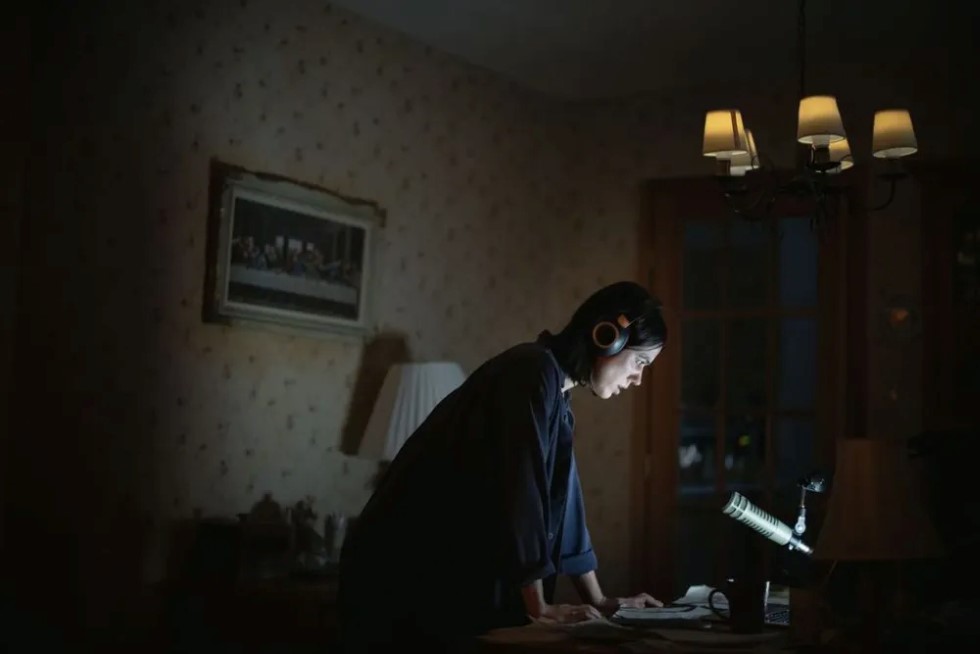
Horror film Undertone — in theaters now — is all about sound. It’s set in one location – inside the house where a young woman named Evie and her ill mother live – and has one on-camera speaking role (Evie). Evie is a horror podcast host, and her co-host, Justin, receives a series of audio files from a mysterious source. The audio recordings start off odd and escalate into insanely horrifying. And the horror doesn’t stay contained in the recordings. Evie begins to have supernatural experiences in her physical world. The film doesn’t use complex VFX for these supernatural elements. In this regard, it’s visually simplistic. Instead, Evie’s terrifying experience is mainly expressed through sound, with practical visual effects reinforcing it. There are multiple perspectives for Evie – her in-headphone experience, her ‘normal’ experience of reality, and her mentally distressed experience of reality. Undertone showcases the power of sound and how much punch it can pack without breaking the bank.
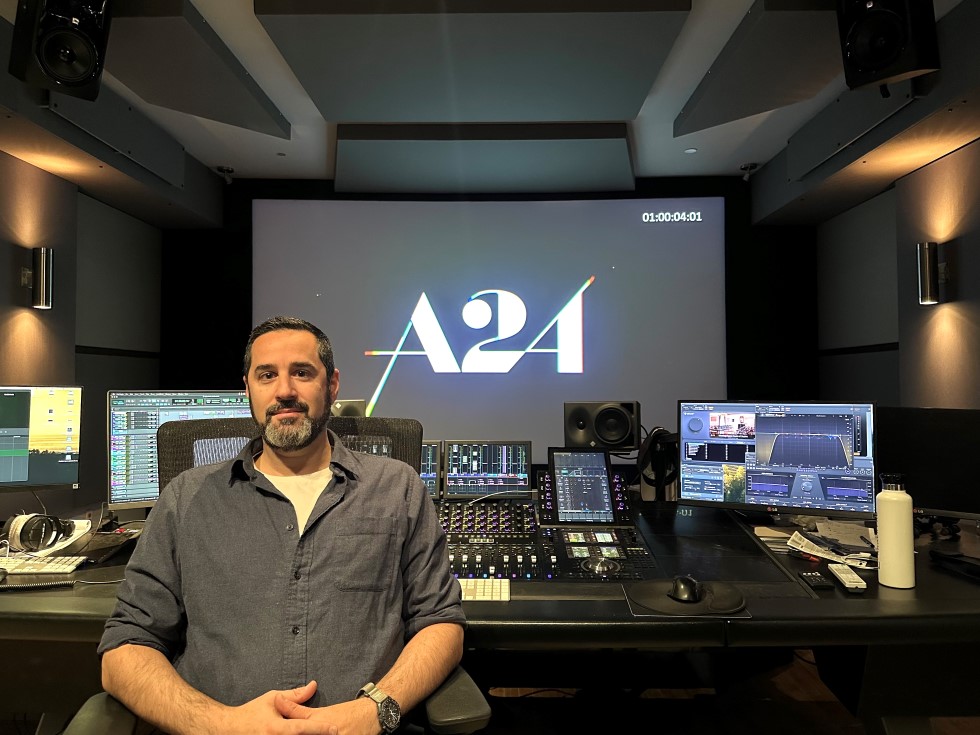
Undertone premiered at the Fantasia International Film Festival in July 2025, where it was acquired by A24, and also showed at the 2026 Sundance Film Festival in the Midnight category. Prior to its theatrical release, A24 provided funding for a remix in Dolby Atmos — a format Director Ian Tuason was eager to explore for Undertone to achieve the spatial specificity he had in mind from story conception. Sound Designer David Gertsman handled sound editorial at Premium Sound in Montreal, and Re-recording Mixer Jon Lawless mixed the film (in both 5.1 and Dolby Atmos) at its sister studio REDLAB Audio in Toronto, in Mix Studio C.
Here, Gertsman (who’s recently been busy mixing shows like DMV for Paramount+ and Ghosts for CBS) and Lawless talk about expanding Undertone‘s initial 5.1 mix into Dolby Atmos, finding ways to enhance the sound of the mysterious audio files without diminishing their raw quality, creating the sound of the demon’s vocals, using the surround field to change perspectives, and letting sound design carry creepy scenes.
Find out who voiced the demon, how the mysterious audio files were created, how adding height channels made the ending more impactful, and much more!
undertone | Official Trailer HD | A24
Can you talk about your collaboration with Director Ian Tuason? How did you work together to compose the 10 audio files that Evie and her podcast co-host Justin received?
David Gertsman (DG): When Ian came to us with the film, we knew the budget was tight, but we like working with young filmmakers and creating those relationships. It had a small crew, with no extras — it was very slim and very rock-and-roll. I like that kind of filmmaking.
In terms of sound, Ian is a sci-fi writer and a very heady guy. He had a lot of ideas that he baked into the script. So, during production, they performed and recorded the ‘scenes’ in the audio files. So, most of what you hear was done live, and for the later files in the series, we enhanced them with sound design to make them more complex sonically.
With Undertone, you have a director who understands and actually cares about the fact that sound is important
With Undertone, you have a director who understands and actually cares about the fact that sound is important. Also, this type of film is so reliant on these audio clips and the mood surrounding it. He did his homework. He did a phenomenal job devising what was going to be done in these little mises-en-scène. So when it came down to working on the audio files, the questions were: how are we going to sweeten this? Are we going to sweeten this? Should the files just be played raw? Is that scarier? Is that more legitimate?
And the answer in the end was to play the majority of the files as they were recorded on set — with all of the room tone, all of the noise, all the shuffling, and all the banging. We did enhance the banging sound in some of the later files, but the core of it, like the exchanges between the couple Jessa and Mike, her singing and chanting, were all acted out and recorded during production. The sound design layering we did was more to address the baby crying, and the backward talking of Abyzou (the demon).
The answer in the end was to play the majority of the files as they were recorded on set
In terms of approach, it was very much thought out from the beginning. It was actually better that way. It gave it a credibility that’s hard to accomplish just by layering sounds. With a good sound design and a good mix for the layered sound, the files sounded legitimate. But the base sound was done in production.
In audio file #4, Evie and Justin call out a sonic artifact, which Evie later isolates and reverses. How did you help to make that realistic, so it seemed like Evie was actually editing this section of the file?
DG: A bit of the credit goes to Ian. They did some rudimentary sound work in the Avid, reversing the file. We then added a little more scratch, a bit more processing to make it more authentic. We didn’t go very heavy-handed with the processing in this case because, being in that world inside the headphones listening to raw recordings, it had to have that granular, natural feel.
Again, there wasn’t a huge amount that we did with those files. I think they played some of that stuff on set, and it’s baked in.
As the audio files get more intense, and Evie’s situation at home deteriorates, she begins to experience strange phenomena inside the house. In one scene, the lights start buzzing and there are cool, swirly whispers. Can you talk about your sound design for that?
DG: In general, the sound design was pretty minimal. I obviously did more than was required of me because you take a stab at making sure the mixer always has enough coverage. But Ian wanted to play things very isolated when they were in the headphones, very dry and claustrophobic-sounding.
Then, when we started to set the mood inside the house, we didn’t have time or budget for sound effects recording sessions; that’s typical for indie films. So, that was all done with library sounds. There are more and more great quality recordings in effects libraries, with high sample rates, so you can play with pitch and processing. While it was mostly effects pulled from libraries, there is one sound in there, these little halogen clinks, that was recorded in an old monk’s abbey. I had originally recorded those for the Helix series and was able to use them on this film. But you don’t always have to reinvent the wheel. It’s more about how you use the library sounds, how you sit them in the space.
There are more and more great quality recordings in effects libraries, with high sample rates, so you can play with pitch and processing
In a lot of instances, there was music but Ian leaned on sound design more than music in the end. Later in the film, we did need that energy from the music, and in some cases, the tonal aspects came from the music. But a lot of the physical sounds, like the clock ticks, whispers, treated house groans, and other small audio cues like little wood creaks or natural sounds in the distance, came from sound design. These sounds alluded to something supernatural happening in the house.

During the mix, I got a call from Jon [Lawless] saying that Ian was muting the music to let the sound design play. That rarely happens. I was really happy to hear that, because in a lot of cases, we accidentally do something similar. We’re all working with very little time and we basically deliver to the mix at the same time, so unfortunately, we don’t get a chance to listen to the music and play off of it. In this case, it worked out in favor of sound design.
The casual viewer may not realize how much detail goes into the layers to make it sound as if it were just recorded with a microphone on set
We were able to create a minimal track for a good portion of the film that was super focused on a couple of elements. This was actually an interesting educational tool in a way, because we, as sound professionals, try our best to stay out of the way of the story and help to create the emotion that sometimes is either lacking or needing support from sound. The casual viewer may not realize how much detail goes into the layers to make it sound as if it were just recorded with a microphone on set. So, having the ability to strip it down and be super focused was great because we managed to do a bit more on the backend of the film once things got a bit more hairy and we introduce Abyzou (the supernatural element in the film). Then, we could get more creative, expand a little further, and take more time on that.
In a lot of cases, people have no choice but to open up their sound library, look up the clock, and go, ‘Okay, I got 10 days to get this done and I’ve got 94 minutes of runtime (or whatever).” You just have to paint with a really wide brush. I went with a less-is-more approach on this film, and I think it was better for it.
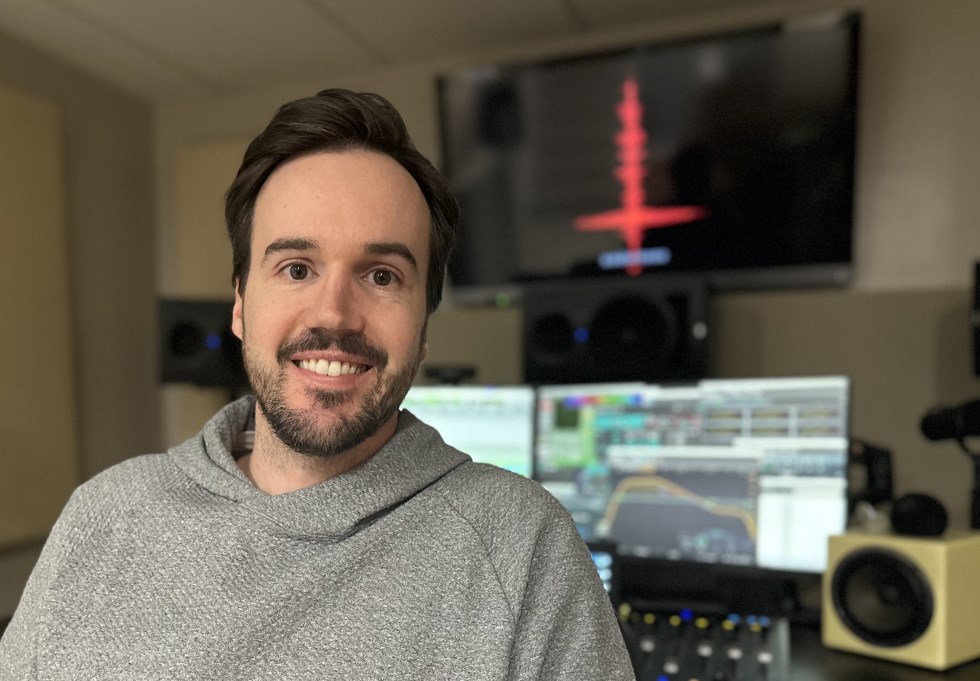
Undertone reminds me of The Blair Witch Project, with its found-footage (or, in Undertone‘s case, found-audio-file) approach. There’s something scarier about a horror film that feels like it could be real, when it’s more raw than ultra-polished…
DG: Yeah, and I think that’s sometimes a bit harder to achieve. One of the challenges we always face — and this happens even at the highest levels of picture and sound post — is getting it to feel natural and really diegetic, not layered. It’s sometimes a bit of a trick when you have a bit too much foley that was recorded in a small studio, or you have a lot of sound effects layers and need everything to sit in the space. And then we go ahead with this film and make the decision to be really raw about it. And, interestingly, I’ve gotten more questions about the sound on this film than a lot of the other projects that we’ve done in the past. I think that’s a good thing.
Jon Lawless (JL): Most of the perspective in those recordings is actually natural perspective. It’s just slightly enhanced when it needed to be.
Dane Kelly, the production sound mixer, had recorded it with a bunch of different mics and the majority of what you hear is in the recording. There was a bit of tweaking and a bit of futzing done to it in moments, but it was one of those cases where I got the files and thought, “Oh man, I don’t really need to do much to these.” It just feels natural and what you’d expect to hear when someone is recording from their bedroom. It was a treat to get those files.
And when people call into the podcast, were those calls recorded practically/on-set, or was it recorded in post and then processed?
JL: Those were done in ADR, and then we did some editing to chop it up and futzed it, adding a bit of distortion using McDSP’s FutzBox.
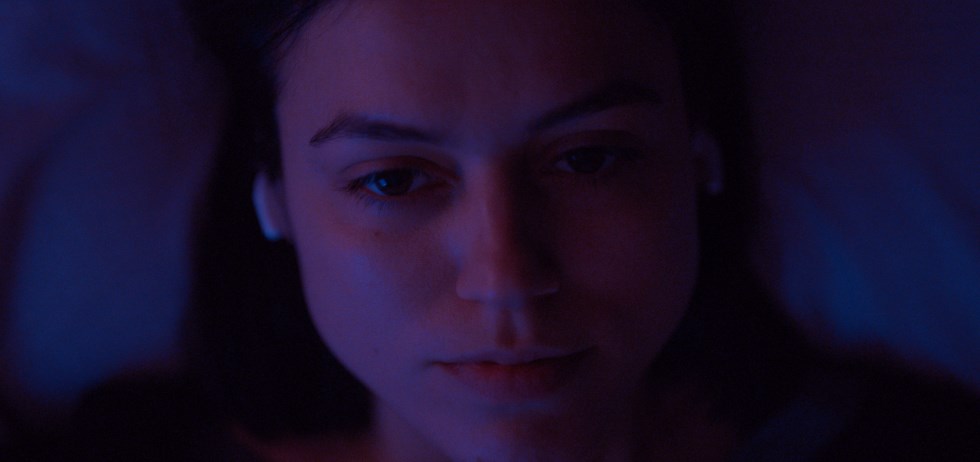
Evie tries to relax into sleep using a guided meditation. It starts off normally but then turns deranged and demonic. Was that already recorded before it got to you? Or was that something you created in sound editorial?
DG: With this rock-and-roll approach to the film, and with the budget limitations, a lot of favors were called in. Some of it was done by voice actors, some by friends, some was the producer, and some was the director himself. If I’m not mistaken, because this was done so long ago, that began with a voice actress and then layers (really raw recordings done in the edit suite) were added.
JL: This was a pretty cool one because even bits and pieces of this got figured out and tweaked near the end of the Atmos mix. We couldn’t get some of the timing and phrasing totally locked in with what we were looking for with the demon voice, so Ian grabbed his phone and recorded a few lines right into his iPhone, in voice notes. He sent it to me and we mixed it in. Technology is amazing!
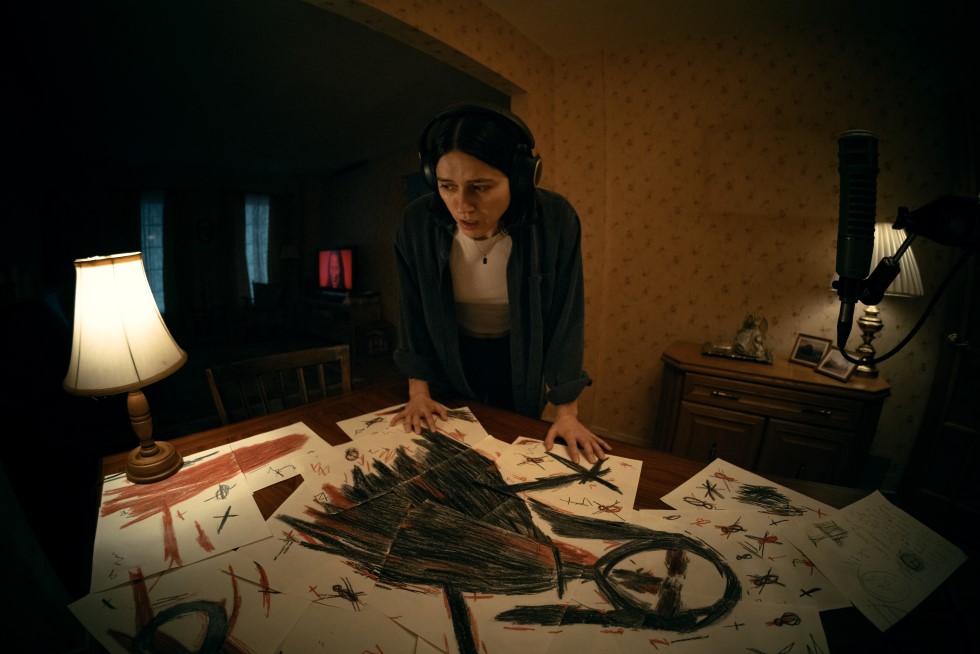
Who performed the voice of Abyzou?
DG: That was performed by the director. Ian is very prominent in this film. In terms of the voice work for Abyzou, that’s Ian. And, we used some pitch-shifting treatment. He had a particular sound for that in his head. He had a pretty clear idea of what it needed to sound like. He’s very much a historical and science-fiction buff, and was telling me about the Testament of Solomon that he used to research this character, Abyzou. So, all the voice layers were recordings of him: recorded on set, or on his phone, or in the edit suite, or all the above. And Jon [Lawless] did a nice job of blending those together and making them sit in the audio files.
I duplicated two or three tracks, used Pitch ‘n Time in AudioSuite to process them slightly differently and then blended those together
JL: The demon voice took a good chunk of mix time. We had the direction beforehand and a pretty clear idea of how Ian wanted it to sound. There wasn’t a ton of processing done to it. It had a lot of creepiness and character to it already, so you’re just trying to squeeze a little bit more out of it. We tried different ways of blending the recordings during the mix. I used Serato’s Pitch ‘n Time to pitch it down, deeper, and scarier. I duplicated two or three tracks, used Pitch ‘n Time in AudioSuite to process them slightly differently and then blended those together. Also, we sent a good chunk of the low end to the LFE and enhanced it further with Avid’s Pro-Subharmonic.
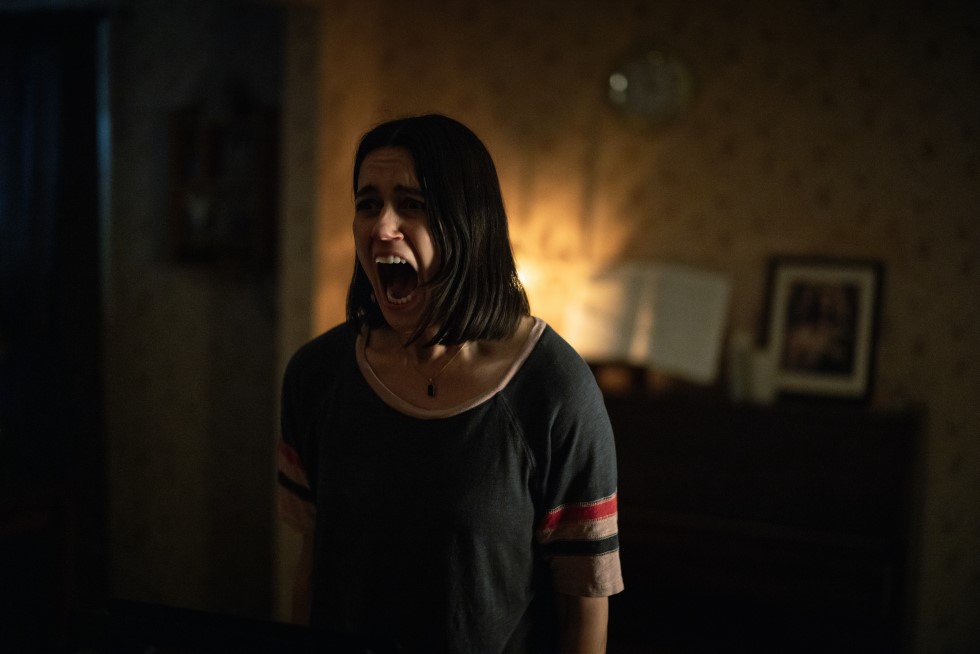
I love the way the movie ends — just sound and no picture. You hear her mother fall down the stairs, and Evie is screaming, all from the perspective of Evie’s podcast setup in the dining room downstairs…
DG: That was actually one of the harder ones to design, for exactly the reason I was describing earlier when I was talking about having dry layers of foley and a little bit of voice. There are all the moody tonal elements to bring it together, but that one was fairly dry, so getting it placed into the house during the mix was one of the more difficult scenes to work on. When they first mixed the film, Ian was very interested in spatialization, using hard panning and moving sounds around. It was quite a challenge for the initial mix because they could only afford 5.1. And sometimes when you’re working in 5.1, it’s difficult to place things accurately because you have such a wide surround sound field. One quarter of the room is covered by one speaker channel, basically. So, getting the sounds to sit right was difficult. And getting that pinpoint accuracy, like, is this sound coming from above me or beside me, was tough in 5.1.
We printed the first 5.1 mix, and it played at the Fantasia International Film Festival in Montreal. It did really well and was eventually picked up by A24, who gave the go-ahead to do the Atmos mix. Then it went on to Sundance 2026, where it played in the Midnight category.
The ending was one place in particular where mixing in Atmos was a huge benefit because of the height element
JL: The Atmos mix was a bit of reverse engineering, just because I had never mixed a film in Atmos before, and the whole mix was previously only done in 5.1. Thankfully, we were able to preserve a lot of the 5.1 panning and just enhance it with Atmos. We were happy with the 5.1 mix, and Atmos definitely helped to create the pinpoint nature of certain sounds, especially for the ending. Ian, in our initial spotting session, had been talking about Atmos. He had already had the idea of wanting certain sounds in certain spots, which was very helpful.
The ending was one place in particular where mixing in Atmos was a huge benefit because of the height element. We were able to place sounds for them at the top of the stairs. It feels like you’re hearing it from her microphone’s perspective, like you’re sitting at Evie’s table. You can hear everything that’s going on in the house, and we’re able to really put the audience in that perspective. That was the main goal.
Reverb played a huge part in having it sound accurate to the space and position of where the audience is supposed to be, which was crucial in that moment. We were using LiquidSonics Cinematic Rooms, maybe two or three instances of it, to have a bit more of an effect in a couple of channels. We did have to spend a fair bit of time trying to dial it in, making sure it sounded as real as possible because it’s basically all recreated.
During the spotting session, Ian knew exactly what he wanted, and Dave and I had conversations about how to achieve his ideas. When the director has the end goal in mind, you just have to figure out how to execute it.
If you were working in Atmos all the time, you would have the most sophisticated-sounding 5.1 downmixes
DG: For the Atmos mix, we had to be very selective. Ian was very happy with the way certain things were sitting in the 5.1 mix, like the mood we created with the headphones, with this very narrow stereo/almost mono feel. That translated very well to any sound stage. And then having the ability to pinpoint other sounds around the theater was an eye-opener for Ian. We could create height, create distance, and give him the spatialization he was hoping for.
It’s a bit of a marvel to work in Atmos. There is no other film-approved codec that can give you the accurate downmix that you need. So if you were working in Atmos all the time, you would have the most sophisticated-sounding 5.1 downmixes. I’ve done other projects where we were just marveling at how the spatialization manages to hold together in the fold down. It retains that sense of height and also the very pinpoint “in the room” accuracy that you’d never get from a huge wash of speakers in a wide array. While it’s not perfect, the downmix definitely gives you that sensation. I can’t explain what they’re doing with phasing in their encoding (it’s proprietary), but I can tell you that it creates a close approximation.
So, the Atmos mix did take as long as the first 5.1 pass because we were able to give him exactly what he wanted. And as for prepping a mix for Atmos versus 5.1, I’d argue that it takes precisely the same amount of time, depending on how sophisticated your templates are. I don’t find that it’s much different to prep for a mix in Atmos. It’s just more accurate. When you throw in complications like reconforms or new visual effects, all the fun technical stuff, it becomes a bit harder to manage. But for me, I always want to work natively in Atmos. But, when you work in a studio, you have to work within the mandates of the project.
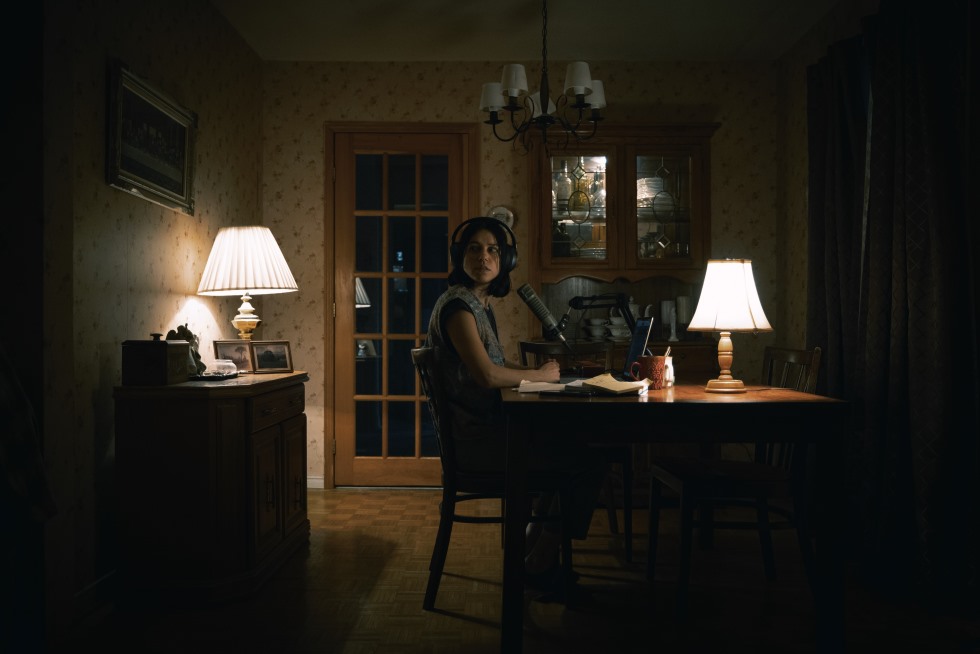
I love how, when Evie is listening to the recordings in the headphones, it feels very enclosed at first. But then there’s this ambiguity where you’re not sure if a sound is coming from the headphones or the physical space she’s in. It’s the odd phenomenon that happens when sounds in an audio recording are spatialized and sound as if they could be coming from the room. I’ve experienced this while playing video games with headphones. Sometimes I have to take them off to figure out if a sound came from the game or if something was happening in my house. And in the film, Evie looks around the house, which makes it even harder to tell…
JL: I’ve had that experience too, where sometimes if I’m listening to something on headphones and there’s a natural reverb in the recording, I look over my shoulder. You’re not sure whether it was in your headphones or in the room you’re in. That was the goal. You don’t want to overexplain it. I hate when movies overexplain it. You leave it up to the audience to question it. Those questions can create cool conversations.
The concern is how to make all the sounds not get lost in the cacophony of it all
This was a challenging mix at times. We have moments where there’s almost nothing except dialogue. That’s hard because you have nowhere to hide. And then the back half hour, you have everything, and the concern is how to make all the sounds not get lost in the cacophony of it all.
DG: That’s when I started layering. We needed the separation to create the emotional impact, especially in the baby sequence, because there are sounds of banging on a big metal duct and the crunchy plastic bag sounds. Then, there are lower, more designy elements that start to bleed in because Ian wanted to get more of an emotional impact. So that was more for a storytelling device. Would it have had the impact if we just kept it raw? I think at some point we needed to open it up and start to punch you in the gut a little bit.
At some point we needed to open it up and start to punch you in the gut a little bit
JL: I remember one of the first big discussions we had was: when Evie puts her headphones on, do we basically rip everything out of the surrounds? And that was Ian’s call. So we gave it a shot. Those aspects are actually some of my favorites. When you take everything away, it really gets you to focus on what’s going on visually and sonically, and you are not really sure if what she’s hearing is in the room.
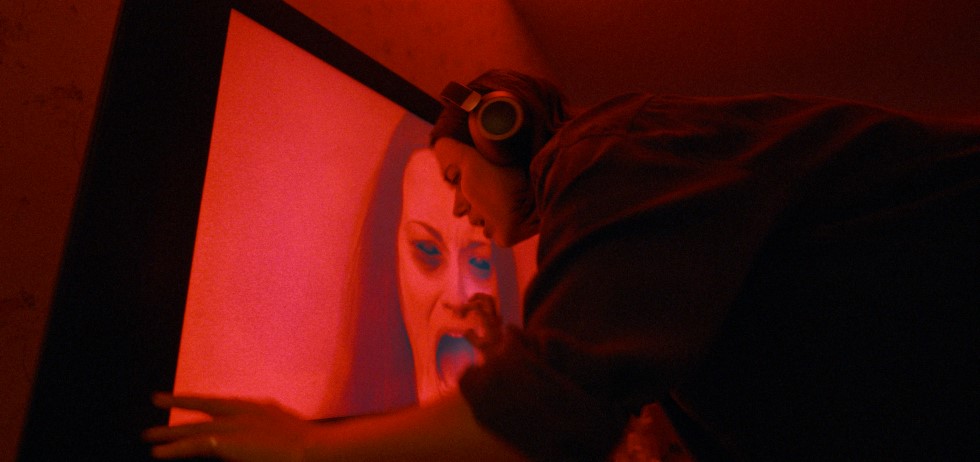
I saw the Dolby Experience version of the film (Dolby Atmos/Dolby Vision), and I have to say that when the film was at peak crazy, the Atmos mix was just bananas. I’ve never heard so many different, discreetly placed sounds — all of which were anxiety-inducing. It was intense!
JL: I guess they nailed the film’s tagline: the scariest movie you’ll ever hear.
DG: Fun fact about those sequences is that it was one of those areas where I did get the feedback from Jon that they were not just making a decision between effects and music, but instead, trying to sew as much chaos as possible. They were basically putting everything into it — all syncopated, all over the place and moving in the room just made it so edgy.
JL: In terms of placement, we were able to have sounds in a general area in the 5.1 mix, so sounds jumping from left surround to right surround to the front, all that was in there. But then going to Atmos opened up more possibilities, especially in the vertical aspect. It was a conscious effort for us not to overdo it because you have more speakers and you want to use them. We very consciously tried to hold back and pick our moments to use it, especially for some of the score and the camera-tilt moments. We thought that was a cool moment to make you feel like you’re twisting in your seat a little bit. But we were very selective in choosing those moments.
You can make anything sound louder by making the preceding scene quieter. There were a couple of moments in the last chunk where that technique was used
This was one of the funnest parts of the mix because there is such a lead-up to it. As the sound builds, it just takes you on a journey that Ian had built. We’d have nice, quiet breaks before chaotic moments. You can make anything sound louder by making the preceding scene quieter. There were a couple of moments in the last chunk where that technique was used. We knew we were leading up to this climax of the film, and that made it an easy challenge.
Those are the kinds of moments that a sound team lives for. This was a sound team’s dream. It’s a sound playground where you can get creative and wild. The team on the stage would say, “Let’s just go to 10 or 11 and see if we need to pull it back at all.” So it was really awesome in that regard.
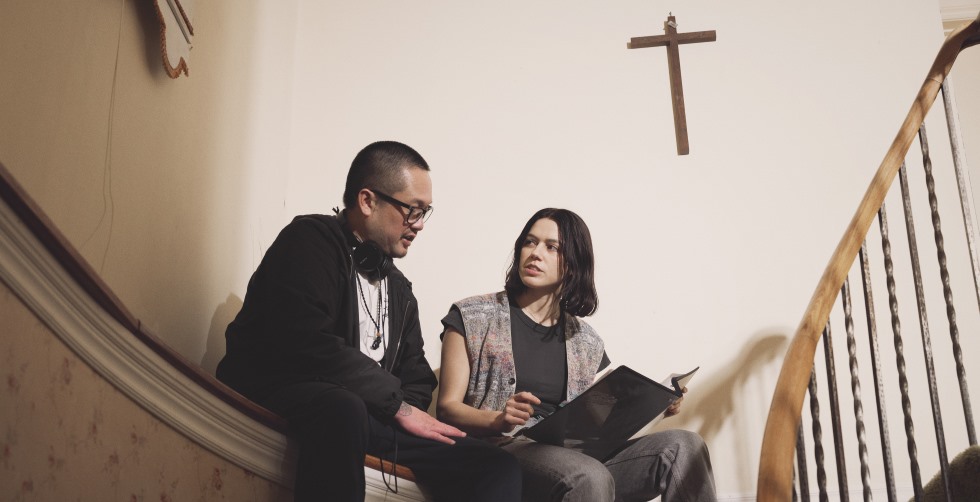
What did you learn from this experience of creating the sound for Undertone? What will you carry forward to your next film?
DG: The main thing for me is when you have a production that actually considers sound from inception, it makes all the difference. When you have directors who are educated, who understand that the story is only going to work with a good soundtrack, they take the time to plan it and devise some of the major sound moments. They think about getting the mic in close, so we have good dialogue. In this case, we had an Electro-Voice RE20 on Evie as her podcast mic, which was great. A lot of these decisions were made early.
Also, it is important for the director to have a clear idea, to have a song in their head of what they want, to either direct on set or direct us in post. I gave a lot of feedback during spotting because the director didn’t necessarily have the terminology (just because of experience), but he definitely had the plan and the ideas. He may not have always known how to execute the stuff that hadn’t already been done, and so that’s where I lived for most of the project. But my main takeaway is that when a filmmaker actually considers not just music, it can make a big difference.
You can do a lot with a little. Indie filmmaking is still a gift, honestly
The other takeaway is that Undertone is a good example of a less-is-more film. As sound people, we love to give it a go, right? We want to create really intriguing things. And there are many pieces to the puzzle that we’re trying to fit in: sound effects, foley, dialogue, or whatever. But it will always come back to the director and what their plan was, and if it’s cohesive. You can do a lot with a little. Indie filmmaking is still a gift, honestly. The biggest problem in our industry right now is a weird gap in the midstream: there are a lot of $500,000 to $5 million films and then $80 million to $200 million films, but very little in between. There’s a good opportunity for the industry to go back a little bit to this sort of rock-and-roll filmmaking style in the mid-tier and just focus on good stories, not worry only about tent poles and big effects and that kind of stuff. And it can be done. It can be done in one location, with a small cast and crew. It can be very effective, as Undertone has proven.
As sound creatives, the number one thing we’re trying to achieve every time we design the sound of a film, or craft the mix, or make decisions about the overall sound, is to shepherd directors who don’t always have a clear vision, to try to create those moods and create those emotions without always relying on just music. It doesn’t always have to be the strings or the low drone that creates tension. We want them to appreciate that sound makes the story complete.
As sound creatives, the number one thing we’re trying to achieve […] is to shepherd directors who don’t always have a clear vision, to try to create those moods and create those emotions without always relying on just music
JL: With every project, you try to take something away from the experience. And for this one, it’s funny to say because I think some of my favorite sound moments are actually the moments with very little sound. It’s just a very effective technique to get quiet.
The collaboration on Undertone was so fulfilling. You don’t always get to be as open with your creative ideas as you’d like to be. But the team had the mentality of, “Okay, let’s try it.” Sometimes an idea works, sometimes it doesn’t. But the times when it does, it’s like, “Wow, that is awesome.” Those are the ones you work towards. So, the main takeaway is just to keep having fun and keep experimenting and not get stuck on one idea, but to approach it with openness. Everyone’s opinions matter, and let’s try it.
A big thanks to David Gertsman and Jon Lawless for giving us a behind-the-scenes look at the sound of Undertone and to Jennifer Walden for the interview!