






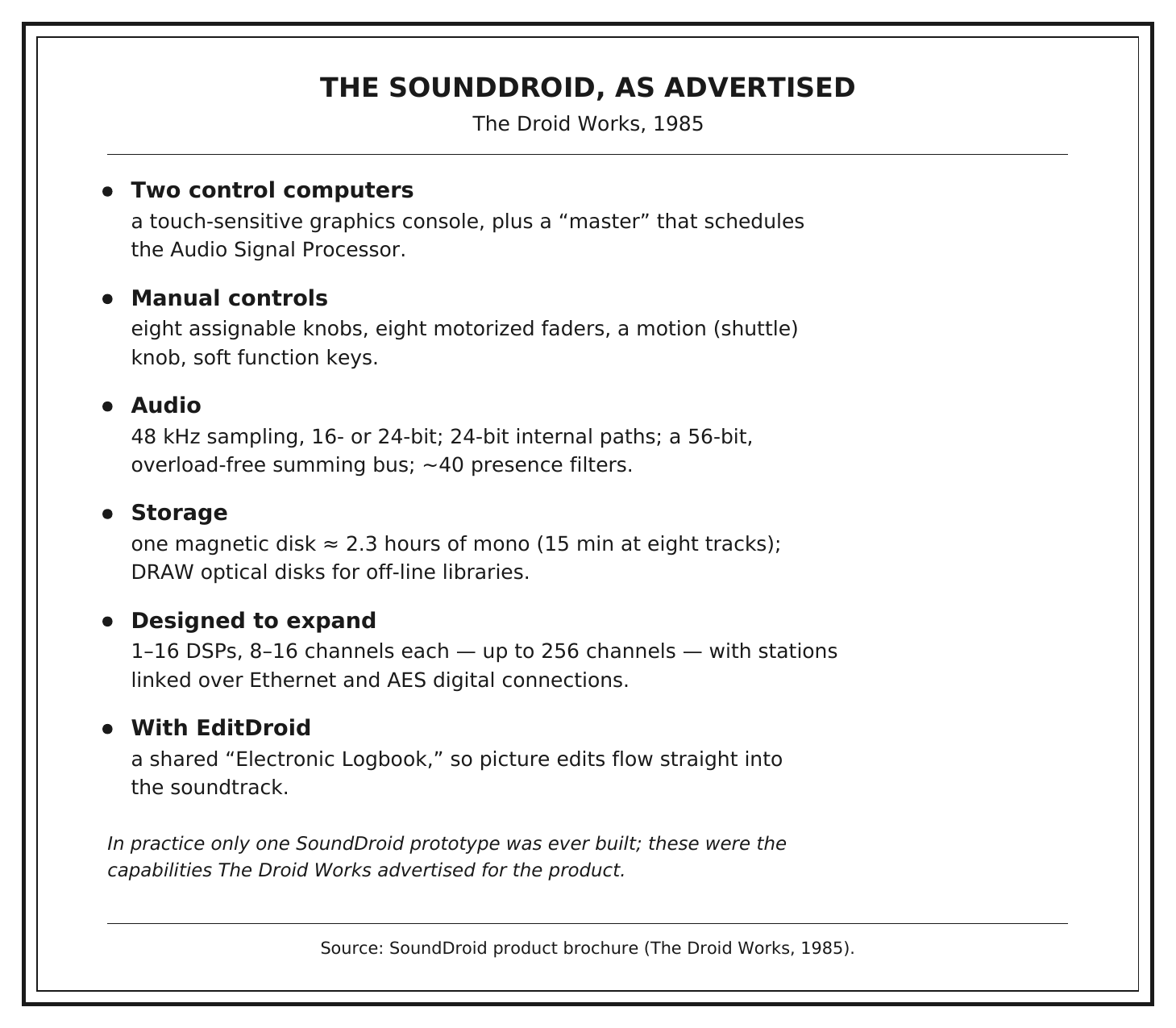
In the early 1980s, a Lucasfilm team led by James A. “Andy” Moorer built SoundDroid, a system that allowed waveforms to be cut, moved and changed on a screen. Matteo Milani of Unidentified Sound Object began interviewing the people behind it in 2008, and those conversations have become DROIDS - an excellent new free book that’s available right now in English, Italian and Spanish.
Here’s Matteo with the story behind his fascinating book + excerpts on synthesized arrows for Indiana Jones and the Temple of Doom, washing-machine-sized hard disks - and how Hollywood reacted to seeing sound for the first time:
Written by Matteo Milani for A Sound Effect
This book is, first of all, a thank-you. To George Lucas, who in the years after Star Wars decided that a film company should pay for research, and gave a group of engineers six years to build tools that did not exist yet. And to Ben Burtt, who was at Sprocket Systems when it was little more than himself and an engineer, made sound history with what he recorded and built there, and was the first to sit at the new machine, because he had watched it being born.
I have been asking myself the same question since I started playing with sound, first for fun and then for a living: where does this way of working come from? The first waveform I ever saw was on a monochrome monitor hooked up to my first sampler, a Roland S-50, at the end of the 1980s. Seeing the sample on screen while setting a loop point felt like magic. My first real workstation came a few years later, a Digidesign Audiomedia III card running Pro Tools. That tells you how old I am.
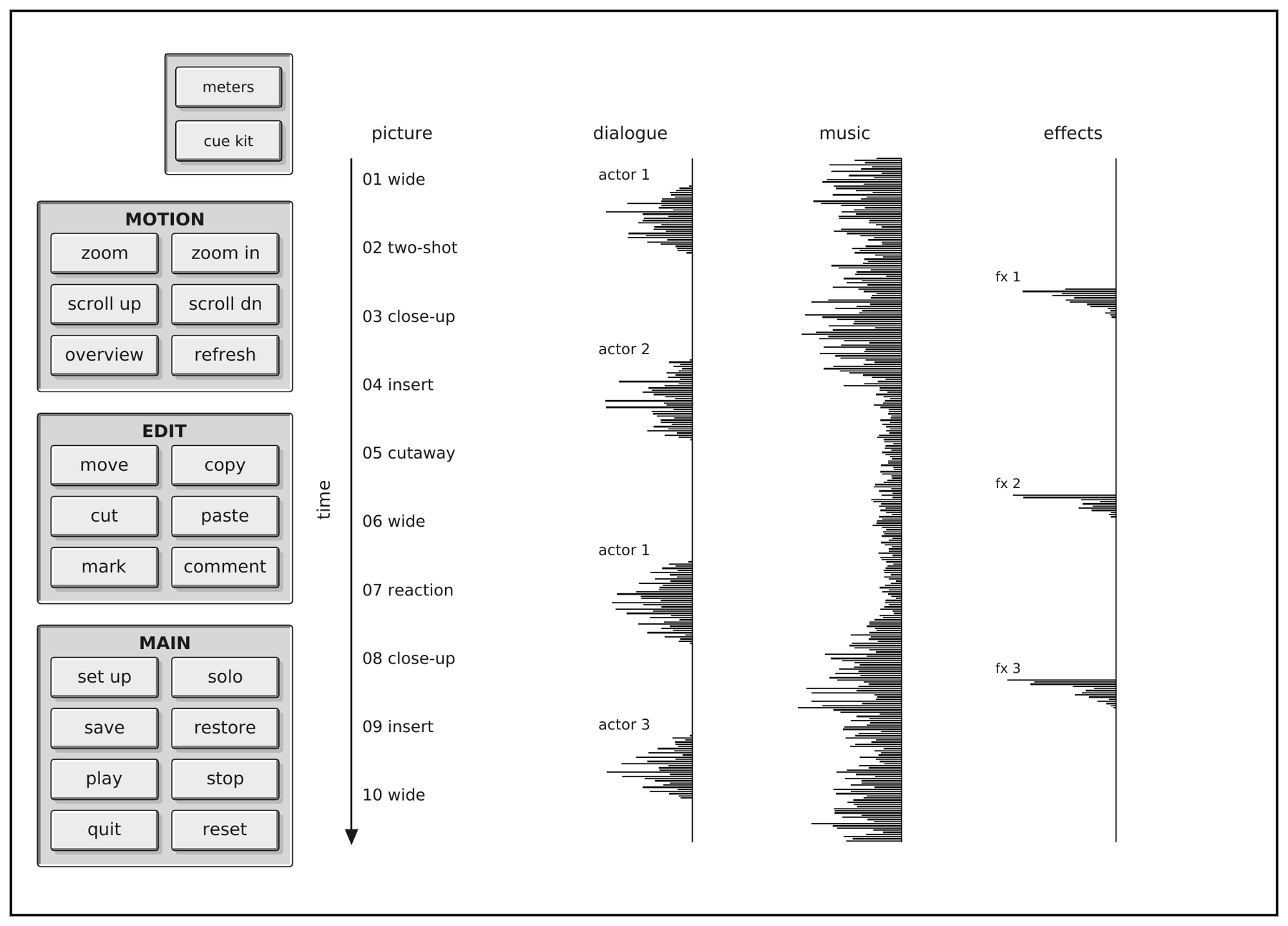
Every session I have opened since sits on an idea someone had to invent. In the early 1980s, in an anonymous building in San Rafael, a small team at Lucasfilm led by James A. “Andy” Moorer put sound on a screen as a waveform you could cut, move and change without touching the original recording. The engineers called their processor the ASP; the system built around it became the SoundDroid. It was shown at the SMPTE conference in Los Angeles in October 1985 and then, for reasons the book tells, it never reached the market. Its ideas did.
Conversations that waited
In 2008 I started interviewing the people who were there, for my Unidentified Sound Object blog. Michael Rubin, author of Droidmaker, was the first; then Andy Moorer and Tomlinson Holman; in 2011 Gary Rydstrom and Richard Beggs. By 2014 those conversations had become a manuscript. Then work and life took over, and it stayed in a drawer for twelve years.
When I picked it up again last summer, I thought it needed a light edit. It needed much more. I went back to the period itself: Recording Engineer/Producer, Mix and Studio Sound, the papers the team published in the Computer Music Journal, the SMPTE Journal and the Journal of the Audio Engineering Society, the patents Lucasfilm filed, the brochures of The Droid Works. Reading how the engineers described their machine while they were building it changed the book more than anything I could have added myself.
The engineers take the floor
The best surprise was that the people who built it were still there, and willing to write. John Snell, Curtis Abbott, Bernard Mont-Reynaud, Marie-Dominique Baudot, John Strawn and Jeffrey Barish each wrote a chapter in their own words. Gary Rydstrom, a young sound designer at Sprocket Systems in those years, wrote the foreword. Carla Scaletti, who as a student travelled to San Rafael to see the machine, wrote the epilogue. Peter Nye, who programmed the film interface, sent the photo of the audio team.
Explore Matteo Milani’s superb sound libraries:
Over the years, Matteo Milani has built a strong catalog of sound effects libraries - hear them below:




The ear comes first
I didn’t want a book only about circuits. A short interlude in the middle turns to the craft: how a sound is chosen rather than just assembled, and why no machine makes that choice for you. Ben Burtt is at the centre of it, as he was at the centre of the project: the sound designer the engineers worked with every day, and the first to put the machine to use.
That season had something special, between the C Building in San Rafael and the Ranch that Lucas was building in Marin County. I have been lucky enough to be invited to Skywalker Ranch twice, and the place still carries that feeling: people who loved sound, given the time and the means to try what nobody had tried before.
DROIDS is free, as PDF and ePub, in English, Italian and Spanish. The four short passages below come from the book; the rest is waiting at unidentifiedsoundobject.com/droids.
Trending deals right now









Excerpt: four stories from DROIDS
Four short passages from the book. Reproduced by permission of the author.
Arrows that never end
From the conversation with James A. Moorer, who designed the Lucasfilm Audio Signal Processor (ASP).
MM: The Doppler Box you invented for Ben Burtt: was it stand-alone, or a remote controller doing a specific task?
JM: It was a remote terminal on the ASP. We would load a specific program into the machine for him to use.
MM: Can you talk about the synthesised arrows in Indiana Jones and the Temple of Doom?
JM: This was done by linear prediction. Ben had recorded the sounds of arrows going by, but they were too fast. I took 100 ms from the middle of one of those sounds and created a filter of order 150 from it. When driven by white noise, it made the same noise as the arrow, but continuing forever. He then put that sound in the Doppler program to produce the sounds of the arrows flying by.
From that one seed the team grew fly-bys at different speeds, each cut to the length of its shot, until the synthetic arrows could be used “interchangeably with the original recorded arrow sounds.”
The street truth
From “Programming the ASP”, the chapter John Strawn wrote for this edition.
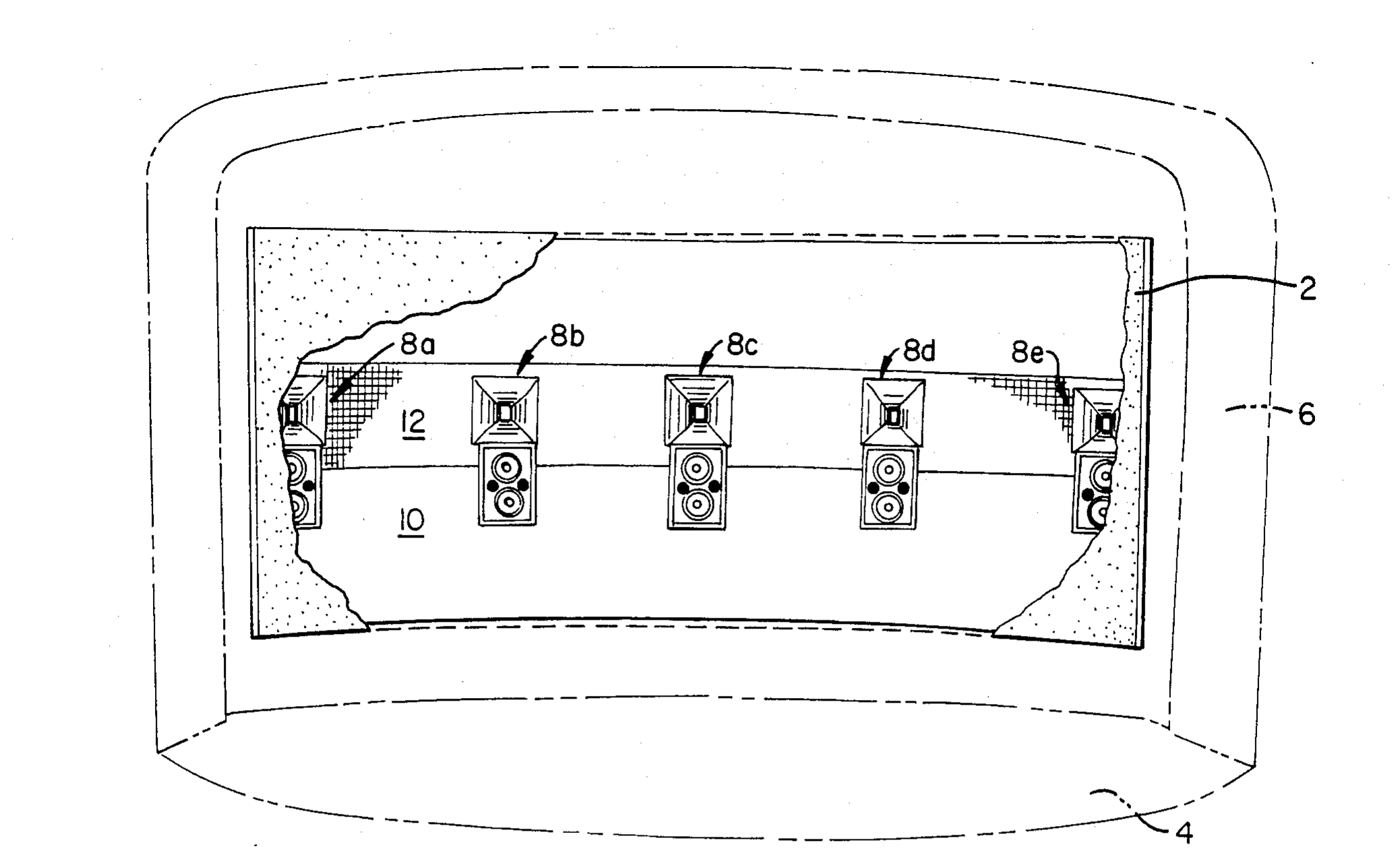
It was an eye-opener to join the film industry after a background in analog synthesizers and computer music. Many of us had no idea how primitive the systems in local cinemas were. Tomlinson Holman gives the technical details, but the “street” truth was almost unnerving. We heard stories of visiting a cinema and finding the left speaker disconnected on the floor behind the screen, with no one in the audience noticing. Once, at a local theatre, one channel was buzzing audibly; when we mentioned the distortion to the staff, the answer was that if we had a complaint they could give us a free ticket for the next movie. The noise level in cinemas of the time, from sources such as air conditioning, was so high that the Lucasfilm mixing studio had to install a switchable noise source, or sound effects could be mixed so soft that they would be lost to the audience. And we learned that a cinema operator earned more from selling popcorn and candy than from selling tickets.
[…]
Those of us who grew up with audio tape know how to move the reels by hand to isolate, say, the precise beginning of a recorded sound. This was called “scrubbing” or “reel-rocking.” I was tasked with making it work on the ASP, and the result was code I cockily dubbed Rock and Roll. It fit into a graphics interface contributed by Peter Nye and was driven by a shuttle knob: as the video tape is moved back and forth, the sound is scrubbed with it.
Washing-machine disks
From “Multichannel Storage and Disk Scheduling”, the chapter Curtis Abbott wrote for this edition.
One of the challenges that differentiated our audio work at Lucasfilm from most computer-music work at the time was the emphasis on recorded sounds stored on hard disks. Hard disks in those days were enormous affairs — washing-machine-sized machines spinning arrays of platters some 30 cm in diameter, stacked fourteen high or so. These monsters stored a screaming 300 MB, and if you programmed them to seek in a certain way you could make the machines slide across the floor from the momentum of pushing the read/write heads. One of the challenges Andy posed to me was to come up with a way to store many channels of audio such that you could easily and quickly change the timing relationships among the channels by a few milliseconds or much more. […]
We also had a fellow from Stanford, Bernard Mont-Reynaud, who showed up to consult for the group. […] When I showed him the scheme I’d come up with for multichannel recording, he was fascinated and started thinking about it. At first I thought this was a waste of time, since it was a “solved” problem. I was wrong, though: he came back with a clever idea — mentioned as an obscure problem in Knuth, Volume 1 — which was to allocate whole tracks and program the disk to start reading a track at whatever point you happened to be when the heads arrived, and then complete the read on the next revolution, putting the different parts of the track into the correct parts of a buffer.
The first time Hollywood saw sound
From the conversation with M.H. Rubin, who trained film editors on the EditDroid and the SoundDroid.
MM: How did movie people perceive the experience of navigating a nonlinear medium rather than an analogue, linear one in the early days of the digital revolution? Were they scared of the new technologies?
MHR: They were unhappy. There was usually a silence for a while. On the EditDroid I was usually editing the scene while they sat watching me edit. Finding a shot, for me, was to press a button and it was on the screen. It was easy to pick up shots and move them around. They couldn’t believe it. The SoundDroid was more far out. Never before could they see the sound! To see a waveform of sound had never been done before. We could zoom into a waveform, go down to the sample, look at it, zoom out. You literally looked and just said, “That’s where the amplitude kicks up, and that’s where you cut it.” In both cases people couldn’t hide their excitement and their fear. […]
Most people don’t like changing the way they work. They’ve been doing something one way for their entire career. […] It would take almost ten more years before this type of equipment took over Hollywood. […]
MHR: Film editors are like tailors: they make beautiful clothes and have a feeling for the material. They can feel the scene and they know that it’s good. […] Something is lost when you lose the tactile nature of film and sound. You can do more with the computer, and that’s not in question.
Get the book for free!
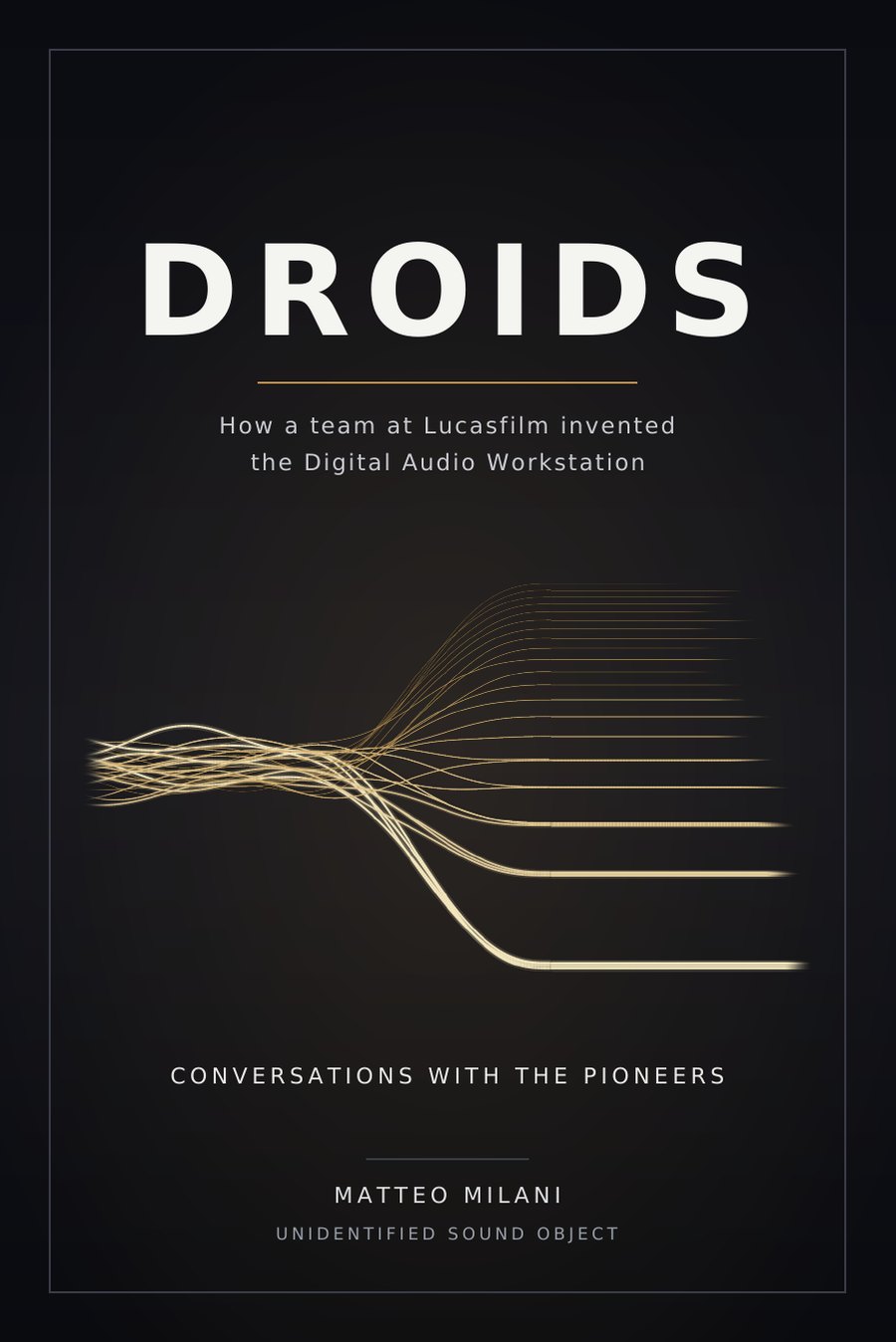
DROIDS: How a Team at Lucasfilm Invented the Digital Audio Workstation. Conversations with the Pioneers, by Matteo Milani.
Free, as PDF and ePub, in English, Italian and Spanish, under a Creative Commons licence (CC BY-NC-ND 4.0). Out 31 October 2026:
Download DROIDS