




Hi Stuart, please introduce yourself and Glitchedtones:
Hi Asbjoern, I’m an indie sound designer based in the northeast of England. I release sound effects and atmosphere libraries through my label Glitchedtones. My libraries are primarily aimed towards film, game and music productions but are suitable for a diverse range of projects, such as art installations, theatre and audio dramas. What really draws me to sound design is having the freedom to experiment with a wide range of sound sources and having little in the way of creative boundaries.
I’ve learned to use whatever I have at my disposal to its full capability and maintain a relatively simple setup which I know well
Glitchedtones is a less-than-part-time venture as I have a day job in an office four days a week. After time constraints, budget is a factor as there’s little left in the pot for nice gear and software after the bills are paid. However, I’ve learned to use whatever I have at my disposal to its full capability and maintain a relatively simple setup which I know well.
For great-sounding results, using affordable means, what sort of equipment would you recommend?
I’d recommend as little as a basic laptop, some decent studio headphones and a copy of Audacity! For more options and some luxury, an audio interface, microphone, monitors, a MIDI controller and a portable recorder are invaluable. There are many budget gear options available these days, one drawback is cheap preamps on recording devices though. It’s difficult to produce high-quality professional field recordings with cheap gear, but that doesn’t mean you can’t use the recordings as source material for your own designs. You may not be able to release a pristine urban ambiances library from a Zoom handheld, but you could have an incredibly unique, high-quality library of planetary environments on your hands once you start processing.
[tweet_box]Sound effects creation on a shoestring[/tweet_box]
What are your go-to tools and plugins?
Granular seems to work particularly well for creating Industrial, Dystopian, Sci-Fi or Abstract ambiances out of everyday recordings
For source material, I often use feedback loops, lo-fi field recordings and computer generated noise. I love granular samplers and processors, so these are a mainstay and something I always go for when it comes to shaping the sounds. There are lots of great free granular tools available online which are all worth exploring. Granular seems to work particularly well for creating Industrial, Dystopian, Sci-Fi or Abstract ambiances out of everyday recordings, with loads of room for creating variations of a single piece of audio. I also go for buffer and glitch plugins a lot and love anything with a random function as it’s great for inspiring ideas and building up source material to mangle later.
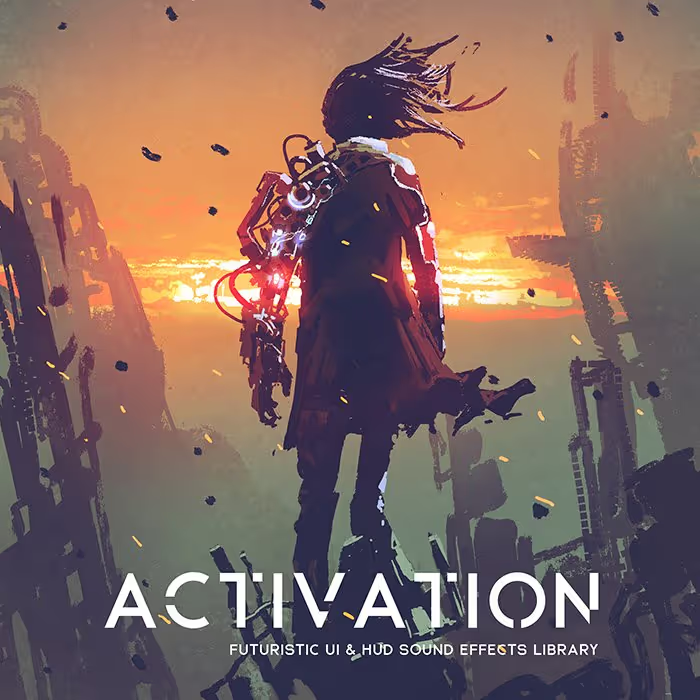
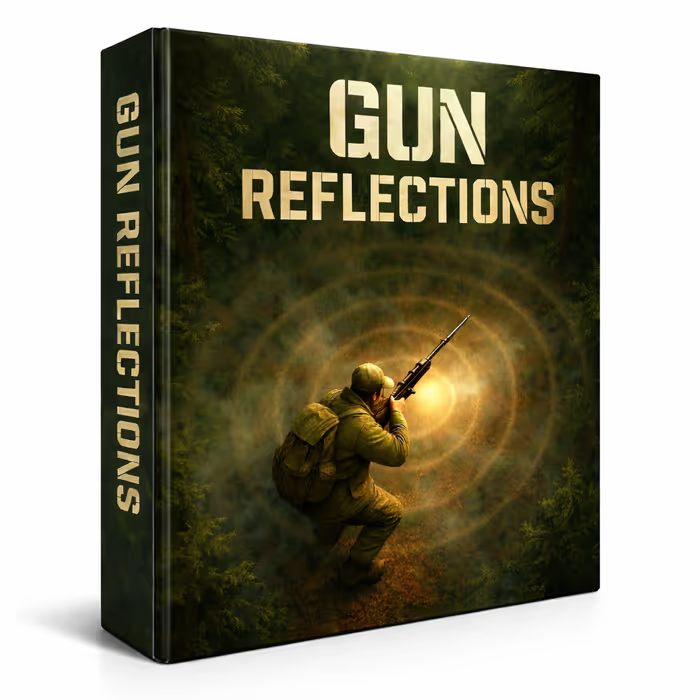
Here are some of the sound effects libraries created by Stuart Keenan and released under the Glitchedtones label (more here):
For those with a limited budget, what are some particularly helpful approaches for generating useful material? Any surprising sources of great material?
I’ve created lots of varied sounds just from jamming out on effects and it’s great for unique glitch and UI sounds
It may seem obvious but record everything! For example, if you are trying out a new plugin on one of your recordings (this is especially good with a synth or effect with random or generative functions), simply record while you play and then edit out the highlights. I’ve created lots of varied sounds just from jamming out on effects and it’s great for unique glitch and UI sounds. You can then use these edits to shape into something new again. By time-stretching or pitch-shifting and layering on some more effects, you can then start crafting drones and ambient atmospheres. Also, don’t get rid of any ‘bad bits’ such as preamps hiss, mic pops and cable crackles until you’ve fully explored their potential!
What are some of your favorite sound design techniques?
A great amount of my work has been built on recording and manipulating feedback loops using the No-Input Mixer technique, so this was a go-to for a lot of my early libraries and still something I really enjoy. It can be so random that you can’t recreate the same sound twice using the same settings but it is a lot of fun to explore! I use a Behringer 4 Channel Mixer and a bunch of guitar effects for this. It doesn’t matter much which pedals you use but I find having a delay pedal in there really gets things going. I’ve created many drones, glitches and electrical sounds using this technique.

What’s your approach for coming up with library ideas?
I tend to find themes for libraries while freely experimenting, I’m always playing around and recording the results, just for fun and to see what happens, checking things out. Anything goes. There’s a lot of randomness and chance in my work, which I find incredibly inspiring. It’s these experiments and encounters which really inspire me to then shape the results into more tailored collections.
In terms of gear or tools, what’s been the one upgrade you’ve made that’s the biggest difference?
I’ve recently got Serum on a rent-to-buy deal, which is a bit of a luxury for me as it’s the first commercial VST synth I have bought. It’s all I use now for synthesized sound design, I find it really intuitive and almost anything you do with it sounds great. As much as I love noise, glitches and granular processing, I’m excited to get started creating some new libraries using Serum as a main sound source.
When it comes to indie SFX, what’s been the most valuable lesson you’ve learned?
I’ve learned not to be dissuaded by a lack of expensive gear and to simply go with getting the most out of what is readily available
I’ve learned not to be dissuaded by a lack of expensive gear and to simply go with getting the most out of what is readily available. It’s easy to think that without a Sound Devices rig or a Native Instrument’s Komplete setup your chances of being successful or being taken seriously in the sound design industry may be limited. However, this needn’t be the case!
Any essential tips for people starting out in indie SFX?
Embrace your limitations, as this is where you may find you are at your most creative and unique.