



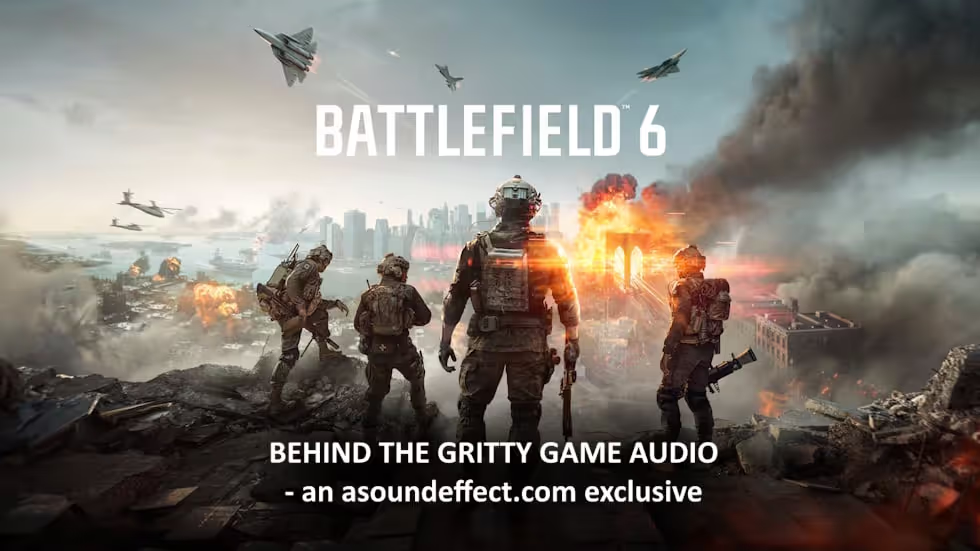
Some jobs are just more fun than others. It’s not every day that one gets to drive a tank and record all its sounds, or build brick walls and drop them from a crane onto other brick walls. Those are just a few perks for the hard-working sound team on Battlefield 6. Taking cues from achievements on past Battlefield title, the sound team crystallized the sound of the franchise and created a killer sonic experience for BF6 players across all experiences: single-player/campaign, multiplayer, and REDSEC (battle royale).
Here, Senior Audio Director Mari Saastamoinen Minto, Audio Director David Jegutidse, Senior Technical Sound Designer Gonçalo Tavares and Senior Sound Designer Mikael Mansson Grolander at DICE, Studio Audio Director Jeff Wilson and Audio Director Tom Hite at Ripple Effect, and Audio Director Gaetan Lourmiere and Senior Technical Sound Designer Olivier Paschal at Criterion Games discuss their approach to crafting a sense of ‘real’ recorded war through careful sound and mix decisions, to convey a gritty, raw feeling more akin to found-footage than a highly-polished production.
They talk about keeping sonic consistency while working with more people, in more studios, across more time zones, during different stages of the project than ever before on a Battlefield title. They break down their approach to handling how sounds behave in the world, like using a bi-directional raycast setup for obstruction and occlusion, how they handled vehicle engines in-game, how they worked with the Frostbite engine team to improve support for all spatial audio formats, how they mixed the game to feel loud, dense, and chaotic, while also creating situational pockets, and so much more! Plus, they share stories of recording sessions for guns, debris, and vehicles, talk about building a custom harness to capture believable first-person dialogue for the soldiers, and explain their three-category system for designing seamless cinematics.
Battlefield 6 Official Multiplayer Gameplay Trailer
What’s new in your approach to sound on Battlefield 6? Creatively, how did you want to enhance the player’s sonic experience of the game? Technically, what new tools/technology were you able to take advantage of to help you complete your goals?
Mari Saastamoinen Minto (MSM): The soundscape of Battlefield 6 is a raw, gritty, and authentic experience of being a modern soldier. But what does that sound like? What makes it sound believable if you’ve never been to war?
We’ve always had a keen interest in how sounds behave in the world, their fall off distances, reflections, filtering, and relation to one another, as well as the physical impact they have on us humans and how we listen and hear sounds in different situations. Experiencing loud sounds, like rockets on New Year’s Eve, construction noises on the street, the sound of your footsteps, and the background ambience all weigh into the creative approach of familiarity that we bring to our games. That goes hand in hand with what references we, as an audience, have of war and how we perceive loud sounds.
This project was a journey to our past, dissecting everything we’ve done well, what we always wished we could’ve done more of or never tried and what we knew we could do better. We looked at everything from a creative and technical perspective, from what and how we record our sounds and voices to how we design our sounds, and build and mix them in-game. We reviewed how we designed our sounds and asked why we decided to design them this way. We explored and tried new approaches to recording weapons, destruction, and voice. We also looked at how we collaborate and communicate across teams, studios, and time zones.
David Jegutidse (DJ): Ironically, what was new in our approach was to be more diligent about respecting past achievement and make sure we don’t just go through the motions and do everything new and different without clear goals or intentions. We were much more thorough in looking back and reflecting on what the essence of the franchise is and what our players and we, as developers, most appreciate from past titles. That was used to build a foundation. We intended to draw on the best of the franchise’s history and make targeted improvements in areas we knew had room to grow, while building on what we already had confidence in.
We added new systems to handle destruction sounds, especially regarding how we scale and collapse many instances of destruction sounds in quick succession, since we knew destruction would play a big role again. This was something we wished we had in the past. We improved on the depth of how weapon fire reacts to different environments by building out both our reflection systems as natural extensions of the Battlefield legacy, as well as adding a lot more bespoke content, numbering in the thousands of individual assets. There are many more new additions or improvements that are logical progressions of what we had in previous games, using lessons learned from them. Some quick examples are early reflections on helicopters, more advanced sidechaining throughout the mix, shockwave reactions like rattling garage doors, or a deeper representation of how footsteps sound on different floors, above and below.
Jeff Wilson (JW): The overall direction of Battlefield 6 was to get back to our roots, which audio is, of course, a core component. To support the franchise direction of an authentic, modern soldier experience, we wanted to create a visceral and tactile soundscape, where the player really feels like they are part of the environment. This meant leaning into newly recorded content for weapons, reflections, and destruction, along with improving core systems for how that content triggers in-game.
Did you tackle sound for the single-player campaign first, before moving on to the multiplayer modes? Or, what was the most efficient way to create sound for both?
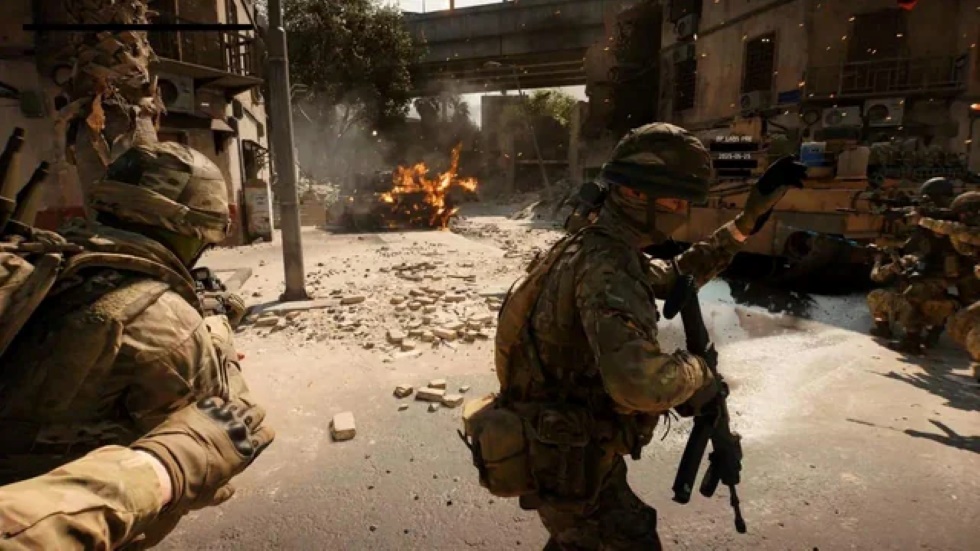
MSM: During early production, we made an Audio Target demoing the mix between weapons, footsteps, and ambience, as well as explosions and voice, to establish the style and tone of the game. Since we are sharing core content (weapons, foley, gadgets, explosions, vehicles, destruction, etc.) across experiences (multiplayer, single-player, REDSEC/battle royale), setting a strong foundation early was key. The mix, style, and tone of these sounds and their relation to one another outlined a foundation for our soundscape as well as a direction to audio teams across studios.
Tom Hite (TH): We also knew early on that there would need to be some tweaks between those experiences. Before we could know what needed to be tweaked, we had to decide on a baseline experience, and it made sense for multiplayer to be it. However, our core audio development considered all the experiences simultaneously as much as possible. All our experiences were developed in tandem, so by necessity, audio developments were heavily communicative (across experiences, studios, time zones, continents…)
How does your approach to sound on the single-player campaign compare/contrast to the multiplayer modes? What were some specific challenges you faced for single-player and multiplayer modes?
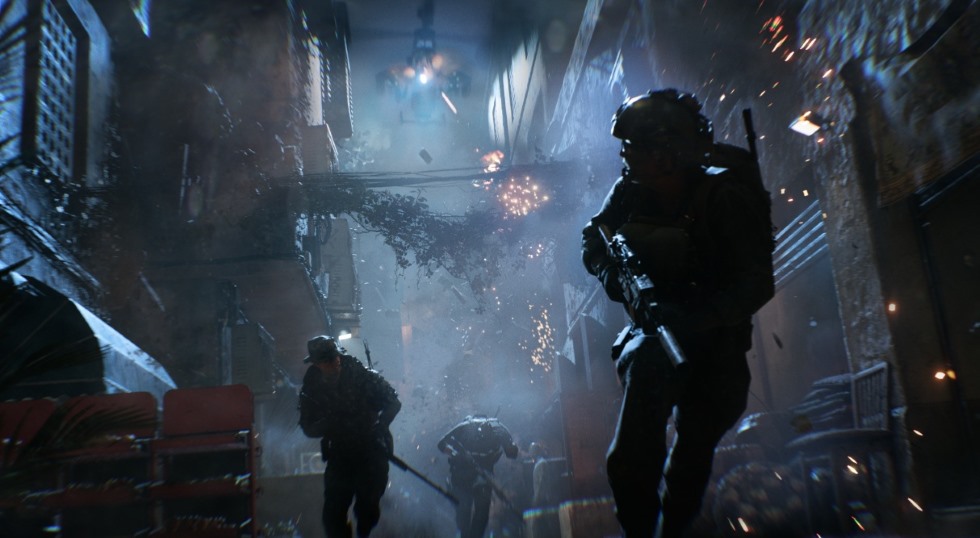
DJ: In multiplayer, a general challenge is the very thing that also makes the franchise special, and that’s the chaos that gets generated by dozens of players playing at their competitive best, or goofing around, or getting creative and testing game limits all at the same time. A lot can happen simultaneously or in any possible sequence. Crumbling buildings, jets, helicopters, tanks, guns, and explosions happen everywhere. So you have to have a mindset of thinking of every sound as a system that should handle itself well in any circumstance it gets thrown into while staying focused on the most probable cases. For instance, you know that the sound of taking bullet damage has to work well with the sound of nearby bullet cracks and whizbys and an enemy weapon firing in your direction. At the same time, if it’s a fire exchange, there is also your own weapon and your own hit indicators and kill indicators and accolades that can all happen at the same time, all in the span of milliseconds before the fight is over.
No matter how logically you think about any sound system, real playtesting will quickly uncover the edge cases no one considered
No matter how logically you think about any sound system, real playtesting will quickly uncover the edge cases no one considered. Then, once the game goes into the hands of millions of real players, you have another influx of these unexpected interactions.
Something that seems obvious to us but should be mentioned is the challenge of really executing on the style and tone we wanted to achieve, while still supporting gameplay needs.
It is a gritty and authentic experience that should feel believable, but at the same time, it is a game that sometimes behaves dramatically differently from the reality we draw on for sound. More competitive gamers often have expectations that are harder to meet within our chosen aesthetic. Everyone appreciates when a game sounds immersive and believable, but few realize how much that can be at odds with gameplay readability expectations. It is one of the biggest challenges in this franchise, to find the best solutions that work for gameplay needs without diminishing the style and tone.
TH: In single player, the challenges were in figuring/re-figuring out single player tech and workflows (considering the implementation of a new game engine, and the return of a linear, single player campaign after a decade) for cinematics while trying to keep a consistent soundscape with the product style and tone, yet bending it out as needed for narrative and emotional impact. Our Battlefield audio tech and designers overcame significant challenges and did a stellar job figuring out how to meet all our narrative needs.
Another difference was the use of music since it is systemic gameplay information for both multiplayer and single-player
We did have contrasts in some areas that needed some variance in tech and tone. Single-player has a stealth mission, for example. It needed stealthy weapon fire. We rationalized that those weapons were using suppressed subsonic ammo, a category that didn’t exist in the rest of the game (but audio is often ahead of the curve), so David set that up for us.
Single-player also needed lower-intensity voice lines, so we set up the logic, recorded all the extra lines, and made sure those worked consistently with the rest of the lines, as most of it is shared across experiences. Another difference was the use of music since it is systemic gameplay information for both multiplayer and single-player, but we obviously needed to script it out for narrative as well. We wanted gameplay consistency, so player understanding of its use would be the same when switching experiences.
The last general differences I’d say were mix variances. We tried to be consistent with our standard values and hierarchy of sounds for things like HDR and amplitude, but there was always the situation of needing to alter things for dialogue to be able to cut through action sequences (mix snapshots and parameter changes over timelines) and muting/mixing down systemic sounds during cinematics, and not-as-common situations like occasionally bumping up ambiences for some durations to reinforce establishing scenery and have it smoothly come back down to standardized values.




What was your approach to occlusion — creating realistic gunfire and explosion sounds in stairwells, buildings, across open areas, etc.?
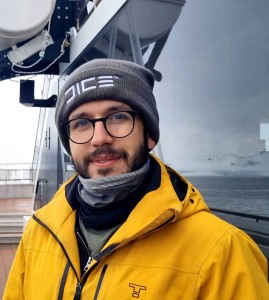
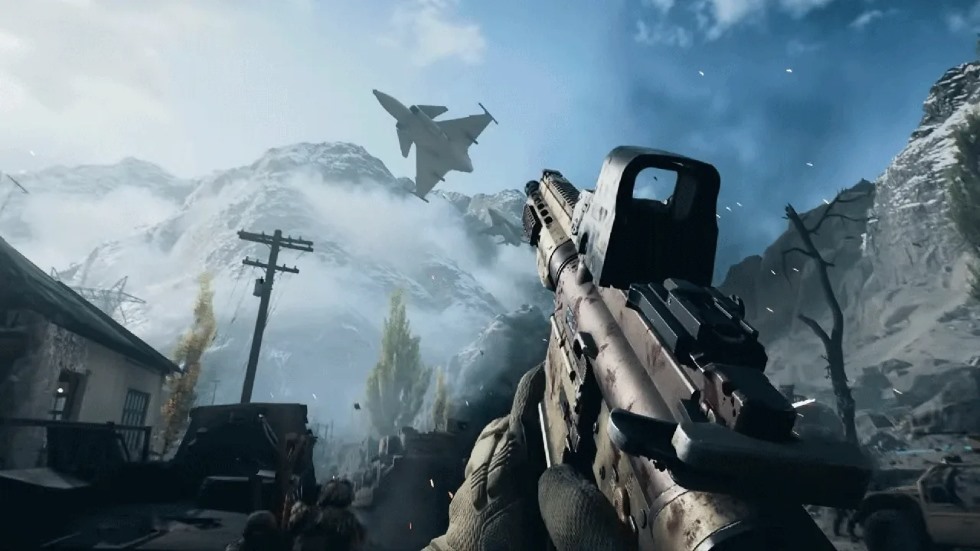
Gonçalo Tavares (GT): Obstruction and occlusion is a complex topic in a game that features destruction so prominently. We tried several different systems throughout production, and we’re very happy with where we landed. We use a bi-directional raycast setup between the sound source’s custom shape and the listener. We configure what these raycasts are and what they translate to sound-wise per event, since each sound has very custom needs. A bullet impact needs a fast, “on” or “off” result, while vehicles need a less reactive but more granular behaviour.
DJ: I will just add that in terms of technology our improvements to the obstruction system are probably the biggest win that is also directly player-facing and opens up more ways for us to refine things from here on out. It has been a hot topic for many projects, and this has been the biggest leap forward we made since I started working on the franchise in 2012. Naturally, there is more room for improvement with such a complex topic in the future.
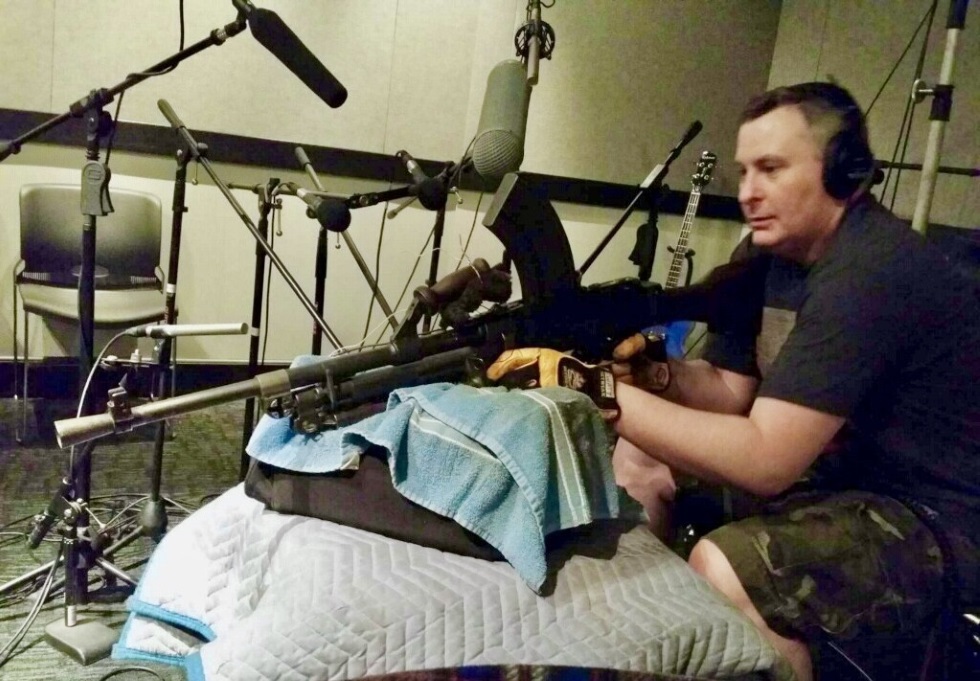
What went into the weapon sounds? Did you do weapon, ammo, and ricochet recording sessions? Any helpful indie sound libraries? Did you have access to weapons’ sounds recorded for other Battlefield titles?
DJ: We did the most amount of new weapon recordings ever in a Battlefield game, through several shoots in different locations. We captured weapons firing, bullet impacts, foley, etc. We also still have access to previous recordings made for previous Battlefield titles and also previous collaborations between multiple EA studios.
Additionally, we do work with commercial libraries; some new additions to this project were the latest weapon bundles from Aftertouch and Pole Position Production. We are always on the hunt for good source content, as that is the essence of good sound.
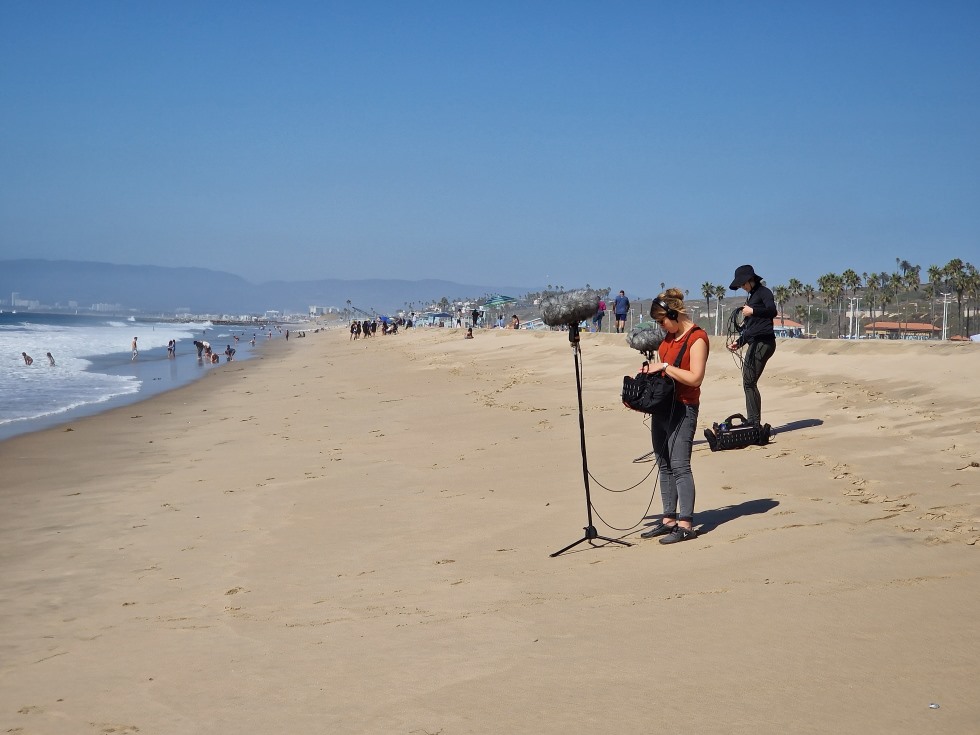
JW: As David said, everything starts with the quality of your source content. For us, field recording is an art form. It’s something we are really passionate about. We had a very big audio team on this title, spread out across time zones, so we brought everyone together for a large audio recording session in Southern California.
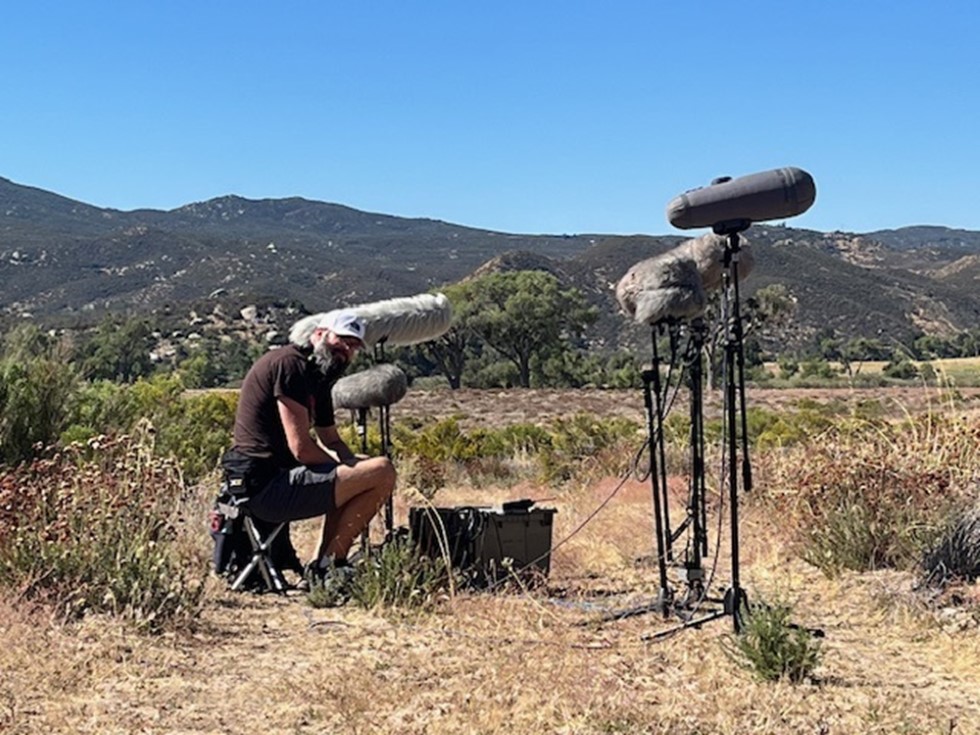
The first goal of course was to capture super high-quality assets, but the second goal was team building, to share this experience and create a really strong and cohesive audio team.
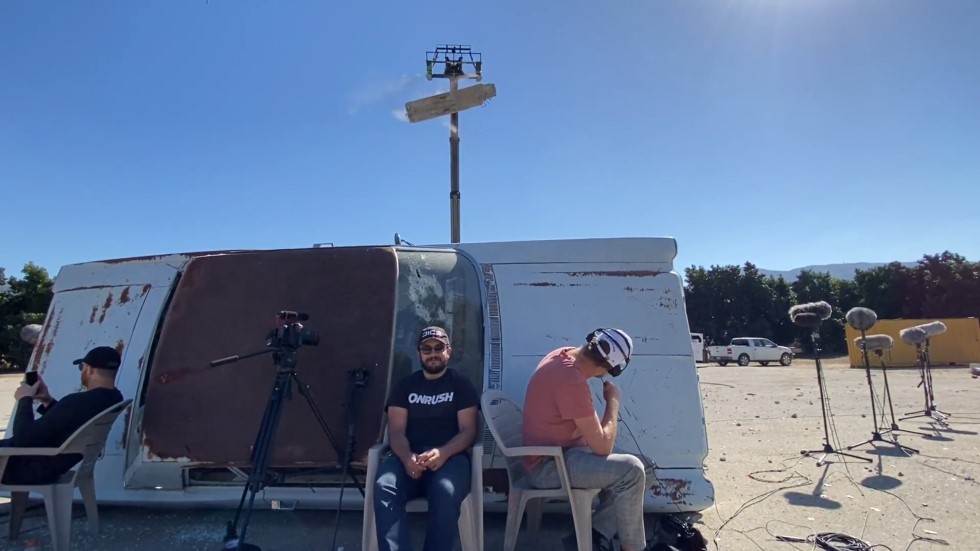
For this sound effects shoot, we visited four locations, recording firearms in roughly 9 different environment types, recording weapon actions, and doing a destruction session with many different material types. We’re always looking to differentiate ourselves by recording our own content.
How does the sound of enemy weaponry differ from ‘friendlies’?
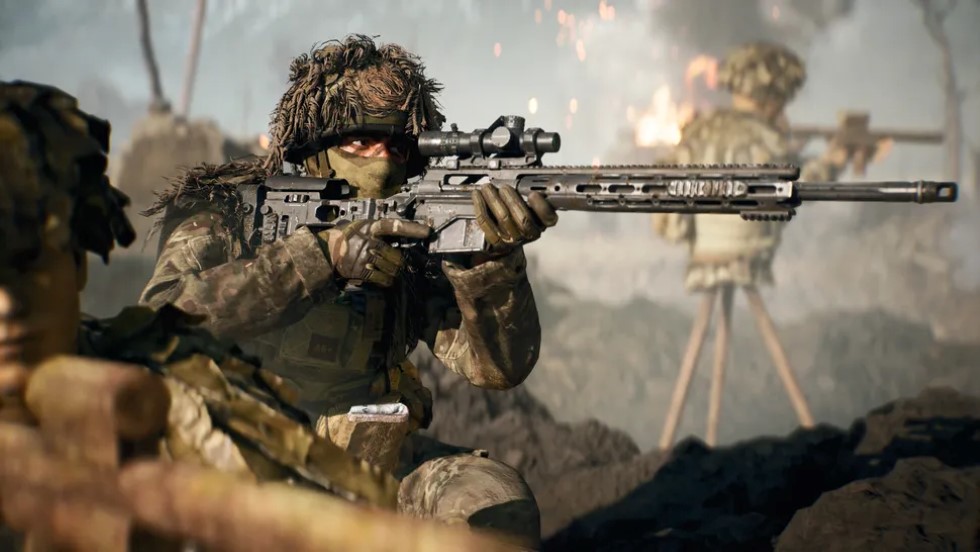
DJ: While not part of the firing and technically a separate sound, the bullet cracks and whizzbys of bullets actually only trigger on enemy weapons. Additionally, an enemy weapon that is calculated to be pointed at you in a cone that adjusts with distance to the enemy gets special mix treatment. It is louder in HDR loudness, less attenuated over distance and plays through a new “threat-bus” which we added to this project that allows us to directionally sidechain-duck other sounds that we consider less threat-relevant.
Can you talk about the sound in the cinematics/cutscenes? What was your approach to creating smooth sonic transitions in and out of them?
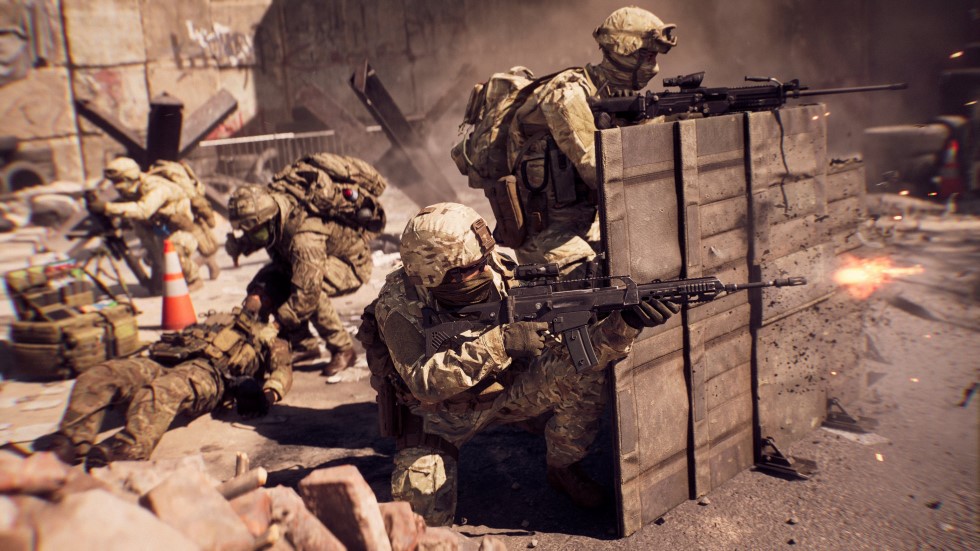
TH: Immersion was the top goal, which meant juggling the game sound for in-game cinematics with full dramatic treatments for the fuller cinematic sequences, and everything in between. We were just as concerned with maintaining consistent tone across everything, since many of the videos came to us extremely hot. It wasn’t always easy to have the larger picture for every cinematic. Fortunately, everyone working on the audio for cinematics, with our partners helping out, were quick to understand what they were about. Aside from the common mix moves of lowering/raising various elements into/out of cinematics, musical overlays often served to transition us out of the larger cinematic scenes.
Olivier Paschal (OP): One of our main challenges was maintaining as much audio continuity as possible across the wide variety of cinematic transitions the player experiences. In Battlefield 6, a single narrative sequence can move from an IGC (In‑Game Cutscene using gameplay tech), to an FMV (a pre-rendered video with baked‑in audio), then through a level unload/load, and finally back into full gameplay.
Those unload/load steps are particularly tricky, because the engine must completely purge anything currently playing, which can easily result in abrupt cuts or unintended silences
Those unload/load steps are particularly tricky, because the engine must completely purge anything currently playing, which can easily result in abrupt cuts or unintended silences. That ran counter to the seamless “always alive” audio experience we wanted.
Here is a meaty example: to create a sense of glue between these transitions, we developed a technique built around what we call a “sweller” reverb. It’s a very long, quadraphonic reverb. We shaped it with softened high frequencies to keep it lush and cinematic without introducing harshness.
The crucial part is that Frostbite allows us to host this sweller reverb on a safe, persistent audio thread that remains active even when the rest of the audio scene must be torn down. Knowing when transitions are about to occur — especially at the end of missions — we can feed the sweller with carefully chosen elements: a transition sweetener, a fragment of the existing ambiance, or even a musical stem. This generates a long, smooth tail that carries through the unloading/loading gap and into whatever comes next.
The result is a more fluid sonic flow, where the player perceives continuity even across aggressive engine state changes.
We plan to keep evolving such considerations with the franchise, because pushing the quality of transitions is fundamental to delivering the immersive experience we’re aiming for.
Can you talk about creating sound for the BGs/ambience? How did you balance having the sounds of battle all around to create a tense atmosphere with keeping the player focused on the battle they’re about to enter or are engaged in?
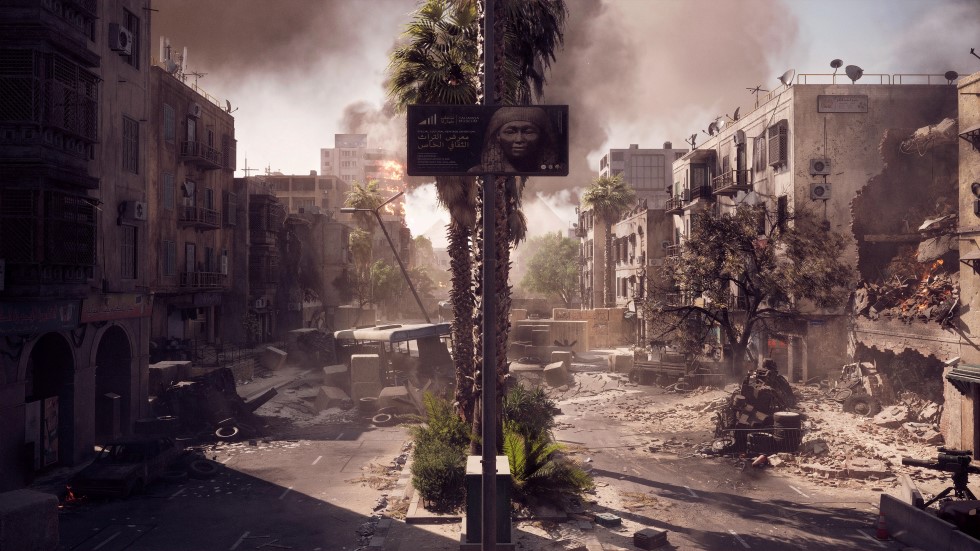
MSM: The ambience sounds in Battlefield are an important part of our soundscape overall. There is always a challenge when designing these since they need to work around all the sounds of weapons, vehicles, footsteps, and explosions. We have guidelines on how much low end and mid frequency they are allowed. This is balanced with them being lush and filled with life and story. They are carefully crafted and should always bring emotion and variety to our levels.
The sound designers researched our in-game biomes to find accurate bird and animal life, as well as insects, temperatures and windspeeds, depth and distances, and reflections
The sound designers researched our in-game biomes to find accurate bird and animal life, as well as insects, temperatures and windspeeds, depth and distances, and reflections. They looked for references in how cities like Cairo or Gibraltar sound. For example, when the art team went to Gibraltar on their scanning trip, we sent a little recorder with them and asked them to capture sounds for us for reference.
The world audio team also works closely with the VFX, environment art and lighting team, so they can craft the best background soundscapes for the game.
DJ: We did want a rich ambience in this game, one that can get out of the way when the action starts. We do have a lot of ambient war that plays in the far distance even without any players on the map, but we also try to put a lot of sense of air and space, detail and life into the ambiences, in contrast to the grit of war.
TH: Single-player mostly kept to the overall game targets for tone and levels, but we did have quite a few instances where we wanted to play up the ambience a bit more. For instance, some of the missions start without any ambient warfare, and are more about presenting an establishing shot before the action begins. In those, we bumped up ambient sounds just a bit, and lowered it slowly over time to settle back into overall game mix levels, or explicitly bumped it back down when about to make an encounter.
For what we’d call “ambient breadcrumbing” (i.e., a subtle point-sourced sound intended to direct the player toward their next target area), an example would be some gunplay that you would encounter in the next area. This could be heard if they stopped everything and listened for it in the ambient mix.
What went into the sounds for environmental destruction? Did you do any ‘destruction’ recording sessions? Any helpful indie sound libraries for destruction?

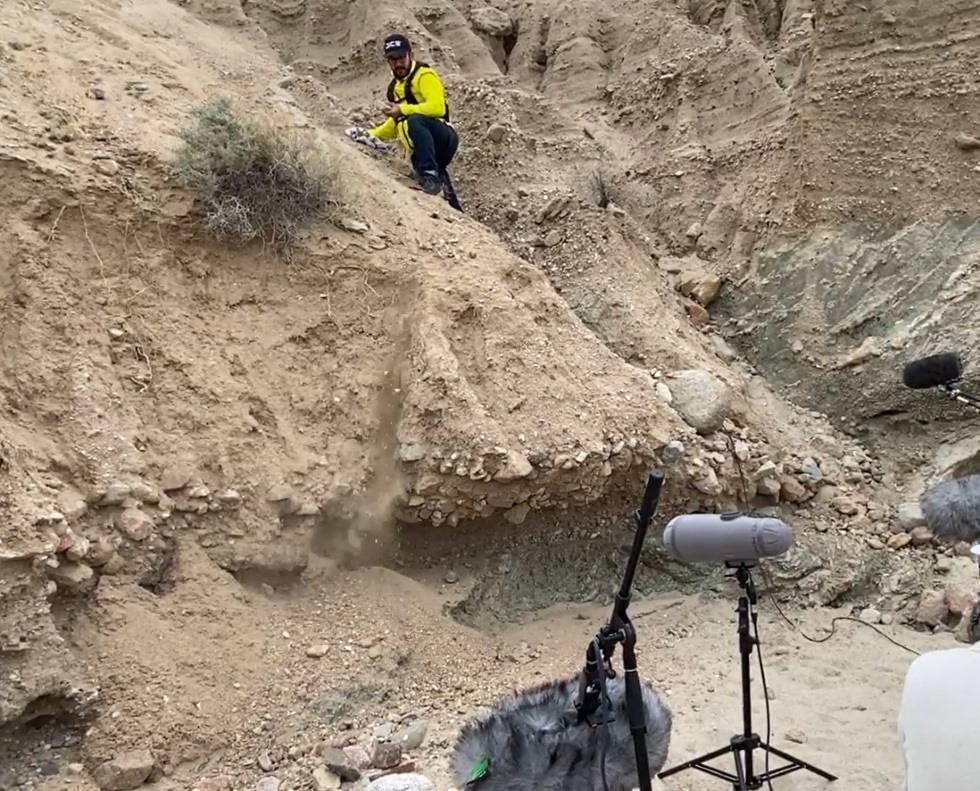
Mikael Mansson Grolander (MMG): Since BF6 and Battlefield games in general have a big emphasis on destruction, we try to find recording opportunities where we can. For this project, we doubled down on recording destruction sounds. We recorded both in the US and in Sweden and dropped all kinds of materials from height: piles of wood, concrete barriers, shipping containers, and metal debris to get large and small sounds. We also worked together with our vendors and constructed brick walls that we destroyed and then dropped on one another for our brick destruction content.
In California, the team recorded sand and small rock debris that could be used to give nice little details to our destruction sounds and we also got an opportunity to record tree destruction. We got nice content and references for the future.
With the understanding of how all these destruction sounds behave in reality, we can get a better understanding of the physical and emotional impact they can have on us as humans. With this in our mind, we then try to replicate this experience within the sound engine so that we land as close to reality as possible.
TH: We dropped piles of debris from 70 feet in the air. We dropped cars. We dropped K-rails. We dropped shipping containers. We dropped cars on shipping containers. We dropped K-rails on shipping containers. We almost dropped shipping containers on mics but only knocked one over. We also had more delicate recording sessions for debris, and we used library sounds, but there was no mandated preference on them.
Can you talk about the game’s foley, and your foley system? Any differences in how foley is handled or mixed in single-player vs. multiplayer modes?
DJ: The general baseline foley for a soldier and hardware interactions is shared in all experiences.
Single-player obviously has bespoke scripted sequences that then have bespoke foley sounds for those.
Additionally, there are a few mix considerations in the core systems for single-player. For example, for extra stealthy gameplay sequences, foley is lowered more than in multiplayer modes where it needs to be more consistent.
A cinematic mix is more important in the single-player context than in multiplayer, where gameplay and competitive readability are more pushed
Also, in general, the behavior we have in multiplayer — enemy movement getting mix exaggerations like playing 350% louder than friendly foley, and having the ability to mix down other parts of the game — is not present in single-player. For single-player, that becomes far too much with all the groups of AI you fight frequently. A cinematic mix is more important in the single-player context than in multiplayer, where gameplay and competitive readability are more pushed.
TH: Aside from the considerations that David mentioned, there wasn’t much else different in single-player gameplay-wise. We had initially thought there would be all sorts of different character and civilian sets we would need, but really, the only change we needed to make was on a couple of civilians that run past you in-game that you hear for a few seconds. We ended up removing the gear sounds from them, but keeping the feet, which we filtered in-engine. It’s not ideal, but it was adequate for balancing the tiny use-case in the remaining time we had available. Cinematics were mostly baked, except in some cases when the characters were doing systemic animations.
What went into the sounds for the different vehicles (tanks, helicopters, jets, etc.)? What was your approach to making them react to player input (acceleration/deceleration)?
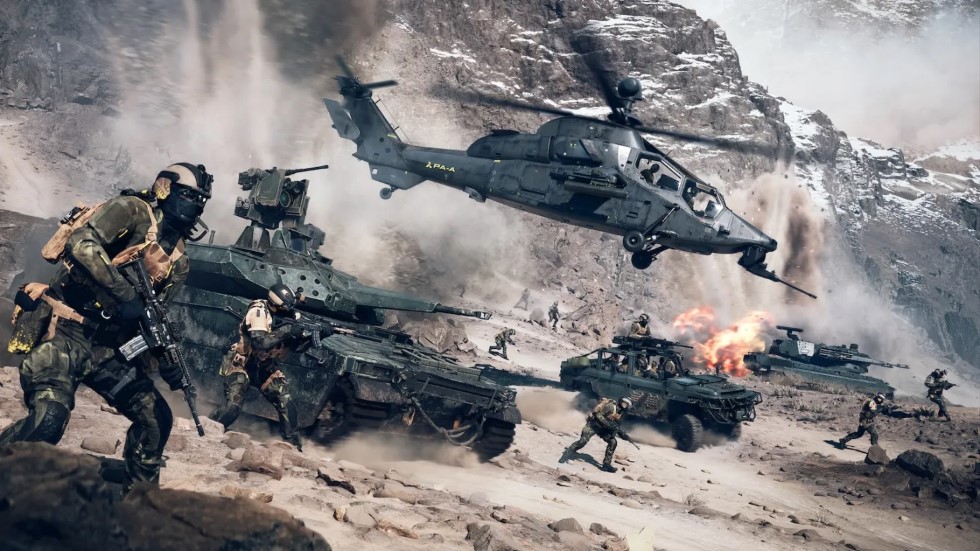
DJ: With this game, in some regards, we went back to the roots with vehicles technologically compared to more recent versions. We found that the end results of some of our older implementations that mainly relied on natural-sounding recordings were better overall in the soundscape than more complex systems, where we would, for instance, splice up content into grains that we could playback to perfectly match RPM.
Some issues we found with the more technologically impressive approach were that it tends to introduce unnatural artifacts, and even if we tried to create a perfect representation of an engine, it would still not play back naturally because the game is not a simulation and does not behave as such. If a vehicle can shift through 5 gears in 2 seconds and then stays at a static RPM forever because the user is just pressing the forward button, and the sound reacts perfectly to that, it would not sound like a real vehicle.
the more technologically impressive approach […] tends to introduce unnatural artifacts, and even if we tried to create a perfect representation of an engine
We want to strike a balance between the interactive component feeling satisfying where it matters, but not at the cost of the overall experience feeling natural. So we rely a lot on smoke and mirrors approaches and working as much as possible with content that inherently sounds natural and real, because it is.
Similarly, jets are much slower in-game, compared to real life, for obvious gameplay reasons, but we still want them to sound just as fast and impressive. We want you to be able to record the game, and what you get out of it should sound like it could be a real recording, even if what the vehicles are actually doing is technically different than their real-life counterparts.
MSM: The team takes all recording opportunities it can, so when the Swedish Military had an airshow in Uppsala, we attended and captured some really nice jet passbys standing far away from crowds on country roads.
TH: Oh, and we drove and recorded some tanks.
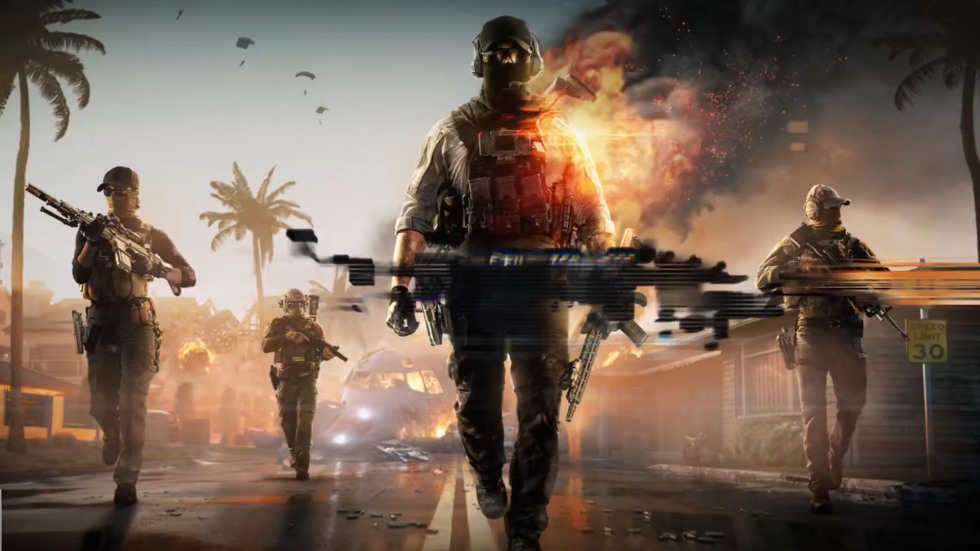
Battlefield 6 was created using EA’s Frostbite engine. What were some key benefits of Frostbite’s audio engine for Battlefield 6?
GT: We have a very tight collaboration with the Frostbite team, which allows us to push for features we really wanted to have in Battlefield, like our improved support for all spatial audio formats. In addition, Frostbite is a very open-ended engine; it gives us limitless possibilities for new features and new mistakes, and we’ve done plenty of both!
DJ: The engine was originally developed for Battlefield, making it a good match by default when it comes to the bespoke needs of the style of game. Also, with so much legacy of Battlefield in Frostbite, there are many lessons and discoveries from past titles to draw on as we look ahead. Fundamentally, the tools offer significant flexibility and extensibility, and if one manages to integrate it all, it’s possible to create very deep, dynamic, interactive systems that shape the soundscape in the organic, believable way we aim for.
Gaetan Lourmiere (GL): One of Frostbite’s strengths is also that it is a “one stop shop” when it comes to audio, whereas a lot of other projects are using middleware. This gives designers significant power to pass parameters from one corner of our game to another, all within the box, as you would with a modular synthesizer. It does require sound designers to be technically minded to unleash the engine’s full potential, but it also makes prototyping new ideas a lot of fun.
Having an engine that is shared across projects at EA also means we can knock on the door of other audio folks in the company to learn from them, how they have solved particular challenges, or the great tools they have been working on.
What were some of your mix challenges for Battlefield 6?
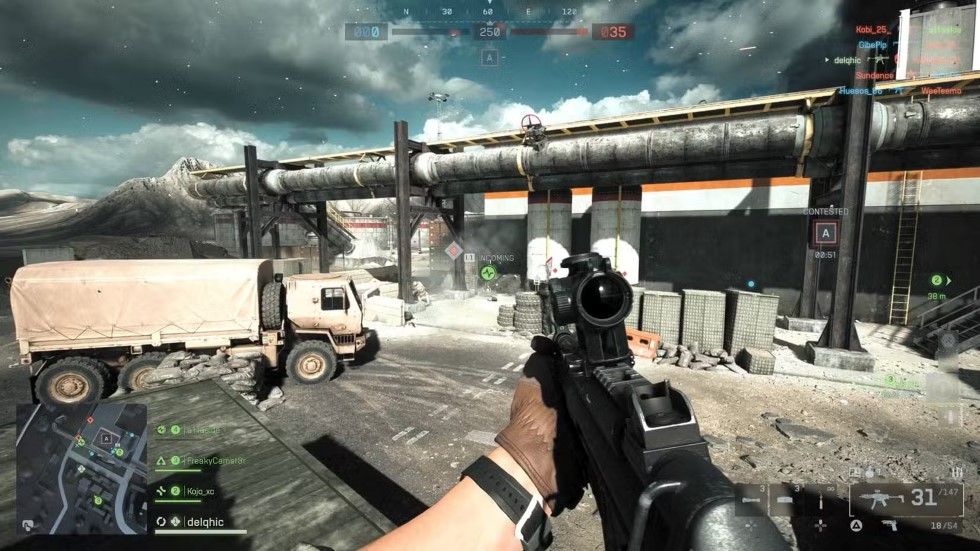
DJ: Balancing readability with situational impact and the expected chaos of war. As audio people, we often want a clear, dynamic, and detailed mix. Our style and tone, however, aim for a sense of “real” recorded war, which does not typically respect these well-intentioned professional sensibilities. We know players appreciate a game that feels loud, with battles that are dense and chaotic. At the same time, players appreciate being able to understand what is going on.
If everything is loud than nothing is, and the whole mix becomes very flat
The mix is designed to make the game feel loud, dense, and chaotic, while creating situational pockets of focus for when we want to highlight something for gameplay relevance or aesthetic impact. If everything is loud than nothing is, and the whole mix becomes very flat. It’s important to look for ways to create more sequential stories of multiple sounds rather than overlayering too many sounds at once. If all that goes well, then you jump from one intense and memorable moment to the next rather than a consistent wall of noise.
We use the HDR system, first introduced by Frostbite for previous Battlefield releases, conditional culling of sounds (which is both a blessing yet a often curse), state mixing, such as for low health states, concussion, or urgency music, the aforementioned threat bus mixing, targeted sidechain compression for things like hit indicators interacting with weapons fire or commander radio voice interacting with the general game mix, and a constantly maintained foundation of how loud the low, mid, and high sounds should be in perceived loudness against each other.
At the same time, we offer selectable game mixes, such as High Dynamic Range or the often discussed wartapes, so users have some choice regarding the overall aesthetic. The differences between these can be massive.
Overall, there are still many ways to improve and refine the mix. There are lessons from past games that went into BF6, and likewise, lessons from BF6 will carry forward.
MSM: One of our challenges is to guide the player to “What the most dangerous thing is at this very moment.” As David said, you need to identify situational pockets of focus to provide breathing room in a chaotic, complex soundscape. A situation, such as when you are at critical health, taking heavy fire, or when you revive someone/someone revives you, should bring focus to take cover and regain health, as well as add emotion that adds immersion.
TH: The single-player mix relied on our core audio standards, including following our best-practices guidelines for amplitude, filtering, general authoring standards, and using HDR. But at times, we had to use explicit mix controls. There were a few classic situations where important dialogue, music, and sound effects were triggered independently in-game rather than as a baked track, so we’d have finer control over the mix moves.
The common creative challenges were similar for any narrative game or show, balancing music/sound effects/VO, but fortunately, we have these controls in-engine over a timeline as well, and can make very precise mix moves. The challenge specific to Battlefield is when and how much to stray from the set product style and tone to meet dramatic expectations. Mitigating something like explosions and dialogue clashes would go through the checklist. Do we have to have them simultaneously? Ok then, can we at least stagger them to some extent? Ok, then, we’re going to have to mix down something.
What were your biggest creative challenges on Battlefield 6?
DJ: A big challenge with this game, more so than previous ones, is consistency. More people, in more studios, across more time zones have been working on it during different stages of the project. The audio leadership at the time the project started set the style and tone we were aiming for, and we were all happy and confident in that.
While much of the industry has moved more towards clean and polished sound design, we lean more into dirty, clipped, organic, messy, and unprocessed sound
During the project, the teams grew a lot. You had all these diverse talents coming in. Now, suddenly, we have to not only understand the vision and direction but execute that as best as possible. What makes this even more difficult is that the vision is somewhat unusual in the AAA game space. While much of the industry has moved more towards clean and polished sound design, we lean more into dirty, clipped, organic, messy, and unprocessed sound. Essentially, we see the artifacts often observed in amateur recordings not as issues but as tools to support a style intended to convey believability. In some ways, it is like we are going more for the found-footage approach versus the Hollywood approach. It was important that we maintained that thought process throughout the production to avoid clashing styles.
MSM: Crafting and maintaining a coherent audio direction across all teams, studios, and time zones was a huge challenge. The raw, gritty, and authentic-sounding style that we’ve refined for Battlefield 6 is challenging, and it is important for our team members and partners to understand what we are trying to accomplish with this style and tone and why. This requires extensive mentoring and onboarding of new team members by our long-term senior team members.
For example, for recording voices for multiplayer, we went back to Battlefield 3 and 4 and analyzed how we produced the voices back then. What was good and why? If we were to do it today, how would we do it?
Ensemble recordings are something we knew we wanted to do since it adds to the actors’ performances, brings a group mechanic, and adds physicality to get that “in the moment” delivery of soldier lines so you can get something really interesting. If there is grit or breath in the recordings, or if the voice is slightly off-axis, that’s okay. It makes it sound more believable and glues other sounds together in our soundscape.
If there is grit or breath in the recordings, or if the voice is slightly off-axis, that’s okay. It makes it sound more believable
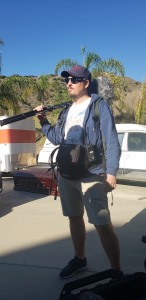
When recording voices for multiplayer, we experimented with microphone techniques and built custom harnesses for the actors to wear to capture a believable first-person perspective of the soldier’s voice compared to third-person. Team members also experimented and did tech tests to find the right “sound” and performance for our game-mode radio voices.
When it comes to editing and mixing our voices, there was a lot of iteration. It’s important that all voices sound natural and unprocessed. Too compressed or recorded too close can break immersion, or it’s hard to blend those recordings with the soundscape. It’s a delicate balance.
JW: One of the biggest challenges was crafting an overarching audio direction for the franchise that could then work for three very different experiences. As Mari and David mentioned, we did a lot of work very early to align on the audio ‘core’ of Battlefield 6. That was deciding how weapons, explosions, voice, etc., would sit in the mix. We knew that would be our baseline for all experiences – multiplayer, campaign, and REDSEC.
But then our audio direction had to go a level deeper. That mix baseline would exist for campaign, but we would then push that experience to be more cinematic overall. This could mean adding sweetener sound effects and slightly tweaking the ‘core’ mix for a high-energy/action-oriented IGC, or doing a big event-driven mix change to reinforce the emotional drama of a scene.
Then, for REDSEC, the mix has to cater to our competitive player base. Here, it’s a much larger play space, and in limited-life modes, the player’s sonic understanding of the environment can make all the difference — that can mean hearing a distant enemy vehicle coming your way, or hearing an enemy soldier opening a loot chest in an adjacent room. For competitive gameplay, it’s about reducing the number of sound emitters in the world, adopting a less-is-more approach, and creating the cleanest mix possible. This is one of the hardest things to achieve, and we’re excited to keep improving it throughout Live Service (e.g., seasonal content updates and battle passes).
What were your biggest technical challenges? And how did you handle them?
DJ: I would say for the core game, the biggest issue that has plagued us throughout production — and still now with new cases in the live game — are certain sounds sometimes not playing. There are hundreds of sounds trying to play all the time, and there is constant sorting going on in the mix: what assets are allowed in memory and what logic is allowed to run. In all that complexity, most things work most of the time, but it just takes one obvious sound to go missing and the whole experience feels broken.
These are the types of issues we can’t reproduce with the debugging tools we have, and only happen under very specific conditions that are difficult to nail down
These are the types of issues we can’t reproduce with the debugging tools we have, and only happen under very specific conditions that are difficult to nail down, considering how open-ended and varied the game can be in terms of features interacting with each other.
TH: I think the biggest technical challenges for single-player were due to the timeframe we had to complete the cinematics. We initially set out to categorize the types of cinematics we would have and standardize workflows for them, but many of them came in very hot, and we couldn’t work on them until they materialized. Some required additional solutions beyond what we had imagined.
We ended up with three major categories: FMVs (pre-rendered videos) with baked audio, IGCs (in-game cinematics) with baked audio, and “standard” IGCs that had multiple assets that were generally not baked.
FMVs were the most straightforward with baked surround mixes. IGCs with baked audio went through a different pipeline but functioned the same way. “Standard” IGCs were more complicated; they could be a combination of in-game ambience (mixed as needed, usually down or muted). VO, sound effects, and music. Audio could be triggered off a simple timeline, individual events, or a combination, and played as baked or point-sourced sounds. VO was usually emitted from characters.
Some standard IGCs became extensive enough to warrant a fully-baked treatment, and others got combined together and turned into an FMV
As development progressed, cinematics were shuffled and intermingled while we were working on them. Some standard IGCs became extensive enough to warrant a fully-baked treatment, and others got combined together and turned into an FMV, whereas others ended up as a mix of integration types.
GL: From a single-player perspective, while a lot of audio systems like vehicles and weapons are shared between multiplayer and single-player, we also have systems that are quite unique to our campaign. Battlefield 2042 did not release with a single-player campaign, and the engine had changed a lot since Battlefield V, so we had to rebuild and refresh a lot of the core systems that are at the heart of a narrative experience (such as cinematics and music, for example).
One of EA’s strengths is the openness of its audio community across all projects, and we have access to studios that have long specialized in narrative games. So, we had great projects to get inspired by, just a Slack message away.
There were also challenges in having audio systems (such as our HDR mixing system) that need to sound great in both multiplayer and single-player situations, despite these experiences having very different audio focuses. This meant we had to build much of our shared system with these challenges in mind, adding branching logic and behaviors based on the experience you are playing.
We always have new ideas for what we want to do and improve, and we have solid foundations to build on.
What have you learned while working on the sound of Battlefield 6? How did this game help you to improve your craft?
MSM: To me, the biggest challenge has been to build a strong team that can work well together, support one another, and have fun together, all whilst delivering the vision we set out to achieve. All team members bring something to the team, to the game, and to our players.
Both the team and I have learned a lot from one another during this project, everything from how we collaborate, communicate, our creativity, and our strengths and weaknesses. I think once you’ve shipped a game together as a team, the team grows closer. During BF6,it was about coming together as ONE team within a healthy and fun team culture. We are always looking to improve and polish our vision and direction. And this comes from the team. If we do this, then I believe we can build a great team together and with that we improve audio as a craft too.
JW: I totally agree with Mari’s comments here. Building a high-performing team spread across four EA Studios in multiple time zones was one of our biggest challenges. Keeping information and communication flowing across the audio team and reinforcing the audio direction were very difficult. But we saw that coming very early on, so we prepared our process/pipelines accordingly. This meant we had to become very good at communicating during very brief windows of time, and we had to be diligent about summarizing meetings and avoid overcommunicating in Slack and email. When everyone is in a studio together, it’s very easy to build familiarity and trust. But when you’re on opposite sides of the world, it’s much trickier.
However, we also had a significant advantage. We have an amazing group of people within Battlefield audio. Although it was challenging, we saw significant collaboration and partnership among all team members. Our team embraced a ‘one team’ ethos from the beginning, and we avoided working in ‘silos’ or having competition between teams. Our audio team knew that we were all in this together, and we are definitely much stronger because of that mindset.
A big thanks to Mari Saastamoinen Minto, David Jegutidse, Gonçalo Tavares, Mikael Mansson Grolander, Jeff Wilson, Tom Hite, Gaetan Lourmiere, and Olivier Paschal for giving us a behind-the-scenes look at the sound of Battlefield 6 and to Jennifer Walden for the interview!