






Survios’s action-horror VR game Alien: Rogue Incursion — now available on PlayStation VR2, Meta Quest 3 and Steam VR — immerses the player in the Alien universe. Taking on the role of former Marine Zula Hendricks, the player gets to explore a research laboratory on an uncharted planet, fight facehuggers and Xenomorphs, and try to prevent an extinction-level catastrophe. Here, Survios’s Head of Audio Department Chris Dang and Senior Technical Sound Designer Tim Schumann discuss their approach to creating sounds that fit the Alien films’ aesthetic yet work for a VR game, mixing for action and exploration, designing immersive environments, using spatial audio to alert players to threats, and much more!
Alien: Rogue Incursion | Launch Trailer
Alien: Rogue Incursion is set between the films Alien and Aliens. Can you talk about capturing the films’ tone in terms of tech sounds, weapons, doors, alarms, etc.? What were some references or guidelines for setting the tone of this game through sound?
Chris Dang (CD): As most know, the aesthetic of the Alien universe is very well laid out by all the projects that have preceded Alien: Rogue Incursion. Reading through documents about the making of Aliens (1986), James Cameron made it clear to his recordists/designers that there needed to be an organic approach to the audio, making the world instantly relatable to the audience. Being that Alien: Rogue Incursion leans heavily towards the 1986 film, we continued that same approach.
With the Aliens ambient and mechanical audio very much rooted in real-world sound from the last quarter of the 20th century, we stayed away from heavily designed assets and instead leaned on chunky recordings of old technology (relays, printers, computers, etc.) to set the stage. We were also very respectful of the signature sound of the Pulse Rifle, augmenting the original sound to punch it up for a modern audience while maintaining the tonal characteristics from the 1986 film.
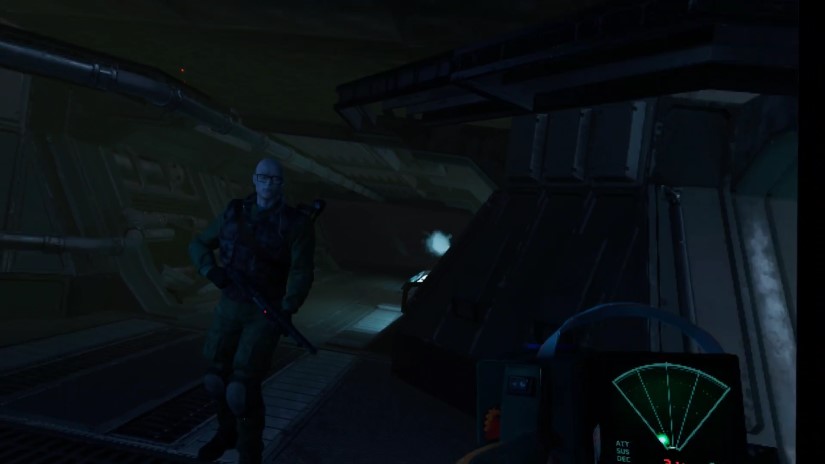
Can you dive into the specifics of how you created the tech sounds (from physical gadgets to interface beeps) for the game?
CD: The team leaned heavily on various libraries to create the final audio found in Alien: Rogue Incursion. A lot of layering and mixing of vintage tech gear was used to create the assets, oftentimes edited down to very granular assets as VR interaction is much more detailed than PC/Console game titles.
Most of the alarms, UI, and interface tech sounds were designed internally from scratch with a VSTi [Visual Studio Technology Instrument]. We would then worldize the soft synths to process the assets for a more “in-world” sound. This really helped to blend the synthetic with the organic, resulting in a unified mix in-game.
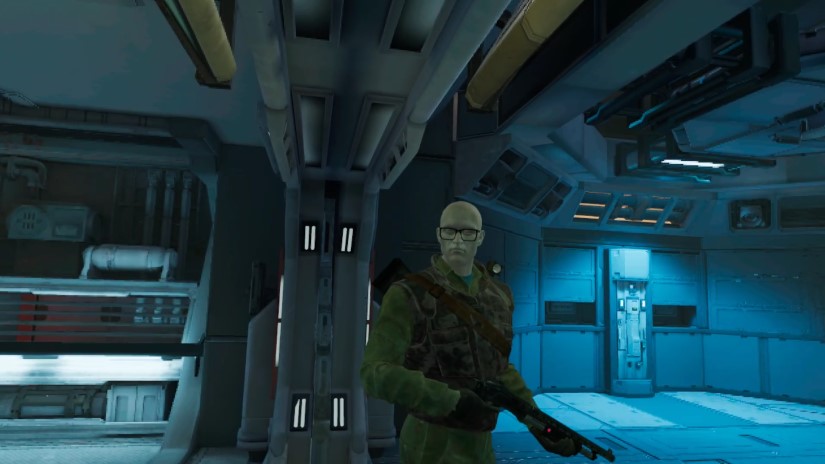
Alien: Rogue Incursion is a VR game. What were some considerations in creating and implementing sound for VR as opposed to a traditional console/PC game?
CD: For me, this one big difference stands out….
Coming from PC/console titles, I am used to a lot of animation tagging for player interactions. For example, when a player wants to reload their shotgun, they will simply hit a button on their controller/keyboard and the reload will take place via a single animation tagged with audio to follow the visual cues.
In VR, the player has complete control over interactable objects. Using the shotgun reload example, in VR the player grabs the forend to cycle it from the front of the barrel to the receiver, and the shell ejects. They pull a shell from the ammo pocket, manually load it in the magazine, and finally grab the forend to cycle from the receiver back to the front to complete the reload.
Each step requires a single audio asset that has no dependency on timing with any other asset (e.g., cycling the shotgun from front to back requires two distinct one-shot assets), as the player can stop the action midway through the reload process (e.g., cycling the shotgun from front to back, the player has the option to stop midway before the forend reaches the receiver and opens the bolt).
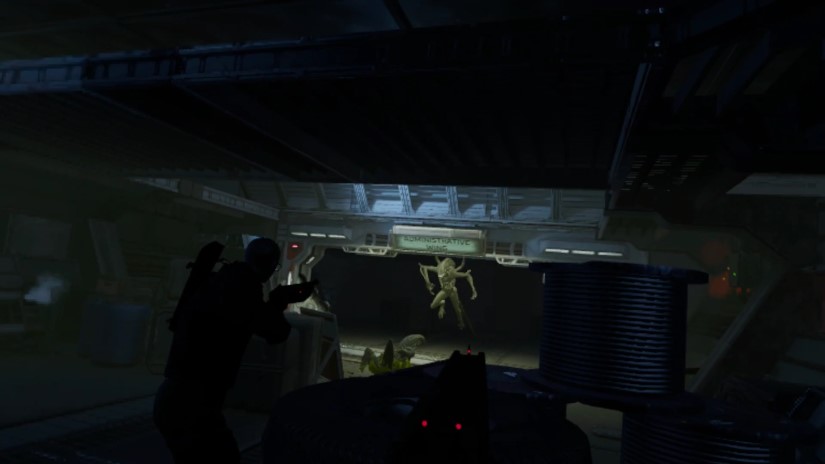
Can you talk about creating the sound of the environment inside the Gemini Exoplanet Solutions (GES) facility? Can you talk about creating a feeling of depth in the environment? Did you do any custom recordings for environmental sounds? Any helpful indie libraries?
CD: We looked for the most efficient methods to nail the eerie mausoleum sound of the 1986 movie. We started with a mishmash of general non-descript room tone recordings to create the base palette of rooms and hallway sizes that populate the facility.
On top of that, the team did a phenomenal job of setting the tone of the facility, adding what we called “Textures” or “Flavour” loops which were unique base sounds for the rooms themselves (e.g., distant relays for the offices, smeared beep boops for medical, metal groans for the deep core nest, etc.). We were mindful throughout the implementation process of this audio to not have too many assets playing at once clouding the ambience and losing those quiet moments of exploration and tension before the inevitable combat.
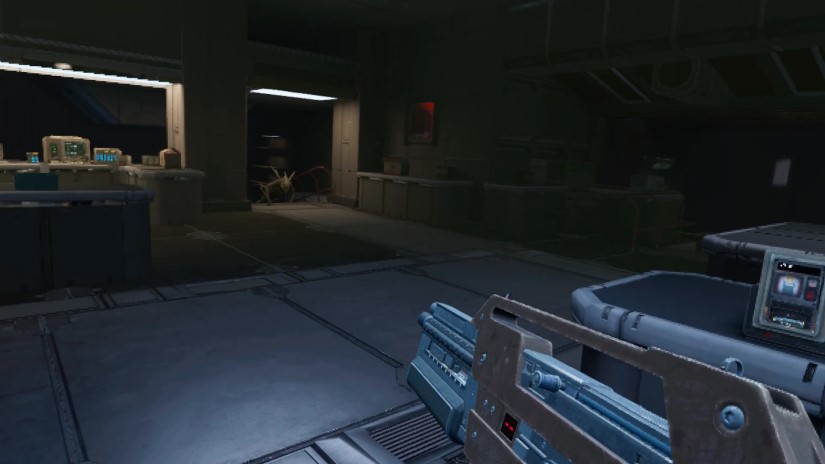
Did you use binaural recording for the foley sounds for Zula Hendricks – to make it realistically feel like you are this character? Or, what was your approach to the foley? How did you make the experience feel so believable?
CD: Personally, I feel this came down to getting the right people for the job. Foley is something near and dear to me, as I feel that badly performed or recorded foley can absolutely destroy immersion in games, especially in VR.
To make this happen, we collaborated with the talented Big Foot Studios in Vancouver Canada. I knew Shane Rees (President) from back at my time in Vancouver Film School, and his team’s deep knowledge of performing and recording film foley was exactly the aesthetic I was after. Since we hear and interact with foley so much in the game, Javier Perez (foley performer) and Tim McCann‘s (foley performer) performances for Zula focused on natural movement without too much embellishment. Danny Eberhardt‘s (recordist) recording was just old school single mic technique, and Vaughn Wagner‘s (editor/designer) edits followed a contemporary mix and master leaving room for any dynamic processing to be done real-time in Wwise.
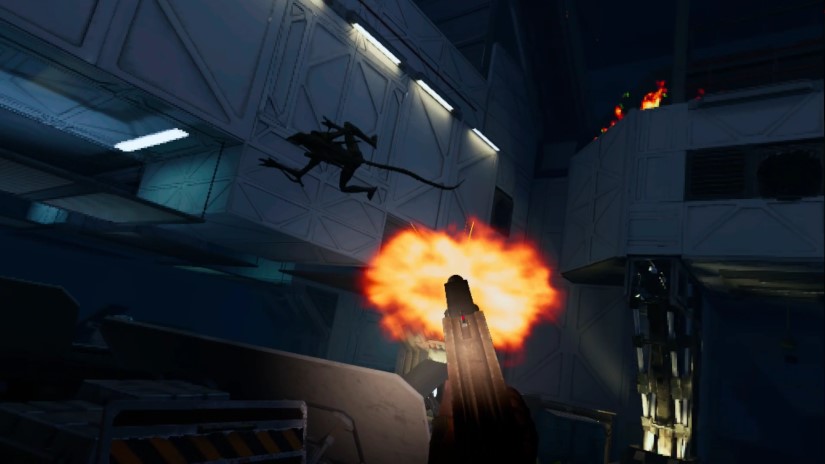
How did you handle processing to put sounds in the environment? For instance, loud sounds cause the metallic environment of the facility to resonate, Xenomorph screams at a distance echo through longer spaces, Zula’s voice has a touch of reverb on it a times…
Tim Schumann (TS): The heavy lifting for all the in-world sound processing comes from the Wwise Spatial system. The win here really comes from how well the system can sell the space you are in. We shipped the game with nine reverb presets, but for the vast majority of the experience, we relied only on five of them.
Most sounds in the game are positional. But for ambience, we definitely added in some non-spatialized sounds with their own additional processing. One thing that I think worked particularly well was using Audio Objects processing for the enemy sounds. This combined with the spatial audio volumes and portals really helps to alert the player to where the enemies may be coming from. It did add a bit of work to the project though, as every vent in the wall or ceiling that an enemy could travel through also needed its own spatial volumes created.
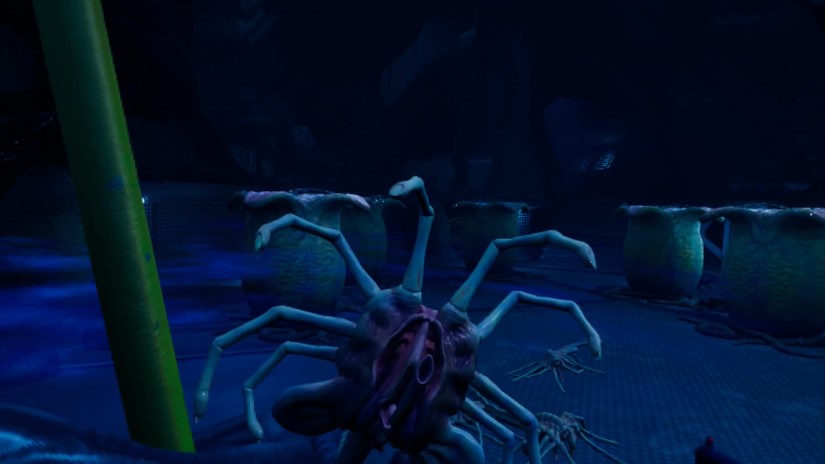
How did you create the sounds for the Xenomorphs and facehuggers?
CD: We had made the conscious decision early on that we were looking for vocalizations reminiscent of the 1986 movie, while updating them with intensity for a modern mix.
We contracted the brilliant designers at Side Montreal who worked with us over multiple iterations to realize the animal/monster hybrid sounds. We iterated closely with Side on having the blend come out just right so that no one particular animal was easily distinguishable, and the final assets were not overtly dragon/monster-ish.
How did you use sound to help guide players through specific areas, achieve set objectives, and keep them moving in a direction that furthers the storyline?
TS: Our team’s talent and commitment to immersive audio and 3D spatialization definitely paid off and helped to keep players aware of their surroundings. While we retain the use of UI sounds, I am happy with how finishing a terminal unlock or a powerbox puzzle will usually result in a sound in the world that a player can identify and move toward.
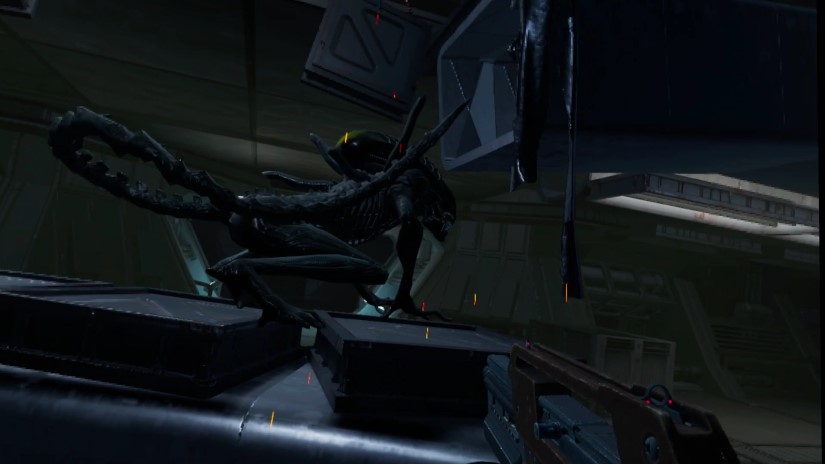
How did you use sound to scare players? This is an action-horror game, after all. What was the most effective way of using sound to elevate heart rates?
CD: I feel that this comes down to audio supporting the level design and gameplay loop. Making sure that our ambience and composer Sara Barone‘s score were as sparse as possible during moments of exploration helps with juxtaposing the motion tracker starting to ping movement, and the sound of the enemies banging around in the vents looking for the player.
This transition from quiet to the inevitable combat sets the mood and the heart rate upwards, knowing that you can be attacked by an enemy using every surface and vent above, beside, or below you. Consciously crafting a mix that respects the need for these peaks and valleys is critical for the player to catch their breath, continue to press forward, and then be on the offensive/defensive throughout the game.
What were your biggest challenges creatively for the sound of the game?
CD: The great thing is that sonically we didn’t face many challenges. We knew what the Alien franchise sounded like and what our aesthetic baseline was.
However, like many studios at the forefront of this emerging technology of VR, our team needed to ensure that what we were creating would enhance the players’ experience. At Survios, we are fortunate to have a newly formed audio team of dedicated devs who care about the audio quality of our games.
Can you talk about your implementation process? What were some of the biggest challenges, or what caused the most need for sound design revisions as the sounds were put together in the game?
TS: Challenges are to be expected with any project and I am proud of the work that our team was able to produce when up against them. Their dedication to this project and its final result really speaks to how well the team understood the source material and how to recreate it for our project.
We did our best to standardize audio actors, components, scripting standards, etc., but never fully solved the pre-existing problems. This project was a reminder of the importance of careful planning and systems testing during pre-production.
Can you talk about mixing Alien: Rogue Incursion? What were some of the biggest challenges in mixing the game?
TS: I wouldn’t call it a challenge per se but the most interesting aspect of the mix for me was a focus on headphones/Quest 3 native speakers. Coming from a AAA background, I’m used to mixing for weeks at a time in studio environments. For this project, Chris and I sat in a converted conference room with pretty poor acoustics. Chris was playing the game using one pair of headphones, while I ran the Wwise session on another pair of headphones from a stream of Chris’s gameplay.
Some other challenges we ran into really just came down to how much we had to focus on fixing up level and actor scripts during the mix. I think in an ideal world 99% of the work during a mix is done adjusting settings in Wwise and maybe remastering a couple of assets. In reality, I think we spent about 40% of our time debugging and re-scripting how and when sounds play. This all gets into the points above about the short development timeline and the mad dash to the finish, but getting to the final day of the mix was exhilarating.
What was your approach to mixing high-tension/combat moments?
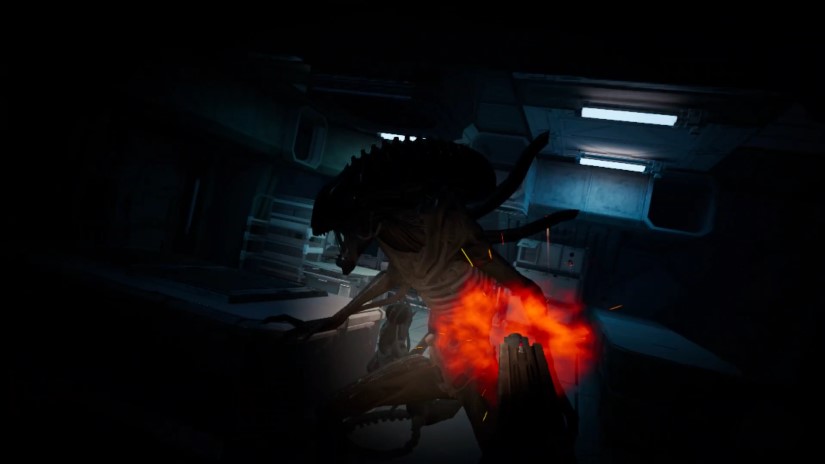
TS: For combat, we really focused on three things: weapons for player sensation, enemy VO for player feedback, and music for emotional impact.
Fortunately, we did not have to do much specifically for combat. We have global volume and frequency-based sidechains that are always interacting with each other, so by the time we got into combat most of our global settings just worked. This is something that we focused on from well before the mix and it did pay off for us. Even though we didn’t have an audio state set up for things like combat and exploration, our team was still able to have this work effectively.
What about quiet, exploration-focused moments, or moments that are more focused on task accomplishment – what was your biggest priority for the mix here?
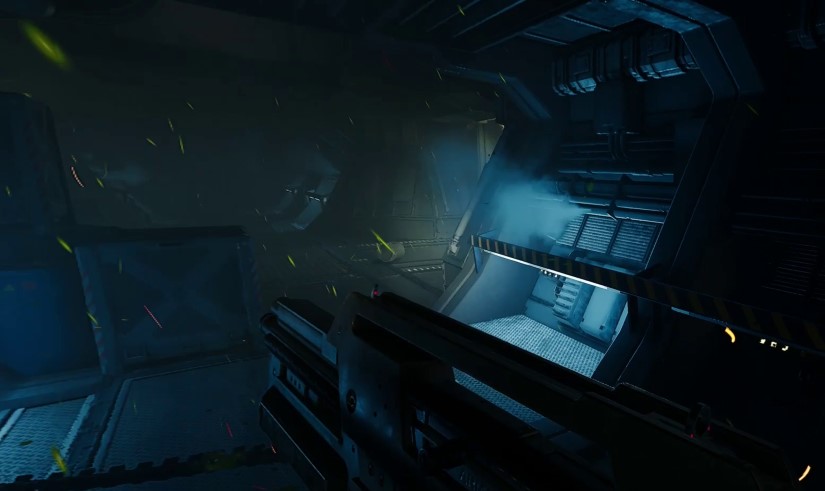
TS: One of the things I really wanted to focus on in exploration moments was having the ambience quiet enough that when players interact with something, the loudness of that action might freak them out a little. An example of this would be using the welding torch, or hearing a short alarm when putting your keycard in a door you don’t have access to.
By keeping the environment sparse, it allows these louder sounds to really impact the player. It also allows for important sounds like the motion tracker or the enemies to really pop out and be identifiable. The main mantra here was really to do more with less and we actually spent a considerable amount of time removing ambience during our mix to achieve this.
What did you learn from your experience of crafting the sound on Alien: Rogue Incursion? What will you carry forward in your work on the next game?
CD: VR is really in its infancy. Coming from a background in PC/console and AAA game studios, I had concepts of how game audio should be designed and executed. Diving headfirst into the deep end with Alien: Rogue Incursion really expanded my knowledge of all the little gotchas in VR, especially the extremely granular approach to asset interaction and designing sounds that support the experience. It’s a very exciting time for audio in VR. It reminds me of the golden years of console dev when there was so much excitement and enthusiasm for what was next on the horizon!
A big thanks to Chris Dang and Tim Schumann for giving us a behind-the-scenes look at the sound of Alien: Rogue Incursion and to Jennifer Walden for the interview!