






John Dunn is a Supervising Sound Editor who has worked on shows such as Raiders of the Lost Ark, Star Trek V, Lethal Weapon 4, and Escape From LA. More recently he has worked on 21 and 22 Jump Street, Cloudy With Meatballs 1 and 2, and Hotel Transylvania 1 and 2. Some of his international credits include Pavilion of Women, Fly Me to Venus, Bittersweet, and The Lady and the Tiger.
 New ReleaseNOVA by Mattia CellottoWATCH VIDEO →
DS: Hi John and thanks for joining us. Today I want to talk about the international film industry. Before we get to that, can you tell me how you got your start in the film industry and how you worked your way up to being a sound supervisor for shows such as Best of the Best 2 and 3 and Escape From LA?
JD: My family immigrated here from Taiwan in 1967, when I was 9 years old. I grew up in San Francisco and came to Los Angeles by myself in 1975. I was 17 years old at the time. I supported myself by working various odd jobs such as parking cars, I worked in a restaurant, I worked as a salesman; you know, whatever it took. Then I dropped out of high school. By chance I got a job in the mail room at Paramount Studios the following year, in 1976. Folks used to tell me how lucky I was. I had no idea of the significance. Keep in mind, most people working in the film business at that time got in through nepotism, from knowing someone, or were very gifted. There were virtually no minorities. I also had no clue I was being hired on because of affirmative action policies. I was told later that I replaced a kid who got angry and was fired for splashing coffee on the secretary. I don’t know how true that is.
I was in the mail room for 6 months. My Chinese DNA wanted to be an accountant, so I got a position in post production finance, where we did auditing of vendor invoices of TV shows. Paramount had all the great TV shows at the time, Happy Days, Laverne and Shirley, Mork and Mindy, everything. I quickly realized that it wasn’t for me and I decided that I wanted to make movies.
A mentor at the studio explained to me that the craft of film editing was crucial to understanding film making and that’s where I needed to go. So I finagled my way into a job in film shipping, where a pool of us physically transported film reels from place to place. Whether it was from cutting room to projection room, or to wherever they wanted it, we were delivering it. Those things were pretty heavy because it was all on film reels. That was way before the invention of the thumb drive. This department was also where they went when they needed editorial help on the show. That’s where they would go to get apprentices. We were sort of like apprentice editors in the film shipping department. That was, at the time, one of the only ways to land a permanent position on an editing crew. So that’s how I got into editing, from the mail room. I was very fortunate.
I got called on to help on Star Trek I and that’s where I met Steve Flick and Richard Anderson. I got the chance to help them build tracks for the mixing stage and it was really quite cool. And for me it was also a time where I did something wrong – I did this incorrect political snafu and I was fired by the VP of post production. I was unemployed and I had family obligations. I was relieved when Steve Flick asked me to be their assistant on their next film called Final Countdown. That was basically the very first team of – what did we call ourselves? Thunder Tracks and then Weddington Productions. Steve Flick, Richard Anderson, Mark Mangini and myself. And shortly after that Donald Flick, Steve’s brother joined us and we did a whole bunch of shows together after that.
In hindsight I should have stuck in accounting, because that’s where you really need to be if you want to produce movies. You want to understand money and have access to it. I was very young. I was naïve and I didn’t know anything about films.
On a side note, during that time at Paramount, my mother and my family moved down. She was a seamstress from China Town in San Francisco. She didn’t speak much English at all. And through my connection I got her a job in the wardrobe department. She worked there for awhile and then she went over to ABC and worked on All My Children, and she became a supervisor for that show for 30 years. That’s where she retired. It’s actually quite a story because she was this Chinese woman that didn’t speak much English, she didn’t know how to drive. It didn’t happen for her until she was in her 40’s.
DS: I understand that you worked on some Chinese films. How did you become involved with Chinese films?
JD: At the time, in the 80’s there wasn’t very much of a Chinese film market, it was basically Hong Kong films or Taiwan, European films, you know. I did work with Jackie Chan in 1979. He made his first film here in the States, produced by Golden Harvest and directed by Robert Clouse, and also produced by Fred Weintraub. This was the Enter the Dragon, Bruce Lee team. That was my first experience performing fight grunts and efforts on an ADR stage. It was his first film here and that was my first time coming across a Chinese production so to speak. Then in 1992, I was the sound supervisor on Hard Target and that was directed by Jon Wu, who at the time had gotten a lot of accolades for his Hong Kong style action pictures. Everybody was into him. They didn’t shoot sync sound or anything. They added everything afterwards, because of all of the different dialects of the actors from different parts of Asia.
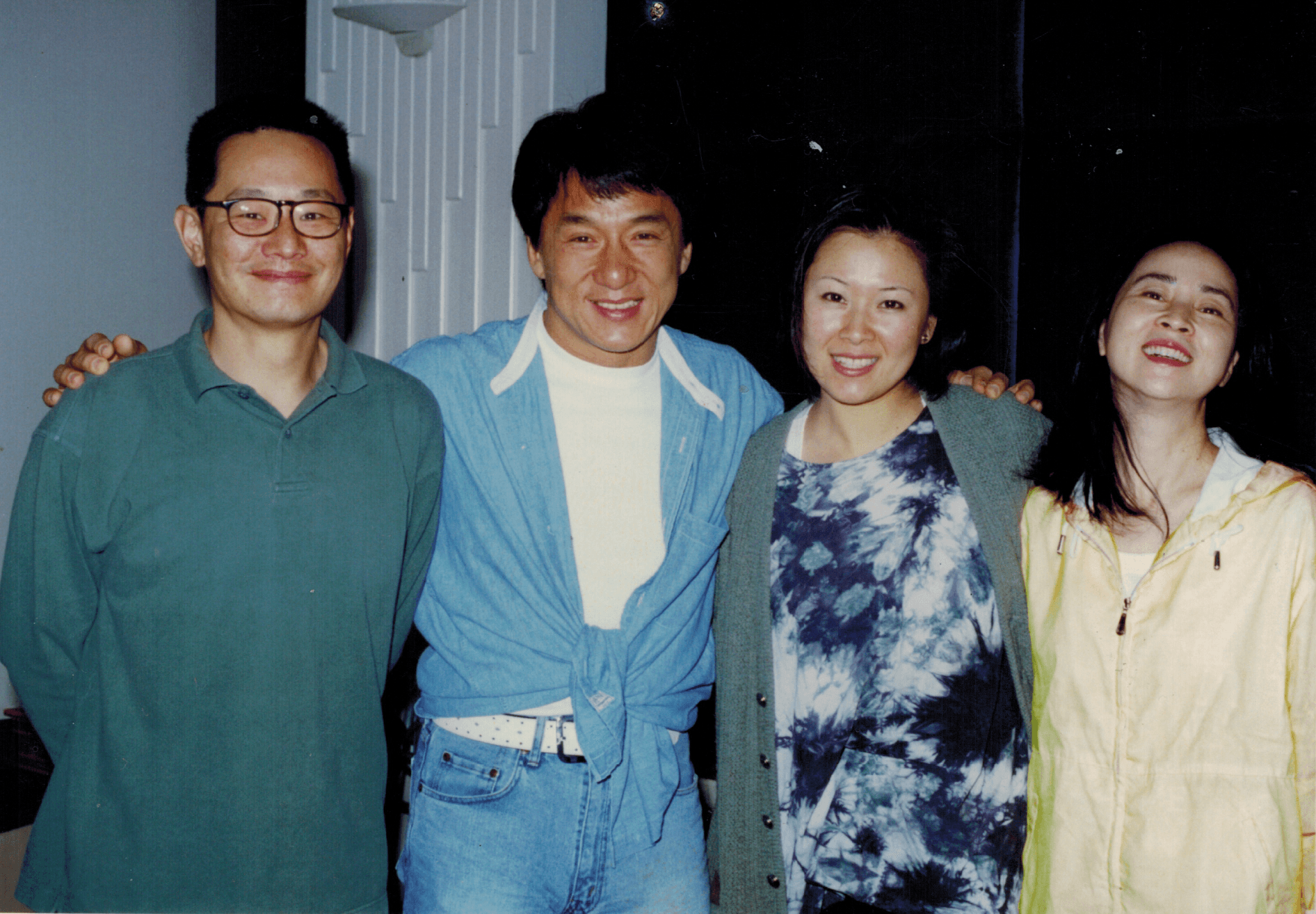
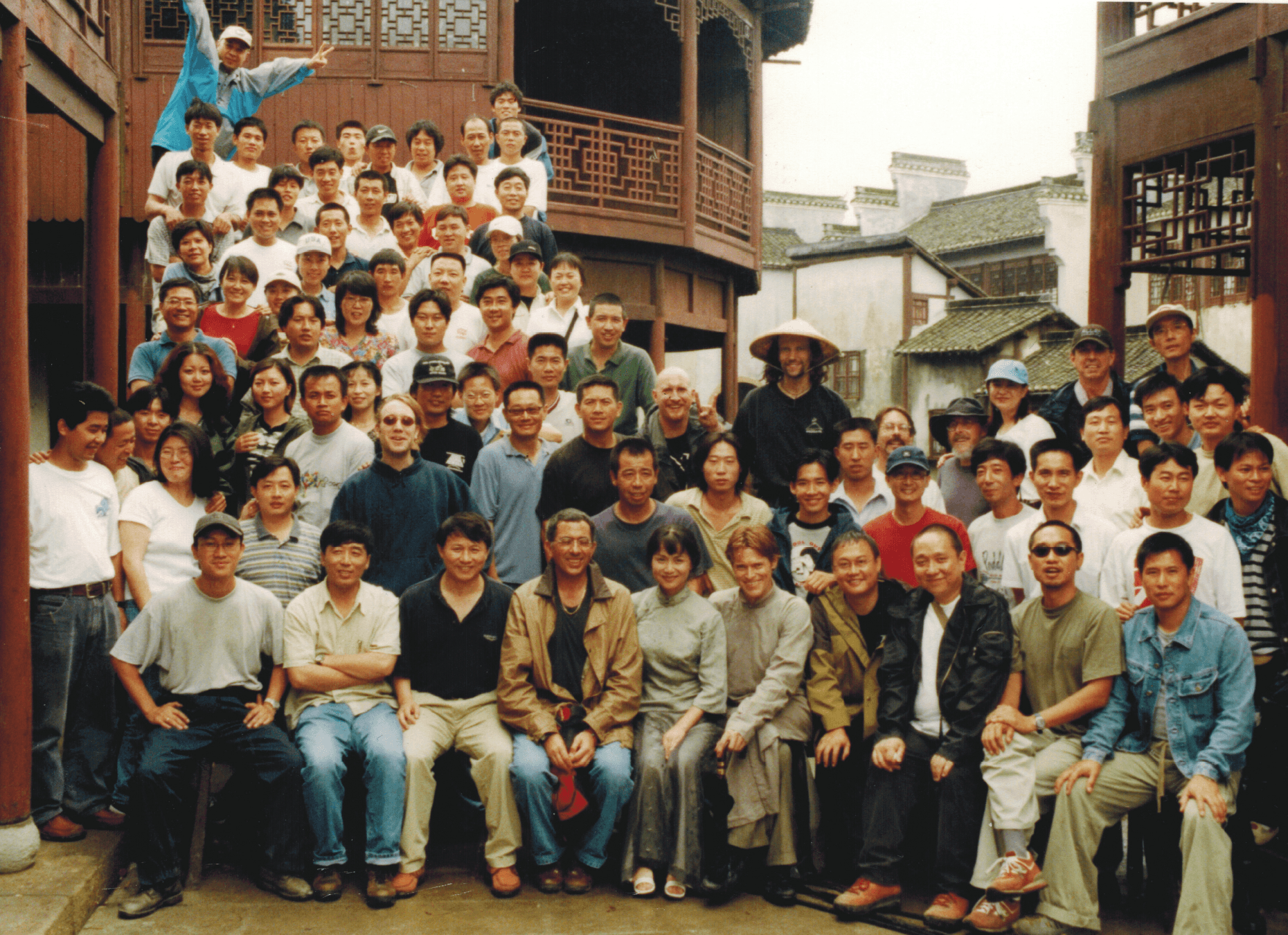
In 1998 I got to go to Hong Kong to record and direct the English versions of the Jackie Chan pictures that Miramax bought. There was like 3 or 4 of those, so we were over there for a month recording all of his translated dialogue, and that was pretty interesting. Then in 1999, I was the sound production recordist and the sound supervisor on Pavillion of Women. Willem Dafoe played the lead and we were in China for it. That was my first time in China and we were there for 2 or 3 months. That was quite an experience.
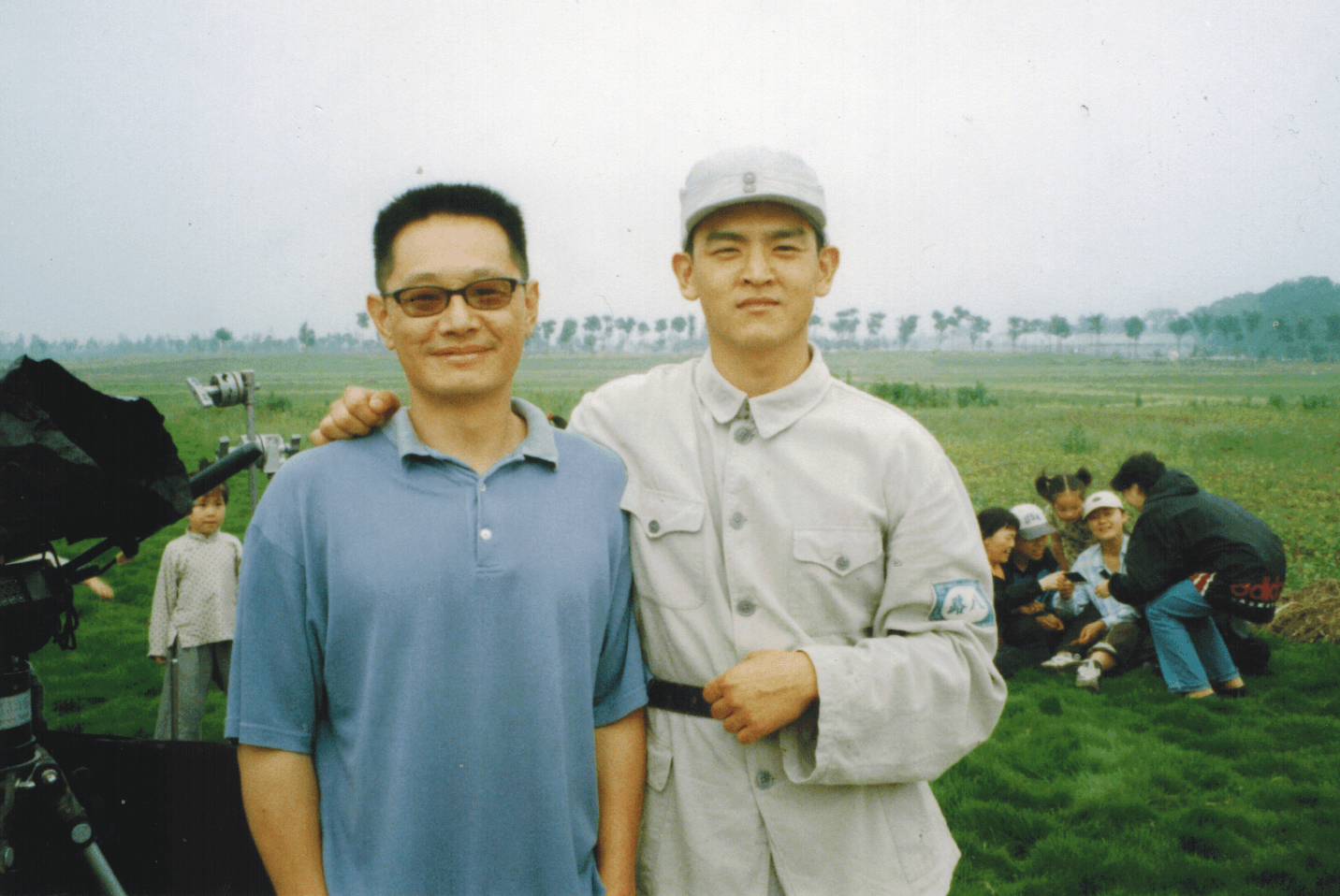
Then I didn’t really work on another Chinese film that was produced in China with Chinese dialogue, until 2013. That was because my Chinese friend went to school at the Berklee school of music in Boston. Afterwards, he went back to China and became a mixer, but he didn’t like the kind of tracks he was getting. So I told him “you know, you should let me cut your tracks for you”. So that’s what I did for about 4 or 5 films. He would send me the picture and I would cut all the sound. I didn’t have a crew or anything.
The first film I cut the Foley out of the library. I didn’t even go to a Foley stage. Then after that, I would pay for several days of foley stage where they would walk everything, because that was the most time consuming – cutting wild footsteps, right? So we did it with Foley and it made it a lot easier. It was basically a one man show. With Pro Tools you could do that very easily. In the old days of film, you couldn’t do a one man show like that. I require a minimum of 6 weeks to do everything. I didn’t do the dialogue, but I did all of the effects. For the most part, what I delivered was way over and above what they normally get in China, so I never heard any complaint about it. Also, the directors didn’t really care as much. A lot of those guys weren’t experienced enough and it was usually left to the producers, because they were there on the dubbing stage when they final mixed. So their whole post production sound was kind of minimal. They depended a lot on the music and stuff like that.
China is a tricky place, because aside from the early Chinese films made by Zhang Yimou and people like that, those were really good – you know, the Shanghai Triad, Red Sorghum, and all those kind of early films. It really gave you a glimpse of China and the culture. But later on, when China got rich, everybody was flush with money. Everybody thought that they could be a director and that’s what happened. Everyone was making films. But that was China and still is today up to a certain point. Up to a couple years ago. It really slowed down quite a bit because of the crack down. Also, their censorship was really hard to deal with. Everything had to go through the censor board. That makes it really tough.
DS: Do you speak Chinese?
JD: Yes I do, and that’s what gave me a leg up that allowed me to do these things. My father was very adamant about me learning Chinese, and reading, and writing. I grew up in San Francisco, which had a huge Chinese population, so it wasn’t that hard. If I lived in Kansas or something, that would have been very difficult. In San Francisco, everywhere around me Chinese was spoken. Though it wasn’t Mandarin. At the time it was Cantonese, because most of those folks were from Hong Kong. The Chinese culture was pretty solid over there. The thing about the Chinese immigrants is, and they don’t talk about this, but they are the rock of San Francisco. They gave San Francisco stability that no one else can, because they own properties – lots of properties, for generations, and they don’t move. They set their roots and that’s it. It’s pretty amazing.
DS: You already touched on this, but were the Chinese films that you worked on done locally in the US or did you have to go to China?
JD: Well, you know on the more recent films that were made in China, basically it was done through Dropbox. Send me the picture and I send you the tracks weeks later. The other films, they were mainly done here in the States, except for when I was the production recordist on Pavilion of Women, where I was actually on set. That was the whole purpose of that particular company that I had started. It was to be able to do sound from the beginning to the end in one location.
At that time, I included film editing and music editing, so that we didn’t have to go across town to talk to each other. I wanted to make it easy so that everything was right there. Then on the Jackie Chan, Miramax stuff, we recorded all of the ADR in Hong Kong. I brought a Pro Tools rig over with me, to do the actual recording. That’s about it, because the way they work and the way we work is quite different. It’s mainly about cost. Over here we have the protection of the union. Think of it this way, if we didn’t have unions and everyone was freelance and non union, the salaries would be way lower. Because we have unions, they set the rules for protocols and how long you can work and stuff like that. Over there, all bets are off. People work 8 days straight, 20 days straight, no overtime. So it was a very different way of working. It didn’t make sense for them to hire editors from the States to work on their big films per se. They just can’t afford it. They don’t want to spend the money.
The way they thought about investments was very different than over here. American films basically rule the world. We make a film here and we can sell it anywhere in the world if it’s half way decent. At least in the past, not today. Today it’s a whole different ball game. Chinese films were not like that. You make Chinese films and you could only show it in Chinese territories or Asian territories. They paid very little. So they had to keep their cost down. That’s why they didn’t even shoot production sound, because it was just an extra expense. It was much easier just to dub everything, so that’s why everything was out of sync in those old Chinese films. All the opticals or special effects weren’t very good. It wasn’t very slick. It was all very basic. Very low budget. A lot of it was just cost and time. The investor would put up the money today and they’d shoot it tomorrow. They’d basically want to have the film out in the theaters 2 weeks after it’s shot. In America, on Raiders of the Lost Ark, we were on post production for 16 months or something like that. Just a crazy schedule difference. Here you had a chance to hone the film. The director had time, he had it in his contract, X amount of time for editing, X amount of time for pre dubbing, sound editing, all that kind of stuff had a protocol. It was ample time for quality work.
Then digital technology came out. Now it’s different. In the beginning, if you had a film you had to go to Hollywood, because that’s where all the equipment was. You couldn’t go anywhere else to do the film. Because you have to have dummies, mixing studios, all those big machines, movieola’s, and all that stuff. It was all very bulky and very heavy. All the soundtracks for a film like Raiders of the Lost Ark would fill a room 20 ft by 20 ft. But now it’s on a hard drive, so you could imagine what it’s like. I was doing mixes in garages on a computer. Digital made a big difference in the quality of the sound. It just made it that much easier for them to do a good job with a lot less equipment. So now you can hear stuff that sounds pretty decent. But technically it’s still weak in a lot of areas. They just don’t have the experience.
On the Chinese films, it was just me, a one man show. It was a challenge, because I had worked on all these big American films and I wanted to work on something different, something Chinese. That was my way of testing my skill, because I’m a pretty fast editor. I can cut pretty quick. For me it was a game. My opportunity in post sound was the best thing in my life obviously. Also, I was really on a track to direct and produce. I actually produced a film.
DS: Did the workflow change working on a Chinese film? Since it was just you and Dropbox, you had to work faster right?
JD: No because what happens is, in America you get changes through the whole post sound editing period. Changes would come periodically, it could be weekly, it could be daily, it could be whatever. Because the picture was never locked. But with the Chinese films, they gave me stuff that was locked. The director’s not going back into it again. That made it easy for me, because I just cut it one time. Where as in America if I work on a big show, I have to cut it 15 times, depending on how many times they change it. They can move scene one to the back of the reel or juxtapose, they could do whatever they wanted. That was just a lot of work when you have 150 tracks or 200 tracks. It became a marathon that way. That was the fun part about cutting the Chinese films, you only cut it once and then you send it off and it’s done. So in that respect, it was kind of cool.
DS: Was there anything stylistically or artistically that you do different on Chinese films? Do they have their own aesthetic?
JD: No, because I would give them things that they never expected. If they have a slow motion or some kind of a pan or something. I used the same techniques that I used on Raiders of the Lost Ark, or any film here, to make it sound more interesting. It could be ethereal, or spooky, whatever the case may be. Because of the films that I worked on in the past, a lot of our effects were very musical. They had long tones. They were very tonal. We played things backwards and we did all kinds of craziness. I did the same thing. It wasn’t what the story dictated, it was what the picture dictated. It was what I saw. Because if they had a cool shot or something, there would be something cool in the sound to reflect it. So approach wise, it’s always the same. That’s what made my tracks sound better when I got to China, because no one else did it that way. You have to remember, I’m using my 35 years of experience to put into this film.
DS: What are some of the challenges that you encountered working on a Chinese film?
JD: No, there were no challenges. The thing is that they didn’t look at sound the way we look at sound here. Once they handed it to me, everyone was gone. The director’s doing something else, the producer’s doing something else, the mixer’s mixing some other film, and then there was this date that I had to meet where they receive everything. Then they start mixing.
DS: Have you worked on films from any other countries besides the US and China?
JD: I did, I worked on a film from Japan. It was called Rampo and it was released in Japan and was very popular. It was a hit. Then it got back to the States, and I got to do the sound on it. Ron Bartlett mixed it with me. He’s one of the top mixers in the business today. I can’t remember why they did that. We just added more stuff and then remixed it. I got a letter from them telling me how much they appreciated that. There was a Canadian director that made a movie that I worked on and a British distributor bought it. The thing about working on foreign films, it generally doesn’t happen unless the director specifies it.
DS: Do you have anything else that you would like to add?
JD: In Asia, you listen to Japanese soundtrack or Korean soundtrack and they’re really really good. In my mind they’re quite a bit better than the stuff coming out of China or Hong Kong. It’s because of digital technology. The big thing about technology is that back in the day, we spent a lot of time getting rid of noise. Think about 200 elements of noisy material. Whether it’s production dialogue or old sound effects or whatever, they were really noisy. So the mixer spent a lot of time cleaning those tracks up and trying to make it sound good. Now you don’t need to spend the same time doing that. Back in those days, analog was just noisy. You had to put it through Dolby SR. Now you just set up a software program and do some editing. Bam, your production dialogue sounds like it was shot on an ADR stage. And that makes mixing a lot easier, because you don’t have the build up of noise. That was one of the biggest battles that mixers had to go through every single show.
What made my career interesting was I came up when we went from old ugly noisy 50 year old sound effects, to newly recorded sound that was cleaner and more dynamic. So what I mean by that is when I started, we started a brand new library. We had freshly recorded everything, the gun shots, the cars. Every show we did, we would record everything. We didn’t go to Paramount library and use those effects that were recorded back in the 40’s. If you go listen to soundtracks that were produced even in the early 80’s, you could hear the difference between our sounds that we did versus the perennials that were there at the time. The old timers that depended on those sounds. You can hear the same gun shots over and over again. Especially if you listen to an older Western. You can hear the same soundtracks, same gunshots, same squeals, and all that. You don’t hear that today, but back then and through the 80’s, there was a big difference. That’s what made it special.
You can find John Dunn on IMDb here.
Thank you John Dunn for sharing some of your wisdom and experience with all of us.