






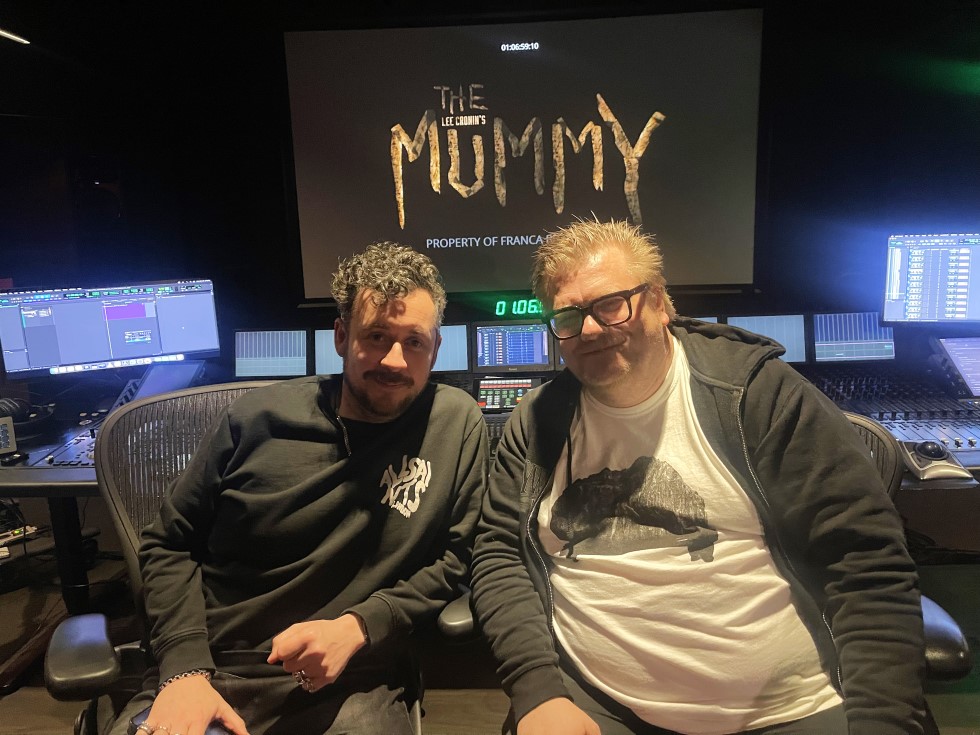
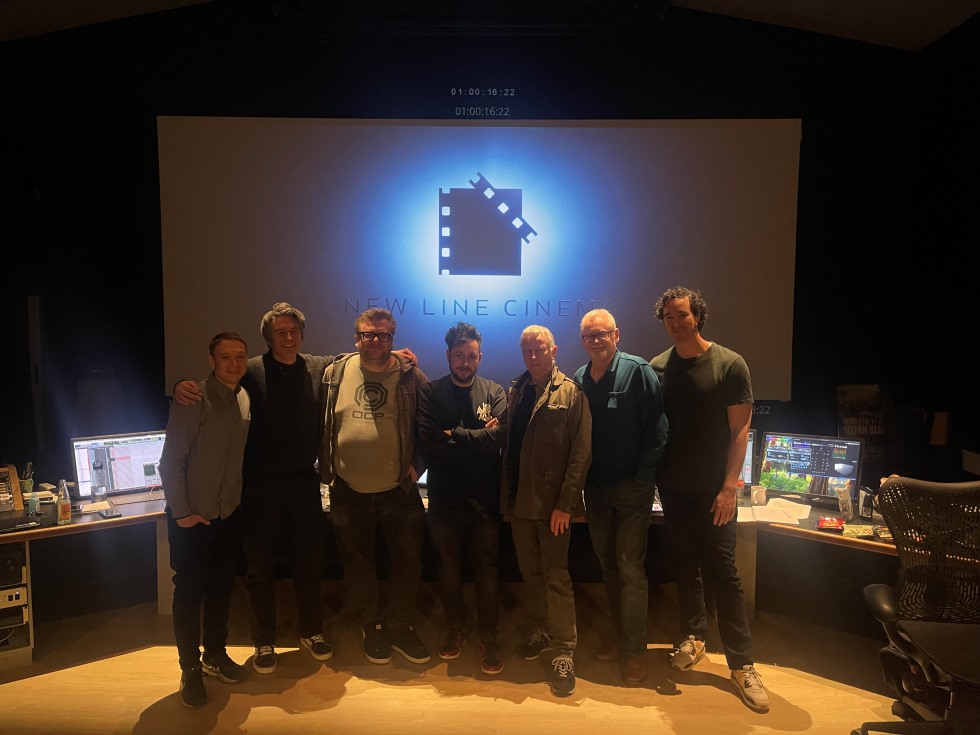
Fresh off their collaboration on Evil Dead Rise, sound designer/supervising sound editor Peter Albrechtsen, supervising dialogue editor/re-recording mixer Garret Farrell, and re-recording mixer Gabriel Gutiérrez certainly weren’t ‘cursing’ when they got the call to reunite for Lee Cronin’s The Mummy!
Find out what sound they used to keep emotion at the forefront of the sandstorm, what sounds (human and animal) they layered to create Katie’s demon voice, how wallpaper and whispering added texture to the skin peeling sounds, what strange and subjective death scene featured a warped version of The Weight song, why distortion was such an important aspect of the vocal processing, how musical artists like Autechre, Kevin Drumm, and even Portishead inspired the approach to sound on Katie’s VHS tape, and so much more!
 Early BirdNOVA by Mattia Cellotto is coming soon!Become an Early Bird and get 3 SFX libraries (worth $125 total!), FREE with your NOVA orderBECOME AN EARLY BIRD →
Lee Cronin’s The Mummy | Official Trailer
You’ve recently done Evil Dead Rise with Dir. Lee Cronin. I loved the sound on that! Since both are horror films, how did that experience compare to Lee Cronin’s The Mummy? What are some key differences in the approach to horror sounds?
Peter Albrechtsen (PA): Lee reached out to me very early about the project, just after the premiere of Evil Dead Rise in 2023, and way before he had even started writing the film — and I got the script more than a year before I actually started working on it. Something Lee said from the beginning was that this was a very different film from Evil Dead Rise; it is more ambitious and wider in scope. When I got the script, I could tell it had many signature elements that fit Lee Cronin’s storytelling, like the family drama at the center of the story. But at the same time, there were also lots of new things. There was this whole detective/police story, and whereas Evil Dead Rise took place in one location, this film spans several locations and many years. So it’s very different in that regard.
When we started, it was about trying to build a unique sonic world for all these different storylines and different environments.
The way that Lee writes his scripts, they’re so dependent on sound. There are so many scenes in this film in which the characters are listening to off-screen action or hearing things. There’s the Morse code aspect, the incantations, and all the many scenes based around sound, like when the characters react to weird noises they hear around them. All these things are very much based around sound.
I remember picture editor Bryan Shaw saying, “Peter, I can’t edit this film without you.” So from the very beginning, my assistant Mikkel Nielsen and I were doing a lot of sketches, and the work just kept developing from there.
Bryan [Shaw] is really good at integrating sound into his editing process. So he and Lee were using all these ideas we came up with in the sound. We really had a wonderful shorthand because we had done Evil Dead Rise together, so there was this feeling that, in a way, we already knew what we were aiming for, even though it was a different kind of film.
Then slowly, during the autumn, the team expanded. Garret came on in September, and we also started doing some previews in L.A. I got great help from some sound effects editors, and Garret, who was supervising the dialogue, had his hands full with all the ADR coming in. Everything just kept developing. Because we had already collaborated on the previous film, it felt like we started off in a place where our creative communication was already really great. Sometimes you don’t need to say much because you have this understanding, which is amazing.
Gabriel Gutiérrez (GG): Jumping from Evil Dead Rise to Lee Cronin’s The Mummy, in a way, was like picking it up from where we left it. But The Mummy is a completely different universe, and we couldn’t apply things from one to the other. Yet, when I joined the mix in January, one of the coolest things as a starting point was that we knew each other creatively and personally. We knew each other’s style. In the day, we figured out our way of working for Evil Dead Rise, and it was such an amazing experience, not only for sound editing, sound design, and mixing, but also as a way of joining creative forces and creating this really amazing communication. So by the time we got started on The Mummy, our progress was already huge because of what we had learned on Evil Dead Rise. As Peter says, some creative ideas come intuitively; sometimes we don’t even have to talk them through since we are all aiming for the same thing. That is really amazing. And also, with the director himself, each of us knew his approach and his style.
Of course, this is a different universe, so we had to discover the sound of this new realm that The Mummy brings in. We could start with some stylistic approaches we learned in Evil Dead Rise, but then we found that some of them wouldn’t apply to The Mummy. It’s a different story. It’s a different place. It’s a different creative direction for sound. We had to discover its sound language and keep working from there.
What I really like about working with Peter, Garret, and Lee is the exploration we do. There’s a lot of exploration, experimentation, and trial and error. We try something new, review it, and may make adjustments. We’ll learn from that experience.
Let’s talk about the sound of the whispers. Layla’s mom (The Magician) whispers her evil spell to Katie in the garden, causing bugs to crawl out of the nectarine and into Katie’s mouth. We then hear the whispers with varying intensity throughout the film. What went into the whisper sounds from a design standpoint?
PA: From very early on, we wanted to use the whispers as kind of echoes of the curse in a way, to create a feeling that there’s something around the Mummy that is beyond what you can see.
We played around with different whispers. In the beginning, I was just using my own voice and some different whispers that I had recorded. Then, as we developed things, it became much more like a signature, in-your-face whisper, and we recorded a lot of Arabic voice material.
The first really clear whisper is from The Magician in the garden. But, actually, before that, there are already whispers when we go into the room with the pyramid in the beginning, and when we see the sarcophagus with the Mummy. You hear these weird echoes of whispers, just very subtle, but they’re there. These whispers come back throughout the film, actually, until the very last scene.


The incantation The Magician is using in the scene with Katie in the garden was something that Garret can talk about, how he treated that, because it was a small whisper, but then the way he mixed it, it was totally enveloping. That became a signature throughout the film whenever this incantation came up. The smallest whisper became such a big thing.
That kind of created the dynamics of how we used whispers. For example, it was sometimes very abstract, as when Charlie is looking at the photos in the basement, or when they see Katie for the first time in the sarcophagus. There are these whispers all over the place.
But the in-your-face whispers for the incantation were really something special.
Garret Farrell (GF): That grew as an idea. The more we kept mixing the movie, the more opportunities we had to place these whispers elsewhere, threading them all the way through the narrative, which grew and grew.
Going back to The Magician’s incantation, we started off small. The way it was shot really lends itself to doing that. We have these amazing close-ups of her mouth when we cut in. So we were able to pull that whisper all the way out into the room and up into the height speakers, really making it sound huge before we bring it back down again to make room for sound effects, then bring it back up and make it loud, and back down again. It was really dynamic in how we used the voice, and we used a lot of crazy tools to make it happen. But it makes her voice all-consuming and all around her, so you can really feel Katie being taken over by that spell in that section.
And that’s something that threads back later, even at the very last scene when Detective Zaki is doing the incantation. Her voice grows really huge as well, with lots of delays and all kinds of processing to make it as big as possible in that scene.
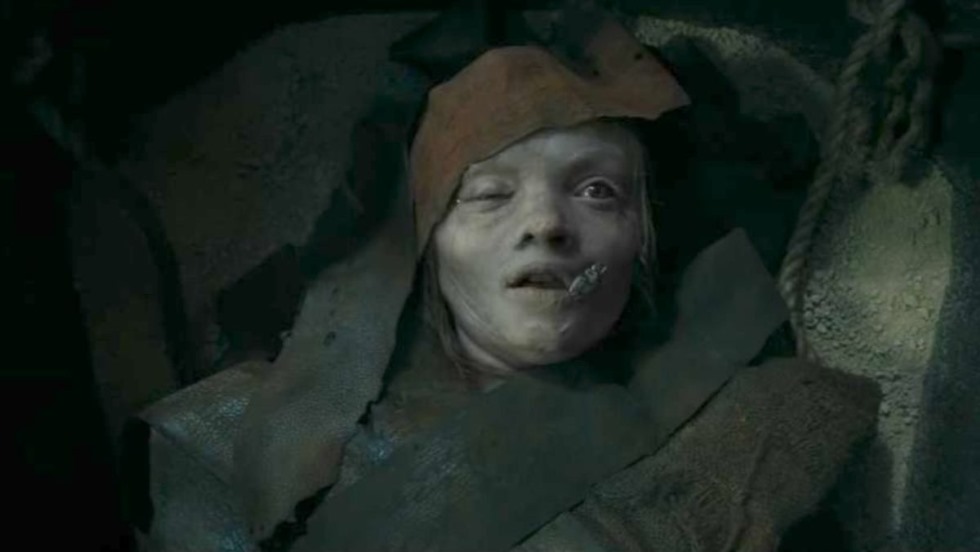
As you mentioned, the whisper sounds happen as they open the Mummy’s casket and unwrap the bindings, revealing Katie’s body. I loved the processing and panning on these. It was so enveloping and intense…
PA: For Lee, it was very important that it had an Arabic flavor and that it also had a male voice to it. So Lee wrote down different curses, and I had a really great sound effects editor named Rana Eid, from Beirut, Lebanon, who helped me get hold of a couple of Arabic voice actors and even recorded her composer friend, Nadim Mishlawi, who did some really cool growling vocals. They all recorded these Arabic versions of the curses that Lee had written down, and we used those whispers as elements that Gabriel could move all around the room in a lot of scenes.
GG: Yeah, it is definitely a signature approach throughout the film. It goes from off-screen whisperings to on-screen incantations from The Magician and Zaki at the end. There’s a story all throughout with the whispering concept. Sometimes it comes from a mouth, and it grows out of the picture to off-screen, and then sometimes there’s no mouth speaking it. It’s just a supernatural event that happens around this curse, around this Mummy concept.
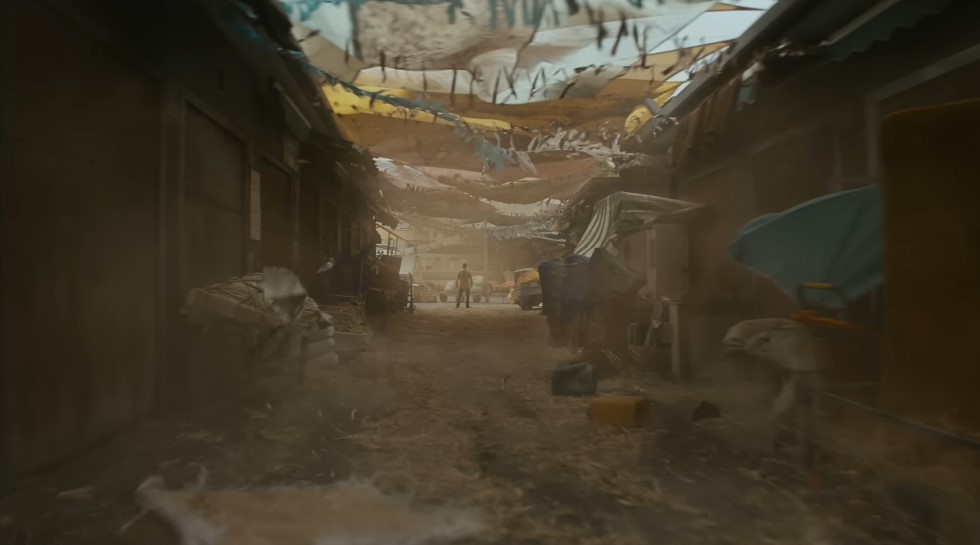
How did you use sound to intensify the terrifying chase through the street as Katie’s dad tries to find her? What were some challenges/opportunities in creating the sound of the huge sandstorm?
PA: That was also something I started on very early. One of the things I was trying to do with sound effects on this film was getting us all to jam around it. My idea for the crew — these two wonderful gentlemen and the rest of the team — is to inspire people to be really creative, bring all their creative juices to the film, and not worry about trying something crazy. I’d much rather do that than the opposite. Everyone on the brilliant sound effects team: Bob Kellough, Aza Hand, Rana Eid, and Kristoffer Salting has a musical background, and I think that’s very important. Lee really loves creative, unique sounds and wants every moment, every scene to have a special sonic character. And because we had a healthy schedule, there’s time to experiment a lot. A lot!
So with the sandstorm, I started out, and then my assistant Mikkel did a pass. We had done a lot of storm sequences for other films, and so we had a lot of material that we could immediately play around with. Then we recorded more things. Sound effects editor Bob Kellough got on the project, and he did a pass. Rana later did a pass. Everybody was bringing all these things to the table, and then I was making them come together. There were many layers, ideas, and textures.
A storm sequence like that can be a nightmare because there’s so much noise. It could just end up as a wall of sound. But what Lee really likes about sound is when you split the sound up into individual signature moments. So instead of a big wall of sound, he likes it to be very precise. So when you’re doing a sequence like this with so many elements in it, it won’t just turn into a wall of sound. It becomes a lot of signature key moments that we kept on refining. There were so many layers, but Lee’s style influences the way we cut the sounds, so it always has detail and dynamics. Every new shot has new perspectives, new details. That’s incredibly important for a sequence like that.
The storm elements include everything from actual wind to weird abstract voices to recordings of hand grenades and trucks very close up. I found that by recording trucks close-up, you get this feeling of a huge weight of sound passing through you.
There was also some really great foley done by Caoimhe Doyle — all kinds of objects rattling and rustling and moving all over.
So I tried to bring all these elements into shape, and then I brought it to Gabriel. Going through that scene and pre-mixing the effects took several days.
GG: It was a huge challenge to face the sandstorm. Ever since I knew there was a sandstorm in the film, I knew that was one of the places we’d need to spend quite some time. But I have to say I really enjoyed this. It’s a dream to mix a sandstorm like that. The track lay was amazing, really elaborate and wide, and it had this idea that Peter is describing, of being singular for each shot, singular for each moment.
There are so many different things going on in the sandstorm. One is the scale of it. It needed to grow big, but for a scene like this, you can’t start huge from the top. There’s this concept of the crescendo that we needed to follow. We have shot-by-shot moments of different events, with each shot having a different combination of sounds, and the size of the storm has to keep on growing and building until it becomes monstrous. There’s also this subjective, stylized moment near the end of the storm that is completely sound-unfocused — you’re hearing things blurring until the final burst with the father’s scream.
It’s a brilliant scene in the way it’s made. It was a great challenge to get it right for Peter and Lee. We were all happy with the result and how we blended all the elements. Since it’s not a dialogue-driven moment, it’s about sound effects and music to give it emotion. We had to figure out how to blend all those in a way that was powerful yet had a lot of definition. We wanted it to be clean, powerful, and raw at times. But it had to feel clean at the end. As Peter was saying, it’s not just a wall of noise. Bringing in definition was clearly one of our targets.
It was really important for us to work in an immersive format; we mixed this in Dolby Atmos. We could literally use every speaker to fit everything in and then play with that building intensity. We could come down with the effects completely and just listen to the father’s breaths, as he’s completely exhausted and frustrated. Then the music comes in big. It was a beautiful experience to work on the scene, really.
GF: The other important aspect to this scene is that when you get down to the basic elements of it, it is the pure raw emotion of your child being taken from you, so it was imperative to keep Charlie’s breathing and emotion at the front where possible, so we don’t lose the sense of his fear. So every opportunity I could, I was squeezing in his breaths and other sounds to anchor us to his terror. At the end of this sequence, we also drop the effects down low and just keep his breathing and the emotional music for a beat to really emphasize his confusion and desperation before the storm hits again. I think this was really effective.
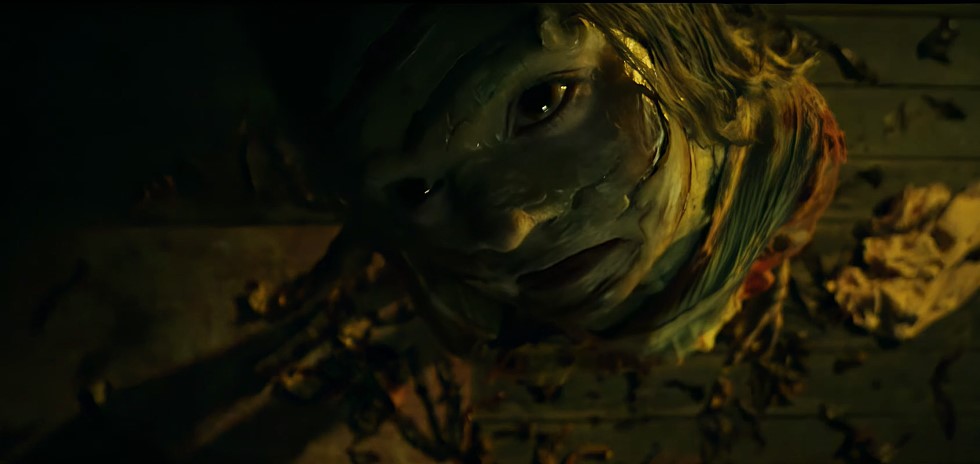
Later in the film, Katie comes into her full power, and there’s another huge sandstorm. Was there anything you discovered from creating the first sandstorm that you were able to apply to the second one? Was the second one easier?
GF: Stylistically, it’s quite different the second time around, so it has a different feel. There are so many other things going on in that last sequence that there are many different hierarchies of storytelling that you’re trying to hand off to. So the sandstorm couldn’t be one particular thing. It had to come forward and step back to give room for other elements in there. So that was quite a melting pot of elements to maneuver through in that last sequence.
It did take a while to work through that. We had to do that together and decide what element would come forward, whether that be music, dialogue, or sandstorm. Sometimes the sandstorm stepped back for a good while, then came back up suddenly, which was a nice way to add a new dynamic to that sequence.
PA: Garret is mixing dialogue and music, and Gabriel is mixing effects and foley, and one of the things I really love when the three of us are sitting in the mix is the way that we play together. A new idea comes up, and then another new idea happens. Garret had this wonderful idea in the beginning of taking out the storm and having a subjective moment where the music and Charlie’s breaths play. It creates this small moment where you connect with him because, at its core, this is a very emotional story. It’s a story about parents losing their daughter; it’s a family drama.
We took the same approach at the end. There was this really powerful back-and-forth between the music, the sound effects, and the voice. And I feel that when we’re in a room together, we have this constant back and forth, and it becomes very creative, and we figure out how to make every little moment shine and tell the right story. And when you have more than 2,000 tracks in front of you — there’s a crazy amount of sound in this film — it’s great to have all three of us figuring out which sounds are the important ones for every single moment. There are an enormous amount of shifts, dynamic changes, and perspective shifts happening all the time in the big climax sequence in the house. And it wasn’t really until we got that right that the whole sequence started to feel right. And of course, we show our pass to Lee and get his creative input, which then brings the whole thing to the next level.
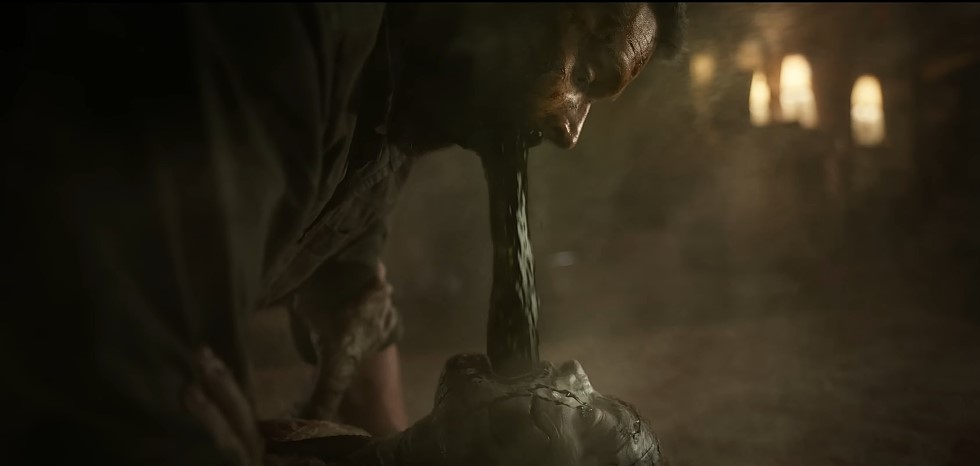
GG: It’s a very complex scene, way different than the first sandstorm because of the climactic moment. Storytelling-wise, there are so many important things going on, and we built it in different ways, as we always do. This is a process of learning. So, you make several passes, construct it, watch it, and then learn from it. Then, in a way, that scene tells you what to do next. Are we focusing on the right things at the right times?
In the last moment of the scene, Zaki delivers the final incantation as Katie fights against her father, who is trying to hold her. There’s a huge sandstorm, and Zaki has an issue with her throat. She can’t speak, but you need to hear her. And so we built it in different ways. It was very big. It was very violent, but there’s also a lot of emotion. Lee spent a bit of time briefing us on what is really happening emotionally, in terms of Katie and her father trying to fix what he did wrong. He couldn’t rescue her before, and now he’s trying to sort that out. That’s what is going on between the father and the daughter. Lee just spoke about storytelling, not sound precisely. And after he explained that, we jumped on it again, and that’s when we got it right. We did a massive cleaning and enhanced some parts. We created bubbles to make space for everything, and then it became much more emotional. It really moves you in an emotional way.
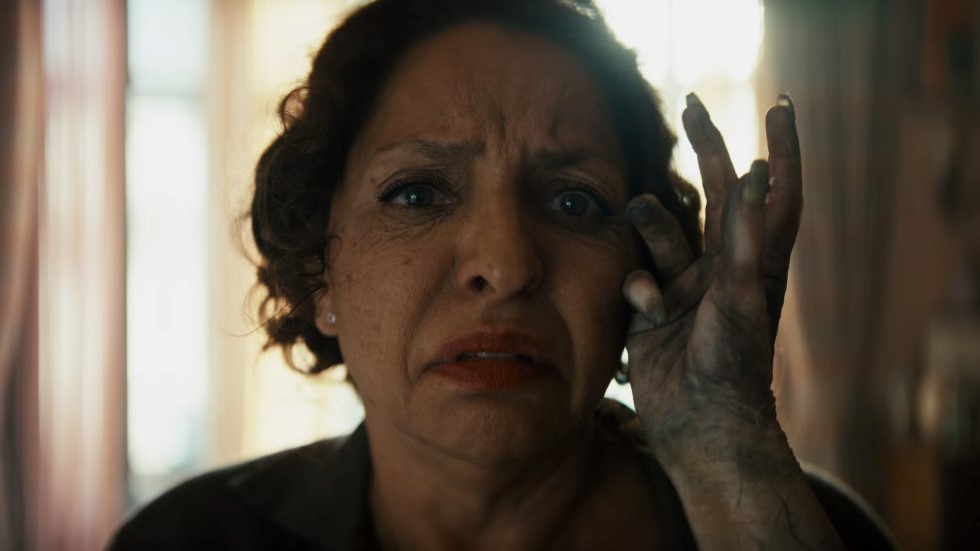
What went into creating Katie’s POV in her bedroom in New Mexico (in that POV, you hear grandma/Carmen chanting a prayer before Katie goes into Exorcist-mode)?
GF: Peter and I had been toying with this idea from the very start. We really wanted to get inside Katie’s head here and give the audience a feel of the dissonance and turmoil going on inside her. We played with filtering what she hears and also really panning the dialogue wide on every shot to create confusion as it switches perspective. We also used a lot of different takes of Carmen’s prayer and spread them around the room, with some delays, to envelop both the audience and Katie, as this is what drives her to attack Carmen, so we needed to make it feel larger than life. And Bob Kellough provided the special sauce with Katie’s weird breathing treatments to really make this come together!
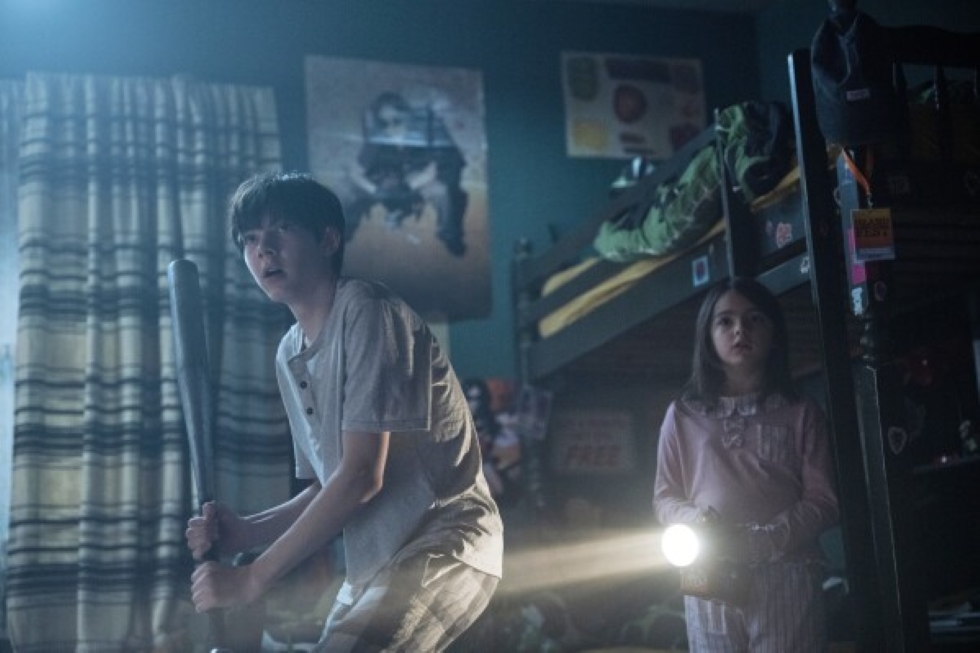
Katie escapes from her room and gets into the walls. What a fun use of the surrounds! Can you talk about creating the sound design and mix for this sequence?
PA: That’s one of these sequences that is really based on sound because they’re listening to what’s happening around them. You don’t see it. You only hear it. So the sound of Katie moving around behind the walls was something we kept on developing. We did some early sounds and Caomihe Doyle in foley did some great stuff for the crawling, and then Lee had some very specific requests for the rhythm and the placement of the sounds. You could really tell that he had some very specific sounds in mind already when he wrote the scene in the script. And during the sequence, it feels like even the camera is listening.
Then the question was: how do we move the sounds around, and what kind of perspective do we give them? The way that Lee shot that sequence, you could just tell that this was all about listening. There’s this long shot of the kids going through the house; they hear Charlie and Larissa (their parents) fighting. I love how Lee made that ambiguous. It could actually be an argument between the parents but then, at the end, the kids realize they’re fighting Katie. We kept on moving every little bump and weird wooden creak around all the time. The sequence was constantly developing. Gabriel had a lot of fun with his panners.
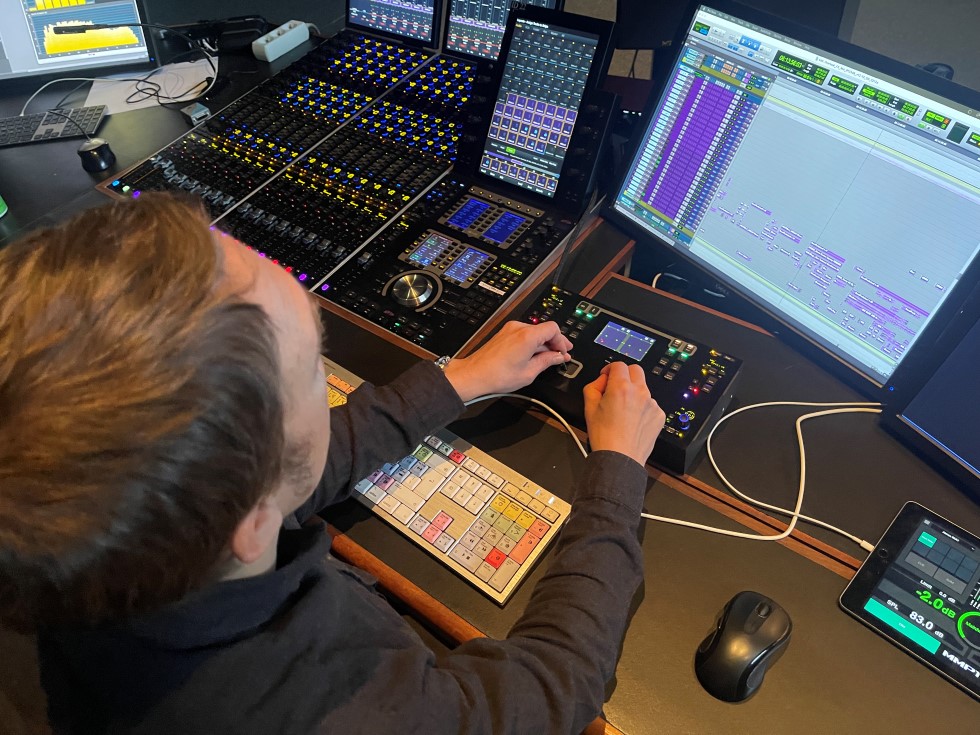
GG: Yes, we did. That scene is a lot of fun. It really well describes Lee’s style.
There are two events that really activate off-screen in the cinema in a big way. One is that the lights go low, and it’s dark. The entire theater is dark, off-screen areas get activated, and there is a lot of freedom to tell the story with sound since we lose attachment with the picture. When you don’t see much, your ears get more active, and then you can clearly use the 360-degree surrounds, the entire room.
The other event is when the characters are really activating off-screen areas; the kids look here, then there. Lee is a master of doing that. It was a lot of fun. Plus the fact that Katie is behind the walls, so that’s another challenging and exciting moment to work with sound — not only panning, but frequencies. That’s amazing because the entire room gets activated. Then, when the lights come back on, everything goes back to the front, in a way.
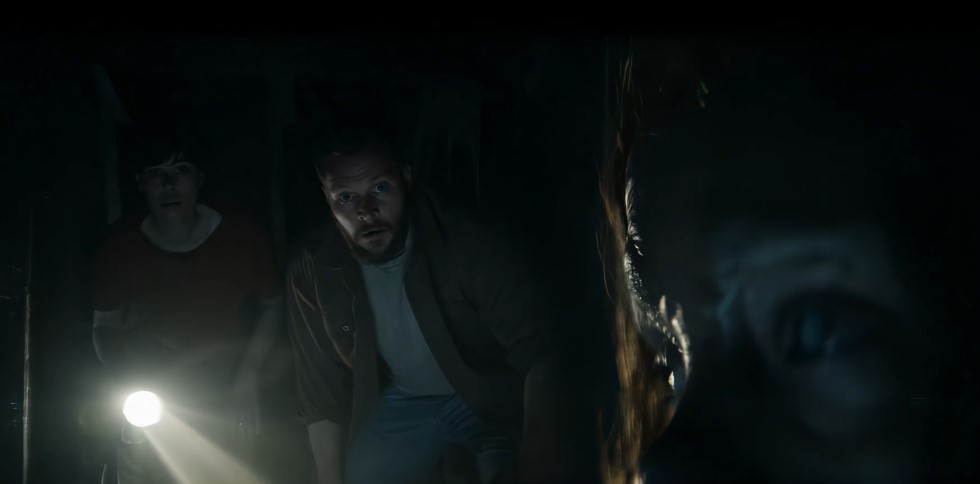
It was also challenging to describe where Katie is moving around just with sound. It’s exciting and, I think, something the audience really enjoys in a full theatrical experience.
GF: When we’re actually in the eaves, and the mom is chasing her around, there are lots of great shots where we see the arm in one angle, and we know then Katie will be in the surrounds. So we were able to just push sounds around. Each shot would have a different perspective, so Katie will be flying around and up into the height speakers, to the left, to the right. We have the vocals and the great footsteps that Caoimhe recorded. So we were able to just really push elements around and make that move so well in the Atmos mix.
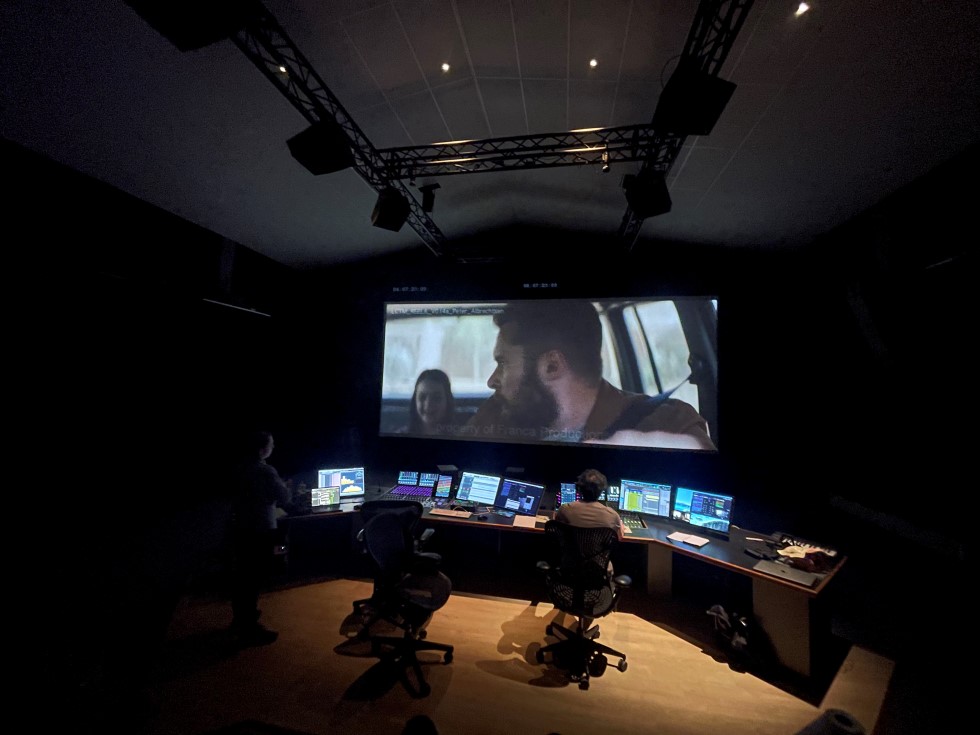
When we’re in the room with the kids, and we hear the parents through the walls, did you create the occlusion effect on their voices in post so they sound like they’re coming from behind the walls? Was there reference dialogue from production?
GF: That’s something we created. We brought them in for ADR and recorded various elements voice-wise because we hadn’t quite nailed down what we would do in that sequence yet. So that came together on the mix stage through experimentation. As Peter was explaining, we just started putting things in and seeing how this works out. We started taking snippets of little things that sounded like arguments and started building those, along with the bangs and knocks as well. That came together organically, so it feels like it’s following the kids’ eye movement.
We tried three or four different versions of that, didn’t we, Peter?
PA: Maybe even more. It’s one of the scenes that had many different versions.
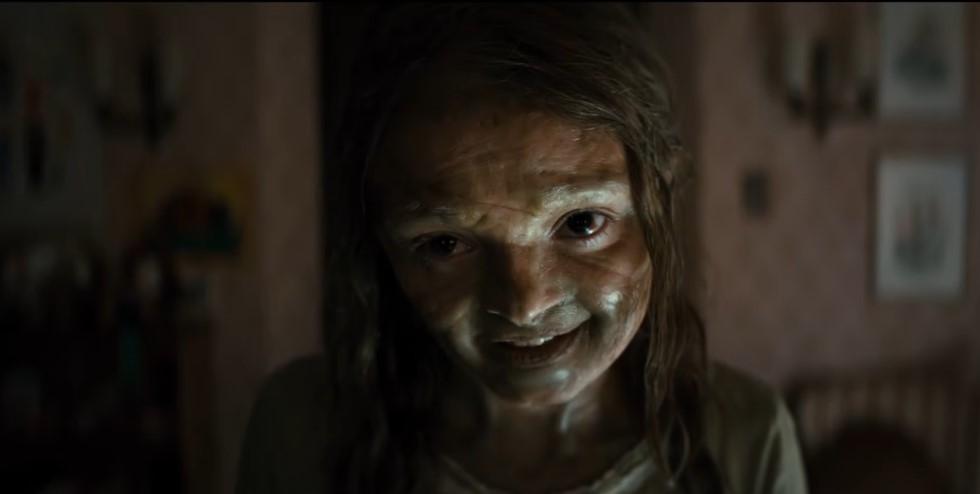
How did you create the sound of Katie’s demon voice?
PA: That was a long journey, but the foundation of this is really actress Natalie Grace’s performance. Her physical performance in the film is amazing. She’s doing a lot of her own stunts — I think pretty much all of them. She’s such a physical actor.
At the same time, she was able to do a lot of really interesting voice things. I remember Garrett and me being on the first ADR session with her, and you see this tiny girl coming into the booth. Garret and I were like, “Okay, could you try maybe to do a little rough voice?” Then she just started doing the voice.
GF: It was almost like she was possessed, honestly.
I can’t say how amazing she was. She came in for three ADR sessions for doing her Katie demon voice. It was just incredible. Every time she knocked it out of the park. She just encapsulated the character of Katie so much. She would be in the studio, and you’d see her go all crazy. She just really went for it. It was amazing.
So all her stuff is in there, and it was just embellishments with some male voice layered in. But all her stuff was just so good. It didn’t take much to make it work because she was so good.
PA: For Lee, it was really important to have that male element inside that voice as well. So we had these Arabic voice actors I mentioned before, who recorded some of these curses. Sound Effects Editor Bob Kellough did a big thing with her voice, cutting in some Arabic elements that somehow felt like they worked together with her voice, so that the Arabic kind of became a shadow inside her English voice. So you had a male Arabic voice inside of her voice. It’s not just pitched down or distorted, but it’s actually a male voice integrated into her voice. That had a lot of layers, a lot of editing.
And then on top of Natalie’s efforts and growls, we gave her a bit of an animalistic quality by cutting animal breaths into her breaths. I worked a lot with vulture sounds in this film. The thought came to me that vultures played a big role in ancient Egypt, and vultures have these amazing sounds. So we cut small breaths and parts of the vulture sounds into Katie’s breaths as well. And on top of that, we even used the sound of Lee’s dog. It had some really crazy breaths and licking sounds that were also used for the funeral scene.
So it was a lot of editing, a lot of incredibly detailed work, and then as the film developed, a lot of panning the elements so they became crazier and crazier. And I really love, for example, the scene of Carmen’s death, where Katie’s voice, her laughter, almost surrounds us and goes in and out and changes perspective so that it becomes a mental thing. So it’s both a voice from this girl, but it’s also something that’s bigger than just this girl. It’s this thousand-year-old curse.
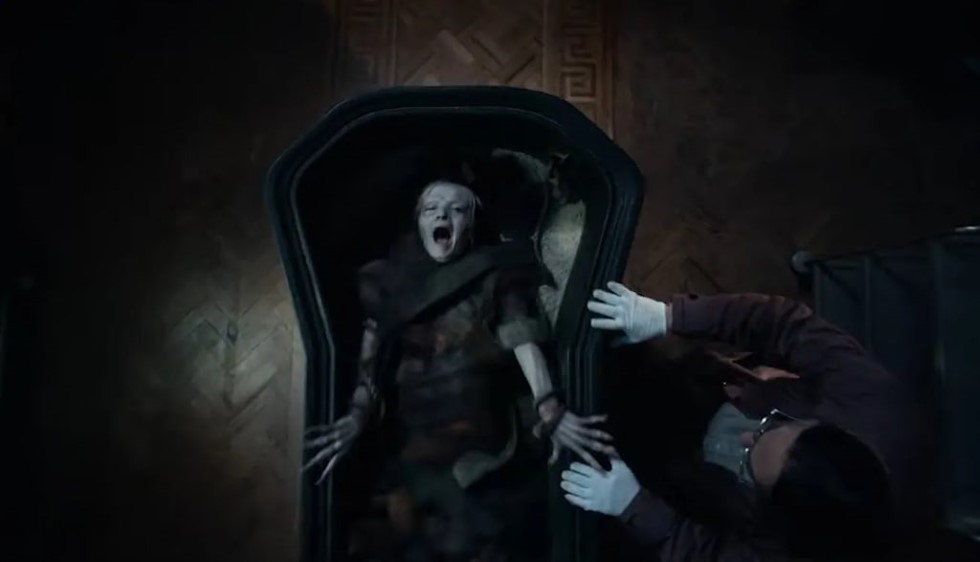
How about when Katie wakes up in the Mummy casket and screams? Was that production sound? Was it enhanced?
GF: A lot of this scream is actually production sound! It has some effects embellishments but again, this is another place where Natalie knocked it out of the park, and although we tried other screams from her during ADR, the production just had something special to it that sent chills up the spine!!
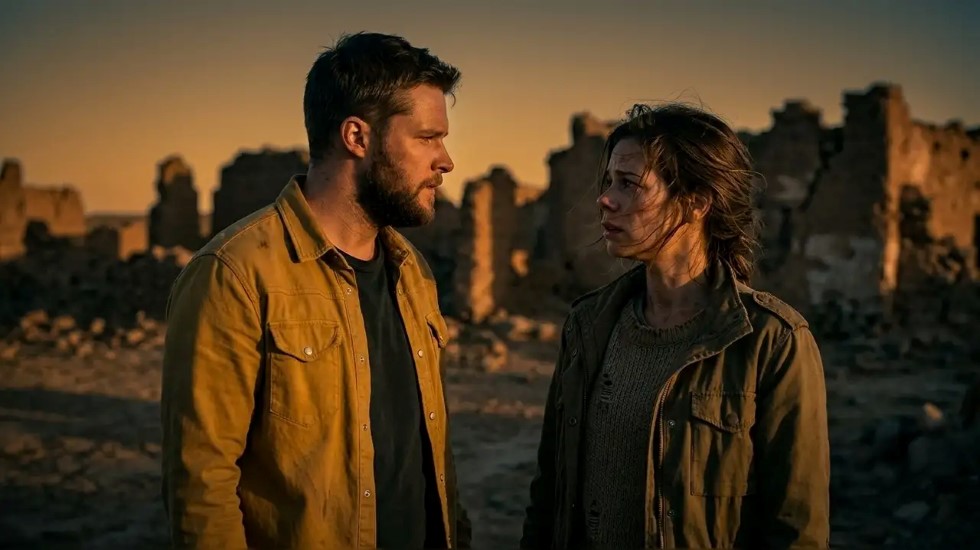
Talking about layering of sounds, the ambiences in the film also had a lot of elements to them. Could you talk about your approach to these?
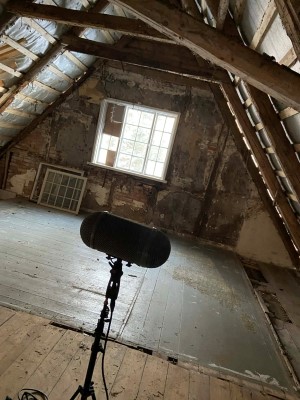
PA: I really love background sounds and ambiences. It’s something I spend a lot of time on. I’m very inspired by Ren Klyce’s work in a lot of David Fincher films and Se7en was one of the key inspirations here, especially for the detective story with Zaki. All the different environments have a lot of different layers and elements, built rhythmically around the dialogue and tonally around the score.
Mikkel Nielsen and I did a first pass on pretty much the whole film during the first half of the process. Then, when Rana came in, I got her to do a pass as well. She has this really extraordinary approach where she uses a lot of abstract textures and musical elements in the ambiences. It was also really important for me to have her do a pass on the scenes in Egypt as she is based in Beirut and knows all the precise details about Arabic environments and voices.
It might seem weird in a movie like this with all its crazy supernatural elements, but authenticity is actually really important to Lee. For the New Mexico scenes, I used a lot of ambiences recorded in the area by Thomas Rex Beverly. There was also a fun moment in the mix where I had added a train horn to a quiet scene where Charlie brings his kids to school, and Lee had to know if there is actually a train station located in Albuquerque before I was allowed to place a train sound in there. Fortunately, a quick Google search showed us that there is, and the train horn stayed in the mix. The devil is in the details.
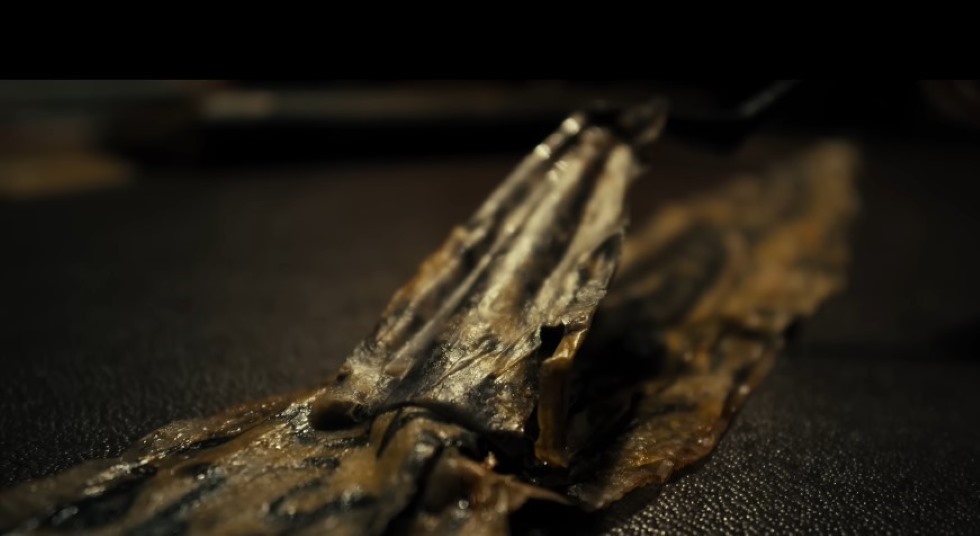
Dad/Charlie peels apart Katie’s skin flap, layer by layer, and finds a message in Hieratic script. How did you create the peeling sound for this scene? It was wonderfully gross!
PA: That was also a mixture of a lot of different things and some really great foley by Caoimhe Doyle. Also, some of the early stuff we recorded was wallpaper and glue — so when you’re peeling wallpaper apart and there’s that wet, goopy kind of feeling.
Also, like on Evil Dead Rise we often used a plugin from The Cargo Cult called Envy, which allows you to shape one sound so it takes the shape of other sounds. We could, for example, take the whispers and make those a part of the skin ripping. So all these different elements went into that. And the further we get into the film, the crazier the sounds are.
The key sequence — in which Charlie realizes there are hidden messages within the skin — climaxes with shots of Charlie intercut with harrowing photos of mummies. Here, I built a very musical and pulsating collage of weird screams, whispers, vulture sounds, and distorted noises and it actually turned into one of my favorite sonic moments in the film. Originally, Bryan Shaw had used a very rhythmic score as temp music here but when composer Stephen McKeon heard the sounds I had done, he changed the music into something that was much more ambient and textural as he thought the rhythms I had created with sound design should stand on their own. Actually, it was quite a bold choice by Stephen which worked very well. Gabriel calls that sequence my “Trent Reznor moment,” haha!
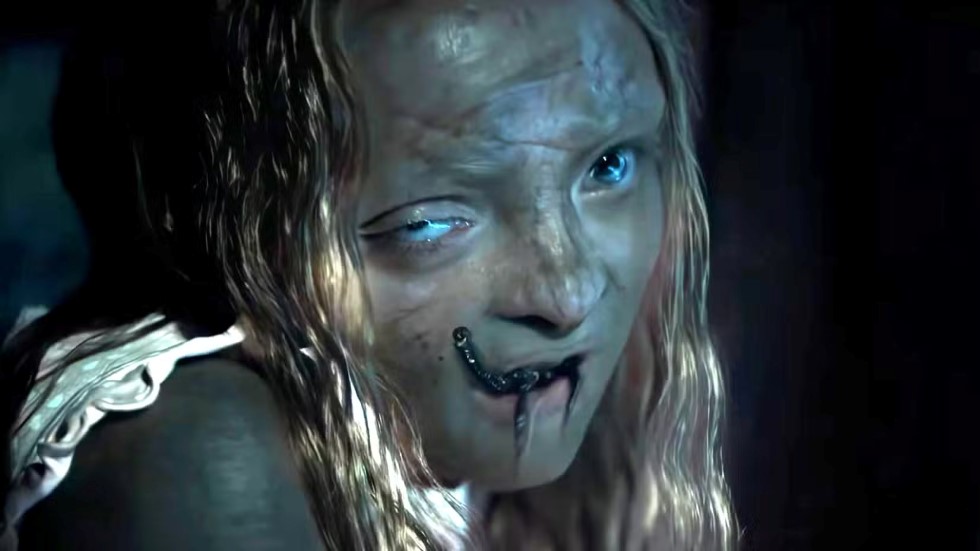
Katie eats a scorpion, and her parents force her to vomit it up. Gross! Any fun sound stories on this one?
GF: I hope Natalie doesn’t mind me telling this story! We had great stuff in production but I also had her perform some of this in her ADR session, and poor Natalie, every time she got to the end of a take she would actually be gagging for real! She would take a minute and then say, “So sorry, let’s go again!” A true professional!! We got some great stuff!
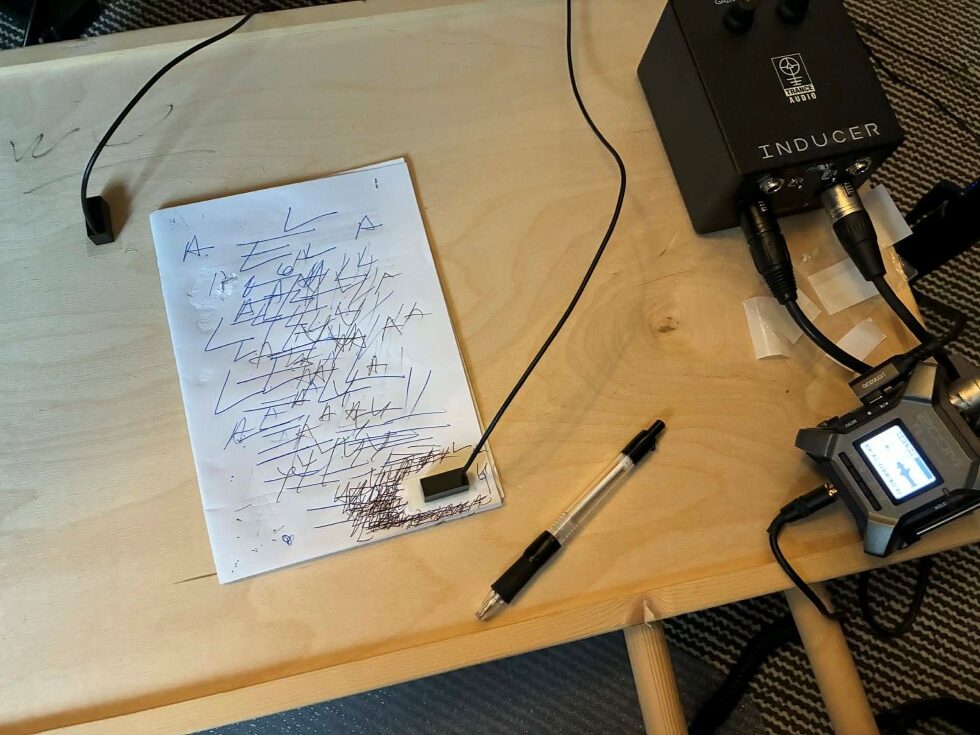
Great teeth-clicking sound for Katie as Mom wraps up her wound, and later on during the Morse code sequence! How did you make the teeth clicks/chatters?
PA: The teeth clicking was such a key sound of the film. It both comes from Katie in several places, but later on (without revealing too much), it also comes from another character who has an important message to tell. I asked Foley Artist Caoimhe Doyle to provide teeth sounds and also make a lot of small sounds of teeth grinding, grit and spit, which we could enhance and make the teeth clicking even more intense. Hearing small mouth sounds amplified really makes them very unpleasant.
And then Bob Kellough did extra stuff with knuckle cracks, practical teeth, and wolf teeth snaps. Bob also came up with the extraordinary sounds — this wobbling low-end sound — for the moment when Charlie realizes that the teeth clicking was actually Morse code. Among other things, he put his voice through DeClick in iZotope but inverted it so it output clicks only, and then he bass-enhanced those. It’s a really powerful sound.
And then I love the abstract but also super potent, heavy sound of the pen when Charlie writes down the Morse code. It’s the kind of scene that when you read it on paper, it seems like a pretty ordinary expository moment, but when you make it come alive with sounds like these it becomes really gripping and riveting. Lee really knows how to utilize sound like that.
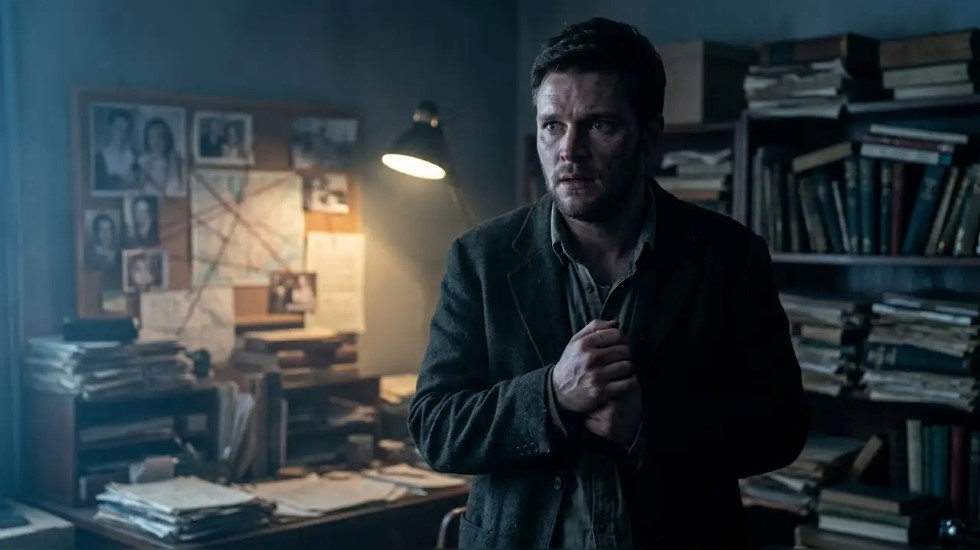
What went into the sound of the recording that the professor plays to Charlie?
GF: Since the voice is on an old cassette player and the recording is very old we really needed it to sound pretty bad and ancient while still being intelligible, as there is a lot of information here for the audience to take in. So that was a fine balancing act. I really wanted to worldize this as I have a great old micro-cassette dictaphone that creates great warbling and speed weirdness but, alas, time would not allow it so I had to rely on plugins this time.
I created the warbling with slight speed changes in Pro Tools, and then I had a chain of plugins doing various things: AudioThing Wires, McDSP FutzBox and FutzVerb, etc. Then there was a lot of dynamic EQ to tame all the harsh frequencies that all of this processing created so that I was able to mix it louder and not attack your ears with shrillness.
PA: The visual elements in this sequence kept changing throughout the process so we kept on developing the sound, adding new layers and textures. I wanted to create sounds for the different illustrations you see but at the same time didn’t want to just make it feel like a basic dramatization of what we see. So, when working on something like this, I pick specific things to highlight sonically, then try to manipulate these selected sounds with echoes and delays, panning them around the room, usually in different directions at the same time. I’m a big fan of The Cargo Cult’s delay plugin Slapper where I can quickly create a lot of different surprising sonic elements by using several different settings, both normal and reversed delays, and then also pitching and distorting these. And Gabriel came up with the idea that all the manipulated sounds cut off when the professor stops the tape recorder, I just love that.
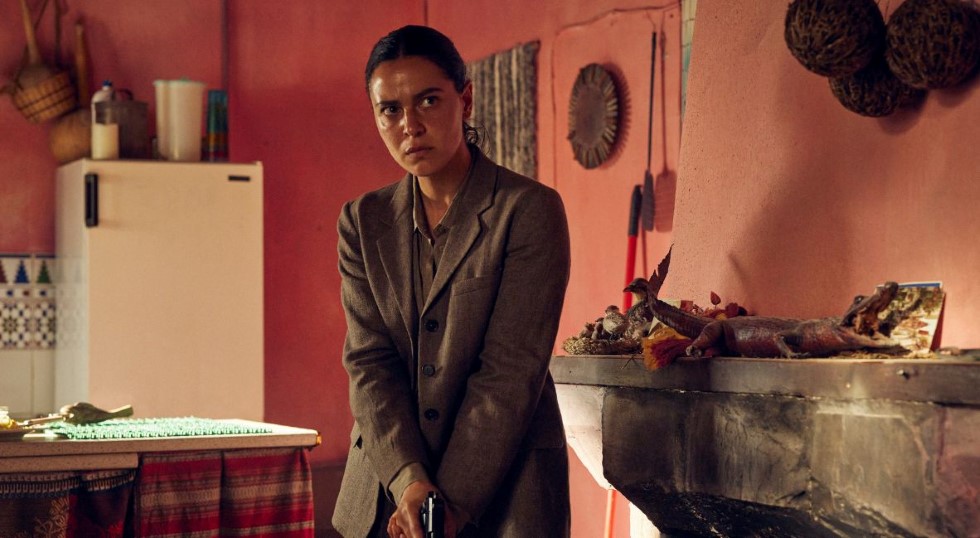
Wow! The sound of Detective Zaki’s gun is huge! When she shoots ‘The Magician’ and when she shoots over Layla’s head, it sounds like the most powerful gun ever. Can you talk your approach to that?
PA: This was actually pretty much Lee’s direction for the gun: it should sound really, really huge! Lee actually referred to the gun sounds in One Battle After Another because they were extremely powerful but still very organic – which also just goes to show how our sonic references aren’t always the most obvious ones which is something I also really love about working with Lee.
So yes, it was a sound I kept coming back to again and again to make it louder and more powerful, trying all the tricks with big guns, cannons, and different reverbs. Bob Kellough also did a pass on it so again there were a lot of elements in the end but it was really Gabriel who did miracles in the mix. Gabriel, you should talk more about this!
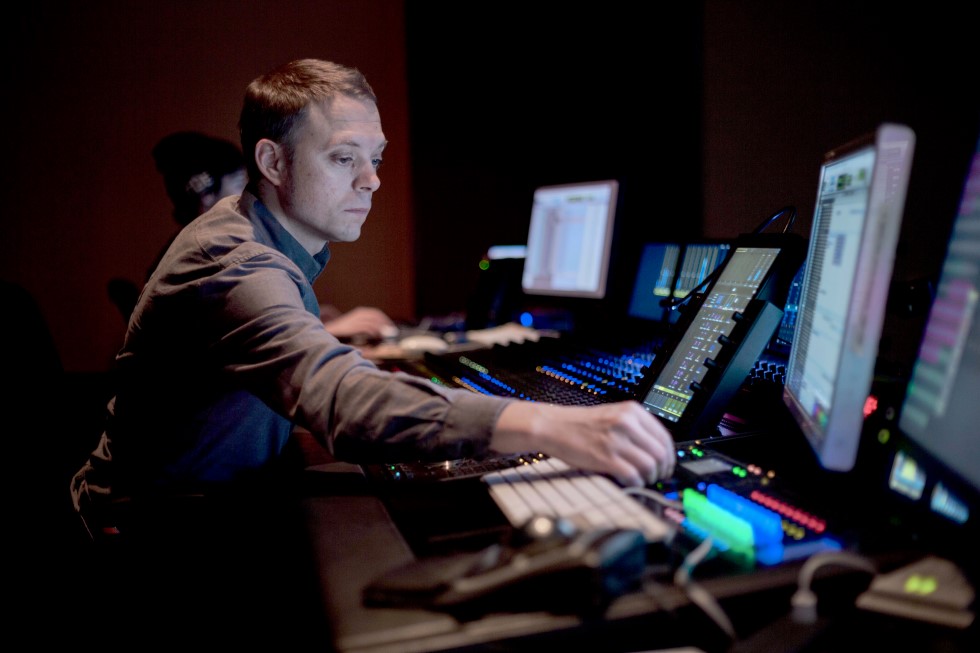
GG: I love mixing guns since there are so many different approaches and styles, it is very creative. Once again, in a way, it’s the film that tells you what feels right for the scene. And, of course, Lee the director!
Peter explained to me that Lee was really after very impactful shots with Zaki’s gun, something that would really affect the audience in both moments. In Zaki’s shot over Layla’s head, I remember doing a first pass of the effects premix, making it big. Then, going back to the scene days later, we made it bigger.
But we still wanted to hear it in a more extreme way, searching for the limits of how loud it could play. So then we just went all the way in, we recombined levels, triggered dynamics, enhanced reverbs and slaps, and played it again. It was LOUD. We all smiled thinking that we found it. Everytime we would play that scene and hear the shot you would find the same smiles in the mix room. Lee really wanted to have these shots as powerful as possible. We know a gun like that would not play so loud, but this is an expressionistic approach to the action; it wants to move and shake the audience. It tells a lot about Zaki’s character and her personality; it created a huge impact in both actions.
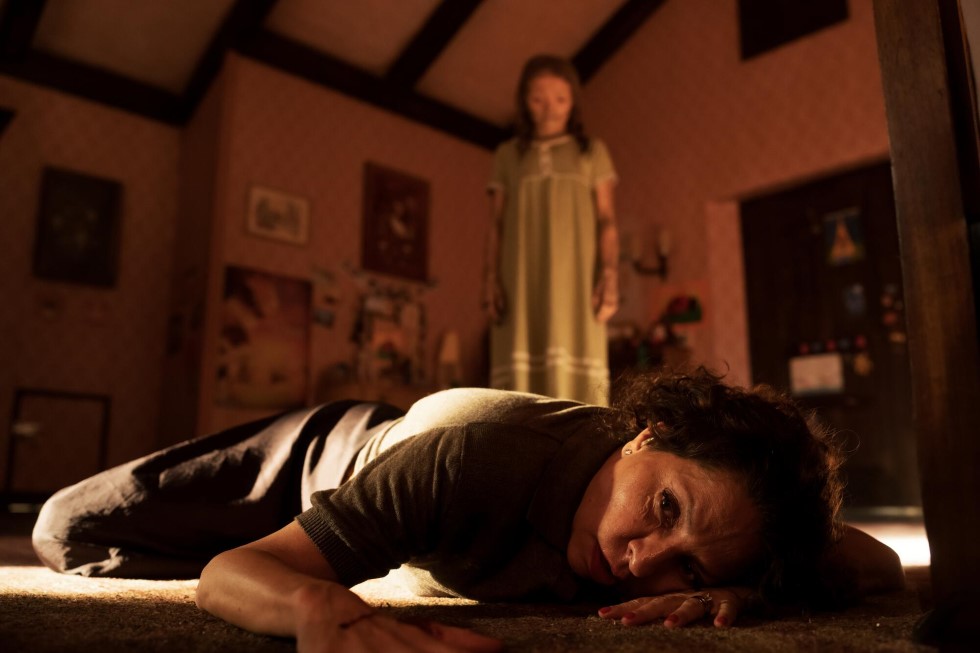
What were some challenges/opportunities for sound during Grandma/Carmen’s death scene?
PA: Grandma’s death scene features a lot of wonderful effects work by Aza Hand. He spent a lot of time refining every sound, every creak, every rip — every moment in that scene. And then on top of that, there’s all the terrific foley from Caoimhe Doyle. One of my favorite sound moments in the film actually comes during that sequence. The Band’s song “The Weight” is used throughout and when it stops, I got the idea of Vari-fi-ing the music so it slows down in pitch and fits precisely with how a prop moves. It’s a humorous touch to a really brutal scene and Lee loves those kinds of juxtapositions between horror and humor, also in the sound.
Garret, could you talk about the approach to the music mix here? Score, song, and sound effects weave in and out of each other and those things always take a lot of work.
GF: Again, this sequence took some time to get right. We had a few goes around to really nail it. We begin with “The Weight” on the car radio and we hand back and forth with score for a few scene cuts until Larissa opens the door to Katie’s bedroom. From here, it all begins to get a little strange and subjective.
We weave a choir stem from Stephen McKeon’s great score with an echoey/delayed version of the song, almost like we are hearing it on the wind but it sounds kind of off somehow. This helps emphasize Larissa’s confusion. This then melds into the song, becoming full frequency at this point back in the car with the rest of the family as Maude (the other daughter) laughs manically. We then do a hard cut back to score for the coyotes attacking the car and this grows as we see Larissa looking down. At this point, we are sneaking back in a really washed out delayed version of “The Weight” again over Larissa’s devastated face which then takes over until the cool Vari-fi ending that Peter mentioned. This handover between score and source music was very delicate and took a lot of experimentation to get right, particularly working out where and how the handovers would work best.
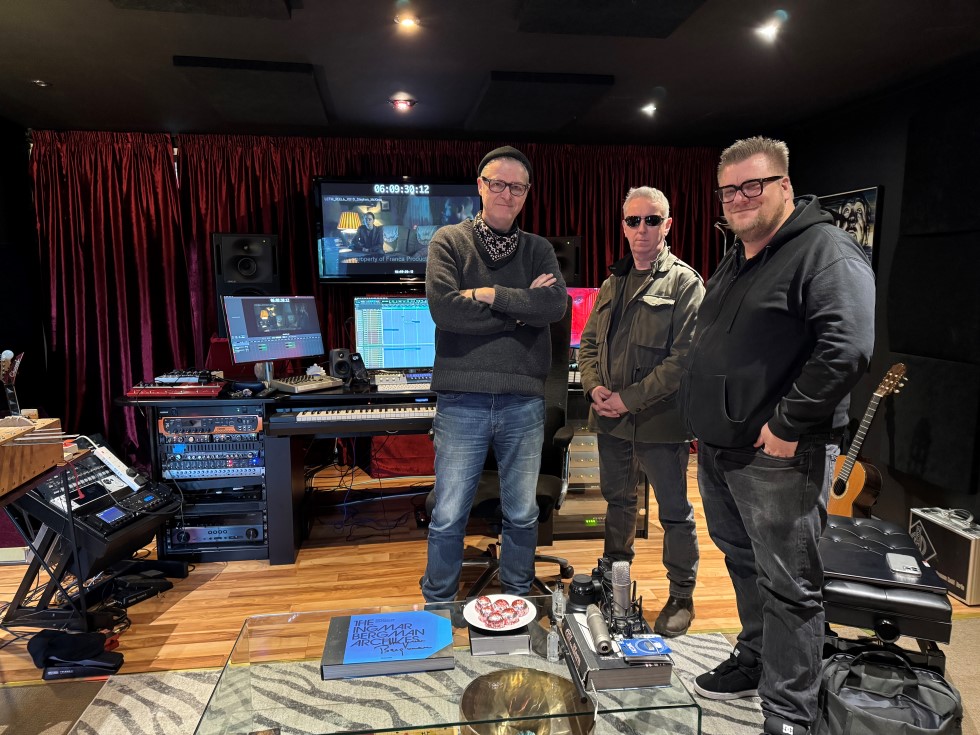
PA: It’s worth talking about the special collaboration between me and composer Stephen McKeon. Stephen and I already worked together on Evil Dead Rise and I think because that teamwork worked out so well I was invited to become an even more integral part of the music process on this film. Stephen, Lee, Bryan Shaw and I were all sitting together at Stephen’s studio for the final two week part of the scoring process and finalized the cues together. That kind of strong partnership between sound and music happens very rarely in the movie world but Stephen was very generous and open and during those two weeks he came up with these amazing sounds, like the distorted string bursts that’s used thematically throughout the film, especially as the madness escalates. This meant that I pretty much knew the score inside and out. When Gabriel and I were premixing sound effects, I knew exactly when to make the effects and music work together, when to leave room for the music, and which elements in the score to highlight to make everything even stronger.
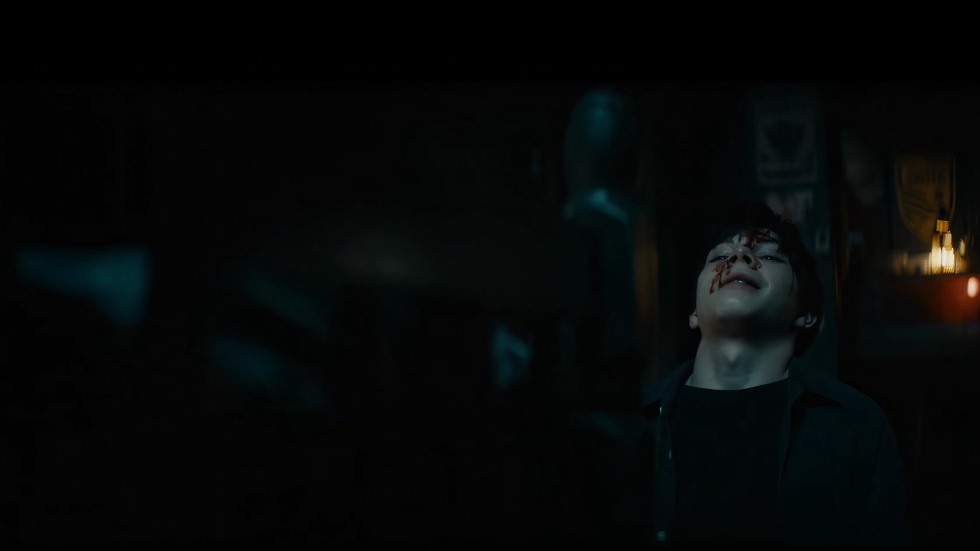
Sebastian tries to escape Katie by retreating to his headphones, but he hears Katie through them and in his mind. What went into the sound design and mix there?
GF: Peter and I are really big fans of distortion — even if it gets us in trouble with QC departments! You will find it throughout this movie, just as it was in Evil Dead Rise.
With the voice treatment in The Mummy, we wanted it to feel like Seb was being attacked by Katie’s voice from all angles. So I am using various levels of distortion from crunchy to just absolute obliteration! The initial distortion you hear just before you hear the voice is not a sound effect but is actually just Katie’s breath being pummeled by distortion! Then I just went crazy with the panning and spreading the voice all around the room, with the laughing getting bigger and bigger.
Another example of cool distortion used for the voice are The Magician’s scream before she gets shot by Zaki. This helps to intensify her attack. Another one I am very proud of is the whispery voices saying “Layla Khalil” that you hear just after Charlie reads the letter from Layla.
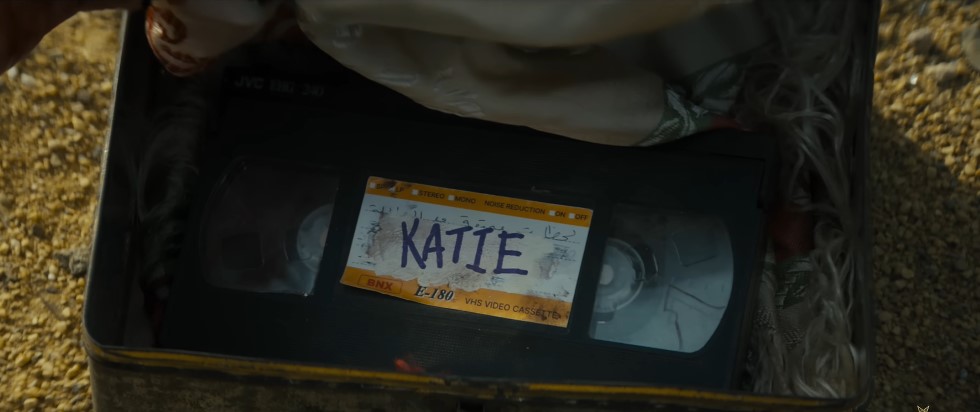
What went into creating the sound of the VHS tape of Katie’s ‘mummy’ ritual?
GF: We really wanted this section to feel raw and real, to really just hit home how horrific this section is. Being a parent, this one really just gets me every time I watch it. It’s your worst nightmare. Katie and The Magician are all the original production sound, and they overlap quite a bit. We recorded ADR for this to give us some flexibility in the mix, but nothing hit as well as the original, so that’s what ended up in the final film. We treated the sound to be quite nasty and compressed with the room reverb pumping and lots of bits of distortion and dropouts. It really gives it an authentic realism whilst also preserving the performance of both our actors here. I still get shivers every time I watch this sequence.
PA: It’s the kind of thing where everything really has to sound gritty, abrasive, and raw. I spent quite some time cutting all the small distorted bursts and dropouts during that sequence. When I work on something like that, I’m really inspired by a lot of electronic music, where noise is used musically. I’m thinking of artists like Autechre, Boards of Canada, Kevin Drumm, Aaron Dilloway, and even Portishead, who all like to use these sounds that a lot of people would think of as arbitrary noises, but they can really have their own distinct musicality and atmosphere. It’s interesting to approach noise like that, and I think it gives the sequence its unique personality as well. And then I love how Gabriel mixed it in a way where these noises in places really surround you in the theater.
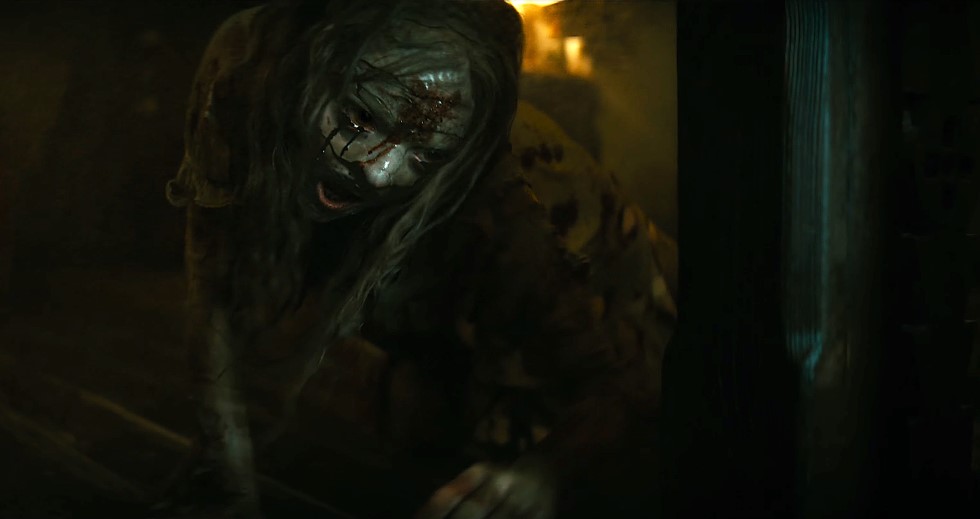
What was the most challenging scene to mix? Why?
GF: I think we would all probably agree it was the last fight with Katie and Charlie while Zaki recites the incantation with a wounded neck while a massive sandstorm is happening all around! There is much sound and so many ways to play that sequence. But as Gabriel pointed out earlier, it was getting to the emotion of the scene that ultimately got us where we needed to be.
One of the big challenges here for me was that Zaki’s (actress May Calamawy) performance here was so good that we didn’t want to replace it with ADR. The trouble was that there were wind machines and all sorts of other sounds all over her production sound, so it was quite a job to clean it up so we could use it. But it was really worth it in the end as it is so powerful.
What have you learned while crafting the sound of Lee Cronin’s The Mummy?
GF: For me, more than anything, it is always so great working with a director who loves sound and knows what it can offer a film in its storytelling. Lee talks about sound in terms of how he wants a scene or sound to feel, not the actual sound itself. He has a great trust that you will bring the right thing to the table. Also, working with Peter is always such a great experience as he just loves to play with sound and is always so encouraging and wants you to bring it to the next level. If you bring something to Peter to listen to and he likes it, he will say, “That’s really great. Now let’s push it more!”
PA: This was an incredible team effort, and I think it’s very important to remember how much it means to have a terrific team around you. Mutual trust means that you dare to experiment more. I love how Lee brought back the main team players from Evil Dead Rise together on this one, and I could really handpick a team with a lot of the same sound people again. And, I brought in new people who also really did stellar work. I need to highlight the ADR department with Dean Covill and Tom Williams, who were just awesome. A production of this size automatically includes tons of pressure and constant shifting deadlines with lots of previews and stuff like that, but having a top-notch crew around you makes it all possible. You always need good people around you. And as Garret says, working with a director like Lee Cronin, who just believes in you and trusts you, is incredibly important. Looking forward to more adventures in sound together!
A big thanks to Peter Albrechtsen, Garret Farrell, and Gabriel Gutiérrez for giving us a behind-the-scenes look at the sound of Lee Cronin’s The Mummy and to Jennifer Walden for the interview!