



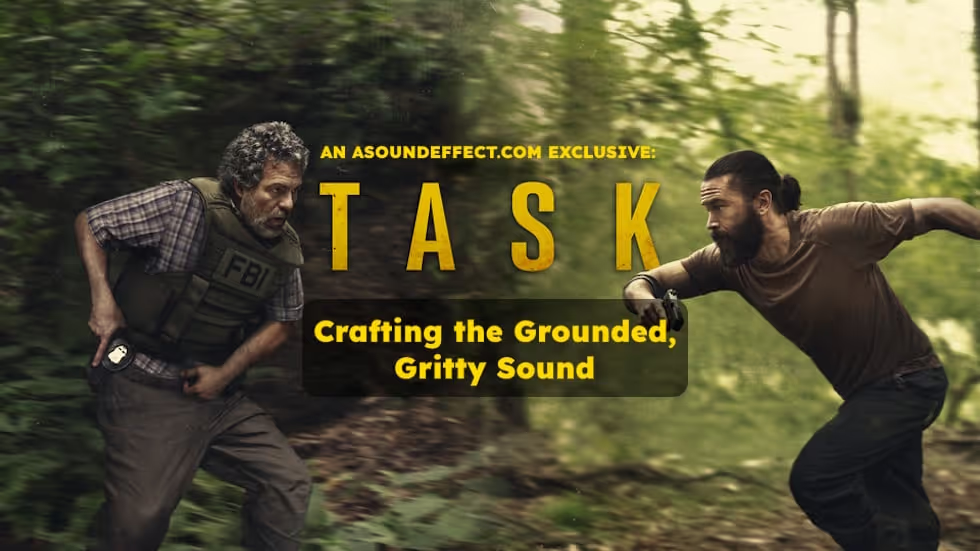
It’s interesting to see shows being shot where I grew up in Southeastern PA, to get that feeling of ‘Oh man, I know that place.’ Writer/Producer Brad Ingelsby, known for his Emmy Award-winning HBO mini-series Mare of Easttown and new HBO series Task, also grew up in this neck of the woods. His stories aren’t just ‘set’ in the Philly suburbs; they live and breathe there. Far beyond having actors speak with a Delco accent or cutting in shots of Wawa, Ingelsby truly captures the locations’ milieu and how it shapes the characters living there. These are working-class people, and some neighborhoods and towns where Ingelsby shoots (like my hometown of Coatesville) are more functional than fancy. That way of living is deeply ingrained in Ingelsby’s characters, their stories, and their decisions. The locations are as much a character in his shows as the actual characters, so making them sound believable was one of the sound team’s many missions.
Task was one of HBO Max’s biggest breakout series of 2025. Like Mare of Easttown, Task was initially intended as a limited series, but after earning critical acclaim and attracting millions of viewers, it was picked up for a second season. So far, Task earned several award nominations, including a 2026 MPSE Award nom for ‘Sound Editing – Broadcast Long Form Dialogue / ADR’ on Ep. 5 for Supervising Sound Editor Lidia Tamplenizza, Dialogue Editor Michael McMenomy, and ADR Editor Mar Heredia (winners to be announced March 8th), and it won the 2026 AFI Award for ‘TV Program of the Year,’ making it strong contender for the upcoming Emmys.
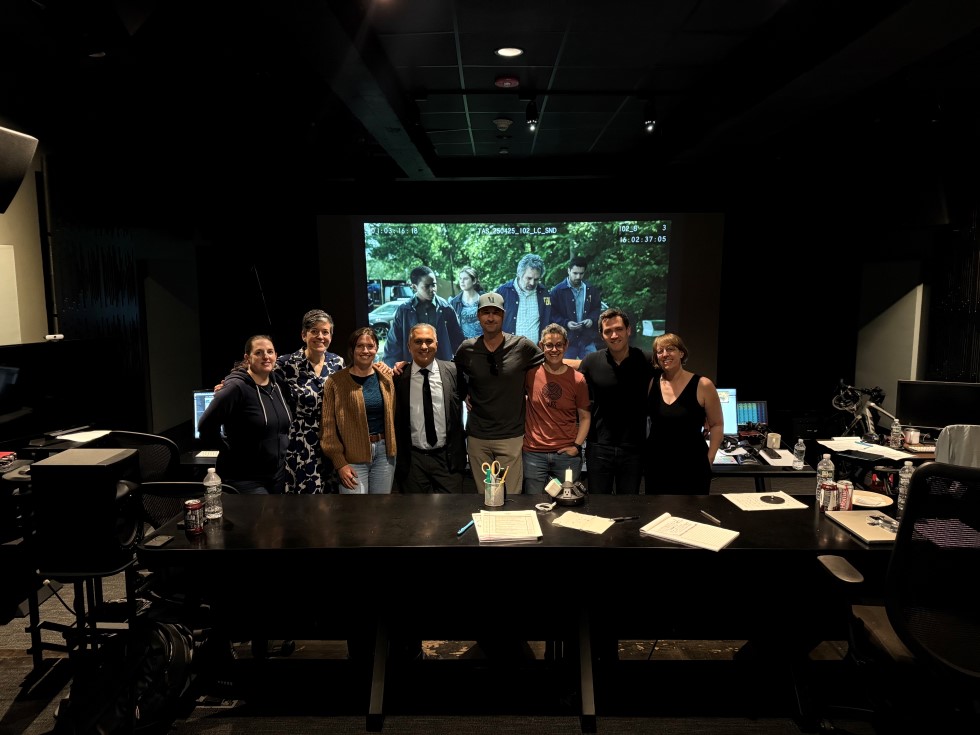
Here, supervising sound editor Lidia Tamplenizza, re-recording mixer Larry Zipf, and dialogue editor Michael McMenomy — winners of the 2024 Emmy Award for Sound Editing on Ripley — are joined by Emmy-winning sound effects editor Mariusz Glabinski, and foley editor Nora Linde to talk about delivering an authentic sound for Task, which was edited and mixed at Warner Bros. Post Production Creative Services in New York City.
Find out how recreating the sound of an iconic AM news radio station helped to sell the sense of location, why off-screen sounds were just as important for storytelling as those on-screen, how an actor’s shoulders inform their foley footsteps, how color-coding helped bring clarity to the sound of the gunfights, and so much more!
Task | Trailer | HBO Max
What were showrunner Brad Inglesby’s initial ideas for the sound of Task? What picture did he want to paint sonically for this location and these characters?
Larry Zipf (LZ): Brad clearly loves Delco. We wanted to help support that specific sense of place. I grew up nearby in Villanova, PA (Montgomery County). I got a big smile on my face the first time I heard the KYW AM News radio broadcaster in Tom’s car in Ep. 1. That was recorded in loop group and performed credibly to my memory. That little detail brought me back to being a kid in the backseat of my Dad’s car as we would listen on the way to school. I think it was important to Brad to keep the show’s sound grounded, both because it suits the story and because it serves the phenomenal performances of the cast. We want to enhance the realism of the world these characters inhabit without getting in the way of a great performance that doesn’t need any help from us!
Lidia Tamplenizza (LT): I agree with all Larry said. Brad loves detail and realism with respect to the characters, action, and place. In all our spotting sessions, he was clear about how realistic and raw he wanted the show to sound; all our work was in service of telling his story. I hope we accomplished that by sonically accentuating all the details that were already there.
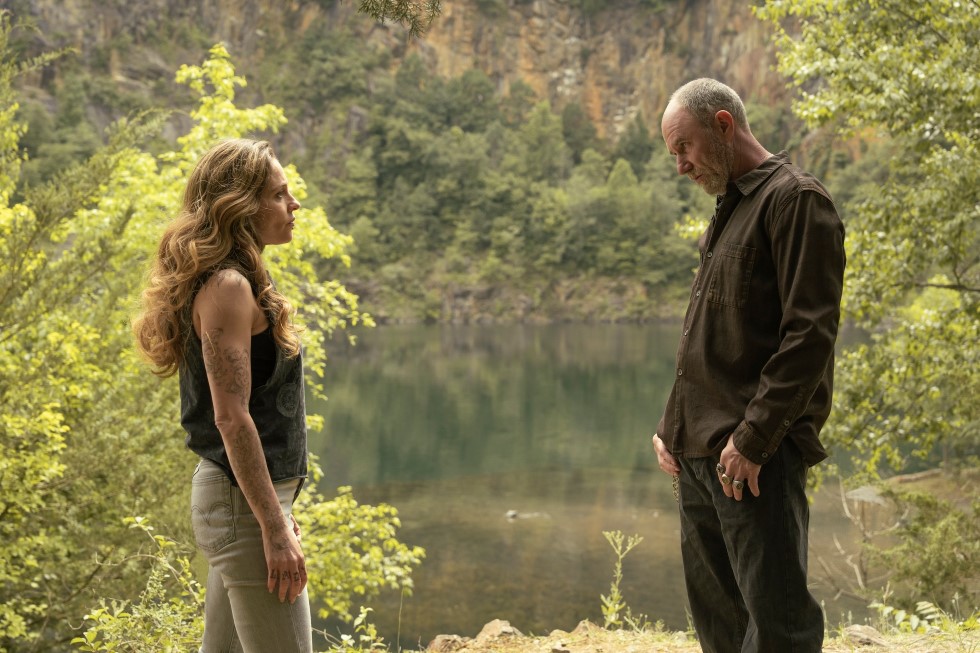
There were definitely a few moments when the sound leaned into a little more hyper-realism, such as in the last scene in Ep. 5 when Tom and Robbie are standing off at the river, and in Ep. 6 when Lizzie experiences hearing loss. But these moments always felt motivated, helping the audience engage with the characters’ experiences.
Brad has such great instincts for sound, and I really think it’s because he loves his characters and he loves Delaware County.
There are several (potentially) challenging moments for dialogue, like the skirmishes/gun battles with lots of running around, and the water/swimming scenes (like Perry drowning Eryn in the stream). Can you talk about your approach to dialogue — your tools and techniques — for these moments?
LT: The sound recordist Teferra McKenzie really did an amazing job capturing the dialogue in the Eryn drowning scene. With the exception of one line of ADR for Perry that was a little muffled, and one large “gasp” for Eryn’s last breath, the production is what you’re hearing for that scene!
The gun battles in Ep. 6 were a little more difficult, but again, we used production recordings where possible. We recorded ADR for certain lines, especially during the big music and effects moments, so they would cut through cleanly.
The fight between Perry and Tom in the cabin in Ep. 6 was also all production. Michael McMenomy did an incredible job of dialogue editing the show. Wherever he had an issue with a noisy or muffled line, he would find cleaner alternate takes to help the dialogue. It was a lifesaver in some of the noisier locations and during heavy action sequences.
we did a lot of ADR on this show, but not necessarily due to noisy production recordings
Interestingly, we did a lot of ADR on this show, but not necessarily due to noisy production recordings. There were accent fixes, lots of additional lines for plot, and of course, some noise. I was concerned at first because I don’t like relying on ADR. We did our utmost to preserve the production wherever possible by using only a word or part of a line of ADR. It’s easy when you’re working with collaborative actors. In fact, working with these actors was a career highlight for me; they were all so devoted to the show and their characters.
I will say that the combination of working with incredibly committed actors and having Larry’s mixing skills really helped sell the ADR in this show. It’s definitely one I’m proud of.
Michael McMenomy (MM): I was especially happy with the scene in Ep. 2 when Tom, Emily, and Sara discuss with Matt the upcoming court hearing for their brother Ethan. The writing and performances are superb. The way the scene was filmed and edited is intimate and subtle. It is a round table of numerous characters in an array of emotionally complex moments. The scene has intense and dynamic performances from all the actors, a number of times when characters interrupt and verbally collide with one another, and the visual perspective and energy often shift quickly and significantly.
The quiet interior setting meant that the dialogue characteristics are especially foregrounded and the acoustics of the room are particularly exposed. This presented a challenge and meant a lot of time spent searching out alternate takes for overlapped lines or compromised syllables, and to bridge transitions between perspectives. All of which is ultimately in the service of preserving the integrity of the actors’ performance in that moment, and I hope that the editorial stitching, combined with Larry’s mixing, means that our work is imperceptible to anyone watching the scene.
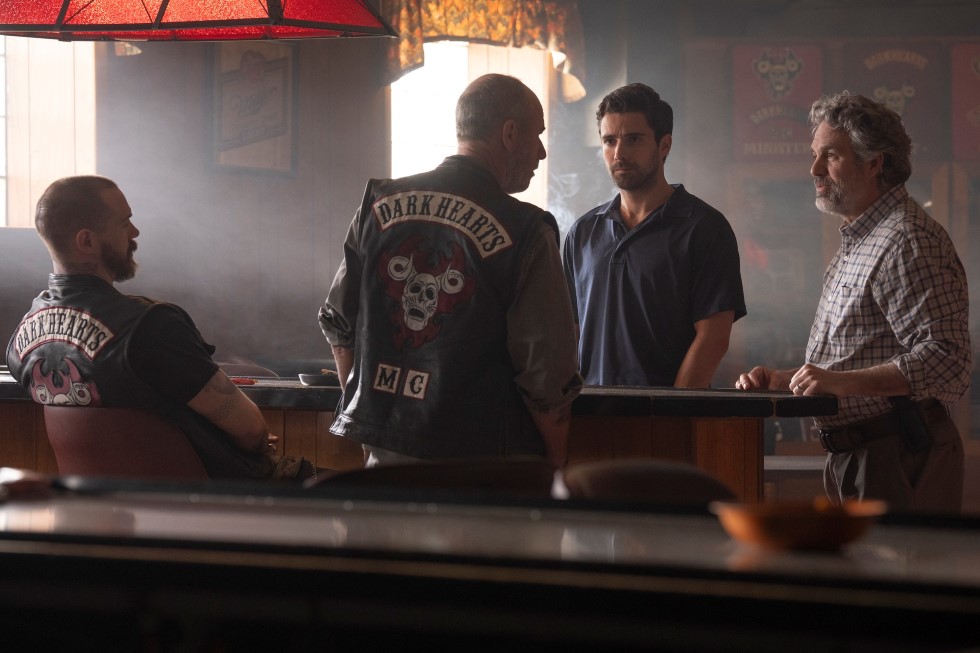
The actors speak with that unique Delco accent. Did the loop group actors have to mimic that, for instance, in the bar scenes?
LT: Brad wasn’t too fussed about the loop group speaking with Delco accents, thankfully. I think that would’ve been a tough casting call!
When casting for loop group, Dann Fink and Daphne Gaines, our loop group coordinators, definitely chose actors with PA leanings. They had a number of actors local to the area and very familiar with the Delco accent, along with some who have trained in the accent in the past. The rest of the Group were cast for neutral accents (mirroring the voices in the series).
I remember talking to the dialect coach Susanne Sulby about her dialect work with the principal actors and how some had thicker accents than others. She noted that the accent sounds realistic only when heard in varying degrees. She was very discerning about which specific words she would flag for dialect work.
Can you talk about your work on the BGs? Did you have ambience/location recordings? Any useful indie sound libraries that helped you establish the feeling of this locale?
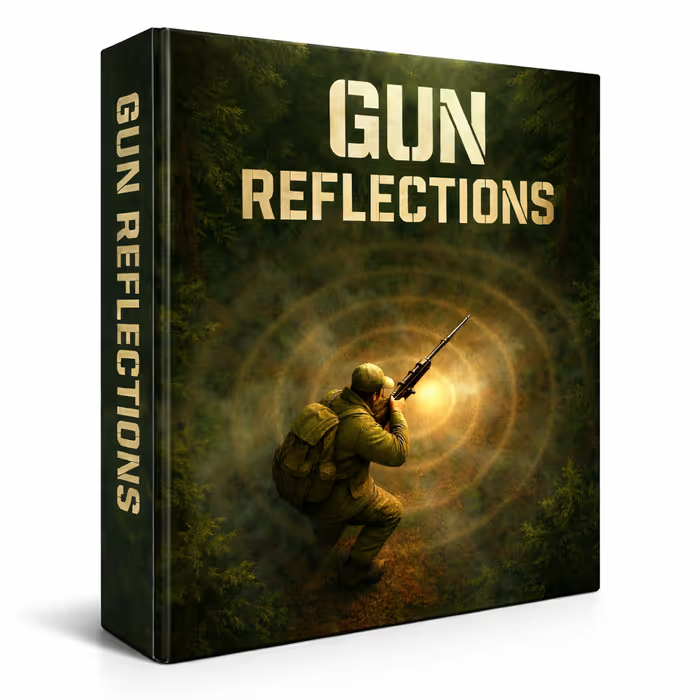
Mariusz Glabinski (MG): From the very beginning, during our spotting sessions with the show’s creators, we understood that realism and staying true to both the characters and the locations were crucial for this project. We made a conscious effort to keep the ambiences as accurate and location-authentic as possible. I was lucky to have some of my own previously recorded material from the region, and Larry contributed excellent recordings from his home in the Poconos. He captured these intensely active night-forest ambiences, loud, lively woods filled with insects and peepers, which became vital elements in creating tension for several key scenes. I also added sounds from commercial and independent sound libraries to supplement our location recordings.
Many of the wind and tree movement textures came from the Hiss and Roar “Wind in Trees” library and Lydtopi’s “Wind in Broadleaf Trees“. Some of the sounds of older model cars also came from commercial libraries.
Overall, the main idea for the show’s backgrounds was to create a sense of tension within the environment itself. The ambiences weren’t just filling space; they were shaping emotional pressure, providing moments of relief when needed, and grounding each scene in a very specific, lived-in place.
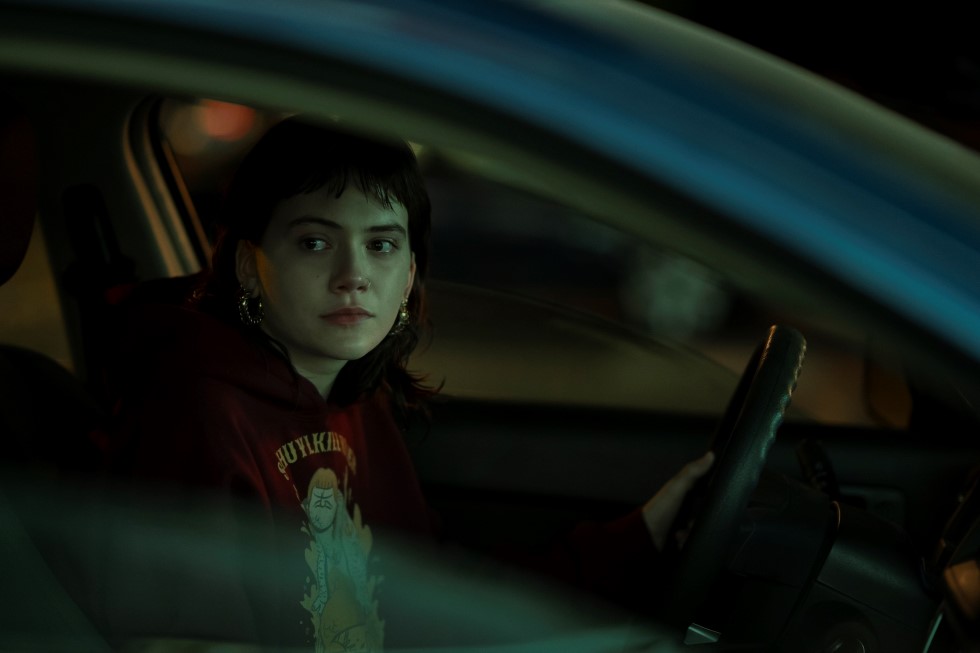
One of my favorite BG sequences to edit appears in Ep. 2, in the parking lot scene, where Maeve tries to drive away from the roadblock while knowing that the missing boy is in her car. The external commotion, voices, police radios, doors, and trunks opening and closing contrasts with our focus on her face and her terrified eyes. Much of the tension in that scene comes from the off-screen sound. And it was so much fun to edit.
Even now, every time I rewatch that scene, fully aware of what’s about to happen, I still find myself on edge.
Of course, it’s not just about selecting and editing the right sounds for the backgrounds, but also about how they are mixed.
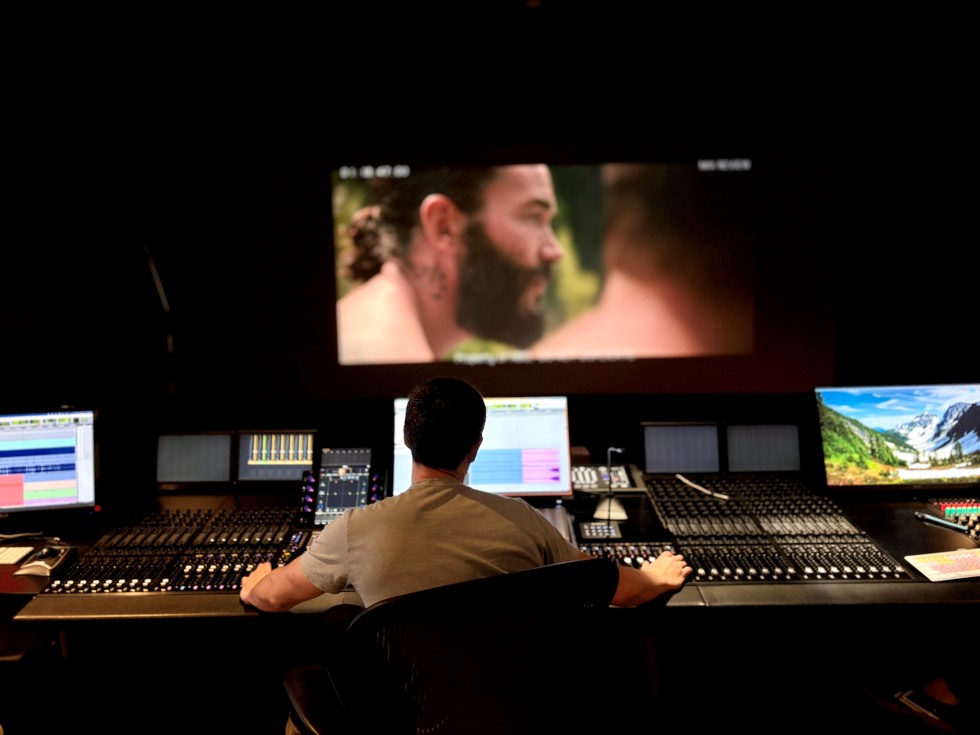
Both Lidia and Larry have a deep understanding of dramatic storytelling and a remarkable sensitivity to details, and they shaped the final mixes of backgrounds and sound effects in a way that truly defined the emotional tone of each scene.
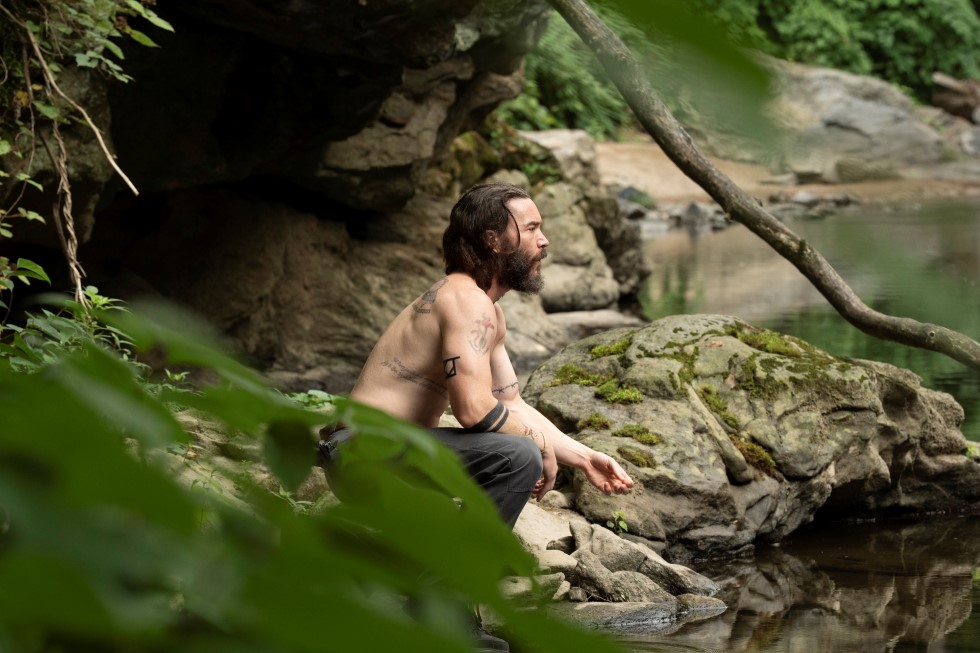
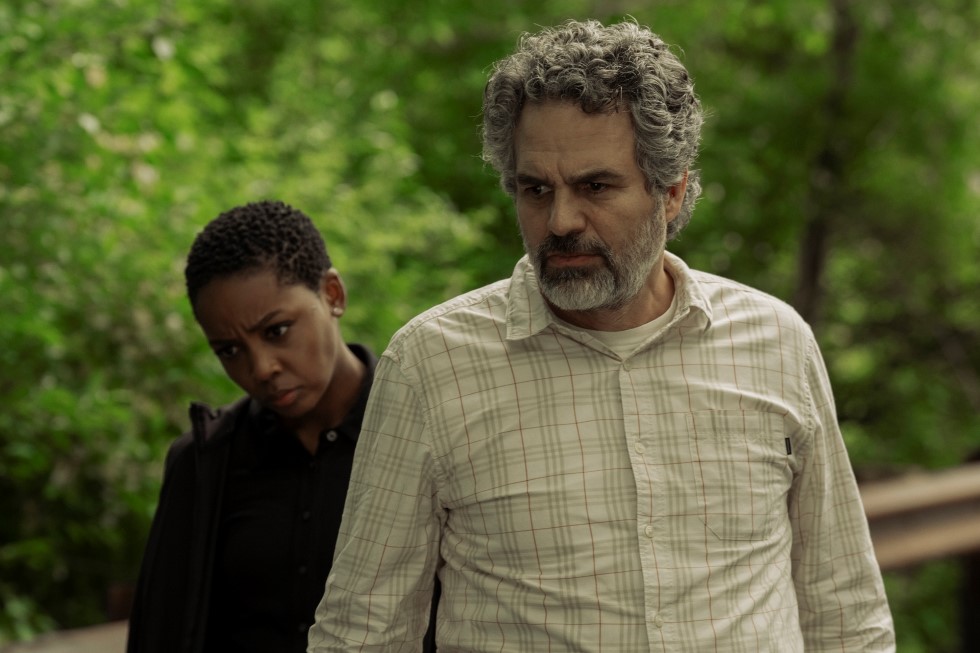
In Ep. 5, Robbie takes Tom out into the woods and leaves him there. Can you talk about your foley editing challenges here, like editing in footsteps by ‘feel’ when you can’t see the exact sync of the actor’s feet? (I love the sonic variation on the footsteps, hearing the leaves and twigs snap under Tom’s feet!)
Nora Linde (NL): Editing footsteps in scenes like that where you can’t clearly see an actor’s feet always presents a challenge, especially in cases where you can’t rely on the production sound for clues, but I’ve found it really helpful to keep an eye on the movement of an actor’s shoulders to get a sense of the rhythm of their walk.
Our wonderful foley artists at Footsteps gave us lots of textures to work with for that scene in the woods, like dry leaves, sticks, and foliage, which is how we were able to get that variation in the sound of his steps. They were also really sensitive about capturing the character’s movement in the leaves instead of just the footstep impacts, and I think that contributes a lot to the realism of the foley in that scene.
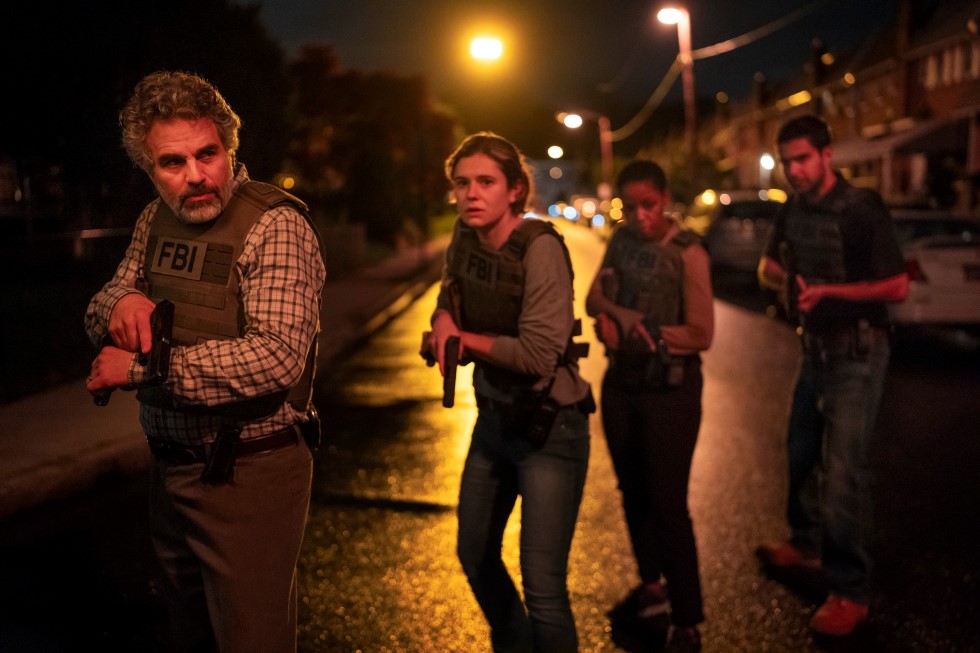
What went into the sounds of the weapons on the show? Did you approach the sound of the FBI/police guns differently than the biker club weapons? Any helpful ‘weapons’ sound libraries?
MG: Yes, we definitely approached the weapons with intention. On shows like this, we always start with a complete list of the firearms used by each character from the prop department, so we can stay true to production and match the correct models in our sound design.
we always start with a complete list of the firearms used by each character […] so we can stay true to production and match the correct models
But once the action ramps up, realism alone isn’t enough; for dramatic effect, you need to enhance, sweeten, and individualize each weapon. I always want every character’s gun to feel slightly different, something that reflects who they are. So even if two characters technically use the same firearm, I’ll add different layers, impacts, mechanical details, or tonal qualities to each one.
For example, for one of the big shootouts in Ep. 6, the scene was so dense with gunfire from multiple characters on both sides that I started by mapping the entire sequence. I went through the scene and placed markers for every gunshot, labeling which character was firing even when they were off-screen. That way, I always knew whose weapon I was cutting for.
Then I created dedicated character gun tracks in Pro Tools, color-coded, so each character’s gunfire was on its own tracks. This made it easy to maintain continuity, adjust performance, and quickly implement new design choices if needed. For example, if halfway through I decided that Jason’s weapon needed more low-end punch or sharper transients, I could go back and update all his shots consistently because they were isolated and easy to locate.
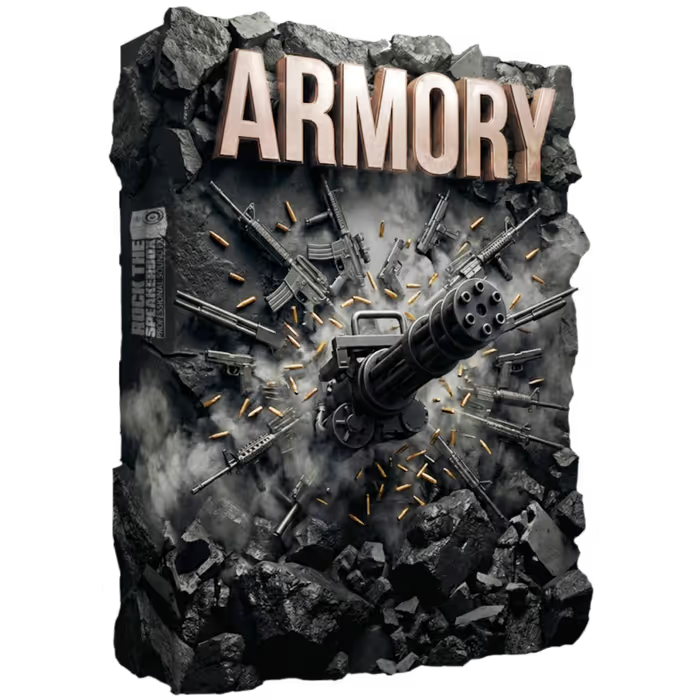
In terms of libraries, most of the core gun sounds came from collections of commercial recordings. I’ve tried to record firearms myself a few times on past projects, but honestly, gunshots are one of the hardest sounds to capture well. Without specialized equipment and real experience with weapon recordings, you rarely get decent results. I’ve kept a few of my own distant gun recordings from the past, and they still come in handy from time to time, but for the main body of the sound, I rely on professional field recordists.
[Frank Bry] has successfully captured weapons and guns from all walks of life, providing a diverse array of material to choose from. Additionally, his bullet impacts are among the best and most versatile
My go-to is always Frank Bry, “The Recordist.” His gun libraries are unmatched, as he has spent years recording a wide variety of weapons. I believe his extensive knowledge of guns and experience in recording them are unparalleled. Plus, he has successfully captured weapons and guns from all walks of life, providing a diverse array of material to choose from. Additionally, his bullet impacts are among the best and most versatile.
For additional body and design layers, I like to blend material from BOOM Library‘s “Assault Weapons” and “Guns” and sounds from SoundMorph, especially for low-frequency enhancement, mechanics, slides, cocking, handling, and “sweetener” textures. SoundMorph’s “Intervention” library is particularly great for handling and mechanical elements.
The primary goal has always been authenticity, but balanced with enough dramatic enhancement to make the weapons feel powerful, character-specific, and emotionally charged in the mix.
In Ep. 6, Lizzie experiences tinnitus and partial hearing loss after Grasso discharges his gun too close to her head. She runs back to the car to call for backup and gets hit by Jayson and Perry in their pickup truck. Can you break down your sound work on this sequence? What were some of your editing and mixing challenges and sonic choices for this scene?
LZ: This was a sequence we needed to figure out together on the stage. Initially, we followed the Avid guide track with regards to when we are in Lizzie’s POV after she experiences hearing loss and tinnitus. As Lidia and I worked through the predub, we felt the impulse to pull back on how often we roll out the heavy filter effect and various ringing sound effects. We need to communicate the hearing loss because it’s a story point as far as tracking Lizzie’s choices through the rest of the scene, but it’s also a pretty unsubtle and unpleasant place to be for an extended period of time as a viewer. So, we presented a more pared-back version. Ultimately, it landed somewhere in between during our review. We had leeway to dial back the intensity of the effect here and there, where it served us, which was also helpful.
In Ep. 7, Jayson and Breaker (another member of Dark Hearts) go to Maeve’s house to look for the money. Tom and Aleah show up to save her. What were some of the challenges in mixing this skirmish sequence?
LZ: This scene was fun to mix! Before Tom, Aleah, and the Dark Hearts arrive, an injured Grasso pulls into Maeve’s driveway to warn her that she’s in danger. There is a great shot that follows Maeve from the window where she observes Grasso rolling through a bush as he comes to a stop, through her living room, and out the front door where she arrives at Grasso’s car and he rolls the window down. Mariusz did an amazing job on all the effects and ambiences in the show, and this was a great opportunity to feel the environments shift from the living room to the hot bugs outside and Grasso’s overheated Jeep engine, where Maeve ends up.
When things started to go off the rails, we tried to sell the geography of where various actions were taking place if they were off-screen
Much of the rest of the sequence is cross-cutting between the garage, the second-floor bedroom where Aleah is jumped by Breaker, and the chicken coop where Jayson eventually holds Maeve hostage. When things started to go off the rails, we tried to sell the geography of where various actions were taking place if they were off-screen, and to make each of these sub-locations feel distinct when we could. We leaned into playing perspective to heighten tension when Maeve and Jayson are in the chicken coop and Tom is approaching. Dan Deacon composed a beautiful score for the show that also did a lot of work in this scene.
What is your favorite moment for sound on the show? Is there one you’re most proud of in terms of your work on it, from where it started to how it played on air?
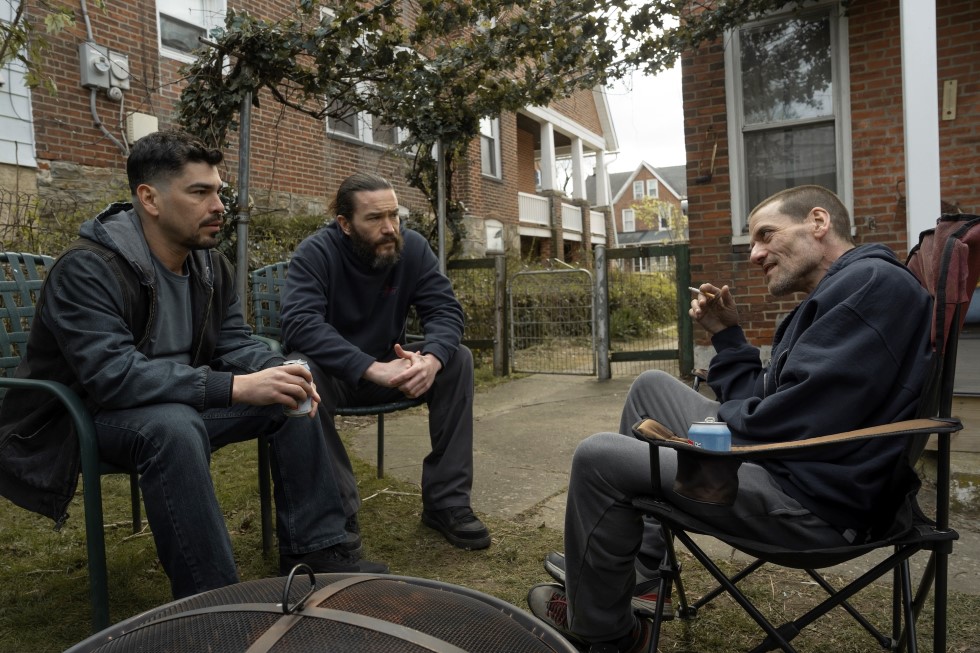
LZ: I love the birdfeeder at the end of Ep. 7. Nora, Mariusz, and our amazing foley team at Footsteps did such beautiful and delicate work for all the individual birds we see coming and going from the birdfeeder. It’s a serene way to end a generally stressful series and very cool how it’s organic not just to Tom’s birdwatching but the themes of the show as well. As far as something I’m most proud of in terms of where it started to final product, there is a sneaky amount of ADR in this show and thanks to Lidia and our dialogue editor, Michael McMenomy, I think we are getting away with most of it (I hope!).
LT: I love the birdfeeder too! It’s such delicate work from our foley team and a beautiful way to end the series. Shout out to Jacqui Kaplan, one of our tireless picture assistants who is also a passionate birder. She was able to help identify which birds were which so we had the correct sound for each bird. By the end of the show, we all knew a little more about birds in the north east!
the small sound details are really the elements I’m most proud of and it all comes together thanks to an amazing crew of people
All in all, the small sound details are really the elements I’m most proud of and it all comes together thanks to an amazing crew of people. The dialogue work that Michael did by tirelessly carving out breaths and nuanced performances, like Emily’s scenes with her therapist, or the family scene around Tom’s kitchen table in Ep. 2, the foley details like when Cliff is killed and falls off the chair at the end of Ep. 4, the dull crinkle of the cling wrap on cement, the footsteps in the brush in Ep. 5, Perry’s chain before he kills Eryn; the effects/BGs from Mariusz grounding the audience in the space, specifically in Ep. 5 when Robbie drops Tom in the woods, it’s such a beautiful cacophony of birds and winds.
And the icing on the cake was having Larry mix all these elements together, along with the gorgeous score from Dan Deacon, and tireless support from Missy Cohen, our music editor.
A big thanks to Lidia Tamplenizza, Larry Zipf, Mariusz Glabinski, Michael McMenomy, and Nora Linde for giving us a behind-the-scenes look at the sound of Task and to Jennifer Walden for the interview!