






Skywalker Sound’s Supervising Sound Editor/Sound Designer Jeremy Bowker and Supervising Sound Editor Daniel Laurie discuss the details of making Universal Pictures/Illumination’s animated adventure-comedy The Super Mario Galaxy Movie a blast for audiences of all ages.
Find out what Princess Rosalina sound used obsidian chimes and resonating wine glass rims, how Yoshi’s foley footsteps were unique from other characters in the film, what resonating metal has to do with Bowser Jr.’s magic paintbrush, how an electric shaver was integral to the laser-scanner sequence, what theme from the original Mario Bros. plays in the rock sound design during the castle crash scene, and why Bowker thanked pop-legend Cher in regards to his work on Rob the Robot.
Interview by Jennifer Walden, photos courtesy of Universal Pictures/Illumination; Skywalker Sound
 New ReleaseNOVA by Mattia CellottoWATCH VIDEO →
Mario and Luigi are back on the big screen. The Super Mario Galaxy Movie — in theaters now — is Universal Pictures/Illumination’s sequel to the box-office record-breaking animated film The Super Mario Bros. Movie (2023). As with the first film, the sound is crafted with the youngest audience members in mind while still checking all the boxes for long-time fans of the Mario franchise. Supervising sound editors Jeremy Bowker and Daniel Laurie at Skywalker Sound worked closely with re-recording mixers Michael Semanick and Scott Lewis to find the sweet spot between exciting and scary and relied on sonic cues, like heroic music from composer Brian Tyler, to let kids know there’s no real danger to Mario and the gang. And, as with the first film, the sound team collaborated with Nintendo to incorporate iconic Mario sound effects, like the Super Mushroom power-up, the classic fireball, the Goomba stomp sound, and more.
Hear about how an electric shaver became a laser scanner, why obsidian chimes were the secret to Princess Rosalina’s magic, how the original Mario Bros. “Game Over” theme hides inside a castle crash — and why pop-legend Cher gets a thank-you for Rob the Robot.
The Super Mario Galaxy Movie | Final Trailer
The goal for animated films geared toward kids is making the big and scary moments feel less intense but still exciting. In The Super Mario Galaxy Movie, how did you use sound to defuse the tension/scariness and set up audience expectations for the tone of this film?
Jeremy Bowker (JB): Both Dan and I are of the mindset that a lot of the credit for the balance and making the film sonically appropriate for the audience (of all ages) should be given to our two mixers: Michael Semanick and Scott Lewis. They knocked it out of the park when it came to the tightrope walk that is keeping a film of that magnitude exciting yet aurally pleasing.
Across the board, we in editorial made sure there was a wide spectrum of sound (highs, lows, scary, fun, etc.) and that there was coverage of every event we wanted to hear. We ensured the mixers had what they needed to shape the track. So with big events on screen, in editorial, we’d often push it a little too far because it’s easier for the mixers to soften the edges a bit than it is for them to fabricate something out of thin air under their faders. So, it’s definitely us (as an editorial and mix team) collectively trying to figure out where that threshold is between exciting and scary. I feel like we really started to achieve that in editorial, but both Scott and Michael refined that really well in the mix.
A lot of work was also done with both Dan [Laurie] and Michael [Semanick] on the dialogue side to continue the theme of keeping the track exciting but not abrasive.

Dan Laurie (DL): Chris Meledandri, the founder and CEO of Illumination, is all about the music driving the film and hearing the dialogue clearly.
This is an unusual film because there are so many Nintendo sound effects that Nintendo wants to hear, quite rightly. As a result, there was a delicate balance between the Nintendo effects and the music. So, we had to be very aware of that as well.
JB: It’s always a bit of a delicate balance. In the end, everyone was really happy with how the film gracefully bounces back and forth between all of those elements Dan mentioned. At a certain moment, you want the audience to feel nostalgic for Mario getting a power-up or hearing that classic fireball sound. At other times, it’s an emotional moment, so you really want the music to swell. Other times, the dialogue has important information or emotion to get across.
Collectively, especially with the mixers, there was a lot of swaying between all those elements.
DL: There’s a lot of back and forth, indeed.
Can you talk about the sound of Princess Rosalina’s sparkly magic?
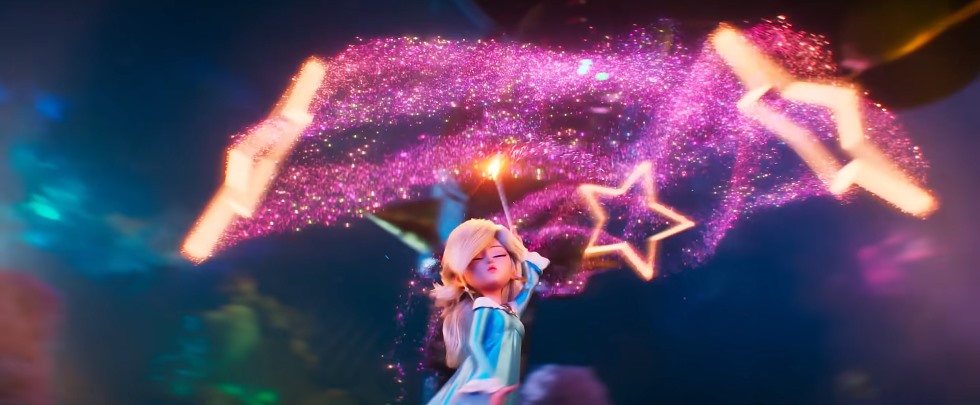
JB: Our picture editor, Eric Osmond, was very excited to make sure that when Princess Rosalina held things in a static state, in her really powerful moments, there was the vibrating wine glass sound you get when you run your finger over the rim. We took that sound and augmented it, using different recordings to make it stereo and fill the space. That became the signature sound of her holding something in midair, whether she’s holding Bullet Bill in midair or even at the end when the two sisters (Princess Rosalina and Princess Peach) have that touching moment before their combined power is released, making Planet Bowser lush and green. In both of those moments, there’s that wine glass sustain, and it became a signature.
Beyond that, her magic was a wide array of elements that catered to each moment, made of anything from percussion chimes and bell trees to powerful, laser-like attacks (made from metal), sounds from jets, explosions, and obsidian chimes.
Obsidian chimes sound midway between glass and rock. They’re a type of volcanic glass. They have a great resonance. Sometimes, metal or pure glass can get a little out of control in terms of ring-out length. But obsidian chimes still have that chime-like identity without the lengthy resonance. They cut themselves off early in a very satisfying way.
What are some challenges for dialogue on an animated film? What are some ways you help attach the voice to the character on screen?
DL: The challenges are that it’s weird because these actors are recorded all over the world in different booths. One booth will sound okay, another booth in another country might sound terrible. And then we have the latest trend of recording lines with a smartphone (which can be problematic).
It’s so different from production dialogue. In a live-action film, the production dialogue is a bit dirty, and many directors like that because it’s real. So we have to make these voices recorded in booths sound like they’re coming from the animated character on screen. It is such a weird thing to record these lines. The actors go into the studio; there’s no picture, and they’ll probably play their lines off the directors. Then, they animate around the actors’ lines. So from the ground up, you are creating this world. We make all the lines level, and then we present it to the mixer, Michael. And then Michael will EQ it, pan it around the room, and then the foley comes in to give it a bit of life, with the feet and the cloth passes. That’s what we do to make it work, really.
JB: It’s also amazing how, in the early part of the process, when things are just storyboards, the pace of the dialogue performance and editing will set the overall pace of the film.
DL: The director(s) and editor might manipulate the performances, like speed it up or pitch it. That happens quite a lot, actually. When we get their dialogue edit from the Avid, we have to replicate what they did. Since they’re using basic tools in the Avid, we have to redo everything they did using our much better tools so it will sound better in the final mix.
JB: That’s one of the amazing things about Dan’s dialogue editing. He has to make it feel exactly how it felt in the Avid, but it has to be a high-fidelity version. So you’re essentially trying to recreate exactly what the picture department has come to know and love about the dialogue, but we’re trying to replicate it in a way that will play well over the world’s best speakers.
They know their work will be redone. They’re in that early creative phase where they’re trying out ideas, and once they have an idea that really sticks, it’s our job to maintain the continuity of that idea while making sure it sounds as good as possible.
DL: Another thing we do is add efforts and breaths to make it feel more real, but the animators don’t miss anything because they’ve been working on these projects for 2 to 5 years. So if you put a breath on Mario, they’ll go, “What’s that??”
It’s a constant back-and-forth of sending over all our edits, even if it’s adding in a little breath. I have a dialogue editor working with me, Chris Kahwaty, who is brilliant. He’ll say, “I’ve done all these edits.” And I go, “Yeah, okay. Now we have to send these to the picture department.” They get reviewed, and the usual reply is, “No,” because they’re so used to what they’ve been hearing. On occasion, we will get approval for something.
JB: And when we get a “yes,” either on the dialogue or the effects side, it’s so amazing because, as Dan said, these people have been living with this night and day for at least three years. So if you bring a new idea or say, “Hey, I’d like to augment this,” and give proof of concept by the work that we’ve done, and they like it, it’s so gratifying because you know it’s drastically different from what they’ve been living with for so long.
DL: It’s a good feeling when they come back, say, “We love it” instead of, “No, that doesn’t work.”
Another thing we like to do is adjust the sync if something doesn’t look right. But that’s something that’s always done while keeping the picture department in the loop.
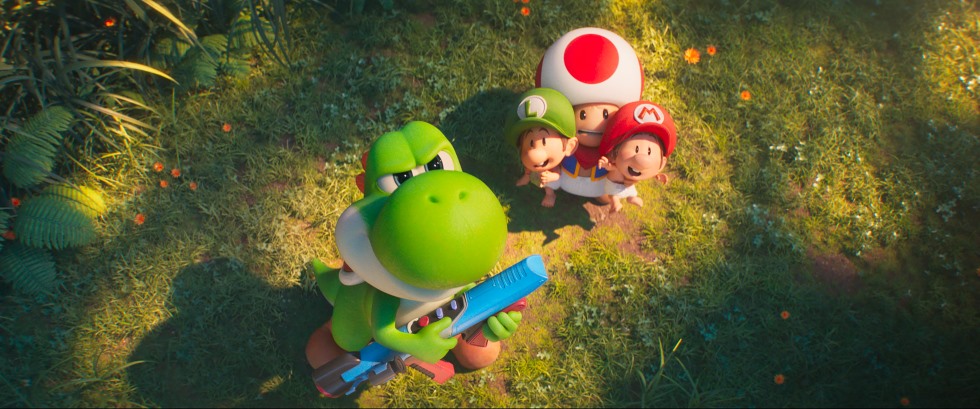
The foley brings the animated world and characters to life, making it feel real. Can you talk about your foley team and the contributions of foley for this film?
JB: They did so much, and we’re so proud of them. Our foley team consisted of Foley Supervisor Jordan Myers, Foley Artists Shelley Roden and Sean England, and Foley Mixer Dennis Leonard.
Their contributions were almost too many to say, but off the top of my head, Yoshi is a great example of their thoughtful work as artists and collaborators. Yoshi is not a very complex being and having him as a friend is like being friends with a pony who might mistakenly knock you off balance at any moment.
In foley, we had many conversations about these dynamics, experimentation with different feet sounds, etc., and in the end, all of those characteristics come across in Yoshi’s foley. The weight, the simplicity of the single-part foot downs, and the non-threatening nature of the soft, leathery attack of each footfall all help support the character of Yoshi.
We tried to make sure Yoshi’s feet contrasted with everyone else’s feet as much as possible by also keeping their rhythm as simple as possible. It also creates a nice juxtaposition between his heavy sound and his adorable voice (so well performed by Donald Glover).
With each and every character on screen, the foley team put that kind of care, thoughtfulness, experimentation, and communication into the process. We are so incredibly thankful for their brilliant work.
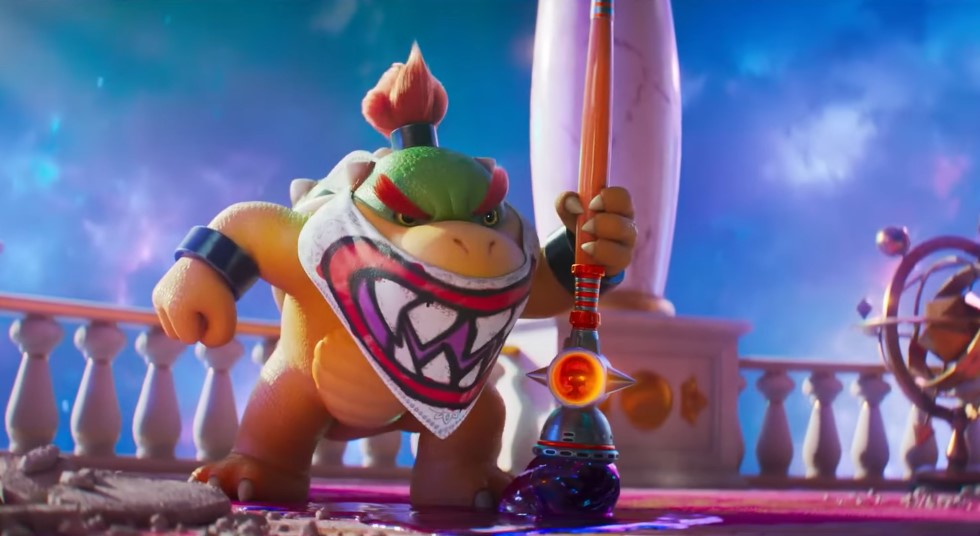
What went into the sounds of Bowser Jr.’s paint brush/paint blob magic? It has this cool goopy, liquidy sound that transforms into solid objects. The transition between liquid and solid sounds was perfect!
JB: That’s so great to hear. That was one of the early pieces of design that we sent to our picture editor Eric, and directors Aaron Horvath and Michael Jelenic.
We knew we wanted continuity across all magic paintbrush transformations. We wanted it to sound fluid, intimidating, and also to represent the object it becomes.
The liquidy, viscous sound was a lot of fun. Usually, the liquid layers were a combination of elements. We had to be very careful because liquidy sounds can get very tacky and have lots of ticks in the high-end. So it was a lot of slowed-down, viscous-liquid sounds. For fun, you can make interesting, liquidy, almost vowel-like articulations with your mouth, so we did that sort of thing to give it a bit of character.
The morph sound was very consistent, a low-end kinda “wooooow” sound made from an altered recording of metal resonating. We wanted that to sound deep and intimidating.
The first scene we worked on that sound was when you first see Bowser, Jr. show up with a mask on. We wanted a contrast to the high-end of the weapons’ sounds; we thought another high-end element just wouldn’t help us at all. So there’s that consistent “whompy” low-end transformation sound, and then the tail of the transformation is whatever object the paint becomes. So, if it’s going to turn into a weapon, you’d have the sound of that weapon, like a sword shing, as the last part of the morph, for example.
Often, a guideline when we’re editing or designing sounds is: can you simplify it to a point where you can make the sound with your mouth? If you can do an impression of the sound with your mouth, then we’re on the right track.
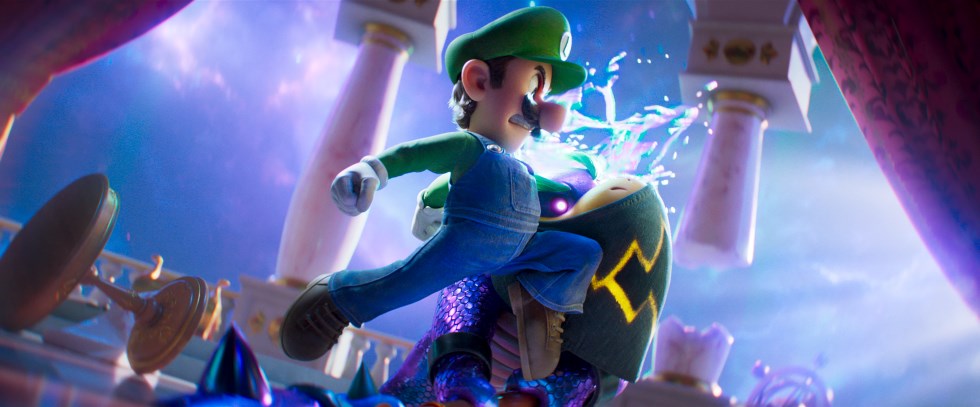
Do you have a favorite paint-blob transformation or paint-blob creature you designed?
JB: I would say the initial ones during the fight when Bowser Jr. introduces himself to the Mario Bros., because I just wanted the idea to work. And when we got positive feedback from our directors and picture editor on the first try, then we knew we were off to the races. So, purely for selfish reasons, it was that first fight where we realized we had conquered the concept of it, and we could now propagate the idea from there.
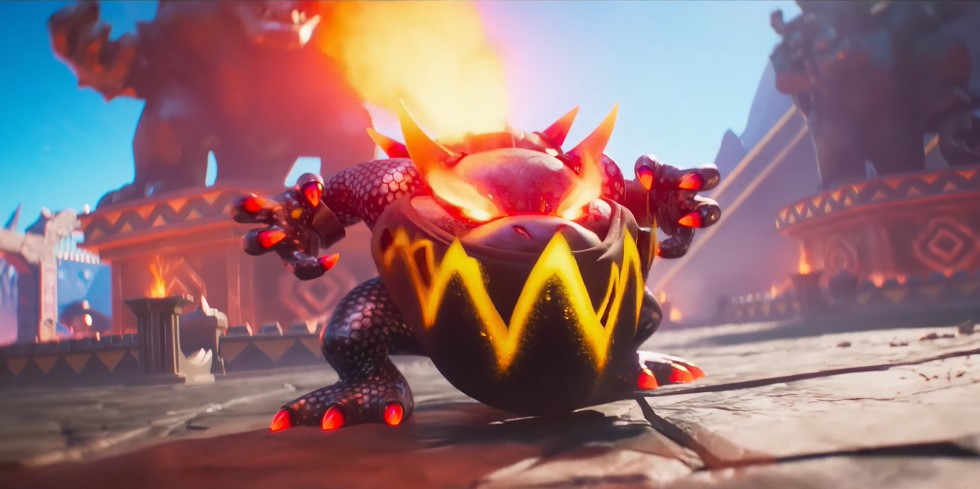
What went into the sounds of Bowser, Jr.’s paint-blob Dragon?
JB: Oh man. I was expecting lots of notes on that but they just said, “Great!” So I took a breath and enjoyed the sunshine outside after that.
It was the same concept, just magnified. The paint sounds went from being either mono or stereo to LCR — using all the front channels and making sure that very different paint-like sounds were in each speaker.
The dragon itself was a continuation of the theme from that piranha plant, which we hear earlier in the film. So, like the piranha plant, it was very (excited) horse-based in its vocalizations. It had a little bit of a chortle in there from a large sea mammal — an elephant seal, I think.
That’s one of those moments where our mixers, Scott and Michael, really deserve credit for finding that fine line of how scary it should or shouldn’t be. And also, composer Brian Tyler deserves some of the credit because the music sets the mood of how concerned the audience should or shouldn’t be in that moment. It was a really triumphant theme at that moment. So we could lean into the scary aspect a little more with our sound design because you just know that Mario is going to succeed. He’s going to be okay because you hear the big, triumphant horn themes.
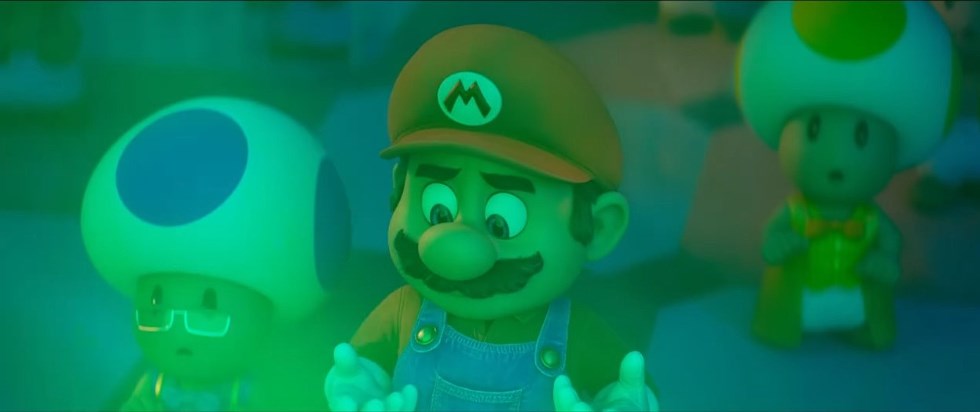
I loved the green scanner sound when Bowser Jr. comes to rescue his dad from Princess Peach’s castle. What’s cool about this is how long that went on for and how long that sound played. What went into that? Were you working against music?
JB: I specialize in long-winded sound effects, haha.
I have to say that something I am really proud of with our sound effects team is that we religiously work against the music track early on. It’s often temp music because the composer is either still composing or actually on the scoring stage, recording the score. When the actual music arrives, many of the masking issues (or lack thereof) are similar because the intent of the temp music was often the same as that of the final score. When you’re cutting against music, even if it’s temp music, it helps you simplify the track you’re making and helps to make sure that you choose sounds that are always moving through space or changing pitch…
DL: and not clashing with the horns.
JB: Exactly. We’re always desperately trying not to clash with the music, as Dan said, either tonally with something like the horns or rhythmically. If there are big hits with percussion, we’ll sometimes fudge things a frame or so to make sure we’re not creating (to use a drumming term) a flam.
With the scanner, your question made me so happy because that’s one of those sounds that marinated and changed over time. I recorded the original ingredients for that, probably, seven years ago. It was a recording of an electric shaver that I slowed down, chopped up in a very rhythmic way, and then sped back up.
I wanted it to have a bit of movement, so I ran it through my studio speakers and — trying to channel my inner Ben Burtt — waved a shotgun microphone in front of the speakers to give it a Doppler effect. And then, just for the heck of it, to see how far I could push it, I added a little more phase with plugins so it would stick out a bit more.
I also love the way that Scott and Michael mixed that. It fades in, and it’s very long. Then it’s very steady, but there’s also this delicate texture that pops up when it rolls over Mario. As it disappears outside of the castle, if you listen really closely, there’s this very classic, but almost too clean (in the best of ways) synthesizer-laser “pew” sound. Those two moments: highlighting over Mario and it disappearing outside of the castle, were cute and fun and gave it an identifiable texture.
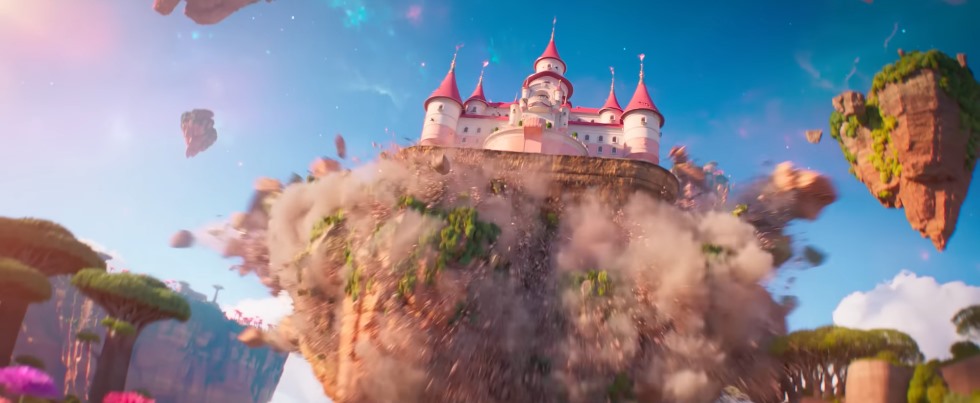
Bowser Jr.’s rescue ship (Megaleg) crashes into the main ship, causing it to drop Princess Peach’s castle. The castle comes crashing down, breaking apart. There are huge impacts and rock breaks — probably the biggest crashes and impacts in the whole film. How did you keep that kid friendly? What were the challenges for sound?
JB: Once again, in editorial, we really tried to push it to the point where we felt it was a little too far because we knew that it would be tamed in all the best ways that would please Chris Meledandri (and the audience that he knows so well). Our aesthetic, of course, is also the same as Chris’s. It’s just that when you’re in the thick of it, you don’t always realize how big or scary things are getting. So it’s great to have mixers that we love and trust so much. Also, having Chris’s ear at the end is a real blessing.
A lot of it has to do with volume. One of the ways we made sure it still sounded large and exciting, yet could be played at a lower volume, was by being really selective about what was there (in our tracks). Because we had worked so much on it, we probably had about twice as many sounds designed and cut in before it went to our mixer. After we cut it, we listened to it and thought, “Oh my gosh, everything’s covered on the screen, and that’s way too much.”
So there was a lot of selective muting of elements. The process or end result is almost like increasing the contrast in photography (giving each sound more autonomy by clearing out anything unnecessary). Also, once we had it distilled down to only the things we wanted to hear, we had the benefit of more sonic headroom, and it still felt powerful. We could then exaggerate specific moments. For example, the incoming boulders (as the castle is chasing them down the hill) have a lot of fun incoming rocket/artillery sounds in there.
We took advantage of the camera spinning around from their POV, using panning to give you a sense of spinning. And we had fun with that pause as they’re looking up at the castle, as it’s teetering over the top of the cliff. No one will ever hear it, but rhythmically and tonally speaking, as a rock tumbles over the cliff, it plays the “Game Over” theme from the original Mario Bros., just as a joke to say, “This is probably the end for you.” It’s almost like the rock is taunting them.
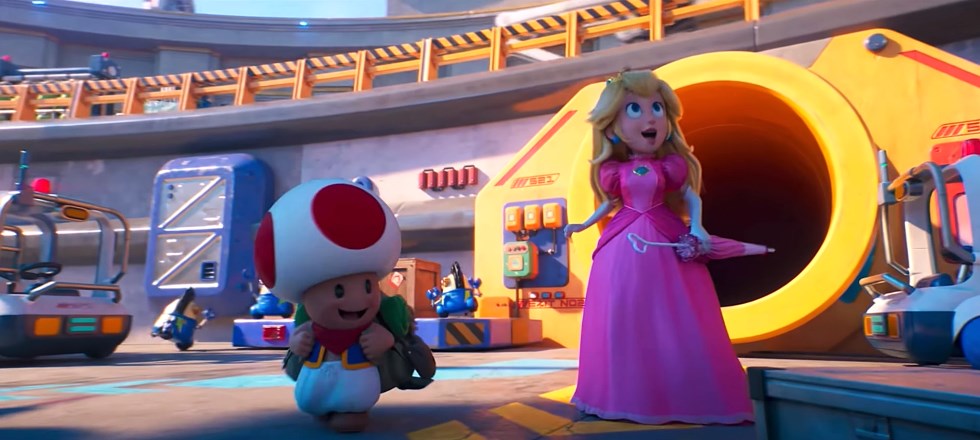
What went into the sound of the Gateway Galaxy hub? There are tons of characters and activity in the background. Did that require significant loop group?
JB: Dan did a fantastic job with the loop group. There are so many textures in there.
DL: Yeah, we record the loop group, put it in, and balance it against Jeremy’s effects. We have to be very careful with loop group because you can go over the top, and some of the loop group artists go over the top completely. You have to say, “No, not so much. Not so much. We don’t want to hear you. It’s more of an effect, really.” We covered every angle and then mixed it before handing it to effects.
JB: In a very similar spirit to what we talked about with the castle, there’s a lot of coverage, and then you peel back the layers of the onion and distill it down to what you need. Sometimes, part of the process of discovering what you need is making sure there’s plenty of wonderful coverage.
DL: The directors are very aware of loop group. If they hear too much of it, they go, “Nope, take it out.” If you’re not subtle with loop group, you’ve got problems. It can’t be too loud and too abrasive, unless you’re working on an action film, let’s say, and people are shouting and screaming. Then you have to do that. But even then, it can be too much. You want to peel it back and just have what you need. So you cover it all, and then 90% gets taken out. But some of it stays.
JB: Sometimes it’s just those one or two things that stay that make the entire thing worthwhile. There’s a real parallel with sound effects recording. You end up recording an insane amount of material, and if you walk away with 2% of it being useful, it’s a giant success. That’s naturally part of the creative process: being okay with a low batting average. You have more success if you just do it a lot. That happens a lot with anything — from sound effects recording to loop recording.
DL: I used to get very upset in my early days. I’d lay up all this loop group, spend hours and hours doing it, and then hardly any of it got played. I felt like, “What’s going on??” But now I’m like, “Well, if you are happy, then that’s great.”
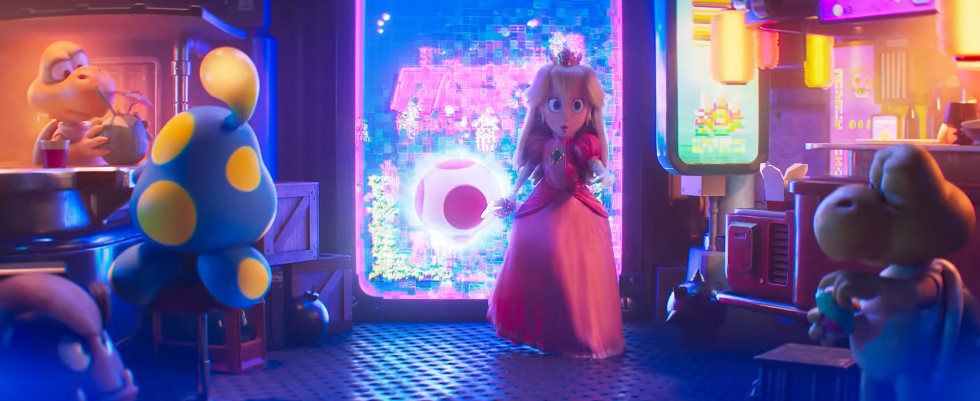
My favorite sound in the whole film is the holographic wall that the monkey (thief) jumps through. Princess Peach sticks her hand in the wall and moves it around, and the sound reacts perfectly to that. It’s a nice use of old-school Mario game sounds, too! Can you talk about your work on that?
JB: That’s so kind of you, and I’m so glad the sound was perceived that way. I had conversations with both Michael and Aaron about this sound. They wanted it to feel glitchy yet also related to the Nintendo universe. I really wanted to tag it to her hand movement as it went back and forth in the wall. So there was one version that I did where I feel like I lost the taste of the original ingredients. But it turned out that starting at a low pitch — lower than the actual Nintendo sounds — then going higher, and then coming back down as she finished her hand movement, left enough of the identifiable nature of those original sounds, and it really tagged it to her hand movement.
In the end, it was a very simple thing to do, and it gave us what we needed. I’m really happy that it is believable as far as what’s happening on screen, and also that people are saying, “Oh, I recognize that from the Mario universe,” which is really what we were trying to achieve.
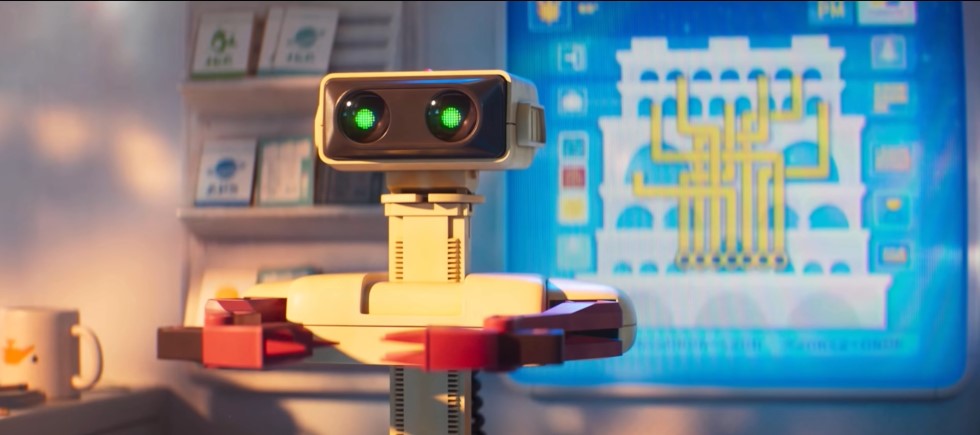
What went into the voice processing for Rob the Robot, at the Gateway Galaxy information booth? He says, “Right oveeeeeeeerrrrrrrrrr….”, getting stuck on that word. Can you talk about your work for that?
JB: Our picture department had a lot of creative ownership in that. Overall, we need to thank Cher and T-Pain for making AutoTune so popular because the original processing was done with Antares AutoTune. The picture department had already sorted that out.
DL: AutoTune wasn’t the only plugin. There were about seven others that we used as well.
JB: I just wanted to thank Cher.
DL: Okay.
JB: Dan and Michael [Semanick] carried that forward and refined it. We love that gag too.
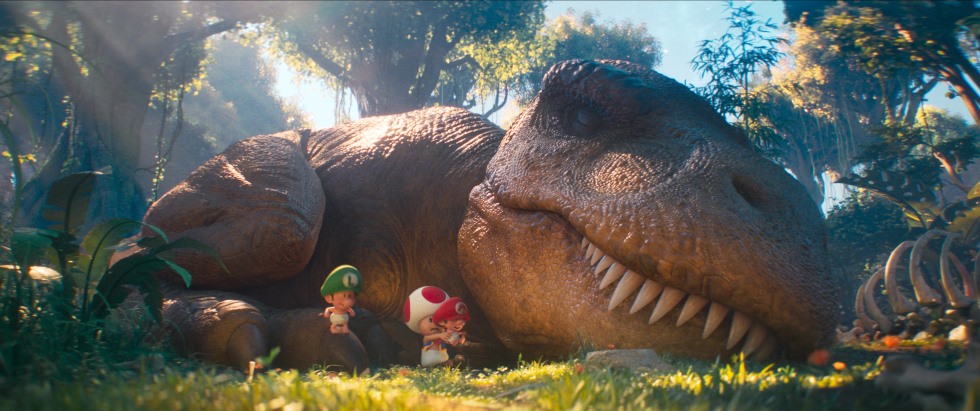
Let’s talk about the scene in which baby Mario crawls into the mouth and out of the nostril of a sleeping T. rex. What went into the T. rex’s snoring and sneezing sounds?
JB: Much of it was from either pitched-down recordings of me or dogs (for the sleeping portion).
It’s funny because we wanted the T. rex to sound, in a way, friendly while it was asleep to help create contrast with the roar. Also, we wanted to create contrast between baby Mario and Luigi and the size of the T. rex’s head. We wanted it to seem like he was gigantic, so you could hear the cavity of his head resonating. We just wanted him to seem insanely big but not intimidating just yet. We only wanted his size to sound intimidating. So there were lots of sounds of me, or Bassett Hounds, and the end of the nostrils were made with pitched-down horse recordings.
And that final sneeze was made with a tiger and my family’s Dachshund, who, rest his soul, passed away a few years ago. He had a great sneeze. The beefy part of the sneeze is made from a sneeze I recorded in 2007 of a tiger at the San Francisco Zoo. It did a lot of great snorting and sneezing, which definitely added to the volume of the moment. And then the mids are a horse, and I think there’s even a cork pop buried in there somewhere.
We had a lot of fun with this. We did tame it down a bit. As he’s crawling through the T. rex’s head, there are several hilarious snorts that sound like someone who has something caught in the very upper end of their nostril. But we ended up going with the baby giggles while he’s in there because that was funnier. But, yeah, we had an absolute blast molding that scene.
One of the great things about our sound effects team is that there’s a lot of back-and-forth. I’ll design something, and then one of our brilliant effects editors will add a few things, and then I’ll go back in and play with it a little bit. Our sound effects editing team consisted of Luke Dunn Gielmuda, Joel Raabe, Richard Gould, Cameron Barker, and Jessey Drake. It’s amazing how generous our team was, because, as far as ownership of the track goes, it’s very scattered. But in a way, we all collectively own what went into it. And by generous, I mean that no one’s really precious with their work or territorial. Everyone just wants the best idea to win, even if that means muting something we spent hours on. If it gives clarity to the track, then everyone’s on board and is really excited for the movie to be the best it can be.
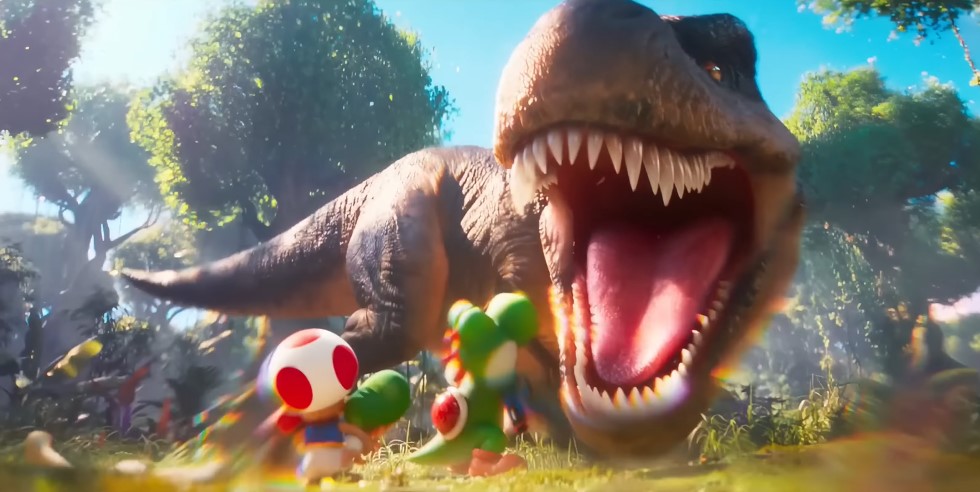
And that ‘classic’ T. rex roar, was that Gary Rydstrom’s roar from Jurassic Park?
JB: It is not a lift from Jurassic Park, but many of the elements that went into Jurassic Park happily live in our Skywalker Library. And in a way, I’m so glad that people are asking that question because I think in order to sell a comic moment like that, we need to nail what we perceive as being the reality of it. If it wasn’t as powerful as that classic T. rex roar we know and love, it would be a bit of a letdown.
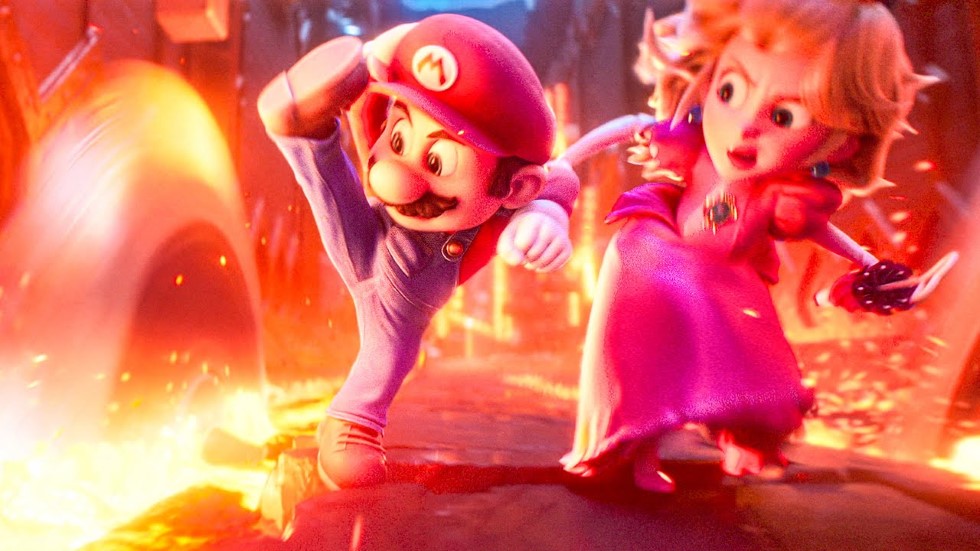
Bowser Jr. has Peach and Mario trapped in what looks like the “Bowser’s Castle” fire-themed level from Super Mario Bros. 3. Bowser is playing/watching it as the 2D-looking game. The film cuts between that 2D view and the regular (3D) animation of the film. What were some challenges/opportunities for sound here?
JB: As with many other parts of the film, we wanted to play up the contrast for comedic effect. When we’re with Bowser playing the game, we wanted to focus on some of the classic 8-bit Nintendo sounds. Nintendo was so wonderful and collaborative; they were great about listening to the material that they had given us, which we were cutting into the context of our cinematic universe, and then giving us the thumbs up or suggesting another sound for the moment. For instance, if we used one particular sound for stomping on the Goombas, they might suggest another Goomba stomp from another game.
As for the actual console sounds, we wanted the buttons to be nice and big and chunky, since Bowser Jr.’s technology seemed almost Cold War-esque. Additionally, if we have larger sounds for the console, it would stay out of the spectrum of those mids and highs of the 8-bit sounds.
Once we’re in the 3D world (i.e., the reality for Peach and Mario), that was all about making it as over-the-top as possible to contrast with the 8-bit video game material. Also, it was about playing friendly with the score. Often, we layer sounds and create a composite. But when you layer sounds, aural masking can get out of control and be problematic for the sound effects themselves, or problematic for what the music is trying to say. So we’d layer sounds to make it as realistic as possible, then do a second pass to distill it down to the elements we really want to hear. And so, it may not be as layered then. And for things like the giant saws, that was a challenge because you want to protect people’s ears while also telling them the saws are dangerous.
Within editorial and also with the mixers, it’s a constant sleight of hand. You hear one sound, and it’s passed off to another, and you’re trying to convince the audience that they’re constantly hearing all of these sounds. But in reality, ideally, it’s a bit of a magic trick. It’s almost like if you hear your favorite song, and it starts with a specific guitar phrase, the second time you hear that guitar phrase, it’s actually turned down. But in your mind, it’s a continuation of the same theme. So we’re basically trying to make sure that every element of the sound — the dialogue, the music, and the sound effects — which are all playing at a very excited state at that point of the film, are playing nice together, have their individual moments, and are complementing each other.
What have you learned from your experience of sound designing The Super Mario Galaxy Movie? What did this film teach you about sound?
JB: Every film I start out on, I take my knowledge base, and I move forward, and then by the time I get to the end, I look at who I was at the beginning, and I think, “I had no idea what I was doing.” That happens with every film repetitively.
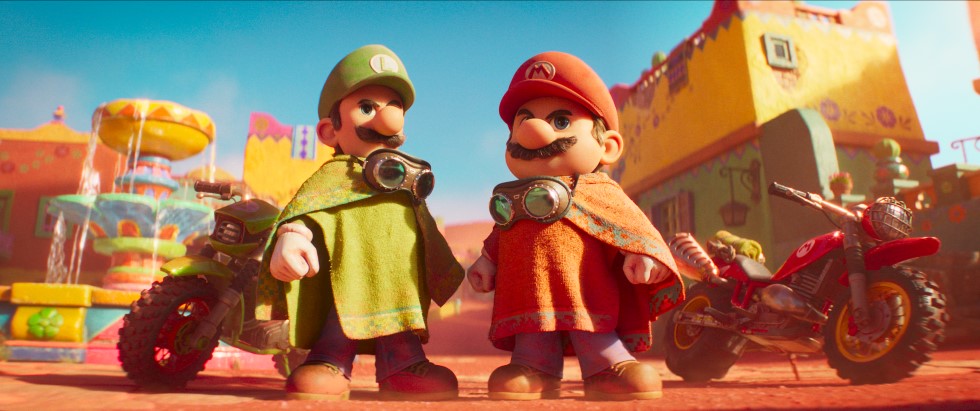
Beyond that, taking advantage of sitting in moments of experimentation, having patience, and trusting the process was huge. For example, I had done lots of experimentation with Kai Paquin. We tried out recording different motorcycles, different mic angles, and different microphones to achieve that classic “thumper” bike sound for Mario and Luigi’s motorcycles that kick off their adventure in the film.
DL: For me, it was a reminder that sound is an emotional language. It stirs up emotions, and particularly in a film like this, it’s full of joy. This film was about fun and expressing joy through sound. Every choice was in service of how the audience feels.
A big thanks to Jeremy Bowker and Daniel Laurie for giving us a behind-the-scenes look at the sound of The Super Mario Galaxy Movie and to Jennifer Walden for the interview!