




Hard to believe the Scream horror film franchise has been around for 30 years!! Scream 7 — in theaters now — sees the return of Sidney Prescott, who’s now married to police chief Mark Evans and has a 17-year-old daughter Tatum. The family takes on Ghostface in a satisfying, fast-paced, gore-filled showdown featuring fun jump scares.
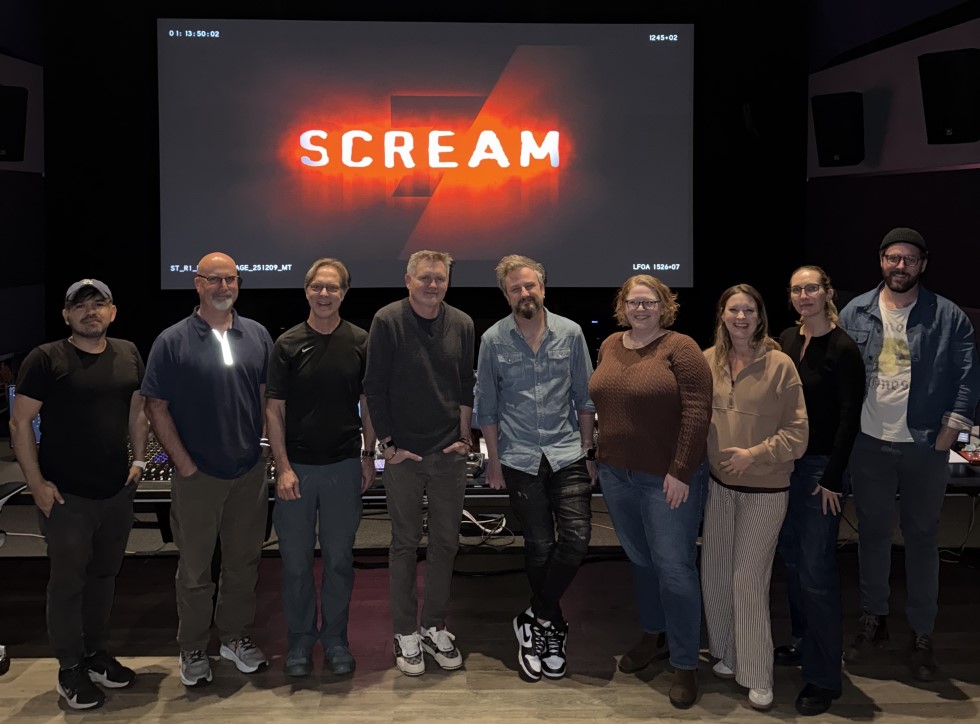
Here, Re-recording Mixers Tom Ozanich and Jon Greasley (also sound designer), who mixed Scream 7 at Signature Post on Stage 1 in Burbank, talk about finding the shape of the scenes on the dub stage by working with specific character POVs, like starting the fire scene from Madison’s POV to create a sonic valley that makes the fire feel bigger in the end, and using the Dolby Atmos surround field to create space in the mix and keep big scenes under control. They also share tips on how to create an unsettling feeling leading up to the jump scare, and why manipulating timing and that sense of anticipation makes jump scares more effective.
Find out how physics influences panning and processing, why effective mixes don’t rely solely on volume, how choosing one POV can add clarity in a cutty scene, what a great music editor can do for a scene, and more!
Scream 7 | Official Trailer (2026 Movie)
Wow, Scream 7!! Did you listen to what they did in previous films in the franchise? Were there any signature aspects of the mix that you wanted to incorporate in Scream 7?
Jon Greasley (JG): There were two things. First, in the opening sequence, when they’re in the recreated Stu Macher house, the phone that rings in the kitchen is the original phone ring from the first Scream movie. That’s a nice little Easter egg.
The biggest thing was Ghostface’s voice; that’s been performed by Roger Jackson from the beginning. He’s been doing voiceover work for more than 30 years, ever since the first Scream came out, so his voice doesn’t sound exactly the same anymore. We would compare Ghostface’s voice from the original film to what Roger did for Scream 7, and there were all these discussions about whether his performance sounds like Ghostface. He sounds different. We understood that we weren’t going to be able to make him sound exactly the same because it was the physicality of his human body, so we just leaned into the gravelly quality of his performance. He almost sounds angrier in a way. The pitch of his voice, the tonality, was different, but it’s still Ghostface. Roger does this whole character, and so Ghostface’s personality remains the same. But we literally took sound clips from Scream and played them against Scream 7, and it sounds really different.
Let’s talk about mixing the foley. In the opening Ghostface attack, Madison is running up the stairs trying to escape, and you really hear her footsteps. It adds to the panic of that scene. Throughout the film, you hear Ghostface’s footsteps and mask squeaks — all to signal where he is and how close he might be. Can you talk about pushing those foley sounds?
JG: I always feel that foley helps with pace in general. For instance, if someone is running at the camera and you feel those feet get closer, it’s a great energy boost. That goes for almost any scene.
The interesting thing about Ghostface’s foley is that, early on, we played with this idea of him just floating through the whole movie and not really making a sound, which made him feel disconnected from the rest of the reality it’s set in.
Hearing his feet off-screen was essential for creating the tension of that scene
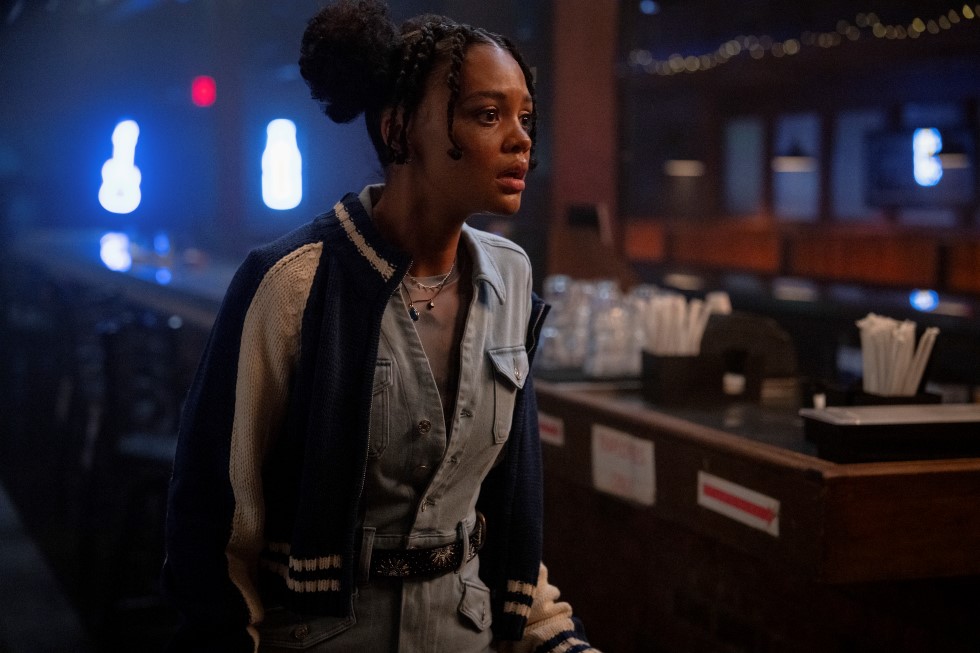
After a little while, we realized that didn’t work. There were just certain parts where you needed to have his weight and presence. A key example of that was the scene in the bar. He’s walking around the bar, and Chloe is hiding behind it. You hear his slow, deliberate footsteps walking around and then leaving the bar. But, surprise, he’s not really gone. That was a whole moment where hearing his feet off-screen was essential for creating the tension of that scene. So at that point, we decided to have his foley in there, and so we had to have it in everywhere.
Tom Ozanich (TO): Also, Ghostface doesn’t make vocal sounds. Ever. So, to make him feel real, you have to buy into that. And so the foley becomes his presence.
JG: That makes it scary. Ghostface gets hit in the face with a frying pan, and he doesn’t make a sound. The rubber mask squeaks sometimes stands in for a vocal. My favorite example of that is the bar’s kitchen when he gets hit in the face with a meat tenderizer and then a wooden pizza paddle. There’s a close-up shot where he just straightens the mask and there’s a little sweetener squeak on it. That always makes me laugh.
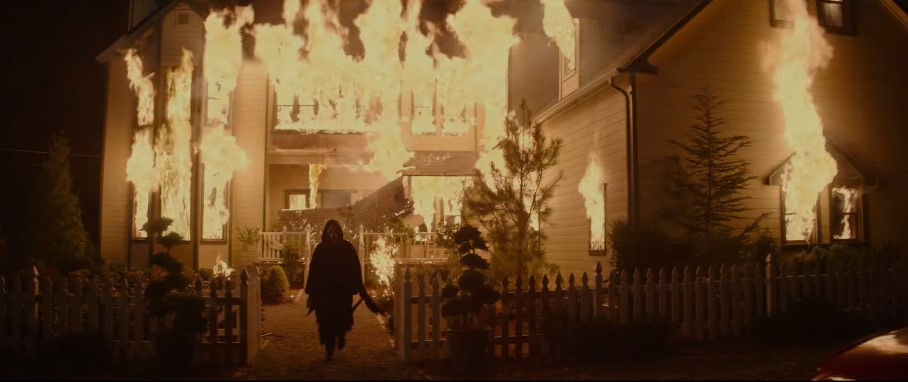
Ghostface lights a big fire at the Macher house to close out the film’s opener. How did you take advantage of the surround field for this scene?
JG: Tom and I are both big fans of the Dolby Atmos format. We like to really use it. We’ll critique movies that are out there on how front-heavy they feel versus how they’re using the space. And that fire scene is a great example of using the immersive format.
TO: My goal is to put the audience inside the movie. So rather than the more old-school way of mixing, which is to have the sound come from the screen, I want to break the walls of that and make you feel like you’re in that space. Obviously, the picture can’t come around you, so we can do that with the sound. It gives this dimensionality that you can’t get from just the visuals.
Neither of us likes just letting sounds sit in any location in the room
The fire scene was tricky to keep under control because there’s so much going on. There’s big music through there. You have to make sure you don’t end up with this overwhelming wall of noise where you can’t hear the definition of the fire bursts.
JG: We’re both fans of movement. Neither of us likes just letting sounds sit in any location in the room. Tom will be panning music elements, depending on what they’re doing, and then with the flames, I have them whipping by you, start in the front and end in the back. If you have everything coming from everywhere, it’s just a wall of noise. It’s like mud.
TO: It’s a trade-off in terms of level and movement. Maybe we want to hear this little piece of brass in the music, and then the fire goes by, so the music makes a little bit of space for that. Once the fire sound does its thing, it gives the music a little space. So, it’s not just volume, it’s also location in that three-dimensional surround space. You can use the space to get out of the way as much as possible for each other, so hopefully you can experience it all without one thing wiping out another.
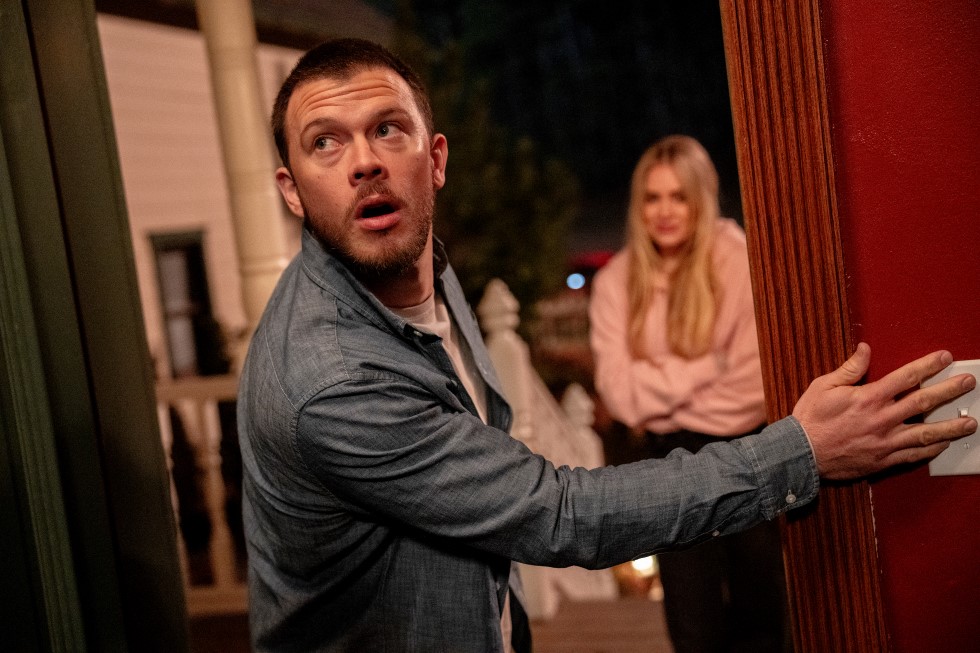
That fire sequence starts from Madison’s subjective POV. She’s coming to and realizing what’s happening…
JG: You have to have those perspective shifts and volume shifts. From the moment that Ghostface jumps out and stabs Scott, the whole sequence is full on. It’s pounding. It has big effects, big foley, and big music. You have to have those peaks and valleys because if it just stays loud then the fire wouldn’t feel as big as it did.
We reshaped all of that to create that valley where we go into Madison’s POV
TO: The way it is now, it wasn’t that way in the beginning. It was all big sounds. We looked at that and went, “Okay, we need to figure out how to make this breathe and give it some space.”
So we reshaped all of that to create that valley where we go into Madison’s POV. Then, you have these more abstract sounds happening that are related to the fire and Ghostface’s footsteps. The camera goes sideways, and so we had fun playing with that perspective, with Ghostface’s footsteps walking along the wall as he goes to light more fires. We had fun wrapping those sounds around the audience.


The key to any great horror film is the jump scares! Can you break down your approach to those? What is the anatomy of a successful jump scare?
JG: It’s about 98% timing. It’s very easy to rely on volume but a piece of advice that Tom gave me early on when we were mixing was that if we can make a jump scare work without it being the loudest thing you’ve ever heard, then it’s definitely working. You can definitely use that big, snappy transient but the volume shouldn’t hurt you.
TO: If it’s relying on the volume, then something’s wrong.
If we can make a jump scare work without it being the loudest thing you’ve ever heard, then it’s definitely working
JG: Exactly. So, moving the preceding sounds a couple of frames earlier or later really makes a huge difference.
One thing that helped me with the jump scares was that we did a couple of test/ preview screenings early on in the process. Oftentimes, during these test screenings, the filmmakers sit in the back and watch the room, watch how the audience reacts to the film. But instead, I sat a third of the way back from the screen in amongst all of the people who had never seen the film before, and really paid attention to when people physically jumped. If the people around you jump six inches out of their seats, then you know it’s working. And a couple of them really did, and a couple of them really didn’t. So, we knew we were going to have to do something different with some of these scenes. And again, it was just moving sounds by frames in one direction or the other.
It’s totally about the anticipation […] You have to just catch people off guard because they know it’s coming
TO: It’s totally about the anticipation. It’s like a rollercoaster, and you’re hanging over the edge, about to drop. That’s one of the most fun parts of it. You build this anticipation. As Jon said, it’s the timing. You have to just catch people off guard because they know it’s coming. So the trick is to figure out how to mess with that. A lot of that honestly is not us. That’s the construction of the movie, the edit. But certainly, moving something a couple of frames sound-wise can make a difference.
JG: The anticipation thing is interesting. If people know a jump scare is coming, an effective approach is to fake them out by making it happen either way sooner than expected or way later.
TO: And you can mislead people with sound. That can help control that timing expectation because there are little clues that happen that are genre clichés that people are expecting. When this thing happens, then there’s going to be a jump scare. So, if you change the placement of those clues, or how that preceding scene feels or works, that can change the timing of the actual jump scare.
JG: The whole collection of the Scream films has been this meta-analysis of deconstructing what a horror movie is, and then turning it on its head. So, this idea of playing with those tropes and expectations is part of the fun of Scream specifically.
Playing with those tropes and expectations is part of the fun of Scream
One of the expectations in horror is that you make things really quiet before the jump scare happens, so you can play it big. But you can play with that too. You can make it really quiet, and keep it quiet for way longer than expected. For example, when Chloe is hiding behind the bar, we took out the score there. All you hear is the fridge hum and Ghostface’s footsteps.
Or maybe you don’t make it quiet at all. Maybe you’re just sailing along, and it comes completely out of nowhere.
But every single one is contextual, and every single one has to work differently. You can’t just do the same thing multiple times in the same film because then people will just expect it.
TO: The score, by composer Marco Beltrami, was great fun. He’s scored most of the Scream films, so he knows the franchise. That being said, Director Kevin Williamson was very into playing around with the music and shifting things around here and there when he felt it needed to drive more during a chase scene, for instance, or we needed to clear out more space in the mix. For a movie like this, keeping things quiet and simple was key, because that’s very unsettling. You have to create tension in order for those jump scares to work. Everybody has to feel a bit nervous, right?
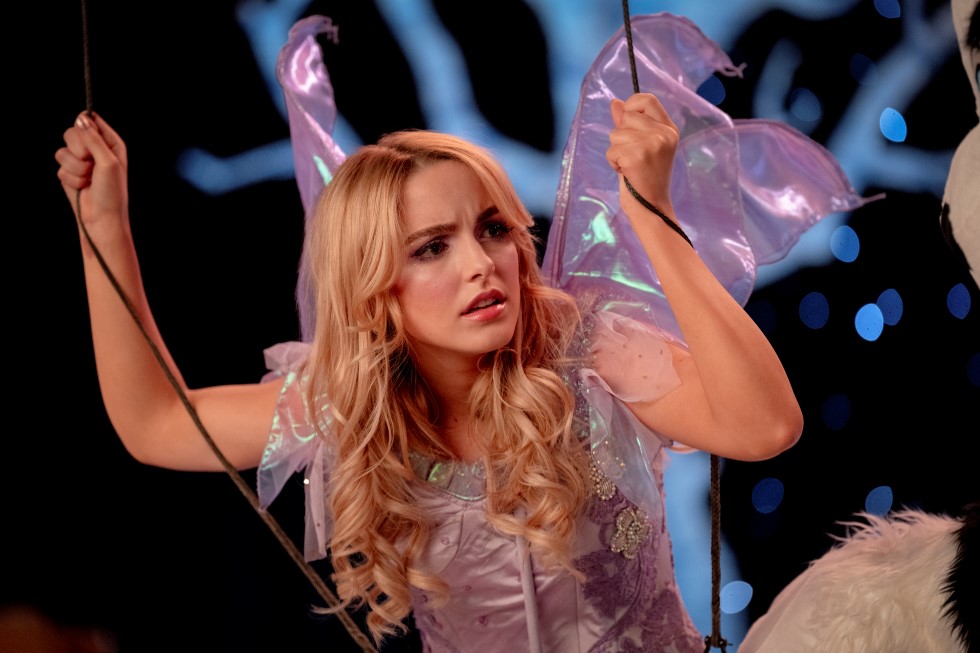
The off-screen sounds, like the clatters and body falls during rehearsal at the high school, were really fun. Can you talk about mixing the off-screen sounds? What are some opportunities/challenges for making those moments work?
JG: We had a lot of conversations about exactly what Ghostface is doing off-screen. As Tom said regarding simplicity, we started with maybe a couple of sounds that were a bit more complex. And we really had to decide what he’s doing. Is it just a knife slash across a throat and a body fall? You need to get concise with those sounds. You get a knife sound, a blood splatter, and then a thump, so you totally understand what’s happening off-screen. Then you get the perspective and level right, so it’s loud enough to hear and understand what’s happening, but not so loud that it sounds goofy. That’s very important to the realism of the whole thing.
You need to get concise with those sounds […] so you totally understand what’s happening off-screen
And there were so many off-screen sounds in the film. We would have multiple versions of those things and have conversations about them, like Ghostface is throwing a bottle across the other side of the bar, or rolling a bottle across the floor on the other side of the room and that feels playful, like he’s messing with them. We’d talk about the intention behind the off-screen sounds, based on what Ghostface would be doing and how he’s trying to screw with the characters. There were many motivational discussions about those sounds.
TO: Treatment-wise (e.g., EQ, reverb, etc.), it’s informed by a couple of things, like how big or how close is that threat? How imminent is it? And some of it depends on what we were talking about before, about the mislead: do you want it to feel closer or further away? Because you’re misleading the audience.
Treatment-wise (e.g., EQ, reverb, etc.), it’s informed by a couple of things, like how big or how close is that threat? And some of it depends on […] misleading the audience
Also, there were a couple of spots where we were placing a sound maybe off to the right and behind you, because that’s where the character looks, and so that’s the logical place, even though it doesn’t exactly match the geography. When you slow it down and look at it, it doesn’t make sense, but in context, when you’re playing it, you never question it. You just buy it because that’s where the action lands.
JG: You have to go by feel rather than being literal.
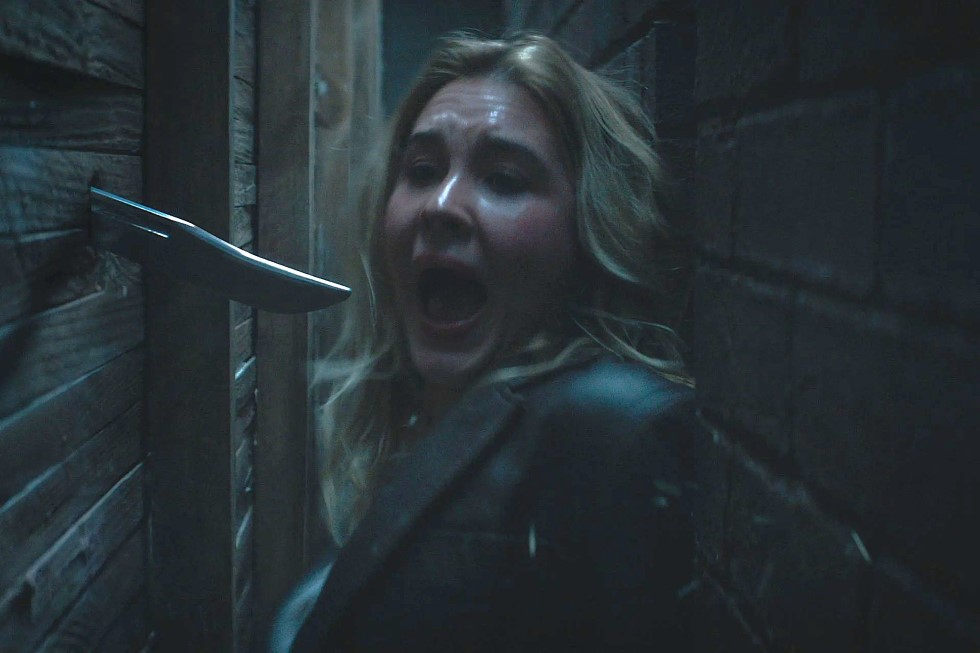
Ghostface is stabbing the wall with Sidney and Tatum on the other side, as they’re trying to escape from the panic room. What were some challenges for the mix here? Or, how were you able to have some fun with the mix here?
JG: We played with that sequence a lot. A big part of making things sound convincing is not just the sound, but how the sound plays in the space. So you have Ghostface in the bedroom, and Sidney and Tatum are behind the wall, in this very tight space, with a brick wall at their backs. I was playing a lot with this space. Is it more fun to have this really short, tight reverb that fills up the space that they’re in? Or is it more effective to have it completely dry on their side? And he’s tapping on the wall with the knife blade, so what’s the difference between the sound of that on his side versus the sound of it on their side? How much high end do we roll off?
Kevin and Picture Editor James Page figured out the timing of the knife taps before we did a sound pass on it. They put a lot of thought into that. So we went into it with a pretty solid foundation and just played with the acoustics of the whole thing. Like, when it comes through the wall, if you hear the knife coming before you see it, then that’s going to give it away too soon.
Even though we cut back and forth between both POVs, the more important one is Sidney’s and Tatum’s
TO: It is a very POV-based design. Even though we cut back and forth between both POVs, the more important one is Sidney’s and Tatum’s because the audience is experiencing the terror that they’re experiencing. The other side of the wall, where Ghostface is, is not as important.
JG: We didn’t have a big atmospheric shift between the two spaces. At one point, we did have a spooky, narrow wind sound on their side, but it would bump going in and out. By playing it smooth all the way across, it’s almost like you never leave their point of view. Even when you’re looking at Ghostface, you’re still with them.
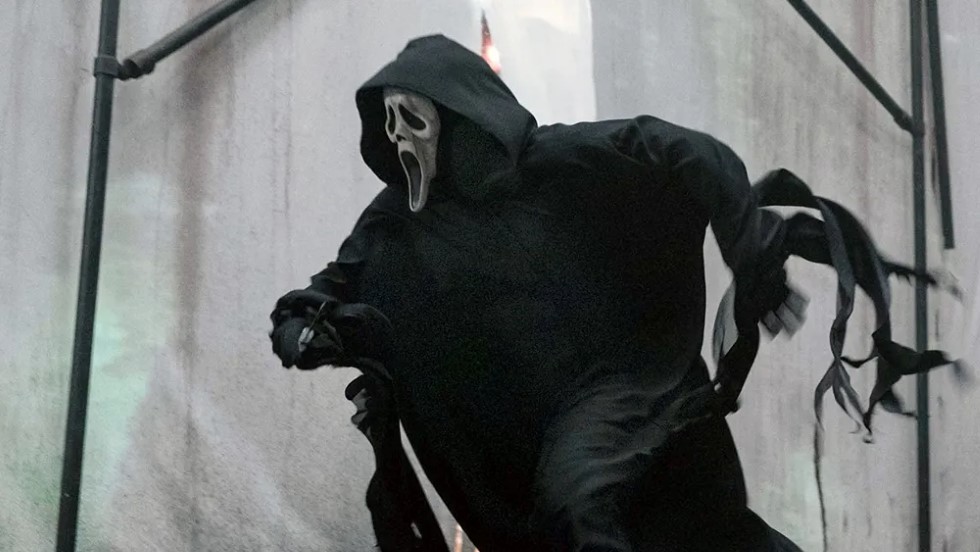
I loved the scene in the home construction/garage section, with the different plastic tarps hanging from the ceiling, obscuring Ghostface’s presence. How were you able to use that visual element to drive your mix decisions?
JG: That was the first scene that Kevin and James sent over to us to work on in sound editorial/sound design. It was the scene that had the most revisions, and we kept looking at it, like, what else can we do with this?
Kevin will ask if you think you can do any more with the scene. And your instinct is to say, “Yes, I’m sure we can do some more with the scene.” But he actually genuinely wants to know what you think. If you think, “No, we’re doing the most we can,” then he wants you to tell him that’s what you think. He trusted our opinion, trusted our input as far as that goes. And so there were numerous revisions, with a lot of additions.
It’s pretty hard to get several dozen plastic sheets to behave exactly the same with a fan on set
There was this whole conceptual thing where he wanted it to feel like a gust of wind blowing through the open garage door was making all the plastic sheets billow in sync and then settle. But visually, it didn’t really support that, because it’s pretty hard to get several dozen plastic sheets to behave exactly the same with a fan on set.
So we had to decide how much of this rhythmic sound we can get away with while still supporting what we’re seeing visually? At one point, we went too far with it. We had these different metallic winds, different sounds of the garage door shuttering, and different thicknesses of plastic sheets rustling because you are seeing very sheer plastic and very thick, heavy plastic. We did all these different recordings of plastics in sound design. We had recordings of plastic that the foley team did. We had a bunch of preexisting sounds from sound libraries. And since we’re mixing in Dolby Atmos, every single one of those plastic sheets is on an Atmos object track, placed all around the room. When you look at the Dolby renderer, you see all those green dots.
Every single one of those plastic sheets is on an Atmos object track, placed all around the room
But yeah, it required lots of revisions, lots of discussion. We had too many elements and needed to start stripping them back because all of these different sounds were obfuscating the effect that we’re trying to convey. We took out most of the production sound. We had to control how much foley presence we wanted from Mark (Sidney’s husband, whose being hunted by Ghostface in the garage) and how many of his breaths and efforts you hear.
That was definitely the most involved, most time consuming, most revised scene in the movie.
TO: It’s funny, one of the basic things that happens in the editorial process is to put in every sound you could possibly think you might need. And then, during the mixing process, the goal is to remove every sound you don’t need.
JG: Tom had recently said, “Everything you need and nothing you don’t need.”
That’s a hard thing to nail in sound design. I was the sound designer on the film, as well as the effects mixer. So that made it easy to find things because I knew exactly where everything was. If somebody said, “What’s that element? Should we take that out?” I didn’t have to search for it. I could go right to the track because I put it there for the most part. It was either me or supervising sound editors Erik Aadahl and Ethan Van der Ryn.
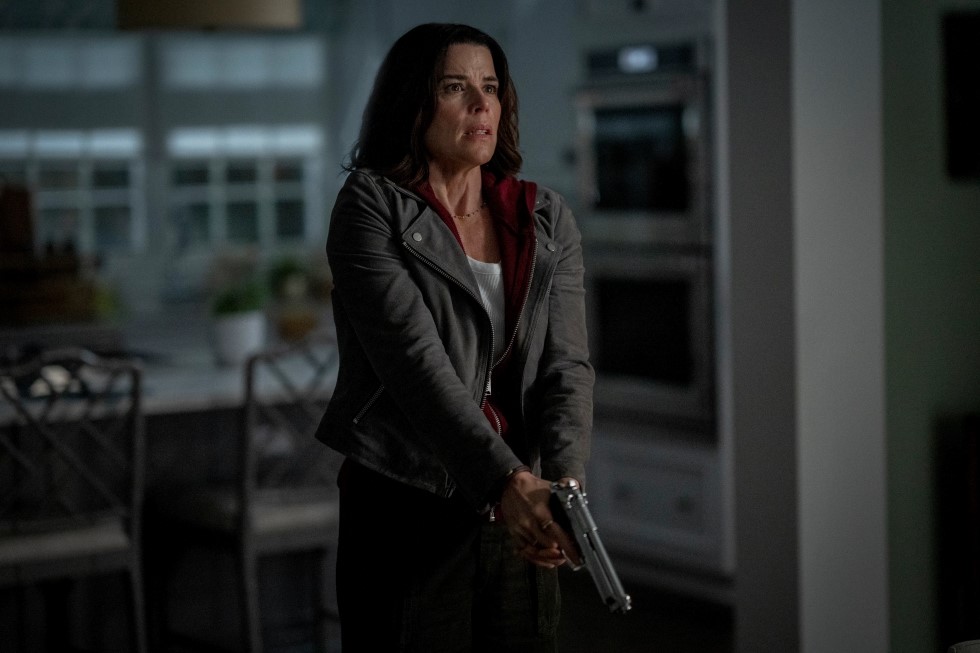
Another cool moment for the mix was back at Sidney’s home. A video of “Stu” is playing on the TVs and screen-devices in different rooms. The video is bouncing from one screen to another, from room to room. So cool! What were some challenges/opportunities for the mix here?
TO: That was one of the later things to get flushed out because of the visuals. That wasn’t completed until much later in the mix process. There are multiple things happening at once. There’s a TV on in one room, then an iPad, then another TV, and those things needed a unique futz to their sound so they didn’t sound the same. Even though they’re saying the same thing, they’re offset; their timing is a little different. For futzing, I mainly used McDSP FutzBox or Audio Ease Speakerphone. I had both of those going so I could just use whatever one I wanted to shape the particular device sound.
With panning things off-screen in immersive formats, you have to be super aware of the physics of how that works
JG: With panning things off-screen in immersive formats, you have to be super aware of the physics of how that works. If you take a voice and just pan it off-screen, it immediately jumps out at you. So, you have to think about controlling the high end, having them sound quieter and duller when they’re off-screen so it feels natural. That’s a matter of degrees. It’s all about the physics of that perspective. The further away something is, the less high-end it has. The further away it is, it’s probably going to have more reverb tail and less early reflections. Then, as it gets closer, you can bring down the tails and bring up the early reflections and dial in more high-end. I would never describe myself as a physicist, but it helps to understand physics and how sound works.
The further away something is, the less high-end it has. […] It’s probably going to have more reverb tail and less early reflections
TO: There are complications to that. You can’t go 100% just on the physics because we’re trying to lead the audience down a road. So in this instance, there are times when you’re watching one screen, but then another screen pops on and that needs to grab your attention because it grabs Sidney’s attention. It makes her look over at the other screen. You have to be able to shift that focus, and that cheats the physics. Something further away in that moment actually becomes the leading sound, so it can pull us over there.
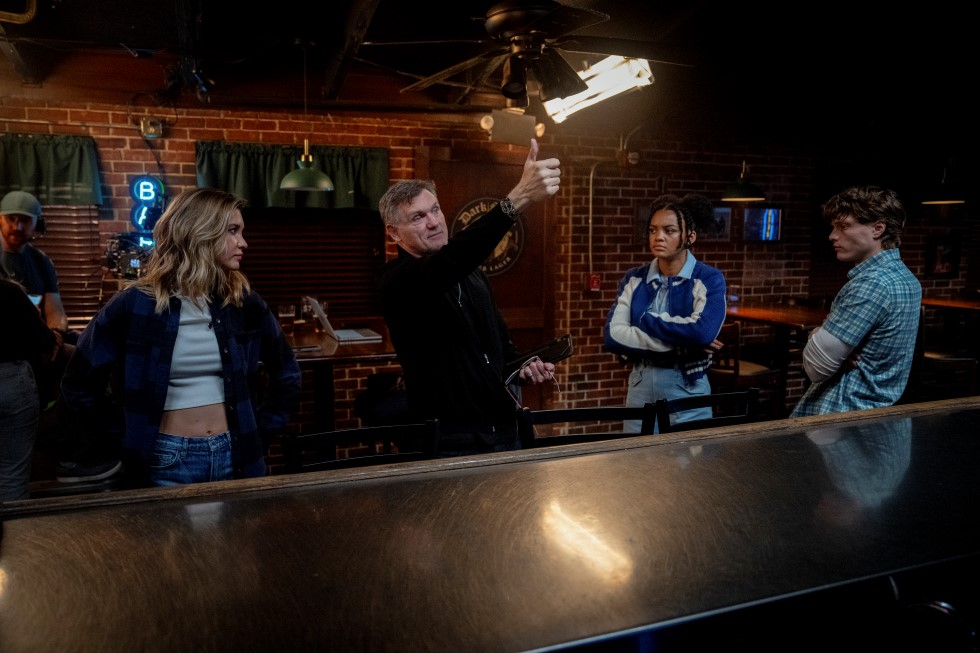
What will stick with you the most from your experience of mixing Scream 7? Or, what’s been the most unforgettable memory from your time on the stage during the mix on Scream 7?
JG: I always try to learn something new every day, and to have the last project be the best job I’ve done so far. Obviously, that’s dependent on what you’re dealing with at any given point in time. But I always like to debrief after the fact, and ask, “What did we do well? What could we have done better? What challenges did we face?” A good lesson I learned from this was not to rely on volume. There was a point during the mix where I was like, “Is everything just too loud? Is this whole thing just too loud?” You start to question yourself. I feel like I was trying to make it loud for a reason, but now I feel like it’s just loud for the sake of it. So, those are really important lessons.
A good lesson I learned from this was not to rely on volume
In addition to the technical aspects, there are also interpersonal things, just getting to know people’s tastes. As I mentioned, Kevin would ask if there’s something more we could do. Don’t just rely on gut feeling or past experience and say, “Yes, we can make it better” if you genuinely think it’s working well as-is. Knowing Kevin’s dynamic and that he wanted an honest opinion was a really valuable lesson to learn about him, and about directors in general.
Another thing I sort of re-learned was how great it is to have a really good music editor. Angela Claverie did such an amazing job. Kevin was constantly asking, “Can we do more here? Can we get a little bit more pace here?” Tom and Angela were working together, like, what if we added a drum element? She would disappear for seven minutes and come back, and Kevin would be like, “Yes, that’s exactly what I wanted.” That was really mind-blowing.
TO: That got tweaked and worked a lot, honestly. Angela was really under the gun. That was maybe one of the most dramatic, stressful positions to be in on this particular film. She had to rework things, and we had to work through things.
I’m able to do something without us having to reconstruct the whole piece. But then at other times, nope, we’d have to reconstruct the whole thing
Sometimes the director would say, “This isn’t working. I don’t like this piece of music. It isn’t working for me here.” And I’m able to listen to what he has to say and figure out that, oh, okay, he wants something with maybe a little more percussive drive, but it’s playing a little too melodic-dramatic. And so if I just change up the mix and feature some other things, maybe drop a stem or pull out something, then I’m able to do something without us having to reconstruct the whole piece. But then at other times, nope, we’d have to reconstruct the whole thing. So that was a big part of the job.
JG: A story I forgot to tell about working on Scream is that when the first one came out, some friends and I decided to all dress as Ghostface on Halloween. In England, Halloween is more of a kids’ holiday; adults don’t really dress up so much. So we all go into this pub and we’re the only ones dressed up, and the bartender takes one look at us and just sort of sighs and shakes his head. Told that story on the mix stage with Kevin.
A big thanks to Jon Greasley and
Tom Ozanich for giving us a behind-the-scenes look at the sound of Scream 7 and to Jennifer Walden for the interview!