






Housemarque’s Saros arrived on PS5 to rave reviews, and as a spiritual successor to Returnal – and it sounds absolutely spectacular. In this huge new interview, Senior Sound Design Supervisor Loïc Couthier, senior sound designers Pete Reed, Juuso Tolonen, and Lewis Everest, and sound designers Lewis Barn and Fabio Liutina walk through how the team made it sound so stellar – and dark:
 New ReleaseNOVA by Mattia CellottoWATCH VIDEO →
Saros – Launch Trailer | PS5 Games
For those on the team who also worked on Returnal, was there anything in your approach to sound that you wanted to bring into Saros – and what did you want to do differently this time?
Loïc Couthier (LC): Saros is a spiritual successor to Returnal, and Housemarque’s direction from the very beginning was: “Refinement, not Reinvention.”
As a result, many of the technical and creative foundations established with Returnal naturally remained at the core of Saros. Even though it is a new IP with its own world and narrative, the two games have a lot in common, including their style, camera perspective, gameplay, and sci-fi genre.
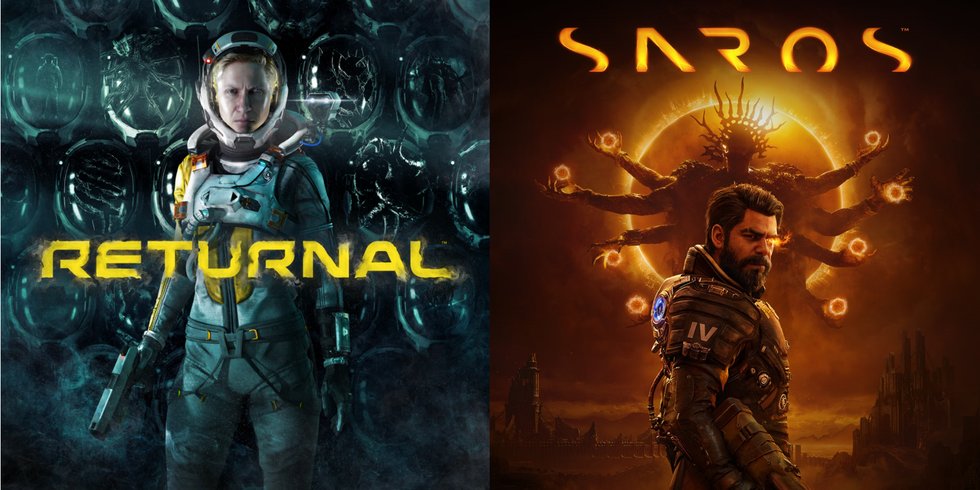
From my perspective as Sound Supervisor, Saros was an opportunity to build on what was successful in Returnal, challenge what we could improve, and explore new ideas.
In terms of what we wanted to bring from Returnal to Saros, a lot of it came down to the foundational building blocks:
- Housemarque’s “gameplay-first” signature style, with its over-the-top treatment of the action, an emphasis on strong player feedback, and making the game satisfying to play from the very first moment.
- Continuing to showcase PS5 Haptics and 3D Audio.
- Reinforcing our team culture and processes, such as regular reviews with Housemarque and the wider audio team, along with extensive audio standards. These all help us create a unified sounding game.
In terms of what we did differently, the biggest change was the creative direction and content, as the two titles are set in different universes with their own storytelling. The team also changed quite a bit, as many of the Senior Sound Designers who worked on Returnal had moved on to supervising or supporting other titles, giving us a fresh team of designers on Saros. In addition, the game engine had been upgraded from Unreal Engine 4 to 5, which meant that most of the underlying systems had to be rebuilt.
In conclusion, we preserved the Housemarque identity and the ways of working that had already proven successful, while all of the creative content was designed specifically for Saros.
Lewis Everest (LE): On Returnal, I was the environment pillar lead, so switching to the weapons pillar was an interesting shift from one of the quietest parts of the game to one of the loudest. From a personal perspective, one thing we wanted to carry over from Returnal was the unique blend of grounded, Earth-like sound design and ethereal, alien cosmic elements. We achieved this on Returnal by curating a careful balance: taking natural recordings that the human ear expects to hear and combining them with highly creative cosmic elements. When you strike the right balance, the listener feels a familiarity with the game world but is also instilled with a subtle sense of unease because things don’t sound quite right.
We wanted to apply this same philosophy across the player’s arsenal. Because our ballistic weapons are based on grounded human technology, we made sure the core sounds featured acoustic elements you would naturally expect to hear. We then combined those with heavily synthesised, abstract layers, which added a unique flavour and weight to each gun. We carried this concept into how the guns behave in the environment, too. When designing the weapon tails, we pushed them creatively by blending expected acoustic reflections and shot dissipation with much more abstract textures, such as synthetic ripples and rhythmic thunder elements.
Beyond the audio itself, I think the most important thing we brought over from Returnal was our approach to collaboration. To ensure our audio felt cohesive and authentic to the game world, we constantly communicated about our workflows and design processes. This, coupled with regularly playing the game together as a team, kept everyone perfectly aligned and ensured our work was harmonious. Combined with Loïc’s supervision and mixing, we feel it was a successful recipe.
Can you talk about the overall sonic identity you were going for with Carcosa? What did you want players to feel through the sound as they move through this world?
Lewis Barn (LB): The overall identity was guided through three principles that we set out at the beginning of the project and kept referring to.
- Each area of the planet needed to feel unique. The player should be able to close their eyes and know which biome they were in.
- The ambience should assist the narrative by evoking the emotions and mood for each space. This pushed us further down the stylised and moody path, closely matching the tone of the game’s story through drones and abstract stingers.
- And finally, it should evoke a sense of wonder and intrigue by suggesting a much larger world beyond the playable area, making the player feel that they are tiny and insignificant among the countless creatures out there.
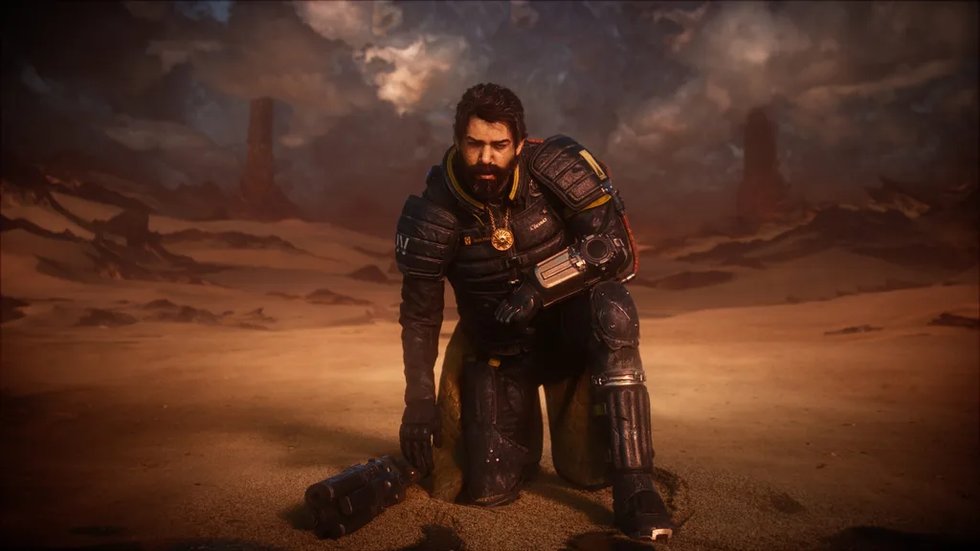
LC: I feel the sound of Saros is deeply connected to the attributes of its main character. It is dark, heavy, brutal, mean, powerful, corrupted, mature, and overwhelming, but also deeply emotional and mysterious. As I reviewed every piece of content, I made sure those attributes were reflected across every pillar of the game, from the environments to the enemies, from the weapons to the UI, as well as in the overall tonal balance of the mix.
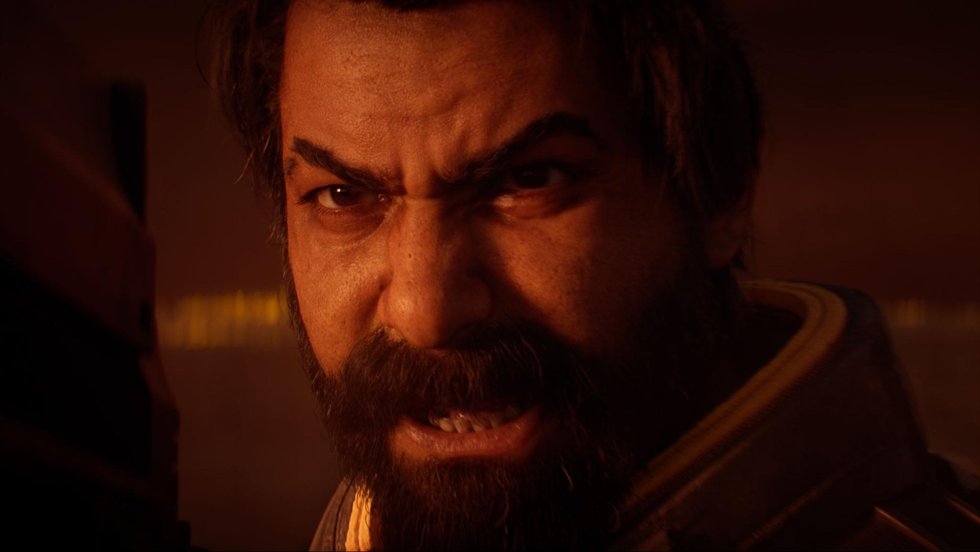
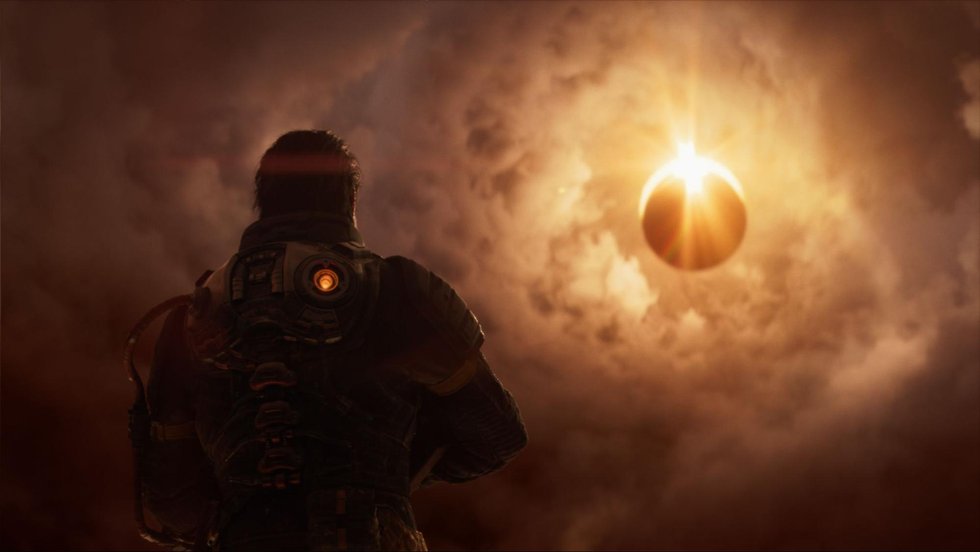
A central element of Saros and Carcosa is the Eclipse, and the influence it has over the planet and its inhabitants. As a result, many elements of the soundscape incorporate the sonic signature of that corruption, to varying degrees, from subtle to obvious, depending on their connection to it. As you progress through Carcosa and the story unfolds, the stakes rise and the corruption intensifies. That evolution is reflected throughout the game, from the ambience and player abilities to the enemies, the Echelon crew and the processing of their dialogue.
One thing I really enjoy about working with Housemarque, and with Greg (Gregory Louden, Creative Director) in particular, is that although their games are gameplay-first, the world building is incredibly well thought out and deeply rooted in emotion, and we try to reflect that in every small detail. The DNA of the Eclipse, the corruption, and the Yellow King is present in far more places than players might realise. That level of deep creative consistency makes the game incredibly rewarding to design for. As the game comes together, you get to see all the pieces of the puzzle fall into place. You also get to appreciate it on a different level than players might, because you know the story behind every creative decision.
Where did you start when you began building the sound of Carcosa? What were some of the first sounds or ideas that set the direction for everything else?
LC: Aside from the early game prototype, which featured Arjun with a few weapons and enemies, the creative identity of Saros started to emerge with the Eclipse, the announcement trailer, and some pre-rendered cinematics.
The Eclipse is central to the game and one of its most iconic elements. We started prototyping its sound treatment early, based on a concept video made by Housemarque. Those were probably the first experiments that truly felt unique to the IP.
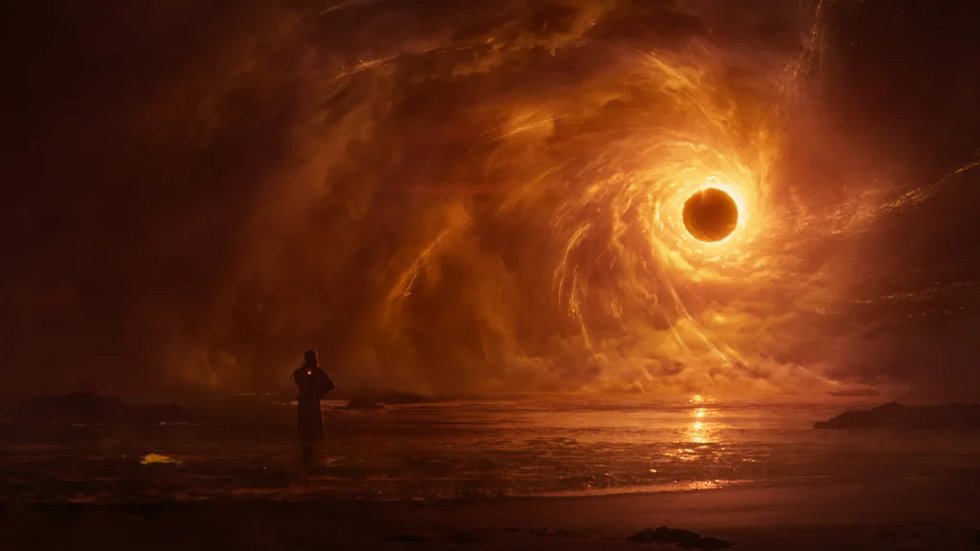
Something quite unusual about the project was that we received pre-rendered cinematics around two years before the end of development. While the game itself still had fairly limited audio coverage and many placeholder elements, these cinematics gave us our first opportunity to test sonic treatments against final visuals, which led to a number of creative discoveries. Juuso, who was responsible for the cinematics pillar, was among the first to explore and establish some of the game’s core sonic identities.
Juuso Tolonen (JT): A lot of the cinematic palette (and later, some of the broader “Saros sound”) originated from the Cinematic Announcement Trailer. We were in a really fortunate position because we, the audio dev team, also got to work directly on the marketing material, and if I remember correctly, that trailer was one of the very first things I worked on for the project.

It gave us an early opportunity to define some of the game’s big signature sounds like the Eclipse braam, and the foundation of the Yellow King’s sonic identity, but it was also a great opportunity to explore things like Arjun’s foley too.
The Eclipse braam was mostly a “rule of cool” design, but Gregory Louden, Housemarque’s Creative Director, really responded to it and wanted it to become a recurring sound associated with the Eclipse, so it ended up being used throughout the Cinematics and in-game too.
For the Yellow King, the processed Sardaukar voice, along with the World Serpent from God of War 2018, were really setting the bar for that kind of overwhelming, godlike vocal presence. We knew we had to reach that level of intensity and iconic weight.
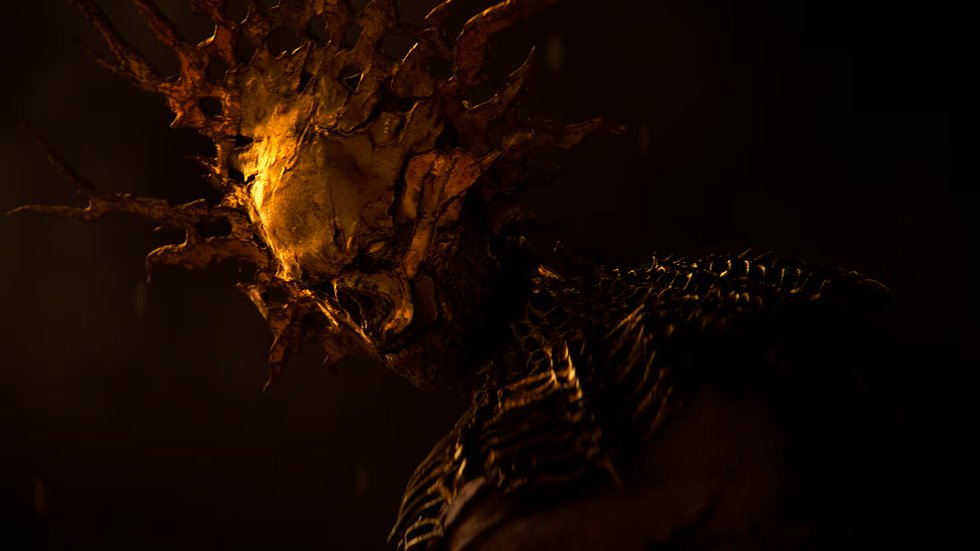
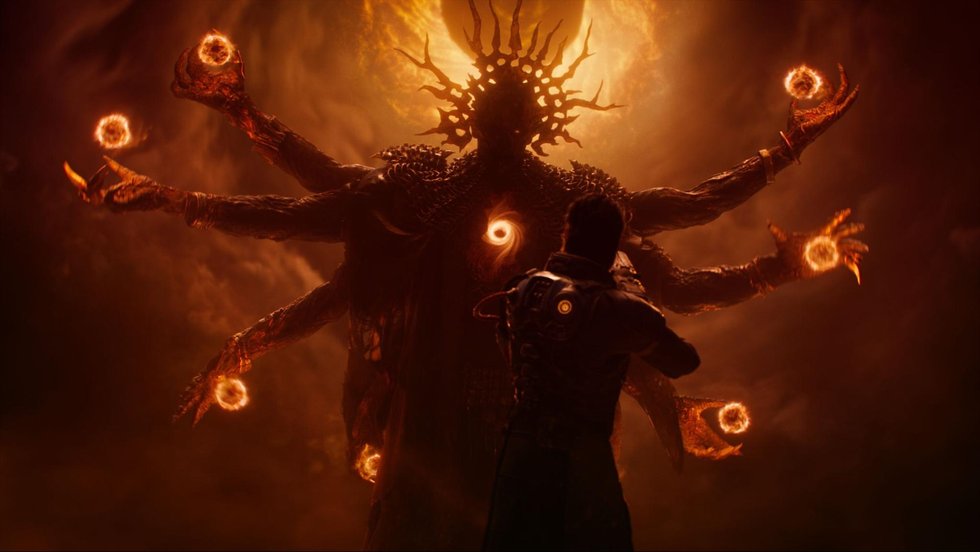
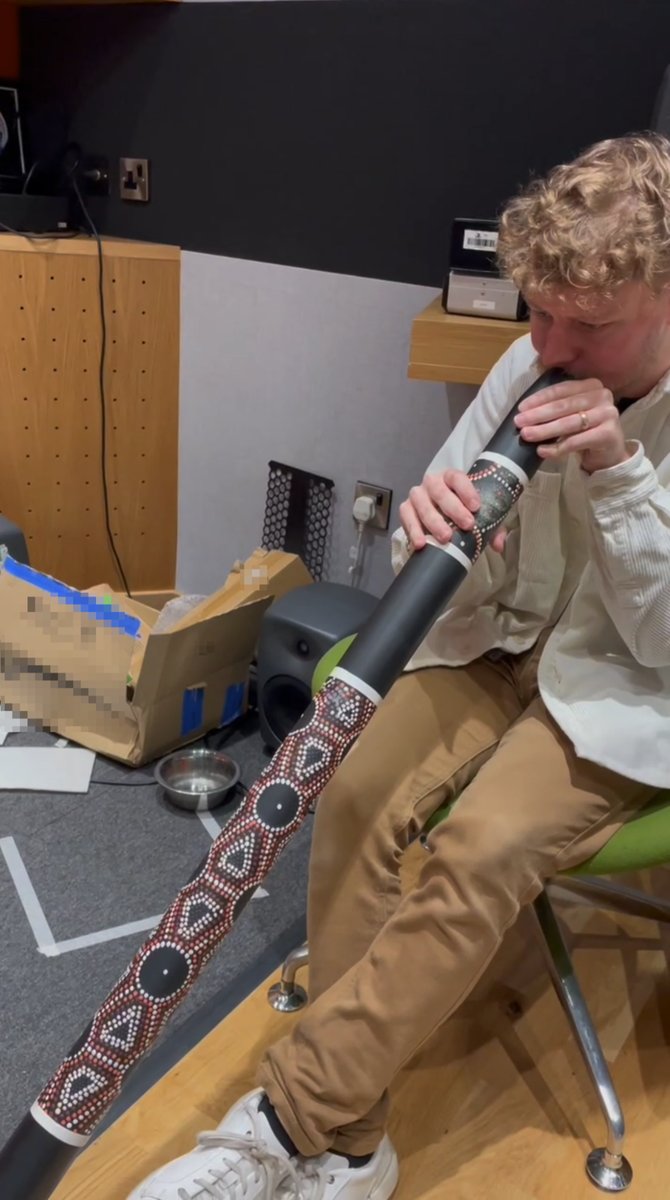
Before I joined the project, Lewis Everest and Fabio Liutina had done a didgeridoo recording session with Blake Bennett from our music team, and that immediately felt like an obvious source to explore. With creative processing, those recordings turned out to be incredibly versatile. Jamming with that source ended up being used all over the game – from the Yellow King’s vocalisations to a more general “Saros palette” that was used across the game to emphasize the Yellow King’s influence on all things.
The Eclipse reshapes Carcosa and changes the feel of the world when it hits. Can you talk about how you approached that shift in the audio, and what happens to the soundscape when it takes over?
LB: We experimented a lot with global processing and effects but eventually opted to have unique content in each eclipse state. Simone Silvestri, the Art Director, explained that the air should feel like it was burning and torturing the world, so we emphasised this with sound. All the distant wildlife you hear is swapped out for a distressed palette during the eclipse with the creatures sounding more aggressive but also pained and panicked.
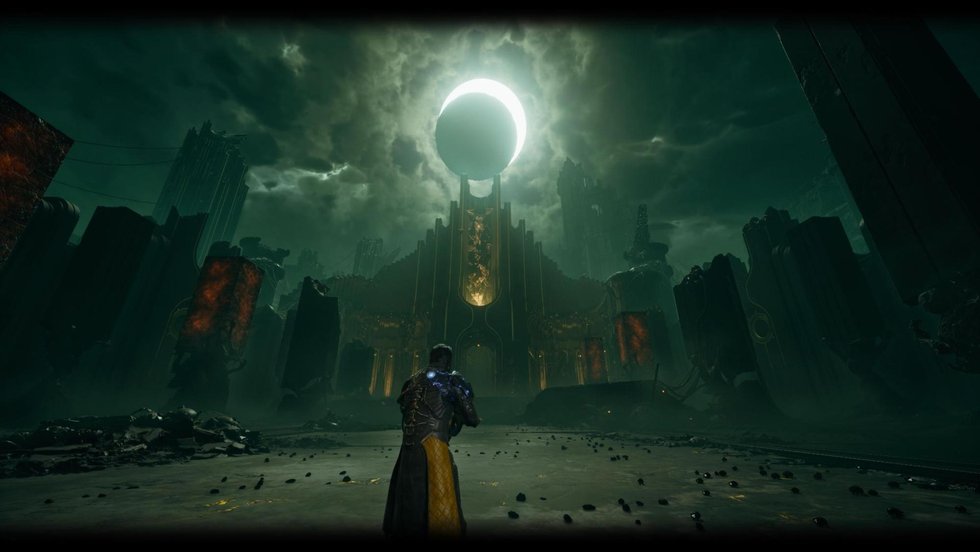
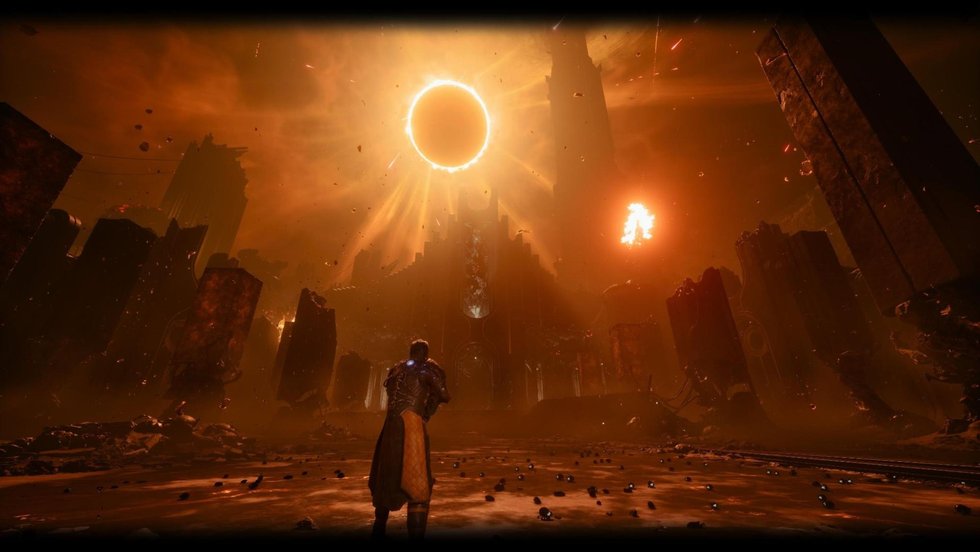
The eclipse ember particle effect also allowed us to sell the intensity of the heat in the air by having the ground literally burn up towards the eclipse. As well as designing the burning sounds we added a psychological aspect to this with the whispers of Nitya to further fuel the distress Arjun would be feeling in this state.
Additionally, Housemarque provided a lot of unique content in the environment for us to cover during the eclipse too, from the warscape and cannons you see in Desecrated Fortress to the machinery in Ancient Depths starting up, all of which immediately helped to transform the environment sonically.
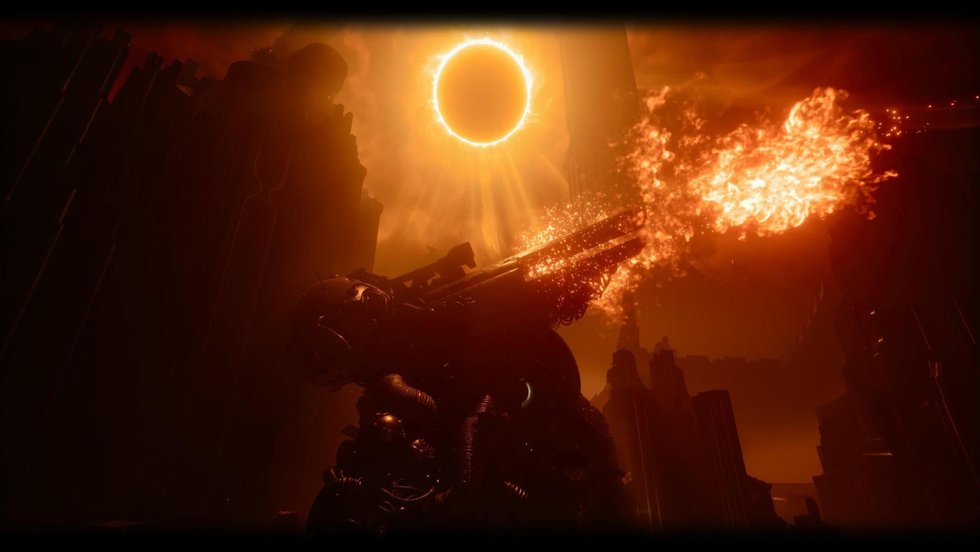
LC: On top of the key elements highlighted by Lewis, we also have many smaller details that are altered, such as increased interference in radio communications, additional layers added to enemies, and subtle changes to the overall game processing (for example slightly louder and longer reverbs, parallel distorsion). I guess we should not forget the Eclipse itself, which has a strong presence and can create a very satisfying experience for players who dare to look at it for long enough…
As Lewis mentioned, we initially experimented with processing-only approaches, as they are easier and faster to implement. However, unless the effect was pushed far enough to become potentially fatiguing or repetitive, it was often too subtle to create a noticeable difference. Processing worked best as an additional layer on top of bespoke content. It is pretty obvious, but the scope increase was significant and we needed to be mindful of how we approached it.
The music is another major sonic contributor to the Eclipse state, with the instrumentation and style changing radically when the Eclipse is active. There is, of course, so much more to say about the music, composed by Sam Slater. Our music team, led by Joe Thwaites, have been talking about that side of the project through other interviews and channels, so I would encourage people to check those out as well.
What was your approach to the weapons and the sound of combat? Were there particular weapons that were your favorites to design?
LE: When I first started on the weapons pillar, it became clear how creative and flexible Housemarque wanted the player weapons to be. Because of this, I wanted to establish a framework to ensure that when working across all the weapons, each one would creatively hit the goals we wanted to achieve and feel consistent across the player’s arsenal.
Establishing this before we started the heavy design work gave us a solid framework to work towards and consistently compare to. The goals were relatively simple: each weapon should have the ability to sound big, powerful, and bombastic. Every weapon should feel like it is empowering the player and make them feel like the soldier they are. All weapons need to sound unconventional and unique to Saros’ science fiction universe. It sounds simple, but having these goals defined helped us stay aligned as the pace of development picked up speed.
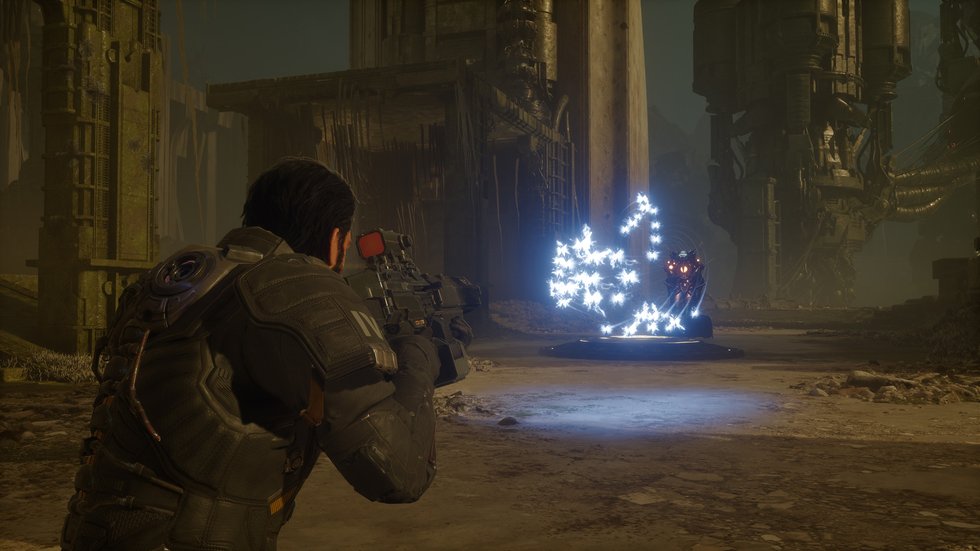
When it came to the design of each individual weapon, we wanted to make sure that our end result sounded as good as it could. To achieve this, each weapon went through broad and multiple cycles of concepting and iteration. We had our systems set up to allow us to have multiple versions or concepts of each weapon active in the game at once. Then, during team playthroughs and reviews, we could instantaneously swap these during combat to stress-test each design and highlight what worked and what didn’t. By doing this and taking on the wider team’s creative opinions, it allowed us to hone our designs to create something that hit our creative goals whilst avoiding danger zones such as listening fatigue for the players.
Outside of the broader methodology, our designs were very modular; this was for a few reasons. One was flexibility in the weapon game design. We knew that each weapon would have a large degree of modularity and customisation, as each weapon type had its own set of traits that could add or alter gameplay behaviours – ranging from explosive rounds to extra bullets spawning around the weapon muzzle. By having a base design that was very modular and granularized, it allowed us to dynamically change the weapon sound with much greater ease. Simply by swapping out a single layer, we could drastically alter how the weapon sounded in milliseconds.
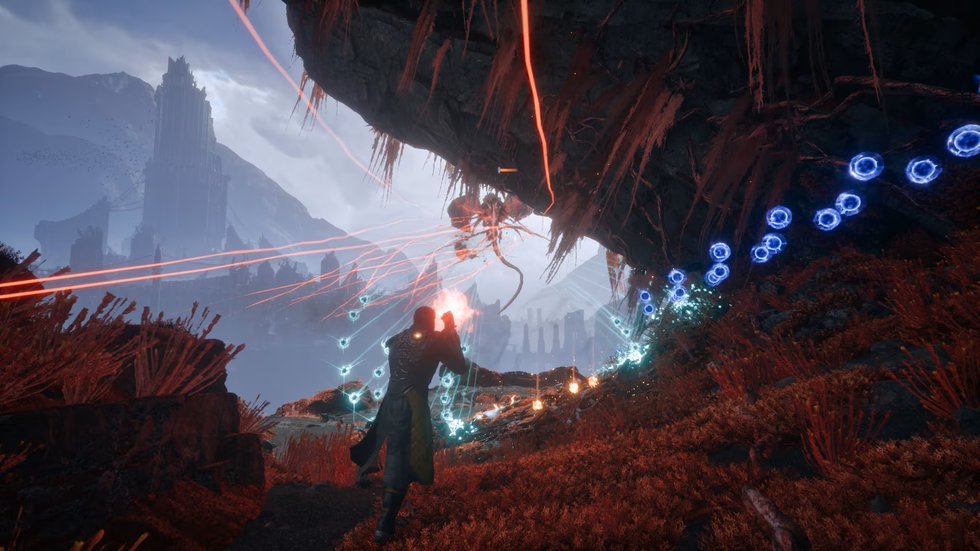
The second reason for modularity was to support the mix. As combat is very intense in Saros and can last for extended periods of time, we needed to factor this into our design to allow the mix systems the greatest flexibility possible. In the same way we could dynamically swap any layer in the weapons, we also applied that principle to the mix, where each layer could be offset by any data point from the game systems that we had available.
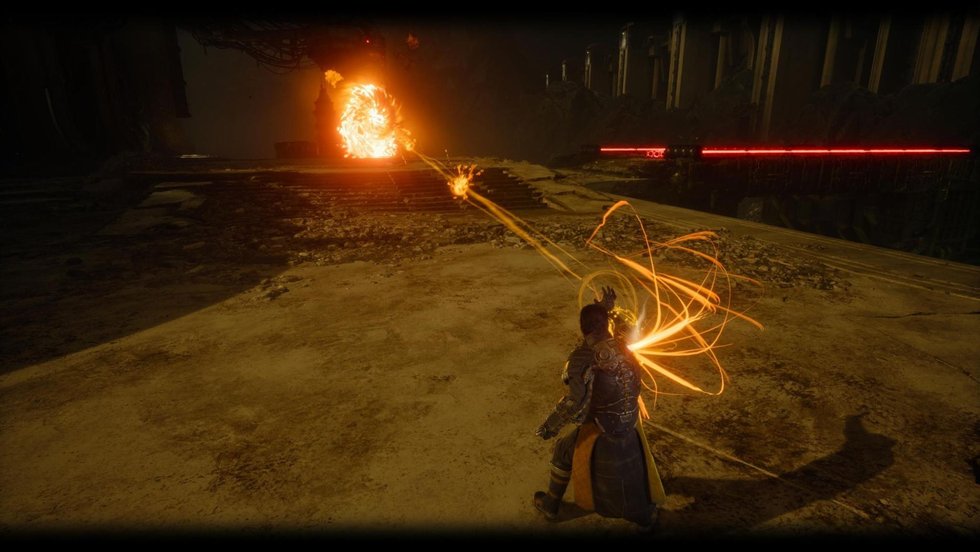
Out of all the weapons I worked on, I think I found the ‘Prominence’ weapon the most fun to design for. It is essentially your rocket-launcher-type weapon; however, it is heavily cosmic-based. Because of this, I could really lean into less grounded textures and push the amount of distortion and saturation that I would normally use.
What went into the sounds for the creatures and enemies of Carcosa? How did you go about giving this hostile world its own voice?
Fabio Liutina (FL): All creatures needed to sound dangerous, heavy, and unconventional. Additionally, their audio needed to be focused on player feedback. Players should be able to recognize these creatures and their actions just by listening to the audio.
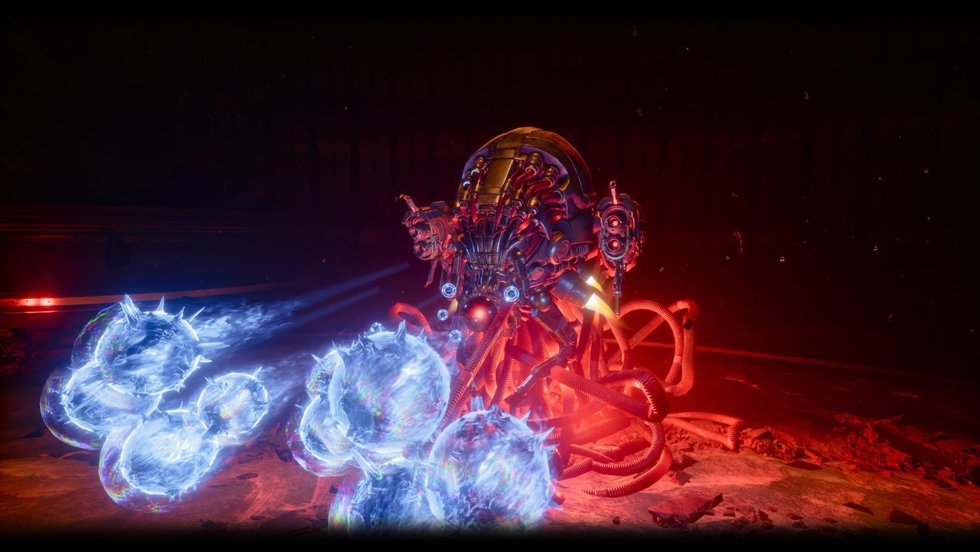
In terms of sources, anything could be one, even if I prefer props mostly. The only rule was that the main spine of a vocalization had to be very tonal. We needed a strong fundamental so that the vocalization could cut through the mix and be memorable to players. Players should be able to dodge or parry attacks just by listening to the audio cue. This was reached by making the vocalisations, especially the ones used as pre-attacks, tonal and memorable.
We expanded on some methods that were used in Returnal, specifically the bookends and highway methods. Both were presented in a talk by Ash Read, which can be found on YouTube. All creatures in Saros follow these methods. This helped in reaching cohesiveness among all creatures and the same creature vocalisations as well as to collaborate between sound designers by using the same terminology and techniques.
For cosmic enemies, we aimed for something more unique; they needed to sound clearly connected with the Yellow King and convey a sense of family. The creative direction was for them to sound menacing yet beautiful. Thus, we explored the idea of splitting the content into two major parts:
- The low vox, also known as “monk vox,” which gives the impression that the creature is talking or praying.
- The high vox, also referred to as the “siren vox,” which is the most musical part of the vocalization.
For this, we recorded a variety of Mongolian throat singing, which became the low vox after extensive processing. This processing, similar to that used for several bosses, primarily involved enhancing the low end, distortion, and denoising. The high vox was derived from different sources, such as female singers and musical instruments like the Shakuhachi.
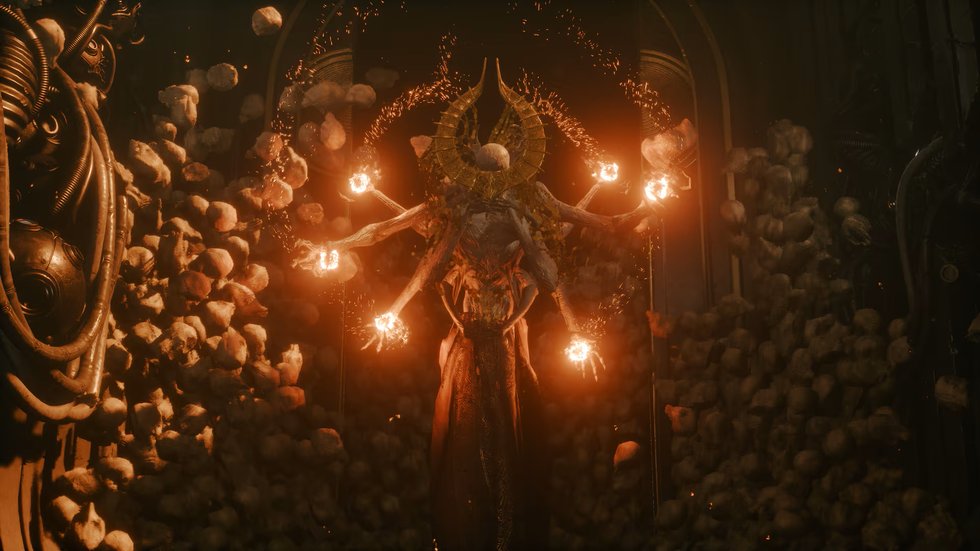
Finally, the remaining work focused on ensuring that the voices worked together harmoniously. They needed to follow the same behaviour, such as changes in pitch over time.
Regarding enemies’ attacks and projectiles, we wanted them to be both believable and unique. In Saros, enemies are divided into families: organic, mechanical, and cosmic. This division meant that we needed to tailor their attacks to align with their respective families. For organic enemies, we aimed for their attacks to feel as if they were naturally ejected from the body or spat out from the mouth, for example. In contrast, for cosmic enemies, we relied more on synthesizers, kicks, and any unusual tonal sources we could find.
In the pre-production phase, Loïc and I worked on concepts and explored how to design the audio for projectiles. We decided to approach their design depending on the case: if it was an individual entity, like single projectiles we would have treated them and designed them as they were. If they were groups of projectiles we would have already designed them as masses or groups of projectiles. Practically, this meant designing a cluster of ten projectiles instead of designing each one individually.
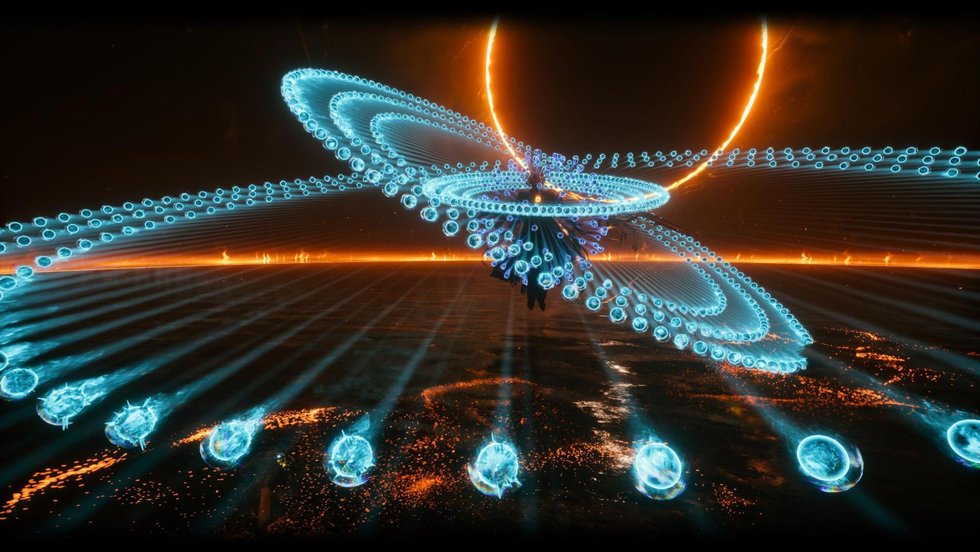
The approach in Saros by Housemarque was to give projectiles a unique identity. There are normal, corrupted, and nova projectiles, each serving a specific purpose in the gameplay. Some projectiles travel in a straight line, some track the players, and others start in one form and explode mid-air to become something else. Our idea was to emphasize these characteristics as much as possible by creating three distinct audio palettes: the normal blue projectiles were based on electric and liquid textures, corrupted yellow ones were inspired by the Corruption (didgeridoo) sounds, and the red projectiles were more tonal, derived from processed human screams. We also provided unique pass-by sounds and bespoke explosion effects for projectiles that explode mid-air. A big shoutout to Adam Persson (Senior Game Designer at Housemarque) for his significant contribution to implementing the explosions.
Saros takes players through a lot of very different parts of Carcosa. Can you talk about designing these environments so they feel alive – and hostile? Were there particular biomes or locations that were especially fun, or challenging, to bring to life with sound?
LB: This was about trying to find the most unique aspects of each biome and highlighting it.
Shattered Rise is the lushest environment in the game, so we spent time focusing on highlighting the vegetation and wildlife, which contrasted the desolate, colossal metallic structures of the Ancient Depths. Here we sold the isolation through the eerie winds, seismic activity and aged machinery.
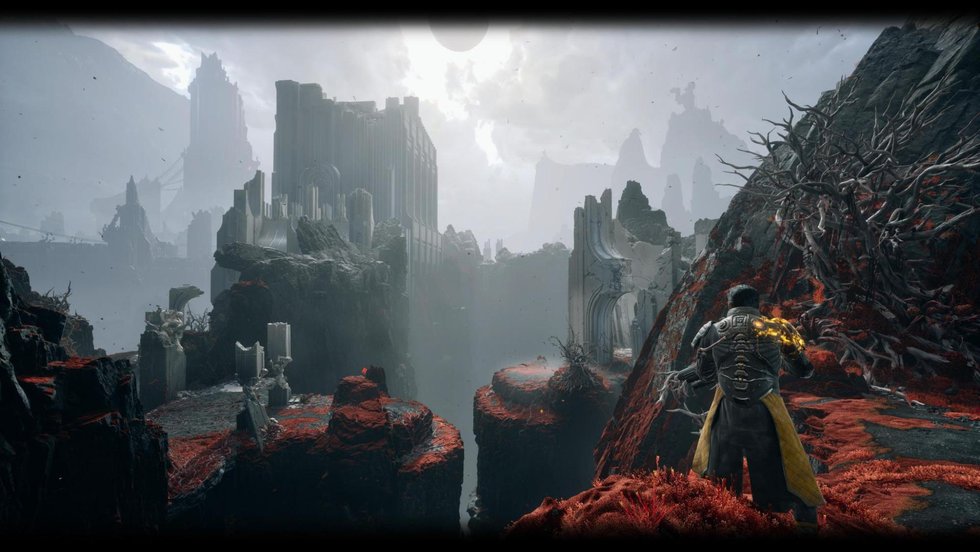
We had two vertical metropolis style biomes with Desecrated Fortress and Cathedral. Here we decided to push the abstract and psychological aspect in Cathedral to further differentiate the two. The Cathedral is full of liminal spaces so we hint at what could be out there through the cosmic enemy style screams and pushed the reverb to be much larger and musical.
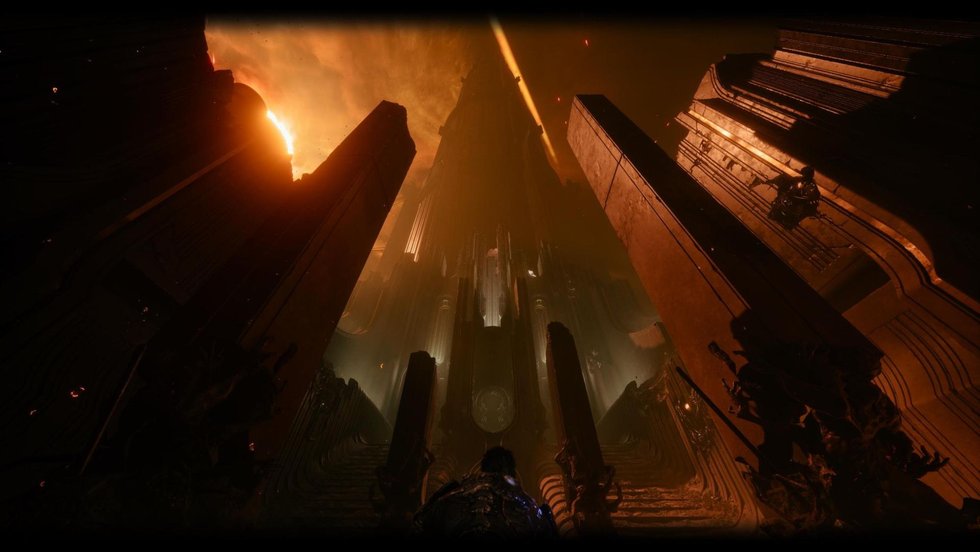
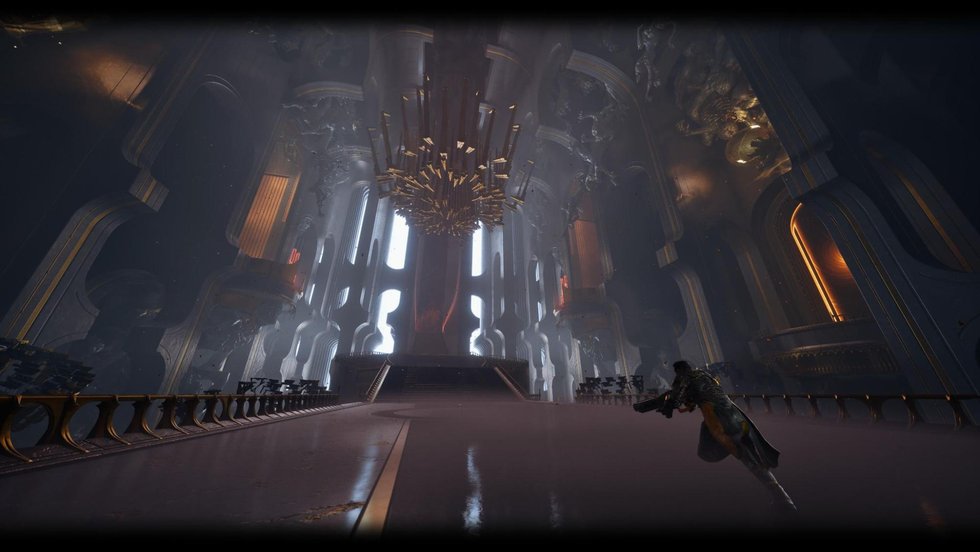
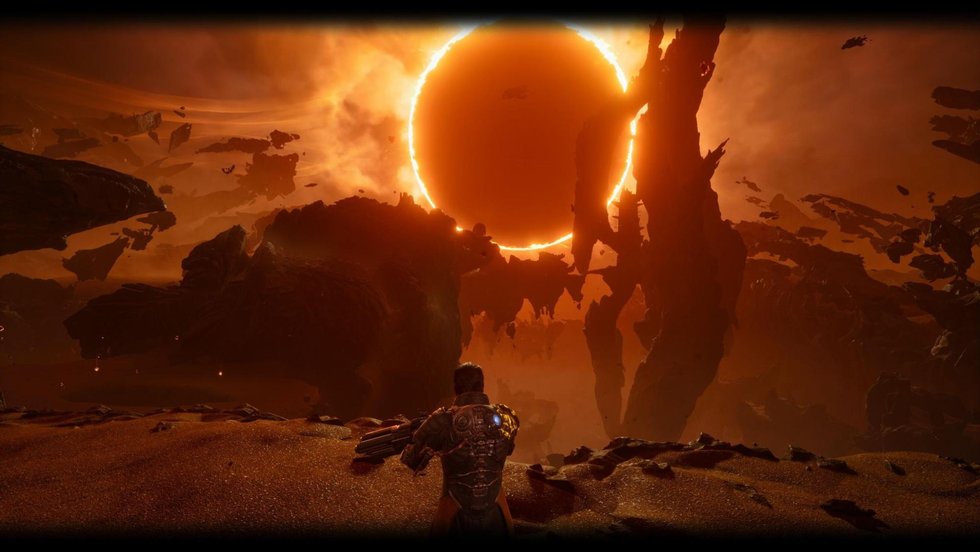
The biome which was both especially challenging and fun was the Yellow Shore. This is the most abstract and extreme version of the Eclipse. We’re surrounded by sand and floating structures, as well as colossal statues that are suspended in the air but not a lot else.
It was challenging as the other biomes had a lot of environmental details that we could fill out the soundscape with but we didn’t have as much liberty here, so I decided to lean fully into the sound of the yellow shore and design the collision sounds of these structures to represent the full power of the cosmic force. It was fun to push the envelope and design some much more abstract environment sounds rather than keep them more natural sounding.
Did you capture any custom recordings for the game, like field recordings, foley, or prop sessions? Were there any sources or sessions that you’re especially fond of?
FL: For the enemies’ area, we made several recordings. We used a violin bow on various objects, including cardboard, polystyrene, plastic, and a ukulele. The mistreated ukulele became part of the sound palette for the first boss of the game. Additionally, we recorded human screams, Mongolian throat singing (especially for the cosmic enemies), and any other unusual noises we could create.
You’d be surprised how many people around the office wanted to participate and scream into a microphone—it’s therapeutic!
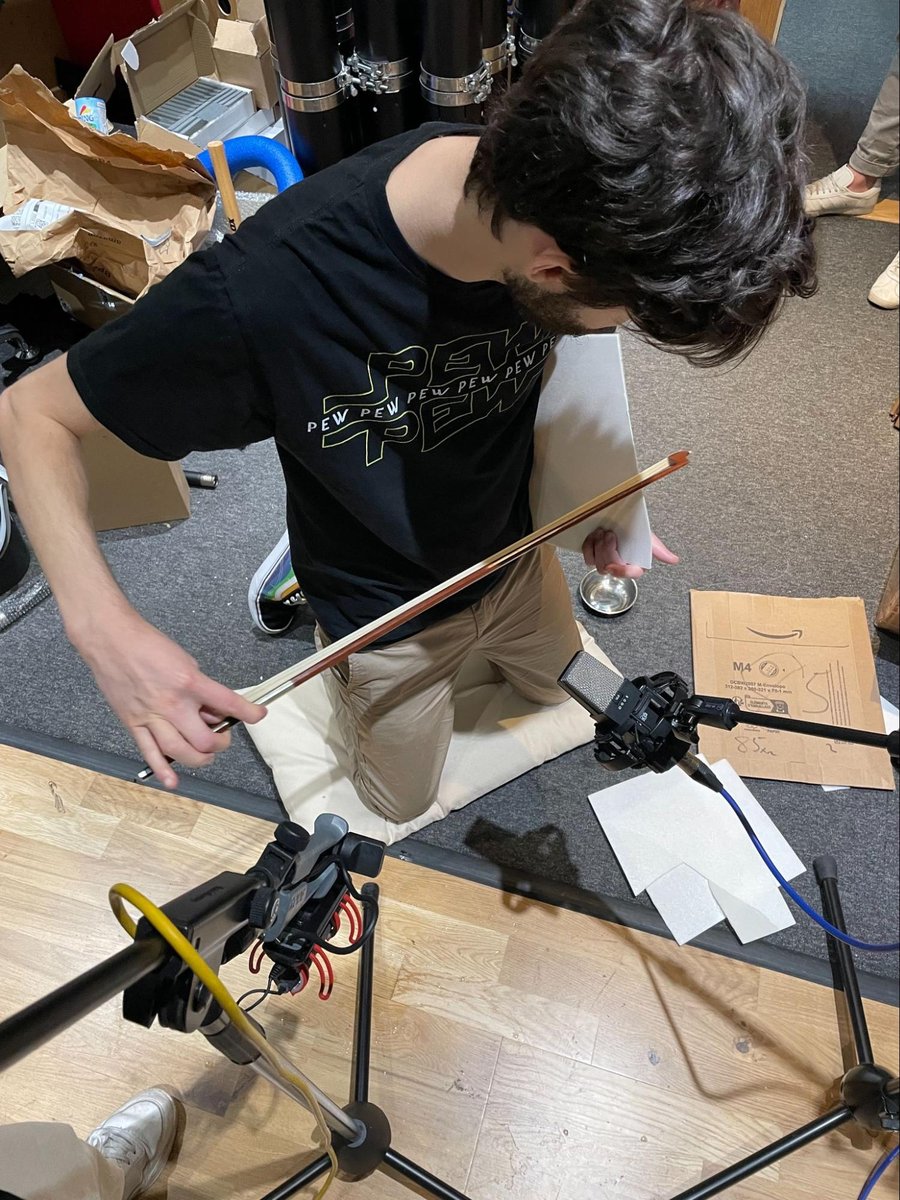
Finally, we made some didgeridoo recordings, which, thanks to Juuso, became the main component of the Yellow King’s vocalizations and one of the key sounds of Saros itself.
JT: For cinematic foley, we had a very specific and stylized palette in mind. The game constantly has a lot of powerful, attention grabbing, stylized sounds going off so our intention with foley was to have a very selective and designed approach, rather than a more natural, full coverage. We wanted weighty, clean and tactile sounds fitted neatly around all the other larger-than-life sounds, just enough to keep the illusion and feeling of constant foley coverage.
We worked with our talented SIE Foley team in the US, Joanna Fang and Blake Collins, and spent quite a bit of time experimenting with different approaches. Their performances were really strong and brought a great sense of natural movement and character, especially for busier scenes with a lot of activity or multiple people moving around. That material ended up giving us a useful organic backdrop and helped scenes feel grounded.
As we had multiple designers working on the cinematics, we needed a way to keep consistency across all the different scenes as each designer edited the foley too. First step was a library of non-synced assets from Blake and Joanna, which gave us a great palette of more organic sounds to use across the cinematics.
We found that some of the hero Foley moments needed a more exaggerated and controlled quality to fit the style of the game, almost more like a SFX rather than a foley performance. To push that further, I recorded a few additional layers at home with an ultrasonic mic, performed right in front of the mic and processed them quite heavily. Those recordings helped us create some of the more tactile, heavy, and stylized elements we were after. These were then organized almost like a SFX library with various performances so we could easily distribute these amongst the designers.
So in the end, it became a nice combination: the US Foley recordings gave us natural detail and performance, while the additional custom layers and processing helped shape the more designed, impactful side of the sound. For Saros this hybrid worked well, because it let us keep the humanity of real performance and enhance it at select moments.
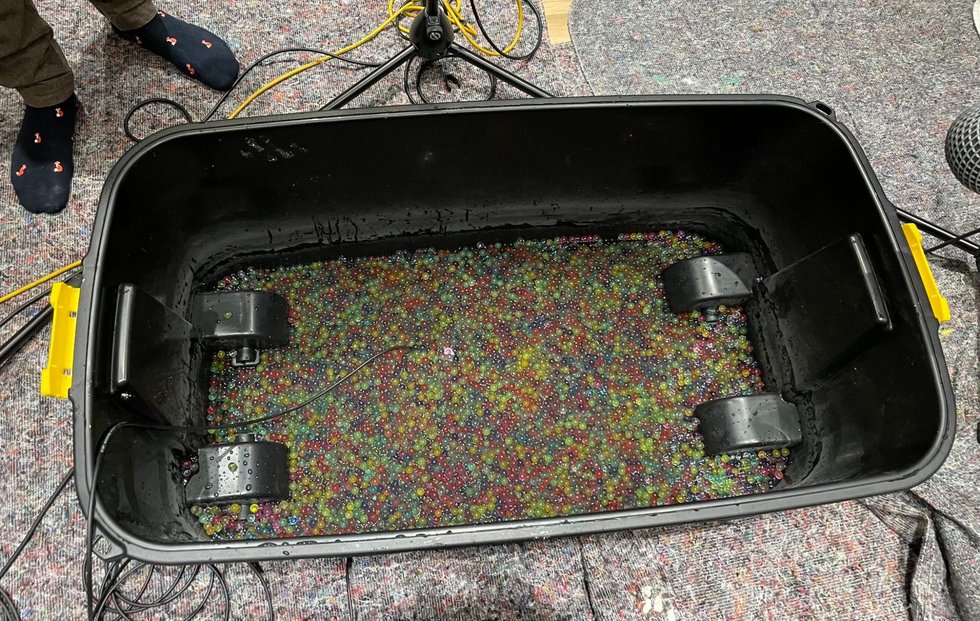
LE: When we first came onto the project and were in early development, we wanted to take the time to source and record as many unique sonic textures as possible. This included the didgeridoo recordings (mentioned by Juuso) and the bow recordings (mentioned by Fabio). In addition to this we also recorded a lot of liquid and goo; this involved us risking our studio equipment by bringing a big tub of Orbeez or water beads into the studio and getting various movements and textures from those. Chamois cloths and whisks also helped us get some nice sonic textures out of them.
Similar to the cinematics pillar, we also had the pleasure of nailing down Arjun’s gameplay footsteps with our US foley team (Joanna Fang and Blake Collins). It was a great collaborative experience where we were able to remotely dial into their recording sessions and provide feedback on the fly. Arjun’s footsteps provided a unique challenge, as he is a very fast and constantly moving character but also carries a lot of weight in his movements, which we wanted to emphasise as it builds into his enforcer-type character on a wider scale. During these sessions, we were able to trial out a fair few different boot types on different materials, and even multiple different footstep rhythms, which helped us narrow down the aesthetic we wanted. These were then wonderfully edited by Lorenzo Valsassina to create the final footstep palette.
LB: For the environments there was a big focus on hyperrealism, where the player can hear more details than is expected, so we did some bespoke recordings to highlight these details. The vegetation was a good example. A lot of recordings of foliage are generally noisy and we wanted to keep everything as clean as possible, so I kindly asked to borrow all the plants in the office and took them to the studio. We recorded running our hands through each leaf type with a focus on capturing the individual transients of leaves colliding, rather than as a group. When collated and edited together, we had a really tactile sounding grass sound, void of hiss and noise which was perfect for the Shattered Rise.
Similarly for the Eclipse embers, I closely recorded a ton of matches being lit and burning out to provide a detailed variety for the effect. Embers were always present during the eclipse so it was important to have a rich source for this.
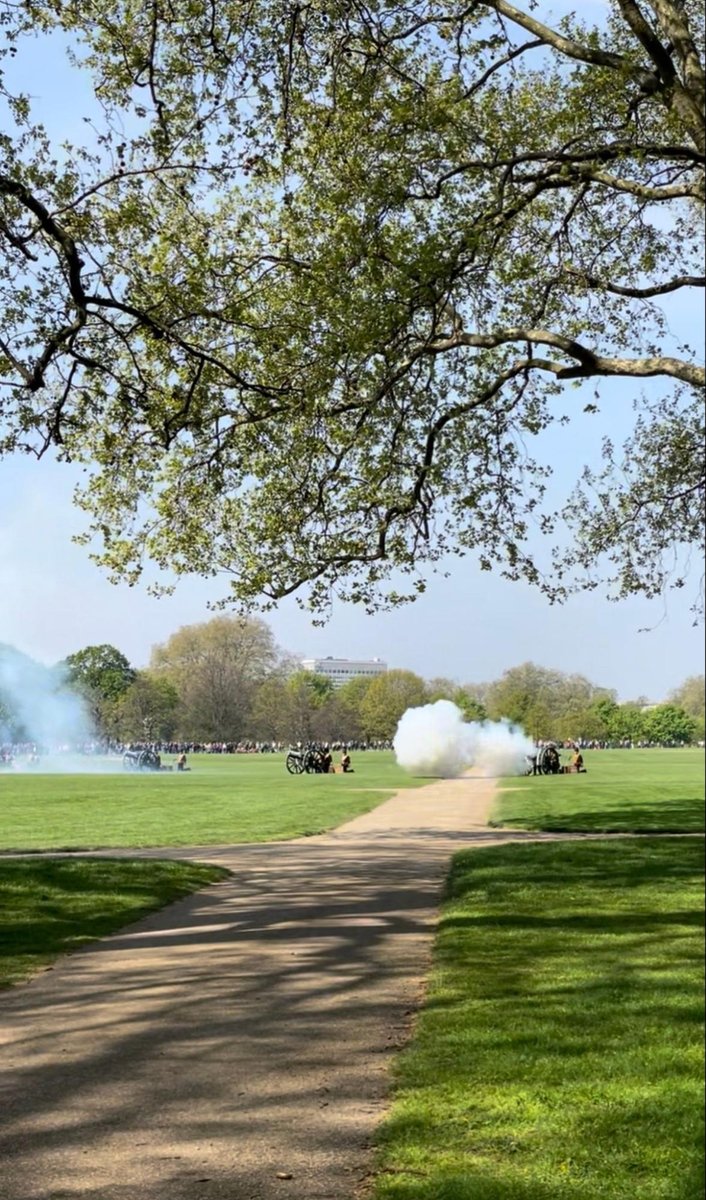
Another highlight was using recordings of ceremonial cannons and fireworks around London that I’ve captured over the years to provide the sound of the Warscape in Desecrated Fortress. The Fireworks were recorded by the bank of the Thames on New Years Eve which meant they were isolated from a lot of the music played to the crowds. The reflections from each side of the banks created a really unique cadence and filter to them which sounded fitting for alien artillery in the sky.
With so much happening on screen at once, what was your approach to the mix, and to keeping everything clear and understandable for the player when the action gets chaotic?
FL: For the enemy area, Loïc, Ville Ojala (Senior Audio Programmer at Housemarque), and I developed a system to manage enemy audio in the mix. The idea was to highlight the most important enemy audio cues by downplaying the less important ones. This system was specifically designed to address situations with multiple enemies of the same type or threat level. As Loïc already had systems in Wwise to deal with enemies of different types, this system allowed to get deeper in mix control.
Our approach was to create a points-based system to establish a priority order for enemies. In addition to assigning absolute priority based on their level, we devised a set of rules depending on the combat situation. An enemy could lose points if it was not the closest to the player, if it was being looked at, if it was not attacking, etc.
All these rules feed into the system to categorize enemy audio into Leads (clearly audible instances), Backgrounds (background instances that are audible but on a quieter level), and Ghosts (muted or very quiet), in order of priority. We also determined the budget for these voices, allowing, for example, only two lead voices per enemy level.
The results were feeding an RTPC, which Loïc could adjust on the Wwise side to affect the mix of the combat.
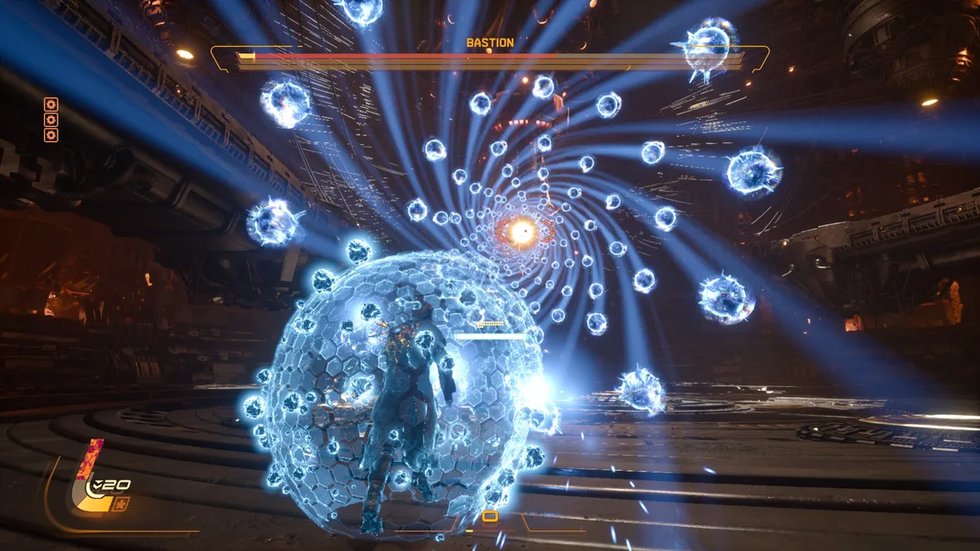
We also had a similar system for projectiles. Saros evolved the bullet ballet featured in Returnal, elevating the challenge for players to a new level. During development, it became clear we needed an advanced system to manage the playback of such a large number of projectiles.
Naturally, these ideas required a reliable implementation method, and Lewis Thresh (Senior Audio Programmer on our team) excelled in developing the projectiles’ playback and priority system. He effectively translated our ideas into a user-friendly system that allowed us to set rules and manage the projectiles efficiently. The concept involved grouping projectiles based on proximity and type, then using a number of variables to prioritize these groups, giving only the highest priority groups an emitter that plays within the shapes bounds, helping us keep the number of projectile emitters under a set threshold.
Finally, Loïc and I reviewed all these projectiles and their combinations, setting Wwise rules to manage them according to gameplay needs, thereby aiding players in prioritizing them during combat.
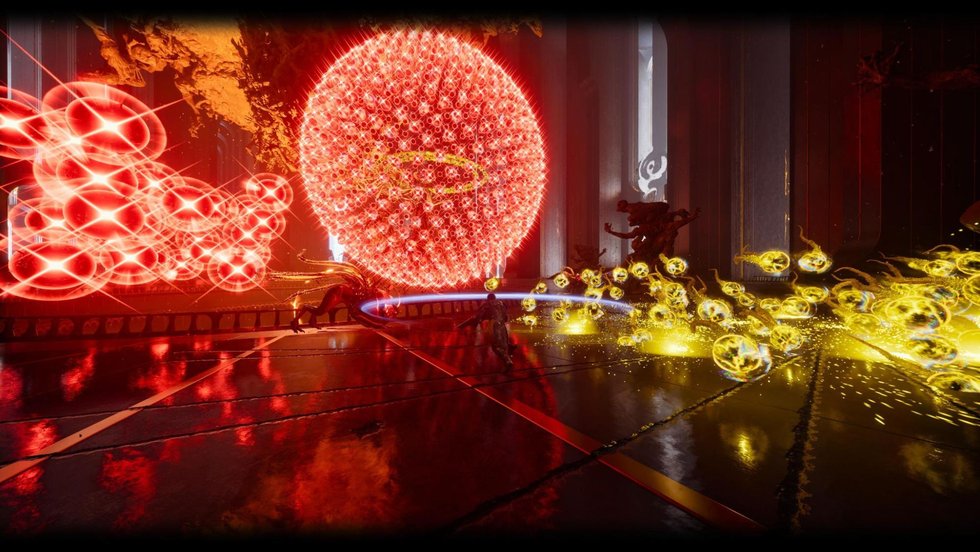
LC: I am sure every mixer feels like their game is difficult to mix, but the amount of simultaneous, critical information in Housemarque titles presents a unique challenge, especially during intense combat. As I often say, only half-jokingly, the game is a relentless spam machine, and the mix tries to be a good anti-spam for the ears.
I would say there are three distinct approaches in Saros, with the clarity and style changing based on the intensity of the action.
1. Exploration
Despite the dense environments and visual effects, we have the freedom to present each sound at its maximum power and range, almost as if everything could be sequentially celebrated, depending on what the player is doing or focusing on. It is generally easy to predict the player’s attention and bring those sounds to the foreground while transparently pushing everything else into the background.
2. Low to medium intensity combat
Things become more challenging, but the mix can still organise and present the battlefield in an accurate, precise, and readable way, while maintaining the high dynamics that give the action its satisfying sense of scale and impact.
This is achieved via the pre-Wwise systems Fabio described, combined with multiple layers of priority systems within Wwise. The more we can be certain a sound is not needed, the more we can turn it down. Multiple stages of small reductions can end up in a clean mix.
It essentially combines a lot of States, RTPCs, and metering-based sidechains. The fundamentals are simple, the whole system isn’t! I would love to get deeper into this but it would become as long as the whole interview, so I will remain focused on the approach.
3. High intensity combat
Once combat becomes truly chaotic, with enemies surrounding the player from every direction, trying to present a perfectly clean, sanitised soundscape not only becomes extremely difficult, it also starts to work against Housemarque’s intended direction.
As I mentioned, at the core the mix behaves like a priority system, where the player is presented with what are deemed most important cues at any given moment. That approach works extremely well during exploration and lower intensity combat because it is usually possible to predict what matters most.
When combat becomes overwhelming, however, there are a lot more sounds fighting for attention, which means that to maintain a clear mix, we need to suppress a lot more content. While doing so, two side effects start to appear.
First, aggressively cleaning the soundscape starts to break immersion. While I can certainly make the audio cleaner through stronger prioritisation, it begins to sound disconnected from what the player is seeing, becoming a stylistic choice in its own right. Our desire was to focus the audience’s attention on a single element despite incredibly busy visuals. However, that approach is much harder to apply in games in general, and especially in one like Saros, where the player’s focus is constantly shifting and impossible to predict. I experimented with it, but players often interpreted the result as sounding empty, or even buggy. It also goes against our 3D audio immersive objectives, where the world is accurately represented. Too many silent elements is very noticeable in a 3D soundscape.
Second, every aggressive decision to remove what appears to be “noise” to someone is actually removing “signal” for someone else. This limits how drastically and confidently you can suppress elements of the soundscape (I am only talking about removing further critical combat cues at this point, any non-combat cue such as environmental sound, distant projectiles or even enemy foley are already removed).
Watching people play made this very clear. Different players often adopt completely opposite strategies, and those strategies can change from encounter to encounter. What one player considers critical information may be completely irrelevant to another.
For example, some players eliminate smaller enemies first before dealing with larger threats, while others do the exact opposite. A cleaner approach that further suppresses smaller threats immediately fails for players whose strategy prioritises those enemies first.
In other words, as a combat scene becomes saturated, it becomes impossible to draw a clear line between signal and noise without making incorrect assumptions. This is why a heavily sanitised approach was not the right fit for Saros in chaotic situations.
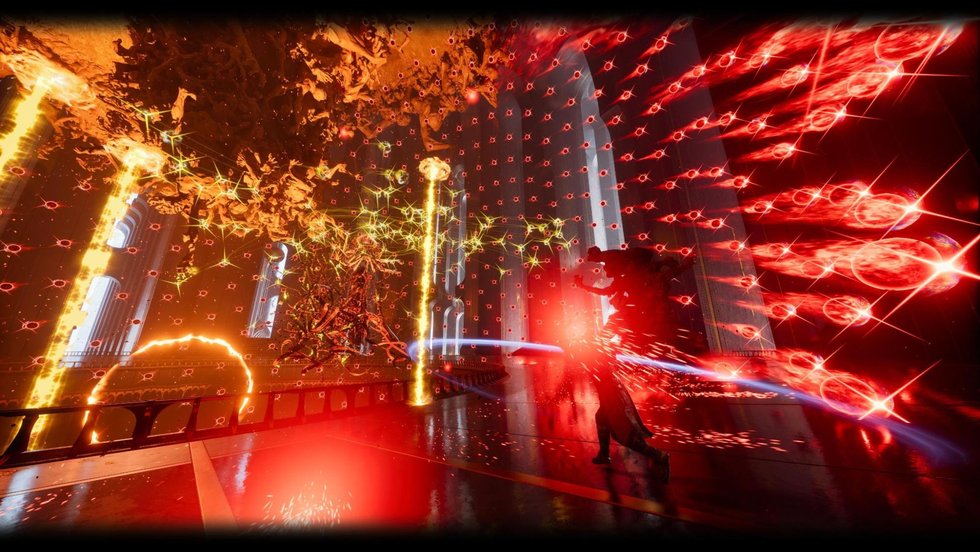
Instead, Housemarque favoured a more emotional approach. As combat intensifies, the dynamic range of the sound effects is gradually reduced, which also helps manage listener fatigue, while the music increasingly takes the lead. Housemarque are very protective of their flow state gameplay. At that point, the goal is no longer analytical clarity, but maintaining momentum and keeping the player in the zone. Music supports that state better than constantly emphasising and suppressing individual sound effects, which can sometimes actually interrupt the flow.
That said, all of our mix priority systems are running and working their hardest in that mode. The goal is simply not to push them to the extreme and over-sanitise the chaos. It is a fine balance to establish.
So, in other words, our solution to extreme chaos was not to impose order on it, but to embrace it. As combat reaches its peak intensity, the experience becomes more fluid and driven by the music, while the sound effects become more cohesive, with only the largest events and most important cues cutting through the music density.
Saros makes use of the PS5’s Tempest 3D AudioTech. What were you hoping to achieve with the spatial, 3D side of the sound, and were there moments where it gave you especially pleasing results?
LC: We are fortunate to have a lot of experience in that technology, and made extensive use of 3D Audio in Saros.
Delivering a successful 3D soundscape requires a clear early structure of input (source) and mixing output formats for each type of content in the game. For example, reverbs and environment beds in 3OA with objects, enemies mixed in 5OA, player weapons in 7.1.4 passthrough, etc.. It gets more complex as layers of the same feature leverage these multiple outputs simultaneously in order to create a rich spatial scene.
More generally though, in terms of what it brings to the Saros experience, I believe its two biggest benefits are increased immersion and improved combat awareness.
Even though I am used to it, I am still often surprised by how much extra precision and situational awareness 3D Audio brings compared to standard stereo. If you play in stereo for a while, it sounds great, but you quickly forget how much spatial information you’re missing. In a game as challenging as Saros, that can make the difference between life and death, simply because you have an extra cue about where the danger is coming from, especially when it is outside the screen. As a player, you build a much stronger mental picture of where enemies are around you, something that is significantly reduced in stereo. To me, it unquestionably helps players navigate such a demanding game.
The immersive aspect is perhaps more subconscious. It is about creating envelopment, depth and a clearer separation between Arjun and the world around him, while also allowing to perceive height and sounds coming from behind. Verticality is a major part of Housemarque’s games. Many sound sources are above or below the player, whether that is birds in the environment, a hidden collectible, or an enemy projectile about to hit you. Being able to accurately perceive those sounds makes a real difference to feeling like you are in Carcosa rather than sitting in your living room.
Beyond those practical benefits, we also showcase 3D Audio simply because it is fun! We occasionally exaggerate certain moments almost like a tech demo, making sure players really notice what the spatial audio is doing. It is a way of showcasing the technology, creating memorable moments, and hopefully giving players something they can excitedly show their friends, whether they are using headphones or an Atmos system. No wordy description beats playing the game and experiencing it yourself… This should be noticeable within the first 5 minutes of playing Saros, along with the Haptics feedback!
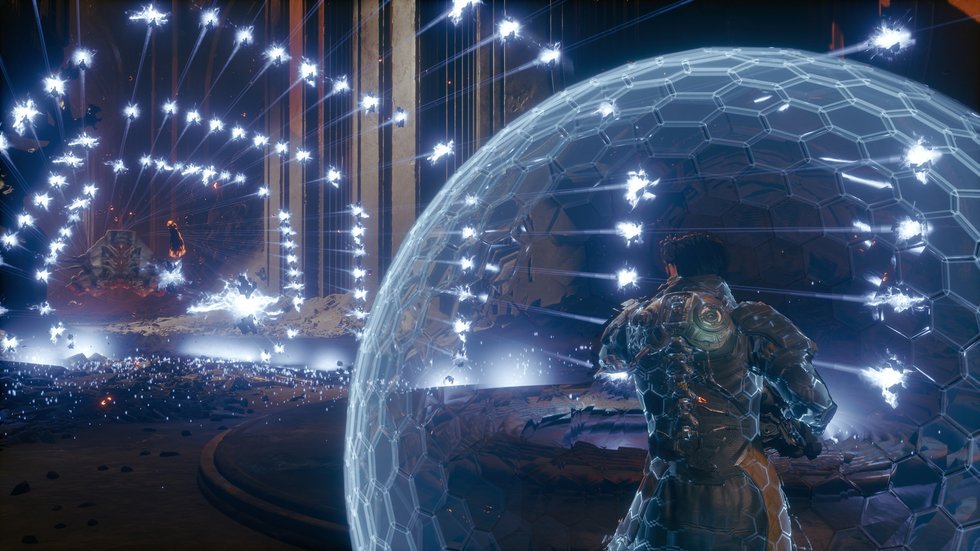
On top of the louder and more obvious use cases, you might also notice how dashing leaves a sonic trail between your starting point and destination, how the shield envelops you as it deploys, how Arjun’s voice reflects off nearby walls and inside the shield, how the wind and leaves move around you in space, or how subtle, invisible sound sources bring life and movement to the world.
How did the sound and the DualSense haptics come together for you? Can you talk about how closely the two were designed alongside each other?
Pete Reed (PR): Haptics were a really important area for us. Returnal set a very high bar, so it was important to both us and HMQ that we pushed the DualSense experience further again on Saros.
Sound and haptics were designed very closely together from the start. When you’re working with haptics, frame accuracy is essential, any discrepancy between the audio and the controller feedback is immediately noticeable, and if the player notices that disconnect, it becomes distracting. Because of that, every designer was responsible for creating haptics alongside their sound design pass from day one. It was never treated as something separate or something we would simply add at the end.
Later in development, particularly in the final couple of months, we worked closely with Housemarque to identify areas where we could enhance the experience even further. We prioritised the features that would give the player the strongest feedback, two of those areas we identified were player abilities and cinematics.
A lot of the work involved in those areas required creating bespoke content which explored more responsive frequencies as well as automation, really digging into what the controller is capable of. Having said that, some of the most effective improvements were actually quite subtle. One of my favourite examples was on the bullet-based weapons (AR, Shotgun, and Pistol). I wanted the haptics to communicate when the player was running low on ammo, and I was able to use an RTPC in Wwise to switch to slightly different frequency assets to achieve that. It’s a very subtle detail, but in a game like Saros, where there’s a lot happening at once, it’s a useful way of giving the player important information through haptic feedback.
Another favourite was the nightclub kick drum, which came from a suggestion by one of our producers, Zoe French. Simply routing the kick stem to a haptics aux bus made the music and the world feel much more intimate.
It was that combination of designers focusing on haptics from day one rather than treating it as an afterthought, creating bespoke assets that pushed the controller’s frequency response and automation capabilities, as well as refining smaller tactile details that helped us make full use of the DualSense in a way that supported both immersion and gameplay feedback.
What was the hardest thing to get right on Saros, either creatively or technically, and how did you handle it?
LE: From a weapons perspective, the hardest part of the design for us to nail was striking a balance with the weight, power and uniqueness we wanted to achieve with the fatigue and mix considerations. As I mentioned previously the combat sections in the game could be very intense for extended periods of time, initially when we were concepting out the weapons we found that some of the unique design elements we were trying, that sounded great in DAW, just were not standing up to scrutiny when playing back in game for extended periods of time.
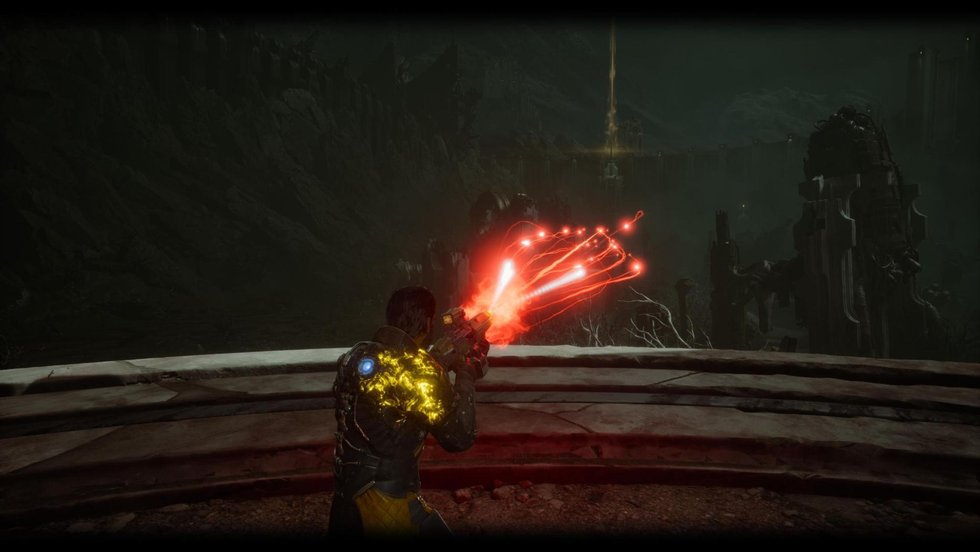
Taking the Assault Rifle weapon archetype as an example, you essentially have limitless ammo so during boss fights you could be firing on full automatic mode consistently for 10 minutes straight with the only reprieves being to reload or to dash/avoid projectiles. Even though we had the systems in place to control this, it could only do so much. Because of this most weapons went through a high number of iterations, carefully balancing layers such as our tonal or mech layers until we ended up with something that universally felt good to use, that hit our creative goals and was able to survive the high amount of repetition.
LC: I’m going to be predictable here, but personally one of the hardest things to get right was the mix. The game can become extremely busy, and as I mentioned earlier, once combat becomes truly chaotic, the focus of the mix belongs more to the individual player than to the developer’s intent.
That being said, this is much less of a challenge in more cinematic, linear games, or in games where the gameplay follows a more predictable flow.
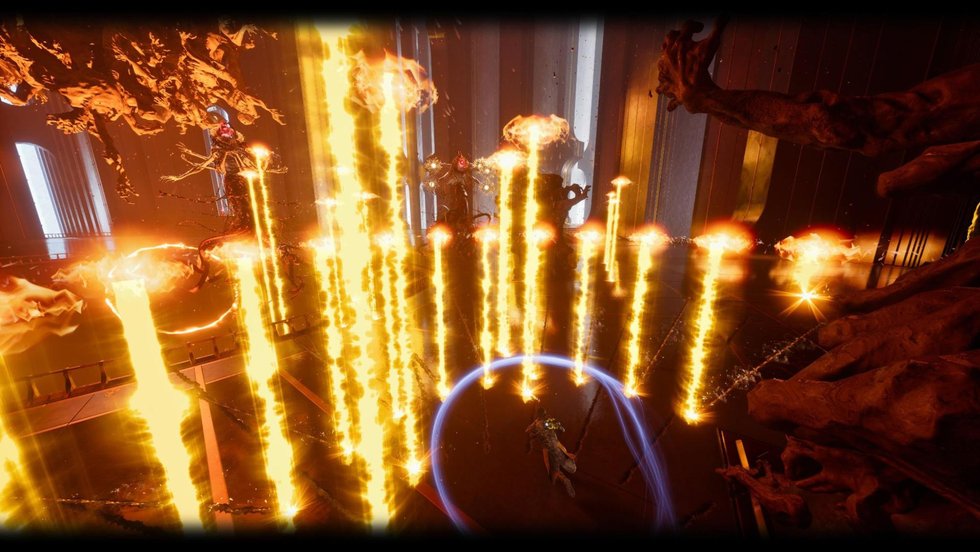
On top of that, the relentless combat can make the audio (and haptics) fatiguing, as Lewis pointed out. The more satisfying and powerful you make the sounds, the more fatiguing they can become over time. I developed systems to manage listener fatigue, and finding the right balance was difficult. Push those systems a little too far and the game starts to sound dark, dull, and muddy. Don’t push them far enough and they are no longer effective.
In short, the system combines simple game logic (states, RTPCs) and weighted meters to evaluate the amount of loud transient activity over time, then adapts the dynamic range and tonal balance, while also muting some individual fatiguing elements when needed.
It may sound similar to the description of a multiband compressor, and in some ways it is, but the main difference is that it does not respond directly to the audio stream. Instead, it reacts to information about overall activity, more like: “It is starting to become fatiguing, so let’s smooth this out.” Finding the right recovery behaviour once fatigue control is engaged was also delicate.
Small adjustments can have a significant impact, and finding the right balance required many focused mix sessions with our Audio QA, Tom Learmouth, stress-testing the game like a hardcore player, which he definitely is!
Did you reach for any independent sound libraries while building Saros, and are there any you’d want to give a shout-out to?
FL: For the enemies’ area, some of Mattia Cellotto’s sound libraries were particularly helpful, especially “Animal Hyperrealism” and “Cataclysm.”
LB: I’d love to shoutout Thomas Rex Beverly’s Nature Roomtones. They’re perfect for so many scenarios.
What did you learn on Saros that you’ll bring with you into your next project, like a technique, a tool, or an approach?
PR: In terms of UI, creating modular assets is the way forward. Being able to author new assets quickly while staying within the established design palette was an approach that proved incredibly valuable.
In regards to collectables, communication was key. I made a point of regularly checking in-game and with the game design team on which collectables were being added or removed. That approach saved us more than once by preventing us from starting work on collectables that were later cut.
Regular team playthroughs were incredibly valuable. It’s easy to develop tunnel vision when you’re focused on a specific area of the game, so being able to keep an ear on the progress of the wider team was hugely beneficial. We were critical of each other’s work, while also recognising and praising what was working well. I believe that this approach helped elevate multiple areas of the game, and it’s something I’ll absolutely be pushing as a must-have on future projects.
LB: Later in development we had a collaboration with Housemarque’s Tech Art team. Ville Ojala (HMQ’s Audio Programmer) and I worked with Kimmo Ala-Ojala (Principal Tech Artist) to utilise Houdini to generate environmental audio data. Tech art were using geometry data for the mini-map among other things, and we used that same data to generate audio splines around the world. It allowed us to cover every cliff edge and even the ocean in Acolyte’s Haven. I definitely plan to identify similar crossovers in the future as it saved us a significant amount of time.
FL: In Saros, we created templates in Wwise that significantly helped streamline the implementation process over time. Specifically, I developed and stored enemy templates in an empty WU. These templates consisted of a hierarchy of containers and actor-mixers, all preset according to their importance in the audio mix. For example, all containers were normalized and had voice limiting, attenuation, and other settings already configured.
Once the design of an enemy was completed, I would copy the appropriate template to the correct location, allowing myself or other designers to simply drag and drop audio waves into the containers and rename them as needed.
Another essential element in the enemies’ audio setup was a reusable component called the Enemies Audio Component. Once attached to an enemy blueprint, this component handled about 70% of the enemy’s audio logic, while the remaining audio was implemented using custom notifies within the animations.
This centralized logic played a key role in minimizing bugs, as there was almost no need to write bespoke logic for regular enemies. Bosses, however, required different handling due to their unique characteristics.
LE: On the weapons pillar the main workflow that I found beneficial creatively was my weapon design session template in Reaper. This involved me creating a very simple Reaper script that would take your shots per second value, convert it to BPM and then set that BPM as the project tempo. This allowed me to get around the max tempo limit in Reaper for some of the faster firing weapons. Once I had this, I would then use the built in Grid system, which allows you to set up custom snapping rules which not only made designing shots in a larger clip much easier, but it also allows you to dynamically change the fire rate in Reaper, so I could very easily non-destructively trial out multiple fire rates without leaving my DAW.
In addition to this, to support a fast turnaround on concepts and iterations, I utilised samplers and midi items to quickly fill out entire clips. This would involve me designing a single layer and importing it into a sampler, triggering it with MIDI and then automating parameters over the clips lifetime. When it came to mastering my assets or a concept being approved, it was then a very simple process of taking my original layer and creating variations. It allowed me to quickly create multiple concepts without getting to bogged down in the nitty gritty and creating multiple variations of an asset that may never make it out of the concepting phase.
Our UE5 Implementation is also something I would look to incorporate into future projects. It involved us using a custom Weapon Audio Component that was written in C++ by the talented programmers at Housemarque, this component then acted as a connect the dots type system, where we could hook custom callbacks to nearly any message or system from the gameplay side. At the beginning of the project, we worked closely with Housemarque to setup as many of these call backs as possible to ensure that when development picked up pace we could work independently, speeding up efficiency on both sides.
The Weapon Audio Component was then instantiated in a hierarchy of audio blueprints, this allowed us to maintain a clean and efficient setup where we could do our own custom audio logic outside of the main weapon Blueprints, reducing conflicts and complexity. The logic could then be shared across all the weapons, with each weapon having the ability to create a new child blueprint to override any logic or create one off custom logic to support a specific feature of that weapon.
LC: I learnt so much on Saros that it is difficult to narrow it down to a few specific takeaways.
Many of the mixing techniques I experimented with and developed during the project will definitely make their way into future titles. The same goes for many of our team standards and processes, although what works well for one game or team does not necessarily work for another.
One thing I will absolutely take with me is how, especially compared to Returnal, we managed to avoid overtime. There is no secret to it. It came down to rigorous planning and, at times, making some difficult decisions to stay on track. A huge amount of credit goes to our Senior Manager, Atsushi Suganuma, and our Producers, Zoe French and Hannah Burdett, for making that possible.
Oh, and one final tip: Try not to have a baby at the same time as you’re shipping a game, unless you enjoy doubling your challenge! I became a dad a few months before shipping, and it definitely made things more demanding. I was grateful that the team was able to do a lot of the heavy lifting.
JT: Of course in general it was a massive learning experience, I’d not worked on cinematics before this extensively and had mostly authored stereo content, so really jumping into the deep end with Atmos and Ambisonics was a little intimidating but extremely rewarding!
One thing that really helped out and became a staple in my workflow was pre-designed libraries. I built an extensive library of only designed Saros-source and this was very useful throughout the whole production, but it was especially powerful when you had multiple designers and wanted to keep it all cohesive. Before starting on a cinematic I would usually pick out the most iconic scenes or features and do a quick sound jam, not even necessarily looking at the visuals but just imagining what kind of sounds I’d like to hear there. They didn’t always fit in that specific scenario but I would always find use for them somewhere down the line.
Were there any surprising facts about the sound of Saros – things that might surprise people about how a particular sound was made?
FL: The first enemy that players encounter in the game, a sort of evil mechanical drone, was created using a bunch of floppy disk sounds that were processed. So, the first enemy is essentially just an angry floppy disk that shoots at you!
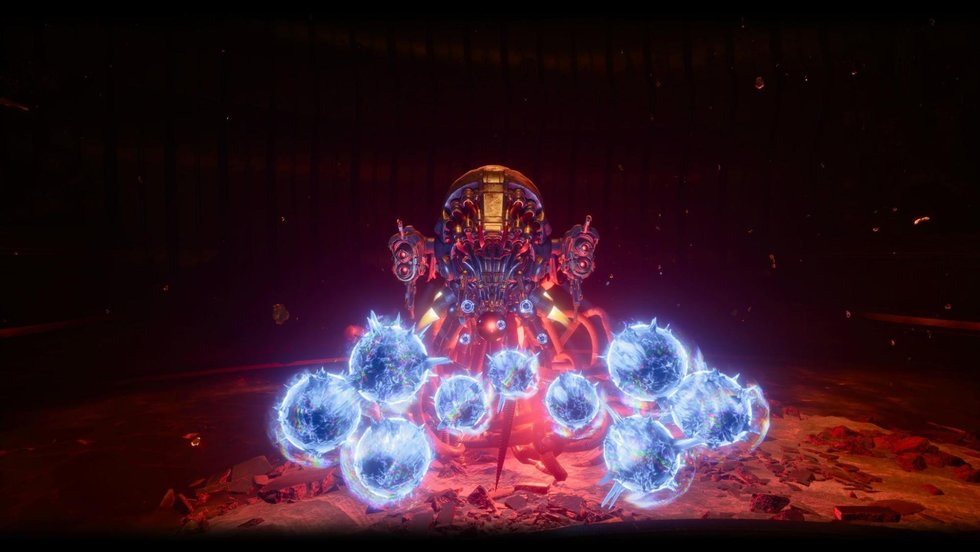
LE: A lot of the 2D weapon tails for the primary weapons are made using Ice Cubes recordings, they utilise some quite heavy processing on them but I found that they created a really nice natural rhythmic pattern that simulated Thunder but had a more ripple-like quality to them!
LB: The sound of the ocean in the Yellow Shore is made of marinated chicken, frying chicken and walnuts being rolled around a bowl. A lot of the general direction of the sound design was to have an ASMR feel, where the player is hearing details that they wouldn’t notice in the real world. These sounds perfectly exaggerated the qualities of the breaking waves when combined and gave a natural upwards compression feel. It’s something you might not notice but I think it adds an interesting twist to the sound.
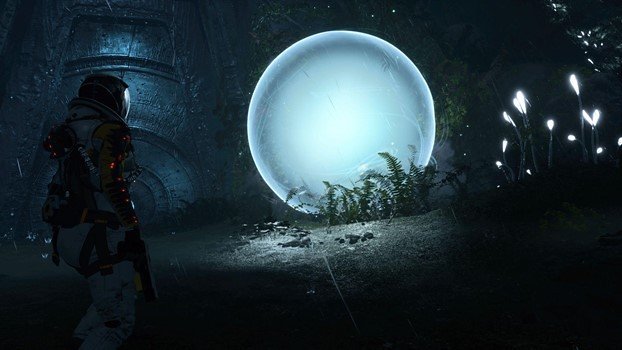
LC: An element of the sound of the Eclipse in Saros comes from Chronosis, the blue multiplayer portal orb from Returnal’s DLC.
JT: The Eclipse braam you can hear in the announcement trailer was a result of a very specific processing chain with multiple steps of resampling. The source itself was very mundane – I think it’s just some air blown into slime – but the whole chain was crafted around this one short sample, so when I had to create more variations I had to spend quite a bit of time reconstructing the chain to be able to match the original sound.
What part of the sound design on Saros are you most proud of?
PR: Honestly, I’m incredibly proud of the sound design of the entire game. I believe every area of sound design in Saros adds something unique and it’s the way all of those elements come together that I’m most proud of.
A lot of care went into making sure each area not only felt strong on its own, but also contributed to a consistent sonic identity.
LC: Similarly to Pete, I am proud of the end result. I believe the game has a recognisable style, a bold creative approach, and a cohesive identity across the entire experience. On a project of this scale, it is difficult not to have areas that stand out for the wrong reasons. I think we managed to deliver an experience that feels consistently crafted and polished, even though, like every game, we had to carefully manage our ambitions to make sure we could ship.
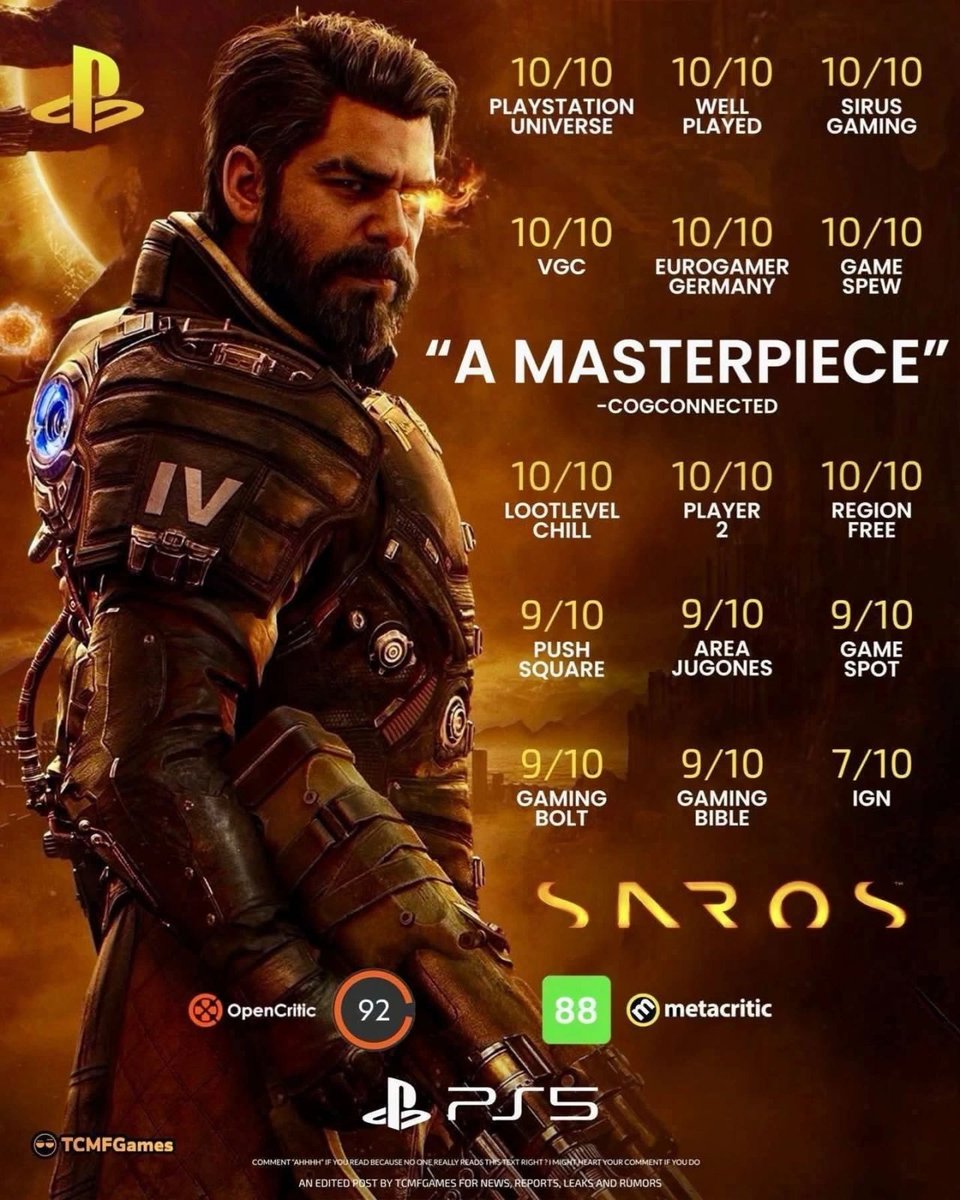
I am also proud that the game’s audio and haptics generated so much excitement in both reviews and player feedback. Our discipline can easily go unnoticed, even when the work is exceptional. We set out to make the experience as engaging, satisfying, and memorable as possible. Seeing players and reviewers recognise that effort has been incredibly rewarding.
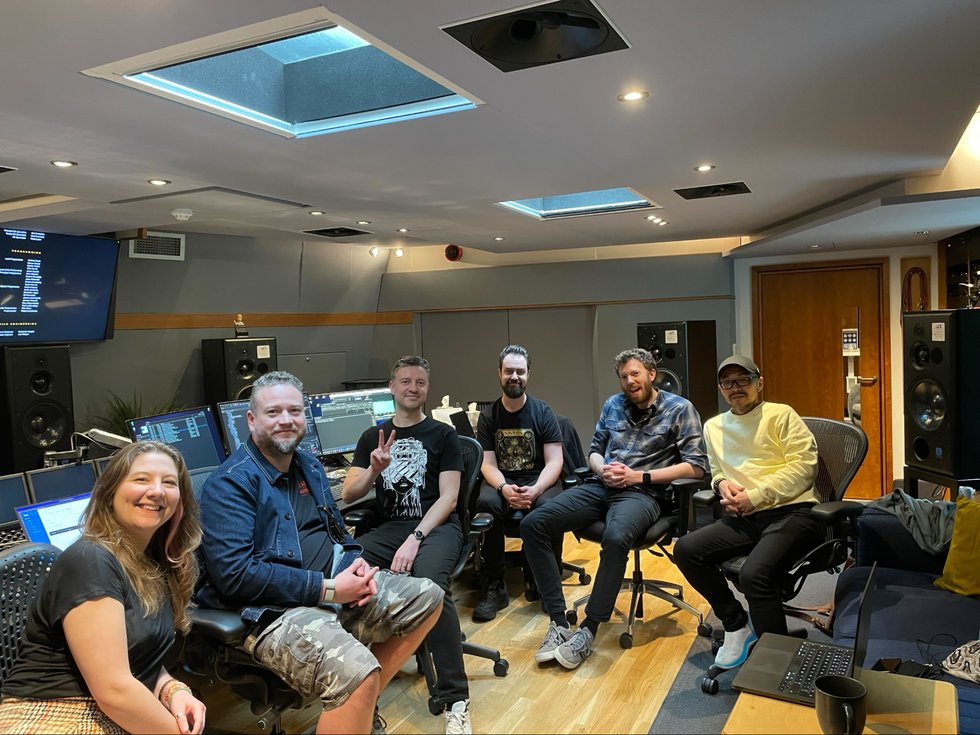
A big thanks to Loïc Couthier, Pete Reed, Fabio Liutina, Lewis Barn, Juuso Tolonen, and Lewis Everest for giving us a behind-the-scenes look at the sound of Saros!