


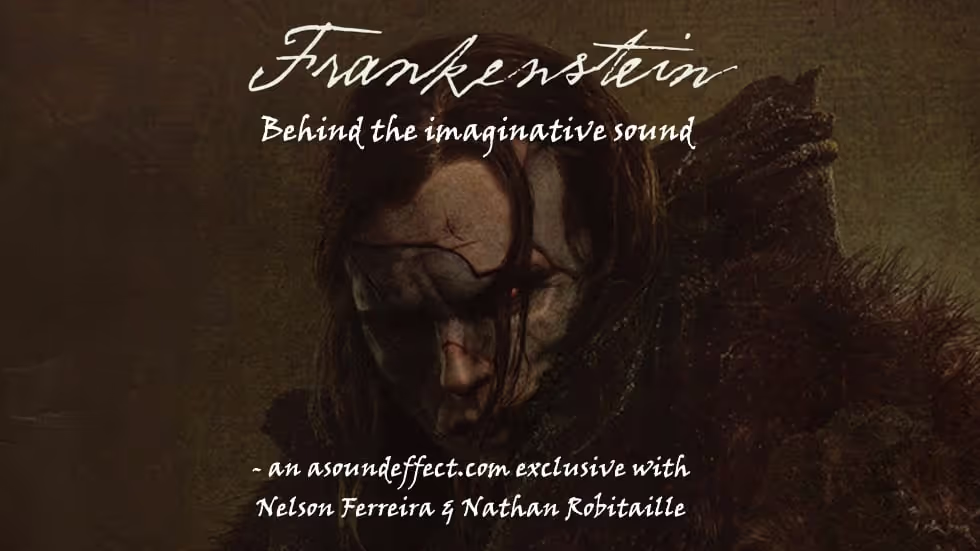
Director Guillermo del Toro has a wonderful way of keeping the humanity in his films’ monsters; they’re not truly monsters, but rather, beings. In his latest film Frankenstein — streaming on Netflix — del Toro takes on Mary Shelley’s classic story. He portrays the creature as unnatural yet not inherently evil. There’s an endearing, childlike quality to the creature that gets corrupted by Victor Frankenstein’s escalating abuse. Despite his mistreatment, the creature never becomes a true monster. Sure, he’s driven by his desire to destroy Victor, but who can blame him? And in the end, well… you’ll have to watch the film.
For sound, del Toro worked with his long-time collaborators, Supervising Sound Editors Nelson Ferreira and Nathan Robitaille at Sound Dogs Toronto. They worked on all of del Toro’s films, including the creature-feature The Shape of Water, which earned del Toro ‘Best Picture’ and ‘Best Director’ at the 2018 Oscars. For over ten years, they’ve been honing their approach, dialing it in so that creating the sound of Frankenstein felt more like flexing a well-trained muscle than a heavy lift.
Here, Ferreira and Robitaille discuss how their time with del Toro helped make Frankenstein a joy to create. They also share details of their prop and weapons recording sessions (which included firing chains out of a cannon!). Find out how the overall sound of Frankenstein is representative of Frankenstein’s monster, why Actor Jacob Elordi kept the creature’s prosthetic teeth on hand while traveling, what Robitaille used for the sound of the small steam engine that reanimated the corpse, what a chicken ribcage has to do with an eye socket, and so much more!
Frankenstein | Guillermo del Toro | Official Trailer | Netflix
Dir. Guillermo del Toro has a wonderful, fantastical style. His films have a signature look. How did the look of his version of Frankenstein – the world, the characters, the technology – impact your approach to the sound?
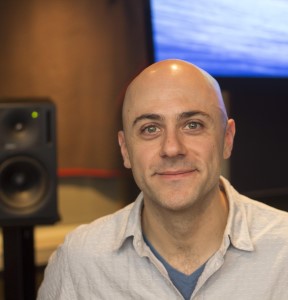
Nathan Robitaille (NR): Steampunk alone has a pretty distinct design language that lends itself really well to sound, and that’s just one of the elements in the expansive world of production design. Ultimately, though, I think it all comes down to that one common denominator: Guillermo. I’d say the visuals clearly influence the sound. Still, it feels less like one department influencing another and more like both departments having a common mad scientist behind them, pulling the strings and making things work together.
He’s also a really generous director. He invites our influence almost as much as he influences the work himself. And he makes a point of ensuring that the ownership of the movie is shared.
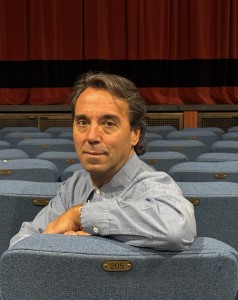
Nelson Ferreira (NF): I agree. One thing I took away from this is that he — right from watching the first assembled scenes — shows you how he tells a story visually. None of it surprises, but it never ceases to amaze. You go, “Of course, this is him. Of course, this is his hand, and this is how he’s telling a story.” He’s let us in on this, and we’ve learned that language. So I guess we have maybe a little bit easier time speaking it now than perhaps we did early on.
Not just surprise and amaze, but also surprise and delight.
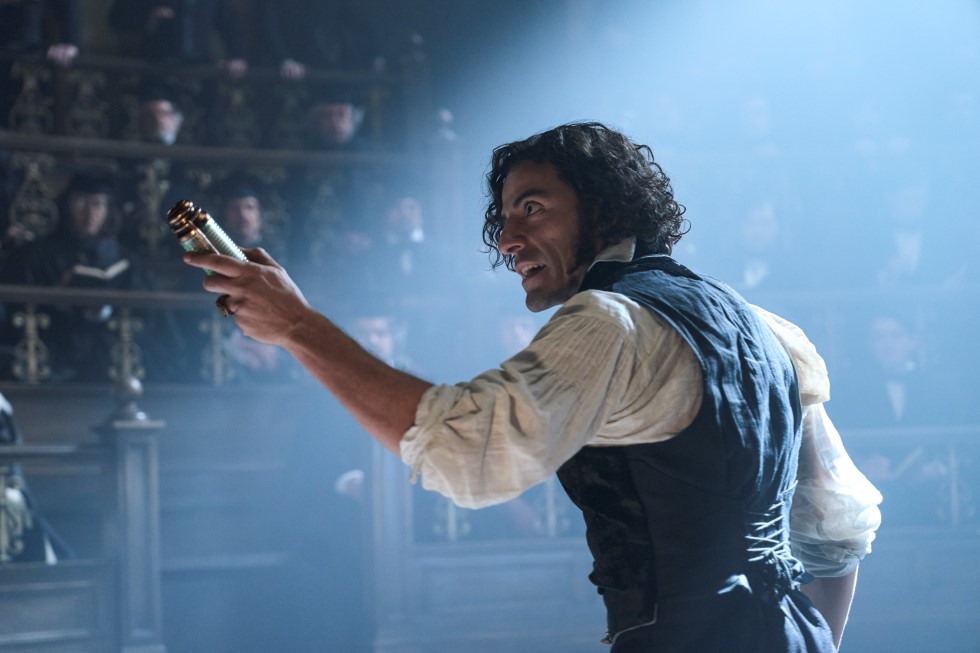
Everyone knows the story of Frankenstein, yet director del Toro made it feel fresh and captivating all over again. For instance, when Victor gives his demonstration at the Royal College of Surgeons of Edinburgh, the machinery he uses to reanimate the partial corpse is so delightful — grim, but delightful…
NF: I’m glad you mentioned that, actually, because (and maybe Nathan agrees) it’s more and more fun working with him as a fan. As a fan, I can’t say that about a lot of directors where you’re just rubbing your hands together, going, “Oh man, what’s coming next? This is great.”
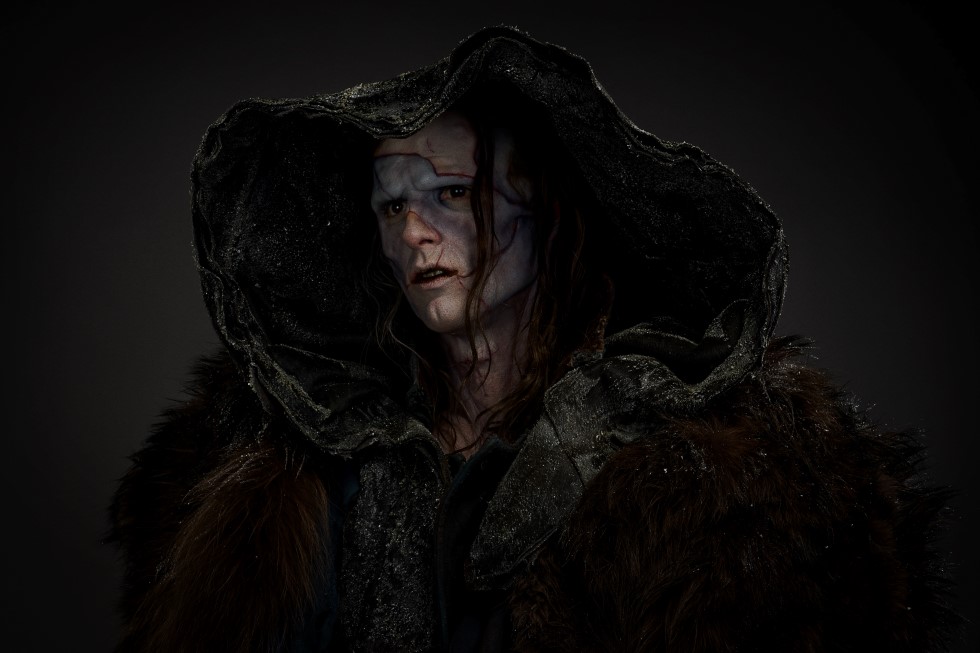
As in The Shape of Water, which you worked on with del Toro, the “creature” isn’t truly a monster. How did you use sound to preserve this character’s humanity, even in his moments of rage?
NF: We’ll start with Golden Globe nominee, Jacob Elordi. He flew around the world with his character’s prosthetic teeth for any last-minute ADR sessions. He was great at portraying the two sides of the monster: the one in the first half of the movie and the notably different one in the second half. So much of that is what he brought. And then beyond that, obviously, is what Nathan has brought to it.
NR: We were pretty hesitant to mess with Jacob’s performance. Anything we added needed to be minimal. The opening scene was a good intro into the big, animal roars and exaggerated rage moments that we’d have fun with, but we knew this wasn’t going to be the creature’s tone for the whole movie. We needed a treatment that could transition from tenderness to rage and back without drawing attention. I listened to Jacob’s voice and favoured animal textures that blended well with him. I needed to cover every line, breath, and effort in the movie so we’d have it on a fader that could ramp up and down as needed.
Jacob Elordi […] flew around the world with his character’s prosthetic teeth for any last-minute ADR sessions
Nelson made a point of having all of Jacob’s ADR recorded at 96k to buy me some processing headroom. I cut out all consonants to isolate open vowels that would resonate inside his chest. I pitched that all down aggressively and ran it through reFuse Software’s Lowender to give us a subsonic boost on his projected exertions.
Guillermo asked me to add a growl in his chest, too. He wanted to hear an underlying animal inside of this innocent giant. Once I found animal textures that blended well with Jacob’s voice, I built a few parameter sets in The Cargo Cult’s Envy and used those isolated open vowels as the source signal.
Then it was just a pass of animal sweeteners, a snarl at the end of an exhale, a whimper under a flinch — just to punch up the animalistic presence.
The trickiest part of the whole design process was stepping away from it to let Nelson and Chris [Christian T. Cooke, re-recording mixer] find the right balance. They brought it into the dialogue premix and tucked it in beautifully. I’ll let Nelson talk more about that.
Chris was […] a great translator for the audience, refereeing that stuff, listening to it, and making judgment calls
NF: A real key to it was giving it to Chris, and I was his co-pilot with that. That was so valuable because Nathan and I, by that point, were so close to it, so inside of this thing. Chris was (as any collaborator in film should be) a great translator for the audience, refereeing that stuff, listening to it, and making judgment calls. In more of a real-time way, he saw where we were in the story, which half of the movie we’re in, and at what stage in that half of the movie. How much monster is too much monster in this moment?
Chris almost hit a bullseye every single time, even surprising us. I knew it would work. I knew that it was all there based on what Nathan had done, and in achieving the balance and absolutely targeting Guillermo’s intent (because he didn’t fully explain how much he wanted, just that he wanted it). It was up to us to figure that out. And again, as Nathan had said, there’s the sort of long leash he gives you in terms of collaboration. It’s, “Here’s the idea, let’s go with it.”
Chris and Nathan really nailed it.
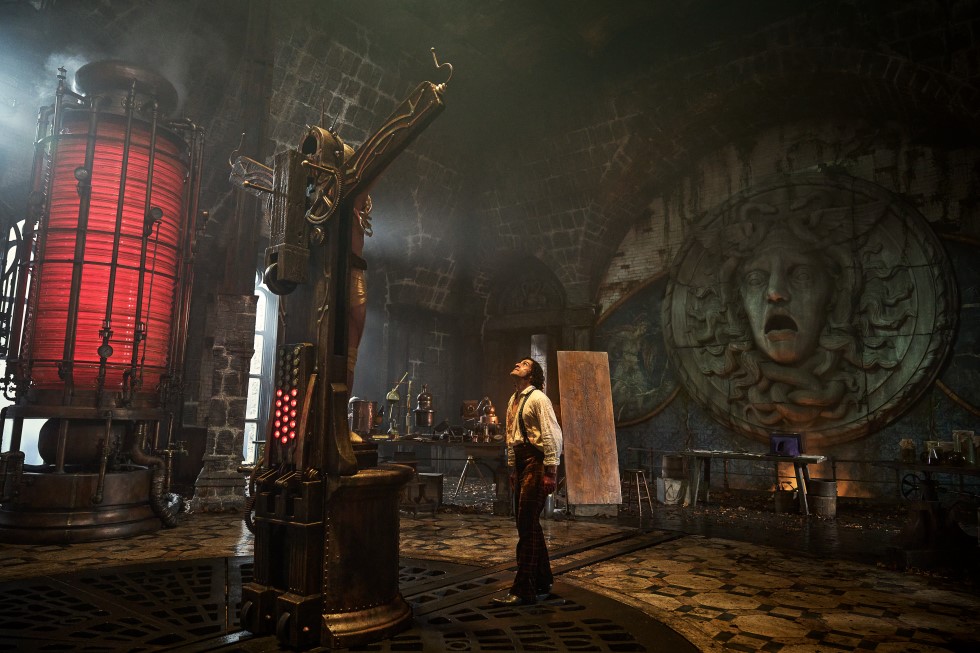
What went into the sounds of Victor’s laboratory equipment – the contraptions, and mechanical and electrical components that ultimately bring the dead back to life (for the first small-scale demonstration he does, and then the large-scale version later in the film)?
NR: Timing really worked out for me here because one of the scenes with the small steam engine came to me long before the main laboratory scene, and it really helped set the tone.
During the shoot in Toronto, I got called into the cutting room to watch the scene where Victor has his first brush of success at reanimating the cadaver in his apartment. The mini steam engine was in there. I liked what I could hear in the Avid, so I just cleaned that up as much as I could to preserve it. It turned out that the sound in the Avid was the actual prop in production, and Guillermo noticed that I liked it.
Not too long after that, I got a text from Julie Lawrence, our post producer, letting me know that Guillermo had sent me a bunch of bins and they were in her office. She said, “Can you come get this stuff? I think he wants you to record it.” I went in, and sure enough, that prop was inside one of the bins.
It was this beautiful wood-and-brass, battery-operated “steam” engine […] The machine had a throttle dial, so once we had power, I could perform the starts, stops, and speed variations to picture
It was such a cool prop. It was this beautiful wood-and-brass, battery-operated “steam” engine. I remember it needed an unusual battery. Jose Acosta (a trainee on this project) went on a hunt and came back with the battery we needed. The machine had a throttle dial, so once we had power, I could perform the starts, stops, and speed variations to picture. It was so satisfying.
I reluctantly gave it back. It was a scale model of the giant steam engines in the lab, which is a perfect segue over to the bigger machines.
Those were easier to nail down. I got a clue from the ideas Guillermo had for other elements in the lab sequence — a printing press, meshing gears, rail carts, etc. The pattern was clear, so, for the large steam engine, I favoured rhythmic machine sounds that I could imagine also coming from the smaller prop that I had recorded.
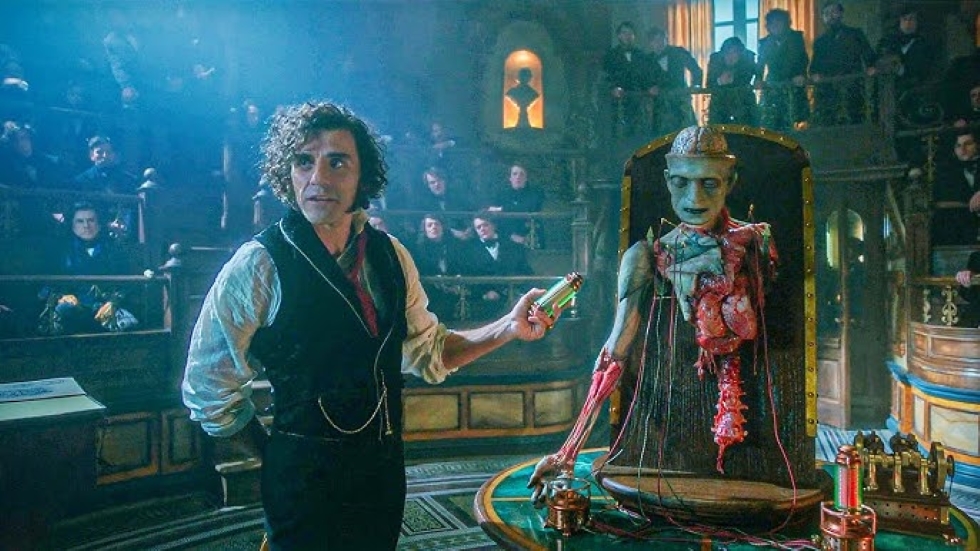
And the sounds of the half-corpse creature in the early demonstration, how did your approach to that differ from the main “creature” (played by Elordi)?
NR: The lion’s share of that was from the puppeteer on the day. There was this dry, haunting quality to his gasps that really worked. We didn’t want to make him a monster. It would be more shocking if he sounded like a dead shopkeeper who had a will to live. And so it was just a matter of sweetening that performance with dry, croaky sounds and wheezing while he struggled to breathe. I recorded myself for the final death rattle to finish him off.
NF: I floated the idea of replacing it the first time I saw it, assuming we’d need a robust recording to play with during design. And Guillermo right away said, “Nope, I like what’s there.” He’s often all about preserving the magic created on set, either by accident or design.
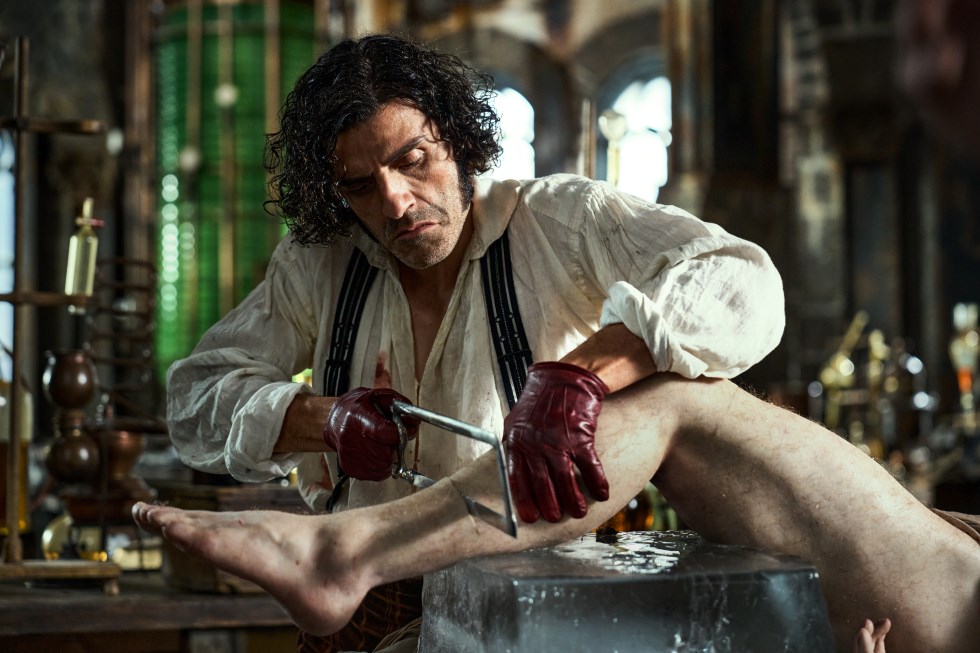
Can you talk about your sound work for the sequence in which Victor is cutting apart bodies and using those pieces to assemble his “creature”? There are such great flesh-cutting sounds! Any fun recording sessions for that?
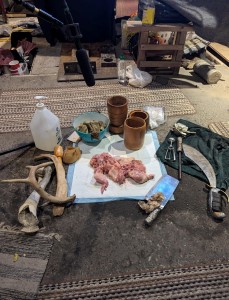
NR: It’s funny, I got an email from Chelsea Body at Footsteps Foley the day that they were recording props for that scene, and the bulk of the email was just a photo of a bunch of pieces of raw chicken, a cleaver, and a giant tub of hand sanitizer. I wasn’t there, but I heard tales of Foley Artist Goro Koyama manipulating a chicken ribcage for the eye socket while Victor is putting the eyeball in.
I heard tales of Foley Artist Goro Koyama manipulating a chicken ribcage for the eye socket while Victor is putting the eyeball in
You can only imagine being a foley artist and having a scene like that handed to you — one that’s shot that beautifully. That’s a good day at the office!
On the sound effects side, it was always going to be about keeping it simple. I had a feeling early on that composer Alexandre Desplat was going to send a score that was really playful and fun, and he absolutely did not disappoint. There was a lot of pruning involved in the sound effects edit, a very deliberate sound selection process, to get the point across without overselling it.
I leaned away from those traditionally spongy, gore sound effects. I didn’t want anything that would take up too much frequency spectrum or overstay its welcome. I wanted to hear the resonance of the implements and tools that Victor was using, and just enough flesh to feel disturbing. I wanted to hear the slice without the squish. I knew it was going to take some effort, much of it subtractive, to get it right.
And I think we did get it right. I’ve seen this movie in theatres a few times now, and I always look around to see how people react. It’s funny, the squeamish folks always think to look away, but they never think to plug their ears. We’re grossing a lot of people out with these sounds. That’s a win in my books.
NF: Could you imagine that scene with different music, though? Without that waltz? The waltz gives those sounds this other character, and now I can’t hear it without that waltz. It’s incredible.
NR: Yeah, it’s beautiful.

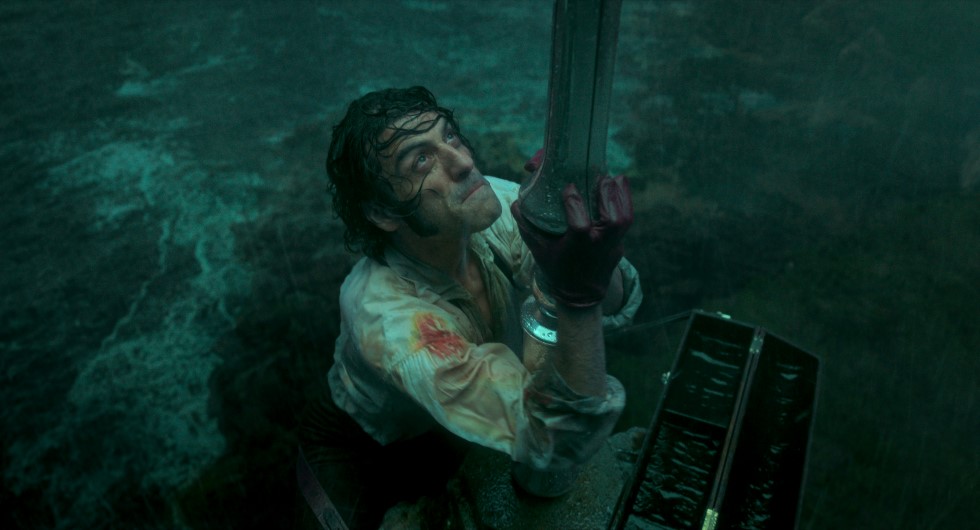
And when the storm comes, can you talk about your sound work here – from the mechanical components moving into place to the lightning powering up the harness and sending the electrical charge through the body, creating the spark of life in the creature’s brain? Again, you have distinct music throughout this scene…
NR: This is the scene. It’s the classic, “It’s alive!” scene. When you mention “Frankenstein,” this is what’s going to pop into people’s minds in some form or another.
A big part of making things shine in that scene would’ve been re-recording mixers Chris Cooke and Brad Zoern handing things off, trading moments, and playing well in the sandbox together.
Editorially, the foundation was the thunderstorm. Shout-out to Scott Hitchon, our junior sound effects editor. He cut that at home during an actual thunderstorm. He probably lost his mind a bit. I’m amazed and proud of how well he nailed that thunderstorm as early as he did.
None of us can say, ‘I cut that scene.’ But every one of us can say, ‘I’m in that scene.’
For the rest of it, we could have two whole interviews just about what went into that scene. So, I’m just going to speak in broad strokes. This scene was the genesis of a concept for me that spans the movie: I wanted this to be a “Frankenstein’s monster” of all our talents. I wanted us all to have parts in this scene. And so what started as a first pass got polished up and sent to another editor, who would add something and send it back to me. We traded it around a few times like that. The end product is a result of that shared ownership that Guillermo encourages. None of us can say, “I cut that scene.” But every one of us can say, “I’m in that scene.”
That approach absolutely did not make it easier. Some really great ideas had to be pruned out. Everything needed to be curated. I had to decide which elements would live and which we’d have to live without. Craig MacLellan, Paul Germann, and Dashen Naidoo all contributed ideas that I wouldn’t have thought of. It was a great way to shed light on blind spots, and I thought it worked really well, so we did that for a few other scenes in the movie.
NF: As an observer to the mix, for that whole creation sequence as well as the creature vocalizations, one might watch and go, “Damn, these must have really been a challenge.” Obviously, they were, but again, it was a near bullseye. It was successful almost right out of the gate. And the creation sequence was one that you would expect pages of notes, not because anything is wrong, but because of subjective taste, right? But it was so right so fast for Guillermo, I was shocked, but not surprised.
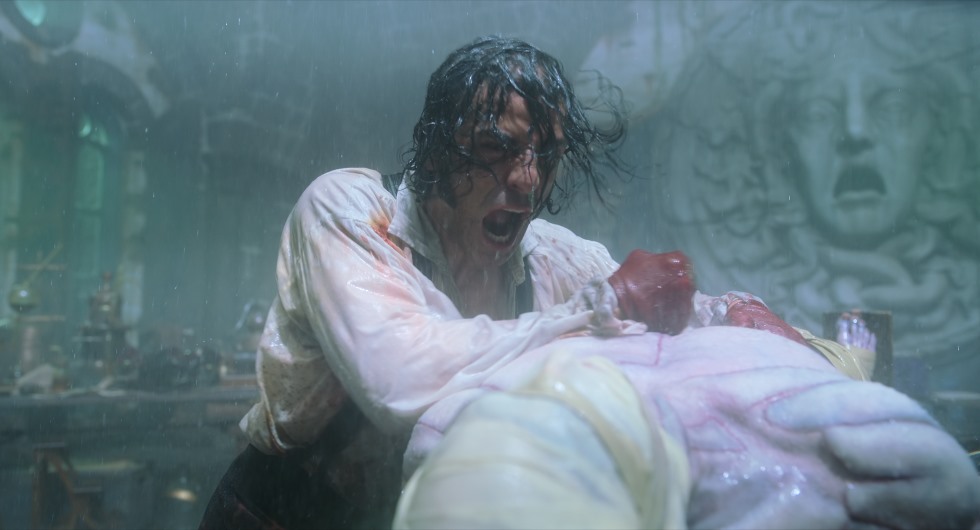
What about the dialogue for that creation sequence? You have Victor and Harlander shouting to each other over the storm, and through this interesting laboratory space. What were some dialogue challenges here?
NF: Not many! Greg Chapman did a great job, despite everything that’s happening on set. It was really well recorded.
Again, what you think would need to be looped wasn’t looped. We have tools one would expect to clean it up, but there were enough legs to the signal that Greg got that it more than survived.
And then the things we did need Oscar for, like climbing the tower and coming back down, were never actually mic’d; we recorded that much later. We may have already premixed the movie at that point. I’d love to give you a story about some gymnastics we did to make it work, but really, it wasn’t that bad.
Christoph Waltz and Oscar Issac are such awesome loopers that what we did have to record, you can’t tell.
And like the medical college, the space in this scene is interesting. It can certainly be forgiving when integrating ADR because there are reverbs in there that, given the size of those rooms, are easier to match than they might be in smaller rooms. Having Chris Cooke mixing it doesn’t hurt either.

What was the most challenging scene for sound editorial and why?
NR: There were plenty of tricky scenes, but one element stands out: the blunderbuss.
During the spotting session, when we came to that gun, Guillermo turned to us and said, “Ideas! What do you guys think? This gun needs to sound bigger than anything else.”
I told him I thought we should fire chains out of a cannon. He seemed conflicted. I couldn’t tell if he was annoyed with me for escalating before he could, or if he was just proud. Escalation is kind of his thing, and here I am suggesting that we fire chains out of cannons. His response was simple: “Do it!”
We didn’t want to wing it, and thankfully, people in the sound community are pretty generous with their techniques
My father-in-law works as a historical consultant, so I knew I had access to cannons and muskets. I just needed to figure out how to do it. I talked to Scott, Dashen, and our friend and colleague, Tyler Whitham. We didn’t want to wing it, and thankfully, people in the sound community are pretty generous with their techniques, so it wasn’t hard to find interviews and articles by folks like Charles Maynes, Frank Bry, Jeff Carpenter, and Chuck Russom. We learned everything we could, made our equipment list, formed a plan, and booked the date.
Then, as we were approaching the recording day in October, I got a text message saying, “Hey, we need you on a plane on Sunday.” A temp mix was advancing on us by over a month, and Guillermo wanted me in LA for it.
I was going to miss this weapons recording session, and that just wasn’t an option. So, I had to cancel the whole thing and reschedule it for a month later.
I was going to miss this weapons recording session, and that just wasn’t an option
When the day finally came, it was a long shooting day, but the results were amazing. We recorded a wide range of guns and cannons. Dashen Naidoo mastered the recordings, and he told me later how important it was to be there to witness firsthand the power of those guns. He let that experience influence the mastering process. We came away with something pretty special.
To bring it back to that blunderbuss, we supplemented it with metal resonance layers, a church bell, lion snarls, etc. But the foundation of that gun, as well as every other gun in this movie, came from that recording session.
It was a huge challenge, but it might have also been the single most fun day of my career.
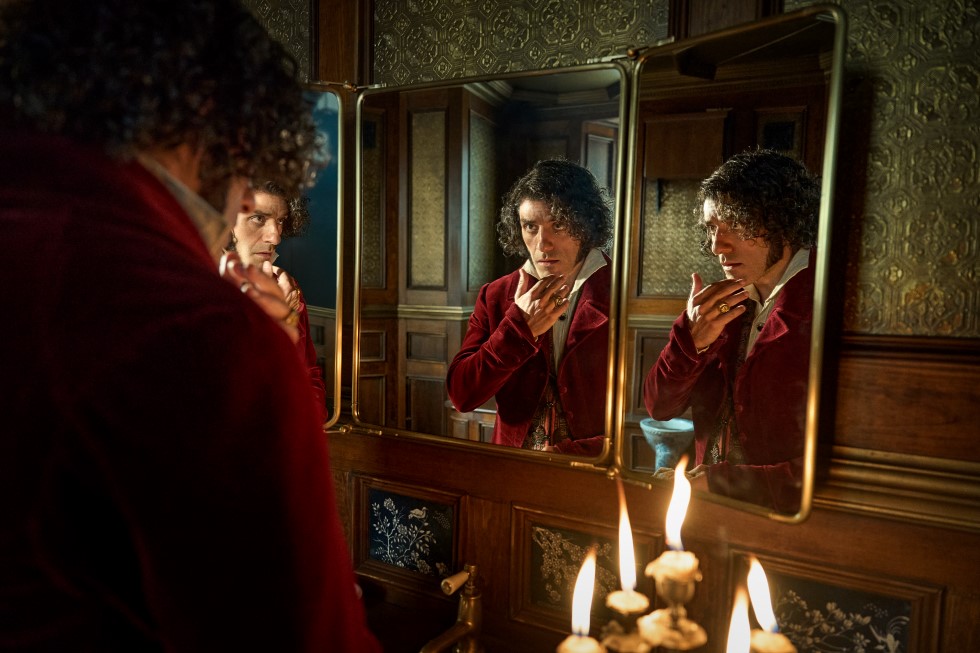
My favorite one-off sound in the film was Harlander peeing into the French porcelain toilet. What went into that?
NF: You’re not alone. It was one of the four or five laughs in the whole movie.
NR: Everybody loves the French porcelain. Like so many strikes of genius, it was born from a happy accident. Paul Germann was working on the scene where the creature punches through the ice to get back to the ship. There was a stream of water trickling off the creature’s cloak. So he searched his library for “trickle.” And a star was born. He knew immediately where that sound belonged. He was so right. It’s absolutely perfect.
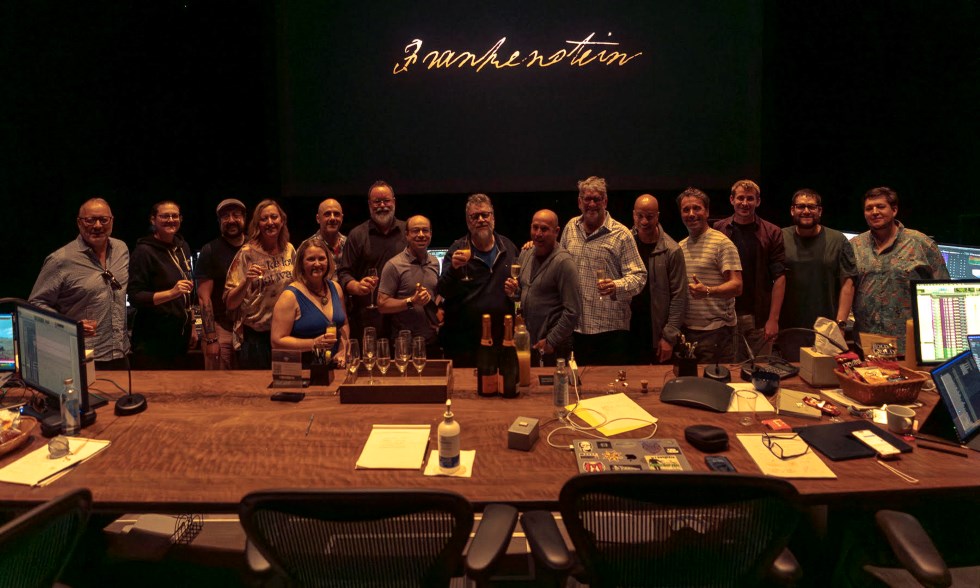
What has stuck with you the most from your experience of creating the sound for Frankenstein?
NR: We’ve been working with Guillermo for about 10 years now. Maybe a little more than that if you include The Strain. We understand each other very well. I’ve recently had the pleasure of joining Guillermo on some of the panels and press tour events he’s done. He talks about seeing Boris Karloff on TV after church when he was seven years old. He’s wanted to make this movie ever since, so the stakes were high; this should have felt intimidating, but it didn’t. We all just fell into a rhythm like a band. And that’s all part of the shorthand that comes from working with someone for 10 years.
this should have felt intimidating, but it didn’t. We all just fell into a rhythm like a band
It’s really easy for us to assume we’ll be the ones doing all the learning in the relationship, but Guillermo made a point of acknowledging that it’s been 10 years for him, too. Nobody goes a decade without growing and learning, and that applies to him as much as to us.
We’re the team that gets the privilege of spending 10 years growing and learning with Guillermo del Toro
When a guy like him says something like that, a lot of gratitude surfaces. We’re the team that gets the privilege of spending 10 years growing and learning with Guillermo del Toro. We’re a pretty fortunate bunch.
NF: I’ll say the same. Maybe even on a more personal level, it’s that you really got the sense of a movie and a filmmaker that was firing on all cylinders. And for me personally, it was a pleasure to watch the team across the board.
I personally always feel better, more skilled, and more creative after going through a process like this with [Guillermo]
This wasn’t The Shape of Water, where I felt we were still auditioning and finding our way. Everybody was flexing this muscle that had developed over the last 10 years working with Guillermo. And, working at this level, I’ve said before that I personally always feel better, more skilled, and more creative after going through a process like this with him. And it was no exception here. It was just a pleasure to watch everybody do this with greater ease and efficiency than before. You are aware that, at the moment, you’re watching them do career-defining work. And for me, that was pretty special.
A big thanks to Nelson Ferreira and Nathan Robitaille for giving us a behind-the-scenes look at the sound of Frankenstein and to Jennifer Walden for the interview!