





What does a city sound like when otherworldly forces start to warp everyday life? Remedy’s original CONTROL was a huge hit, and in CONTROL Resonant you play as Dylan Faden who ventures into a strange city where that’s exactly what’s happening.
This was a big shift for the sound team: The first game wasn’t built for exteriors, so they had to find new ways to populate a whole city with sound, use ambisonics to explore its verticality, and keep fast, chaotic fights clear from almost any perspective.
Here’s how they used blades, tuning forks, and an Aztec death whistle for the Aberrant, Dylan’s shapeshifting melee weapon, how they mixed the enemies with a strict two-tier bus structure - and why the voice of the Board, the otherworldly entities trapped inside that weapon, started with the Haka. Welcome to this exclusive game audio deep-dive!
With Audio Lead Lucas Pierrot, Principal Audio Designer Tazio Schiesari, and Senior Technical Audio Designer Alex Golunga. Interview by Asbjoern Andersen, and images courtesy of Remedy Entertainment


CONTROL Resonant – Launch Trailer
What did you want to keep from the sound of the first CONTROL game, and what did you want to do differently on Resonant, creatively and technically?
Lucas Pierrot (LP): It’s a good and vast question, I’ll try to focus it on one angle. To me, one key element in audio design is consistency. When you build a sound signature for an IP, this should be maintained to keep lore and narrative connection, especially for a second game. A good design works because it makes sense in its own world.
So although there were not many elements we wanted to keep “as is”, we had a few elements that we needed to develop. The Hiss is an obvious one, it evolved in Resonant and we expanded it a lot audiowise, but its DNA should still be here. The Hiss is chaos, always in movement, aggressive, violent. The Hiss are mosquitoes. We built the new Hiss on the same base, we also kept some important markers like the Hiss chanting from the floating bodies, or some of the organic and distorted texture that are the foundation of what the Hiss is.
Another trivial but important example is some of the Oldest House sounds. It was important that players from the 1st game could recognize “their” Oldest House from the 1st game. Alarm sounds, shelter doors or door access beeps are some of the sounds we kept identical.
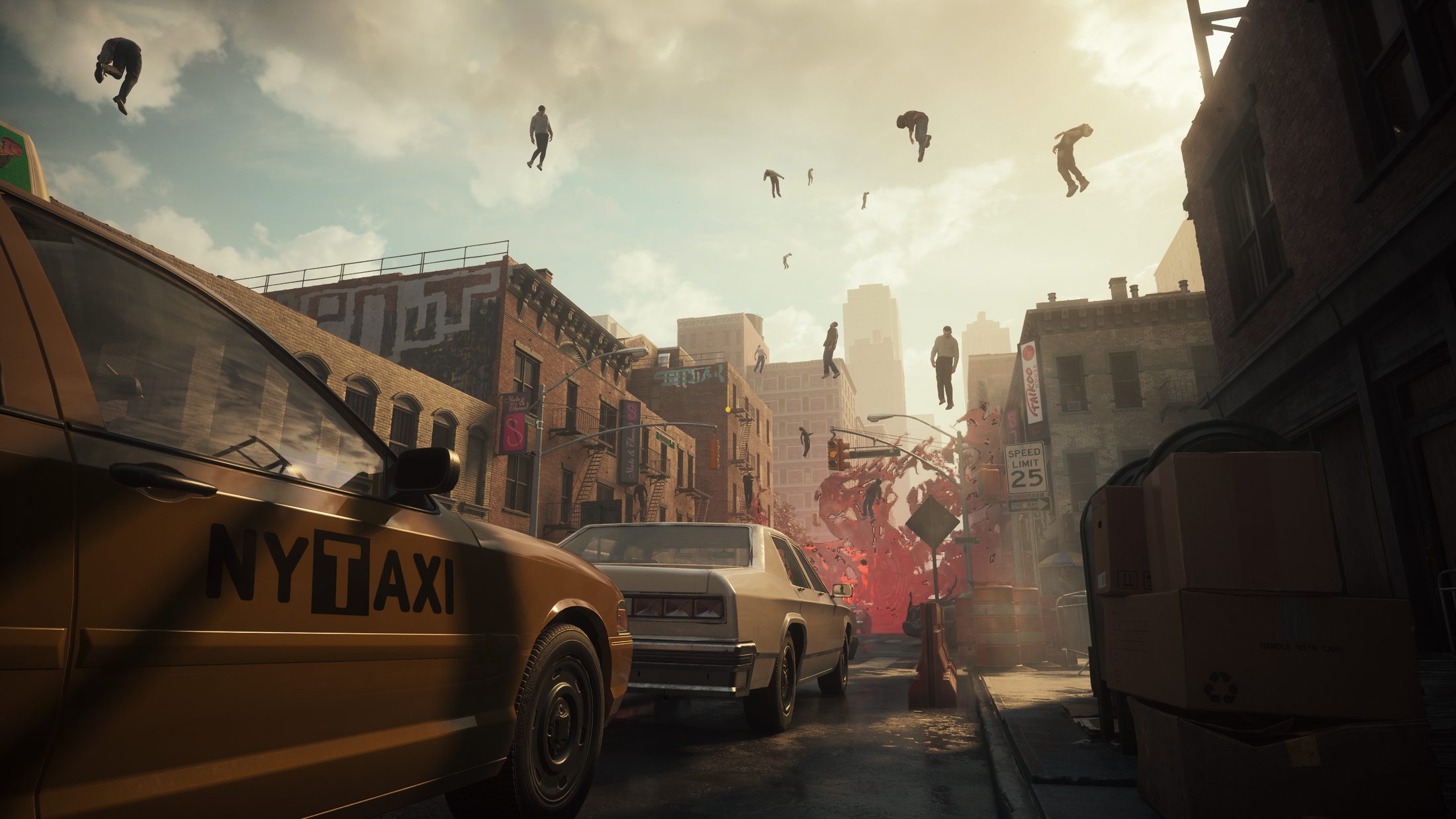
One of the first challenges for us to solve was to get out of the Oldest House (creatively and technically). CONTROL was not built for exteriors, and we had to find good ways to deal with the environment and the sense of space. One of our early goals was to efficiently populate the world with audio, half procedurally I may say, and to use ambisonics as a 3D audio means to explore the verticality in our game.
Can you talk about the audio direction and the music direction for Resonant? How did they shape each other - and were there specific keywords or references that guided the team?
LP: Sure, at its core the audio direction is there to support the themes explored by the game as a whole, to keep them believable and emphasize what is important.
One element is the supernatural. It is a clear strength of the CONTROL world, the Strange is our core and the monsters need to shine (metaphorically and literally!).
CONTROL is a collision between the strange and the normal, our everyday life. The strange needs to take the limelight and we put it forward. As a human being in this world, we need to feel we are overpowered, those forces rule us and our fate, they are the main reason we need to act to survive. In short, the weirder it is, the greater it must sound.
We have quite a lot of combat in Resonant and I wanted us to complete what game design was building. The gameplay asks you to plan your encounter. What type of enemies you’re facing, what are their abilities and specs, how you should lead your fight.
Audio should be here to emphasize feeling over thinking. We tried to make combat feel like dancing. Once you master combat, reward also comes from the flow, ideally you “get in the zone” while slaying enemies. We didn’t want to interrupt this bubble, but on the contrary underline it. Concretely, it means having strong beats and weaker ones, selecting carefully what cuts through the mix at a given time. Thinking on how some abilities or weapon forms should sound like to push for the right power fantasy. Sound signatures per enemy factions and type… Building the fighting experience so it has a nice flow. It’s not about hearing everything, it’s about hearing what matters so it feels good. The design itself was thought in its context to achieve that.
The sensation of space was also an important point. Dylan is getting out of the Oldest House, for the first time in years. It’s the same for the player and we needed to respond to that. In CONTROL, the world is also a character, we had to solve how to make the space alive, so when you’re rushing through the streets and parkouring, it feels reactive and not static. We built our music, ambiance and traversal abilities to get to this sensation of excitement and curiosity.
On the music side, I wanted our choices to both talk about the cosmic terror our world is put through and also reflect the inner quest Dylan must fulfill: connecting with others.
This is a game about humanity and relationships, so we worked with acoustic instruments, sounds of human origins (vocals for ex) and tried to keep musical ensembles small to get that intimacy. Something more personal.
But we are also in this dreadful new reality, an unstoppable force warping our world and consuming humanity in the process. Music should talk about what is outside the frame, the unknown, the terrifying. To do that, we tried to find that “audio uncanny valley” by warping those natural instruments I was mentioning earlier.
Music is then transformed as those alien forces warp and pattern people, our cities and the life as we know it.
Again, the strange takes over. You’ll notice some areas with a lot of FBC presence have way more natural instruments than the ones heavily warped.
Several reviewers have praised the combat sound. What went into the sounds for the Aberrant and its different forms?
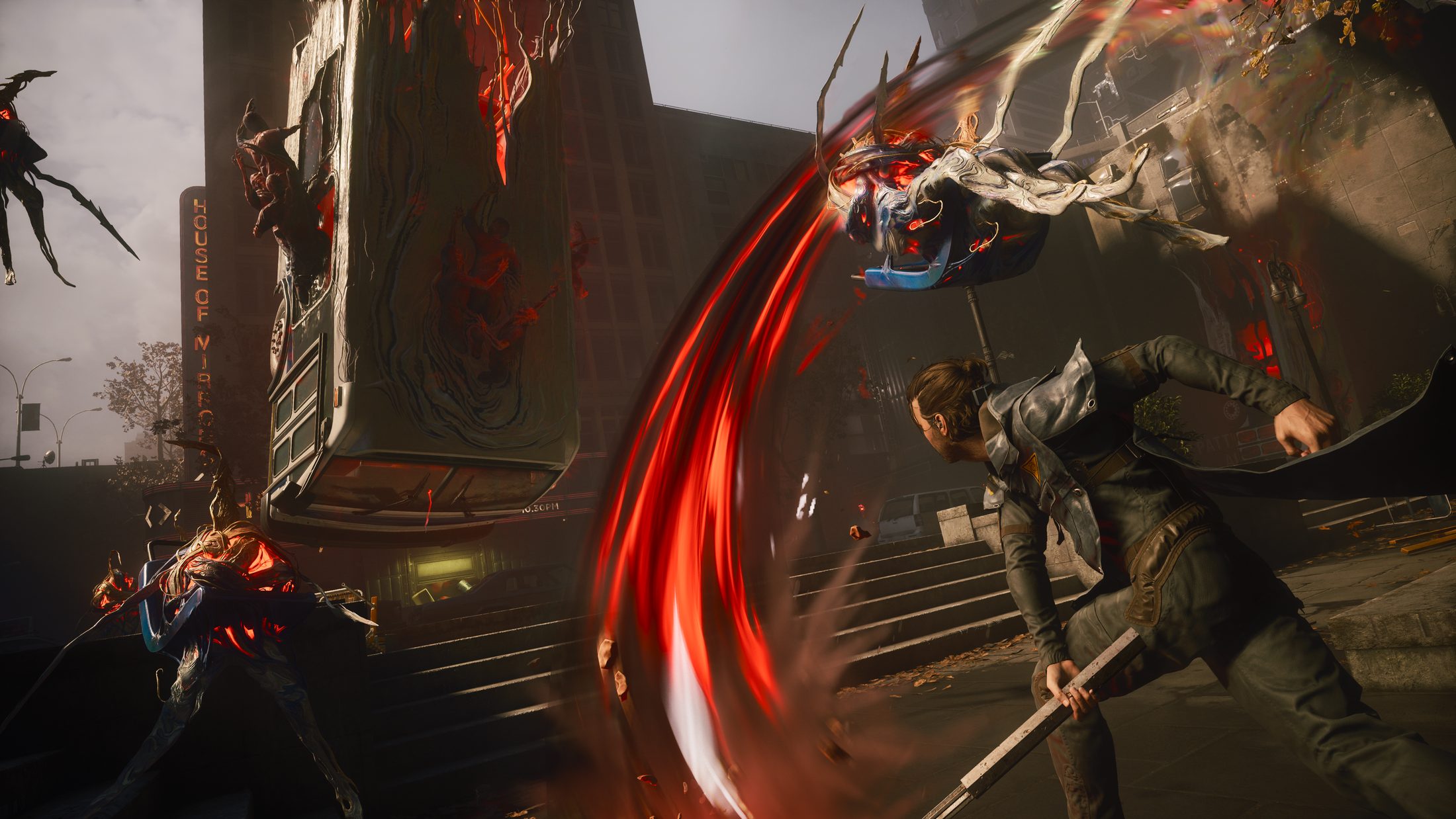
Tazio Schiesari (TS): The Aberrant is Dylan’s shapeshifting melee weapon in CONTROL Resonant, mirroring Jesse’s Service Weapon in the first CONTROL. It can take over ten different forms, ranging from a scythe to a giant hammer or even a metal whip.
One of our main goals was to establish a defining sonic characteristic for each configuration, giving every version its own distinct identity while maintaining a cohesive sound that made them feel like parts of the same family. This principle extended across every aspect of the Aberrant’s sound design, from swings and impacts to transformations and the sounds of its forms breaking apart.
The Aberrant isn’t rooted in magic, nor is it powered by any obvious source of energy. It’s essentially a chunk of metal that rearranges itself into whatever configuration Dylan needs, only to discard that structure once its purpose has been fulfilled.
I wanted its sound to feel grounded in the physical world, without leaning too heavily into sci-fi or overtly magical territory. At the same time, I wanted to avoid the familiar sonic language of conventional melee weapons, such as medieval swords. I started by recording a wide range of metallic sources, including various kinds of blades, drawbars, tuning forks, crowbars, weights, railings, magnets and graphite rods to name a few. These recordings provided a foundational sonic palette that I could draw from and heavily process to add weight and give the weapon a more distinctive character. I often blended them with synthetic elements derived from feedback loops, additive synthesis, and modal synthesis, introducing a more otherworldly quality without losing the underlying sense of physicality.
A good example of this approach is Extend, the whip configuration, which combines heavily manipulated recordings of bungee-cord whooshes with the mechanical sounds of a folding bike lock. Its whip cracks are enhanced recordings of snapping a leather belt.
Principal Audio Designer Tazio Schiesari recording some of the components that went into Extend, the Aberrant’s whip configuration - and how it sounds in the game
Wide Edge, the broad sword-like configuration, takes a different approach, relying predominantly on synthesis to establish its sound identity, through feedback and additive synthesis. Glaive instead is all about cutting through air, so I used a combination of Aztec death whistle and violin bow for the swings.
Tazio demonstrates some of the sonic components for Glaive
One of the ways Lucas and I decided to tie the different configurations together was through the sound of the Board. This appears in several places and at varying levels of intensity. For example, the Aberrant’s glitching idle, which hints at its readiness to transform, incorporates a textural layer derived from the Board’s voice lines. Similarly, when the weapon shifts into a new form, Board-inspired sonic accents are interwoven with the sounds of metal rearranging itself. The most prominent use of the Board’s voice occurs during enemy executions, when it manifests in full force.
How did you design Dylan’s abilities from a sound perspective - and how did you keep them distinct when players combine them in a fight?
TS: In CONTROL Resonant, players acquire new abilities by defeating the Resonants: naturally gifted humans who have been patterned by the Hedron.
Each Resonant grants the player two or three unique abilities. Our goal was for their sonic identities to reflect the Resonants themselves, creating a connection between the characters and the powers they bestow. In practice, some abilities were already well into production before their associated Resonant encounters had fully taken shape. We often used these existing abilities as a starting point, refining their presentation as the encounters became more fleshed out.
One of the biggest challenges in designing these abilities was that quite a few of them revolved around rock and concrete. It was important to give these shared materials distinct sonic treatments so that each ability could establish its own character rather than blending into the others.
Shield, for example, needed to convey a strong sense of protection as it materializes into a bubble around the player. At its sound core are recordings of a couple of heavy cobblestones I borrowed from a construction site, and recorded them as they collided at low speed. Amplifying these quiet recordings brought out their low-end weight and gave the ability a substantial, physical presence when Dylan summons it. Since combat can get quite crowded, another technique that worked particularly well was to use a silent signal to duck much of the surrounding audio just before the shield materializes. This creates a brief sense of vacuum, giving the sound effect more space to cut through the mix.
Key sounds included in the Shield ability
Spike is another rock-based ability, but it draws on a slightly different material. It uses black rock, a material that has appeared several times throughout the franchise and it has unusual properties. To distinguish Spike from Shield, I introduced a particularly tonal, resonant layer as the rock formations emerge from the ground. This gives the material a sharper, almost crystalline quality, further reinforced by layers of ice and glass. This in turn later helped inform other aspects of the game, including the design of the Resonant known as Physicist, which Adi Keltsh (from Adi Audio) did a fantastic job expanding upon. Similarly me and Tibo Csuko (from Bruits Studio) went back and forth between his awesome work on the Deserter Resonant and the sound of the fire based abilities Dylan obtains by defeating it.
Push was another ability that Alex and I had a lot of fun developing. Lucas’s direction was for it to feel narrow and focused, so I imagined it as a pocket of air compressed into a tight mass, travelling forward until it collides with an obstacle. This concept helped communicate a concentrated blast with a clear trajectory, reinforcing its sense of directionality. Most of the sound was created using a handful of patches in Serum, alongside some Eurorack modular synthesis. The explosions triggered on impact, however, were rooted in real-world recordings, helping ground the ability in a more physical, tangible sound.
Tazio showcases some of the sounds for Push, and how they ended up sounding in the game
How did you use sound to give the player feedback in combat, so they know when they’ve timed something right or when an enemy is vulnerable?
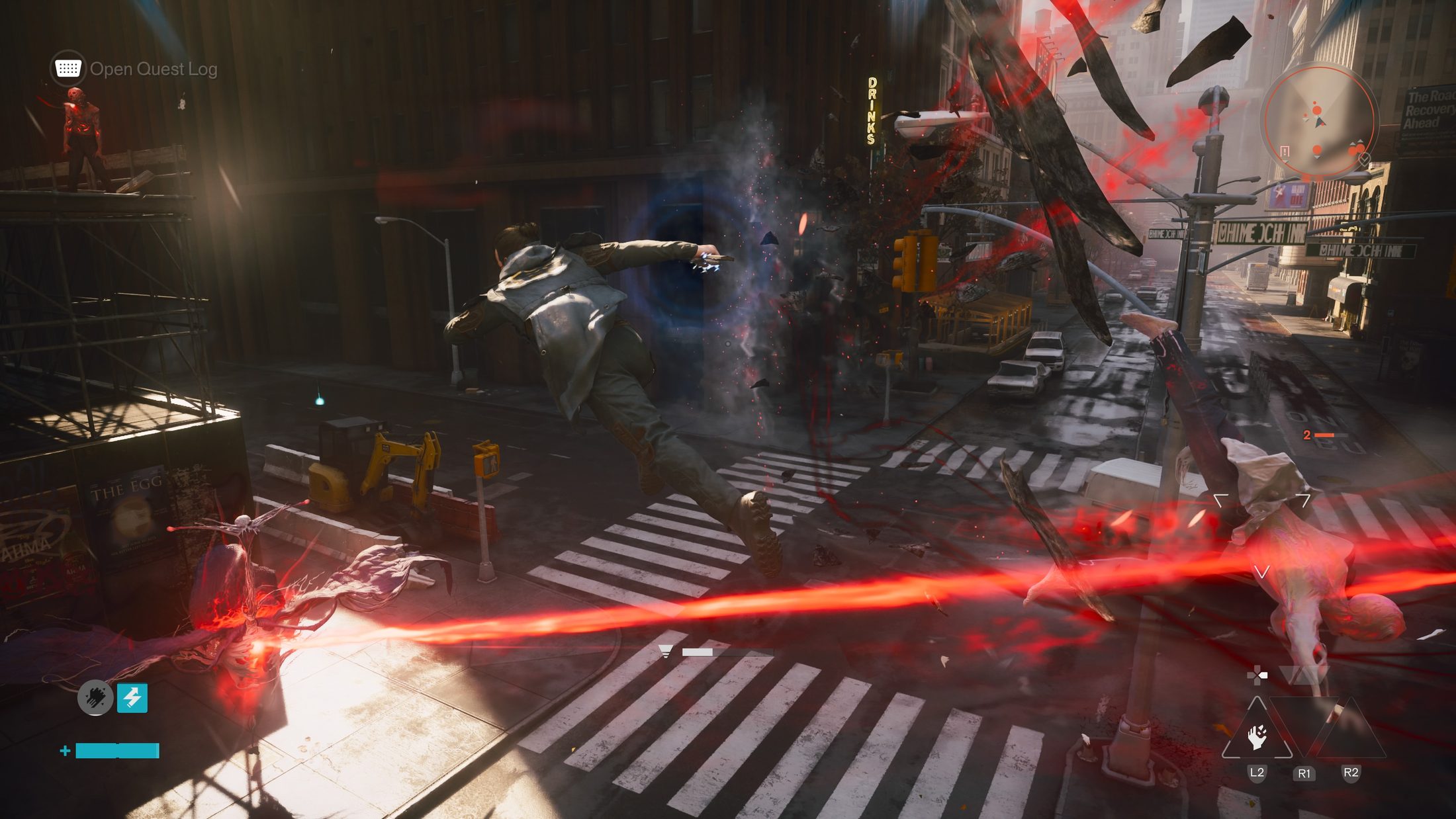
Alex Golunga (AG): Combat in CONTROL Resonant is really fast and aggressive, so we put a lot of emphasis on categorising different enemy types and their attacks in order to only convey the absolute most important information to the player at any given point. The starting point for this was the broad classification that the gameplay design team has for enemies (Elites - dangerous opponents which have to be cleared to end a combat encounter, and Drone enemies, which are minor and keep respawning until the Elites are dispatched). From there we further classify their attacks based on range / speed / potency, and finally we split their sounds into SFX and vocal layers. This ensures that no matter how chaotic a combat scenario might get, we have the right information in place to push most other elements out of the way in the mix if something really important is about to happen.
Tazio and Michael Hartung (Dynamedion) did a tremendous amount of work iterating on this framework, and I think it really shines in the final mix.
Additionally, spatial positioning accuracy is really important to us, maybe more so than in other games in this genre because of our protagonist’s speed, the camera distance (and how variable it can be), and of course, the big one: the gravity shifting mechanic that allows the player to fight enemies on entirely different planes.
This really has to start way before any 3D Audio spatialisation techniques and involves a deep focus on doing intentional sound design that will split well across multiple emitters and positionalise in a natural and accurate way. Generally speaking an enemy in our game will not consist of just a single entity from an audio perspective, but rather multiple objects on various body parts and attack components, as well as temporary objects spawned on demand. We tried to keep attenuations generic and consistent across the game, and we use cone attenuation on attacks where appropriate.
Each audio entity in the game can choose to query the acoustic space around itself to determine its own reverb send parameters, and all reverb client entities in the world can define their individual ratios between diffuse and directional reverbs. For enemies specifically, we only use directional reverbs to keep positioning tight and unambiguous, with a side benefit of keeping our noise floor manageable and clean even with larger numbers of enemies.
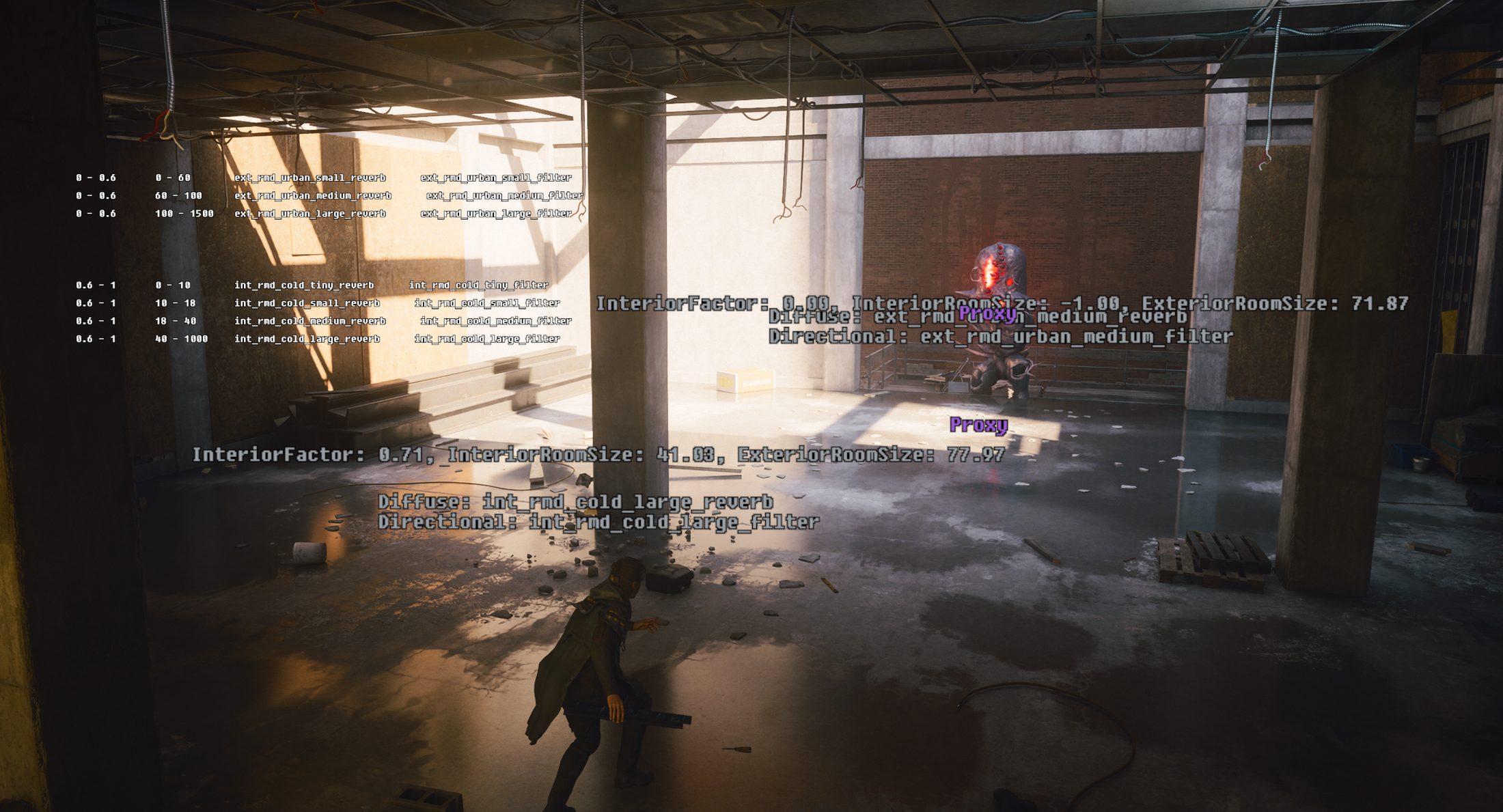
Enemies are also propagation clients, and this is especially important for identifying distant clusters of them around gravity-shifted environments. The screeching idles of Hiss enemies propagating around inverted building corners, combined with the reverb details described above (and our bespoke early reflections system) contribute to zone ambience in a considerable way as well, informing the player of how dense and ever-present the danger in these areas is.
I’d like to extend a massive thank you to the Northlight audio programming team, who played a crucial role in enabling some of these features: Stefan Wiklund developed the acoustic grid that enables us to query interior/exterior space parameters such as size and interiority, and Iiro Rosell created our propagation tech that is used on enemies and key moments in the game such as the sinkhole mission.
How did you give each of the Resonants a sound of their own? And which boss fight gave you the most trouble?
TS: Each Resonant has such a strong visual identity and moveset that it came sort of natural to have distinct ideas and sounds for them at least as a starting point.
I wouldn’t say there was one Resonant that gave us the most trouble, as each boss presented its own challenges, both from a sound-design perspective and at a technical level as they don’t follow a specific template. One encounter that was particularly refreshing to work on, though, was the Dancer.
As the name suggests, the Dancer is a human who has been patterned by the Hedron and was highly skilled in ballet and it was clear that music would be the centerpiece of the encounter. When the player encounters her, she is in the middle of a slow, deliberate performance that the player will inevitably interrupt, triggering the fight. The animation and lighting teams did a fantastic job with this sequence; watching the in-game introduction is genuinely mesmerizing.
The Dancer also wields two batons as part of her performance (and attacks). I thought it would make sense narratively if her supernatural abilities allowed her to tune them to the music as she danced. This created an interesting harmonic interplay between the sound effects and the score, sometimes blurring the line between the two and making the music feel like an integral part of her abilities.
Another aspect I wanted to convey through sound was her physical presence. She towers over Dylan, but it was equally important that she never felt clunky or cumbersome. I explored this duality through her footsteps, varying their intensity and layering in the creaks and stresses of wood as it flexes under her shifting weight. These details helped sell her size and mass without sacrificing her grace: she could feel almost weightless and effortlessly elegant while dancing, yet heavy and precise when attacking.
This contrast also carries through to her voice. The fight unfolds across two increasingly intense phases, and Lucas and I wanted her composure to gradually unravel as the encounter progressed. In the first phase, she retains her elegance and poise even vocalizing some ballet terms, although taking damage can briefly expose glimpses of the more monstrous nature beneath the surface. In the second phase, that restraint begins to fall apart, revealing a much more brutal and desperate side of the Dancer. The voice direction follows this progression, moving away from elegance and control towards something more aggressive, erratic, and unhinged.
I’d like to give a shout-out to Elizabeth Andrews for her amazing voice performance, and to Sébastien Croteau from Monster Factory for his excellent voice direction!
How did you use 3D audio techniques like ambisonics in Resonant? Where did they make the biggest difference for the player?
AG: Especially later in the game, the entire soundscape can be observed from almost any arbitrary rotational perspective, and crucially, the player is fully in control of swapping between these perspectives whenever they want. This means not only that various elements need to sound good from any perspective, but also that the transition between these perspectives must be seamless (and hopefully interesting as well).
Ambisonics was the most elegant solution to this problem since it provides a lot of flexibility for sounds that are “large” and “encompassing” for lack of better terms. For example, the vast majority of base ambience layers use ambisonics, as well as many quest / narrative beat sounds; abilities such as the gravity shift use 3rd order ambisonic renders that are posted rotationally fixed in space at the beginning of the ability, so the player will always hear a perspective shift, especially if they use a 3D Audio endpoint or a setup with height speakers.
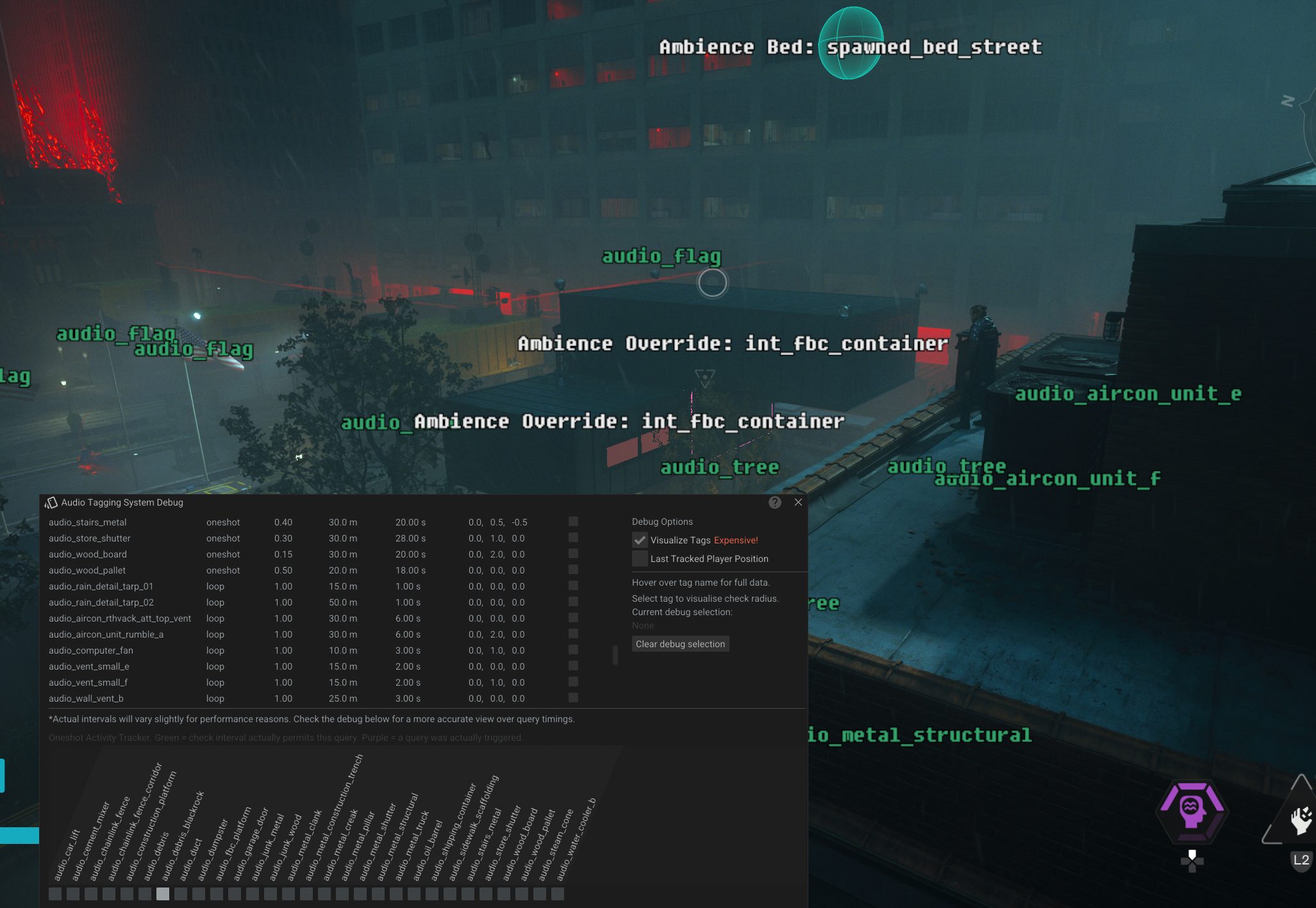
AmbiX content folds down to a point source in a natural way because of the diffuse channel, which is key for having distant ambiences that open up around the player when they get close, or another example would be the ambisonic rain bed that sits on a rig around the player but can be left behind at the entrance to an interior space. When combined with some filtering, the ambisonics content can now both act as the main rain bed, as well as the semi-distant positional exterior rain heard through a doorway. In different gravity planes, the rain bed can be left in the original gravity orientation of the world, and because of the positional information embedded therein, the perspective shift feels natural and effective in the final mix.
On a technical level for us as developers, different AmbiX orders are composable, and it is easy to make informed choices on the positional fidelity needed for a sound (something diffuse and ambient could be 1st order, while something more important might be rendered at 3rd order etc).
The middleware we use, Wwise, also makes it trivial to create mix structures that accommodate both AmbiX content and more traditional multichannel content being downmixed together, so it enabled us to achieve a lot of coverage and inject modular AmbiX content in many contexts in the game.
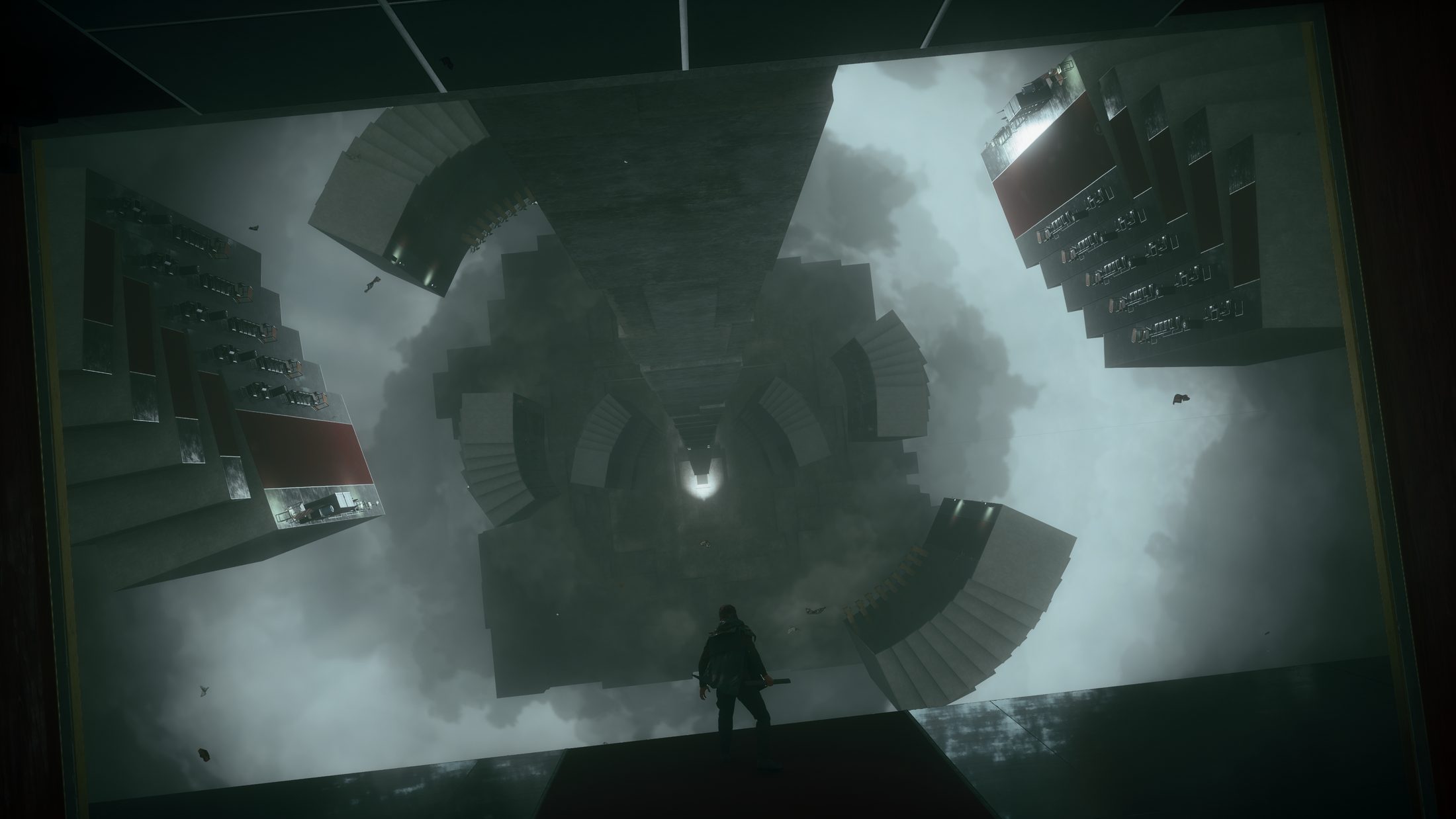
The Gap is a liminal space within Dylan’s mind. How did that shape the way you designed its sound - and the transitions in and out of it?
LP: The Gap is an interesting one, it went through different ideas and visualization over the years. In the end it has 3 or 4 elements that we decided to underline with audio.
Those elements are the barren land, the room underground, the cell and the giant Aberrant. Each of them are symbols we treated differently. The barren land and the sub room are mostly playing ambisonics beds with rotating elements, if you have an Atmos setup you should be able to hear those moving around. These are very abstract and try to paint a picture of Dylan’s psyche. Dylan’s mind was damaged because of what he went through and the Gap’s nature is a witness of that. In early concepts, I put some fragments of memories floating around, trying to regain shape. In the end the audio concept was simplified but the intent is similar. This explains the nonphysical, floaty and undefined nature of what you can hear. The underground ambiance is heavier but also more intimate, more focused, maybe even a bit simpler as if we get closer to Dylan’s true inner self.
For the cell, I decided to keep the ambiance realistic and genuine, like it is in the real world. It is what Dylan knows the best, unfortunately for him, this is the cell that held him for many years in the Oldest House so I thought it made sense to keep it the same. It also allows us to play a bit on contrast, the cell gives this anchor in reality compared to the abstract Gap sounds whirling around.
Finally, the giant Aberrant which is also the Board, contained in it. When Dylan is “outside” you can hear some powerful textures made from Board content, to give it an ominous presence like a doomed lighthouse. This is the only thing out there and it should focus the player’s attention.
When you go downstairs, it is more intimate, and this sound stops. Instead, you will have some different sounds per interactive pillar layered on top of the background bed. This approach serves two purposes: leaving you to upgrade and re-spec in a more peaceful, less oppressive setup, but presentation wise, it also makes sense to have a quieter setup when you are closer to yourself in a way.
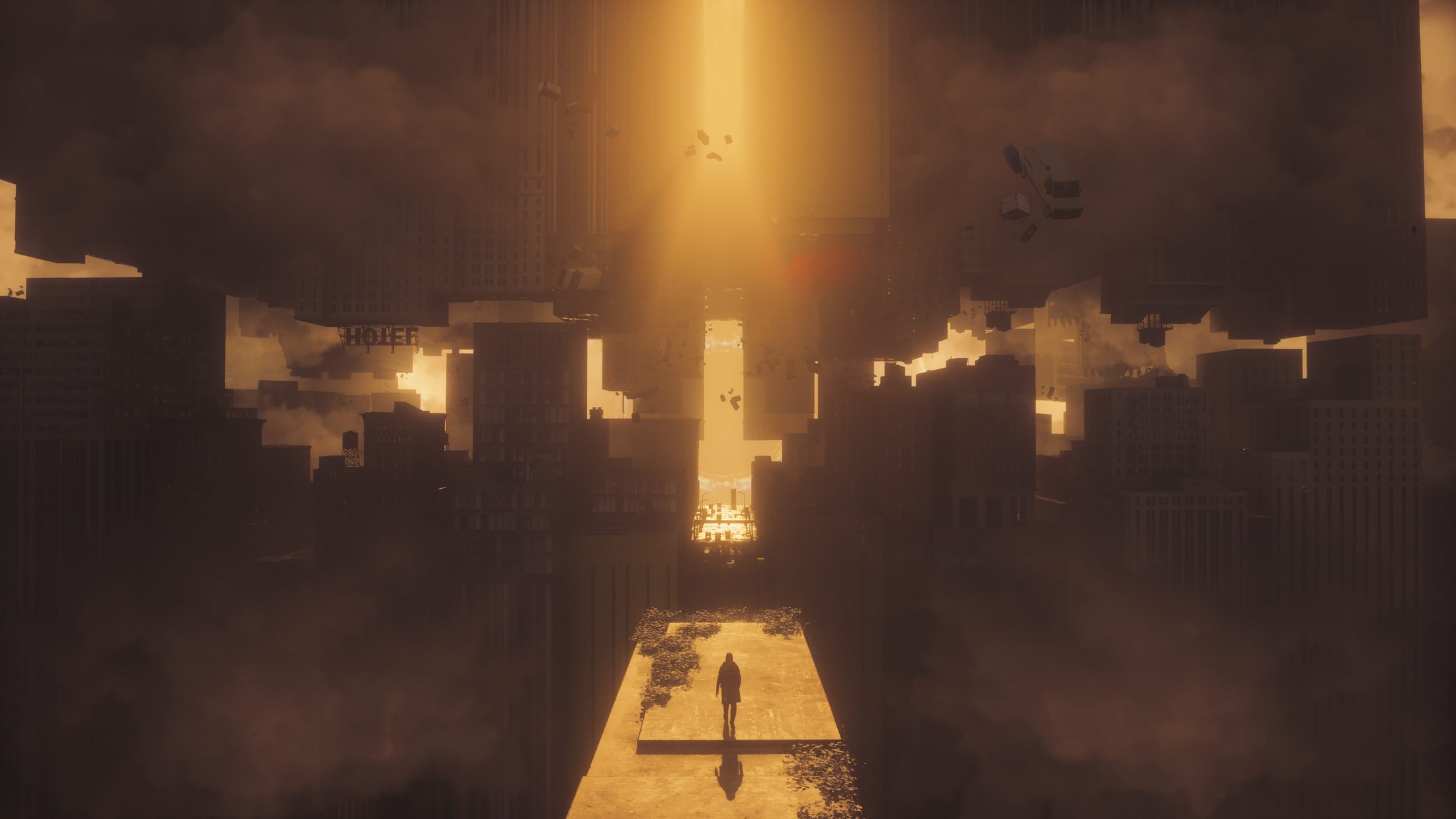
Dylan gets around the city in some unusual ways. How did you approach the traversal sounds?
LP: Those sounds are interesting and difficult to balance, because it needs us to solve a paradox. You want Dylan and the player to feel powerful, this agility and ease to move is an impressive thing. But those sounds happen all the time and we certainly don’t want to annoy players by hearing the same stuff again and again. So it also needs to be discreet and subtle.
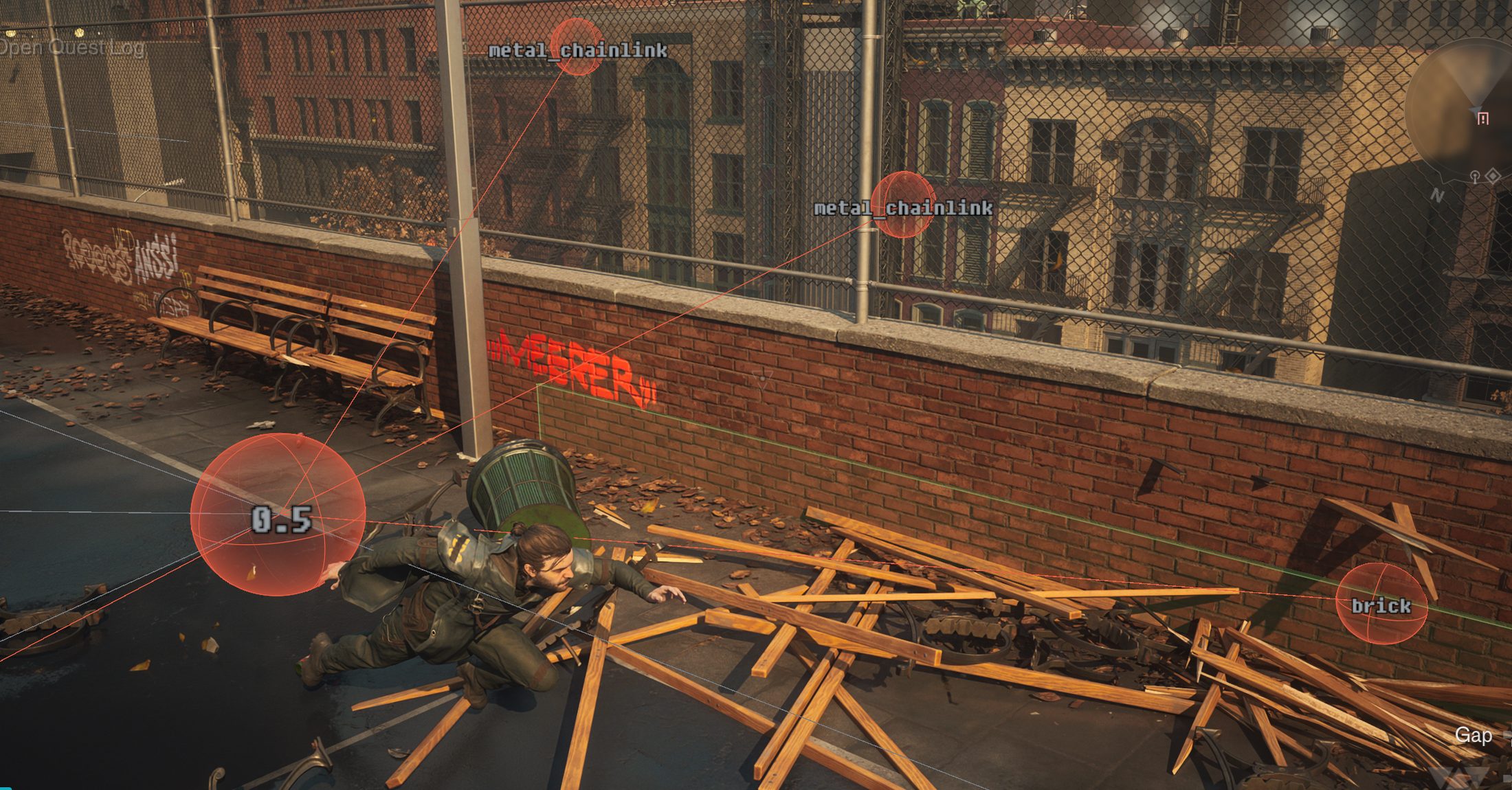
So we chose a hybrid approach to have the sound overall quite subtle, to support the ease of Dylan’s movement, but we still added some bite when needed.
Jump and double jump are light and “normal”, but activating surge will give a nice thump. Flying while reaching an anchor point is light but the landing itself is stronger and more physical (material dependent too).
For gravity anomalies, we have different bucket sizes so light movements like stepping on a wall is not as impressive as a full 180 camera swing.
Levitation is mostly silent but we do take the height from the ground into account to change the set of sounds playing. It’s giving nice variations while keeping the whole presentation lowkey.
Dodging attack is snappy but does not linger over time and dash is quite subdued. Its looping nature would also cause mix issues.
So in short, it was about finding a balance between the supernatural and the gameplay, how the game wants the player to use those abilities, and what it means for us sound designers.
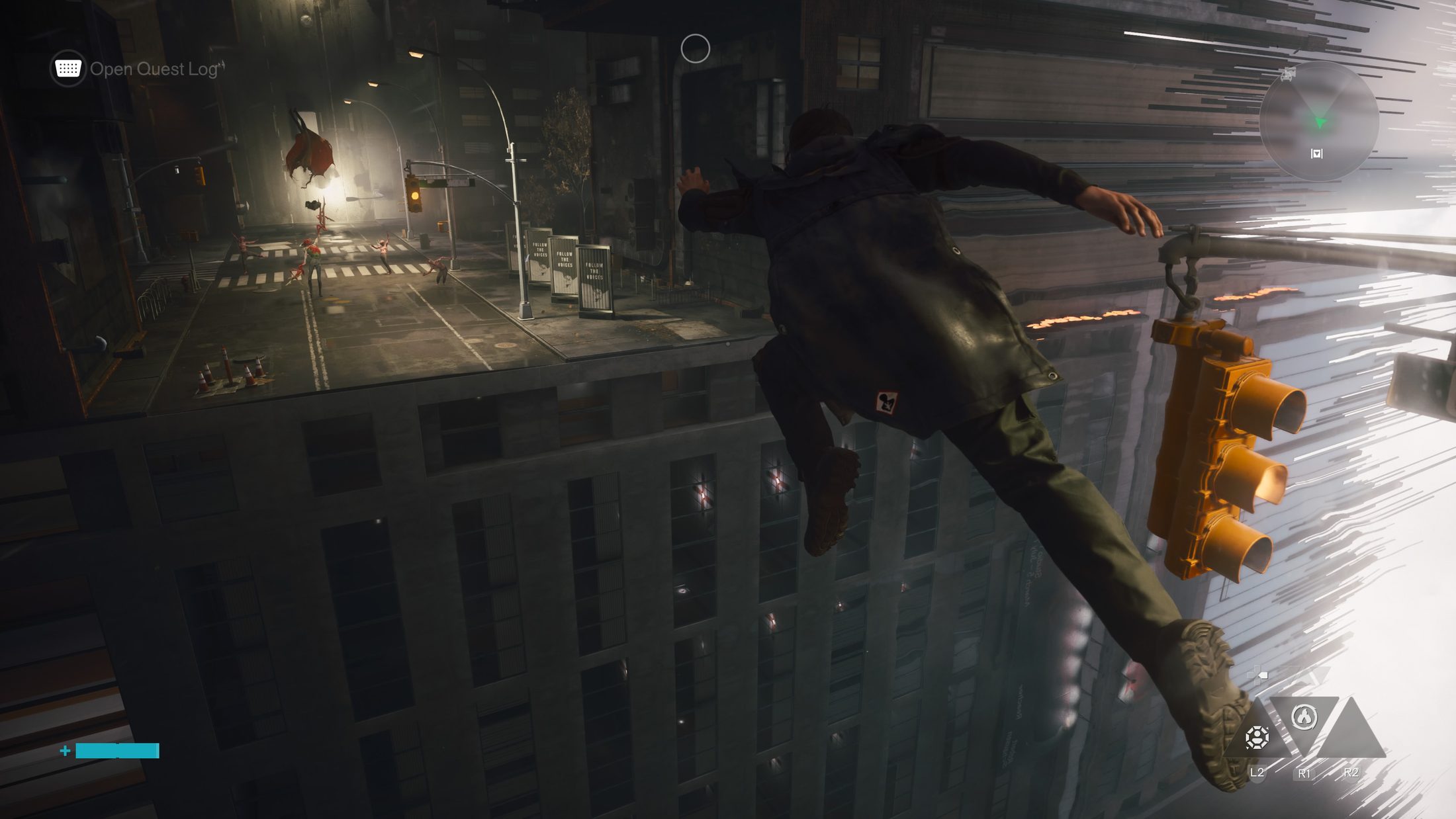
Talking about The Board’s voice, Kotaku wrote that CONTROL Resonant has “the coolest bit of video game audio in 2026”! What went into it this time around?
LP: I was very happy to see how positive were the feedbacks on the Board globally! There is another interview out there about the Board specifically so I’ll use this opportunity to complete some of the answers.
The Board is the 1st concept made for the game audio wise, back in 2021, and this is important because it kind of explains why an approach that was thought to be a test at first ended up close to the final version.
For a bit of context, I wanted to find a way to feel that in CONTROL Resonant, compared to CONTROL, the Board is not in charge anymore. The Board is trapped in Aberrant, forced to work with Dylan and they are frustrated and angry.
But as you can imagine I didn’t want to have the Board yelling all the time like a human being would do. They are not human to start with and we want to keep this distance with how human beings act. They are those ancient, otherworldly entities that probably don’t even feel space and time as we do, and their wrath should feel different.
So, I searched for a symbolic, ritualization of anger and display of power, and thought about the Haka, the Maori War dance. Inspired by this, I recorded my own voice doing different things and gave it a rhythm, a pulse, a flow to emphasize certain aspects and give it weight.
I recorded with a Sanken CO-100k, well known by sound designers out there. Recording at high frequencies allows us to manipulate and mangle audio further before creating digital artifacts, which was very useful here.
I don’t know any specific voice techniques, so I worked the other way around and found different formants in my voice (natural resonances we all have) and worked on those. We’re talking here about the usual suspects: performance, editing, stretching, EQ, comp etc.
That gave me 5 board members, each of them with a specific role in the sound design, for example Abyss was the lowest voice and was there to thicken the sound and give depth. (Yes I gave them names…). Again, this is not narrative information, this is only sound design needs, I needed 5 voices so the design works.
Having several members allows us to bring life, mystery and variety. Sometimes they speak as one which gives a powerful impact. But at other moments, only one member will comment on something, the others don’t care.
This was also very important for the narrative intents. When I received the lines, I wanted audio to have the right vibe to connect with the meaning of the sentences. Performance/editing was a big part but having this gradation with several board members was important for this purpose.
I had planned to use more voices for the final version (male and female) from different languages: Finnish, Icelandic, French, English etc. I even started to record a small story about the adventure of Roger the dog in French. Then having it translated in Icelandic by Gulli (Gulli Gunnarsson, Senior Audio Designer) who read it, sorry acted it, in the studio too…
Unfortunately, the consequence of this sound design approach is that all effects and edits worked with my voice only. Those formants were tuned together and switching the voice would not work anymore. The amount of work needed to achieve that was not compatible with the scope of our game. So in the end, the Board was made with one voice only.
I won’t deny nor confirm that there is a sniffle or two left in there from good old Roger…
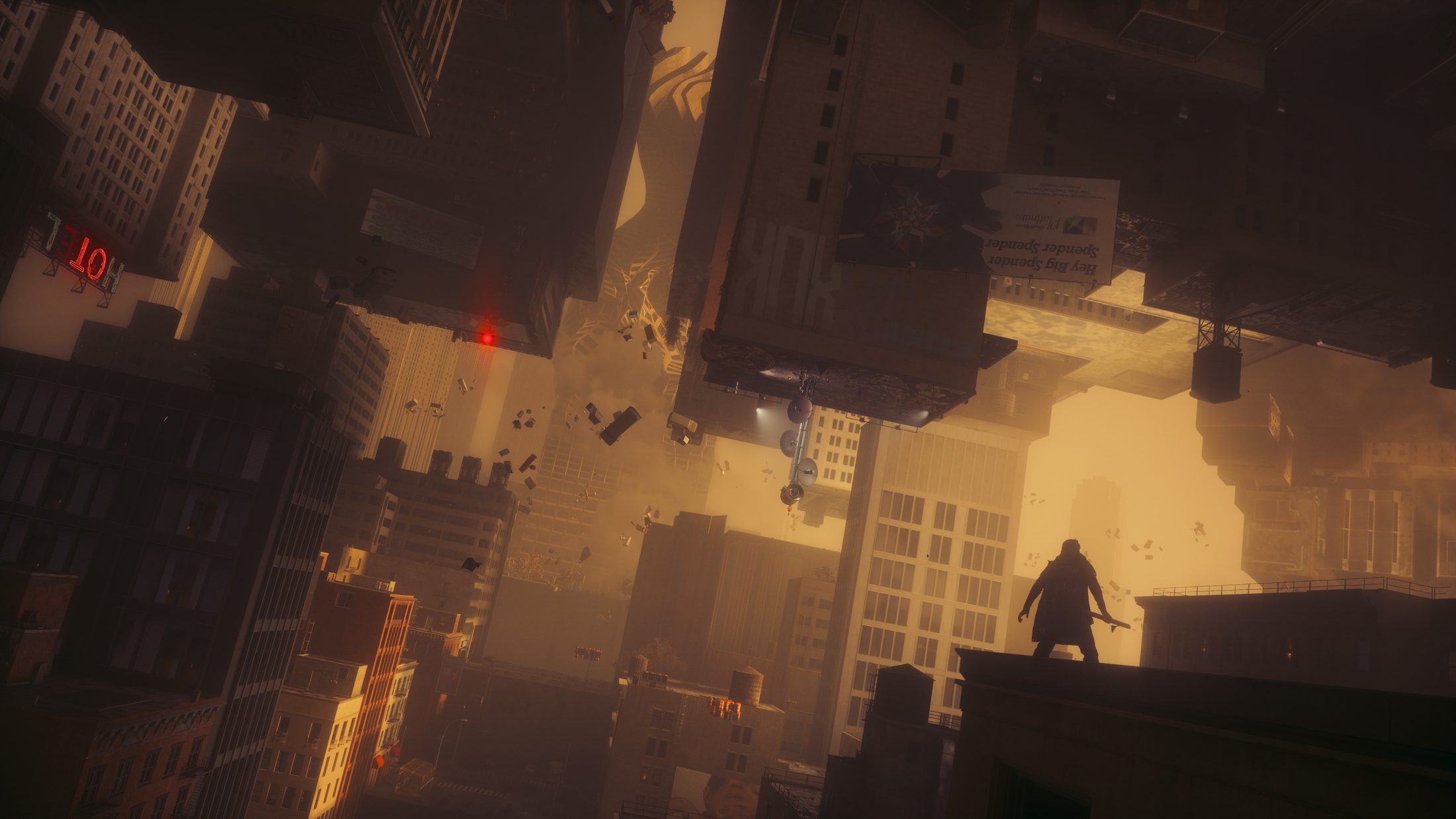
How did you work with Petri Alanko on the score? What about Zoe’s Mixtape?
LP: Most of the music work happened between three people, Petri Alanko (our main composer), Clément Duquesne (our music designer) and me. I feel we had a good process, and even when we hit some difficulties and we had to make hard decisions, we managed to get to a good place in the end.
Early on the project, we had a few discussions with Mikael Kasurinen (our creative director), making sure we hit important points, then I set the music direction for the project, so our intents and goals are as clear as possible at the game level. For example, define what we should cover with music, how we should do it and for what purpose (narrative or gameplay wise).
At the next step, we would usually present to Petri ideas or specifics about a given track, for example how a track should feel like or what purpose it fulfills in the game. Petri was then free to compose and experiment; at the end of the process he would deliver a concept track. From there, it’s the iteration process you know, reviewing, discussing, updating etc. until we are all hopefully happy!
Clément designed all music interactive systems. Music is tightly linked to our gameplay and we both had to figure out different challenges to make it work the best. How do we get to the best version of concept track in-game? Is it by editing content? Arranging it differently? Or changing the music behavior? (usually a bit of all…) - Clément was the one working the closest with Petri to get the different music stems and build the interactive tracks from the concept tracks.
This workflow worked quite nicely for years, then we received a much-needed help from Kilian Oser (additional composer) and Koča Kaštavarac (additional music designer) to ship on time towards the end of the project. Big thanks to them again.
Zoe’s songs are a bit different. These tracks were a mean to build Zoe and Dylan’s relationships. Help them to connect with each other and with the player. They happen in specific spots, meaningful for the game experience.
I won’t lie, picking the locations proved to be quite difficult, it needed to make sense for the story, to happen at the right moment, but also it needed space to shine (audio simply has a time-based physicality we can’t avoid of course!). Those tracks were thought as linear tracks, not interactive ones. Even though we did cheat sometimes and put a bit of interactivity, they mostly read in-game as if Zoe played the track to Dylan’s headset in one go. That’s the narrative intention.
About the tracks themselves, the process started with Mikael and Ashley (Ashley Smith, Lead Writer) they had narrative and creative context, I worked the most on finding the music references to fit. Then the iterations with Fried music, our partner, went quite smoothly, I think it was a great collaboration.
I can’t help but also mention the remedian tracks. Some of the players noticed we have some tracks playing from radios, speakers etc without any gameplay linked to them (most of the time). These are tracks made by people at Remedy. They are just here for you to enjoy and it is for us a nice way to have people in the team leaving some personal work in the game. As you can often see pictures of devs and dev’s pets in games in general, in Resonant we also added some music! There are 19 of them, so happy hunting!
Between the Aberrant, the Hiss and the Mold, a lot can happen at once in a fight. How did you keep it clear for the player, and what was hardest to get right in the mix?
TS: Clarity is the ultimate goal of the mix, as you pointed out, but never at the expense of immersion. Throughout the project, we were constantly balancing the need to direct the player’s attention towards what mattered most from moment to moment with the need to preserve the feeling of being caught in an intense brawl with otherworldly monsters, surrounded by a world that is as beautiful as it is twisted, with larger-than-life events unfolding all around you.
My main responsibility throughout production was working on and supervising gameplay and combat audio, so interactive mixing and sound prioritization were areas I focused on early on.
As Lucas mentioned in a previous answer, it all starts with the right content. Sounds need a clear identity so players can learn to associate them with specific enemies, actions, and events. They also need a clean timbre and carefully controlled duration to remain distinct without adding unnecessary sonic clutter when combat gets hectic.
Another important, and often overlooked, consideration is the stereo spread of individual assets. Spatial positioning is essential not only for communicating direction accurately, but also for making efficient use of the available sound field. Sounds can often be unnecessarily wide, creating overlapping that obscures other elements in the mix. This was particularly important given the camera and listener perspective in CONTROL Resonant, where enemies and other threats can approach from virtually any direction across a full 360 degrees.
One of the more complex challenges was mixing the enemies’ factions. During production, we established guidelines not only for the relative loudness of different sound categories, but also for their spatial positioning, grouping, priority hierarchy, and bus assignments. These conventions kept the project organized and helped maintain consistent playback behavior across a wide variety of very different enemies.
We knew the mix would be particularly challenging, so we deliberately opted for a strict two-tier enemy-bus structure: Critical and Non-Critical. Within that hierarchy, Heavy Enemies (Elites) took priority over Fodder Enemies (Drones). This approach was challenging because many situations would have benefited from an intermediate priority level, but keeping the system deliberately simple forced us to make clear decisions and made it easier to maintain throughout production.
If a particular enemy sound category needed more or less prominence, we would simply adjust its position in the bus hierarchy accordingly. This gave us a straightforward, flexible way to manage competing priorities without adding unnecessary complexity to the system.
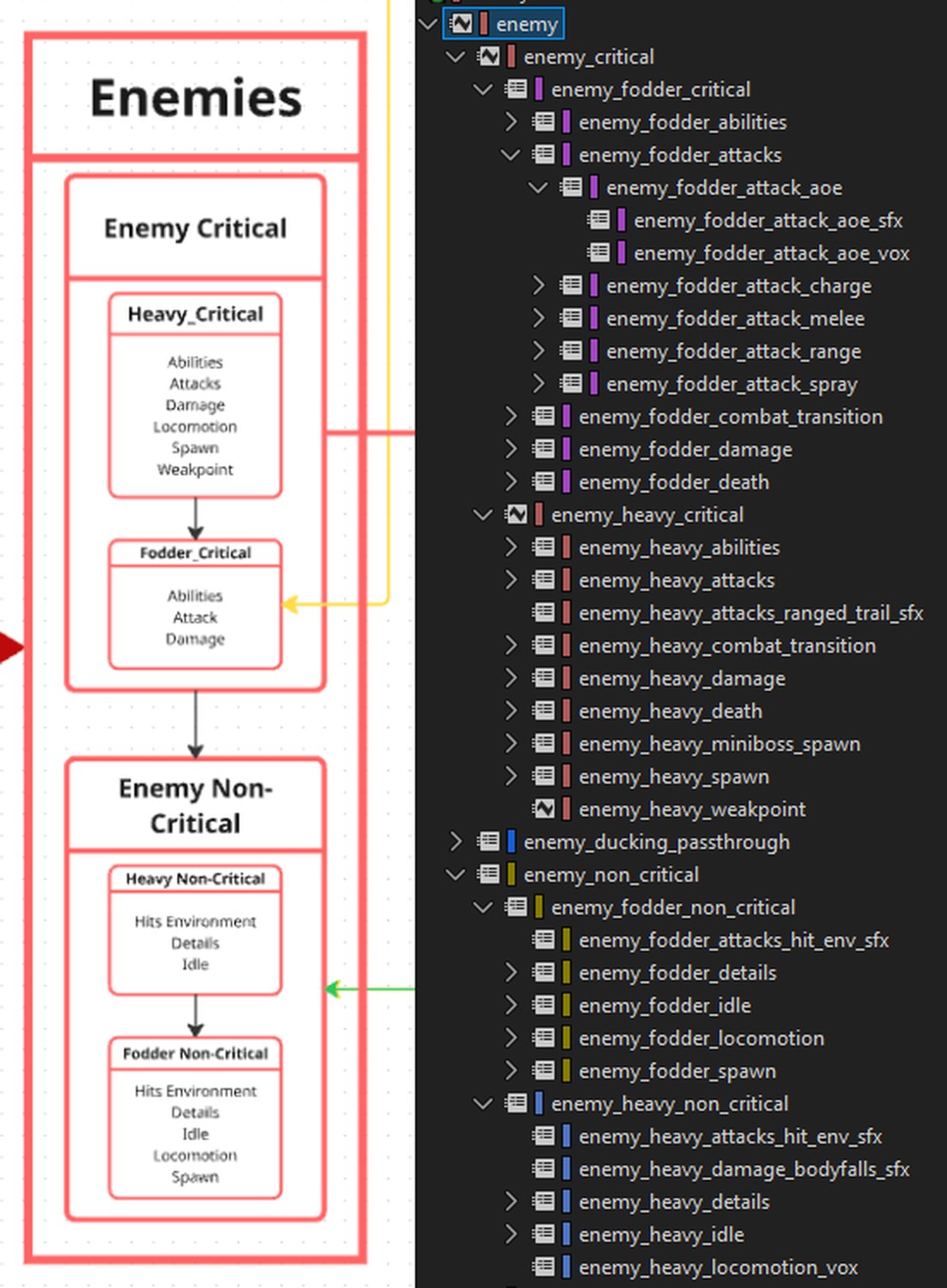
Of course, this is only one part of the overall mix. There are a lot of other sound groups, including player attacks, critical feedback, story moments and environment to name a few each influencing each other in the mix according to the situation.
When Lucas, Gulli, Alex and I sat down together in the studio to mix the full game towards the end of production, some of our original rules evolved, new ones were introduced, and others were occasionally broken when the situation called for it. Ultimately, the systems we had established gave us a solid framework, but the final decisions still came down to listening, iteration, and knowing when to prioritize the experience over the rules.
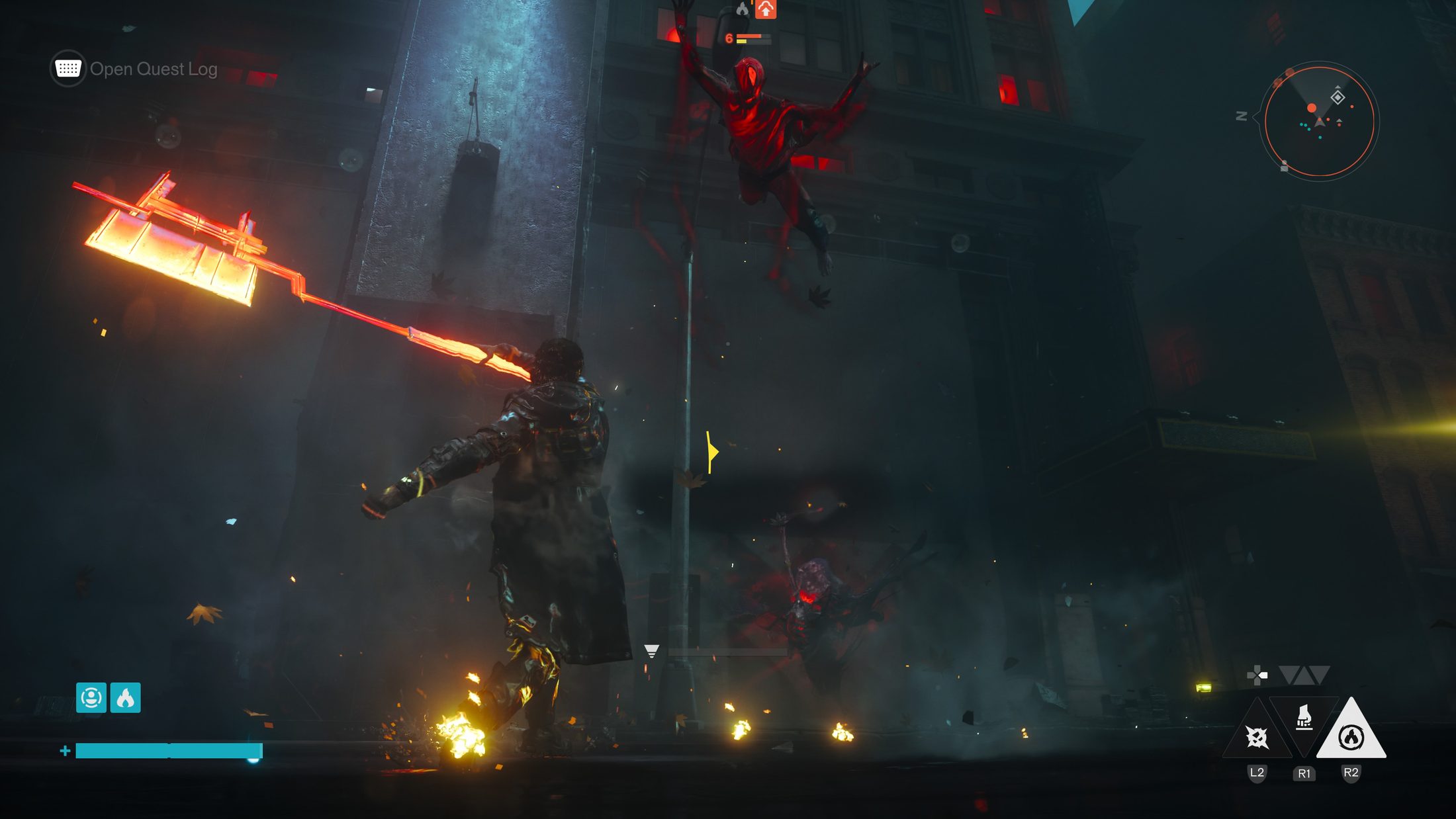
What were your biggest creative challenges on Resonant?
LP: CONTROL’s world is rich in abstract concepts and getting to a strong identity for all of them and maintaining it through the years was not easy. Especially in combat, where we had to build and expand those designs in line with the faction’s aesthetic while keeping clarity with our demanding gameplay. For example, building sound signatures for each enemy to help players recognize what they’re dealing with, even off screen.
The Hedron was probably the toughest, because it has so many different forms in Resonant. We have the enemies from that faction of course, with the must-have mentioned above, but also the entity itself, the physical being. The blended video effects, showing its influence in quest beats, or its distant presence in the faults… pulsating like a black sun.
There’s also the effect the Hedron has on objects from our everyday life (patterned objects repeating, environment, ambiance…) but also level design’s shifted platform… dialogue with the pattern speech… and of course, music!
A whole world of design that needs to be consistent, believable, and pertinent for its purpose in-game. It took a long time to build.
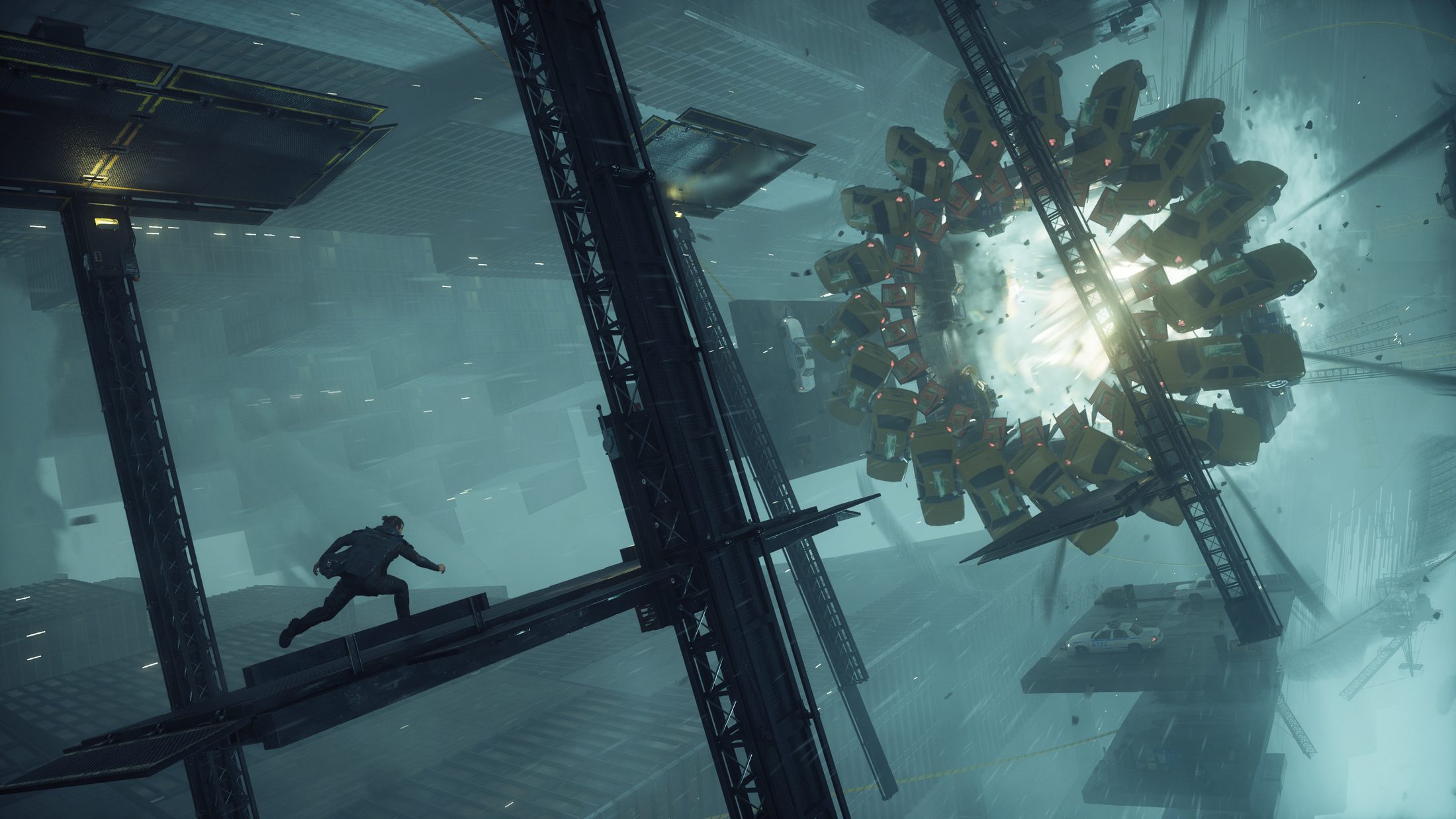
What were your biggest technical challenges, and how did you handle them?
AG: From a high level perspective, certainly the scope of the world and the fact that we had to get outside of our comfort zone, creating much more systemic tech and implementation solutions to simply achieve the right amount of coverage. Leaning into more traditional, hyper-detailed, handcrafted implementations was simply not an option within the production realities of this project, but I think those creative and technical boundaries really pushed us into making much sharper decisions around where and when the detail is truly needed and impactful.
The solutions took many forms, but ultimately all follow the theme of creating workflows that can be used in various contexts and refined for future projects: using ambisonics for key soundscape elements, expanding a range of systems to encompass multiple layers and levels of fidelity for added flexibility and scoping, ensuring reverbs and spatialisation techniques are not deeply player-centric, but rather world-based, and building custom plugins for features such as early reflections or multiband mixing.
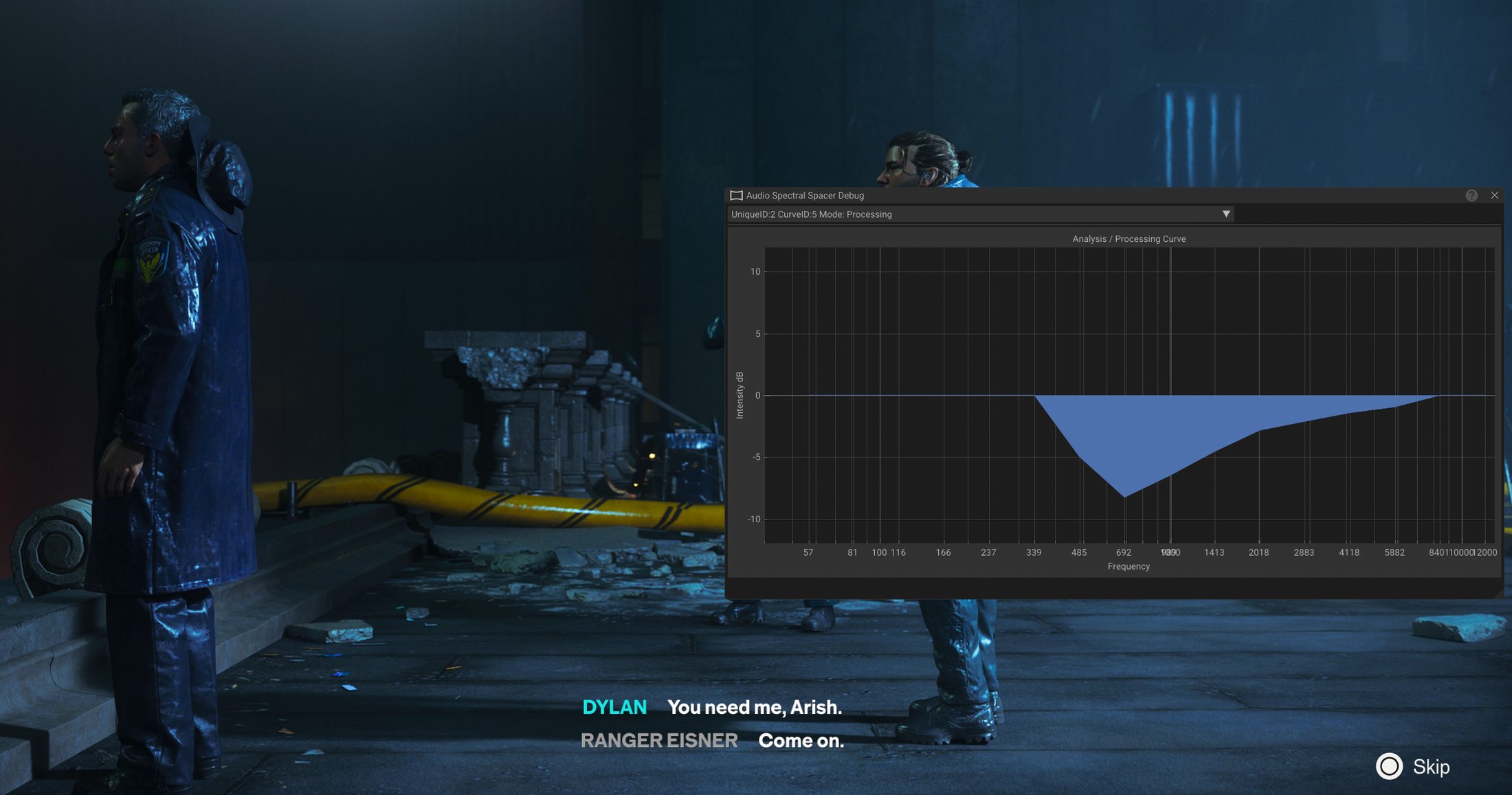
Overall, it was deeply fulfilling work, and we are really happy with how this has translated into what the players are listening to.
Any surprising facts about the sound of Resonant, like a source nobody would guess? What will you use again on your next project - and what are you most proud of in the game, from a sound perspective?
TS: I think what I’m most proud of is that, as a team, we created a game that sounds as distinctive as it looks. That sense of distinctiveness is at the core of Remedy’s identity, and I feel that the sound design and music not only reflect it, but amplify it.
LP: Making a game is fighting chaos and you can’t defeat chaos. You can only freeze it long enough in a state where you’re happy with the outcome, and hopefully release it at that time.
Knowing this and our constraints, what this team managed to do is incredible and I’m really proud of them. It might sound cheesy and like a classic thing to say but it is true.
If you are not used to these production cycles, it might be hard to imagine what it’s like to work for 6 years on a project on your own, without showing anything to anyone out of the studio. When it finally comes out and on top is well received by the public, it is a great relief and reward for us, so thanks again to the whole audio team, and of course thanks to the players. There wouldn’t be even a game without them.
A big thanks to Lucas Pierrot, Tazio Schiesari, Alex Golunga, and Gulli Gunnarsson at Remedy Entertainment for giving us a behind-the-scenes look at the sound of CONTROL Resonant!