






Audio Director Martin Stig Andersen and Lead Sound Designer Lukas Julian Lentz went to great lengths — or rather, heights — to make climbing adventure game Cairn (developed and published by The Game Bakers) an exhilarating sonic experience.
Find out what sound they used to represent the ‘voice of the mountain,’ why the foley team at Skywalker Sound needed a mini excavator for their work on Cairn, what pinecones have to do with ice climbing sounds, who vocally performed all of the bird sounds, what Climbot and airplanes have in common, and so much more!
Bonus: Just updated this interview with an in-depth Dolby Creator Talks video about the sound for Cairn
Interview by Jennifer Walden, photos courtesy of The Game Bakers; Martin Stig Andersen
 New ReleaseNOVA by Mattia CellottoWATCH VIDEO →
Ever want to climb a mountain, but lack the training and gear? There’s a climbing simulation game that offers a thrilling experience from the safety of your gaming chair.
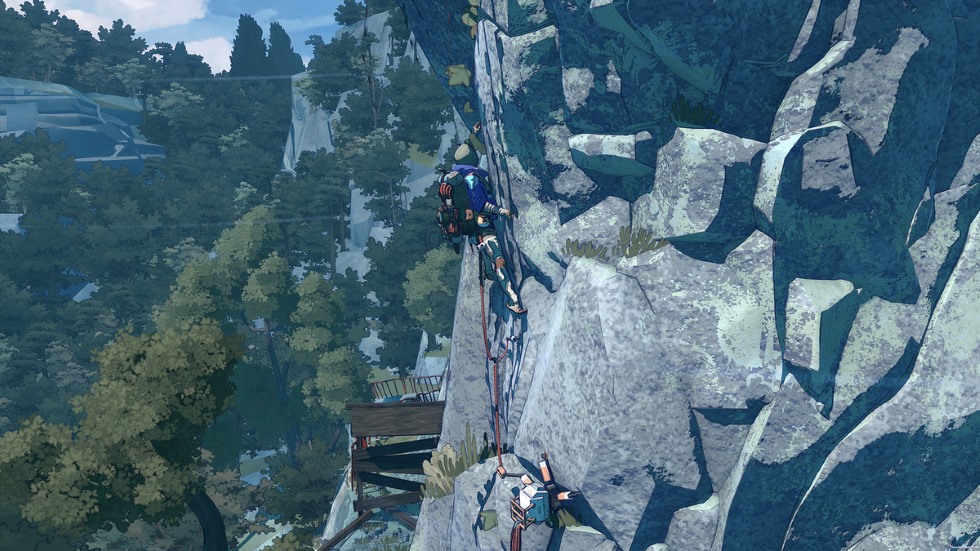
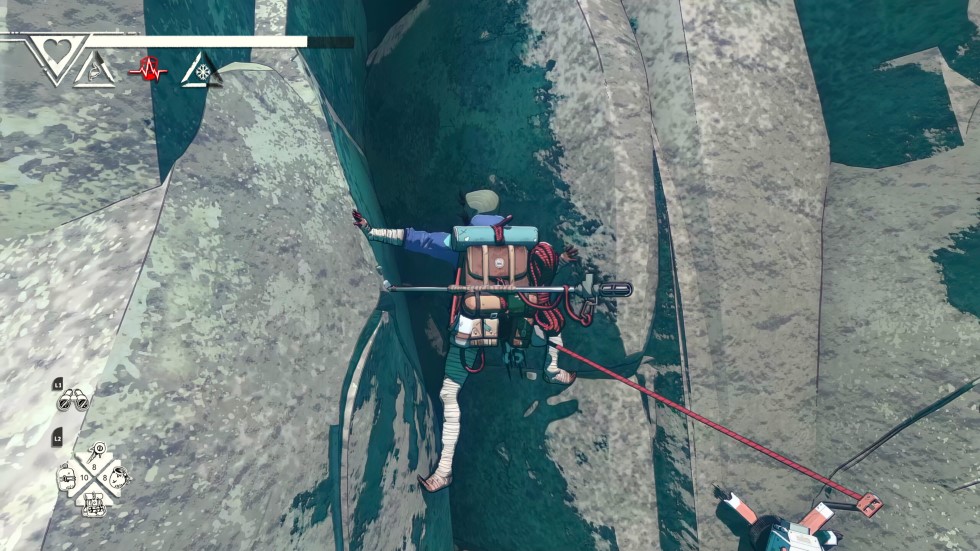
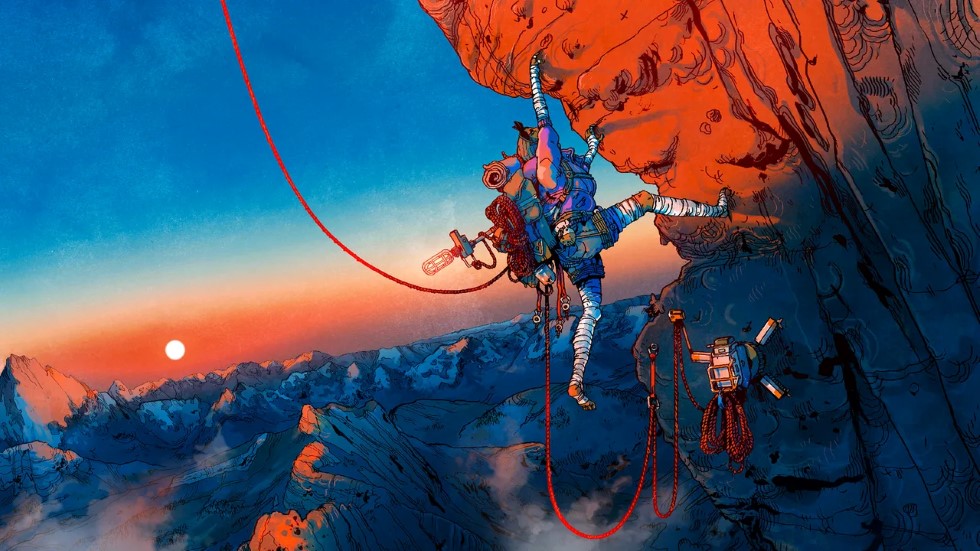
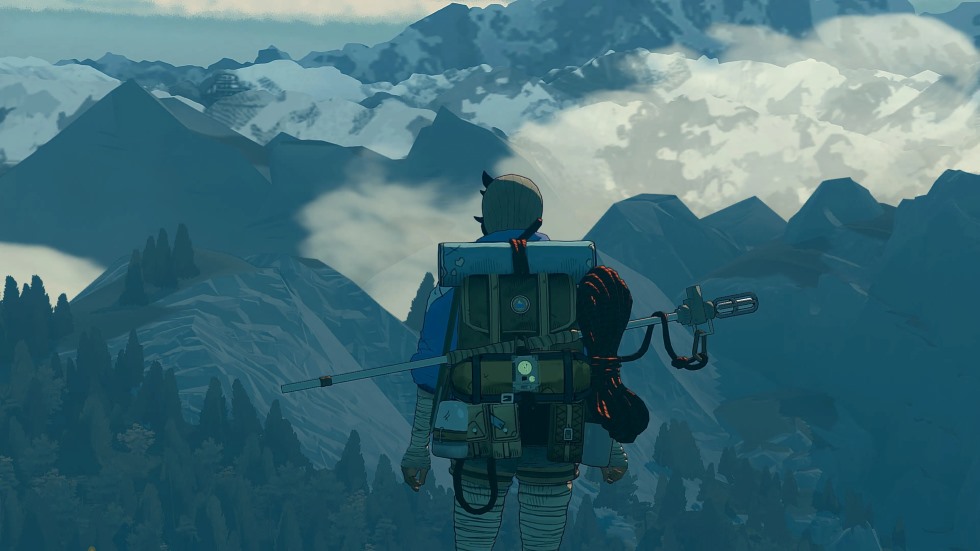
Cairn— developed and published by The Game Bakers, now available on PS5 and Windows — is a climbing adventure game in which the player takes on the role of professional mountaineer Aava. Not only does the player have to successfully summit a range of mountain peaks by manually controlling each of Aava’s limbs, but they must also manage Aava’s hunger, thirst, and body temperature. The in-game weather system and a day/night cycle also contribute to the difficulty of each climb. Hearing Aava’s labored breathing and seeing her twitching muscles draw the player into her punishing experience. It’s not about reaching the top; it’s about surviving the climb.
So far, Cairn won “Best Game of Indie Arena Booth” at the 2024 Gamescom, the 2025 Tribeca “Games Award” for advancing games as an art form, and the 2025 IndieCade “Grand Jury Award.”
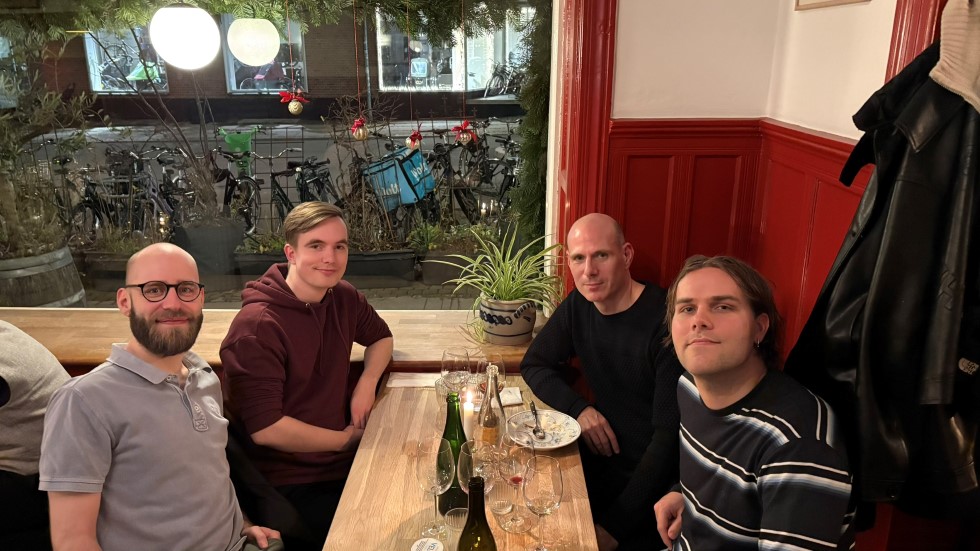
Here, Audio Director Martin Stig Andersen (known for Back 4 Blood, LIMBO, Inside, Control,and many more) at Interactive Tapes and Lead Sound Designer Lukas Julian Lentz at Aftersound (known for sound designing COCOON) talk about using sound to elevate the player’s experience of each climb, finding the right balance of climbing gear against environmental sounds, and recording foley and breathing sounds to immerse the player and provide gameplay feedback.
Cairn – Launch Trailer
The Immersive Sound of Cairn – Dolby Creator Talks, with Martin Stig Andersen, Lukas Julian Lentz, and guest host Alistair Hirst (51 min)
How did you use sound to put the player inside the mind of Aava as she ascends to the summit? How did you use sound to make the climb feel both arduous and exhilarating?
Martin Stig Andersen (MSA): The main pillars in the audio of Cairn were Aava versus the mountain (i.e., the game’s “boss”), contrasting Aava’s focus with the expansive soundscape of the mountain. What you hear is largely dependent on what you see and do.
When climbing and looking straight into the wall, the focus is on the subtle climbing and breathing sounds, while ambiences become quieter and are pushed to the front. Everything gets very close up, as if Aava is filtering away unimportant audio information, allowing her – and the player – to zoom in on the climbing, which is Cairn’s core gameplay. The silence framing the climbing adds a lot of tension, almost a sense of suspense, or a feeling of time standing still.
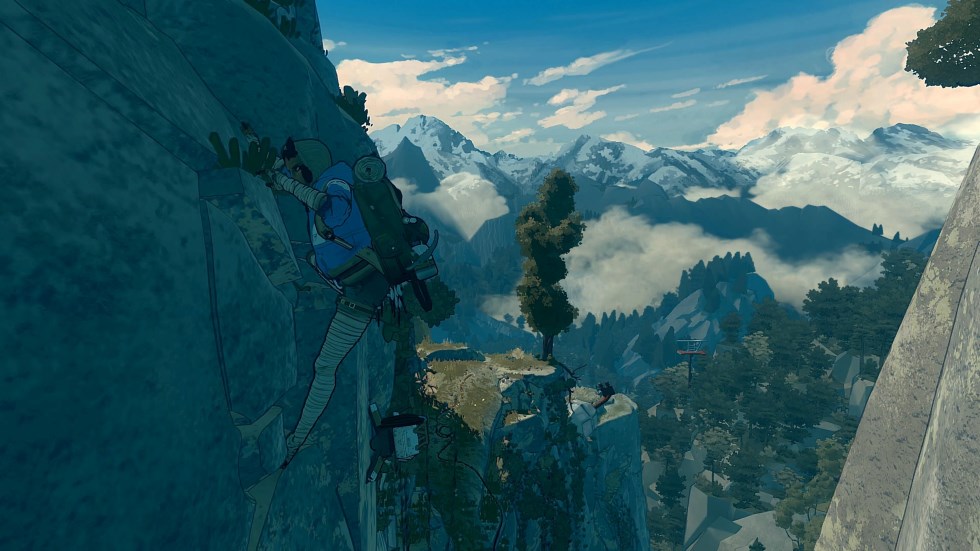
When you look around while on the wall, this mental filter slowly disappears, and the sound world opens up. Ambiences, wind, wildlife, etc., gradually grow louder, and the sound field expands to the full 7.1.4, creating a stronger sense of immersion. It feels a bit like stepping out of the climbing “time bubble” for a moment. The ambience also changes depending on where you look. For example, when glancing at distant mountains, you’ll hear subtle creaking sounds.
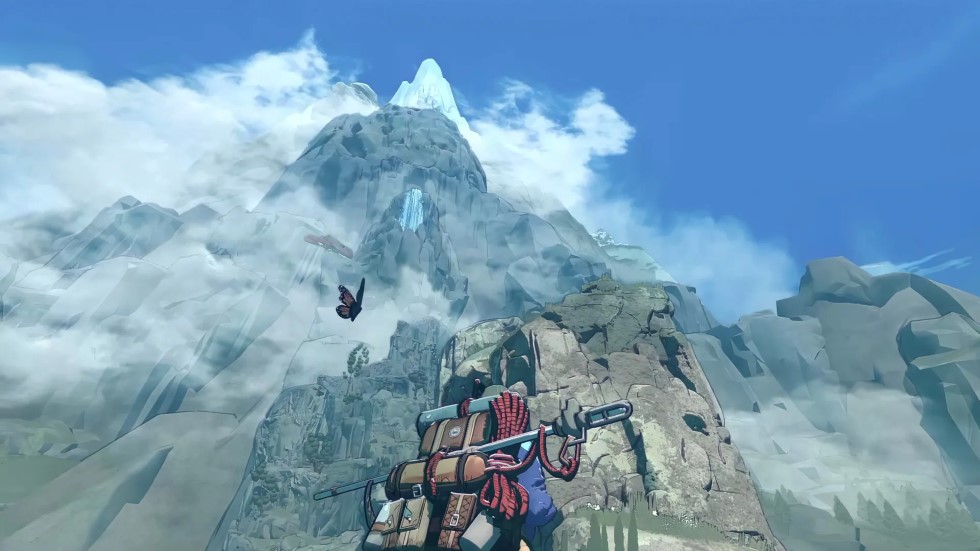
If you look up, you’ll hear something we call “mountain intimidation.” The idea is that the game places a sound emitter at the most intimidating point on the rock relative to the player’s view — this could be an overhang just above you or a peak further away. If you look even higher and find a more intimidating point, the emitter quickly shifts accordingly. However, if you lower your view and the active emitter moves out of frame, the transition to a lower point happens more slowly, letting the emitter hang above you.
As mountain intimidation increases, the entire soundscape shifts into a more abstract, rumbling texture representing the voice of the mountain. This soundscape is natively 7.1.4, and the position of the intimidation emitter influences the mix. For example, if the emitter is positioned above you — such as when you’ve just lowered your view — you’ll primarily hear the intimidation soundscape in the height channels, where it’ll linger for a moment before fading out slowly.
Conversely, when looking down, you’ll hear a more airy soundscape that we call “levitation” which is also somewhat abstract, sounding a bit like echoing tree creaks from far away, representing the distant forest below. I’m not a climber, and I’m scared of heights, so my experience would be quite the opposite: the abyss below would be most intimidating! But for Aava, the challenge is above, and what you’ve conquered is below. Gravity is upside down, and she’s being pulled upwards.
When reaching solid ground, the ambiences open up, both in terms of volume and envelopment. It gives a nice contrast to the climbing, like a change from a subjective to an objective point of view. Not being occupied with climbing, we can now fully enjoy the world around us and take a nice break before the next climb. Sometimes a little music cue will trigger when completing a climb, emphasizing this sensation.
What went into Aava’s foley sounds? How did you design variation for different holds and surfaces?
MSA: In Cairn, foley and breathing sounds play two important roles: making climbing sound believable and providing important gameplay feedback to the player. Both had to form a language that the player could learn, even if only at a subconscious level. As in real climbing, the game features a range of different holds of varying quality — jugs, pinches, ledges of different sizes, etc.— each of which should have an identifiable sound.
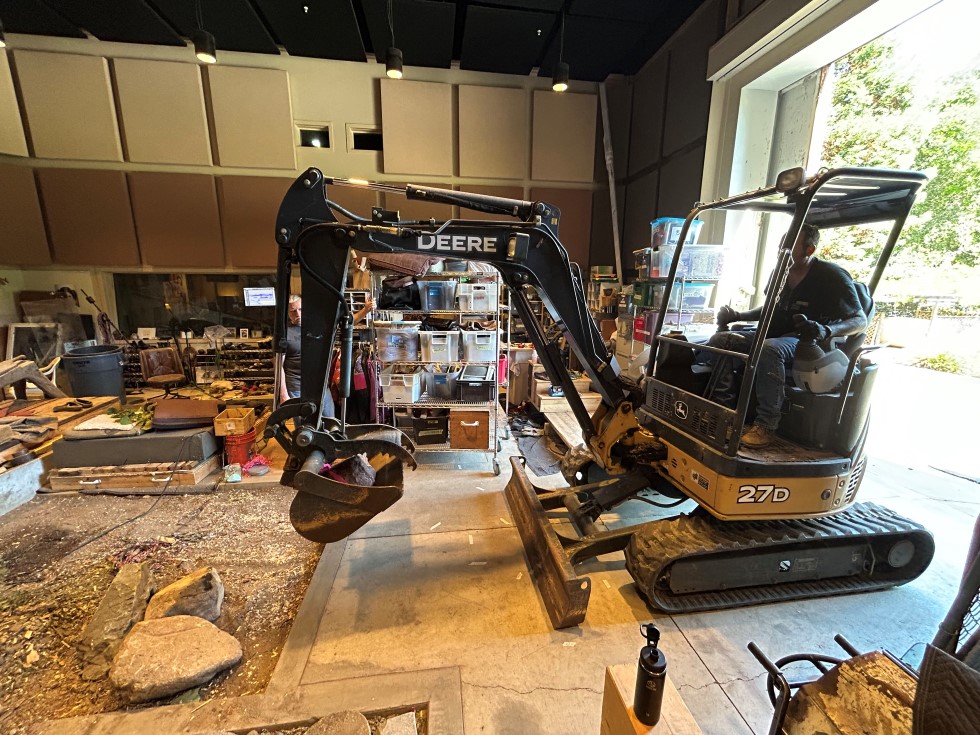
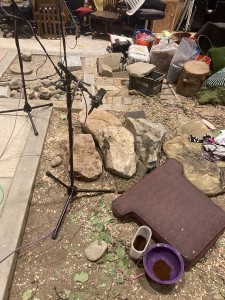
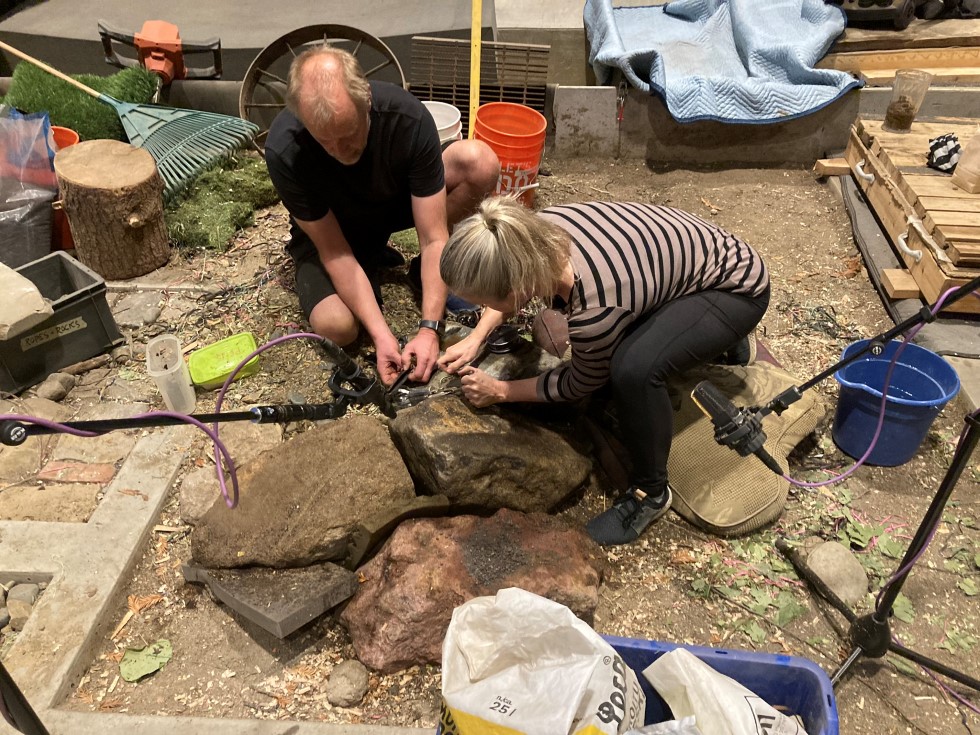
To achieve this, we needed expert help, so we reached out to the amazing Foley Artist Heikki Kossi and his team at Skywalker Sound. The staff there were kind enough to drive a mini excavator into the hills to pick up rock pieces for the session. Heikki did an excellent job creating sounds that fit each hold while also reflecting the impact each hold would have on the player’s stamina. Good holds are represented by a very defined, single grab sound, while neutral holds contain two elements: a less defined grab sound followed by a noise suggesting a less secure grip. Bad holds — essentially, when there is no hold and the player is leaning against smooth rock — contain three small noises, indicating that no proper grab has been made.
For feet, we created unique sounds for four different foot angles. To give an indication of how much weight the player can put on a specific foothold, we blend in a bass layer recorded with a geophone, which captures the vibration of the rock rather than sound through the air. This idea came from sound designer and friend Nicolas Becker, who has a lot of climbing experience and described foothold quality (the amount of support one can rely on) as a bodily sensation.
The same design language was largely used for ice climbing, making it more intuitive for the player. We used pickaxes and spikes on a giant ice block, as well as alternative props, including large pinecones that Heikki had brought from Finland. He has a special trick for creating ice sounds by crushing the cones against glass.
We also recorded extensive climbing equipment, handling rope, carabiners, etc. One of my favorites is the sound of the self-screwing pitons being drilled into the wall. Foley Artist Shelley Roden used a hand-crank egg beater held against a piton and a piece of rock.
How did you design and implement Aava’s breathing and effort sounds to communicate stamina and gameplay state?
MSA: Breathing provides the most obvious stamina feedback to the player, thanks to an elaborate breathing system and thousands of assets. At the core of the system is a matrix where one axis represents the player’s current stamina level while the other represents the orientation of that stamina. For example, breathing with medium-high stamina sounds different depending on whether stamina is decreasing slowly or quickly, remaining stable, or increasing slowly or quickly. The result sometimes feels almost magical. For instance, if stamina is near zero and suddenly increases rapidly, you’ll hear a very relieved breathing response. The pool of breathing sounds also changes if the player enters what we call the “danger zone” — a small grace period between stamina being maxed out and Aava ultimately falling.
To keep the breathing organic, the original recordings are separated into inhale and exhale assets, preserving their natural, slightly uneven durations, and then stitched together back-to-back at runtime. For the recordings themselves, we opted for real rather than performed breathing and effort sounds. Partly because I generally don’t like fake effort sounds in games, but also because of the large amount of nuance required for Cairn. It’s all about context. For example, performing breathing that represents medium-low stamina with increasing stamina is quite abstract — both for the performer and for me evaluating in the moment.
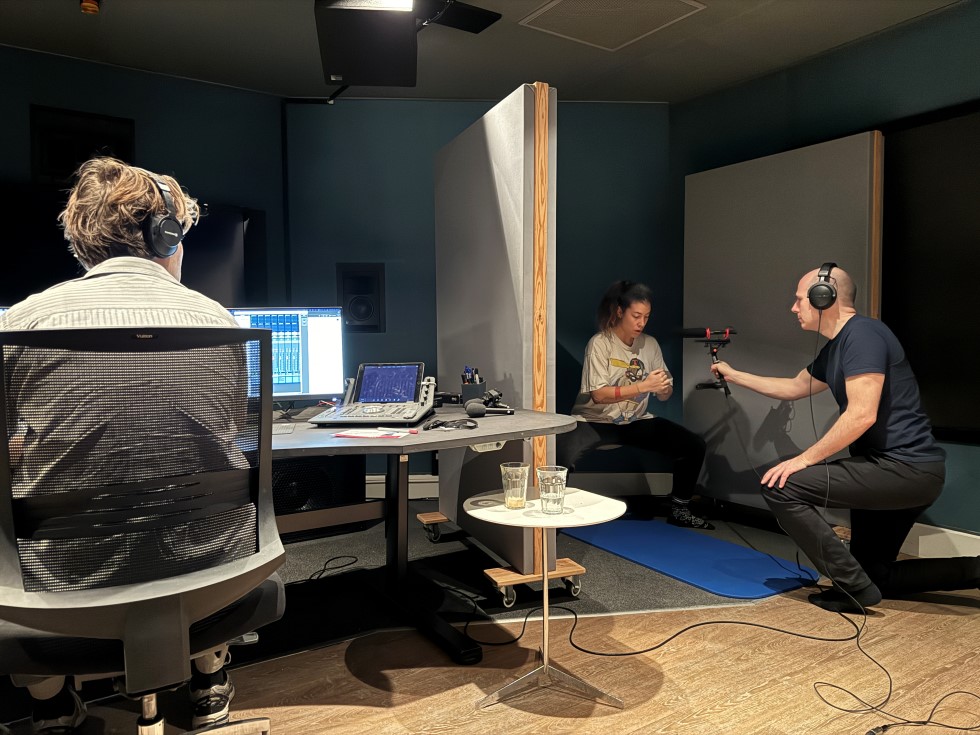
Instead, Camille Constantin Da Silva, the performer, would do intense exercise, such as high knees, after which we recorded her breathing for a minute while she caught her breath. A sequence like that can be edited into several groups representing different stamina levels. To capture different nuances, for example, representing different stamina orientations, Camille would put herself in different positions. Catching her breath while standing normally sounds very different from doing so while holding a plank position. Exhausted from the session, Camille would sometimes need a short nap, and we took the opportunity to record that as well for when Aava sleeps in her bivouac.
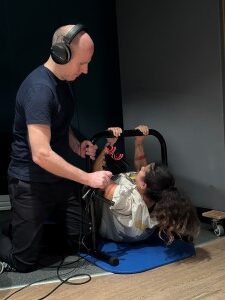
While the breathing effectively reflected Aava’s state, it did not always align naturally with the visuals. A minimum level of synchronicity between breathing and movement was needed. To achieve this, we frequently interrupt the back-to-back stitching of inhales and exhales. A simple example is when Aava moves from having four limbs attached to the wall to having three, we add a short break after the next inhale. If Aava grabs a new hold during that break, we immediately trigger the next exhale, thereby synchronizing sound with movement. If the player lingers with three limbs attached, the break will time out, and the normal breathing pattern resumes.
When Aava releases two limbs, she makes an effort sound, followed by a quick inhale and a short pause. If she grabs a new hold within that break, she produces another effort sound. Again, if the break times out, her regular breathing pattern resumes. Which effort sound is used depends on her overall state, stamina level, and stamina orientation. For example, if stamina is high and she is in a stable position, the effort will be subtle, whereas the effort sound may approach a scream if she is close to falling.
What went into the environmental sounds (winds, rock debris, birds, critters, river/waterfalls, rain/weather, etc.)? Did you do any field recording? Any helpful indie sound libraries?
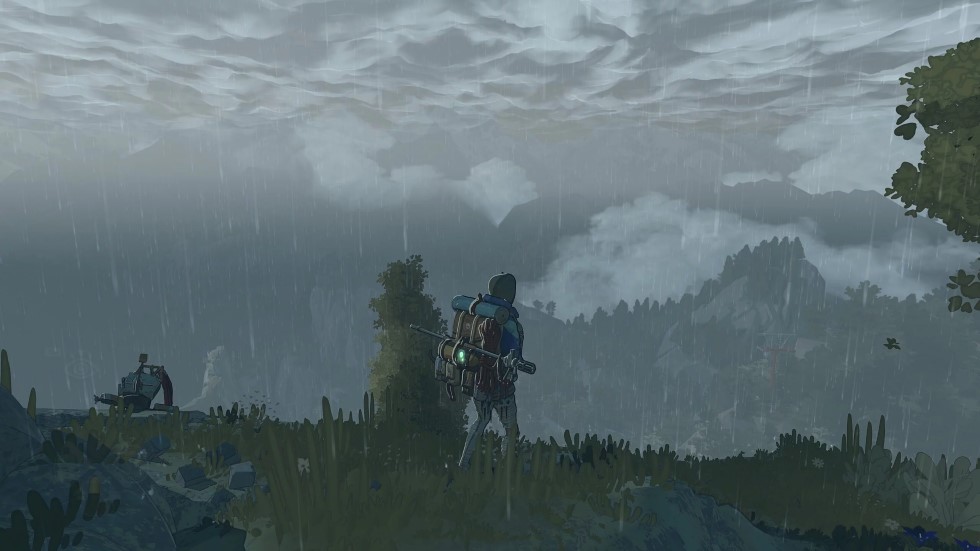
Lukas Julian Lentz (LJL): Windscapes by Nicolas Becker was a library I used quite a bit throughout production. As with much of the game’s audio, it was important that the wind in the game had a subjective character to it rather than feeling purely naturalistic.
The wind in Cairn is essentially omnipresent, as Aava, our protagonist, puts it, “At all times, every moment.” Having access to a wide range of nuanced wind textures was a massive advantage, ensuring there was enough wind content for the many hours of constant wind without becoming fatiguing.
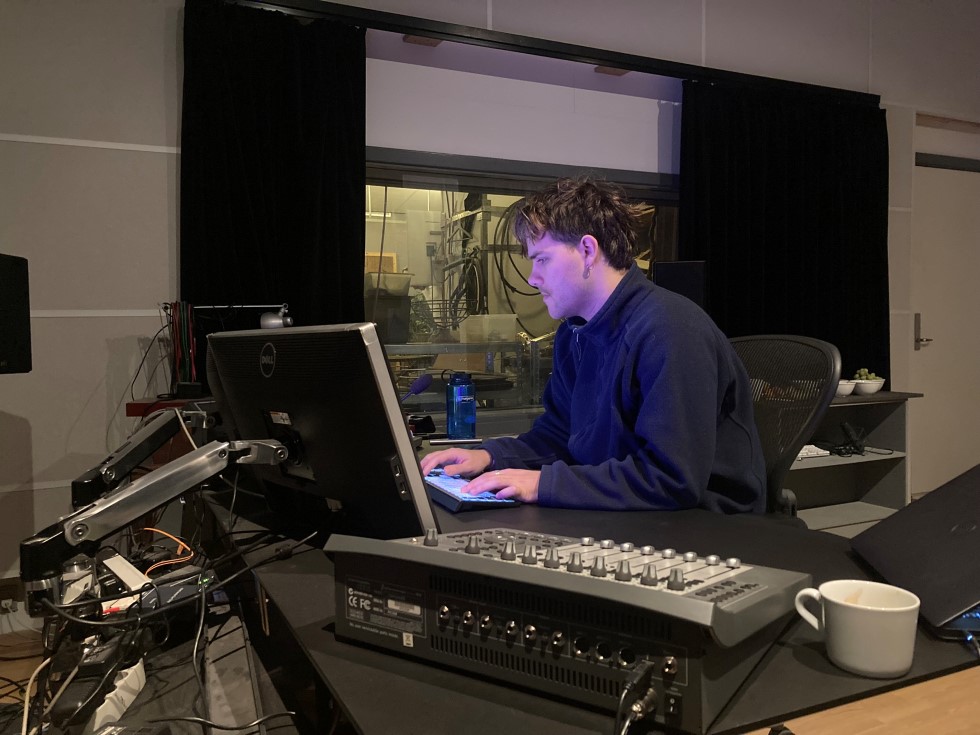
To support this, I designed a system that functions almost like an audio particle system. It analyzes the type of environment surrounding Aava and dynamically spawns swelling wind layers around the player. This approach was partly inspired by the Sound Particles tool, which I’ve used since working on COCOON, and the kinds of workflows it enables.
Our sound designer, Andreas Johansen, made most of the bird sounds you hear in the game using quite an interesting approach. Rather than relying on traditional recordings, he performed many of the phrases vocally and then heavily pitch-shifted them. The result is an interesting hybrid between the familiar and the unique. It makes it sound like “a world” but not necessarily “our world,” which was important as Kami should avoid conveying any specific geographical identity.
What were some guiding principles for the sound designers when bringing the environmental sound material together to help them create the intended player experience?
MSA: In general, it felt important not to shy away from silence, because — at least to me — silence is one of the positive qualities of being in nature. In games, there can sometimes be a tendency to fill space, perhaps because we want our work to be noticed. But silence can stand out in its own way, especially when contrasted with more active moments. It’s similar to being in the countryside — I become more aware of the silence, and that in itself becomes meaningful.
Relatedly, it felt important to create as much variation as possible without necessarily adding more elements. For example, the organic rock formations became a natural source of variation, as their early reflections could subtly color the sounds.
For Cairn, I wanted to value beauty over strict accuracy and to think of the overall sound as an album, where all the different parts play together to form a unified whole. The aesthetic and stylization of a sound become just as important as what it represents, and the technical aspects remain hidden — you don’t notice state changes, crossfades, panning, ducking, etc. You simply feel present, you and the mountain, immersed in the world.
Sound-wise, how did you make each climb location feel unique?
LJL: Mount Kami is one big mountain, giving the player the freedom to traverse thousands of square meters. Because of this, manually placing environmental audio emitters wasn’t feasible for our relatively small audio team. Instead, most of the environmental audio is driven by a systemic approach, allowing sounds to be distributed automatically across the world.
In practice, we developed a set of rules that determine how environmental sounds behave in different contexts. This meant that whenever the level design team updated or reshaped an area, the soundscape would adapt automatically. As a result, level designers ended up playing a significant role in shaping the sonic identity of each area, as their work on the environment directly influenced how each area sounds.
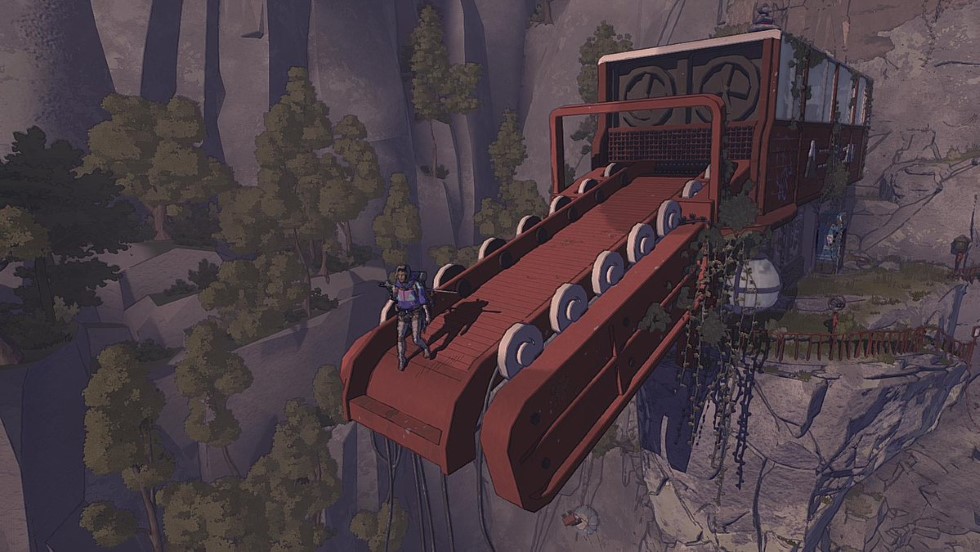
For more unique or narratively important locations, like the large waterfall or the abandoned cable car station, we supplemented the system with bespoke audio to give those areas a more distinct and memorable identity.
What went into the sounds of Climbot?
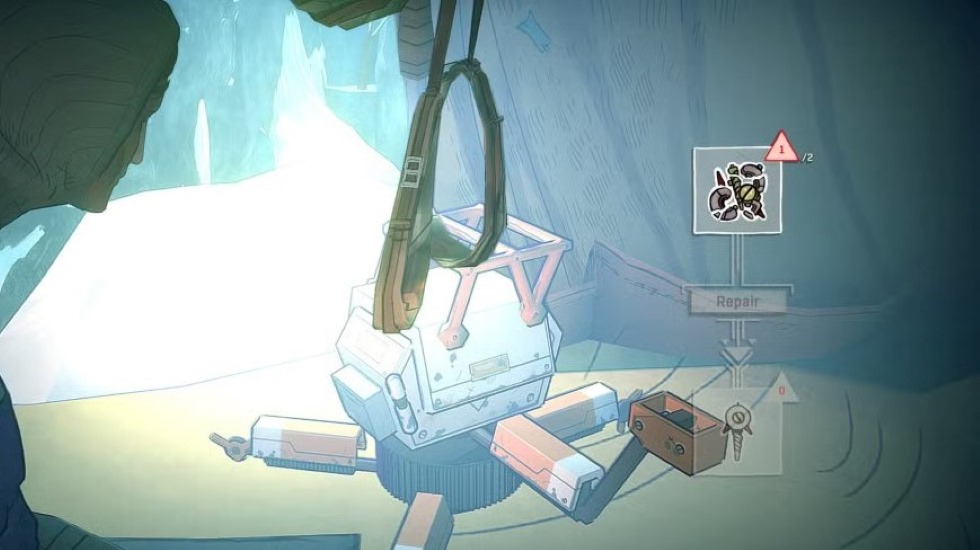
LJL: I approached the Climbot a bit like an airplane: somewhat awkward when moving along the ground, but powerful and efficient when moving vertically. That contrast became the core idea for the sound.
To achieve this, I recorded two drastically different motors: a beard trimmer and the most powerful drilling machine I could get my hands on. One of the main challenges was designing a sound that wouldn’t become annoying over time, since the Climbot is a constant companion that follows the player everywhere. Because of this, the final sound design is quite subtle and intentionally avoids drawing too much attention to itself.
Aava is generally very direct in her language and often calls the Climbot derogatorywords like “piece of trash” and “hunk of junk,” so I was inspired by that, going in a more creaking direction that would actually make the thing sound like a moving trash bin.
Originally, I had a very different design for the Climbot that leaned more toward something futuristic and alien. That version remained in the game until just a few weeks before launch. However, after pre-launch playtesting, the persistent high-frequency elements gradually became fatiguing to me. Around that time, I had access to a powerful drill in my new studio, and the moment I turned it on, I immediately knew I had found the right sound.
What ended up in the game was created in a short but intense session, just a few hours of recording and iteration shortly before shipping. I’m very grateful we were able to make that change, even so close to launch.
What went into the UI sounds for the game?
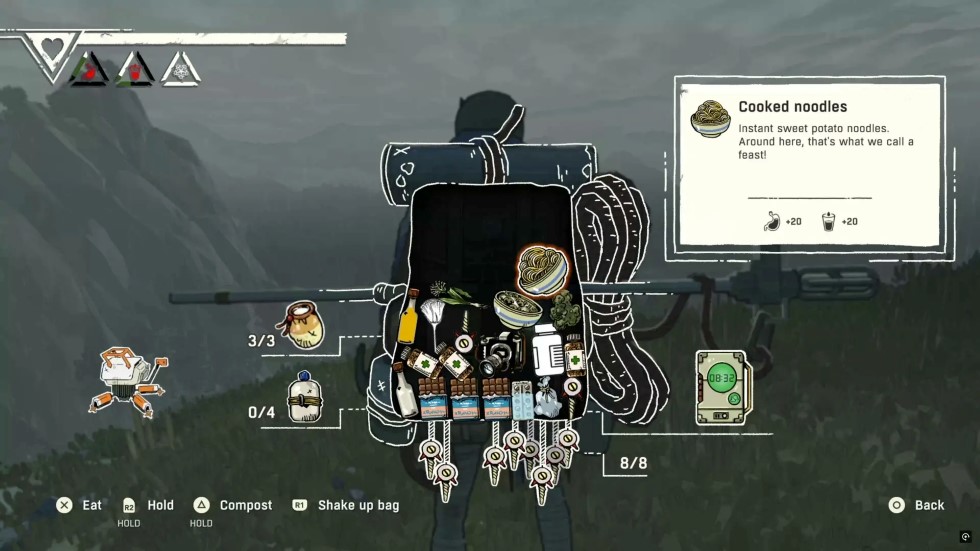
LJL: About every non-dietetic UI sound in the game is designed from recordings I did of various climbing equipment. I am lucky enough to have two good friends who are climbers, and they introduced me to all sorts of interesting mechanical pieces of gear I had never heard of before (e.g., a “GriGri”). I later turned these recordings into the UI sounds in the game.
For our loot system, there are tons of loot UI sounds that lean more toward diegetic, which sound designer Andreas Johansen spent weeks recording for the game. Having distinct sounds for each of the many different loot items in the game really helps when navigating through objects like backpacks and broken vending machines. I really think Andreas did an amazing job of systematically crafting these sounds that communicate the properties of each item in the game, making the survival aspect of the game not only more engaging but also more intuitive.
What were your biggest creative challenges for sound on Cairn?
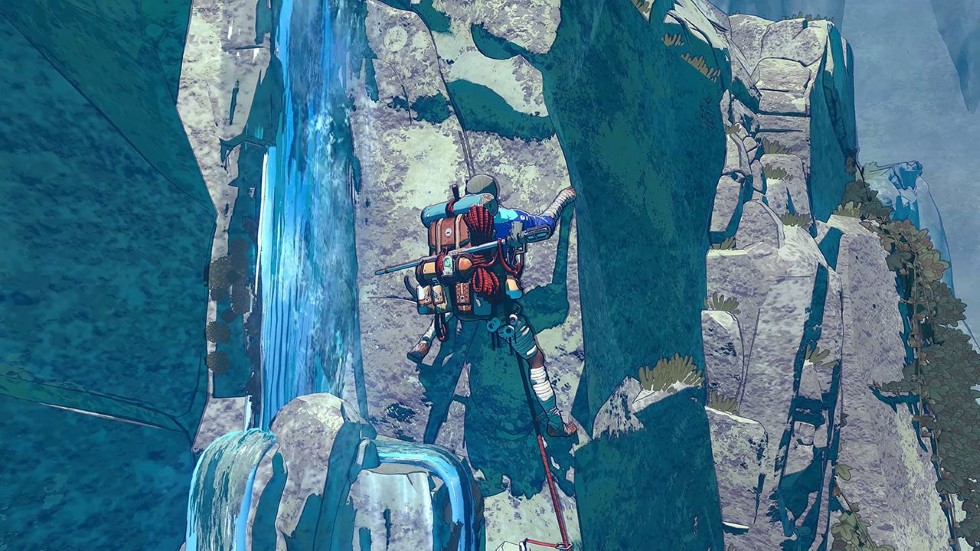
MSA: For the majority of the game, there’s only you and the rock, and one of the main challenges was how to make that interesting from a sound perspective. Before I joined the project, the developer had done some preliminary video tests, adding music on top of the climbing, but it didn’t really work. Climbing is generally slow-paced, so anything fast-paced feels disconnected from it. In commercials featuring climbing, you’ll often hear energetic music trying to make it feel cool and action-driven, but it actually removes tension and makes it feel safe. With Cairn, we wanted the opposite feeling.
When I climb in the game, I get the sensation that time stands still — almost a kind of moment-to-moment zen state. The audio didn’t need to do much beyond supporting that through climbing, breathing, and subtle environmental sounds. Then, when you reach solid ground, you come out of that focus mode and begin noticing the world around you. That felt like the right moment to introduce a bit of music, open up the soundscape, and shift attention to the larger structure of the game.
What were your biggest technical challenges for sound on Cairn?
LJL: There are two technical struggles that come to mind. Perhaps the most obvious one is a byproduct of our Dolby Atmos mix approach.
Instead of using the more performant quad beds and positioned mono audio objects, the game relies on a lot of concurrent 7.1.4 files. Because of this, over 60% of the game’s total size is solely audio assets, which we mostly stream from the disk. This created issues on slower HDDs, where audio playback could begin to stutter.
To mitigate the high disk usage, I spent a significant amount of time profiling disk usage to determine which files should stream and which should be loaded based on how often they would play. It became an act of constantly balancing streaming bandwidth vs. RAM usage on a knife’s edge.
The other big challenge was achieving a sufficiently detailed representation of the entire mountain’s geometry loaded into the Wwise sound engine for realistic acoustics. We use the Wwise Reflect plug-in that lets us render early-reflections from game geometry to get realistic 3D acoustics that add a subtle yet remarkably familiar sonic spice to the diegetic sound design.
I found that the colliders that the game uses for not letting the camera slip through walls was a great starting point, but was way too complex and not always as clean as we liked to not let the sound engine process insignificant spatial audio rays.
Therefore, our sound designer Jonas Wiis Jensen and I spent many hours decimating and cleaning these meshes in 3D software to fit a somewhat decent level of quality. I think the extra work we spent on these proved highly useful during production. Not only could we use this geometry for the real-time early reflections, but also for determining if something is in view directly from the sound engine by checking if transmission loss is applied in combination with the listener cone angle.
Can you talk about your approach to panning and spatialization in Dolby Atmos? How did you use this surround format to immerse the player and also to craft a more subjective experience for them?
MSA: I’ve always been a big fan of stereo — or more specifically, stereophony — where you create a spatial illusion, or phantom image, by manipulating the relationship between two channels. While an Atmos mix created solely by spatializing mono content might offer more defined or technically correct positioning, to my ears, it often sounds less immersive than a well-crafted stereo mix based on stereophonic sources. This is partly due to side effects of panning a single signal across multiple speakers, such as comb filtering and the Haas effect, which can cause the illusion of a 360-degree sound field to collapse. In stereophony, you avoid these issues thanks to the inherent decorrelation between channels.
Regardless of the number of output channels, if a sound represents something that is naturally wide — like a waterfall — but the source is monophonic rather than stereophonic, I can get an almost claustrophobic physical response, like a subtle tension in my chest. In LIMBO and INSIDE, which both feature stereo-based mixes, I used “balance panning” of stereophonic sources for sounds that needed width, such as a distant truck in the background. With balance panning — also called “balance fade” in Wwise — you create the illusion of positioning the stereo signal simply by adjusting the relative volume levels of the left and right channels, rather than summing or panning the channels.
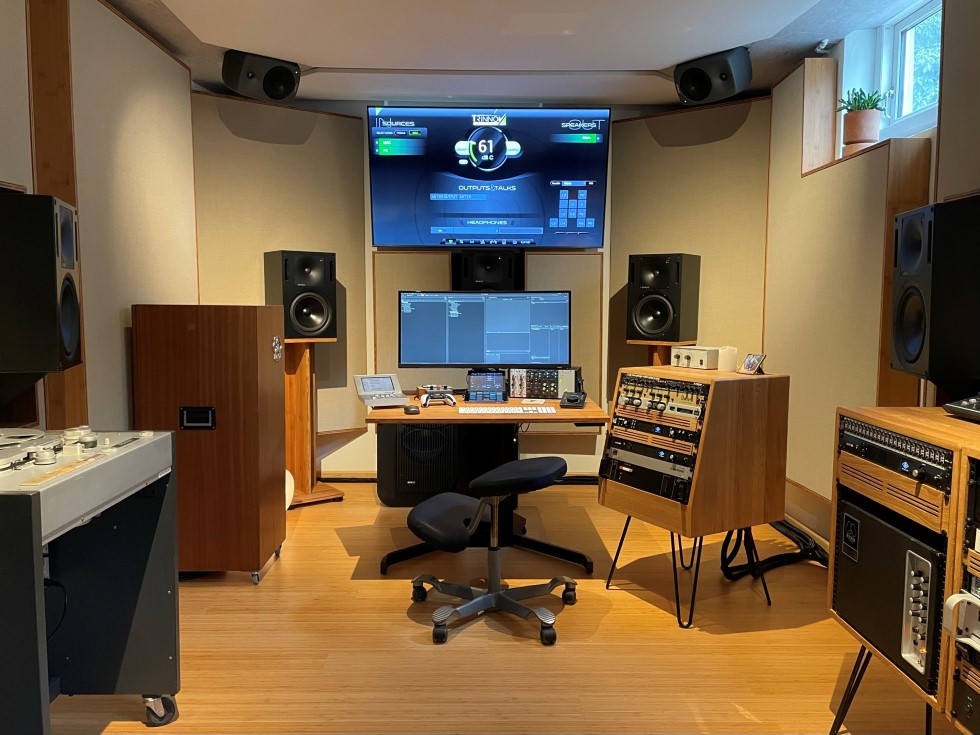
In Cairn, I was interested in expanding this stereophonic approach to the Atmos format by authoring native 7.1.4 content with decorrelated material across all channels, and then using balance fade to position it in the world. For example, instead of panning a mono waterfall sound dynamically across the 7.1.4 speaker layout based on its position relative to the listener, we would use that position to gently rebalance a 7.1.4 asset. This preserves the spatial complexity and natural width of the sound while still allowing it to respond to the player’s perspective.
LJL: It may be too early in our medium to think about immersive speaker layouts in a traditional sense when working with the full 7.1.4 channel configuration. However, based on conversations I’ve had within the industry, bespoke 7.1.4 beds seem to often be used primarily for cutscenes or non-positioned ambience layers, rather than as a primary method for spatialized sound.
In many games, a sound like a waterfall might be implemented as a single 3D point emitter. In our case, we often used panned 7.1 or 7.1.4 beds for a large portion of environmental-positioned sounds as well. This approach allowed us to shape the spatial character of sounds more directly across the speaker field.
On top of this, we have an interesting aspect of our game in that it features a clear focal point: the distant but tangible summit. This provided a natural reference direction and opened up creative possibilities for panning. Many sounds were designed to behave differently across the front, side, and rear speakers, with the rear channels often carrying a more diffuse or abstract version of what is heard in the front.
Using the summit as the “forward” direction, we applied balance-fade speaker panning to dynamically shift the balance for directional emphasis on many ambient sounds. This approach also translates well to stereo playback, ensuring that the intended spatial relationships are preserved even when 3D audio is disabled.
What were some other challenges/opportunities when mixing the game, like balancing environmental sounds with foley, breaths and efforts, and Climbot’s effects during a climb?
MSA: As much as I love silence, it is also very challenging. There’s a fine line as to how far you can go — much like with darkness in an image. In cinema, if you go fully black for a while, you start noticing the white projection screen. In a game, if things become too quiet, you begin to notice the sounds in the room you’re physically in.
At the same time, we had to consider the yin and yang of mixing. In real life, climbing sounds are extremely quiet, and during the foley session, I could barely hear them. In the game, however, we amplify these sounds significantly, as if you are tuning your ears toward tiny details and adjusting your listening sensitivity accordingly.
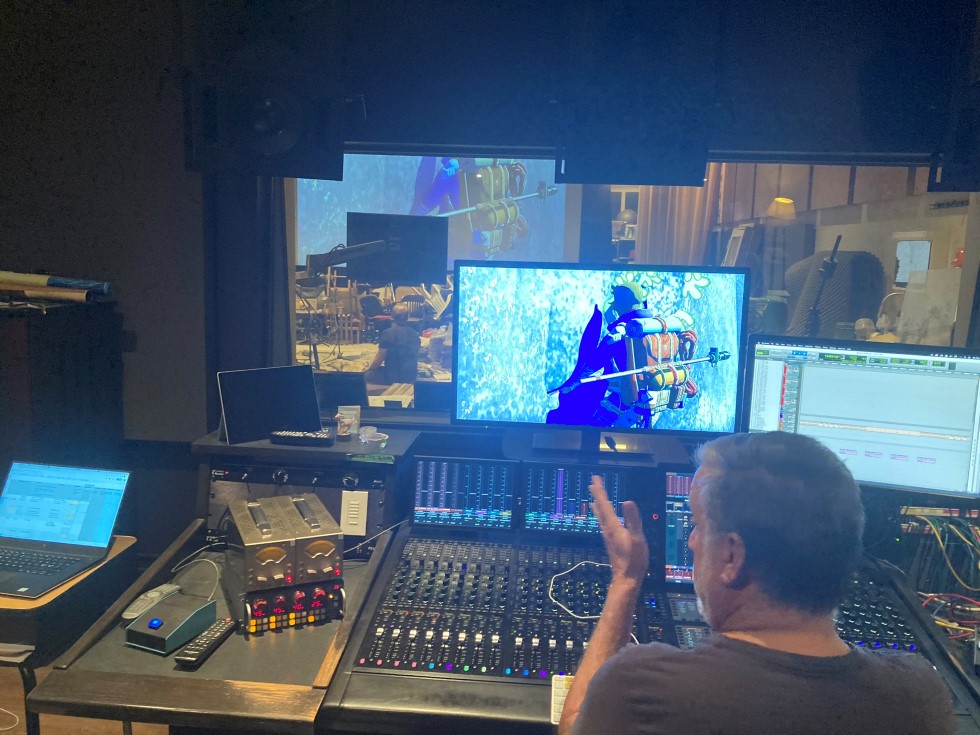
To avoid complete silence in the background, it was tempting to keep the ambience playing at a natural level. But doing so would introduce a reference point, making the climbing sounds feel artificially loud. In other words, quite counterintuitively, the louder we made the background sounds, the louder the climbing sounds would seem. So finding the sweet spot where the background sounds were neither too silent nor too loud was quite challenging.
To further emphasize the perceived intimacy of climbing, we made sure that environmental sounds such as waterfalls, birds, and the Climbot are primarily audible when within the player’s frame of view. This approach also helped create variation and prevented sounds from becoming fatiguing over time.
What have you learned while working on the sound of Cairn? How did your experience on this game help you to grow at your craft?
LJL: For me, it was the first Dolby Atmos project that I have worked on. Being on that learning journey together with Martin on this project has led to a lot of interesting discoveries and opened some amazing discussions about how 3D audio and Dolby Atmos can be utilized for video games in general.
Also, it has been challenging to design sound for a game where the audio is a driving gameplay signifier. It creates a whole new set of mix problems, where the mix always needs to give room to the sounds that the player needs to hear. I remember being a bit baffled by how much harder I found the gameplay the first time I climbed beneath a loud waterfall. Loud environmental audio emitters can quickly feel like a sort of boss-fight from how much harder the game becomes if the breathing and foley are drowned out in the mix.
A big thanks to Martin Stig Andersen and Lukas Julian Lentz for giving us a behind-the-scenes look at the sound of Cairn and to Jennifer Walden for the interview!