






The Blood of Dawnwalker - Rebel Wolves’ first game - is set in Vale Sangora, a mysterious region where ancient vampire Brencis has taken control, and protagonist Coen wields witchcraft by day and vampiric powers at night.
The game is a massive hit, and I'm thrilled to give you the exclusive A Sound Effect story behind its intense sound - told by audio team members Alexis Meyer, Austin Shannon, Denis Grigonis, Agnieszka Kondek, Tomasz Kaczor, Hanna Kubiak, Dominika Gonsierowska, and Nikola Kołodziejczyk.
Here’s how they designed the whispering sounds of blood hunger, perfected the sounds of combat, built unpredictable dialogue scenes, got creative with birds, alligators and lions for creature sounds + why there are gunshots in the menu sounds & TONS more. Happy deep-diving!
Interview by Asbjoern Andersen, images courtesy of Rebel Wolves
 New ReleaseNOVA by Mattia CellottoWATCH VIDEO →
The Blood of Dawnwalker – Launch Trailer
In this interview: Alexis Meyer (Senior Sound Designer) • Austin Shannon (Principal Sound Designer) • Denis Grigonis (Sound Designer) • Agnieszka Kondek (Cinematic Producer/Localisation Producer) • Tomasz Kaczor (Senior Sound Designer) • Hanna Kubiak (Lead Audio Designer) • Dominika Gonsierowska (Lead Localization Producer) • Nikola Kołodziejczyk (Lead Composer)
The Blood of Dawnwalker is Rebel Wolves’ first game, giving you a blank slate to start from. What were your ambitions and sonic visions for the project?
Alexis Meyer (AM): I think above all, we wanted to support the narrative in every possible moment. Whether that be through the music, sfx or dialogue, we knew that telling Coen’s story properly was the most important part of the players experience, so rather than focusing on ambitious audio systems, or chasing industry trends, we made most of our creative decisions in terms of supporting the story in the most direct and efficient way possible. Due to the ambitious nature of the project and it being our first game, we didn’t have the luxury of having the refined tools and pipelines we might have been used to, so simplicity and efficiency was critical in order to achieve our goals.
Hanna Kubiak (HK): Although Coen’s story is quite far away from reality, we wanted to build a realistic sounding world with all its dirt, flaws, rawness and simplicity but mostly we wanted to support the narrative perspective and Coen’s story as one of our main audio pillars. Except for a few moments in the game when another POV was more important, our goal was to always show all the experience and emotions directly through Coen’s ears and eyes.
In the game, ancient vampire Brencis has taken control of Vale Sangora, and people there live under vampire rule. What did you want a place like that to sound like?
AM: Right from the start, looking at the concept art and seeing early asset iterations, it was clear to us that it was going to be a dark and oppressive world, and the atmosphere needed to reflect that. But we also wanted to strike a balance, because this story happens in our own world, so it also needed to feel grounded and realistic, not too far into the realm of fantasy. Konrad Tomaszkiewicz (Game Director) and Mateusz Tomaszkiewicz (Creative Director) also had a very clear vision and ideas about how certain characters and places should sound which helped to guide us towards a more cohesive universe.
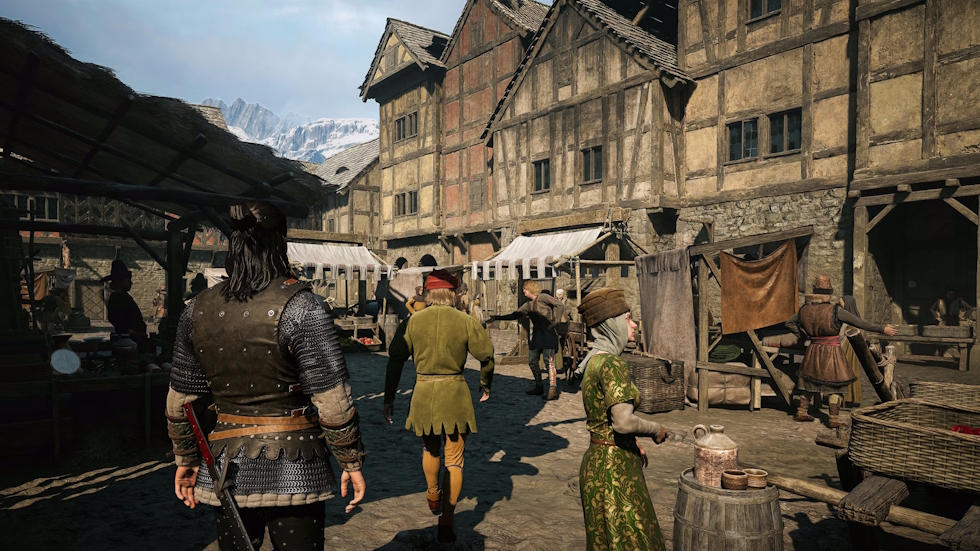
Coen is the main protagonist, and his life is split between day and night. What was your approach to the two soundscapes – and what happens to the sound when the sun goes down?
AM: In terms of ambience, we wanted to amplify the sense of danger at night, since that’s when vampires come out. During the day things sound peaceful and relaxing, but at night you can hear distant wolves, occasional guards shouting, and the forests start to shift from being warm and inviting to creepy and unsettling. Initially we played with amplifying Coen’s hearing dramatically at night, but the player spends a lot of time as a vampire and the effect could become annoying over long periods so we dialed it back considerably in the end.
HK: I remember when I first started talking with Konrad Tomaszkiewicz about the duality of our world in the game and how it should affect it sonically, he mentioned he would like to have this feeling that Coen is able to hear spiders crawling in the forest during the night with his vrakhiri hearing. Obviously we didn’t go into that level of detail, it would be quite a challenge to tame, but I think Alexis did an amazing job with selling this unnerving feeling that the world around us is more alive and that our senses are indeed enhanced during the nighttime.
Austin Shannon (AS): We were also able to record two sets of grunts for Coen, one for human form and another for vampire form. Will de Renzy-Martin was able to add some extra grit and character to the vampire versions that really help sell the primal aggressive nature of Coen’s darker side.
HK: Yeah, sessions with Will were amazing – he was always full of energy and ready to give even more with all his performances, it was really great to see him finding this animalistic, wild and raw side of Coen, we were constantly checking how his performance as Coen-vrakhiri sounds like compared to his human voice and every time the difference was simply amazing.
What went into the sounds for Coen’s vampiric abilities, like Shadowstep, walking up walls, the claws and the wolf? Which were the most fun to design?
AS: I think one of the first sounds in this area that we wanted to nail down was the shadowstep. This is a core traversal mechanic in the game and is used in some form by all of the Vrakhiri as well as many other creatures. There were some challenges in making this sound, as we wanted it to sound satisfying and powerful, but also keep it from being too overbearing or distracting. We tried a few different versions before settling on the final one – we even tried going the other direction, making it very subtle and stealthy. After all, Coen is a creature of the night and should move around mostly undetected, but we just lost that feeling of using a powerful ability and the satisfaction of having that burst of energy upon teleporting. So we ended up opting for the more aggressive version, and sacrificed some of the realistic stealth some may expect for an ability like this.
For the wolf, I started with the same palette to give it a similar feel, but with a bit more of a twist to accentuate the smoky transform VFX. Also, we use a TON of whispers in this game. We didn’t want to overuse them, but at the end of the day they were that one element that kind of ties everything together and gives it that dark occultist vibe we were looking to maintain across the project.
I think that the most fun ability to design was the Planeshift (wall walking). This was one that just came together really quickly on the first pass and just felt right. I wanted it to have weight and the feeling of some energy sucking you to the wall, so I went with a sound with a slightly tonal sound with a lot of low end to give it weight. This approach also helped it not get in the way of the other foley and locomotion sounds of walking or landing on the wall.
Coen’s Blood Hunger grows if he goes too long without feeding, and can cause him to lose control and feed on people nearby. How did you warn the player through sound – and what went into the feeding sounds themselves?
AM: We knew that blood would be a huge part of any vampire game, and blood hunger is one of the coolest areas in which to explore that part of the audio palette. Austin made some awesome beds and textures for the blood hunger which modulate dynamically based on different parameters. We also used whispers to add additional feedback. As they fade in, they begin to coax Coen into giving into his hunger and when he drinks he gulps deeply and without hesitation. Finally when he is satiated and releases his fangs, the whispers let out a satisfying “ahhhh” much like I do after a particularly refreshing beverage.
AS: There were some challenges in adding a persistent looping audio cue that lets the player know they are in a state of blood hunger. We wanted it to be there as important gameplay information for the player, but also not have a persistent oppressive sound that would be fatiguing. We solved this not only by designing the loop with lots of variety and modulation but also by implementing time based attenuation – once the player goes into blood hunger it is very apparent and audible, but as time goes by we slowly bring the level down so it’s no longer reaching for the player’s attention and kind of just sinks into the overall game soundscape.
There’s one related thing that our amazing Senior Technical Sound Designer, Mario Crespo, did that I think is really cool. When we drink alcohol and get ‘drunk’ there is a fullscreen effect that turns everything wavy and distorted. Mario ended up adding some wobbly pitch modulation to the music while in this state which I think adds some really fun detail.
Tomasz Kaczor (TK): We also have another cool gameplay mechanic called Astral Communion – our dark magic ability that allows players to speak with the dead – the primary focus was creating a distinct acoustic signature that instantly sets it apart from standard dialogue interactions. The goal was to make the mechanic feel heavy, mystical, and deeply atmospheric.
Both waking spirits and releasing them back to their rest are anchored by ethereal, breathy stingers fused with reality-bending sub-impacts and sharp transient layers. Throughout the entire communion, the dialogue is underlaid by an evolving bed of spatialized whispers, giving players subtle, continuous feedback that the psychic channel is active without ever cluttering the dialogue and music mix.
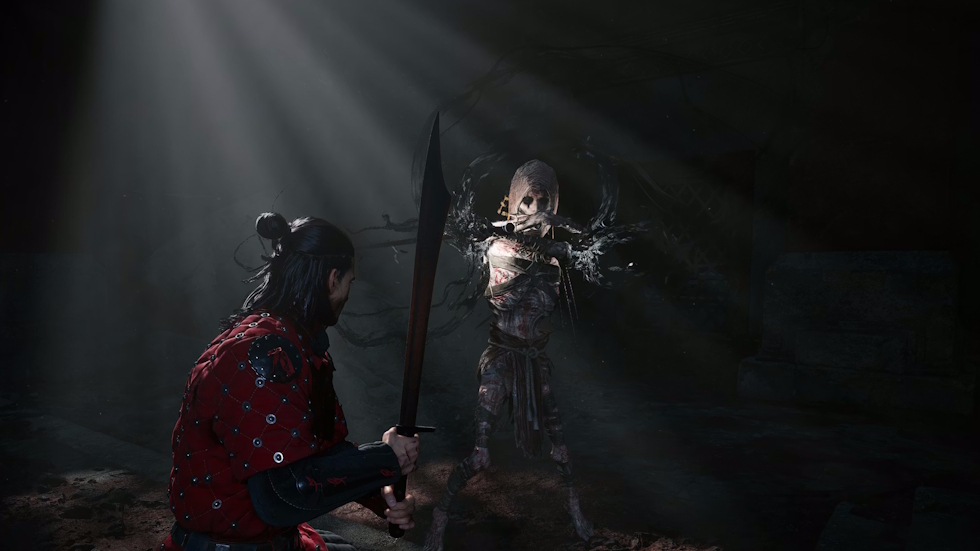
What was your approach to the sounds for the swordplay? The fights depend on direction and timing, so how did you make a parry, a block and a clean hit sound differently?
AS: This was one of the systems that we worked on quite a lot with our directors and design leads to get just right. Once the directional blocking features were starting to take shape we realized that audio was going to play a crucial role in providing feedback to the player.
We ended up dividing the weapons into the following categories: impacts, omniblocks, directional blocks and perfect parries. We have something like 12 weapon types which all need a custom set. Since we have more than just flesh-based enemy types in the game, we wanted to make sure that there are distinctions based on what kind of body we are impacting. We ended up settling on three different body types: flesh, ethereal and undead. Every weapon also has a normal impact as well as a larger, more cinematic impact that we use for special attacks and weapon art combos, as well as some other special categories for finishers, killing blows, dismemberment and decapitation. We separated the weapon sounds from the body impacts with the intent of making things as modular as possible, so they could be procedurally combined depending on the enemy body type, the player weapon type and the intensity level. I think we really pushed the amount of visceral gore in this game which helped sell the viciousness of combat, we were not shy with our use of blood.
For blocking, we also wanted to give the player important feedback as to whether they are blocking efficiently or not. If the player does not hold down a direction while blocking an incoming attack, we play an omniblock sound. If they block while holding down the correct direction, we play a directional block sound. We tried to distinguish between these two by making the omniblocks more messy with some extra clangs, slides and rattles and kept the directional blocks more solid with a single satisfying clang with a bit more low end body than the omniblock.
The perfect parry took many tries before we landed on what you hear in the game. I think this is one of our most ‘gamey’ sounds in the game (this and some of the combat healing abilities). We wanted to keep the game’s sonic identity grounded in the dark fantasy aesthetic, but this was one area where we felt like we had a bit more leeway to stray into a more stylized/gamefied territory. This sound needed to really give the player that awesome feeling of timing something just right and I think we ended up with something that works really well. We have three weapon categories that each need their own parry sound: blades, claws and unarmed. Although they all share some common layers between them (a stylized drum impact and a filtered synth transient) we realized that we would not be able to use the main blade based parry for everything. The blade based one has that characteristic feeling of blocking metal with metal and worked great for this case, but for claws it didn’t really feel right to have a giant metal-on-metal ding. However, since the claws also lean heavily metallic we were able to drop the ding and use some more scraping/shinging type layers that give the player the sensation of grabbing a sword with the claws and throwing the attack to the side.
The most challenging parry sound to get just right was the unarmed version. Coen can not only fight with his fists whenever he chooses, but if he fights an animal or an unarmed creature, he will not use his equipped weapon to parry – instead, he’ll parry with a kick, since these creatures don’t have blades to clash with. The directors wanted the unarmed parry to feel more like an attack, and also wanted to retain that exciting feedback that the metallic layers were providing but without using any metal. I think I went through dozens of iterations for this, trying all kinds of approaches with extra reverb, whooshes, explosions, bells, extra foley, syncopated impacts, etc., but in the end we ended up with just using a beefed-up version of the fist impacts along with those subtle layers that exist across all perfect parry categories.
Witchcraft is Coen’s daytime magic, and at night he has his vampiric powers instead. How different did you want the two to sound – and how did you accomplish it from a design perspective?
AS: We wanted to distinguish these two but also keep them kinda close in aesthetic. For a lot of the witchcraft things we took a more ritualistic or demonic approach – incorporating processed chanting and vocals for many of the elements. We tried to refrain from using too many whispers since we had already heavily associated them with the vampiric abilities. Also, another major component that helped set the vampiric abilities apart was the use of lots of gloppy and viscous blood sounds.
HK: All magic shown in our game comes from the same place and from the same entity. We wanted to highlight this connection and certain common elements, but at the same time we wanted to maintain an utterly different character of vampiric powers and sorcery. With the whispers we wanted them to feel almost like sentient beings trying to convince Coen to embrace his more violent, darker side, pushing him especially during more challenging moments yet with sorcery it was clear we needed to emphasize its ritualistic and grounded character and nature.
AS: We also have a lot of these short jump scares all over the game. They give us these quick but intense windows into where Coen’s powers are coming from and the design of these really helped shape the sonic aesthetic of this other realm. They were a lot of fun to work on and I ended up leaning heavily into processed screams, distortion and tonal glitch-like elements while really pushing surround panning modulation to make them as brutal and immersive as possible.
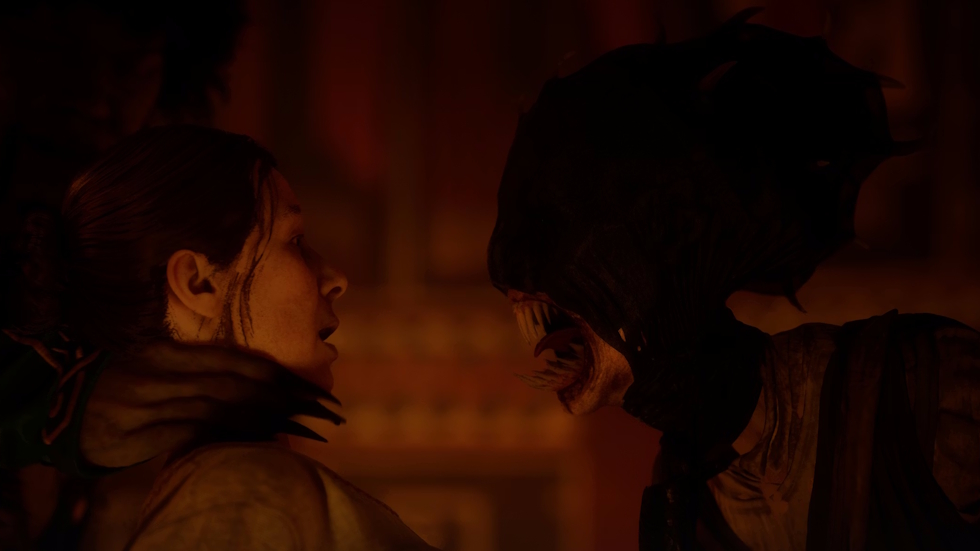
Can you talk about the sounds for the monsters, for Brencis and the vampires around him – Xanthe, Ambrus and Bakir? Were there any that were particularly challenging to get right?
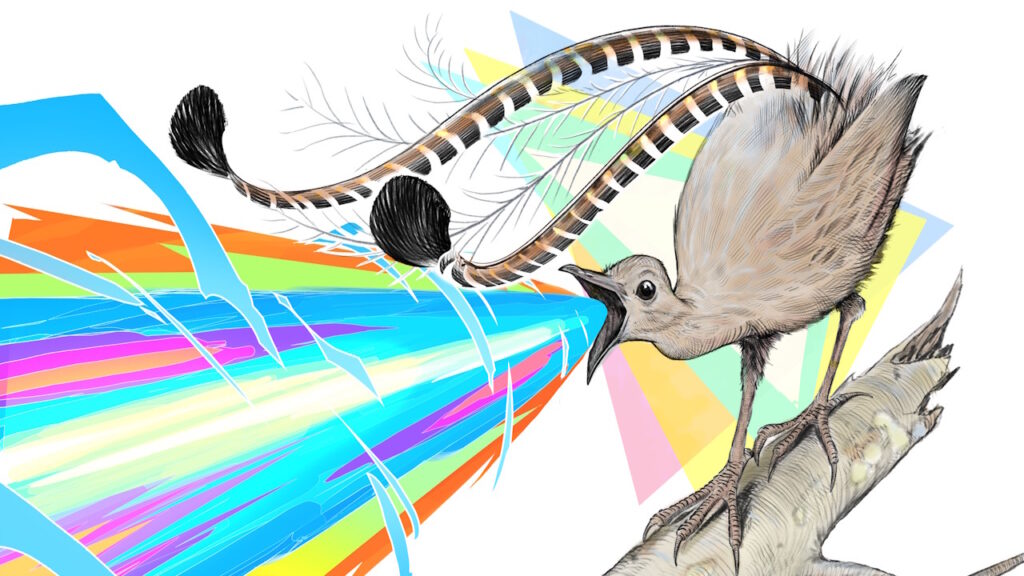
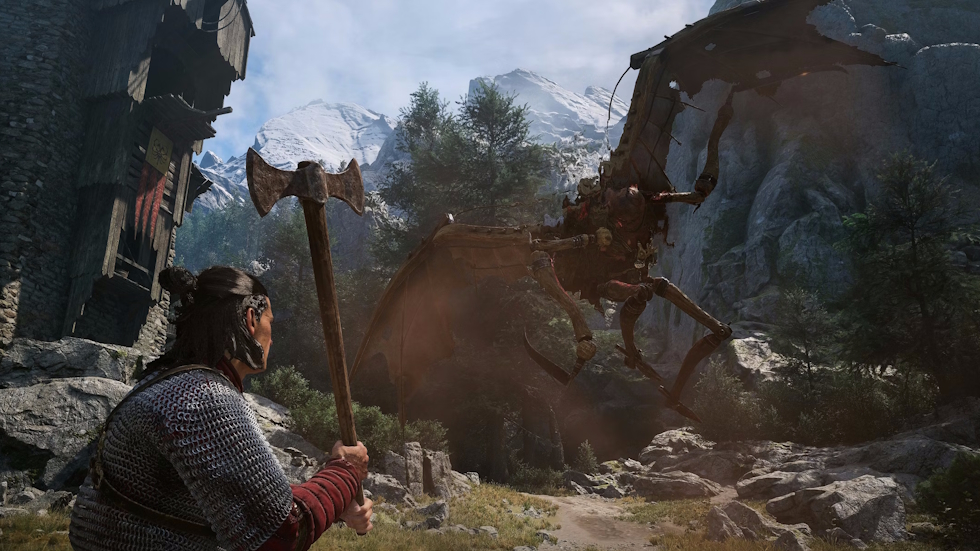
AS: Regarding the normal creatures, we took quite a typical approach for most of them seeing as they are either real creatures or aberrations thereof. We have normal dogs and wolves, but we also have their counterparts that are vampiric or undead. For these we made sure to keep the spirit of the core animal there but also gave them some of that extra demonic flavor that let the player know these are not normal creatures. We have a giant Tatzelwurms whose vocalizations were made by morphing random bird screeches with other animal sounds like alligators and lions. The Gargoyle was really fun to work on as he stands out quite a bit from the others in basically being a type of golem. I was able to get pretty creative when designing his wings and movement sounds by using some great recordings of things like ropes, metallic and wooden creaks, pulleys and wooden gears. I took all of these layers and stacked them together and modulated each track differently and then fed that output into one of my favorite doppler chains using The Whoosh in Reaktor. This gave me a ton of glued together gestures that had a cohesive motion that I was then able to easily edit into his movement set. For the bosses we split them up between a few designers and I think it really helped in making each one stand out as having its own identity. Shoutout to Camilla Coccia who designed Ambrus, I think she did a stellar job with him and I especially love the way his clones sound as they spawn in near the player – she used some really cool reverse reverb on their attack grunts that just worked so well. However, I think the most involved boss would of course be the final form of Brencis. At this point I had a solid palette of blood and astral magic to employ in designing his abilities and this one actually came together pretty quickly with little iteration.
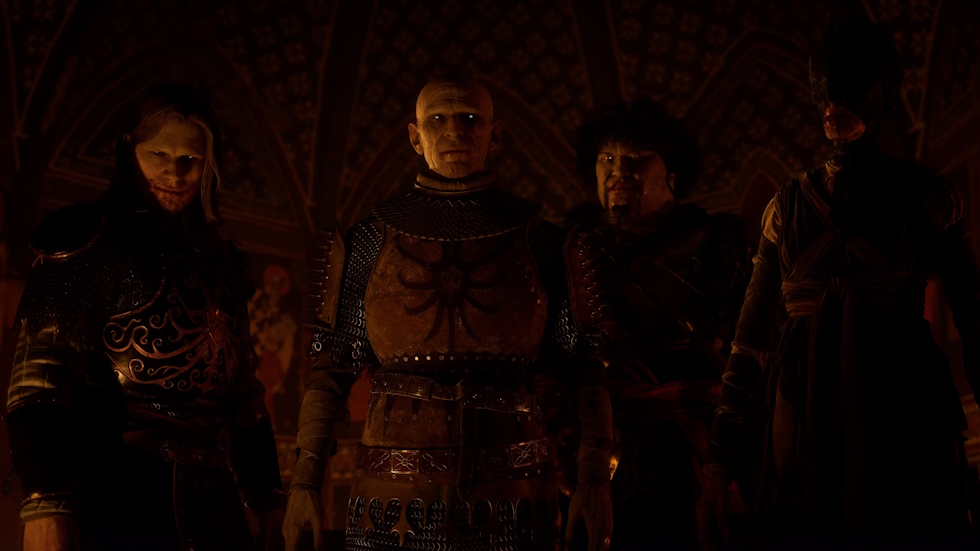
Vale Sangora has everything from forests and swamps to mountaintops and medieval settlements. Can you talk about designing the ambiences? Do you have a favorite location when it comes to sound?
AM: One of the things I always aim for when creating ambiences is to recreate that relaxing, almost ASMR-like effect that nature has on me. When I successfully capture this element in a design, I find the result to be deeply immersive. Part of the creative exploration in ambience was playing with the contrast between grounded and natural ambiences vs otherworldly, dark and unsettling ones. In some locations Vale Sangora is a perfectly peaceful and quaint sounding place, while others mirror the violent and unsettling nature of the monsters that occupy them. One of my favorite places is probably the St. Tyna convent. It’s as though a portal into some demonic dimension has opened and the combination of the lighting, ambience and music make it one of my favorite places in the entire game.
There’s a lot of 14th-century clothing, armor and props, and Coen doesn’t always move like a human. What was your approach to the foley?
HK: We wanted the Foley to sound as natural and realistic as possible, so I knew we had to work with the best studio in Warsaw. I’ve reached out to Jacek Wiśniewski, Foley Artist, from Dreamsound Studio with whom I’ve worked in the past for other game projects. Dreamsound has a gigantic Foley stage with a pool and thousands of peculiar sounding props – it always feels like heaven when I’m there, especially when I’m trying to guess what props Jacek is using while he works. He’s truly the best Foley Artist I’ve had the pleasure to work with, having extraordinary skill for always finding the right sounding items. Regarding Foley itself we used a vast variety of natural clothing pieces authentic for people who live in Carpathian regions but at the same time we’ve recorded lots of additional accessories like belts, buckles, chains, jewelry, just to make sure we would have plenty options to pick from when creating our granular Foley system. We were focused on delivering the most flexible system covering all characters so we recorded all sets of sounds for many main clothing materials based on the character and speed of the movement. To make sure our characters would not sound too bland but that they would have many additional sounds depending on the attire they would wear, we’ve recorded so many different layers. When we’ve started we’ve been recording for few days straight – Foley, sound pallets for individual characters (like all those beautiful wooden creeks and ropes for Gargoyle – that was actually Jacek’s favorite design and it was quite obvious he had so much fun finding the right sounding props for Gargoyle’s torso, its wings, all the wooden elements showing its weight, massiveness and quirky but lethal character).
Are there any sounds in the game where the real sources would surprise people?
AS: For me that would be the vocals of the Gargoyle. When I started this creature, Hanna gave me some resonant vocal recordings of herself that she did through some large tubes. They had this really cool derpy, breathy quality to them and I ended up processing those to get his grunt set. I think at some point near the end of the project I mentioned this to her and she laughed. I think she totally forgot that she made those recordings and found it funny that this giant creature is based on her voice.
HK: I think it was when we were mixing game in the office and I thought ‘well, he [Gargoyle] sounds familiar!’. I recorded those sounds using some really long cardboard tubes but the most interesting were vocalization made through the silicon sleeves of BKR water bottles – they were a bit wider and they had this nice reverberation to them. I made those recordings after conversation with Mateusz Tomaszkiewicz about Gargoyle and I thought it would be really cool to try to catch this impression of a person sealed inside Gargoyle’s torso – breathing, struggling, in a trance, unconscious with some unhuman element to it. Austin completely nailed this design.
As for other surprising sources – I really love doing recordings, I recorded myself for a few other monsters in our game, but I think the most surprising might be Murron’s voice – I was so tired after recording him and his unhinged, animalistic vocals and breathing. When I record I try to mimic all the emotions and psychically moving like the character really helps to sell the audio performance, so people in our office were surprised by seeing me in audio room crouched, waving my arms, baring my teeth, clicking, smacking my lips like a maniac and doing all weird screams and vocalizations I could think of.
The game has full voice acting in six languages. Can you share the story behind the dialogue work, from casting and direction, to actually getting the performances in the game?
Agnieszka Kondek (AK): English is our primary language for writing and recording, so getting the audio right was huge for us. Back in 2024, we teamed up with Bigmouth Audio – a small independent studio – and honestly, we hit the jackpot. Instead of treating them like an outside vendor, they genuinely became an extension of our Pack, with daily direct contact.
Casting the main characters went smoothly because our directors had a clear vision of what they wanted to achieve. Some actors nailed it right away – like Will de Renzy-Martin, who plays Coen. He slipped into the role so naturally that we barely needed a voice director in the booth with him. He was so dialed in that he would even spot and fix narrative script issues on the fly.
For the rest of the roles, Bigmouth handled the heavy lifting, bringing in amazing talent that fit right into our budget constraints – we had just 40 English actors covering every character in the game, compared to other games it’s a small number. The main recording phase was of course intense, requiring us to break sessions down into multiple batches as content was finalized. All in all, we logged about 650 hours in the booth, with our team involved in every session to keep everything as aligned as possible.
Dominika Gonsierowska (DoGo): The idea of recording a game as huge as Dawnwalker in six languages – alongside nine additional languages available in text only – and having all of them ready for release is an ambitious task for a new studio launching its first project. And still, we wanted to go further than that.
Our aim is for players who choose a language other than English to forget that the game has been translated and dubbed. We want them to become fully immersed in the experience. To achieve that, we needed studios with high quality standards and, on our side, a very hands-on approach, as managing such a huge volume of non-linear dialogue can quickly become overwhelming (kudos to our amazing localization producers).
The process always starts with a great translation. What looks good on paper may still not be enough for recording, as spoken sentences need to maintain the right rhythm and tempo. Then we choose the right voices and start recording, which is a long and demanding, but also incredibly creative and rewarding, process.
Finally, we move on to constant refinement. Our testing team listens to the voices as they are implemented into the game and, for the first time, hears them alongside the actual dialogue, context, and interactions. This is where we often discover details that need adjusting: a piece of context that was lost, a character’s motivation that was misunderstood, or an emotional delivery that doesn’t quite fit the scene. We want to catch every one of these issues and iterate until the experience of playing with a dubbed version feels completely natural and immersive.
Another idea that is always on our minds is adaptation. Of course, we use the English version as the foundation, but every region has its own acting traditions, standards, and emotional range. That’s why our goal is always to achieve the most natural result possible for each individual language and market.
TK: Beyond the VO aspect itself, our non-linear structure forced us to rethink how audio supports dialogue. In The Blood of Dawnwalker, a conversation is rarely just two people talking – it’s an active, unpredictable gameplay state. A seemingly peaceful dialogue scene can instantly spiral into violence, dark magic, or a desperate moment where Coen’s Blood Hunger takes over and he feeds mid-conversation.
Because of this branching reactivity, we treated every dialogue scene with the same meticulous SFX polish usually reserved for linear cinematic cutscenes. No action – whether it’s an on-screen confrontation or a subtle off-camera gesture – was left without bespoke sound support.
To pull this off seamlessly, we used a hybrid approach. We relied on our dynamic systemic foley for natural character movement and clothing, but layered it with custom-designed sound passes for unique quest beats – capturing everything from subtle gestures, detailed foley take-ups, and dynamic interactions to the visceral, heavy impacts of sudden combat or feeding. The goal was to ensure that no matter how a player steers a dialogue, the physical reality of the moment feels absolute.
The Blood of Dawnwalker – Characters and Voice Actors
Did you capture custom recordings for the game, like field or prop recordings, or anything built from scratch? If so, were there any you’re particularly happy with?
AS: Unfortunately we did not really have that much time to dedicate to recording; we were always under time constraints to just get sounds in the game. However, there were some fun things I did record, like all of the material sounds of looting items, small objects for the UI and various vocalizations needed for creatures. We also all recorded a bunch of whisper sounds and ended up making some folders and sharing all of the recordings that fed into the palette designs.
Denis Grigonis (DG): Personally, when I was working on dialogues or cutscenes, I found having a portable recorder by my side very handy. Some of the dialogues had subtle scenes, like fingers being pushed into a bowl of blood or touching skin. Sounds like that aren’t that common in commercial libraries, or if they are, getting the exact result I wanted through editing would take much longer than just recording myself performing the action on screen.
HK: Just like Denis I’m trying to record whenever I have the opportunity. I use pcmD100, pair of 8020s and kmr81i. For swords and claws I’ve recorded lots of kitchen appliances, metal tools, knives from my home and all of our knives from the kitchen in our Rebel Wolves’ office because they had surprisingly nice scrapes and rings to them. I did quite a big session for whooshes for weapons, recording all sorts of sticks, poles, branches and rackets which is always great fun. Personally I really loved the session where I recorded all sorts of metal bowls from my stand mixer, metal for plant pot covers from my home and some metallic slicing discs from food processor I had at home – I used them for some of the attacks for Undead and Mare and their special abilities because those sounds have this unusual, otherworldly rings to them. I was trying to record whenever I could and once when I was making gyozas at home I had to make a break and record sounds of the stuffing – cooked vegetables, sesame oil but most of all thicker glass noodles which were making this wet but springy slimy sound, which was pretty different from regular pasta I recorded in the past and was perfect for some monstrous, gory sounds.
Were there any indie sound libraries that came in handy in getting the game sound right?
AS: We have a quest in which a pig is a major character and we could not have done that guy without the Pigs library from The Recordist. We also used Boom Library extensively for the sword sounds (among many other things).
HK: For impacts and combat sounds I really like using Tonstrum libraries, they have amazing fight sounds and for anything gory I’m always tempted to use their Gore and Slaughter library – it’s full of amazing sounds and I really love their textures and naturalistic character. We used a few indie libraries as well and my favourite were sounds from the library for European mountains and animals by Ivo Vicic.
The score is a collaboration between five composers, using folk and period instruments alongside the orchestra. Can you share the story behind that collaboration?
Nikola Kołodziejczyk (NK): We approached the music with reverence to historically informed solo performances, and tried to capture a very intimate, characterful and sombre tone of the start of the game, while opening the palette in sync with player actions and the story unraveling. We opted for an unusual orchestra setup that was naturally geared towards low-end character and low-volume playing – instead of a massive brass section we employed contrabass clarinet, contrabassoon, bass flute, basset recorders, manual portative organ, wagner tuben instead of french horns, basset horn instead of clarinet, and so on. On top of that we recorded folk instrumentalists in situ – playing live with the orchestra, so that the three-dimensional effect of a real recording will be preserved. So instead of string quintet tightly packed near the decca tree our first responders were baritone violin, bass flute, singers and various string instruments – Płock fidel, Kemancheh, gheychak, bilgorean suka (suka biłgorajska) and baritone violin among others. We collaborated with folk virtuosos: Karolina Matuszkiewicz and Kacper Malisz and facilitated performance-first philosophy to making sketches, so we could retain the emotion of the raw performance better, without heavily relying on bigger ensembles to fill the gaps. We tried to get as minimal as possible in terms of instrumentation on exploration pieces, so we could really open it up as a reward later.
Five composers in question are three inhouse ones: Nikola Kołodziejczyk, Adam Jędrysik – our cinematic composer, and aforementioned Karolina Matuszkiewicz, joined by legendary polish composers Piotr Musiał and Mikolai Stroinski, who contributed key character themes to the game. Each composer has his own style, so making it cohesive was done by carefully matching the pieces with the artist, so each one could be tailored to their sensibilities, and secondly – the unifying element was Karolina, who uses 4 different singing techniques, and plays the majority of soloistic parts. Getting one master performer to interpret the music glues the ideas really well. For the orchestra we collaborated with AUKSO Chamber Orchestra of Tychy – an exceptional ensemble that has the vigor and rhythmic cohesion of a small virtuosic string quartet but delivers it in a much more voluminous chamber orchestra coat. We also used the help of Atom String Quartet in more direct, punchy feel of combat pieces, and some pastoral, intimate themes (Anca Theme etc.). The music was recorded and mixed by Błażej Domański in Studio 7 Piaseczno. For the orchestral recording we also used custom made microphones that gave us exceptional clarity and dimensionality to the recording without extending the size of the ensemble. It was also recorded on location in a concert hall in Tychy, using a massive array of Neve preamps and a custom remote recording system, to further help define the character of the music with the specific hall ambience.
Personally, I’m very glad that in this production we were able to value the folk contributions in a way that is not traditionally done, and I hope this will become a standard in the industry in the future. Not only featuring folk instrumentalists, but also fully crediting them with composing credit, where the melodic component of the piece is sourced from them.
Lead Composer Nikola Kołodziejczyk conducting the game's main theme
What was your approach to mixing the game, and how did you strike a balance between music and sound design? How does the mix change between quiet exploration, stealth at night and full combat – and what were your biggest mix challenges?
AS: The mix was a bit of a challenge since all of the elements didn’t really come together until the very end, and we ended up having to do our “final mix” way before we were even done with content. Also, since we are all (mostly) remote, we had some extra challenges when it came to big decisions. Fortunately, we were able to get together for one week in the same space to do our “final mix” pass, but one week was just not enough time to play through all of the content in the game. Knowing that we would be strapped for time from the beginning, we took the mix-as-you-go approach, being careful to keep the mix in mind at every step. We defined some broad category levels for things like exploration/combat music, player abilities and enemy SFX, and premixed these categories as they went in, using references. This allowed us, near the end, to make broad-stroke changes to categories, and kept us from getting too granular with level changes.
We treated dialogue as king and made sure to mix everything around that. Being a narrative-driven game with all the amazing writing and performances, we knew we wanted to keep dialogue in the spotlight at all times. Since we had great recordings from the start, it was easy to get all the dialogue sitting in the right spot and make all subsequent mix decisions in relation to it.
Regarding dynamic mixing, we did not implement anything fancy like Wwise’s HDR, and tried to keep things as simple as possible. Most of our broad-stroke mix changes came from using states and lots of sidechaining. Keeping the mix focused during large battles, with multiple enemies and allies all fighting at the same time, was particularly challenging. With the help of one of our audio programmers, Tomasz Dietrich, we were able to build out a system where we are determining if Coen has locked onto an NPC, or if an NPC is attacking Coen. If neither of these is true, then we attenuate all sounds coming from that character. Unfortunately, this feature did not make it into the game from day one, but it’s something coming in a new patch soon, and we feel it really helps create more clarity during larger battles.
Also, since we have a fully dynamic weather and time system, we had to make sure that any particular weather scenario would work with music. We ended up driving music volume based on rain volume, so that when it’s raining hard, we boost exploration music to keep the balance retained.
One particular challenge was the otherworldly realm we travel to, Anachora. This space was unlike anything else in the game world and had its own set of challenges, seeing as there was a lot of activity drawing the ear – we have giant tornadoes, thunder, ethereal monsters in the distance and lots of wind. Keeping clarity and intelligibility here was a bit of a challenge, and we ended up relying heavily on states and ducking.
Mix was one area that we really wanted to spend more time on, and players can look forward to some big improvements here in the next patch.
Coen uses his Focus ability to examine a scene and reconstruct what happened. What went into the sound of it?
AS: This was one of the features that was pretty well defined from the beginning. We knew that we wanted to remove most of the audio while in focus mode and only give the player important information, but we also didn’t want to make it feel too empty or dead at the same time. This is Coen using his superhuman senses to extract information from the environment. If we took the strictly realistic approach, everything would just be louder and overstimulating. So, obviously we couldn’t do that, but we also couldn’t have only the specific sound of the clue you are investigating be audible either.
In the end, we filtered music and player sounds, and removed most ambient sounds, with the exception of 3D environmental emitters. We also accentuated certain other categories of sounds – things that were quest-related, important gameplay moments, or, for example, sounds that helped the player find food to quench their blood hunger. We have a lot of other ideas to make this ability more immersive that we weren’t quite able to implement just yet, but we plan on experimenting with pushing this ability even further as we build out our systems.
What can you tell us about the UI sounds, and how you designed them?
AS: This was something I really enjoyed doing – UI is one of those categories of sound design that is almost purely left to the imagination and can really shape the overall sonic aesthetic of a game. From the beginning, I knew I wanted to really lean into the dark esoteric vibe and make the UI sound mysterious, ominous, supernatural and overall shadowy, while still keeping everything grounded. I wanted to make sure every sound would make sense existing in this world and not break immersion for the player.
My first step for approaching the UI was to design a source palette. To start, I put together a session with a bunch of different elements: whispers / chants, impacts / explosions, tonal / magic and clicks / metal.
The whispers all started as custom recordings I did. I then went through them, selecting the highlights and running them through some simple effects chains to give them a dreamy quality. I used these extensively to achieve a smoky, ritualistic vibe as you move through the menus, and they helped tie a lot of the sounds together into one cohesive identity. For the body and attack of the sounds, I ended up using mainly orchestral drums, some processed explosions, and one major element that may surprise most – gunshots. These shots were used in many places where I really wanted to give a UI action an aggressive and satisfying feeling – the inventory equip sound or successfully upgrading an item, for example.
For the tonal elements, I assembled a lot of source material here, mainly using whale, seal and other creature vocals. I then fed them into MGranularMB, among many other things, to push them into abstract tonal territory. I would then take many of these layers and load them into Serum 2’s granular oscillators to push them even further.
For the tactile clicks and textures, I ended up recording a bunch of objects that could be found in our game world – things like parchment paper, leather bags, belt buckles and coins. I worked with everything in one large Reaper session that allowed me to experiment and mix and match different layers while keeping everything as consistent as possible. Aside from designing the source palette, most of the UI designs were pretty light on creative processing. Most of the heavy lifting after the source-palette design phase was done by EQ, reverb, delay and some pitch shifting. There was a good amount of trial and error with UI, some sounds went through quite a lot of iterations as I sat with them or got feedback from other colleagues.
For the HUD notification sounds like level up, corruption increased, quest complete, etc., we started by having our lead composer, Nikola Kołodziejczyk, throw together some musical stingers and phrases. I would then bring in Nikola’s audio and basically embellish the major beats with sound design sweeteners, along with EQ and compression, to make them feel more distinct from the rest of the music. These sounds are definitely a music and sound design hybrid, but Nikola’s musical ideas are at the heart of them.
Overall, the UI was a blast for me to work on, and I feel like I really got to be creative and sculpt something quite spooky. I heard someone say that moving through the UI sounds like interacting with an occult artifact, and I take that as evidence of a job well done.
Can you talk about the sound work on the cinematics? How did you make them sound consistent with the in-game audio, and how did you handle the transitions in and out of them?
DG: Since we already had an established sonic palette for gameplay for example weapon impacts, whooshes and similar elements, my starting point for cinematics was always to draw from that same palette. I think that shared foundation is really what kept the two contexts feeling like part of the same world.
Fun part with cinematics is that they aren’t interactive which freed me from some of the technical constraints of real time gameplay audio and let me lean into a more editorial, storytelling driven approach. I’d take a weapon impact we already had and stack a heavier, bassier layer under it, or push in something more visceral if the moment called for it, more gore, more weight, extra cinematic whooshes timed to specific camera or character movements, and more stylized sword shings that read as bigger and more theatrical
So really, the consistency came from the shared foundation, and the “cinematic” feel came from having the creative freedom to build on top of it pushing things further to embellish storytelling even more.
AS: Regarding transitions, one thing that made our job easier was the fact that we maintain game ambiences throughout the cutscenes. Also, this is one area where doing premixes on all cutscene SFX helped greatly in getting them all into the same space so that we could adjust higher level categories until we dialed them in just right.
HK: The whole team worked on various cinematics and it was always such a treat to listen to their work. Additionally, Tomasz Kaczor did a great job providing the whole team with a library of sounds to use in some repetitive situations during dialogues and cinematics.
Overall, what were your biggest creative and technical challenges on this game?
AS: I must say that our biggest challenge was one of resources. When I started about 1.5 years ago I was worried about even getting a basic first pass coverage for everything. We were basically starting from scratch with a content and tech deficit and had to build most things from the ground up with the deadline rapidly approaching. Since we were a new company, we didn’t have much opportunity to experiment or prototype things and had to hit the ground running with final assets and get all of our systems functioning at the most basic level. Without our awesome audio programmers and technical sound designers, we would have really struggled to get the game sounding how we wanted it – much of the credit goes to these guys.
HK: I think that the most challenging moment for me was making the tough call to fully redefine our audio direction and rebuild our systems and pipelines from the ground up, especially when the whole company was already deep in the production. Taking such a leap meant we also needed to restructure the team to support such vision. I knew that to deliver a game in the quality I would expect we needed unique people with a unique mix of skills and not knowing if I would find them, especially given turbulence in the gamedev industry, was simply scary. But after a lot of searching, reviewing hundreds of CVs, reels and many conversations later we built a truly exceptional team.
What are you most proud of in the game? And what have you learned here that you’ll bring with you into your next project?
AM: I am super proud of what the whole team here at Rebel Wolves was able to achieve on our very first game. I learned that surrounding yourself with the right people and having a strong, well-defined creative direction can really help bring a project together. I joined Rebel Wolves specifically to work on a game with a strong narrative focus, and I’m thrilled that The Blood of Dawnwalker gave me the opportunity to have such a creatively rewarding experience.
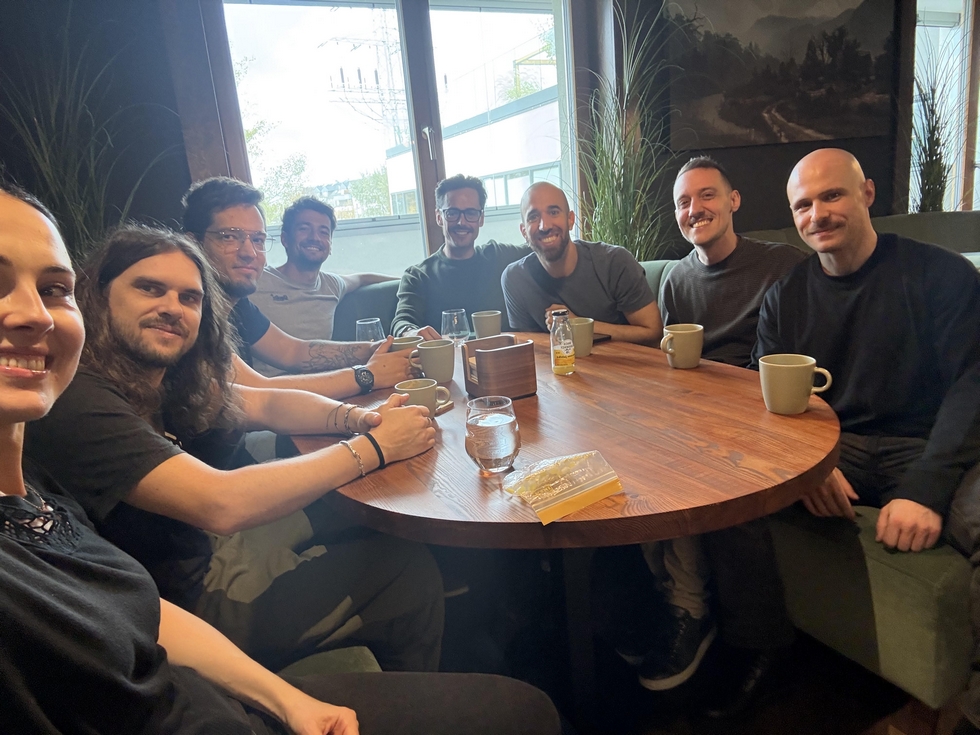
AS: I still have a hard time believing we all pulled off what we did as an audio team with the resources we had. The fact that we shipped a game as large and ambitious as The Blood of Dawnwalker with the time and team size we had is a bit of a miracle in my book and I am extremely proud of what this awesome team was able to accomplish. One of the reasons why I think everything turned out so well is due to this awesome team we have. All directors really gave us the freedom to approach things how we wanted and gave us the ownership and autonomy that allowed us to really pour our heart into this game. This great work culture was a crucial factor that resulted in things turning out as well as they did. I really appreciate the company and team culture and how we work so well together and are always able to support one another in the ultimate goal of making a badass sounding game.
Regarding the future, I think we have laid down a more than solid foundation. As we move forward on future projects I’m confident that we are going to continue to improve on what we did well and push some boundaries on what we could do better. If this team accomplished what we did with the time we had, I can only imagine what kind of amazing things we will be able to do moving forward.
HK: For me it’s always about how well our team works together – they are supportive, open to feedback, always ready to discuss new ideas. They are eager to share their knowledge yet remain completely humble about their work, always giving space to each other but most of all it’s simply amazing how well we click, especially given that we work remotely. As for the future, there’re so many things we would like to change for the better, improve and add, it looks like we’re gonna be really busy!
A big thanks to Alexis Meyer, Austin Shannon, Denis Grigonis, Agnieszka Kondek, Tomasz Kaczor, Hanna Kubiak, Dominika Gonsierowska, and Nikola Kołodziejczyk at Rebel Wolves for giving us a behind-the-scenes look at the sound of The Blood of Dawnwalker!