


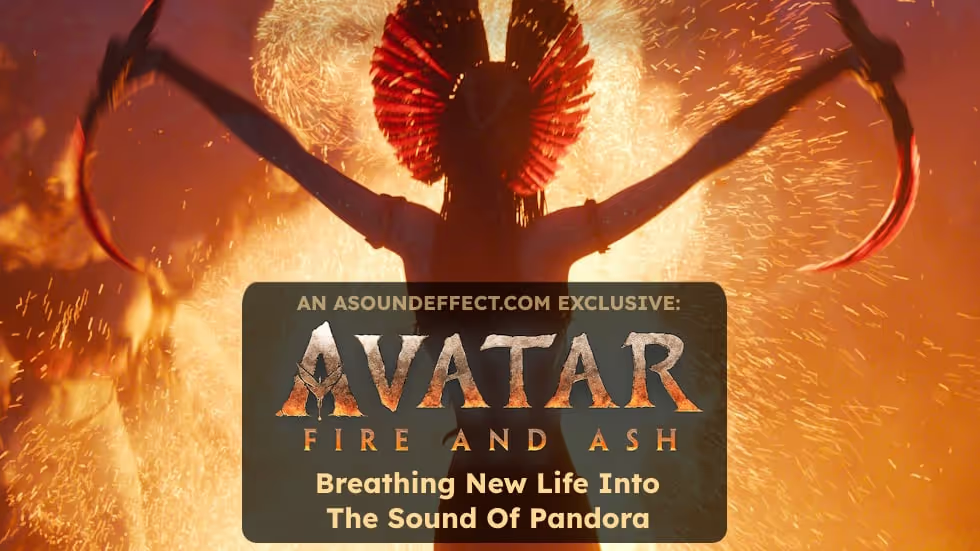
The sound of Avatar: Fire and Ash showcases Director James Cameron’s keen attention to detail. It’s a case study in precision and clarity; nothing is haphazard. Every detail — down to the sound of vines scraping across the top of the camera or the amount of echo and reverb added to a gunshot to convey exact distance and environmental reflection — was finely tuned. The major battle scenes, with action happening everywhere on screen, are carefully orchestrated to draw the audience’s attention to what the director wants to focus on. The ambiences are sometimes divided, with sounds on the left differentiated from those on the right. Dir. Cameron would listen to the individual splits of dialogue, effects, and music to handcraft each moment of this 3-hour-15-minute movie.
To lead the sound team, Cameron once again chose Supervising Sound Editors Gwendolyn Yates Whittle, who has worked on all three Avatar films, and Brent Burge, who joined the franchise on The Way of Water. Since Fire and Ash picks up right after the events in The Way of Water, the sound of the previous film was integral to this one. It was important to keep consistency across the films, so The Way of Way‘s effects tracks were mined for ambiences and creatures that returned in Fire and Ash, used as inspiration for the sounds of the Ikrans and Tulkuns, the Metkayina Village, Kiri’s connection to nature, and the RDA vehicles. Additionally, Yates Whittle and Burge got to explore new sounds for the Ash Village, the RDA tech and gear, the magnetic flux vortex, the Windtraders convoy, and so much more.
Here, they talk about shaping the sound in music-driven scenes, like Kiri’s “miracle” moment with Spider, building a ‘breaths and efforts’ library for each character using the production recordings, creating immersive sound moments for the IMAX 3D and Dolby Atmos formats, and much, much more!
Avatar: Fire and Ash | Official Trailer
Dir. James Cameron has created an incredible world for the Avatar films. Let’s talk about world-building through sound. You’ve both worked on the previous Avatar film, The Way of Water, and Fire and Ash picks up in the immediate aftermath. Was there anything new you wanted to bring to the sound of the Metkayina Village? Were you able to reuse elements you created for The Way of Water for this location?
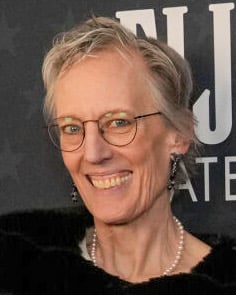
Gwendolyn Yates Whittle (GW): I worked on the first Avatar film, and that’s where all the forest sounds came from, and on Avatar 2, where all the bespoke aquatic sounds were created. So in this, Avatar: Fire and Ash, they’re in the forest, and they’re with the reef people. So we based our sounds on both of these films. Chris Boyes is the genius sound designer who originally created the feel and the sound of the planet.
Jim [Cameron] designed the creatures of Pandora using real animals for inspiration, to look like a horse or look like a barracuda, but different. So all the sounds had to be rooted in something that could plausibly work on our planet, but with a twist. So there was always a biological reality in the way they look and how they sound. So we used the elements that Chris Boyes made for Avatar 1 and 2, or David Chrastka made for The Way of Water, as a launching pad for Fire and Ash because it had to clearly match what happened before; it had to feel like Pandora, but with a twist. Brent and his team added the twist.
Brent Burge (BB): It’s exactly right what Gwen said about the biological imprint of everything. As much as Jim is a fantasist about the world, he’s also rooting everything in what we are familiar with. Having established the world of the Metkayina Village in The Way of Water, the last thing Jim would’ve wanted was for people to come into Fire and Ash and hear something completely foreign. Because the film picks up so soon after the previous one, he wanted everyone to immediately feel comfortable with what they were hearing, as something familiar they knew belonged to that world.
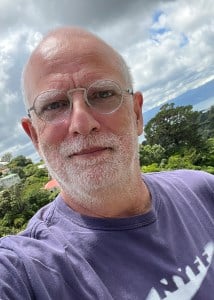
The sounds also serve as emotional signposts. For example, in The Way the Water, the water laps underneath those huts had to have a particular intent. So you’ll hear some of them being a little more gentle, some of them being a little more intense, like during the family argument, the water laps under the hut changes in Fire and Ash.
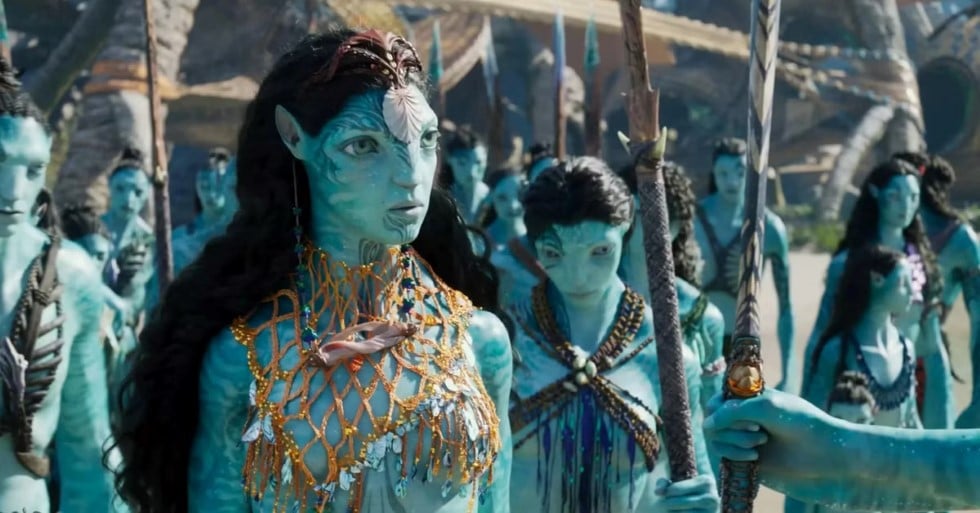
Jim always loves to establish scenes with a familiar sound, such as seabirds, so everybody knows, no matter what they’re looking at on screen, we’re near the sea and we’re in a place that we’re familiar with because we can identify those seabirds. We came up with a lot of interesting alien seabirds — even variations of alien seabirds attached to earth seabirds. He was very particular about the sound of the seabirds, wanting to establish that this was somewhere everybody knew. So we built as much as we could, but at the same time, we honoured the existing work that Chris, Dave, and the crew established on The Way of Water.
Did you go back to your Pro Tools sessions for The Way of Water and pick out these individual elements? What was the easiest way to organize them so they were easy to find and use?
BB: During the spotting session with Jim, we asked him where in the previous films he wanted us to source material from. That was a key question during spotting sessions. Of course, he knows his films backwards. So he would say, “Go to the rookery scene in The Way of Water to find some of the Ikran sounds that have this kind of aggression to them.” And so he gave us direction on where to go, and then we had the freedom to establish what he was after.
There was a bit of selection going on and embellishment to source material from The Way of Water. So if it was the Metkayina Village, we’d look at how we could keep it within what’s known, but also help embellish it. In the mix, we continued working out where to place ambiences. For instance, in the forest during the river scene, we actually had swamp on the left and forest on the right. You’ll hear some of those delineations in the track.
Looking at “recipes” of established sounds and doing deep dives with Jim was substantial, and The Way of Water libraries we had to work from were massive as a starting point. Hayden Collow, our sound designer on Fire and Ash, really enjoyed going into where Chris had found the sounds, to see what was actually being used. It was an interesting experience for him to remain in that design area while seeing what would be more applicable to what’s on-screen in this film. Of course, you can’t just pull the sounds from one film and put them in another; they wouldn’t fit the action. So, establishing the sound of the Metkayina Village was done during The Way of Water team, and for Fire and Ash, we had to be very careful about keeping that, be very careful about placement, spatiality, mix, the whole thing.
The new location in the film, the Ash Village, is a massive contrast to Metkayina Village. What went into your sounds for this environment?
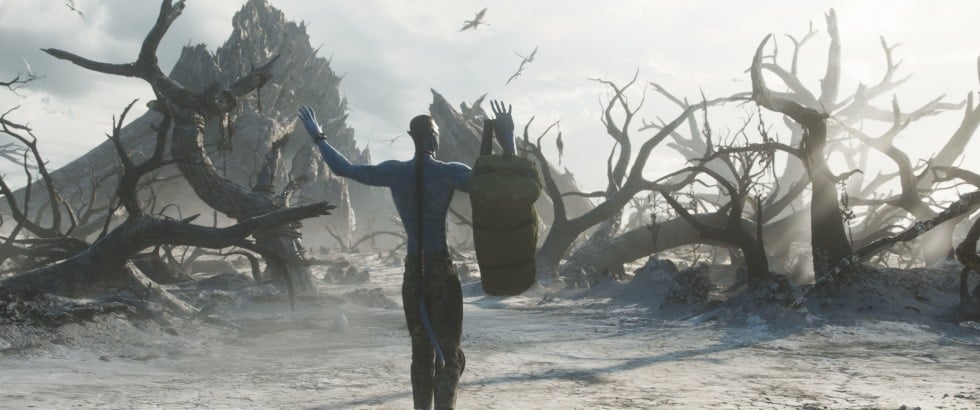
GW: The Ash Village actually is one of my favorite scenes, and partially because of the way it starts. The most important sound is the sound of Colonel Quaritch walking in on that surface that you’ve never seen before. Is it ash? Is it sand? What is he walking in on, and why is that there?
What he’s walking in on is indicative of their whole way of living. It’s barren, burned, and so quiet. You don’t realize that there’s actually a whole living, breathing village there with children and animals.
So the sound eases you into that whole chunk of the film. And it starts with the beautiful foley footsteps. And then, when the guards grab Quaritch, it pans out, and you see the Ikrans. The Ikran sounds here, for some reason, always make me think of The Wizard of Oz — they’re a little bit more evil and malicious than the others. There’s something darker about them as they’re circling. Then, you see kids, and it builds until the grande dame herself enters. Then, it quiets down out of respect for her power, and the story unfolds from there.
The Ikran sounds here […] always make me think of ‘The Wizard of Oz’ — they’re a little bit more evil and malicious than the others
So you’ve got the loop group, the main characters, and their hisses. You see how the structure of their society works, which is very different from that of the reef people or the forest people.
BB: In terms of the new environment, how those feet landed was important. Was it on ash? How fine was it? We had fairly good pictures early on for this, and we even went into the particular details. There’s a small crust on top of the ash that the foot subtly cracks through. We had that in there, and Jim enjoyed it for a while, but he then asked us to reduce it so you’re not hearing that overtly. But that was the level of detail we had. Then, as the foot lifts, it creates a little breeze of dust that’s flying off his foot as well. So that was the foley team, who were just extraordinary in this scene as well.
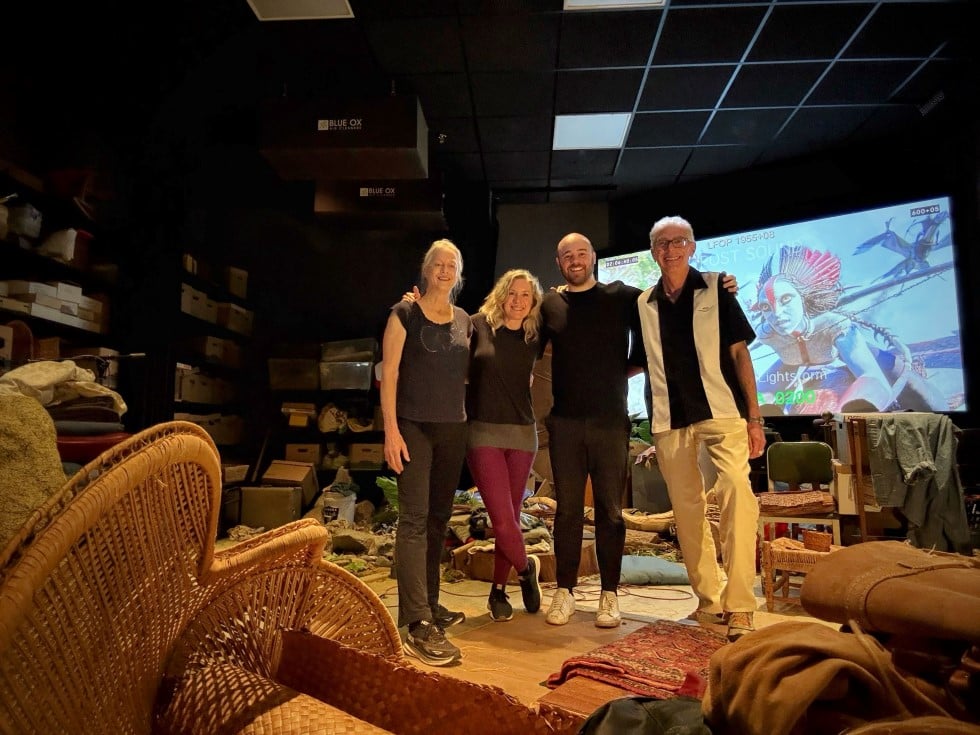
GW: The foley artists were Jana Vance, Shelley Roden, and Ronni Brown at Skywalker Sound.
BB: They were just fantastic. Craig Tomlinson, my Foley Lead Editor, was brought to tears at one point.
GW: How many people cry over Foley? But he did. He said, “The performances are so beautiful.”
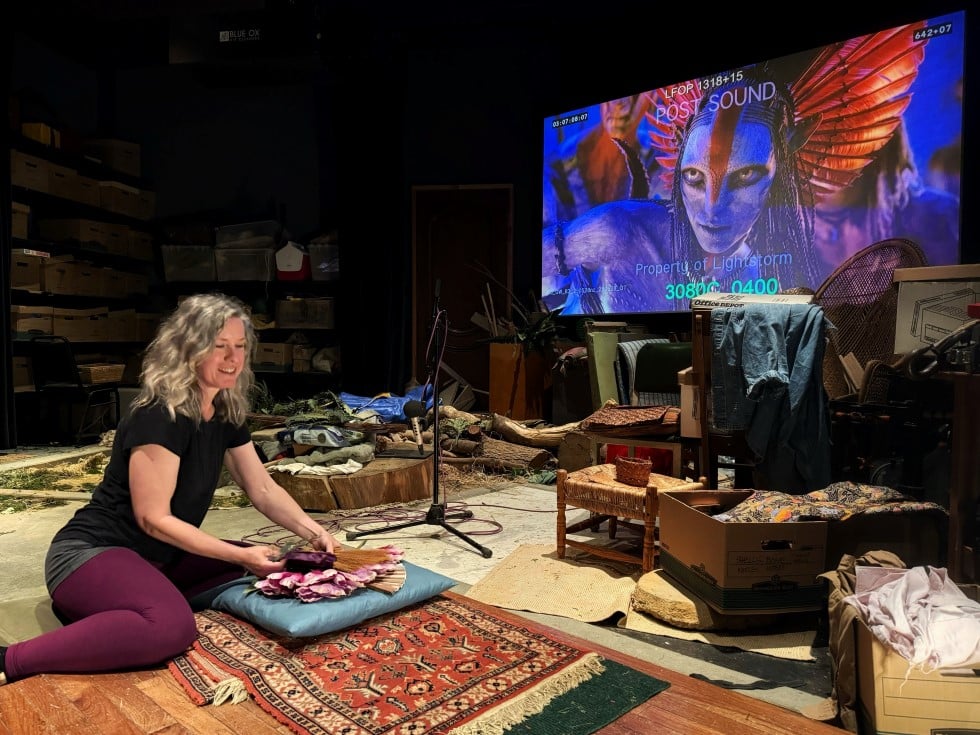
BB: It was. And it was an experience, just listening to it, playing it down and hearing something that you have effectively made photorealistic in a completely animated world and having it sound like you were there with them, with the surfaces beautifully correct and so forth.
So the key sounds were the footfalls coming into the village, the placement of the Ikran vocals that were very carefully done, working out where they would play, how the village would come together, and the sounds of their fires. All these leads kept everything together. There’s the reveal of Varang, where her kuru had a specific sound as she brought her hand down to suggest that she might join with Quaritch again.
Working with Jim is very much a hands-on experience in the mix, and that’s one of the joys: to have his attention placed on your craft
Then of course, there’s the distant gunshot, which takes out one of the Ash People’s guards. That was very carefully worked out in terms of timing, which was great. It took a long time to work out how distant the sound of a gunshot should be. That was very important. We got to what we thought sounded right, and then we’d listen to it with Jim. We played the dry gun sound (without the echo) and added processing to that. How much echo versus reverb? How much would the sound be bouncing around?
Working with Jim is very much a hands-on experience in the mix, and that’s one of the joys: to have his attention placed on your craft. You’ve done a lot of work to get that right, geeking out on it, and you wonder if they’ll notice. And then suddenly, it’s a very, very short focus on this sound that you’re looking at. And it’s great because Jim then hears if you’ve put the work in. You get Jim’s response about a sound, which is great, even down to the details of the impact of foliage as the kids run through the forests, for example. Everything has been created at a particular time for a particular reason, even down to the feet hitting the brush.
GW: When we were mixing that scene in the Ash Village, and Varang gets Quaritch to go into the yurt with her, she gives that sort of look to her tribe. Jim said, “We need them laughing there because they’ve got really dark senses of humor.” That was a good note. On a dime, we created a black humor vibe for the Ash People.
BB: That’s awesome.
GW: Jim finds moments for sounds, and those don’t happen when people are talking. It goes between the gaps of people talking. So, in that forest scene Brent mentioned, for example, each brush hit, each movement was visually specifically placed to work with the dialogue. Nothing is haphazard.
BB: And it’s all in his head. He can tell you exactly what he wants at a particular shot.


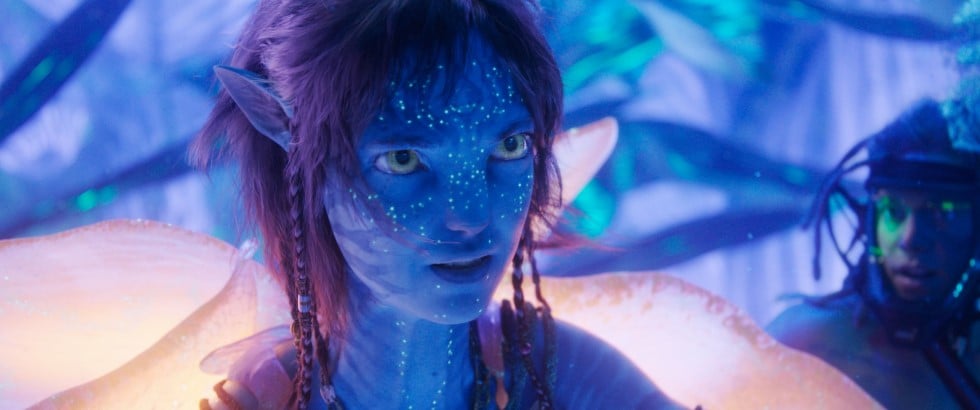
Kiri, who is 14 years old in the film, is voiced by Sigourney Weaver. Sigourney’s performance is amazing! But, being that she’s voicing a much younger character, did you process her performance in any way to make her sound younger?
GW: Kiri was a character in Avatar 2, and early on in the film, I got a call from Jon Landau, saying, “You gotta listen to this voice. Tell me what you think.” And I said she’s definitely deeper than most teenagers, but there are teenagers out there with lower voices. So, I went on YouTube and found quite a few videos of 14- to 15-year-old girls with deep voices. My niece also happens to have a particularly deep voice. So I played Kiri’s production against those videos for Jon, so he could hear that she’s right in range with these kids. If you can divorce yourself from the idea that it’s Sigourney Weaver, then you really don’t have any problems with it.
We were really careful with her performance. There were times when we pitched up certain words or certain syllables, but it was just a quarter semitone — sometimes a half semitone. We never went more than a half, and it was really on a case-by-case basis. Some lines we didn’t touch because they were perfect. We never ever messed with the performance at all. It was really just tiny tweaks, and it was only in a handful of lines.

When I was doing ADR with her on the second film, she said being 14 is really awful. It was really hard to go back there and be that petulant, constantly emotional and on edge, angsty person. She said it was a really difficult thing to do, yet at the same time, it was immensely freeing.
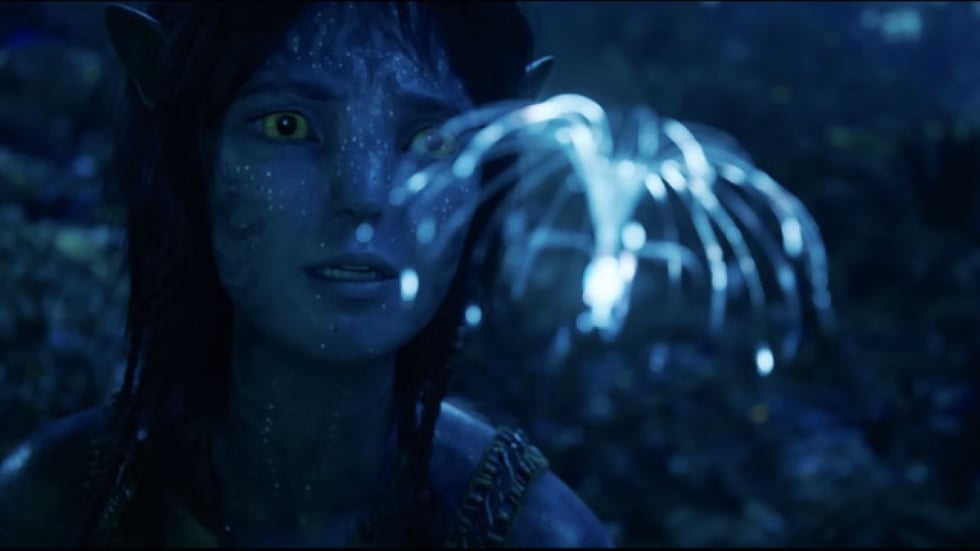
Can you talk about your sound work for the scene in which Kiri uses her connection to nature to help Spider breathe the air on Pandora? Since this is a music-driven scene, can you talk about blending your sound design with the score? Were you working against a temp track?
GW: We call that scene “The miracle.” We had the score pretty early for that one — earlier than a lot of them, if I remember correctly.
Brent, you guys were probably able to sit your effects out of the range that Simon [Franglen, composer] was hitting…
BB: Yeah. Of course, we assumed that Jim might want the music not playing at all, so we went crazy with it for a while. But then the music was presented to us, and we did adjust the sound effects.
Having music before the mix is always massively advantageous because we can sculpt and massage the sound effects to be in a support role or an upfront role. Generally, it’s a support role if the music’s been supplied to us. We then work our sound effects out around that. For example, the wood sprite that Kiri finds and reaches out to was mute for a long time until we managed to subtly bring in the wood sprite design that we had in there, which Jim and Jamie [Landau] liked.
Inspiration for Kiri’s effect on the forest came from ‘The Way the Water,’ when she’s lying in the grass and it’s doing these waves.
Inspiration for Kiri’s effect on the forest came from The Way the Water, when she’s lying in the grass and it’s doing these waves. There was something similar to that moment, and we could attach that sense of pulsing into the background of Fire and Ash until the music took over, and then it became a massively awesome music scene.
We also built the ambiences into a crescendo, so when Kiri disconnects her kuru, you hear them go away. You’re not really aware of the ambience being full and sitting quite densely behind the music, but then when they go away, you notice it.
GW: We’re building a feeling of anticipation with the music and the effects working together there. And I worked with Spider’s breathing, so that it gets shallower and less frequent throughout that scene.
BB: And Jim wanted the alarm sound to happen right on those flashes. It was all effectively shot that way, with the alarm’s beeping consistent throughout all the shots and in the lighting, as you’ll notice. There’s nothing worse for the sound team than the beeps and the lights suddenly being in a completely different rhythm, which can happen in shows, but not on this show.
GW: The beeping and his breathing add a sense of panic, the sounds adding to the tension as it becomes clear he may possibly die.
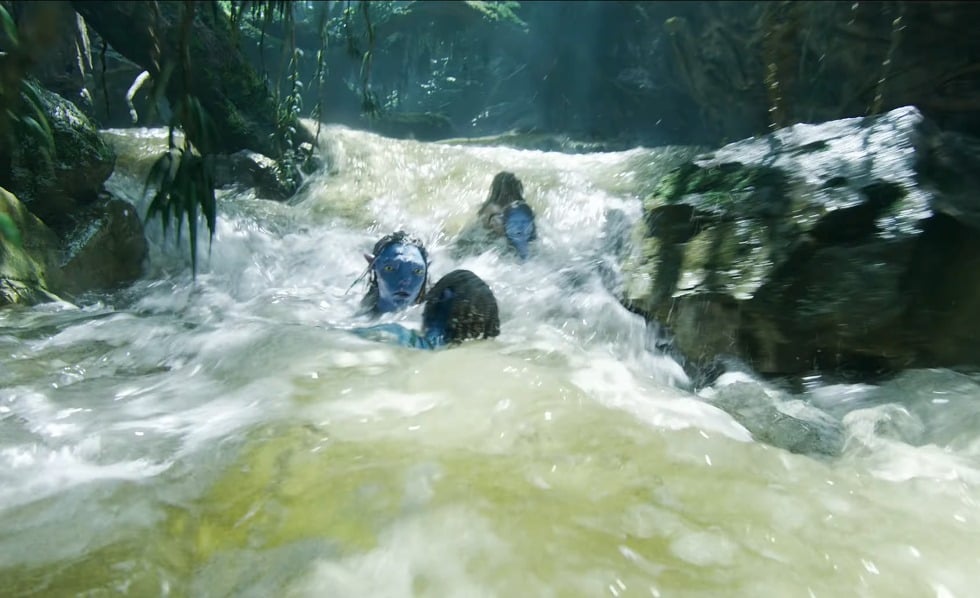
Just before this scene, the kids escape the Ash People by running through the forest and jumping into the river, and they’re swept downstream through the rapids. This was such a fun moment in IMAX 3D! Can you talk about your sound work here, how you took advantage of the surround field to make the audience feel like they’re in the river, too?
GW: It’s a cool scene, right? That scene was actually shot while they were shooting Avatar 2. I got to go to that set. They were in the big water tank, and they built these rapids. I watched the actors in their mo-cap suits literally being thrown down these mock-rapids. All that stuff was very real. They’re always very worried about Tuk, the youngest kid, getting hurt or traumatised. They were very careful about actress Trinity Jo-Li Bliss because she was the littlest one, and they’re all careening down the rapids together. It was crazy and really cool to see that.
I watched the actors in their mo-cap suits literally being thrown down these mock-rapids. All that stuff was very real.
Jim, because of the way he wanted it shot, could decide how much they’re underwater and how much they’re going under and coming up for breath.
We have their gasping, coming up to breathe, and screaming at each other. All the mo-cap stuff worked with the chaos of the shoot and with the sound.
BB: That “method” concept of shooting the scene was amazing. It worked out great for the sound team, too, because we got that scene quite late.
GW: Yeah, it did.
BB: So we had a lot of material set and prepared for it, but we didn’t actually realize it was going to be quite so aggressive. It was bigger than we thought. We thought it was going to be more like water rolling over the rocks and so forth. But they’re nice big rapids. So, we got to go to town with the sounds of everybody getting pushed under the water, and changing perspectives. Jim loves that stuff. It gives a little contrast, creates little changes to what’s happening, and therefore the details.
Jim was also very particular about the vines going over the top of us as they went under the branches […] You can almost hear the vines sliding over the top of the camera.
Jim was also very particular about the vines going over the top of us as they went under the branches — when they were hiding before they jumped into the water. You can almost hear the vines sliding over the top of the camera.
And then they go into the white water, and when they come out, there’s an amazing shot I just keep marvelling at: the overhead shot of them swimming to the shore of the river. I just keep looking at that shot thinking, “Wow. But everything’s fake!!.”
GW: Everything’s fake — the water, the foliage — nothing is real. It’s very deliberately placed. And it looks spectacular.
BB: It’s just amazing. You just forget you are watching something that’s not there.
GW: You have to support the realism of the VFX with perfectly placed sounds, even them splashing through the water and climbing out again. Nothing is haphazard. Everything is placed for a reason, so you’ve got to make sure all those bits of movement and efforts are heard to make it feel as real as it does.
BB: We’re playing the perspective of seeing them half below the water and half above, with the water washing over their faces and so forth.
And you mixed natively in Dolby Atmos? Did those overhead sounds translate well to the overhead channel in the IMAX mix? Or was that something you needed to rework?
BB: They did work well. Those are the things that are really focused on in terms of getting the mix to translate in different formats.
GW: We made our main mix in Dolby Atmos first. That was our reference mix. For the first Avatar film, we went to an IMAX theater in L.A. and checked the IMAX mix at the crack of dawn (before the theater opened to the public) to make sure everything was right. And things did translate well. We didn’t do a lot of monkeying around. So, based on that experience, there was more ‘trust’ (a very scary word!) on this one.
BB: The IMAX mix was created at Park Road Post, and Disney potentially QC’d it in IMAX when it was sent back to them.
That’s the goal, to make sure the experience is the same even if the format is different.
But even though there are multiple channels overhead in the Atmos format, and you can use object tracks for panning, the Atmos Bed format has overhead “rails,” which are stereo from front to back. So if you put anything into those rails, it’ll appear throughout the ceiling. Objects spatially work better in that situation. So when we have objects move through the speakers, that’s what they’ll check for, to make sure everything happens the same way in IMAX that it did in the Atmos mix. While the translation might be slightly different in IMAX, the audience gets the same experience.
GW: That’s the goal, to make sure the experience is the same even if the format is different.
BB: Jim wanted that sound to be traveling over us at that speed and with that sound. So, that’s what would be translated into the IMAX mix.
GW: Even going from Atmos to 5.1, which has no overhead speakers, you don’t lose the feeling of that experience. You still feel surrounded by the sound.
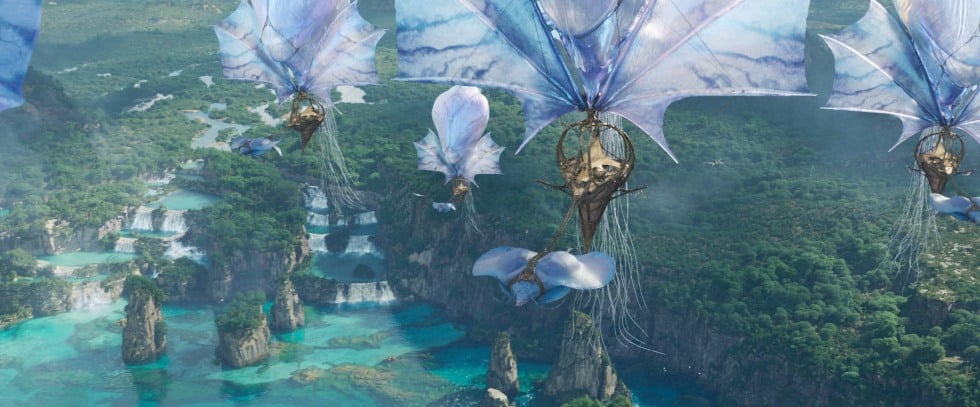
And this movie offered so many opportunities to use the overhead channels! You have the Windtrader convoy, the RDA gunships, the Ikran flights… there’s no chunk of space that’s been forgotten. There’s something happening everywhere you look…
BB: We love doing that stuff, especially offscreen, like the offscreen battle at the end, for example. That’s always great fun to present because you try to work out the best placement for sound, decide what people should be looking at, and where to draw attention.
Recording RDA equipment for ‘Avatar: Fire and Ash’
GW: Jim is so specific about that stuff. For instance, in the Windtrader attack, there’s a lot going on, but you don’t necessarily hear everything because Jim wanted that to be a more music-driven scene. So, you hear very specific things that he wants to draw your attention to within the music. So in a place where you think you might have a lot of stuff going off-screen, you don’t. It’s very carefully told.
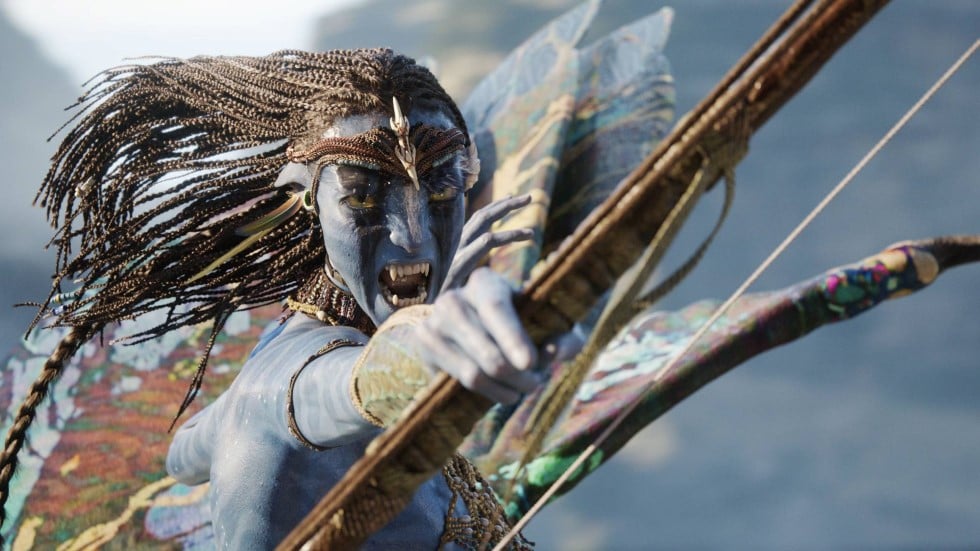
Did you have temp music to work from for the Windtrader convoy attack scene? Or, like “The Miracle” scene with Kiri and Spider, did you have the actual score?
BB: I think we did get that score, although it changed.
GW: During the final, Jim was rearranging the music while he was rearranging the effects, while he was rearranging dialog lines. That was definitely a collaboration of all departments. Jim was working that scene out sonically while we were mixing it.
BB: Yup, and he can work that out on the fly effectively on the stage. He’ll go, “Okay, I want music here, at that point there, I want us to have effects for the fires, and then there we’ve got a dialogue line, and I want music to kick off in the dialogue.”
During the final, Jim was rearranging the music while he was rearranging the effects, while he was rearranging dialog lines
He’s orchestrating it like that. And where something may not work — we have a bit of a hole — he’ll look at the effects to see if there was something that we could add on screen to help that moment where the energy may have dipped for a second, or he’ll turn to music and say, “Hey, can we try…” and he’ll remember something that he really liked in the music, maybe not even from that scene, but he’s just got this whole film in his mind. He can just ask the music team whether this other section of the score will work. Oftentimes, he may even say something like, “Let’s delay the music by a second. I really think the music could work in a different way if we delay this piece of the music, not the whole thing, just this piece of the music by a second. Let’s have a look.” And sure enough, it works.
GW: He’ll ask to delay the drums, drop the strings, and bring the strings back here. And then have the effects add in something there. Now, this guy will yell, and then this effect comes in. And it works. It’s magic.
Much of the battle scenes were orchestrated in terms of what’s not in there. It’s very carefully orchestrated.
BB: And his timings for things can be surprising. He’ll ask to move something by eight frames. You move it by eight frames, and whoa, it makes all the difference, and not in the way you anticipated.
Much of the battle scenes were orchestrated in terms of what’s not in there. It’s very carefully orchestrated. Decisions were constantly made about what did and didn’t play, and where. It was carefully planned.
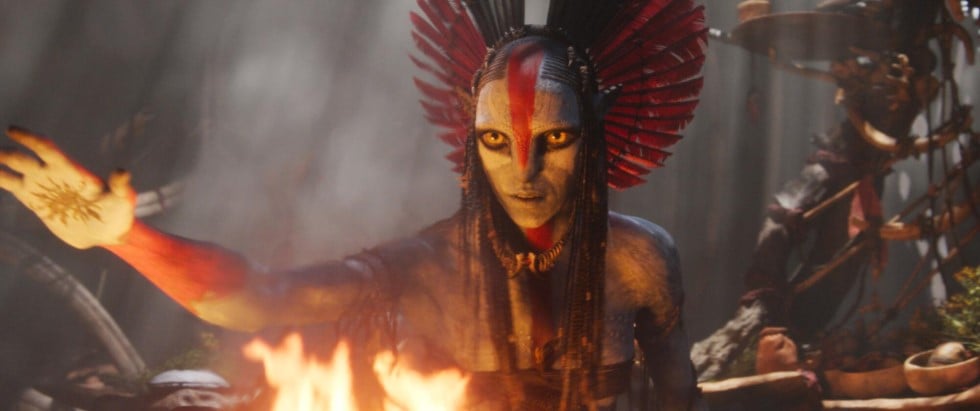
Ash People leader Varang uses a powerful hallucinogen to induce an altered state of consciousness in Quaritch. What went into the sound of this ‘trip’?
GW: There’s a treatment on the dialogue, which is basically different types of reverby, echoey things, but it’s not consistent through the whole scene. So, depending on the intensity of Quaritch’s experience, there was more or less delay, sometimes not even across the whole line. And then it would come back to reality. Sometimes it was just about the placement of the delays. We kept it bizarrely grounded even though you’re in this crazy headspace for him.
Quaritch is shocked, but he’s also enjoying it, reeling her in. He knows what she’s doing, that she’s going to like what he has to say. The music was the base of it, and the treatments and effects added to element of chaos.
BB: Hayden Collow was the sound designer on Fire and Ash, and he always refuses to tell me his secret, although I never really ask what he did. I would just experience what he did and say, “That’s amazing, and maybe we could do this as well.” I realized, when we had a quick chat about that scene, that the music was going to be about chaos, but without using the subs. Hayden approached it by going beneath the music, working in the lower-frequency domain with rippling, pulsing sounds.
Hayden approached it by going beneath the music, working in the lower-frequency domain with rippling, pulsing sounds.
Other details were beautiful as well, like the fire on her fingers and the way she pulls the fire in. At that moment, you’re in reality when she closes her fists. But then we go back into the hallucinations of Quaritch’s experience, and we can still hear the fire whistling away, as it were. Her tail swings around in 3D, and that’s one of the great moments of the film. We love that stuff. That’s what sound design is about: perfectly supporting the expression of what’s on screen. And in this situation, we’re inside someone’s head, and that’s so much fun to do.
GW: We used every single speaker we had available to us in that scene.
There was a version that was just effects, too. They played that for Jim, but I wasn’t there when he heard it.
BB: We did play that for him. Jamie Landau was one of our wonderful producers on the film and was very hands-on with the mix. Jamie was a bit of a filter for us, where we would say, “Hey Jamie, we’ve got something pretty out there to play for Jim. Do you think he’d be interested in hearing it?” And this was one scene where we thought, okay, if Jim hears this, he’s either going to throw it out, or he’s going to be curious about how it would work. So, we played it for him, and he said, “Let’s keep an open mind.”
Working with Jim is different from working with other directors in terms of what we started calling “deep dives.” Jim would listen to the reels purely with effects — no music, no dialogue — and would distill down exactly what he wanted to hear in the effects track, and that’s what we’d deliver to him in the final mix.
GW: He also did deep dives with music and with dialogue — hearing each one by itself.
Jim would listen to the reels purely with effects — no music, no dialogue — and would distill down exactly what he wanted to hear in the effects track
BB: That’s unusual. And he may be making decisions, like, “I’m not quite getting that there. I really want to hear that moment right there.” And you realize that there might be a gap in the music, but he’s got the structure of the mix in his head. So when we came into the final mix, he knew exactly what he had in the tracks because he’d heard our work so much. So for us, the final mix was about pivoting on a dime if something wasn’t working. We’d have to find something else very quickly.
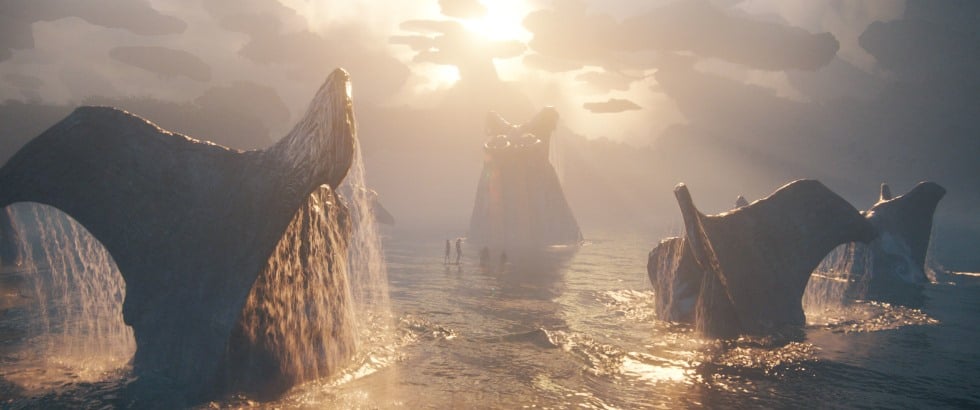
What went into the sound of the Tulkun talking to Metkayina during the council meetings?
BB: Chris Boyes created a massive library for the Tulkun for The Way of Water so that heavily influenced the Tulkuns in this film, but, of course, we had some larger Tulkuns in the council scene and in what we call “Tulkun-henge.”
That was interesting for us because we knew there was some syntax that he wanted in there. It was very much about the subtitles, and nothing is created by chance. The subtitles were on screen for a certain period of time, and the vocals of the elders had to match the subtitles within reason, so you had a sense that there was communication happening within the Tulkuns. Hayden did a lot of work with the elders, building on the vocabulary Chris had created for the library previously, and then upsizing it because, as the elders were talking, the water was rippling.
The subtitles were on screen for a certain period of time, and the vocals of the elders had to match the subtitles within reason
The council scene was interesting because it was too late to do the visual water ripples in the scene, so we had to match the water rippling to what we’d done with the vocals and the mouth movements. For the second scene, “Tulkun-henge,” however, we determined the timing of the water rippling visuals based on our vocals! So, where you do see them, they are beautifully in sync when they’re talking.
We had some material quite late that we put in for Ta’nok, the wounded one. They were still matching what we were changing and putting in. The interesting thing for us was that the thunderous “Tulkun-henge” statements that were being made by the elders in that scene, Jim was very comfortable with in terms of how they played. We really obviously wanted Jim to be impressed by the use of massive subs in the surrounds. But the thing he was really focused on was the emotion, the emotive quality of Ta’nok, in the scene. Jim spent a lot of time with us on that, just getting that right sense of pity and rage through Ta’nok. You may even pick out some words in some of the elders’ speech. Jim was very comfortable with the way they sounded, but in terms of the emotion, we had to do quite a lot of work. In our approach to the design, we had to be careful that they didn’t sound human.
Jim was very comfortable with the way they sounded, but in terms of the emotion, we had to do quite a lot of work
GW: The voice of Kevin Dorman (the brilliant actor who played many parts in all three Avatar films) is in there, but it was treated in a way to get away from that humanness. The human voice is extraordinary in terms of how you can always hear it, pick it out.
BB: We went deep on this during the mix, where everyone had an idea to try and Lex [Alexis Feodoroff, re-recording mixer] was open to trying them.
GW: Lex was fast and organized. It was his first time mixing with Jim, and he was a rock star. He did a great job.
BB: We also had Gary Summers and Michael Hedges.
GW: Mike went through his paces with the music, moving individual elements, like the drums or the strings, five feet here and 20 there. They were all brilliant.
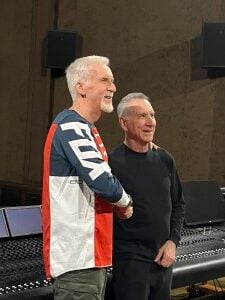
BB: They were amazing. Jim literally would walk around the stage between the mixers, talking to each one about what he wanted in a particular scene. It was very much a hands-on experience. It was amazing to watch.
GW: We had an all-star editorial team, too. My dialogue team added so much subtle detail to the track. Martin Kwok (our dialogue supervisor) has an incredible ear for the emotion of how a breath or a lip smack or a bit of silence before an inhale can affect a performance. Helen Luttrell, Ray Beentjes, and Dmitry Novikov rounded out our dialogue crew with beautiful, sensitive additions to Jim’s tracks, adding clarity and energy with their editing.
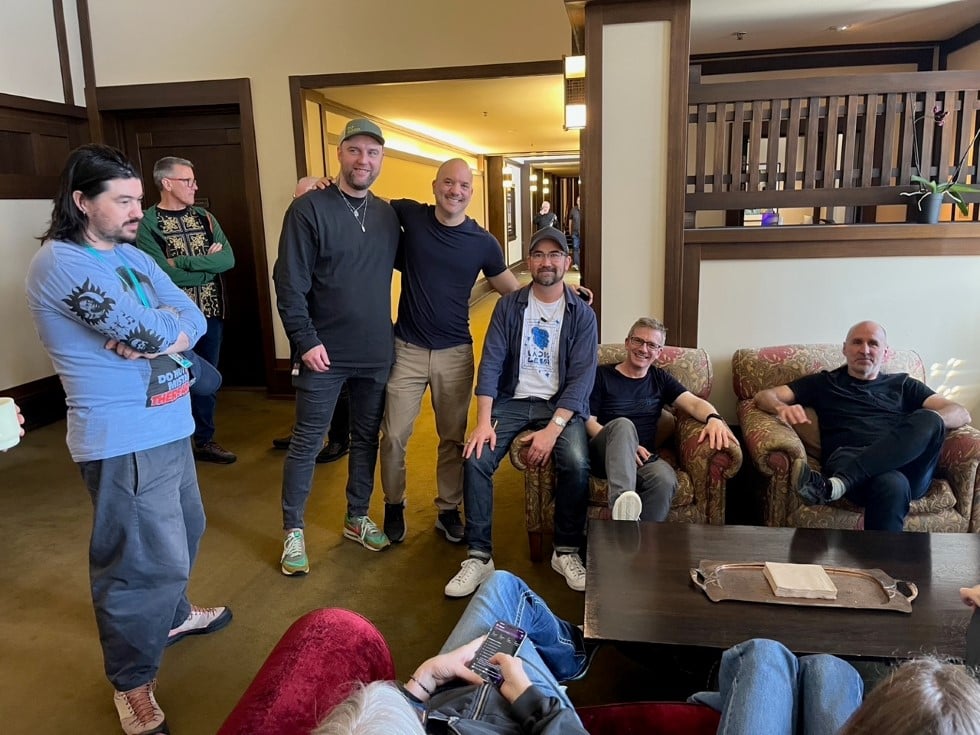
There’s a very small moment, right in the beginning, when Neteyam asks how he died. You can tell he’s uncomfortable, especially after the fun they just had. To sell that discomfort, Martin cheated in the perfect breaths, inhales, and lip smacks for that section. When it’s not there, the scene still works, but it’s so much more human and so much more emotional with the extra breaths and hesitations Martin edited in. It’s beautiful. It’s a work of art that most won’t notice, but sound professionals will.
A lot of those breaths and lip sounds were culled from the production track. Our production sound mixer, Julian Howarth, got everything. So, we had a huge breathing library that our dialogue assistant, Luana Barnes, organized and labeled with the type of sound: nose inhales, heavy panting, open mouth inhales, yells, etc., and tagged with the actor’s name, so it was easy to grab quickly in Soundminer.
Our dialogue editor, Dmitry Novikov, did the scene at the end on the rocks, after the battle. We had to get rid of a lot of repeats and overlaps in the guide tracks and make sure the right grunt or oof was in there. Luana found all of those available options between production and ADR and labeled them, so Dmitry could build that scene. I’ve heard people say that it felt completely real as they were fighting and jumping around on the rocks. So, between the foley and the breath edits, it was a success. It felt realistic.
BB: …and on the effects side, we had lead sound designer Hayden Collow, Matt Stutter, and Mel Graham as our local effects editors, joined by Josh Gold from Skywalker, and the enigmatic Justin Webster, who has also developed a lot of our essential software. Foley was led by Craig Tomlinson at Park Road, supported by Ian Chase at Skywalker.
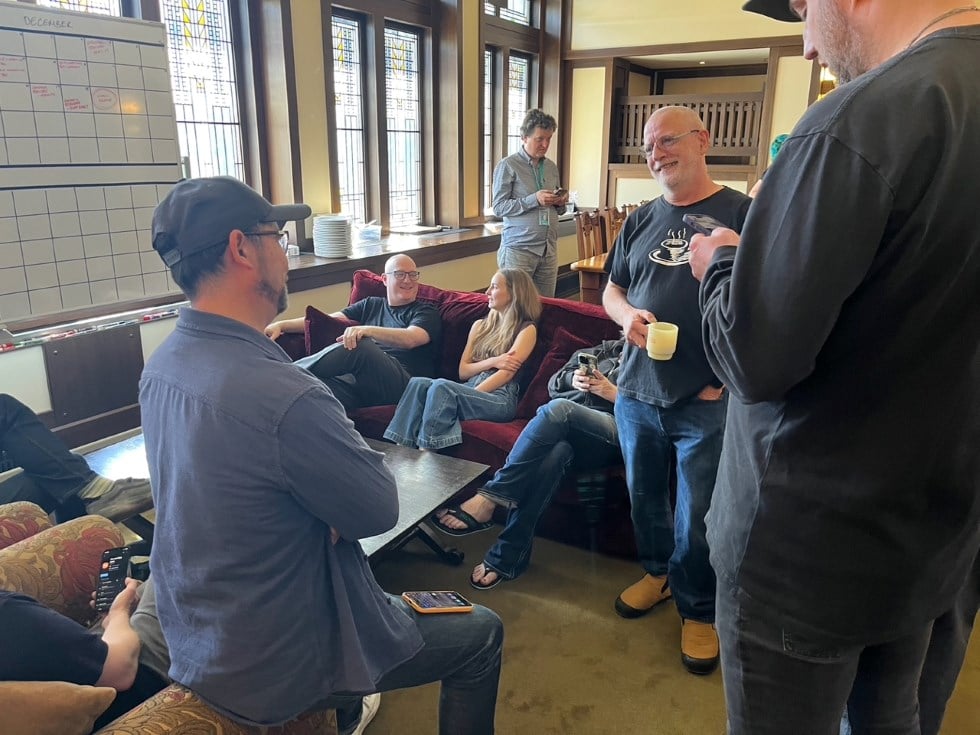
Our Assistants were outstanding support for all of us. Lead by the endlessly capable and creative problem solver, Marco Alicea, as our supervising assistant. Benny Jennings and Alex Sipahioglu were our effects assistants (often armed with microphones). We also had the absolute pleasure of having the brilliant Calvin Amis with us as an intern.
What personally was your most challenging/rewarding moment for sound in Fire and Ash?
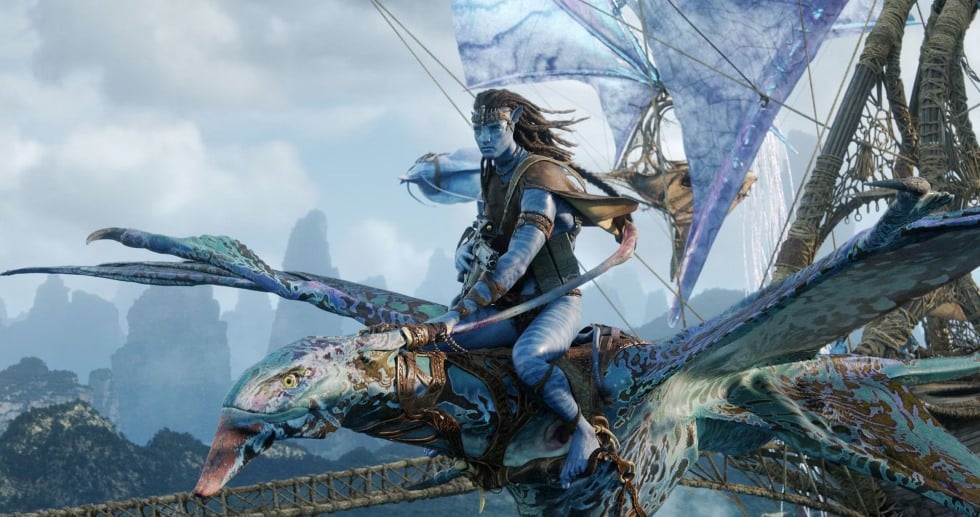
BB: My favorite moment is a very minor thing. During the Windtrader scene, as Jake is flying around on his Ikran, he veers slightly towards us, and his Ikran just does a couple of vocals in there. It creates that reality of, yeah, that’s what it would probably do. Jim heard it and liked it. It always stuck with me as this lovely kind of idea of the Ikrans having their own character. That was a lovely little moment. The Challenge: always clarity.
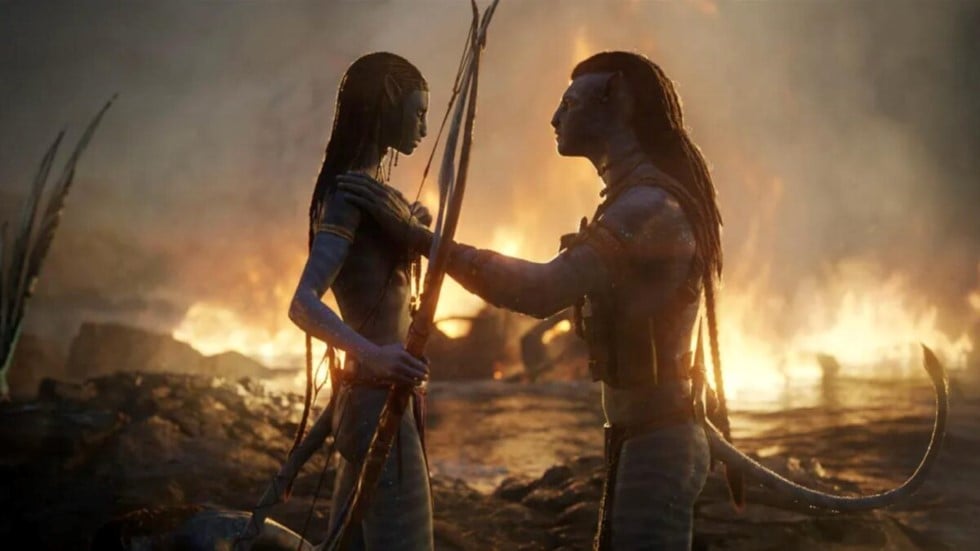
What have you learned from your experience of creating the sound for Fire and Ash? What will you carry forward from this experience to the next Avatar film?
GW: Jim is unlike any other filmmaker. He works on these films for so long, shoots all the cameras himself, and he knows the movie inside and out. You have to be prepared in a very different way when you’re working for Jim because he cuts the guide tracks himself, or at least embellishes them. So, he knows where things are. The guide track is a bit of a bible, and you have to honor that and riff off of it. There are a couple of things you learn, and this is true for the other Avatar films, too. You learn that to make a place feel quiet, you have to hear something small sound loud. That was one thing Jim said frequently about going through the forest; you hear that foliage snap, and it’s louder than you think it should be, so it makes you realize how quiet the forest really is. If you hear a pin drop that tells you how quiet the place is.
Also, you learn to think about clarity. What is this shot telling me? Why is this shot here? Why am I looking at it?
Also, you learn to think about clarity. What is this shot telling me? Why is this shot here? Why am I looking at it? And how does sound help support that? You don’t want to hear guns and drums at the same time. So, Jim asks, “What is this shot telling you? What do you see here? Why do we have this shot? Make the sound tell that story, too.”
BB: It was really intense, especially if you’d misread his intention. Jim can be quite abrasive in terms of achieving what he is after. And the thing that frustrates him is “process.” That’s what we’ve evolved in our approach, in terms of knowing how to make sure we are beating the temp. And if you don’t beat the temp, then he would say, “We’ll play the temp if we have to, if you can’t beat my temp.” Of course, we would always beat the temp because that’s our intent anyway. And he would always know that.
There is this concept of ‘grey’ sound. Unappealing and unnecessary ‘grey’ sound is whatever sound is not helping the shot.
Clarity, as Gwen was saying, was important. There is this concept of “grey” sound. Unappealing and unnecessary “grey” sound is whatever sound is not helping the shot. It’s getting in the way of something. So, for example, why would I have all those guns going off on the left when all I want to hear is what happens on the right, where this person has a bow and arrow?
Jim would ask that, and you’ll go, “Okay, if that’s what you want, Jim, that’s what we’ll do.” Then, we’ll do it, and watch it, and of course, your eye goes to the right.
That was always the thing I kept learning from being with Jim, and we were in this for a while. It is definitely something you take away from working with Jim; you take away concepts that you may not have entered with. That’s for sure. It’s actually going to be interesting to move on to another show with another director.
GW: It’s the mechanical “process” of things that frustrates Jim because he wants to be thinking about creative stuff. He doesn’t want to think about why we’re stopping here or why we’re starting there during the mix. He wants all his focus to be on the creative side of it.
There’s nothing like being ‘in the flow’ with Jim, where everything clicks into place. That is ‘Avatar 3’s true magic
BB: So, when you have to open Soundminer to get a sound, he’d ask, “What’s that for?” So, we would have our libraries in our sessions, so we didn’t have to use Soundminer. We would have markers to the sounds at the end of our session timelines. We’d go down there, find the sound, copy it, and put it in the timeline where we needed it. That’s how we did it because Soundminer was too slow, and often, Soundminer would be just raw sounds and not the built sound effects we needed. So, if we had them built at the end of the session, we recall that location and grab them. When we talk about “process,” we’re trying to keep the creative flow going with Jim. You want the sounds to be there in the first place, or be able to put them in there quickly to keep the energy going, and there’s nothing like being “in the flow” with Jim, where everything clicks into place. That is Avatar 3‘s true magic.
A big thanks to Gwendolyn Yates Whittle and Brent Burge for giving us a behind-the-scenes look at the sound of Avatar: Fire and Ash and to Jennifer Walden for the interview!