



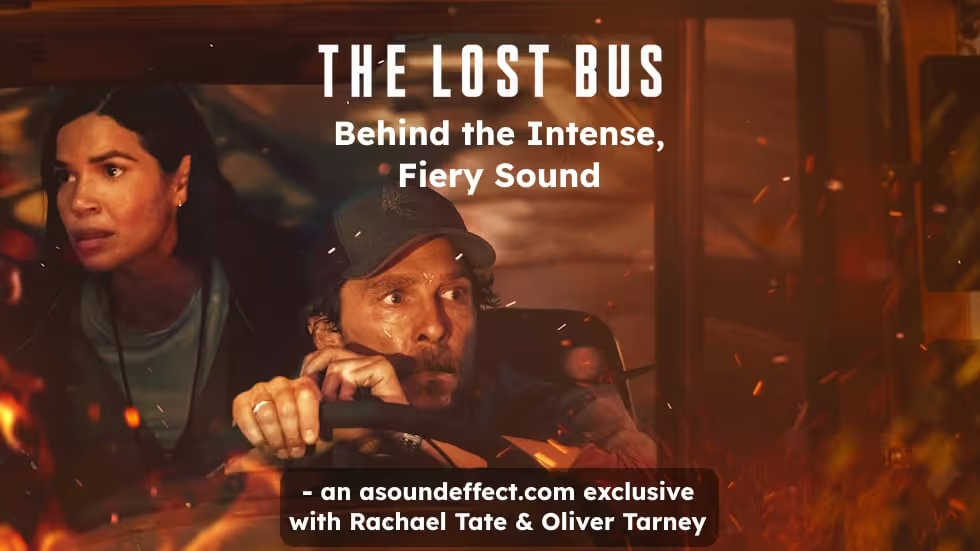

Director Paul Greengrass wanted to create an accurate portrayal of the 2018 Camp Fire in Paradise, California for his new dramatic film The Lost Bus — now streaming on Apple TV+. The true story focuses on the heroic actions of bus driver Kevin McKay and teacher Mary Ludwig, who evacuated students from a local elementary school. Although The Lost Bus is a dramatic film, it effectively conveys the heavy emotions of the event through an accurate and often realistic portrayal of the tragic Camp Fire that destroyed the Paradise community.
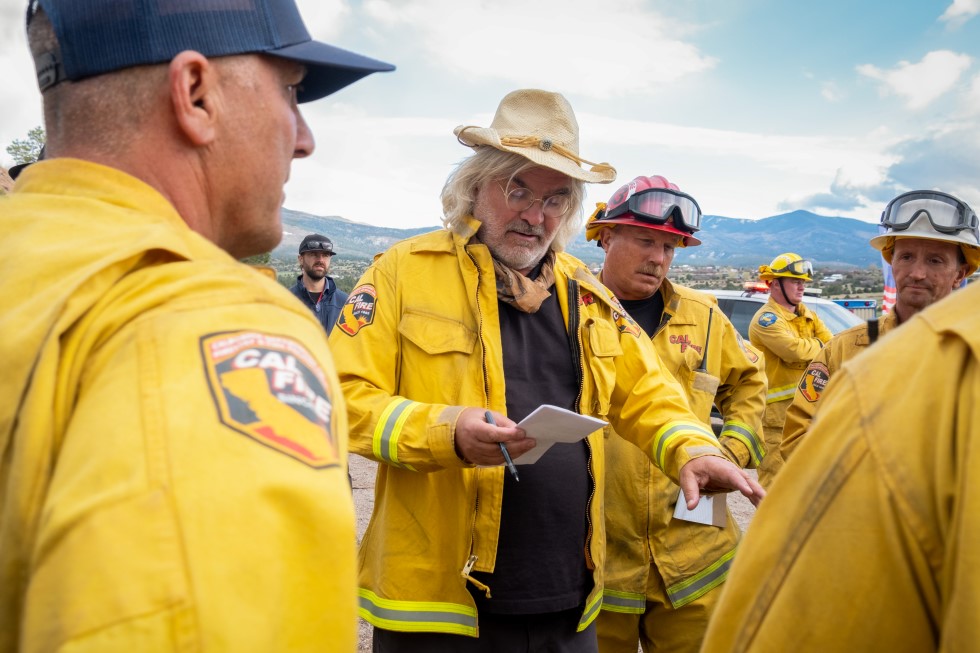
The filmmakers involved real-life Cal Fire personnel in the filmmaking. For instance, Cal Fire Chief John Messina, who was in command on the day of the actual Camp Fire, was an actor in the film. Additionally, Fire Air Attack pilot Shem Hawkins voiced the film’s radio comms lines coming from the planes. They even had Messina’s other colleagues voice the firefighter comms lines instead of using voice actors.
The sound team — led by Supervising Sound Editor/Sound Designer Oliver Tarney and Supervising Sound Editor Rachael Tate — also had access to five hours of unedited recordings of the emergency communications from that day, including the dispatcher’s time checks, which allowed them accurately cut real comms from the Camp Fire into the events in the film as the story unfolded.
Here, Tate and Tarney talk about creating all those background comms, using shifting and turbulent wind sounds to build tension and to give the fire a feeling of unrelenting movement, recording the on-set bus and fire trucks, carefully cutting individual dialogue and reactions for the 22 child actors on the bus, on so much more!
WARNING: MAY CONTAIN SPOILERS
When did you get started on The Lost Bus and, sound-wise, what did dir. Paul Greengrass want to focus on first?
Rachael Tate (RT): We started about a month into filming. Paul likes to get sound involved as early as possible because he uses it as a storytelling tool, not just a finishing layer. From the start, he wanted the sound to immerse the audience in the tension and immediacy of the story — to make you feel like you’re inside the bus, inside that chaos and fear, but without ever slipping into something overly stylized or leading.
His first focus was on the POV shots, what we called ’ember-cam,’ where the viewer is experiencing the fire from the inside, as it ignites and quickly careers towards Paradise. He mentioned wanting the fire to be a character in of itself, to, in fact, be the antagonist. The uniqueness of fire as the villain is that it’s completely indiscriminate. It targets anyone and everyone in its path, without mercy. It’s not evil, but it behaves like a living thing that’s always reaching for more — air, fuel, life. When we were shaping the sound, we knew we wanted it to feel like it was hunting, like it could turn on the wind at any second and come for whoever was closest. It’s unpredictable and relentless, and that makes it one of the most frightening forces to represent in sound.
There are a bunch of kids in this film — at the schools, and on the bus rides. Did you get to do loop group sessions with them, for the general bus ambience, the school ambience, the panicked screaming as the bus drives through walls of flames, etc.?
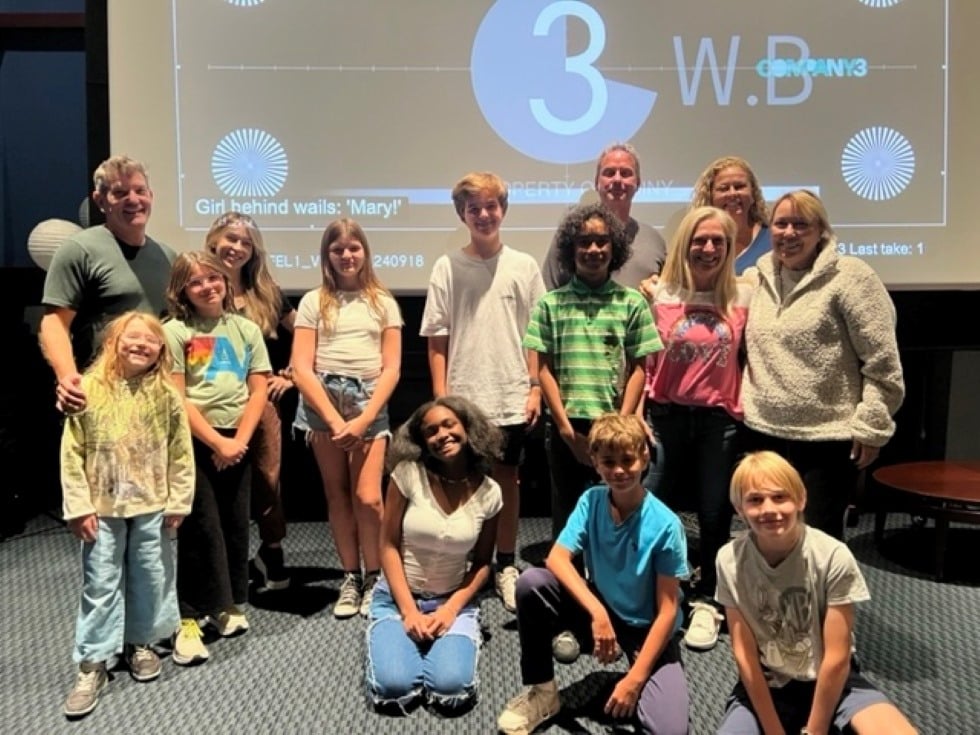
RT: Paul really wanted the 22 kids’ reactions to feel real, not staged or “performed.” He encouraged the children on set to be themselves and react naturally, in an improvised way, which they all did so effectively. Our production mixer, Lisa Piñero, captured as much of this energy as she could, hiding mics all over the interior of the bus.
Our production mixer, Lisa Piñero, captured as much of this energy as she could, hiding mics all over the interior of the bus
Later, our crowd supervisor, Glynna Grimala, recorded two days of children’s loop group at Formosa Group in LA. This meant we could add in specific spot lines on top of Lisa’s recordings from set.
Both Lisa and Glynna also recorded layers: calm travel ambience first — just kids being kids — then small breaths, gasps, sobs, and then progressively increasing the panic and screaming as the fire builds and the environment collapses around them. It was important that it never sounded like a “wall of screams,” but rather individual voices and reactions that pull you into that claustrophobic space.
Can you talk about your sound design for the scene in which the fire starts — the gusty winds messing with the electrical lines, the power towers creaking, and the transformer breaking loose and igniting the dry grass/brush underneath?
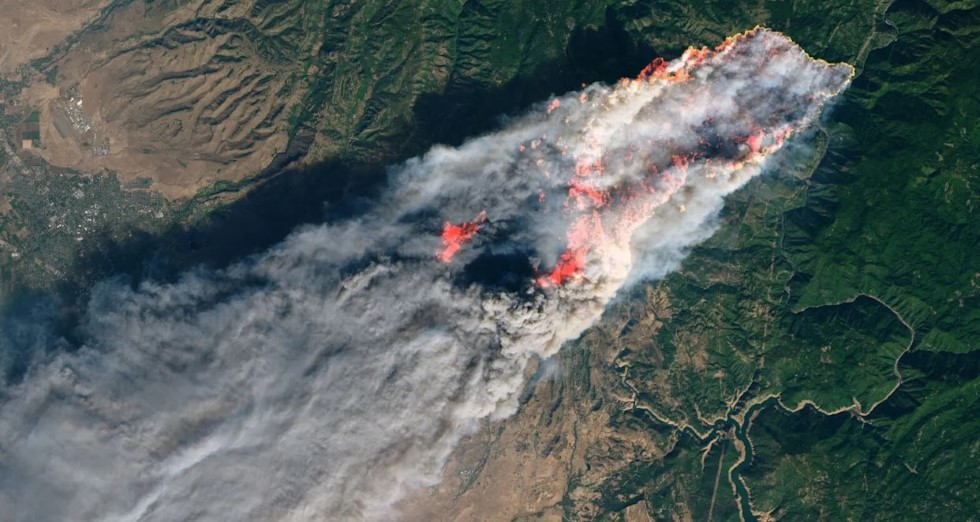
Oliver Tarney (OT): That scene was all about tension — the sense that something terrible is about to happen, even before we see flames. We started with the wind, as the powerful Santa Ana wind was the catalyst in the failure that caused the fire. It is unpredictable, shifting direction, building pressure. We wanted the audience to feel the environment was arid, like the whole area was a tinderbox.
As the winds increase in intensity, the infrastructure of the power lines is becoming more vulnerable — we hear the low electrical hums, the metal creaks as these huge wires sway more and more, the hook eventually buckling and snapping under the strain. There are deep, metallic resonances as the steel flexes, and the cables shudder in the gusts. It tells you something in this world is about to give.
We layered various electrical recordings — high-voltage arcing, and substation hums in with the metal of the structure. We wanted to convey the scale of the power being carried via the pylons.
The ignition moment — when the dry brush catches — was designed to feel both tiny and catastrophic: just a few sparks landing, and then this realization that the entire landscape is about to change dramatically.
Can you talk about how you used specific sounds to build up tension and a sense of impending doom as Kevin is trying to get the bus back to the depot as the fire is starting to kick off?
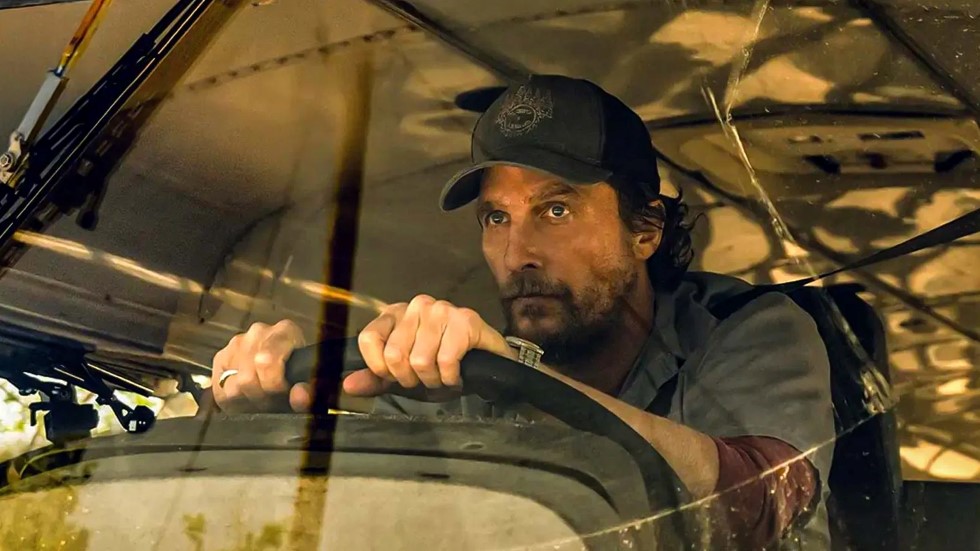
RT: I really feel like that stretch of the film is all about escalation — not just louder or busier, but a gradual tightening of pressure. We want the audience to feel Kevin’s focus narrowing as the world around him starts to unravel. So, we treated every sound — the kids’ chatter, the radio, even the wind — as part of that mounting tension.
At first, there’s this ordinary layer of bus ambience: kids talking, laughter, and the mundane radio comms. But as the winds pick up, those sounds start to fracture — the radio chatter becomes clipped and anxious, the increasing gusts whip through pylons overhead, throwing pine needles at the windscreen, and you can hear the cumbersome bus straining as Kevin works hard to perform a simple 3-point turn.
In the scenes with the firefighters first trying to access the fire, we fully expose the audience to the sheer power of the elements for the first time in the film
When Kevin’s mom calls, it cuts through all that with a reminder of what’s at stake; his son is sick, and Kevin isn’t there. Then his ex-wife is calling, adding to the pressure even more. At that point, the radio chatter from Ruby at the depot bleeds in, competing for his attention. That overlapping communication was crucial; it gives the sense that everyone’s talking at once, no one’s fully connecting, all the while the danger is closing in.
In the scenes with the firefighters first trying to access the fire, we fully expose the audience to the sheer power of the elements for the first time in the film. This chaos contrasts effectively when intercut with Kevin’s still more contained environment on the bus. Cutting between those perspectives is an effective tool we use several times throughout the story to emphasise the extremes our characters are facing. It builds a rhythm of anxiety. The sound is telling you the fire’s already coming for Kevin, even though he hasn’t seen it yet.
There’s a lot of background voices — radio announcers, radio chatter, radio calls from Ruby/base, phone calls, kids, crowds, emergency workers out at the fire sites, etc. Did you end up doing a lot of loop group for The Lost Bus?
RT: Yes, we did a large amount of loop group. The film is layered with so many background voices that we needed to create an authentic, living soundscape, but without it ever feeling staged.
As well as the children’s sessions over at Formosa, the adults were recorded over two days, but in two parts: a studio-based session for interior spot lines and anything that required picture reference, and an exterior session. This was done on grass, near a couple of small buildings. The grass meant there’d be little foot noise, and the buildings gave a beautiful natural slap to the more projected lines. We captured this session on a 5.0 array, always matching our microphones to Lisa’s on set.
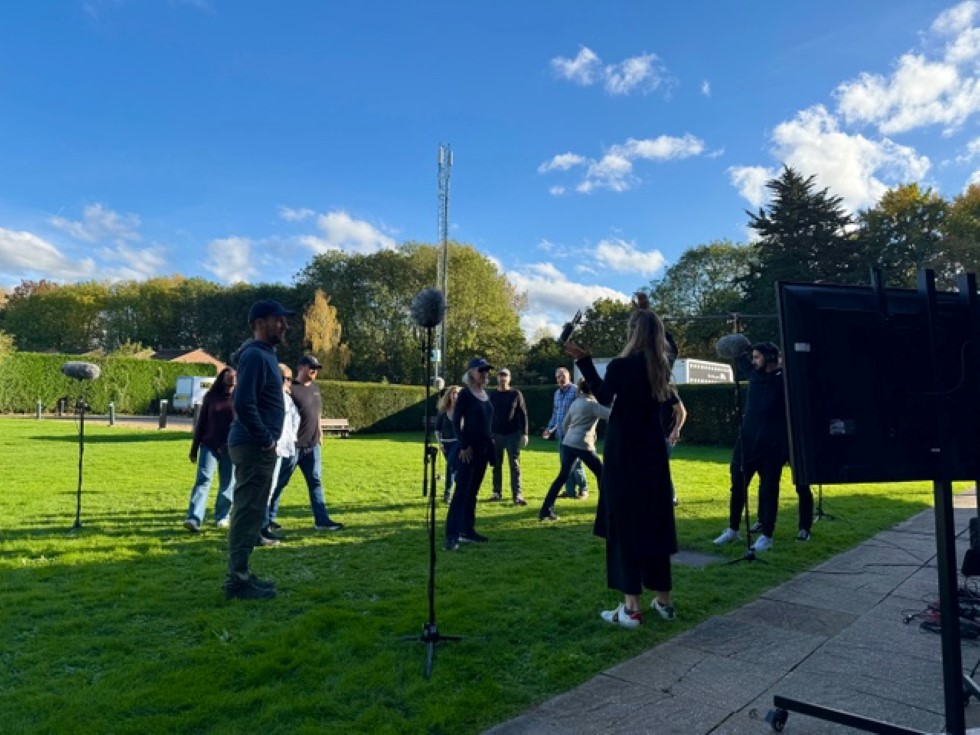
For those frenetic sequences at the makeshift HQ, the relief tents, paramedics rushing around, military, etc., we had a boom operator stand in the middle of the voice artists as they walked and ran about, crossing paths. This maelstrom of voices, acting out the frenzy and energy of those scenes, was critical in making the larger world of the wildfire responders feel alive, chaotic, and immersive all at once.
A lot of research went into the terminologies and protocols so the actors could be provided with support material, enabling them to give as authentic performances as possible. Our main source of information was Cal Fire Chief, John Messina. He was in command on the day of the actual Camp Fire. He is actually in the film too, so he did ADR for us, which he was unusually good at!
Whenever you hear background radio chatter, it is exactly what was happening at that moment. It’s real voices, saving real lives
We also had a real Cal Fire Air Attack pilot voicing those radio lines in the planes — John’s colleague, Shem Hawkins. When we described what was happening at that point in the story, we could ask him what he would naturally say. He and John informed so many of those comms lines in this regard. Even the firefighter comms, as others are racing to the initial burner, are other colleagues of John’s and not actors. That flatness was baked into their training, and it is what Paul naturally gravitated to in order to further anchor the film in realism.
Crucial to this point, we managed to find unedited recordings of the emergency communications from that day — five hours covering everything from the initial vegetation fire call to the eventual loss of radio signals as transmission towers went down. The dispatcher’s time checks gave us a precise time reference so we could precisely line this up against our film as the story unfolds. Whenever you hear background radio chatter, it is exactly what was happening at that moment. It’s real voices, saving real lives.
That thread of realism is impossible to replicate, and the calm, methodical delivery of trained first responders is a remarkable thing to have been allowed to use. Those voices are now preserved in the film forever, like a time capsule.
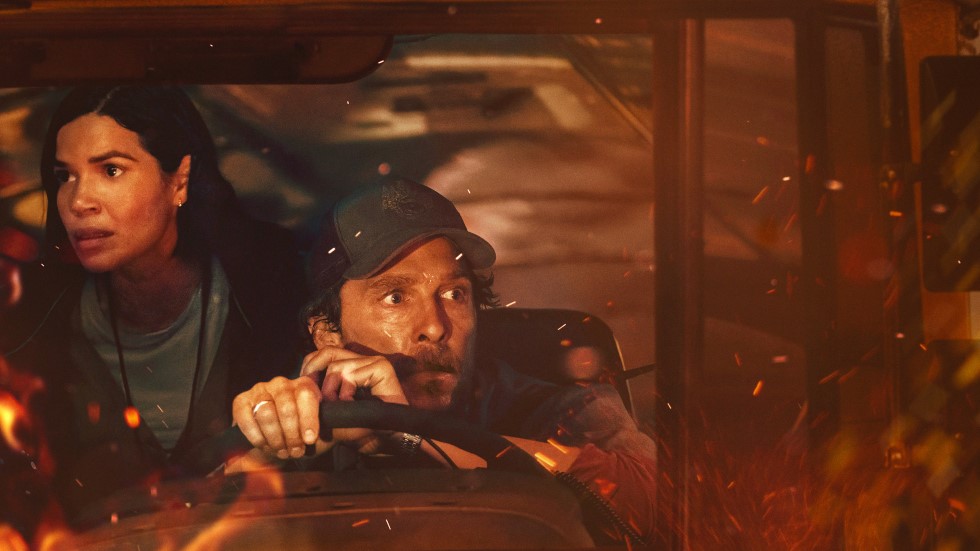
What were your biggest challenges for dialogue on the film? Any scenes that stand out as most challenging?
RT: One of the biggest challenges was balancing clarity of dialogue with the chaos of the environments. There’s a lot going on — kids on the bus, wind whipping through the mountains, fire roaring, radios and emergency chatter overlapping.
That whispered scene between Kevin and Mary, towards the end, was one of the most challenging sequences for me. They are speaking softly, almost in a private bubble, while the fire encroaches. From a sound perspective, it was all about intimacy — letting their voices carry the weight of regret and vulnerability without being overwhelmed by the surrounding chaos.
The challenge became removing these sobs from what is a delicate but fragile dialogue between our leads
As they filmed that moment, the children on the bus were sobbing quite loudly behind them. Later, Paul knew he wanted to make the children too exhausted by this point to project. The challenge became removing these sobs from what is a delicate but fragile dialogue between our leads. We had to rise to the challenge and preserve as much of these original performances as we could. Capturing those whispers, breaths, and pauses lets the audience connect with the characters even amid impending danger. In the end, that scene had only one line of ADR for tech, which we are very proud of.
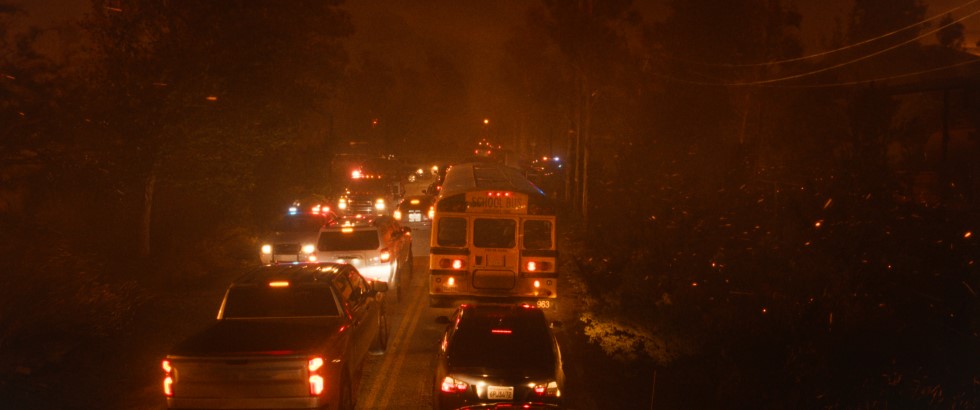
What went into the sounds of the fire? What were some of your sources for the fire and wind sounds?
OT: The fire in The Lost Bus was a huge focus — it’s almost like a character itself. Our goal was to make it feel alive, unpredictable, and immersive, without ever sounding generic. We layered real recordings of fire with manipulated textures to give it a larger-than-life presence. That included close crackles, distant roars, and subtle pops that add realism and tension.
We both tried many different routes to get a more varied palette of snarling, spitting, vicious embers
For the fire POV sequences, I designed a huge number of elements, as did Sound Effects Designer Aran Clifford. We kept making new elements as the VFX became more detailed throughout the project. We both tried many different routes to get a more varied palette of snarling, spitting, vicious embers. I would often use Symbolic Sound’s Kyma, while Aran used Sound Particles to good effect. There was no specific route — just trying different combinations and using the best of what had been created.
Wind was another critical element. We used a mix of field recordings and designed elements so it could interact with the fire and the environment. That allowed us to convey both the physical force of the wind and its emotional impact — how it spreads the fire, pounds embers against the exterior of the bus, and makes the world feel unstable. Combining these layers helped build that sense of chaos, danger, and relentless energy that runs throughout the film.
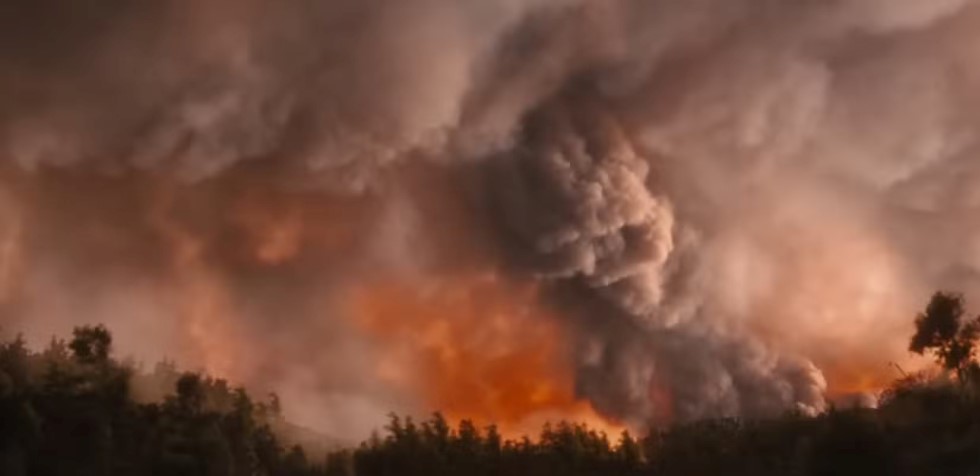
Can you talk about your approach to designing the fire sounds, especially in moments when the fire was a character — a monster — that is threatening the lives of Kevin, Mary, and the kids on the bus, as well as the emergency workers?
OT: For those moments, we treated the fire almost like a living, breathing character — a monster that’s hunting Kevin, Mary, the kids, and the emergency workers. Our approach was to make it feel unpredictable. We layered fire recordings with manipulated textures — deep, rumbling undertones, sudden crackles, and sharp pops — so it could feel both close and massive at the same time.
We also designed the fire to interact with its environment: gusty winds blowing, power lines straining and arcing, trees cracking and splintering under the heat. The POV embers dart about as if actively seeking and responding to the characters.

What went into the sounds of Kevin’s bus?
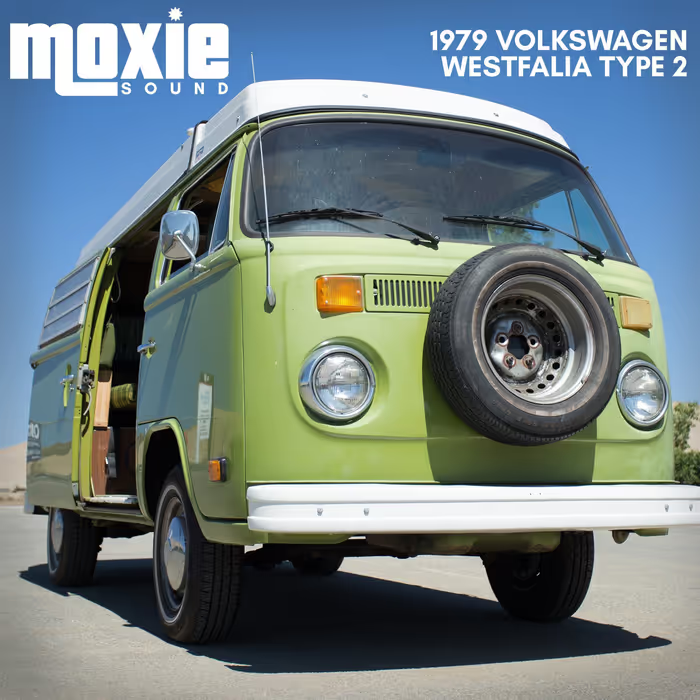
OT: John Fasal flew to the production location at the end of the shoot to record the school bus and the fire truck. John had recorded the vehicles in Jason Bourne for us, so we were very familiar with how fantastic his work is.
The bus was a confined, moving environment where almost all the drama unfolds, so it was vital to get an extensive library. John did a spectacular job, recording with Ambisonic mic setups on both vehicles. Re-recording mixer William Miller then did a fantastic job with how they translated into the theatre. I’m really pleased with the way they turned out, particularly the school bus.
The bus was a confined, moving environment where almost all the drama unfolds, so it was vital to get an extensive library
Early in the film, it sounds heavy and cumbersome, like it’s hard to maneuver the lumbering mass through the town. It’s impeding Kevin’s progress and adding stress to his day. But the same heavy mass and low-end torque take on a different guise later, and protect Kevin, Mary, and the children much as an armoured vehicle would.
It was gratifying to have the same set of recordings play so differently depending on how it was manipulated and augmented.
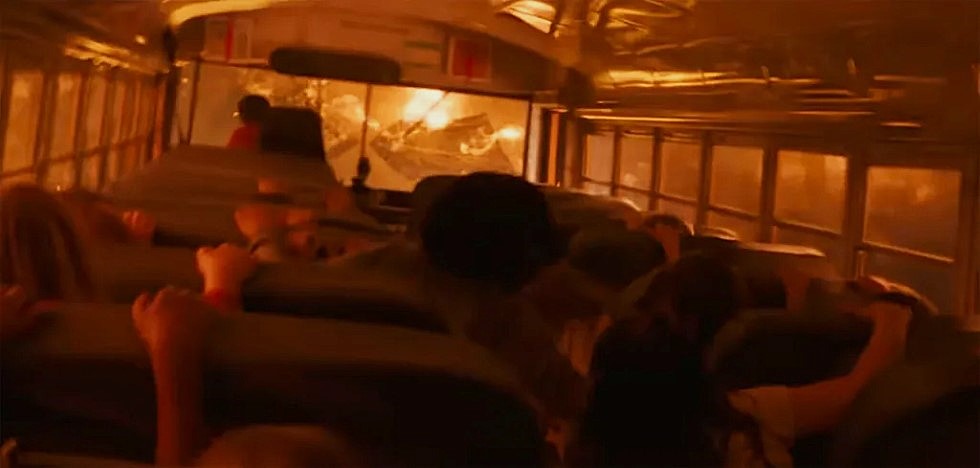
Can you talk about your foley team? (There are so many amazing foley sounds of backpacks and bus seat creaks, firefighter gear, etc.) In addition to character-related sounds, did foley also help with sonic details for the fires or the bus?
OT: Our foley team was incredible. Foley supervisor, Hugo Adams, foley mixer, Adam Mendez, and our foley artists, Sue Harding, Andrea King and Oli Ferris — added so much life and texture to every scene. They captured a huge range of details, from the pine needles hitting the bus windscreen, the nuances of the children’s uneasy seat creaks, to the dynamic energy of the firefighter equipment.
As well as adding layers of movement and texture that bring the environment alive, foley was also a powerful tool for guiding the audience’s attention. By subtly emphasizing certain elements, we draw focus to a character’s action, a small but important movement, or a dramatic beat in the scene.
What was your favorite scene for sound design? Can you talk about your work on it?
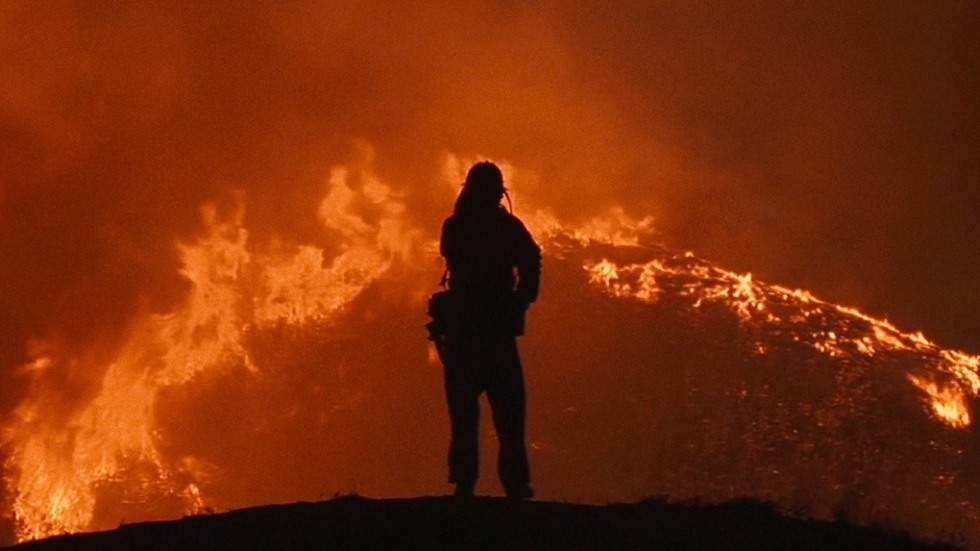
RT: The burnover sequence was a key scene for sound design. It’s one of the most intense and high-stakes moments in the film, as the fire quickly closes in on the small community of Concow. The residents are directed to shelter in a reservoir as the inferno approaches and eventually burns over them. We deliberately pared back certain layers of sound and rolled off some frequencies to create a sense of sensory overload. By simplifying parts of the mix and removing overly detailed elements, the fire and chaos feel enormous and overwhelming.
By simplifying parts of the mix and removing overly detailed elements, the fire and chaos feel enormous and overwhelming
Ironically, when everything is too detailed, events can seem smaller — the mind gets distracted by minutiae. By focusing on the essential elements — the roar of the flames, the wind, the bus rattling, and the key character reactions — we amplified the scale and intensity of the moment. It’s a way of making the audience feel trapped inside the scene, engulfed by the fire, without being lost in unnecessary detail.
We have seen reviews mentioning how the sound design makes the audience feel like they’re right there with them. Some people have even mentioned holding their breath when they watch this sequence, which attests to the power of sound design.

In terms of your sound work on The Lost Bus, what are you most proud of?
RT: We are so proud of how immersive and emotionally resonant the soundscape has helped in making the film become, and of our team’s dedication to authenticity throughout the process.
From the layered chaos of the fire and wind to the subtle foley details of the bus and the kids, to the real emergency radio chatter, every element was crafted to put the audience inside the world of these events. The way our work helps tell this story — grounding every moment while still making the danger palpable, heightening the tension, supporting both the micro and the macro of the story all at once — is highly effective, and something we are fortunate to have been a part of.
As a side note, firefighters from Cal Fire have recently been in touch to let us know how accurate and effective the film is. That is incredibly satisfying to hear!