




Cartoon Saloon’s hand-drawn animation for Netflix’s My Father’s Dragon – directed by Nora Twomey – inspired award-winning supervising sound editors/re-recording mixers Zach Seivers and Justin M. Davey (also sound designer) to take a hand-crafted approach to the sound, eschewing synthesized and overly digitally processed effects in favor of recording, editing, and layering natural sounds.
Here, they talk about using mics that capture ultrasonic frequencies so the recordings of wicker baskets and hampers can be significantly pitched down to create the sound of Wild Island sinking, recording loop group sessions with actors making animal vocalizations and layering those with real animal sounds, using the sounds from Elmer’s reality to design sounds for his imagined trip to Wild Island, creating an overall earthy and organic palette of sounds that ground the animation so it doesn’t feel ‘cartoony’ yet reinforces the whimsy and emotion of the story, and so much more. They also talk about how they made a punchy mix that works for both near-field (home) listening environments in stereo and theatrical environments with Dolby Atoms playback.
My Father’s Dragon | Official Trailer | Netflix
Cartoon Saloon has made some fantastic animations, like The Secret of Kells, Song of the Sea, The Breadwinner, and Wolfwalkers. There’s a definite style to their art! How did the look of the animation on My Father’s Dragon influence your approach to the sound?
Zach Seivers (ZS): I remember at the very beginning, we were given some really great conceptual drawings so we had a sense of how the film would look and feel. It has a whimsical, hand-drawn quality to it yet it’s still three-dimensional and immersive. It definitely has its own look.
Justin M. Davey (JD): Based on that, we immediately knew all the design needed to feel organic. Nothing could feel digital or processed or sci-fi. Everything had to feel tactile, haptic, and grounded in reality.
…everything that goes on in Wild Island sonically is inspired by something that is in his real life…
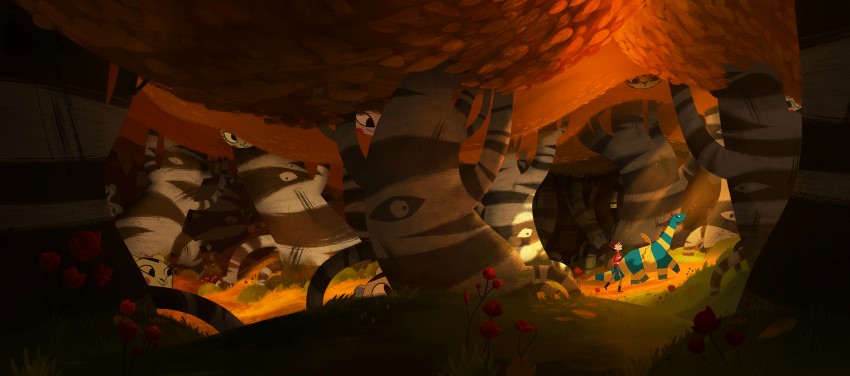
The entire trip to Wild Island takes place in Elmer’s head, so everything that goes on in Wild Island sonically is inspired by something that is in his real life, which is very grounded in this 1940s-esque era. So, everything had to feel appropriate for that and the design had to come out of those elements.
The element that could have been the most sci-fi in the film is this “magic lightning” (i.e., electricity) that happens on the island. We worked hard to make sure that did not feel like science fiction and we ended up with something we’re really happy with – this sound that has a glassy feel to it.
ZS: Yeah, it’s all very earthy. The imagery can have a lightness to it and a whimsy to it, so do you lean into that lightness and playfulness? Or do you stay with the edginess and weightiness of Elmer’s journey? Ultimately, the latter was what we tried to get at. It’s an interesting counterpoint to the image.
In terms of visual inspiration, the imagery is so evocative.
JD: In terms of visual inspiration, the imagery is so evocative. We’re obviously always influenced by the visual image of what we’re working on but in a fantastical, animated film, the latitude for what those environments are is so broad that gives us just enormous creative influence.
A couple of my favorite environments are the “pitcher plants,” where Elmer and Boris (the dragon) first meet each other. That environment is mysterious and mystical in a playful way. Another favorite location is a sanctuary, hallowed-ground space in Aratua’s Cave (he’s a wise, old tortoise). Nora sent us photos of cathedrals with stained glass windows and other sacred places that influenced the animation.
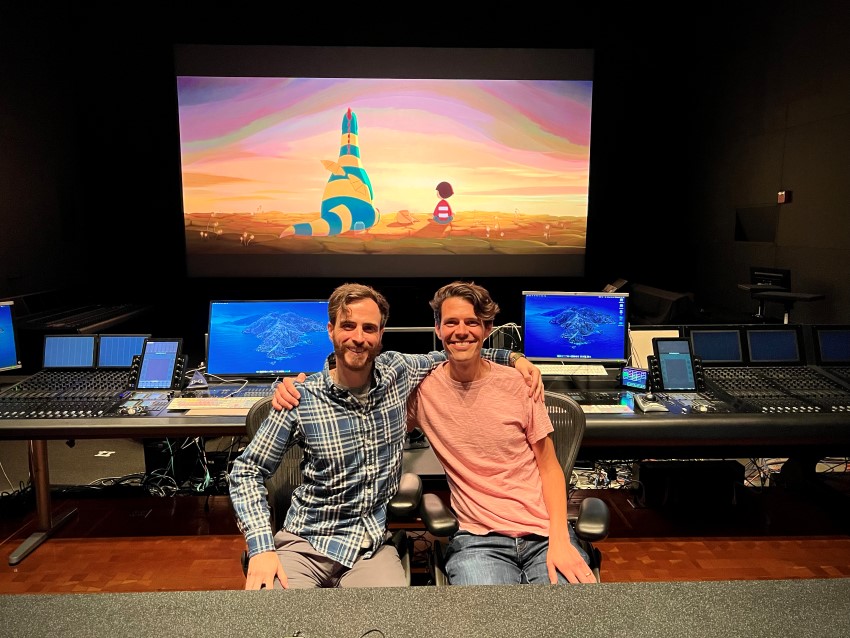
When you started on the film, what were the director and/or producers focused on sound-wise? What were the first things they needed you to tackle (other than the voice recordings)? Was there something they were most concerned with getting right in the initial phase?
JD: When we first started talking about the film, a focus for Nora was the sound of the sinking island. She wanted an exciting and unique sound for that earth movement. So that was the first thing in my head, and we did some fun, specific recording for the island (more on that below).
The other thing we had to figure out early on…was the logic of the animal vocalizations…
The other thing we had to figure out early on (because it would influence where our energy and focus were going to be) was the logic of the animal vocalizations: how do they speak versus vocalize or emote? Where do we use real animals? Where do we use our human actors vocalizing as animals?
If the animal talks in the film, does it have to have a human producing its animal sounds and roars or can we use designed animal recordings?
ZS: Nora was really supportive of us trying everything because she was not entirely sure of what was going to make sense. So she told us to go have fun, explore, and then show her some options. So Justin (on the sound design side) went about building the efforts, grunts, roars, and those types of sounds from real animal recordings. He just went to town with it.
We did a bunch of different sounds for the different species of animals.
At the same time, I worked with loop group. We had 15 amazing actors who were partially in Los Angeles and partially in Georgia; we had people all over the place all Zooming in and performing simultaneously. It was amazing how well that worked. We did a bunch of different sounds for the different species of animals. I conducted them over Zoom using hand gestures to guide them through how big or small to get.
So while I was editing all the group recordings to present a version that could work entirely with human-created animal vocalizations, Justin was doing the same using animal recordings. When those two elements came together, it was so cool. The Summit sequence (when Elmer arrives at the island and finds all the animals gathered together) was the one that we used to figure this logic out, and when we played everything against each other, we discovered that we could blend the loop group and sound design together and it worked really well.
It wasn’t trickery or weird digital, synthy processing.
It wasn’t trickery or weird digital, synthy processing. It was choosing the right sounds and carefully layering them. It was really neat how it came together.
JD: The Summit sequence was our proof of concept. When Zach and I put our work together, we immediately knew what didn’t play, and what frequencies were conflicting between the different animals. We also figured out that the howler monkeys were going to have to be purely loop group because they are an absolutely terrifying-sounding animal in reality. I tried to make them less nightmare-ish but was not successful. They’re the envy of every death metal vocalist.
Certain animals inherently make sounds that seem more emotional to us humans…
Fortunately, the loop group was able to give us a much friendlier sound for the howler monkeys and still served the purpose of the alarm system for the island.
ZS: Certain animals inherently make sounds that seem more emotional to us humans, and some just come across as terrifying. Once we heard what the animals really sounded like, it became clear what worked and what didn’t. There were several animals that I totally didn’t expect that Justin threw in, that all of a sudden added a whole other tonal layer that is a very emotional component.

What were some animals that you threw in to add more emotion to the sound? I’m thinking dogs; they’re very emotive…
JD: There weren’t any canine creatures on the island. It was comprised more of “exotic” animals, but we did use my beloved dog Bailey who passed away in 2021. Even before he was gone, I’d use him in some capacity in every project. Bailey is part of the mysterious Boris vocals we hear before we meet Boris; he sounds like a very big, scary dragon. Bailey also voices some of the whining baby tigers.
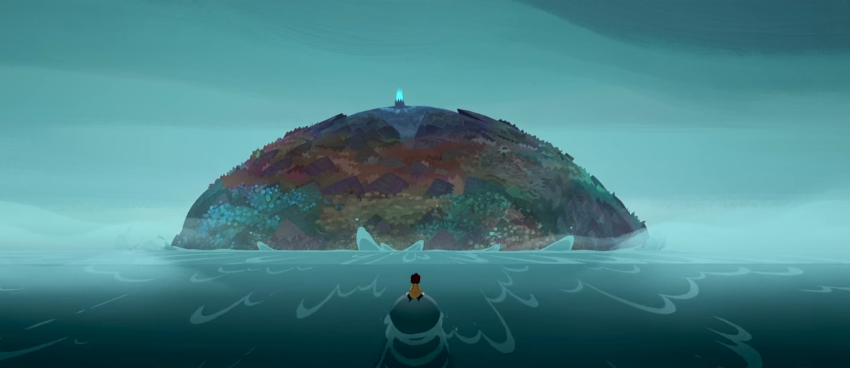
You mentioned the sound of the island sinking. What were the specific recordings you did for that?
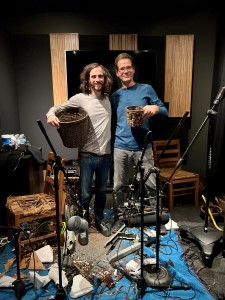
JD: I did a whole day of recording with one of our extremely talented designers, Jay Jennings.
Jay and I set up 10 microphones, four of which were specifically geared for recording ultrasonic frequencies so we could pitch the recordings.
We destroyed a bunch of wicker furniture chairs, hamper baskets, styrofoam, wood, and various things. We smashed them, dropped them, and jumped on them. (Nobody fell off the hamper; that definitely didn’t happen.) We got great, original-sounding material that we were able to pitch waaaaay down, and make these massive island crunches, cracks, and movements.
What was your post sound schedule on this film? Since there’s no production track, you have to do it all. How did you accomplish all you needed to get done, and who did you invite onto the sound team to help out?
ZS: The biggest reason why I have a huge emotional connection to this movie is that I’d been talking to the director about it for a few years now. The producers Julie Lynn and Bonnie Curtis are amazing. Justin and I have worked with them several times…
They’ve always been so kind to us, looping us into projects really early.
JD: I think we’ve worked on nine projects with them.
ZS: They’ve always been so kind to us, looping us into projects really early. My Father’s Dragon was the most extreme example of that. Having read the script and seeing it evolve over the years, I had such an intense and memorable reaction when I saw an early animatic with the actor’s performances cut in for the first time. I connected with it big time.
JD: You called me, and I had never heard you that emotional – ever.
ZS: And the reason why – to be honest – was because I thought it was such a beautiful story.
I was excited because I knew that Justin and I were going to get to work together on it.
Also, I was excited because I knew that Justin and I were going to get to work together on it. He’s someone that I’ve cherished working with, and we’ve worked together many times but it’s been a while since the last project we worked on. So, there was so much excitement from just knowing that this was something that we were getting to sink our teeth into.
JD: I’d also like to shoutout our crew because – as Zach said – we had this long post schedule that allowed me to reach out to really talented designers who had skillsets that were apt for this film and bring them onboard for whatever duration of time they had available.
Tim Walston started first on the film. I was still working on Spider-Man: No Way Home, but Tim was available at that time (that was his window). And I really wanted Tim to work on specific elements, such as the silly pipes in the apartment. I knew he would knock that out of the park, and he did. Jay Jennings needs no introduction and he contributed truly beautiful work.
I really wanted Tim to work on specific elements, such as the silly pipes in the apartment.
Diego Perez is an ace for me. We’ve been in the trenches for each other on multiple shows and I know he can handle anything.
This was the first time I had the privilege of working with Tim Farrell and only the second with Christopher Battaglia. Both Tim and Chris really dug deep and created some fantastic design elements.
ZS: They are all amazingly talented people who could do this movie themselves. The contribution of all those individuals and their collaboration amounts to something special and gave Justin the space to put his sound design hat on too.
While they were doing what they do best, I was able to cut all the dialogue myself, which was really fun. I was able to mix the dialogue while I was editing it, and feed finished pre-dubs to the sound design team to work against.

Tell me about the sound of Wild Island. What are some key sounds that make this place unique?
JD: As we mentioned earlier, the entire journey to Wild Island was imagined. Early on, we wanted to figure out how to play the fantastical elements using sounds that Elmer would recognize from his life. Nora knew right away that the pipes in the apartment would play as the island’s roots that connect it to the bottom of the ocean.
…we wanted to figure out how to play the fantastical elements using sounds that Elmer would recognize…
We also allowed the island and the city to influence each other. For example, in Nevergreen City, we used animal calls like orangutans, siamang apes, and tigers to create distant, mysterious sounds, alarms, and even some weird street conversation. We were trying to tie all these elements together in an emotional way. Some of the big island crunch sounds I recorded were used (not pitched down) early in the film when Elmer and his mom have to leave their foreclosed grocery store behind. There’s this empty, windy, creaky wooden scene and we’re using some of the island elements there as wood creaks.
There’s also a tonal lonely wind blowing through the empty store that I used again later when [SPOILER ALERT] Elmer walks into Aratua’s empty shell and realizes Aratua is dead.
For the roots and the pipes, I recorded the craziest door I’ve ever heard.
For the roots and the pipes, I recorded the craziest door I’ve ever heard. I was in New York working on A Quiet Place at Warner Bros. PPCS and there was this absolutely bonkers door hinge squeak on the third floor. Brandon Jones and I dubbed it “the Godzilla door.” I hadn’t found a specific use for the recordings yet and this was the perfect opportunity. The sounds from the door are pretty big and lent themselves well to being sized up for the island roots.
[tweet_box]Designing an Organic Sound for Cartoon Saloon’s Animated Film ‘My Father’s Dragon’ – with Zach Seivers and Justin M. Davey[/tweet_box]
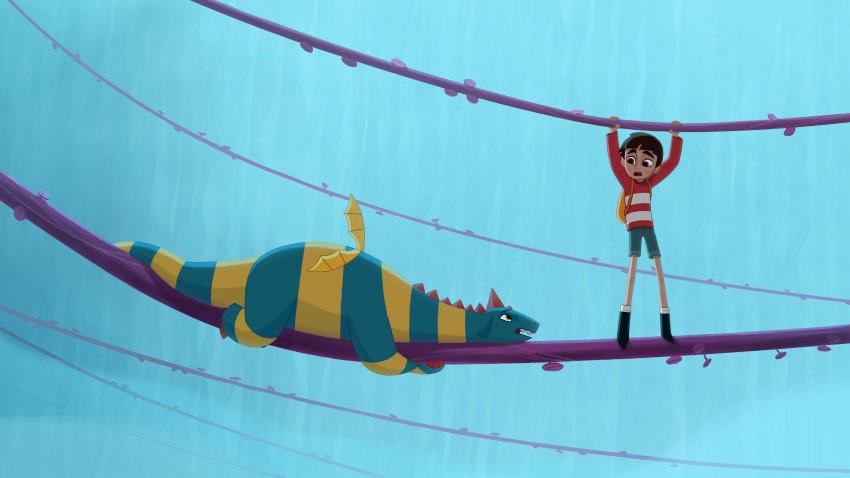
This is an adventure film for kids, so how were you able to scale back the intensity and action while keeping the energy in the more tense scenes?
JD: The global answer is that we didn’t, hah! In fact, throughout the process, things got bigger. Nora responded positively to the scale of the design; it felt necessary.
Zach and I had conversations about some of the bigger elements in the film. Zach has two young boys and is familiar with how they respond to frightening moments in movies. My nephews are on the other end of the spectrum; they watch films that scare me!
…throughout the process, things got bigger.
There were scenes I’d send to Zach that he felt unsure about, so I’d suggest that we lean into it because I wanted Nora to be able to know what was happening with her design, top to bottom, and respond to what was working or not working for her. Basically, every time, she said, “Yeah, that’s cool. I like that. We don’t need to pull it back.”
It’s always easier to tame a sound that’s too big or too scary than to go in the opposite direction. I ended up sizing up some things during the final mix. For the moments where you’re looking directly down into the core of the island, I felt they needed more power. We were laughing about it later, about how much additional energy and low-frequency I added to moments we originally thought may be too frightening.
For the moments where you’re looking directly down into the core of the island, I felt they needed more power.
So the answer is that we didn’t pull any punches.
ZS: And that was definitely despite my injections, asking Nora, “What do you think about this for a younger audience?”
Nora kept in mind a child’s perspective really poignantly, though. She understands her audience and gives them the benefit of the doubt. She believes in their ability to go on the journey and have moments of fear but know that they’re going to stay brave and get through it.
She was right. Justin and I were lucky to see the film in different places with an audience of kids, and they were totally into it and not at all crying or leaving the theater! They really enjoyed it and had great questions afterward. It’s great that Nora has confidence in kids to go along for the ride.
JD: We also brought a laptop to the stage so that we could periodically test the mix on a laptop. So we’d go from full Dolby Atmos to stereo on a Macbook Pro. That was helpful and informative for our choices.
We also brought a laptop to the stage so that we could periodically test the mix on a laptop.
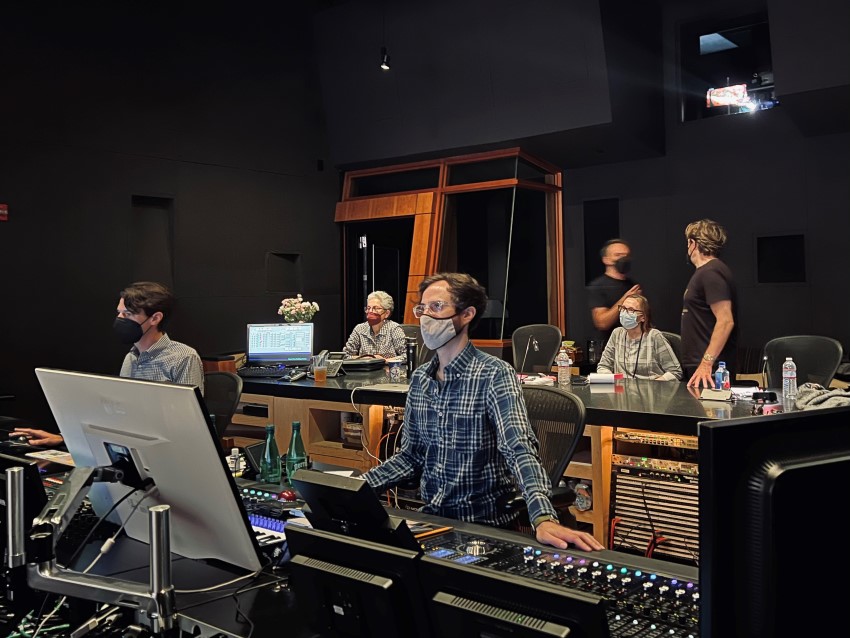
ZS: Yes, a huge thank you to Tom Lalley, William Stein, Marc Gebauer, and Jesse Johnstone, the engineers at Fox Studio Lot. The Robert Wise Mixing Stage is such a great room to mix in. It’s not too big or small; it’s tuned incredibly well. The mixes translate very well to a large room. It’s gratifying as a mixer to spend your time listening to the mix at reference on great loudspeakers and then switch over to a Macbook Pro and hear all the choices you made translate better than expected to laptop speakers. I credit that to the way the room was built and tuned.
JD: So much praise and thanks to Lisa Dennis, our post supervisor, and our producers at Netflix also. They gave us enough time to work on the film and create the soundtrack it deserves.
What are you most proud of in terms of your sound work on My Father’s Dragon?
JD: I’d say the world within the film altogether. I feel like the entirety of the sonic palette fits the film, and that’s a testament to the film itself and to Nora. The film speaks to you and you know what it needs. The worlds within the film – Wild Island, Nevergreen City, and the locations within the island – are unique and different yet they all stitch together to form the larger universe of the film.
The worlds within the film…are unique and different yet they all stitch together to form the larger universe of the film.
One of my favorite moments is a scene in which Elmer and Boris are on a ledge and in dire straits. It’s here that Boris regains his ability to fly. The “Boris Launch” sound is probably my favorite single sound in the show. It actually came together quickly and I knew it was the right sound when I sent it to Zach and to Nora. Nora replied in an email, saying, “The Boris launch just makes you want to get up and shout.” So I knew it was the right sound.
ZS: For me, the marriage of music and design in the film is what I’m most proud of. This is a movie with a lot of complex parts and there are really beautiful, extremely emotional themes in the music. And the same can be said of the sound design. That is a tough thing to navigate when you know that everyone in the room has given it their all emotionally and creatively, and they’re invested in what they’re bringing to the table. I’m proud that we walked away with something that we are all so happy with. There were some hard conversations where we had to figure out what was best for the story at any given moment, but we always got to a great place thanks to Nora.
A big thanks to Zach Seivers and Justin M. Davey for giving us a behind-the-scenes look at the sound of My Father’s Dragon and to Jennifer Walden for the interview!