






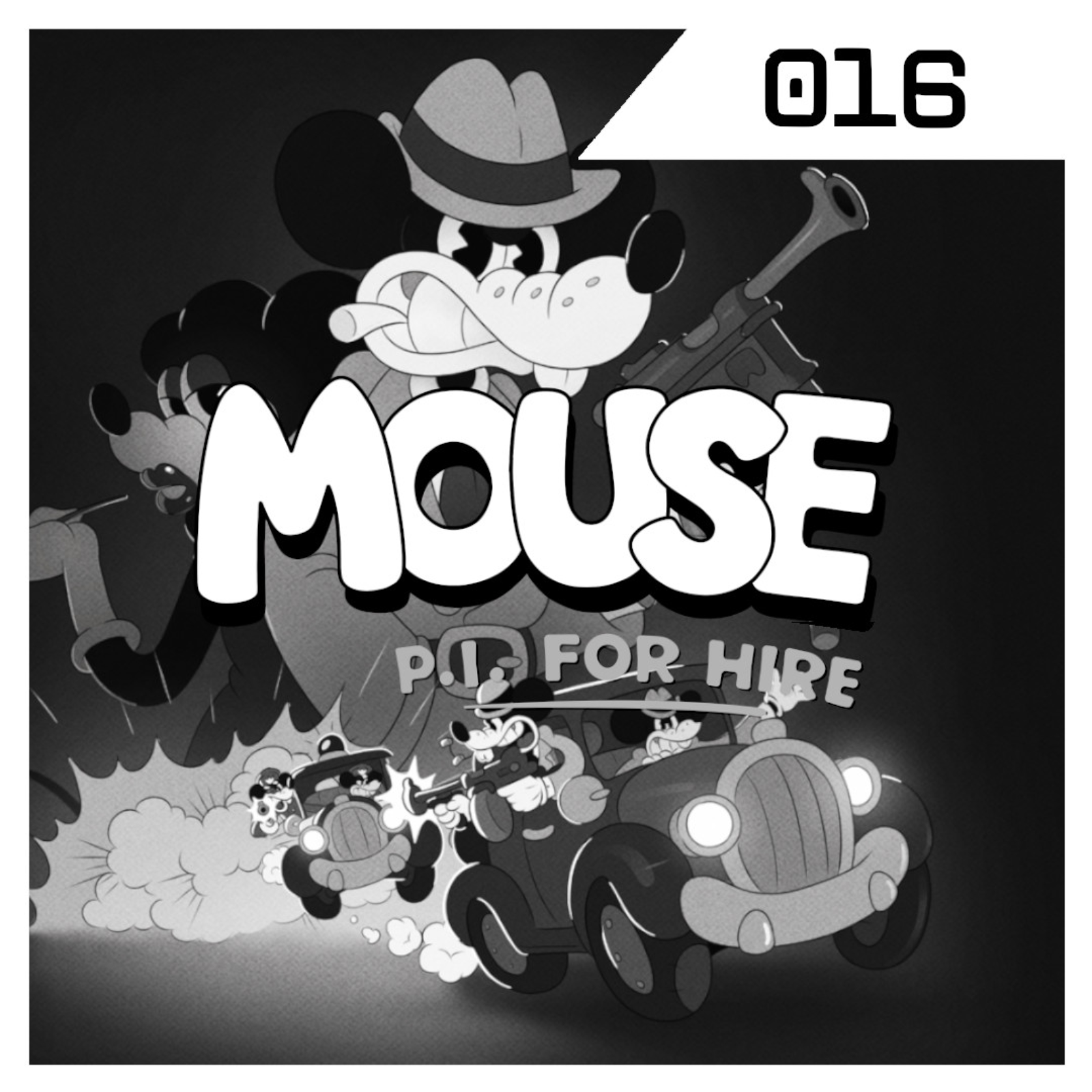
Fumi Games’ MOUSE: P.I. For Hire is a noir detective shooter that plays like a 1930s cartoon, with all of its animation drawn by hand – and the audio built to match. Here, the game’s sound team shares the story of how that vintage, hand-performed soundscape came together, and how they kept it authentic in a fast-paced boomer shooter.
Find out how old typewriters and analog machines ended up in the game’s interface, what Benny Goodman has to do with the combat music, why even the ‘clean’ mix isn’t entirely clean, how hidden sound gags reward curious players – and so much more!
 New ReleaseNOVA by Mattia CellottoWATCH VIDEO →
MOUSE: P.I. For Hire | Official Out Now Trailer
The game is done in hand-drawn animation – every frame! How did the unique approach to the visuals impact your approach to sound? How did you make the sound feel “hand-drawn”?
Sound Team: One of the biggest inspirations for the entire project came from early animation studios like The Walt Disney Company and Fleischer Studios. Films and animations such as Steamboat Willie, Silly Symphonies, Popeye, Betty Boop, and Who Framed Roger Rabbit were incredibly important references for us.
As a team, we spent a huge amount of time studying those old cartoons. One of our internal references was watching dozens and dozens of classic Popeye episodes to fully absorb the rhythm, pacing, visual language, and especially the relationship between movement and sound.
For the sound design itself, from the very beginning, we wanted it to feel like it belonged to the same handcrafted world as the visuals.
One thing that fascinated us was how simplified the worlds of those cartoons were. The audio language was also much simpler and more focused. Back then, creating sound effects was often an enormous effort. Many effects were physically performed live, created using custom-built machines, orchestral tricks, or highly stylized recordings. Because of that, those sounds were treated almost like characters themselves – very exposed, very readable, very intentional.
That philosophy became extremely important for MOUSE.
We wanted sound effects to feel like caricatures or miniatures of reality rather than hyper-realistic simulations. In those classic animations, a sound often had a very clear role and occupied the foreground of the experience. It wasn’t buried under layers and layers of dense realism.
To make the game sound “hand-drawn,” we approached audio almost like animation itself.
Many sounds were physically performed and recorded using simple, everyday objects – wooden props, metal objects, pitch-changing whistles, PVC pipes, mechanical toys, and various improvised tools. Many sounds were intentionally exaggerated and performed rhythmically rather than realistically.
For example, we used various whistles that imitate: locomotives, horns, birds, and cartoon-like movement transitions. We also created many effects vocally using mouth performances and physical foley gestures inspired by early animation sound techniques.
At the same time, we combined those recordings with layered source material, mechanical libraries, virtual instruments, and live musical elements. Sometimes a sound effect behaved almost like a musical phrase rather than a traditional sound effect.
One example I really like is a shotgun reload sound created using a PVC pipe. By striking the pipe with a closed hand, we achieved a resonant air-pressure effect that felt like inserting shells into a weapon. Then each subsequent reload layer was pitched slightly higher, creating a rising tonal progression as the shotgun became fuller and fuller.
Another important part was tonal processing. Almost every foley element and gameplay sound was processed through filters designed to gently mimic the sound of vintage playback systems. We softened the extreme lows and highs, pushed the midrange slightly forward, and added subtle saturation to create a more rounded and stylized sound signature.
So even without the optional degradation filters enabled, the game already carries a slightly vintage, cartoon-inspired tonal identity.
At the same time, we had to remain very careful with gameplay readability. For example, Jack Pepper’s regular foley is intentionally restrained. Since the player hears those sounds constantly for the entire game, we didn’t want them to dominate the soundscape or fatigue the player over time.
However, temporary or ability-driven actions – things like wall running, special traversal moves, double jumps, lock-picking, or combat actions – received much more stylized and expressive layers. Those moments are meant to feel performative and impactful, almost like animated punchlines inside gameplay.
In a way, we tried to recreate the philosophy of early cartoons, where certain sounds step into the spotlight exactly when they have something important to say.
MOUSE: P.I. For Hire – A Deep Dive Documentary
Also hear – from the Audio Podcast Alliance:
Overall, what were some guidelines or key pillars for the sound aesthetic of the game?
Sound Team: One of the biggest creative goals was preserving the artistic identity of early 20th-century animation while still maintaining the gameplay readability expected from a modern boomer shooter.
That created a constant tension between authenticity and functionality.
We quickly discovered during prototyping that weapons absolutely had to dominate the mix whenever the player fired them. In a shooter, weapons are the primary gameplay language, so no matter how stylized the game became, those sounds always needed to remain impactful and readable.
At the same time, we made a very unusual creative decision regarding weapon progression.
At the beginning of the game, weapons are intentionally much more bandwidth-limited and midrange-focused. They sound closer to vintage cartoon aesthetics, with narrower frequency response and less aggressive low-end and high-end information.
However, as players upgrade their weapons through the progression system, the weapons gradually open up sonically.
Each weapon level expands the frequency spectrum slightly further. The higher the upgrade level, the wider, heavier, and more powerful the weapon becomes. By the time the player reaches the highest weapon levels, the sound becomes dramatically fuller, punchier, and more modern in impact.
This created a really interesting balance.
Early in the game, we stay much closer to the authentic cartoon-inspired aesthetic. But over time, as the player becomes more powerful, the sound design itself evolves alongside the gameplay progression.
It also became a reward system for players who enjoy heavy weapon feedback. The player doesn’t just statistically improve the weapon – they emotionally feel the weapon becoming more powerful through the sound itself.
Another major pillar was treating music and sound effects as part of the same storytelling language.
Classic cartoons often use music almost like a narrator, constantly guiding emotion and movement. We wanted gameplay to feel similarly directed.
That meant carefully staging moments where sound effects intentionally move into the foreground while music steps back, and other moments where music becomes dominant and gameplay sounds become more supportive.
We spent a huge amount of time playtesting levels, adjusting transitions, and shaping the balance between music and sound effects so gameplay would feel almost like playing through a living animated film.
Nothing in the soundscape was accidental. Every stylistic choice was carefully directed and intentionally shaped to evoke the experience we wanted the player to feel.
Did you capture any custom recordings for the game? (If so, can you talk about your recording sessions – what you captured & how you recorded the sounds?) Any helpful indie sound libraries?
Sound Team: Yes, a lot actually.
We used whistles, metal props, wooden objects, PVC pipes, mechanical toys, physical foley performances, and even mouth-made sound effects inspired by classic animation techniques.
At the same time, we heavily layered sounds together using recordings, libraries, virtual instruments, and live instruments.
A lot of sounds in the game are actually multi-layered hybrids built from completely different types of sources. Sometimes a weapon layer could contain mechanical recordings, musical textures, processed foley, and synthetic tonal elements all working together.
We often approached sound design almost compositionally, especially when trying to capture the game world’s exaggerated cartoon logic.

What went into the sounds for Jack Pepper: his foley, his gun(s), his melee/fight sounds, his lock-picking skill, his chainsaw, etc.?
Sound Team: Jack Pepper’s Foley was designed very differently from traditional, realistic FPS protagonists.
His core movement sounds intentionally act more like a supporting layer rather than a dominant foreground element. Since players hear those sounds constantly throughout the game, we wanted them to remain readable but never exhausting or distracting.
At the same time, gameplay abilities and special actions become much more expressive and theatrical.
As the player unlocks new traversal abilities, new foley layers are gradually introduced into the character.
For example:
- double jumps introduce spring-loaded shoe mechanisms,
- wall-running activates suction-cup sounds attaching and detaching from surfaces,
- helicopter-tail traversal transforms the tail itself into a spinning miniature rotor system,
- and certain environments introduce completely unique surface interactions.
Some levels even contain surfaces like banjos that trigger melodic notes while moving across them. We often tried to think about sound design melodically rather than purely rhythmically, which felt very connected to the musical language of classic cartoons.
The lock-picking systems also follow that philosophy. As the player manipulates lock pins with Jack’s tail, the pins create small, randomized melodic phrases. Every successful interaction generates slightly different tonal sequences, giving the mechanic its own musical identity rather than making it feel like repetitive mechanical UI feedback.
Jack’s melee combat was heavily inspired by classic cartoon violence language.
Punches and kicks intentionally use exaggerated “slapstick” style impacts – combinations of hand slaps, body hits, meat impacts, and highly stylized cartoon-style transients similar to classic animated films.
One of Jack’s attacks transforms him into a spinning propeller-like tornado inspired by old single-engine airplanes. During combat, powerful knockouts can even trigger exaggerated boxing bell accents to reinforce the comedic cartoon energy of the action.
Weapons followed a similar philosophy.
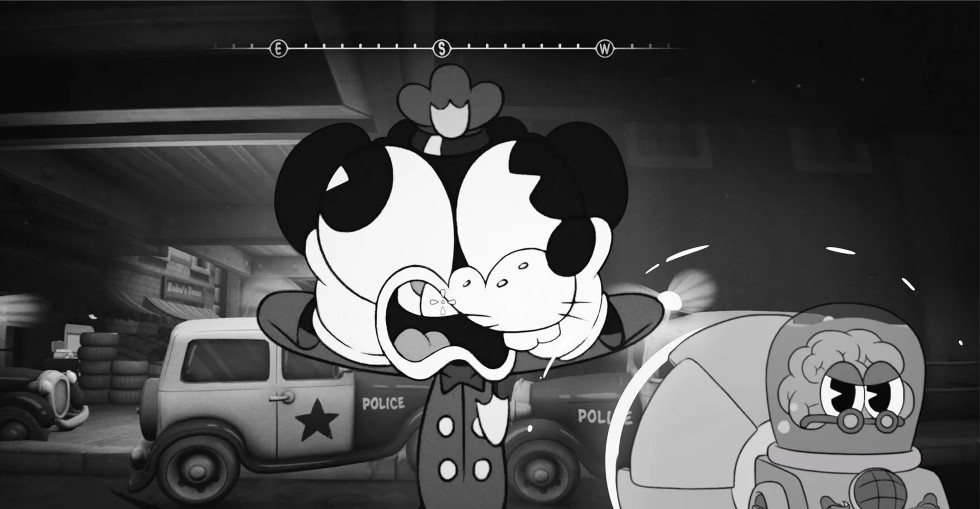
Some weapons are intentionally absurd and highly stylized. One example is a weapon built around a living brain contained inside a capsule, capable of firing energy rings that overload enemy brains until their heads literally inflate and explode.
Its reload system uses propaganda-themed musical boxes, each with melodic reload sequences that become part of the weapon’s identity.
Another weapon behaves more like an old cannon being loaded with heavy metal balls. During reloads, we used recordings inspired by bowling balls rolling through bowling return systems to create exaggerated mechanical movement with a strangely satisfying cartoon feel.
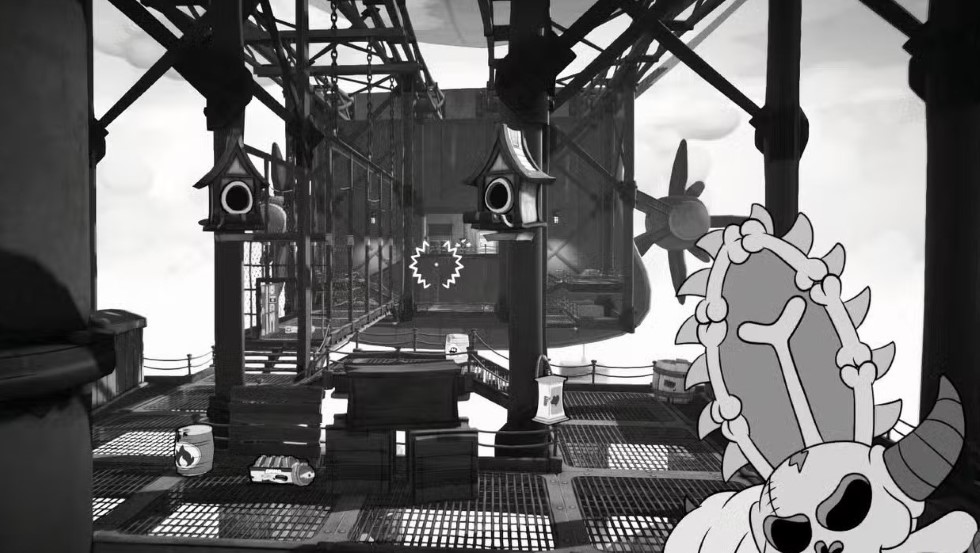
The chainsaw became another major sound design playground.
The weapon itself is built from heavily edited chainsaw recordings designed to operate across multiple behavioral states:
- idle movement,
- single aggressive cuts,
- and continuous high-RPM operation.
On top of that, the chainsaw system dynamically reacts to different materials in the environment.
Cutting through wooden surfaces produces aggressive splintering and shredding layers, while attacking metal surfaces introduces heavy grinding and screeching textures. When used against enemies, the sound shifts toward gore-driven foley with flesh impacts and exaggerated visceral splatter elements surrounding the player.
The goal across all of Jack Pepper’s audio was constantly blurring the line between sound design, music, comedy, physicality, and gameplay feedback, which felt very true to the spirit of classic animation.
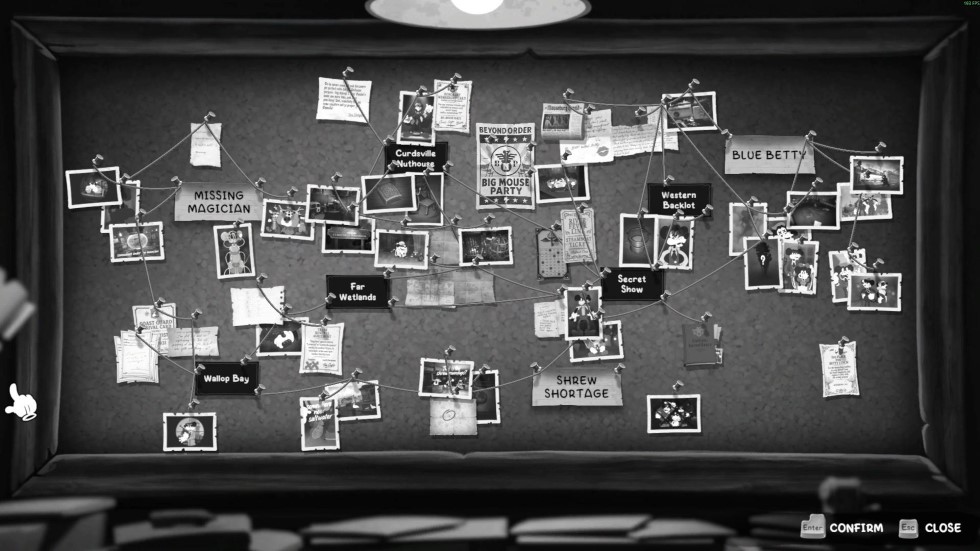
What went into the UI sounds, such as the menu sounds, rewards/loot, clues, etc.?
Sound Team: Our main philosophy for the UI was making it sonically neutral, tactile, and non-fatiguing.
Because the player constantly interacts with menus, inventory systems, weapon wheels, notebooks, and HUD elements, we knew the UI couldn’t aggressively compete with gameplay audio. Otherwise, it would become repetitive very quickly during long sessions.
At the same time, we still wanted it to feel fully connected to the world and the era the game takes inspiration from.
Most UI interactions were built using recordings of small mechanical objects, inspired by old typewriters, analog machines, paper-handling, rotating mechanisms, metal clicks, and other moving mechanical parts. The weapon wheel itself also uses subtle mechanical movement layers to maintain consistency with the world.
Interestingly, we intentionally avoided adding constant audio feedback to permanently animated HUD elements such as health and ammo displays. Those interface elements are always moving visually during gameplay, but adding continuous audio behavior to them would become extremely monotonous and distracting after only a short time.
Rewards and pickups received a very different treatment.
Every money pickup – whether coins or paper cash – contains additional stylized layers designed to exaggerate the satisfaction and “celebration” of collecting rewards. We wanted those moments to feel playful and emotionally rewarding in a very cartoon-like way.
Different ammunition types also have their own distinct pickup identities depending on the weapon category they belong to. Even small gameplay interactions were treated as opportunities to reinforce the personality of the game world.
Clues and detective mechanics became especially important musically.
Whenever players collect clues or attach evidence to the investigation board, subtle variations of the game’s main musical theme are triggered. That motif slowly embeds itself into the player’s memory over time.
Later in the game, the same theme reappears across different musical styles, locations, moods, and instrumentations. Sometimes it’s playful, sometimes noir-inspired, sometimes tense or melancholic.
That recurring motif became an important connective tissue between the many different worlds and tones inside the game, helping the entire experience feel emotionally cohesive despite constantly shifting gameplay and environments.
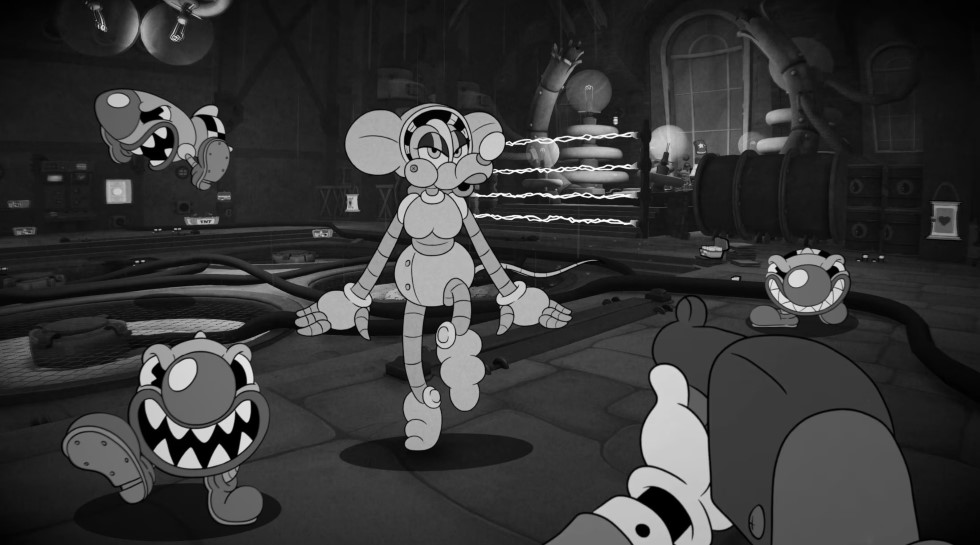
What went into the sounds for Robo-Betty?
Sound Team: The sound design for Robo-Betty was primarily handled by the PlaySide audio team, led technically by John Guscot and Zach Zuluaga.
The goal was to create a robotic character that felt less like modern science fiction and more like a retro-futuristic fantasy imagined through the perspective of the 1920s, ’30s, and ’40s.
A huge inspiration for the character was Metropolis and the era’s fascination with robots, mechanical women, alien technology, and futuristic machinery.
Her voice also became a major part of her identity.
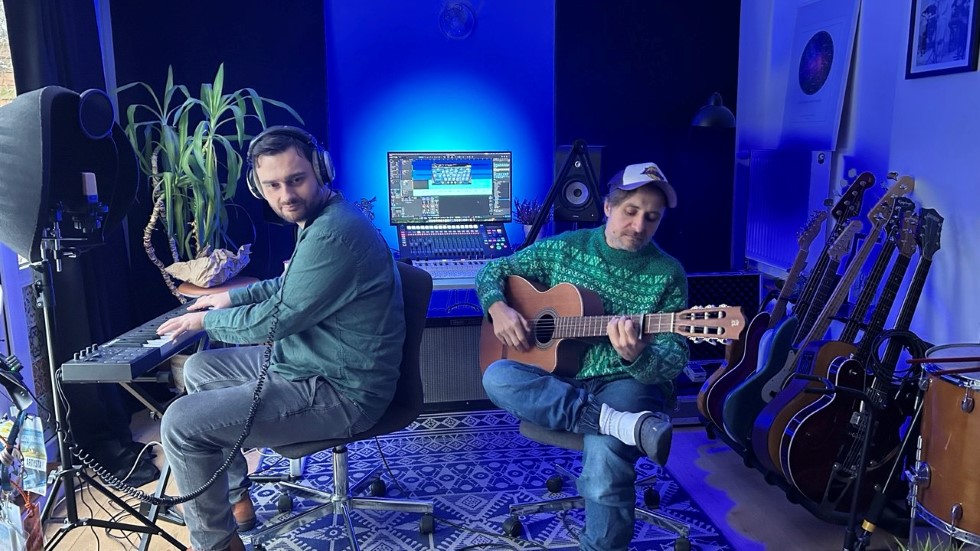
“Music in game sounds like the old cartoons the animation refers to.” What were some music references/inspiration? What about instrumentation? Did you record live musicians? Did you use vintage mics, or was the vintage quality added as a post-process?
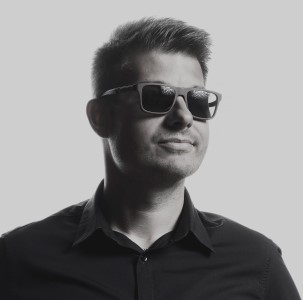
Patryk Scelina: At the very beginning, I started listening to some music references from Damian and FUMI GAMES. They already had an overall vision for the music, and they even used some temp tracks in the early gameplay, so I didn’t start from nothing. It varied from old Swing and Ragtime to modern Jazz and Blues. I knew from the start that my job wasn’t to reinvent the wheel, but rather to use all of that as inspiration and come up with new material that not only sounds similar but also serves the function of dynamic gameplay. Actually, we quickly realized that even though a lot of the temporary music used in the game was fast, we’d need the tempo of the combat music to be even 10-20% faster.
That being said, I needed to do a test, and not just a music composition test. I also wanted to create a music system prototype to check how the music should be structured so we could use it dynamically in the gameplay. One of my favorite tracks of the era is Benny Goodman’s “Sing, Sing, Sing,” and I really wanted to write a piece with a similar vibe but tailored to work in the adaptive music system. That was my initial demo, which I used for early tests and iterations.
That was a very important part of the process, simply because it allowed me to decide, in general, how that fast-paced music needed to be structured. That first piece went through a few iterations during testing, but I eventually used it in the game. I also put it on the soundtrack and called it “Sling Sling Sling” to pay homage to Benny Goodman.
When it comes to other inspirations, I listened to a lot of film noir scores, not necessarily to find something that I’d use as a direct reference, but more to sink into the style. I listened to some Bernard Herrmann scores, such as Taxi Driver, Chinatown by Jerry Goldsmith, The Pink Panther by Henry Mancini, and a lot of old crime TV series soundtracks. Clearly, these are not from the same era. However, it was most important to me to establish a color palette and the overall sound of our detective story.
MOUSE: P.I. For Hire (Original Game Soundtrack) by Patryk Scelina
Those two types of references were my starting point. However, there are some other music styles as well. Jack Pepper visits many different places during his investigation. That gave us many opportunities for musical twists, too. We have some Bluegrass flavours, a taste of Spaghetti Western, and even some spooky experimental electronic music. All of that led to using various instruments and colors. The core sound is Big Band-oriented, which means piano, bass, drums, and horns. Beyond that, we have clarinet, vibraphone, acoustic and electric guitars, banjo, mandolin, violin, harmonica, synths, and even vocals.
Not everything was recorded live. We recorded most of the Big Band music and many solo instruments, such as guitars and violin. But there are many cues in the game that were produced entirely or partially with virtual instruments.
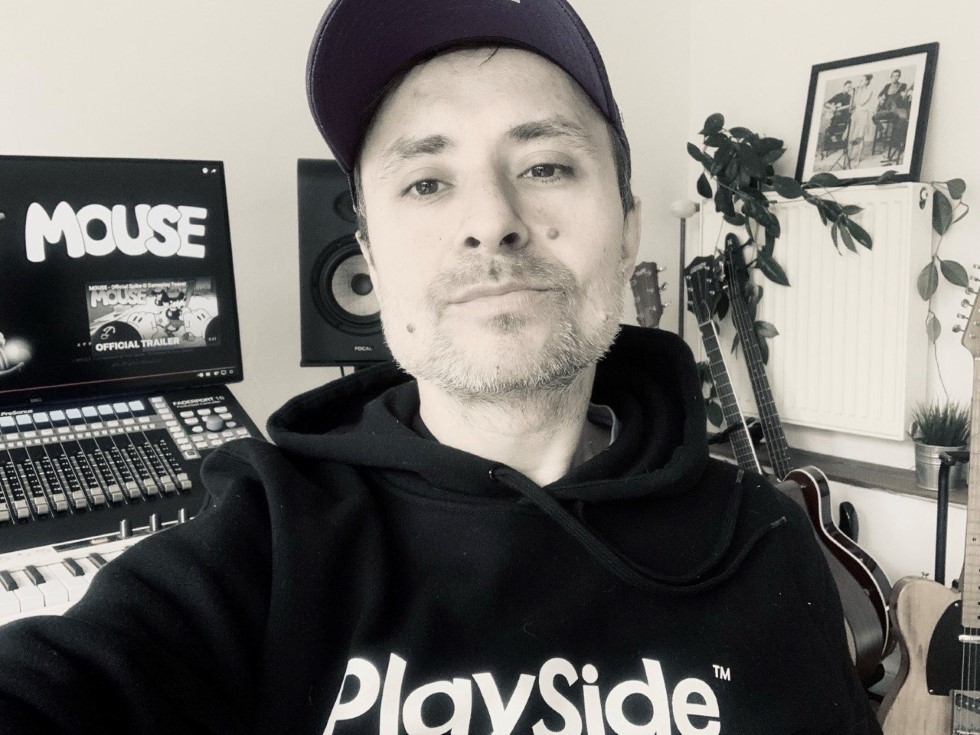
When it comes to recording techniques and equipment, we had an idea to use some old carbon microphones to get that authentic early 20th-century sound. However, that would have been too destructive to the sound and simply not pleasant to listen to for longer than 10 minutes. So we decided to find a sort of sweet spot. In other words, we made it sound a bit vintage, but not too vintage. We mostly used vintage condenser microphones and some modern ribbon mics for horns. That was the starting point. Then our recording and mixing engineer, Kamil Biedrzycki, aged the sound a bit more using some analog gear and a few fancy plugins.
The final stage of aging the sound was the sound degradation system in Wwise designed by Damian. That works like a charm because it is a real-time effect. It adds some noise, distortion, and wobble that constantly evolve. That’s even better than having music files with pre-rendered wobble and noise, simply because that would be a fixed effect embedded in the music loop. Damian’s system adds all of those imperfections to the entire audio signal randomly, which makes the whole experience much more natural and organic.
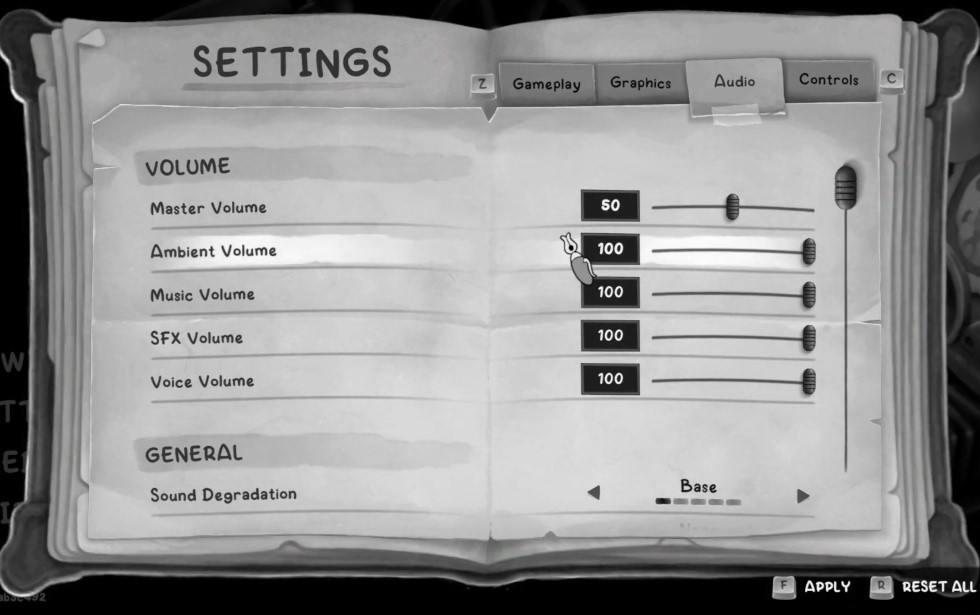
Players can customize their sound experience of the game by adding distortion filters via the Settings menu. Players can choose different filters and how much filtering is applied. For instance, they can add a ‘vinyl’ filter that sounds like 1930s – 1940s vinyl records. If they want the sound to be clean, they can opt to do that. What did that require on the tech side? Also, what went into the filtering – off-the-shelf filters, or custom-made?
Damian Czajka: The degradation system became one of the most important and ambitious parts of the project because I didn’t want it to feel like a simple “retro filter” placed on top of the game.
From the very beginning, the goal was to create a system that emotionally recreates the feeling of listening to old media rather than simply lowering fidelity.
I started researching historical playback technologies from different eras – from early Edison phonographs and wax cylinders all the way through shellac records, celluloid recordings, and later vinyl playback systems from the 1930s and 1940s.
What fascinated me was that every playback technology had its own identity and imperfections:
- limited frequency response,
- mechanical instability,
- saturation,
- surface noise,
- crackle,
- wobble,
- playback-speed inconsistency,
- and the physical noise generated by the machines themselves.
The earliest phonographs using wax cylinders sounded extremely distorted and bandwidth-limited. Their playback mechanisms were mechanically unstable, noisy, and heavily saturated. Later technologies gradually improved fidelity, but every generation still carried very specific artifacts and sonic coloration.
I wanted to recreate not only the tonal response of those systems, but also their physical behavior.
So instead of building static “preset EQs,” I designed a real-time degradation system in Wwise that dynamically processes the audio during gameplay.
Each degradation mode combines multiple layers:
- filtering,
- saturation,
- distortion,
- playback noise,
- mechanical hum,
- surface artifacts,
- transient softening,
- bandwidth limitation,
- and playback instability simulation.
One of the most important parts of the system is the procedural wobble simulation.
The pitch of music and sound effects is driven by randomized automation parameters. The system constantly changes both the target values and the interpolation time between them. That means the pitch subtly drifts in constantly evolving ways, very similar to unstable RPM behavior on old phonographs, gramophones, or vinyl players.
What makes it feel natural is that the modulation never loops predictably.
The values randomize continuously, along with the timing between changes, which creates subtle organic movement inside the sound rather than a repetitive “plugin wobble effect.”
Another important layer was recreating the idle noise of the playback devices themselves.
For example:
- vinyl playback introduces soft crackle and continuous groove noise,
- wax cylinder simulations become much narrower and more distorted,
- older playback devices introduce stronger mechanical noise and harsher tonal instability.
Interestingly, the noise itself often helped create pleasant randomness and movement in the soundscape.
At the same time, we had to constantly balance authenticity with gameplay readability.
If we fully recreated authentic early recording technology, the game would quickly become exhausting to listen to, and gameplay clarity would collapse. Weapon readability, dialogue intelligibility, enemy feedback, and navigation cues are still extremely important in a fast-paced shooter.
So the entire degradation pipeline was built around controlled stylization rather than pure historical simulation.
The effects are intentionally subtle enough to preserve gameplay functionality while still strongly shaping the emotional identity of the soundscape.
Another important design decision was that even the “clean” mode of the game is not completely modern-sounding.
Almost every sound effect in the game already contains subtle vintage coloration:
- softened highs and lows,
- slightly emphasized midrange,
- gentle saturation,
- and a warmer tonal profile.
That means the game always retains some degree of cartoon-inspired vintage identity even without the degradation presets enabled.
Interestingly, the music itself remains mostly untouched in the default setup. Only after enabling stronger degradation presets does the music begin receiving more aggressive filtering, wobble, distortion, and playback coloration.
On the technical side, the system relied heavily on custom Wwise routing, RTPC-driven modulation, layered processing chains, randomized parameter behavior, and dynamic effect automation.
The final goal was never creating a museum simulation of old playback systems.
The goal was to make players feel emotionally as if they were inside a living, breathing cartoon world from another era – while still preserving the responsiveness and clarity required by a modern action game.
What were your biggest creative challenges for sound on MOUSE: P.I. For Hire?
Sound Team: The biggest challenge was constantly balancing stylization with gameplay clarity.
We wanted the game to maintain its noir-inspired cartoon atmosphere while still functioning as a highly readable boomer shooter.
At the same time, this project gave us a rare opportunity to make bold decisions that normally would be very difficult to justify in more traditional productions.
The world and visual identity of MOUSE allowed us to experiment with ideas that could easily feel too strange or risky in another type of game.
Boomer shooters naturally create a huge amount of sonic chaos:
- weapons firing constantly,
- enemies attacking,
- explosions,
- music transitions,
- foley,
- environmental interactions,
- and UI feedback all happening simultaneously.
One of the biggest challenges was making sure players could still identify what happened purely through sound.
We often described it internally as creating “audio key-and-lock relationships.” The player should immediately recognize:
- which weapon was used,
- what target it hit,
- what type of enemy reacted,
- and what gameplay result occurred.
Another major creative challenge involved designing scripted events and what we internally treated as “hero audio assets.”
Certain 3D emitters and environmental moments inside the levels needed to sound completely distinct from the surrounding ambient world. Those sounds had to immediately pull the player’s attention without feeling disconnected from the environment itself.
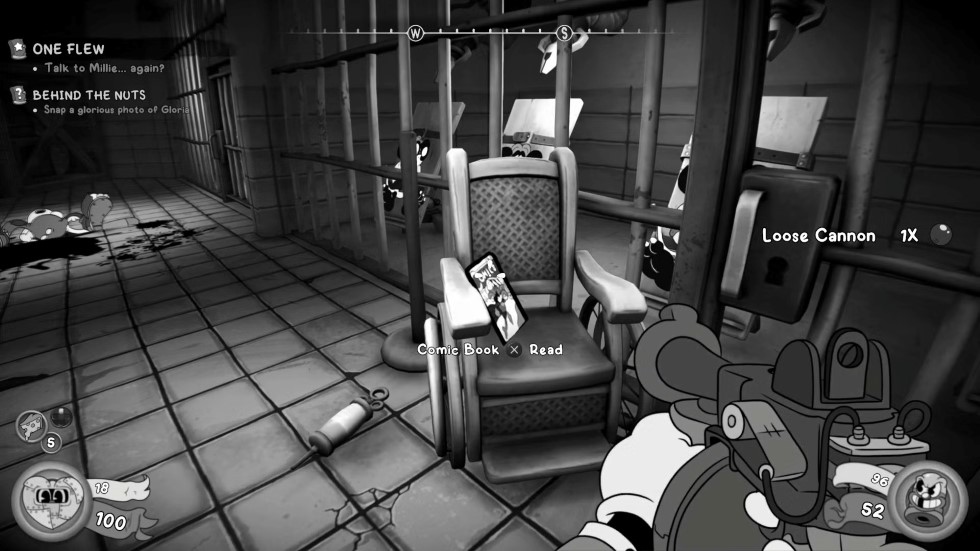
For example, at the asylum level, we created large ink-extraction machines that drained prisoners. The machines were intentionally designed using exaggerated combinations of miniature pumps, suction systems, tubing noises, and sounds resembling someone trying to drink the last drops of liquid through a straw from the bottom of a glass.
Those kinds of surreal sound ideas became incredibly important for the game’s identity.
The real challenge was carefully controlling how often those moments occurred.
If the entire world sounded completely realistic, the unique stylized moments would lose impact because the world itself would feel too ordinary. But going too far in the opposite direction created another problem – if absolutely everything behaves like an exaggerated cartoon all the time, players eventually become desensitized and stop noticing the artistic details because the experience becomes overwhelming.
So one of the biggest creative balancing acts was maintaining a carefully directed relationship between:
- sounds that function as atmospheric background,
- and sounds that intentionally step into the foreground as artistic, narrative, or emotional moments.
That balance became one of the core philosophies of the entire sound direction.
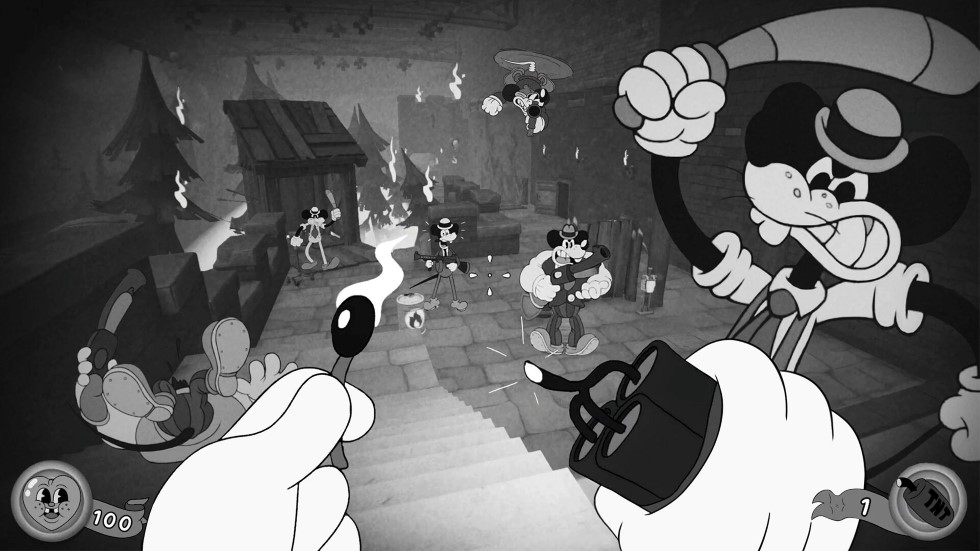
Was the Unity game engine a good fit for the sound team?
Sound Team: Yes, overall Unity was a very good companion for the project.
We were able to handle the implementation pipeline successfully inside Unity together with Wwise, and the workflow itself remained flexible enough for the type of game we were building.
Of course, there are certain functionalities available in Unreal Engine integrations with Wwise that are not as readily available inside Unity. For example, some automated systems related to spatial audio behavior, geometry handling, or acoustic portal-style workflows required more manual handling on our side.
But honestly, once you work with a strong middleware solution like Audiokinetic Wwise, the engine itself becomes slightly less important. The most important thing is that the engine properly communicates with the middleware and exposes the systems you need for gameplay interaction.
The bigger challenge was actually performance and scalability.
Many Wwise systems rely on physics interactions, collisions, environmental triggers, animation events, and a large number of simultaneously active emitters. In a game with huge amounts of interactive objects, enemy behaviors, scripted events, foley systems, adaptive music, and environmental reactions, it can become very resource-intensive quite quickly.
So a large part of the technical work involved constantly searching for optimizations and simplified solutions that still preserved the artistic goals of the sound design.
And here I really need to thank the PlaySide audio programmers and technical audio specialists who worked on the Unity and Wwise integration side of the project. I think they did an incredible job optimizing the connection between the engine, the middleware, and the gameplay systems while still allowing us to push a very ambitious amount of interactive audio content throughout the game.

What were your biggest technical challenges for sound?
Sound Team: One of the biggest technical challenges was processing the audio in a way that preserved the vintage identity while still remaining readable and modern enough for gameplay.
We constantly had to balance:
- clarity,
- stylization,
- performance,
- and mix readability.
Another major technical challenge came from the frame-by-frame animation workflow.
Since all enemy animations were hand-drawn frame-by-frame, the animation sequences inside Unity were represented visually frame-by-frame inside the editor. The programming team built tools allowing us to directly attach audio events to specific animation frames.
That system became incredibly important because it allowed us to synchronize:
- enemy footsteps,
- impacts,
- foley,
- attacks,
- and gameplay behaviors with very high precision.
The game also contains many highly dynamic weapon behaviors:
- alternate fire modes,
- continuous beam weapons,
- automatic weapons,
- upgrade systems,
- reload systems,
- and adaptive pitch behavior.
One small but important feature is that weapons gradually pitch upward as ammunition becomes depleted. The last bullets in the magazine sound noticeably higher than the first ones, subtly informing the player that a reload is approaching even without looking at the HUD.

Can you talk about the audio systems you built for the game?
Sound Team: One of the largest systems in the game is the degradation pipeline, which dynamically processes audio in real time depending on the selected playback style.
Beyond that, the game contains:
- adaptive music systems,
- layered boss music structures,
- enemy reaction systems,
- traversal foley systems,
- weapon upgrade systems,
- environmental interaction systems,
- surface detection systems,
- and level-specific gameplay audio mechanics.
Almost every weapon contains:
- alternate fire behaviors,
- changing sonic characteristics,
- adaptive reload logic,
- and progression-driven spectral evolution.
The adaptive music system created by Patryk Scelina dynamically reacts to pacing, combat intensity, arena structures, bosses, and gameplay flow.
Many levels also contain completely unique audio systems.
For example, one level inspired by classic adventure films features a giant rolling stone chasing the player through the environment with its own reactive audio behavior and gameplay interaction logic.
Even the minimap driving sequences contain miniature vehicle audio systems.
We also added many hidden sound gags and environmental jokes throughout the game to reward exploration and reinforce the cartoon world.
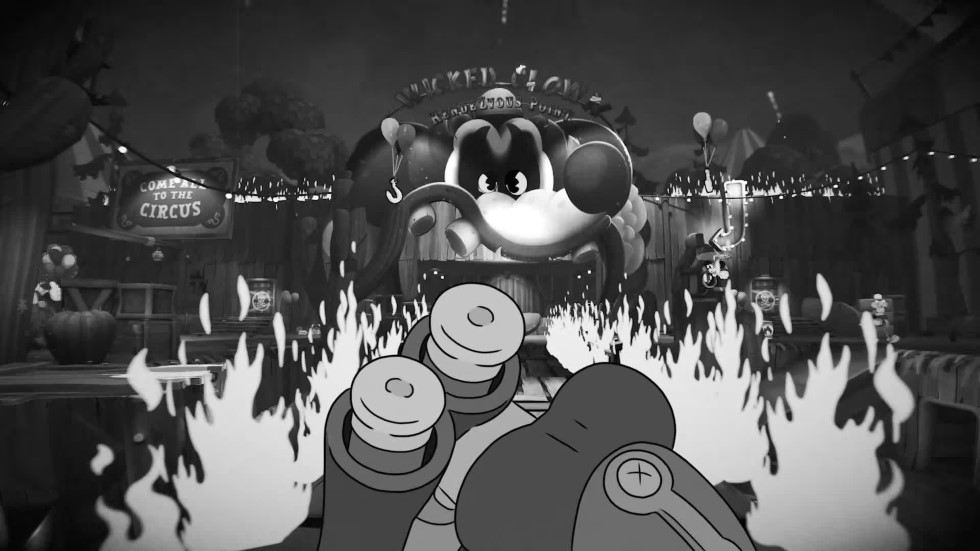
What was your approach to mixing the game? Most challenging ‘levels’/locations/fights to mix?
Sound Team: Our overall mixing philosophy followed the core principles of classic boomer shooters: gameplay readability always comes first.
Weapons were always the highest priority in the mix.
Right below them came:
- enemy reactions and impacts,
- enemy foley and vocalizations,
- destructible environmental interactions,
- nearby gameplay-critical emitters,
- and then broader environmental layers.
Further down the hierarchy, we had:
- 3D environmental emitters,
- environmental ambiences,
- and finally larger 2D room tones and atmospheric layers.
One interesting creative decision was to leave natural sounds mostly unfiltered in the default mix.
A large portion of the game’s soundscape is intentionally stylized through saturation, tonal shaping, and vintage-inspired processing. Because of that, natural ambience elements – birds, wind, insects, water, vegetation – became an important contrast element.
By preserving their full frequency spectrum, nature sounds create a subtle feeling of freshness and openness inside the soundscape.
They act almost like a reset for the player’s ears.
Of course, once players enable stronger degradation presets, even those sounds become filtered and processed through the degradation pipeline. But in the default setup, those natural ambience layers help create emotional breathing space between the more stylized gameplay moments.
That became extremely important for pacing.
One of the biggest goals during mixing was creating emotional amplitudes throughout the experience.
During large combat arenas, boss fights, or scripted action moments, the game intentionally becomes extremely dense:
- music intensifies,
- enemies overwhelm the player,
- weapons SFX become more frequent and more aggressive,
- and the soundscape generates enormous energy and pressure.
But after those moments, we often deliberately transition into quieter scenes:
- calmer music,
- reduced gameplay density,
- or sometimes complete musical silence.
Those quieter moments allow players to relax, absorb environmental ambience, and emotionally reset before the next major gameplay escalation.
We often thought about the game almost like an audio rollercoaster. You can’t stay at maximum intensity forever, otherwise the player becomes desensitized.
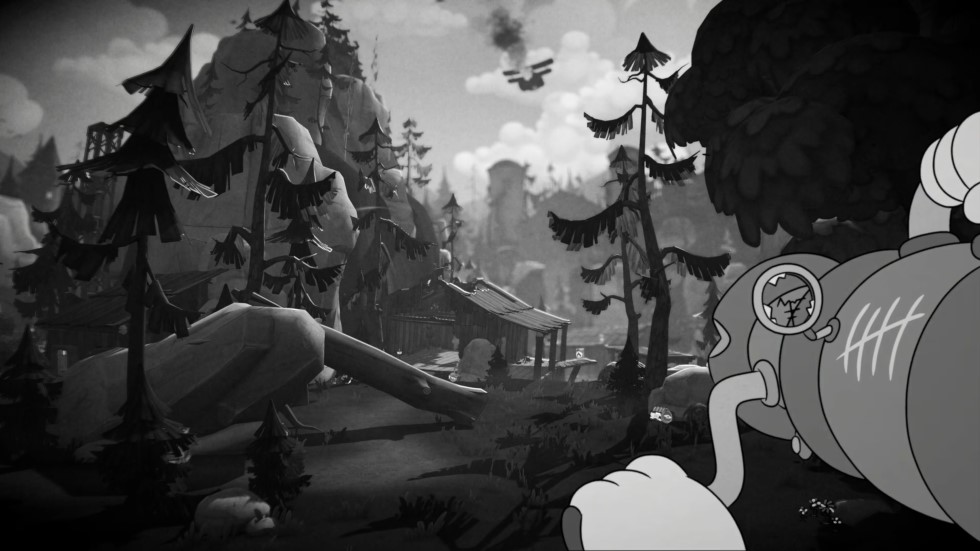
One of the most difficult locations to mix was the underwater world.
The biggest challenge there was finding the correct balance for underwater filtering and spatial perception. We wanted players to genuinely feel submerged underwater, but pushing the filtering too aggressively immediately destroyed gameplay readability and combat clarity.
What have you learned from your experience of crafting the sound and music for MOUSE: P.I. For Hire?
Sound Team: One of the biggest things I learned from working on MOUSE is that you shouldn’t be afraid of bold creative decisions.
Sometimes ideas that sound amazing in your head simply don’t work once they enter actual gameplay. But the opposite is also true – some ideas that initially seem strange, risky, or even slightly wrong can suddenly become incredible once properly tested inside the game.
That project taught us how important experimentation and prototyping really are.
A huge part of the process became imagining yourself inside the world and asking very instinctive questions:
- What would I want to hear here?
- What should emotionally stand out?
- What should remain subtle?
- What should feel funny, uncomfortable, satisfying, or nostalgic?
We also learned how important balance truly is in stylized audio design.
One carefully crafted, highly stylized sound can become a memorable reward for the player – almost like discovering a hidden jewel inside the experience.
But for that jewel to truly shine, it needs the right canvas around it.
It needs calmer moments, simpler textures, quieter spaces, and more restrained sound design surrounding it. Otherwise, the player stops noticing those special details entirely.
Nobody becomes impressed by diamonds if they are buried under an endless ocean of diamonds.
That became one of the core lessons of the entire project: sometimes restraint is just as important as spectacle.
A big thanks to Damian Czajka, Lukasz Koscielny, and Patryk Scelina for giving us a behind-the-scenes look at the sound of MOUSE: P.I. For Hire and to Jennifer Walden for the interview!