


The sound for John Wick: Chapter 3 – Parabellum is no exception, and in this exclusive A Sound Effect interview, Supervising Sound Editor Mark Stoeckinger talks about his approach to crafting that signature Wick-style soundtrack that sets the film a class above a typical action flick.
He shares how they make those legendary guns and how they designed the just-as-legendary knife fights. He talks horses, motorcycles, environments, rhythm, counterpoint - and how you keep improving an already-hard-hitting soundscape.
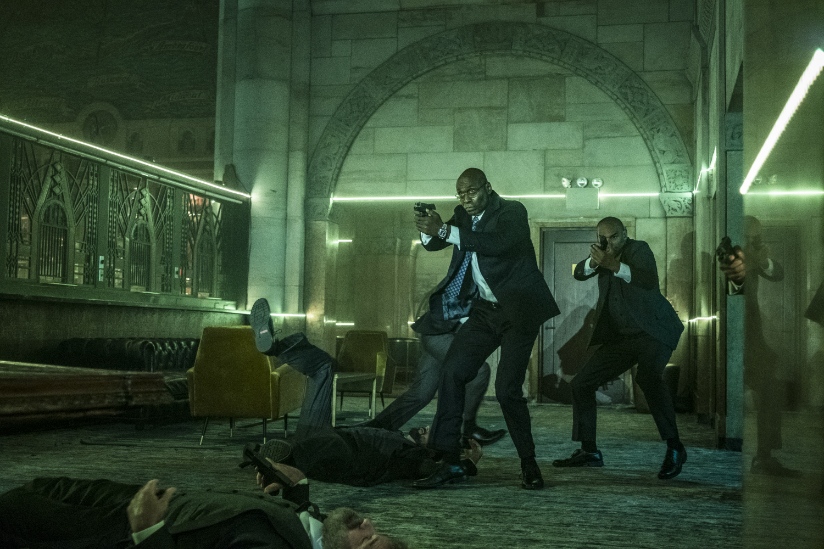
It’s official — Lionsgate announced John Wick: Chapter 4 is coming May 21, 2021. I can hardly wait. The Wick franchise has been consistently action-packed and inventive. The fight scenes are choreographed and executed with such precision that supervising sound editor Mark Stoeckinger at Formosa Group likens them to ballet. But the design of the fight scenes goes beyond what’s on screen. Sound plays a huge role in defining the Wick style — fast, precise, and brutal. Sound makes the moves feel faster, the hits feel harder, and even brings clarity to chaotic conflicts, like the shootout inside the Continental Hotel.
Stoeckinger has supervised the sound on all the Wick films to date; his sound designer Alan Rankin has as well. Rankin is the ‘gun guy’ responsible for those punchy, precise, powerful, and defined gun sounds that impossibly get better with each film. They’re hands-down the best gun sounds in an action film ever.
Here, Stoeckinger talks about his approach to crafting that signature Wick-style soundtrack that sets John Wick: Chapter 3 – Parabellum a class above a typical action flick. He shares how they make those guns and how they designed the knife fights. He talks horses, motorcycles, library books, and more!
Mark, you’ve worked on all the Wick films. What was unique about this one?
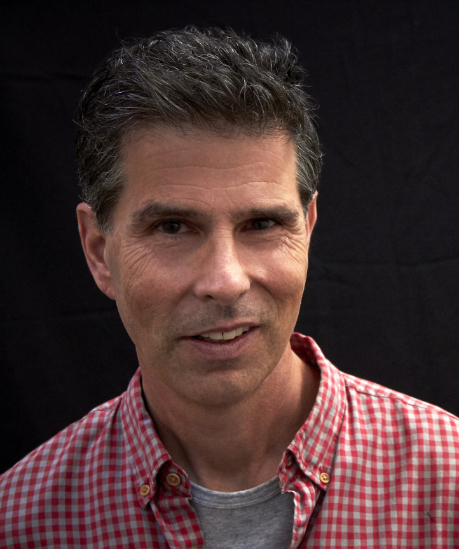 Mark Stoeckinger (MS): These films are hard to make and this third one was the most ambitious. I’m a huge fan of the franchise. For me, each Wick film is always refreshing and new. You’re following John’s character and the different people he comes into contact with. It’s like peeling an onion of his past life and sonically we’re doing the same thing. With each film, there are new environments and locations and situations that you always want to do something unique for.
For John Wick movies, people first think about the guns and knives — and sure there’s a lot of that — but sometimes I feel the most rewarding spaces are the ones that are different or off-putting. Kevin Kavanaugh’s production design in this film is so interesting and that inspires interesting sound work. It looks a certain way and you either want to play counterpoint to that or give it a rich sonic landscape that makes it work. Case in point, when the Adjudicator (Asia Kate Dillon) went to see Santino’s body in the morgue, down there was a big furnace and that makes sense. But we had the idea to make it sound like a meatpacking plant. We made it sound industrial. You never see any of it but that was the direction we chose for the sound.
Also, the production dialogue in that scene had some weird practical effect on it that nearly made it unusable. Fortunately, all the dialogue folks working on this movie were able to solve it and having a fair amount of sound in the background helped to mask the residual noise on the dialogue. It almost sounded like a jet whine in different pitches and frequencies from every single angle. That sound came from the practical effects creating the background fire in the furnace, but it sure didn’t sound like fire! So, we couldn’t get away with having that noise on the dialogue. Our choice of industrial background ambience helped the production dialogue problem and it helped stylistically.
[tweet_box]Behind the gloriously punchy sound of John Wick: Chapter 3 – Parabellum[/tweet_box]
The John Wick films are full of interesting sounds and backgrounds. In John Wick 2, at Laurence Fishburne’s place, it’s near the harbor and the bridge but there are other off-putting sounds we put in there to express the idea that this place is a little weird and unique. Or, towards the end of John Wick 3 when John goes for the glass room fight, what sounds like music at the very beginning up until he starts fighting the two Shinobi (Cecep Arif Rahman and Yayan Ruhian) and even continuing through the remainder of the scene is actually ethereal sound design. We made it very spiritual and Asian because that seemed to be what the production design called for.
From the sounds of the city, the rain, or the desert wind of Morocco it is laced with non-literal sounds, almost as if it were a graphic novel.
Those are the things in the John Wick sonic landscape that are fun because they’re different. Sure you want the guns to sound really cool (and I think they did) but you want the moments between the action beats to be equally detailed and rich. It starts out in New York City and that is a dense environment. And in Morocco, that has its own version of a dense environment. From the sounds of the city, the rain, or the desert wind of Morocco it is laced with non-literal sounds, almost as if it were a graphic novel.
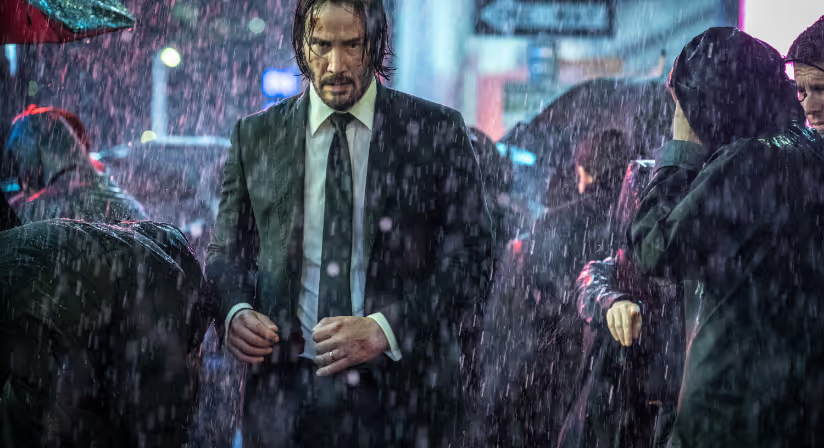
Also, in New York City it’s raining. That was a challenge too because when they make their own rain on-set they have to use a lot more water than would be natural so that it shows up on film. So sound-wise, you wonder if you should make it sound like the deluge you see that gets in the way of the dialogue or tailor it back. Usually, we try to tailor it back. But that’s one of those weird things that happens from the set to the reality of how the film is going to get played.
The Wick films’ fight scenes aren’t just brutal, they’re inventive! John Wick rides a horse into a motorcycle fight…
MS:It’s so great! And, there are little things like when Wick and his assailants realize they are surrounded by glass cases filled with knives and an antique clock goes off. It’s something old that is in the vein of that space. It’s a little sound beat that made everyone laugh (not at the sound but at the moment).
Or, even in that same sequence when John is assembling the gun, it’s this homage to The Good, the Bad, and the Ugly. When Wick finally shoots the pistol, it doesn’t sound like an interior gunshot. It’s more like a big open canyon shot with big reverb, like in a Western film, with a bullet zip and ping that plays to that moment as opposed to sounding real. I don’t know if the audience will pick up on that or not, but that’s the kind of fun things that we do and that director Chad Stahelski really enjoys and expects.
You can think of John Wick as a lonely gunslinger who is fighting his way out of various tough moments. It’s like a modern version of a classic Western — hence the horse!
Looking at the New York Library sequence, John uses a book to neutralize his assailant Ernest (Boban Marjanovic). Can you tell me about the fight design for that scene?
MS: When John uses random objects as weapons, you want the sound to be intense and a little movie broad because it needs to be — it’s John Wick. But, at the same time, there has to be as much reality in the sound as you can get away with without mitigating or emasculating the moment. Those are some big hit sounds mixed with big book thwacks — some of which were pulled from library, others we recorded, and some were done by Dan O’Connell in Foley. You find the combination of sounds that most complements the hit and you put that in.
That scene has so many little details sounds. If you listen to the production recording, you don’t hear anything but two thirds of the actors’ words. Everything else is added. So, you want everything in the scene to feel real in every regard, even if it is a little over the top, like the book sounds. Books alone won’t give you the power that you need for a John Wick fight. For example, when John breaks Ernest’s jaw, that sound was a Granny Smith apple crunch — although Chad accused us of using celery :)
All of us that work on the Wick films are big fans of the franchise and that inspires us to have fun.
The fights in Wick films all have such great rhythm, which you can really hear in the knife fight above the lighting store because there was no music in that scene. You can feel the rhythm of the fight…
MS: Chad is amazing at that. He wants all his action sequence to be choreographed, with the actors and the camera operator (from what I understand) so they can play the fight out. You can see the fight and it’s real. Other films will do one quick move and then cut, do another quick move and cut. It’s all edited together. The picture editor on John Wick 3, Evan Schiff, is amazing with his sense of timing. And, Chad knows the Avid as well. They work closely to get the fights timed and orchestrated while using master shots as much as they can. The editing helps with the pacing a bit but so much of it is also performance.
Chad is not only a fan of action; he’s also a fan of live performance, which has its own sense of rhythm and motion. He has a lot of different interests and finds creative ways to mash them up.



During the knife fights, you can hear all the different metallic swishes and stabs and shings. What were your sources for those elements?
MS: Those were mostly sourced from library. But, we take all those shings, stabs, and swishes and alter them to make them specific to the moment. In that sequence, Chad’s direction was to make sure that each set of weapons sounded unique.
The fight in the glass room near the end is like three different knife fights in a row. The first one is all about bludgeoning and there are a bit of samurai swords and glass. The next one is more like small blade knives, so their swishes and shings are higher pitched. They sound faster. The last part is samurai swords with more power and more low-frequency sounds. The swishes and scrapes and shings are all lower-pitched. So we’re dealing with sounds that are all in the same family of sounds, but they’re different too. You pay attention to the difference between a knife swing and a samurai sword swing. It’s myopic, trying to sew it all together. It’s time-consuming.
You look at the scene and decide if your sound matches the energy or the size, and you’re continually evolving it. It’s almost like a painting in that you need the color of one sound to complement another.
You look at the scene and decide if your sound matches the energy or the size, and you’re continually evolving it. It’s almost like a painting in that you need the color of one sound to complement another. If you make a change to one sound you may have to change other sounds too because now the sounds don’t match. You’re constantly going back and forth to find just the right sounds, especially on a film like this where there are so many sounds. I’d say that John Wick 3 is the busiest movie that I’ve worked on, with all the various sound elements and track count and the time it took to make each element feel unique to this film. All the sounds are really specific and you hear the differences.
When editing sounds for the fight scenes, are you totally locked on what’s happening in the picture? Or, can you edit the sounds so they work more rhythmically?
MS: It’s a combination of both. There is a sense of visual timing that Evan Schiff did an amazing job on. He’s also very much a soundie; not all picture editors are but he is, and that’s a part of his timing and the beats he creates.
At the same time, when you start to develop the sound, you can feel the difference when something doesn’t quite have a rhythm to it. So, frequently you’ll cheat the sync of the sound or do something different so that the sound has its own rhythm. There are layers of rhythm going on — you have your picture rhythm, your sonic rhythm, and then the music. The music’s rhythm has to be integrated into the scenes.
Behind the scenes feature on John Wick: Chapter 3 – Parabellum
For the horse and motorcycle fight, what were some of your challenges?
MS: The first challenge was that there was a cool piece of music that had a lot of guitar in it which is in the same register as motorcycle sounds. So the challenge was finding where to duck and weave to accentuate the sound that you wanted to accentuate. Ultimately, you have the sonic contrast of motorcycles versus the horse. You want to have that trade-off in the sound — to hear the motorcycle moments with the engines revving and then hear the horse moments that are all about the gallop and the horse’s breathing. So, you have a rhythm from the horse’s feet and its breathing. You never want to really lose that because the horse is the tempo of the scene — plus, it’s so cool. How often do you get to have a horse running down a street in New York City, being chased down by motorcycles?
So, the challenge was to keep the horse’s sound throughout the scene. And the next challenge was to make sure the motorcycles had a distinctive voice that didn’t get lost in the guitar-heavy score.
For the powerful horse kicks, we wanted to make sure they were big and punchy without having to rely on the subwoofer. But, frequently, you back it up with the subwoofer. You don’t want to rely on the subwoofer though because it’s kind of a one trick pony, sonically anyway… pun (not) intended.

How do you build the gun sounds for the Wick films? Those guns feel so close and powerful and brutal, especially in John Wick 3…
MS: Alan Rankin has done the guns on all of the Wick movies, since the very beginning. He’s a key person of the sound design team — sometimes an army of one on Wick.
Over the course of the films, the sound has evolved. You want the films to sonically evolve as much as anything else so you find what’s new and different for that film and support that. Also, you learn new ways to go about doing that.
I think the shotguns and assault rifles can support the most low-frequencies because they are bigger guns and have more power. You have to use layers —put in the blast and put in the gun mechanisms. Those assault rifles are submachine guns and you hear the ping as the shell is ejected because they are ejected forcefully so the gun doesn’t jam. That’s a dominant sound. So, you want to have a boomy layer that doesn’t have a sharp attack with another layer that has a sharp attack. You layer a sound for the high frequency range and for the low frequency range (but not for the mid-range).
You also want the shots to sound different, so you can tell who is shooting. Otherwise, it becomes a mishmash of common gun sounds. You tailor all of the pieces together to make specific guns — a sound for Halle Berry’s gun, a sound for John’s gun in that scene (because he always uses guns that he grabs off the bad guys it seems), or the assault rifle that sound pretty similar to the assault rifle in Wick 2 in the catacombs.
The MP5s that the Continental Hotel invaders use in this film took three iterations before Chad was happy. The guns have silencers so at first we had them sound a little electronic and weird. That wasn’t quite right, so we made them sound more like suppressed guns by taking some of the higher frequencies off of them. Finally, Chad decided that they should just sound like cool, real guns. So our third approach was a straight up gun that was slightly suppressed but that wasn’t the dominant feature. That’s just an example of how the sound evolved with the director and creatively too.
You want to feel the guns, too. If you’ve shot a gun like that, you feel it. And Chad wanted to feel it. Martyn Zub, who mixed the effects, made it so you felt the gun without being hurt by the sound.
The gunshots, the impacts, and even the shell casings dropping can all be heard in the chaos of battle. The gun battles are so tight and precise. What are some of your techniques for creating Wick-style gun battles?
MS: The most important thing to do to make that happen is to understand your frequencies. If you’re loaded up on high-frequency sounds than you can’t put in more high-frequency sounds.
It’s also important to cut off the sounds cleanly. If you listen to the sounds soloed, everything would sound cut off. There are no tails on the sounds. That’s so you don’t have much sonic overlap with other things you’re doing. And that’s something else that takes a whole lot of time.
Each layer of a gunshot sound has to be lined up to the sample or else you lose the sharpness of the transient. All of that helps with articulation. A lot of the precision comes from not playing a frame of sound that you do not want to hear. Even with that, you always find you have more than you need. So, those are our tricks to making it all clear.
There’s no substitute for taking the time to craft a soundtrack that everyone seems to appreciate.
There is a lot that happens in the mix, too. You put the different shots in the space differently — from different angles, with different panning. You want to move the sounds around the space because the ear responds to movement. So you want to have movement in the pitch and frequency and also movement around the theater. All of that takes a lot of time to do. So even though this is our third Wick film, it wasn’t easier. There’s no substitute for taking the time to craft a soundtrack that everyone seems to appreciate. I had met one of the producers on the film last year and he said the soundtrack was one of the best things about the Wick films. It takes time — time and talented people — to make that and there’s no substitute for that.
Chad is a big fan of sound and using the Dolby Atmos surround field. He’s totally into the minutia.
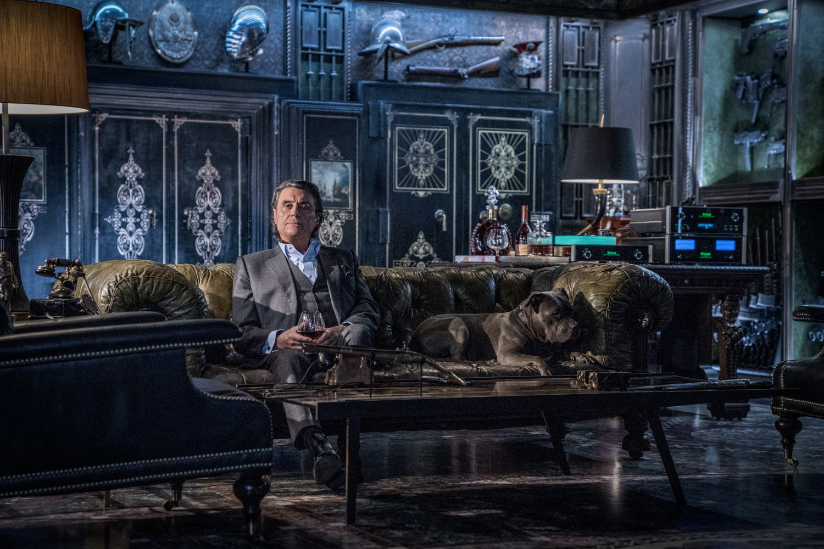
In the Continental Hotel fight, the assailants are wearing bulletproof everything — helmets, gloves, and full body armor that covers every part. How did you use sound to help those assailants feel nearly indestructible?
MS: The picture department started by adding in metal hits and ricochets. To that we added elements that had lower frequencies and even some cloth rips. So that sound evolved over different people touching it.
It’s something that was really important for Chad. He wanted the audience to understand that the bullets were hitting hard metal and bouncing off. Typically when bullets bounce off of metal they ricochet. They make this big resonant ping. When we cut the sound, we didn’t want it to reverb out. We wanted to make it a short sound. For the Wick films, you want something cleaner because there is so much sound happening. You want to put in multiple hits and also be able to play the gunshot. You want to have the gunshot and the impacts close together but sound different. So the gunshot happens in a lower register and the impact is a solid, succinct metal hit.
When a bullet hits something hard, it almost sounds as loud as the gunshot. We acknowledged that and tried to make a lot of the hits as strong as the shot. For the guns that weren’t on camera, we could pan the gunshot and put some reverb on it so it wasn’t in the way. We tried to play what’s on camera and play it big.
Sometimes the sound needs to lead you because there is so much visual information.
Chad wanted the bullet impacts on the body to sound different from the impacts on the helmet, which is also bulletproof. There’s that stereotypical helmet sound that needs to be the dominant sound so you understand what’s happening. Sometimes the sound needs to lead you because there is so much visual information. With the sound clean enough, you get it. You put them both together and you get it. Again, it had to be a really short sound.
There’s a lot of glass in this movie. Near the end, John fights the two Shinobi in the glass room and they are throwing him into one glass case after another. What was your approach to the glass sounds?
MS: That scene is filled with visual effects because the practical effect didn’t work out; only one of the cases broke. The rest of the cases were done via visual effects.
Glass is a difficult sound because it can get annoying really fast, that bright glass sound. One trick is to record the glass breaking at a higher sample rate, which helps it sound not so edgy and brittle. You can roll some of the higher frequencies off using multiband EQ and compression. That can help to clean up the sound so you can have a lot of glass and it doesn’t really hurt your ears.
All the particulate stuff was done by Dan O’Connell on the Foley stage. He even did some of the initial breaks too, recording at a higher sample rate.
The rest was done by Alan Rankin. He did that scene and all the Continental fights. Other people contributed to the fights but Alan found a way to keep the glass from becoming painful and there was a lot of it. You put some subwoofer hits on it when people fall through the glass floors or break the glass cases. You pan them so they come at you and then go over your head into the Atmos overhead speakers and go behind you. Again, it’s a moving sound, not static. That is the key.
Did you have a favorite scene for sound?
MS: The whole movie was my favorite scene for sound because each moment is different and unique, and I really like different and unique.
The motorcycle chase on the bridge was one of the more challenging scenes because a lot of that was shot as a visual effect — the people on the motorcycles were real of course. So, we wanted that to sound real and big. We were able to rent a racetrack out in Buttonwillow and record a bunch of motorcycles. You want an angry swarm of motorcycles but at the same time you need to control all the sounds.
There’s also a performance value to recording sound effects, especially things that move. You’re not just capturing the sound; you’re getting the sound to perform in a specific way and capturing that. We spent a fair amount of time on that motorcycle chase to get it to play the way that it did. So, there was a nice sense of accomplishment on that scene but they’re all still my favorite scenes.
I like the Grand Central Station scene because we were able to use non-literal sounds, like the sound of an approaching train’s brakes that you would never hear like that, rising to an intense crescendo as the first set of assassins approach John. It’s almost like a music cue, like rising violins, but it’s a sound design moment. Or, making the crowd sound muted until John and his assailants have their talk before John escapes. Things like that are less obvious but part of the fun of creating the soundtrack for John Wick 3. We wanted to make the soundtrack different and unique and have fun with it. We loved geeking out about the lore of John Wick and finding sounds to support that.
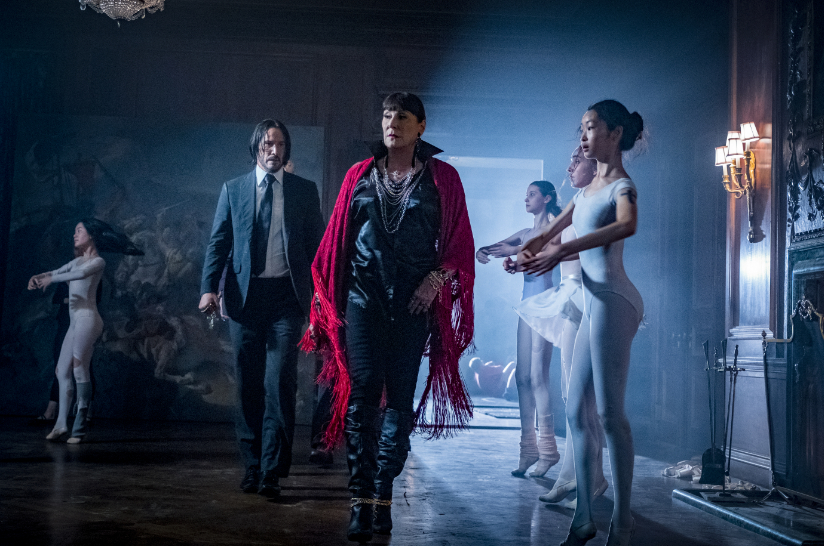
Can you tell me about the motorcycle recordings you captured? Where did you put the mics and recorder?
MS: The recorder ended being in a backpack. For the mics, some ended up being near the exhaust pipes and some were under the rear fender because you have to protect them from the wind as much as possible. Some were closer to the front of the engine. They were all DPA omnis going into a SoundDevices multitrack recorder.
One thing I wanted to get was the sound of tracking of a motorcycle, even if it ended up being a gritty sound with buffeting wind. So we put Charlie Campagna and Peter Brown in the back of my car — one out the back hatch and one out the rear window and drove around the racetrack pacing the motorcycle. We tried to have the motorcycle do higher RPMs than the car was going. Those sounds were primarily used for the bad guy bikes because they had a lot of movement. So the rider would come up to the car and back away from the car and pass the car and we would track it for a little bit. We then would blend that with some of the onboard recordings from that motorcycle.
John’s bike is primarily the on-board recordings with some of the tracking blended in where it made sense. If you listen to it, it gets kind of buffeted and windy, that’s from the motorcycle recordings. We tried to clean them up but nevertheless it’s still there and it helps to add a sense of realism to that scene.
If you experience the movie in a big theater you really get the sense of movement; the bikes go around you and one bike goes behind you and then shows up when the camera pans back. All of those sounds we were able to do from the recordings we captured. We had a lot of bikes and a lot of recordings. We had six bikes that we recorded singularly.
Then, for the shot at the beginning of the bridge where they all go by, I wanted to recreate that so we spent a lot of time in the back of a pickup truck that would pace the motorcycles and then other times we’d stop the truck and they would go by us. To make that match picture, we had to cut the recording and change the speed a little bit and layer in some other sounds. But we were able to spread the sounds out in the theater and that made it really cool.
What’s one surprising thing about your work on John Wick 3?
One reviewer of the film said, "The Foley artist deserves a raise!"
MS: That we’ve gotten so many accolades. People have noticed all the things that you are asking questions about. They notice the visceralness of the fights and the details of the knife fight and the impact of the guns and all the hits, even some of the esoteric spaces that we put our characters in. That was surprising because that is what we do every day and you never think that it’s going to get that kind of attention. When it does, it’s nice. It means that all the intricacy of detail and thematic sound design paid off. It was a much appreciated soundtrack.
There was a lot of Foley in this film for Dan O’Connell and one reviewer of the film said, “The Foley artist deserves a raise!” Dan said he never had a review like that. It’s so good.
They say it takes a village, and John Wick 3 took a village. There were a lot of people doing some amazing work cumulatively to make that soundtrack. There were sound designers Alan Rankin and Luke Gibleon (who created the museum fight and horse chase and fight). There was Paul Carden who did all the dialogue work. You may not realize it but a lot of that is added and it’s extra performances. It’s edited in as intricately as the sound of the guns. Re-recording mixers Andy Koyama and Martyn Zub (who also did a lot of sound design work) have mixed all three John Wick films and what they did to make this film sound as great as it does is truly epic. So that was our core team who helped make it all work.
A big thanks to Mark Stoeckinger for giving us a look at the skillful sound of John Wick: Chapter 3 – Parabellum – and to Jennifer Walden for the interview!