


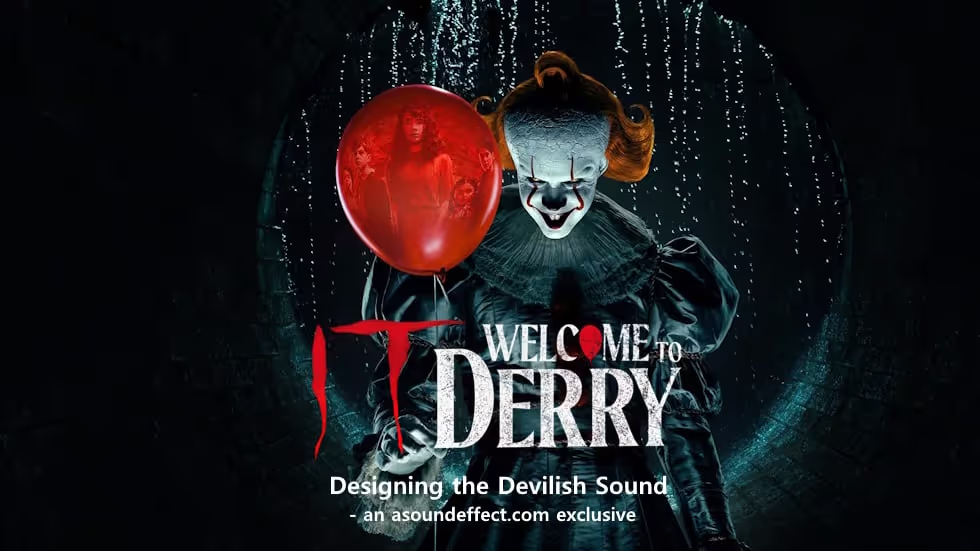
For the HBO horror series IT: Welcome to Derry, director and show developer Andy Muschietti (who was involved with the IT films) wasn’t afraid to get weird. The goal from the beginning was to make the audience feel the horror exactly as the kids would. His credo for the sound team: “Make it bigger!” opened a wide creative path for Supervising Sound Editors David V. Butler and Brandon Jones, and Sound Designer Erick Ocampo — at Warner Bros. Post Production Creative Services — to follow. They designed sound that’s wonderfully abstract, eerie, and twisted, helping to define the sonic identity of Welcome to Derry while also honoring the spirit of the films. They layered in eerie, playful, and unsettling textures to sweeten and sculpt the sound, making everything – even a trip to the grocery store – feel delightfully unhinged. Talk about a playground for horror sounds!
Here, Butler, Jones and Ocampo share details on how they created sounds for the first three episodes, what went into the sounds for inventive monsters like the pickled dad in a jar and the two-headed bat baby, how they designed the disembodied voices, what went into the sound of the human-skin-covered lamp, and how they used warped and twisted sounds to build tension and elevate the visuals’ fear factor.
Find out what creature sound incorporated time-stretched burps, vomits, and farts, why fluorescent light flickers — varied in pitch — were used to create a deranged xylophone sound, what a metal-saw bending and twanging has to do with a fun house mirror, how a failing timing belt on an old Hyundai Elantra enhanced a character’s hallucinations, and much more!
Warning: May Contain Spoilers for Ep. 1 – 3
It: Welcome to Derry was developed by Andy Muschietti, Barbara Muschietti, and Jason Fuchs, who were all involved with the films It (2017) and It Chapter Two (2019). Did showrunner Jason Fuchs want to pay homage to the sound of the films in this series?
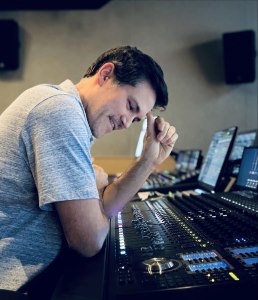
Brandon Jones (BJ): Andy gave us an insane amount of creative freedom on this series. I can’t remember a single moment where he said, “Make it exactly like the films.” Setting the story in the 1960s definitely helped us stretch out a bit creatively. But when it came to Pennywise, having Erick Ocampo on board was clutch. Since he worked on the features, Erick was very familiar with Andy’s creative tone and style. He sprinkled in demented jingle bells that doppler, pitch-bend, reverse into themselves with Pennywise’s movements … absolute candy for us sound nerds. And our fantastic effects re-recording mixer, Michael Keller, had worked with Andy on the films before, so he knew exactly how far we could push things.
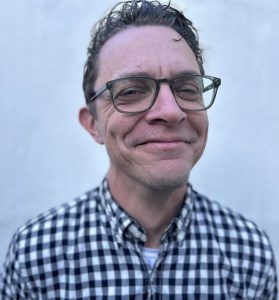
David Butler (DB): And with Andy, it’s pretty far, and sometimes not far enough.
Erick Ocampo (EO): To echo Brandon — having worked with Andy in the past made my job as Sound Designer so much easier. There was already a creative shorthand and a level of trust that allowed me to really push things. That familiarity gave us permission to shape sound design that’s far more abstract, eerie, and twisted, which helped define the sonic identity of Welcome to Derry while still honoring the spirit of the films.
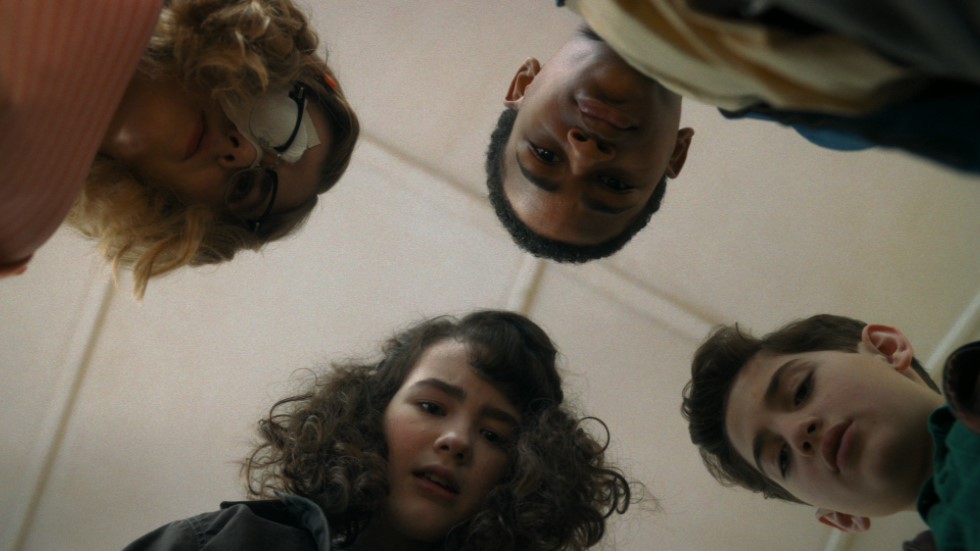
The series is told from the perspective of a group of kids. Did that influence your approach to sound in any way? For instance, in the moments of horror, when these kids experience otherworldly phenomena, did you heighten the sound so it felt more ‘imaginative’ than realistic?
BJ: Yes, we absolutely pushed the horror moments over the top because so much of what you’re seeing lives outside literal reality. That became a recurring theme with Andy: no matter how massive we built the effects, he always wanted it BIGGER. That kind of stylistic swing is what keeps this job exciting. On my previous project, the sound had to be subtle, understated, and realistic. So stepping into this world with permission to layer, sweeten, and sculpt until everything felt delightfully unhinged was super fun.
EO: So much of my influence came from experiencing the world through the kids’ perspective. I had to fully immerse myself in their point of view and ask, “How do I make this feel bigger, scarier, and more emotionally charged for them?”
During those moments of otherworldly phenomena, I layered in all kinds of eerie, playful, and unsettling textures — little sonic details scattered throughout — to amplify that sense of fear. The goal was always to make the audience feel the horror exactly as the kids would.
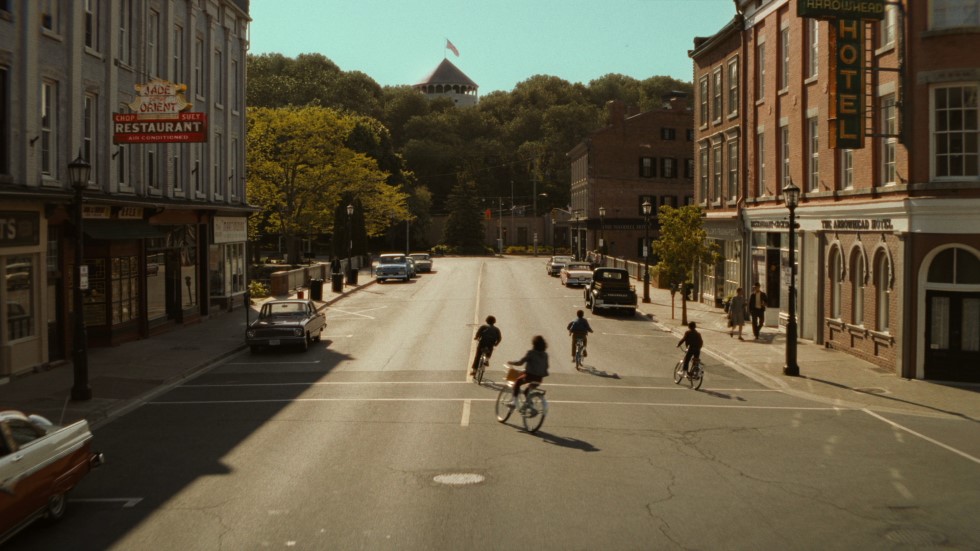
What are some unique sonic characteristics of Derry, Maine, 1962? How did you use sound to help paint a picture of this setting?
BJ: This turned out to be way trickier than I expected, finding traffic and walla that felt 1960s, but didn’t yank us into the present with a rogue Prius honk or iPhone chirp. I ended up doing a ton of surgical editing to strip out modern engines, horns, and rings from the background tracks. I also went on a deep dive through my library for anything that had that intangible “1960s vibe.” Sometimes it was a random ferry horn, a distant train, an old truck by, or a lonely church bell that just felt right. Those became my little vintage gems that I used as spotted BG elements.
The nearby military base helped to add texture too: distant aircraft, PA announcements, klaxons, etc. And I even tracked down recordings of birds native to Maine, so folks watching up there feel right at home.
DB: With the loop group, the adults knew what’s up, but Georgia Simon, who led our voice actors, had to make sure that the kids didn’t say anything remotely modern. Some of the terms might be goofy in today’s teenage vernacular, but we wouldn’t want “cook” or “cringe” to poke through in a quiet moment.
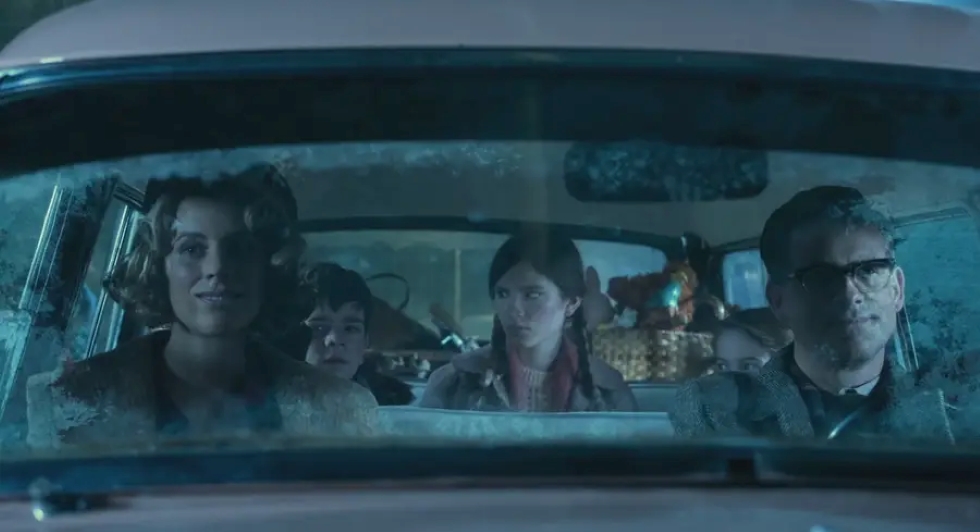
How did sound help to support the escalation of events in Matty’s car ride out of town, from odd and unnerving to WTF?
BJ: This was a super fun sequence, and it’s all about building a slow crescendo. We started off with little details like the car radio tuning and glitching, then the sister opens up the container of chopped liver, and we hear a little fly buzzing around it. Then the dialogue really drives things until the mother goes into labor. David did an amazing job of filling the gaps with ADR and overlapping dialogue just enough to keep the momentum building until the mom’s screams take over. We spent a lot of time on the mix stage getting this sequence just right between the dialogue, music, and effects because we all knew it would set the tone for the whole show. Andy’s first note when he heard it: “Make it bigger!”
DB: Picture editor Esther Sokolow did a fantastic job ratcheting up the weird and unnerving visually, but once we got to “O-U-T,” I wanted the energy to be out of pocket. We needed actor Lochlan Miller to come in and spell some other words offscreen, but we also brought in actors Mark MacRae and Audrey Wellington to basically do multiple takes of spelling “O-U-T”. Andy wasn’t available for these sessions, but at this point, I knew what he wanted: bigger. Mark and Audrey each did a first take, but my direction was “more.” More insane, more demented. After each take, I kept telling them to go off-leash. They think it’s crazy enough, but it isn’t. By take eight, Mark was pumping his fists and dancing around.

What went into the sound of the two-headed baby bat monster?
BJ: The mutant baby went through many iterations. In spotting, Andy asked for “pitched-down baby vocals,” so I experimented, but the material I had didn’t carry the intensity the scene needed. I detoured into something more monstrous and screechy, but Andy reminded me — rightly — that his original instinct was the way to go. So it was back to the drawing board. I ended up time-stretching and pitching down baby cries and vocals, mostly from my nephew, Jackson, which I had recorded a few years ago. We were babysitting him one weekend, and my wife was changing his diaper, and he was pissed off! Like any good husband, I ran for my recorder instead of helping her.
DB: So, a normal routine babysitting job for a family member, and you bring recording equipment just in case?
BJ: Ha ha, but of course. I’m a total nerd with my Zoom H5 handheld recorder. Thankfully, Andy approved of Jackson’s baby vocals as a foundation, so I was able to go back and lightly sweeten with creature vocals to get a little more energy and intensity. I also recorded myself gagging, wheezing, and gurgling water in my mouth to create the connective tissue between the vocals.
DB: I’m looking forward to when Jackson is old enough to watch it and be told that he’s the voice of the Giant F’ing Mutant Baby.
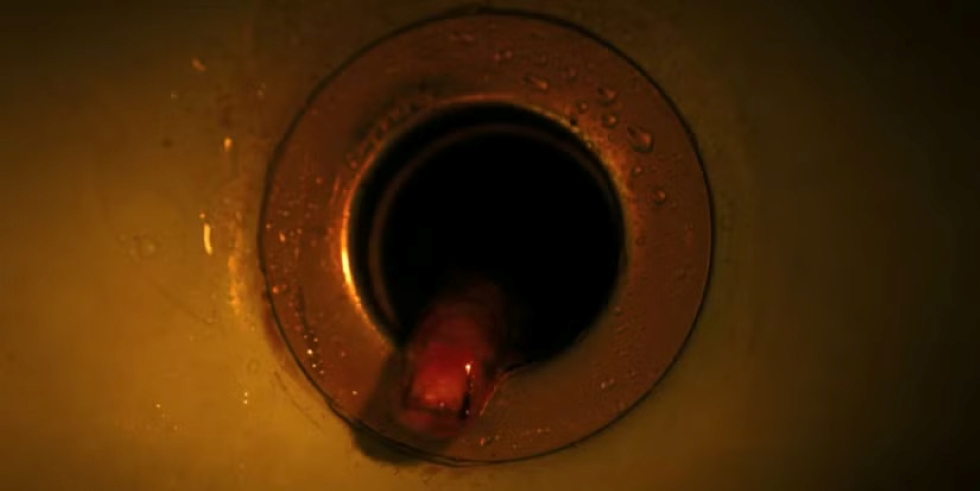
Following Matty’s disappearance, his friends experience scary situations. What went into the sound of Lilly hearing Matty in the bathtub drain?
BJ: I had some subtle sound design elements in this sequence, but much of the creepiness was achieved by Marc Fishman, who was our excellent dialog/music re-recording mixer. He played around with intricate perspective cuts and added weird pipe reverb on the vocal lines.
DB: This was my first time working with Marc, and I could not be happier with what he brought. Not only did he do feature-level work in a very short window, he also did dialogue design work on the fly that took scenes to the next level.

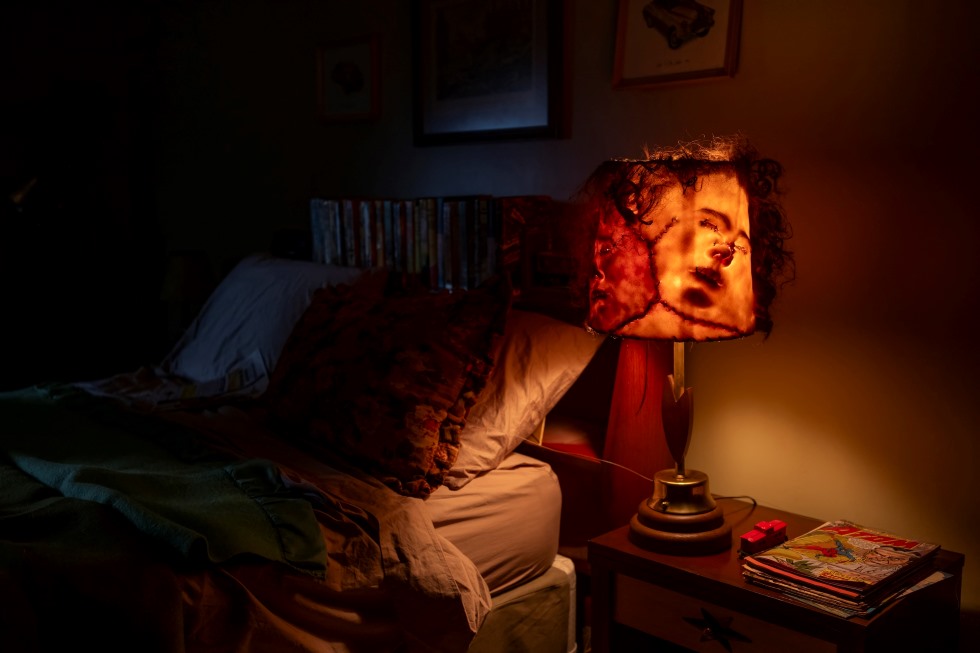
Can you talk about your sound work on Teddy’s scary experience in his room, when his lampshade becomes covered in human skin?
BJ: I love the tiny details in scenes like this with a slow build. I really leaned into the little chain tapping against the lamp base — making it hyper-real and uncomfortably close. Our foley was crafted by Boom Tracks in Australia, and they delivered incredibly detailed, top-tier work for the series. I couldn’t be happier with the care and precision they brought to every scene. As a topper over the foley, years ago I recorded a metal hanger clinking against a burnt-out bulb, and it ended up being the perfect sweetener for the light flickers and electrical sputters.
I recorded a metal hanger clinking against a burnt-out bulb, and it ended up being the perfect sweetener for the light flickers and electrical sputters.
Like the mutant baby sequence, my first pass went full monstrous on the lampshade screams. But Andy wanted to lean into the raw simplicity of the loop group actress’s blood-curdling scream at the very end. So we stripped everything back and let that single scream own the moment.
DB: While we had loop group cover all three members of Teddy’s family doing closed-mouth vocals; Georgia Simon just kills it with that scream. She’s just an ace up the sleeve when it comes to an ear-piercing scream.
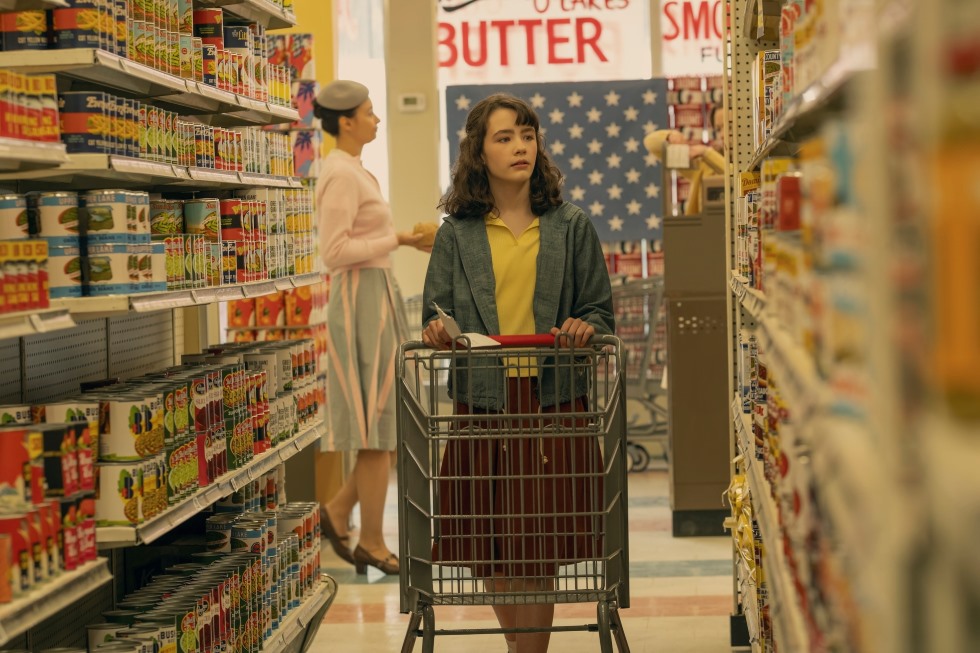
Can you talk about your sound work on Lilly’s trip to the grocery store? I love the PA announcements, the sound of the aisles/shelves moving, the whispers from other shoppers, the lights flickering, and the pickled head of her dad in the jar with the slight tink of his teeth on the glass!
DB: We had a script for all the whispers in Lilly’s head. I had everyone from both the adult and kid groups do it, just so we had a variety of voices using a variety of styles: sinister, scared, taunting. The kids really worked well when they alternated with one another, trying to outdo their partner. From there, 20 minutes of recordings, lining them up in order, and picking the best one for each. There are 30-40 different lines packed into a very short window…
[Erick] created a bunch of warped fluorescent light flickers that varied in pitch, sounding almost like a deranged xylophone.
BJ: …which Marc swirled around the space with unsettling reverb and delays. On the effects side, Erick Ocampo did fantastic work on this sequence. He created a bunch of warped fluorescent light flickers that varied in pitch, sounding almost like a deranged xylophone. And we tried to put in as many different colors of glass clinks, rattles, and squeegee rubs as we could. Erick did a first pass, then I added more variation, trying not to let things get too static. Again, this scene is all about a gradual crescendo, so you don’t want to go too big too soon.

What went into the sound of the pickled tentacles and the sounds of the “pickle dad” monster?
DB: Andy specifically requested Andrew Morgado for Pickle Dad. He had provided the voice for the leper in the first IT. Drew is ridiculously talented with tremendous range. What you hear is him, untreated. Of course, after the first couple takes, Andy wants Drew to take it 10 steps farther. You get that one take where Andy is quietly saying this breathy “Yeah. Yeah.”
BJ: For the tentacles and body pieces moving, Erick’s pass leaned hard into the wet, slimy, squishy gore side of things, which was great. Then I added a low-frequency layer made almost entirely of time-stretched burps, vomits, and farts to really crank up the GROSS factor. I just tucked a couple of nasty burps under his final line, “Just one kiss for papa!” for that extra touch of wrong.
EO: This scene was definitely one of my favorites to work on. To get that wet, slimy, nasty, gross texture, I pulled from all kinds of wonderfully disgusting ingredients — ketchup and mustard bottle sprays, spaghetti, seafood, oatmeal… the whole buffet. Those tactile, visceral layers gave the moment the unsettling, skin-crawling realism it needed.
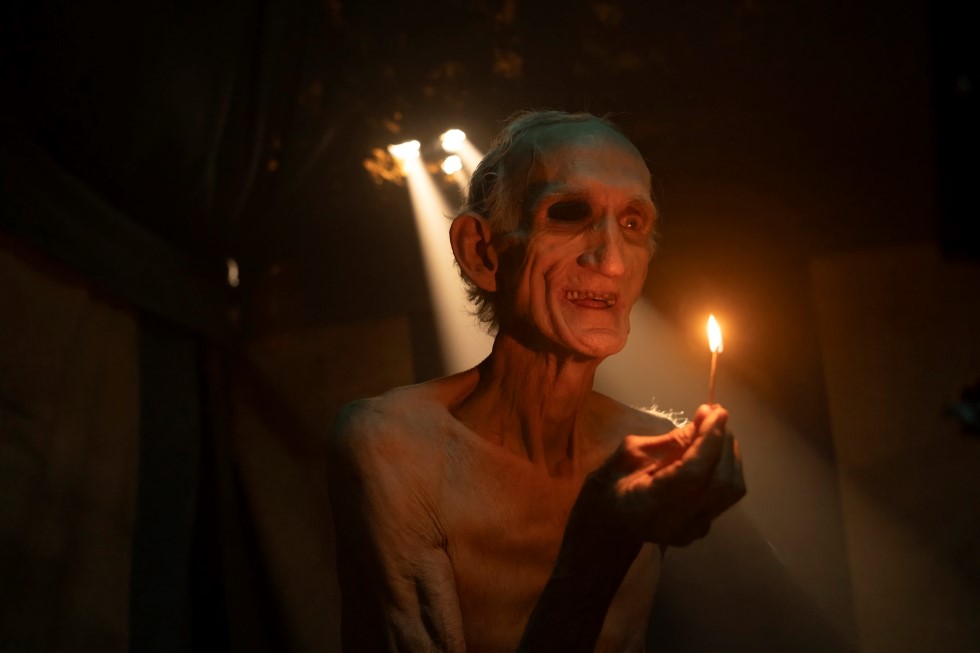
For the cold opener of Ep. 3, set in 1908, can you talk about your approach to sound for the town carnival? What went into the freak show attraction sound: the upright piano, the subjective POV as the kid, Francis, seems alone and is lured toward the one-eyed man in the back?
BJ: Erick did incredible work on this sequence. He twisted and mangled the carnival sounds right up to their breaking point, and the result was beautifully demented. One of my favorite moments in the whole series is when young Francis walks past a funhouse mirror and his reflection warps. Erick dropped in this metal-saw bending and twanging as the image distorts, which makes no logical sense, but it works so well. Andy loved it.
DB: Georgia Simon helped us to find Andrew Frankel, to do the voice of Skeleton Man. I had heard his audition and this dude looks nothing like the voice that we used. Andy loves using talented voice actors to take these Pennywise hallucinations to the next level.
The goal was to turn a lively carnival into a dark, warped, and unsettling reality that mirrors Francis’s growing fear and disorientation.
EO: This was another super fun scene to design. It was definitely a challenge to create carnival sounds that felt authentically 1908. I really had to think about how to bring the time period forward, focusing on the small details while staying grounded in Francis’s perspective.
The moment Brandon mentioned happens right as Francis steps into the funhouse, and I wanted to punctuate that transition so the audience feels like they’re crossing into a twisted reality with him. It starts subtly with the mirror, and then, as he moves deeper inside, the world becomes increasingly overstimulating and surreal.
The sound design for the piano player smoking was amped up, the old, uneven charge of the lights, walla that Dopplers and reverses into itself, and layers of textures that make no logical sense but color the scene — everything was designed to gradually distort the environment. The goal was to turn a lively carnival into a dark, warped, and unsettling reality that mirrors Francis’s growing fear and disorientation.

What went into the sounds of Francis’s walk in the woods, where he encounters the one-eyed man monster?
BJ: The big challenge here was blending Erick’s creature vocals with the loop group actor who voiced the old man whom we affectionately called “Skeletor.”
DB: This name is news to me. I called him Skeleton Man because I swore that’s what the picture department called him.
BJ: Really? I guess that was all in my head, ha ha. But Andy wanted this Pennywise manifestation to keep a human foundation sonically. I asked David and Marc if I could pull the loop group vocals into the effects session.
Erick leaned heavily on friction textures — gritty, boney, rattly sounds — which paired beautifully with the actor’s efforts.
DB: Andrew Frankel did a great job with the creature vocal chasing Young Francis through the woods. Did I ask him to do too many takes? Absolutely. But it allows me to weave together all the best moments and hand it off to Brandon and Erick.
BJ: Normally, those performances live on the dialogue side of the console, but folding them into effects gave us the control we needed to surgically weave between the designed creature elements and the human layer. Erick leaned heavily on friction textures — gritty, boney, rattly sounds — which paired beautifully with the actor’s efforts.
EO: Yeah, the biggest focus for me was capturing “Skeleton Man’s” vocals and movements. I wanted him to sound as monstrous and unsettling as possible while he’s chasing Francis through the woods. I leaned heavily into friction-based textures — exactly like Brandon mentioned — to shape both his voice and his physicality.
The goal was to create a creature that felt rooted in a human foundation, but twisted into something far more disturbing.
I kept asking myself, “What would an old man who looks like a giant skeleton actually sound like?!” That led me to build a palette of raspy, gritty, boney, rattly, and throaty textures, and then layer punchier, low-end elements underneath to give him more size and weight. The goal was to create a creature that felt rooted in a human foundation, but twisted into something far more disturbing.
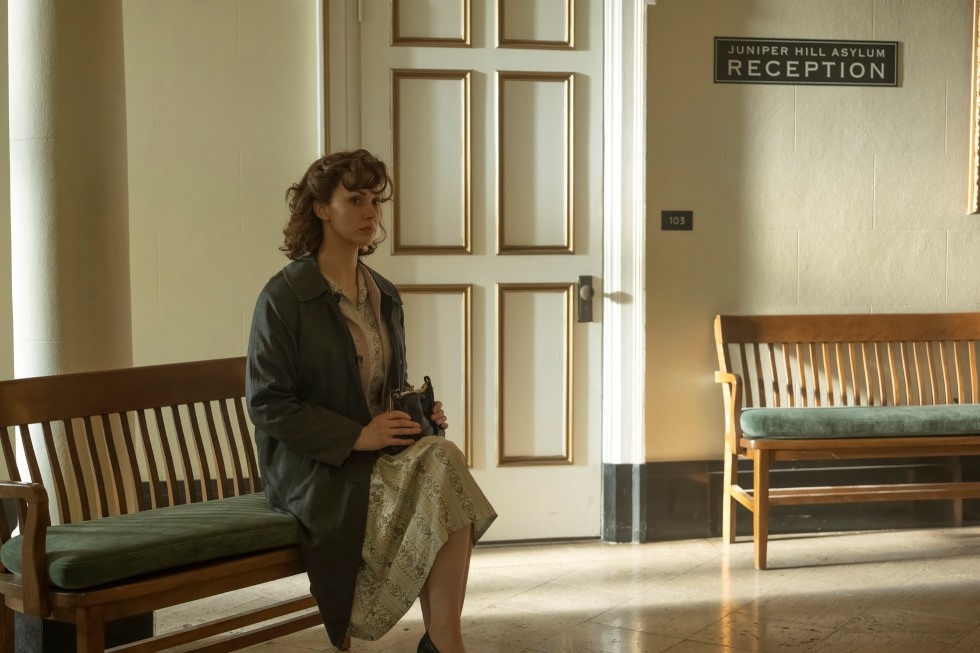
What went into the sounds inside the Juniper Hill Asylum?
BJ: This was a really fun sequence that blended loop group and effects. By this stage, I had a clear sense of how large Andy wanted the sound, so I went big with the effects: patients pounding on walls and doors, crying, shrieking — full chaos. I combed through my library for the most intense and deranged human vocals I had. When we played it for Andy for the first time, I briefly wondered if we had pushed it too far. But he loved it exactly as-is.
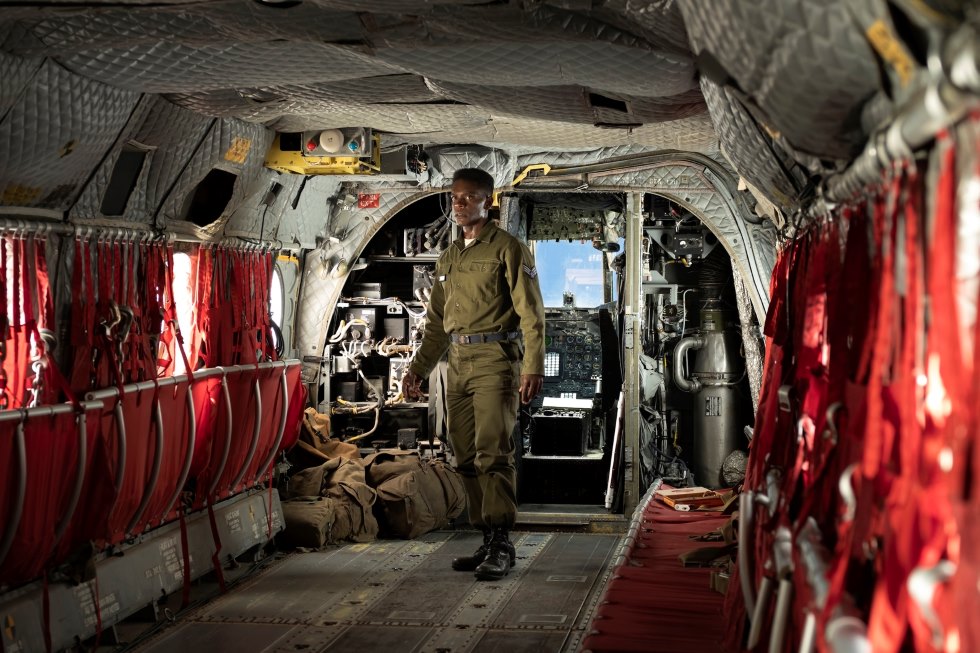
What went into the sound for Hallorann’s experience on the helicopter: him mentally finding the grave of Pennywise, and the visions he experienced of the war and the sewers?
BJ: The constant POV shifts in and out of Halloran’s perspective at the beginning made this sequence tricky to shape into a clear, cohesive moment. Full credit to our incredible re-recording mixers Marc Fishman and Michael Keller, who really made this scene come alive.
Composer Ben Wallfisch and I both built signature sounds for Halloran’s mind power, and we ended up weaving the two approaches together across the whole series. Ben leaned into eerie human singing and moaning, while mine was more textural: a low purring/throbbing that rises and falls with the strength of his visions, plus a high-frequency shimmer I made from a failing timing belt on our old Hyundai Elantra. I threw it into PaulXStretch to get the pitch where I needed it, then processed it to within an inch of its life until it felt properly warbly and dissonant.

How did you approach the sound for the kids’ cemetery seance and their encounter with the ghosts as they flee on their bikes?
BJ: I’ll let Erick dive into this since he cut the scene, but he built a whole set of bike-spoke Dopplers that had this wonderfully playful quality — and they cut through the mix beautifully.
EO: This scene was definitely one of the trickier ones. There’s an avalanche of elements happening all at once: the ground breaking apart, rocks collapsing, ghost vocals swirling around the kids, and then the frantic movement of the bikes. For me, the key was keeping the bikes front and center.
There’s an avalanche of elements happening all at once: the ground breaking apart, rocks collapsing, ghost vocals swirling around the kids, and then the frantic movement of the bikes.
I wanted the audience to really feel the kids’ panic as they’re being chased by ghosts while trying to navigate this chaotic, collapsing environment. The bikes are their only lifeline in that moment, so emphasizing their movement — the spokes, the Dopplers, the strain of the frames — helped reinforce the fear and vulnerability of these kids, who are just trying to outrun something impossible.

So far, what were your biggest challenges in terms of dialogue on the show?
DB: At its core, IT is about the end of childhood and all the wonders and problems that go with it. But when you cast 13-year-old boys, things change. All I can say is, keep your eye on Will’s height throughout the season.

What’s been your favorite scene for sound so far (Eps. 1-3)? What went into it?
BJ: One of my all-time favorite moments is in Episode 2, when the popular girls are playing patty-cake at the lunch table while Lilly and Ronnie argue a few tables away. Huge credit to the picture editor Esther Sokolow for crafting such a beautifully intercut sequence. The flow is incredible, and it gave us a ton to play with on the sound side. We knew this scene needed a delicate balance of dialogue, effects, and music (which cleverly builds the patty-cake rhythm into the score). This was a rare occasion where I provided the composer with finger snaps, claps, and foot stomps, which he morphed and modulated and folded into his score. Then our music editor, Lise Richardson, provided me with a click track so I could sync my effects of claps, snaps, and stomps perfectly. I made sure to use different material so there wouldn’t be any phasing or doubling up between effects and score. The real trick was pacing the intensity — the claps and stomps get absurdly huge by the end, but we had to earn that crescendo without blowing things out too early. Another mix challenge that Marc and Michael absolutely crushed.
This was a rare occasion where I provided the composer with finger snaps, claps, and foot stomps, which he morphed and modulated and folded into his score.
DB: Not to be boring, but I absolutely agree if asked to choose from the first three episodes. It’s not a big, flashy sound design moment. At its core, it’s simple, but expertly executed. Weaving the music and effects around the escalating tension between Lilly and Ronnie until Ronnie snaps with justified rage is flawless.
But from a horror point of view, there’s a moment in the 4th episode that is just gnarly. And the 7th episode is, beginning to end, the best-sounding episode of the season.
BJ: Yes! Fans will squirm so hard when they see Ep. 4. It hasn’t aired yet at the time of this interview, so get ready! And you’re right about Ep. 7. Without spoiling anything, there’s a very long, intricate sequence that was incredibly difficult to build and sculpt, but the end result is fantastic. It’s a great example of EVERYONE’S collective hard work, from the foley, dialogue editing, score, sound design, actors’ performances, camera work, directing, visual effects, mixing — it all comes together beautifully.
EO: Oh man, all three episodes have so many great moments, but if I had to pick a favorite from the first three, I’d go with the Pickle Dad scene. I know I touched on it earlier, but there was a lot that went into building that sequence.
For me, the tension actually starts before we even enter the grocery store, when Lilly is walking up to it. I wanted to gradually build that unease by emphasizing the slow-motion shots: her footsteps, car-bys, the ambient backgrounds… all of those little details help set the tone before we even hit the supernatural beats.
It was super important for me to hit all the subtle nuances of his facial movements, the twitchy motions, the sound inside the jar as he speaks, and the flickering lights above him.
Once we’re inside, everything shifts back to a kind of “normal,” but with a subtle edge. The old 1960s shopping cart became its own character — fragile, rattly, and sounding like it’s about to fall apart at any moment. From there, I focused on highlighting each unsettling moment that leads up to the Pickle Dad reveal: the butcher chopping fish, the woman holding the can of food who does that creepy head-bend and smile. I punctuated those moments with sharp, eerie stingers.
As Lilly moves deeper into the store, I sprinkled in more of those eerie textures and gradually heightened them as she gets surrounded by the pickle jars. Then comes the manifestation of Pickle Dad. It was super important for me to hit all the subtle nuances of his facial movements, the twitchy motions, the sound inside the jar as he speaks, and the flickering lights above him. All of that helps sell the tension before the big reveal.
And then of course, when he becomes that gooey, gloppy, absolutely disgusting creature, that’s where I really got to push things. As Brandon and I mentioned earlier, the goal was to make that moment as viscerally gross and uncomfortable as possible. It was such a fun, wild scene to build all the way until his tongue starts coming out. Now that’s the moment where I really wanted to push the grossness!
A big thanks to David V. Butler, Brandon Jones and Erick Ocampo for giving us a behind-the-scenes look at the sound of IT: Welcome to Derry and to Jennifer Walden for the interview!