





Who doesn’t love a good road trip? And packing properly for one can make it all the more enjoyable! If you’ve seen Ethan Coen’s new film Drive-Away Dolls, co-written with his wife Tricia Cooke, then you’ll fully appreciated that innocuous statement. If you haven’t seen the film (go see it!), Googling the visual artist to whom the film is dedicated – Cynthia Plaster Caster – will give you a good idea of what I’m talking about.
So as not to spoil the story, I’ll leave it at that.
Oscar-winning supervising sound editor/re-recording mixer Skip Lievsay at Warner Bros. Post Production Creative Services in NYC has been working with the Coen brothers for 40 years. In fact, he’s the Coen’s absolute go-to for sound, having worked on all of their films from Blood Simple (1984) to Drive-Away Dolls (2024). There’s so much comedic film history there that it’s hard not to reference some of the ‘legacy’ sounds found in films like Barton Fink, The Man Who Wasn’t There, and No Country for Old Men. Sonic Easter eggs from past films pop up in Drive-Away Dolls and there are new sounds that should be added to the collection of ‘classics.’ (There’s a wonderful suction cup sound that I foresee being used in future films.)
Here, Lievsay talks about his ongoing collaboration with the Coen brothers, how they tell jokes using specific sounds, timing, and levels in the mix, how they used Dolby Atmos to make the psychedelic music-driven sequences even trippier, and much more!
DRIVE-AWAY DOLLS – Official Trailer 2 – Focus Features
You’ve done all of the films for Joel and Ethan Coen. How has that experience carried forward to your approach to Drive-Away Dolls? For instance, I noticed some ‘legacy’ sounds, like the hotel bell ring from Barton Fink…
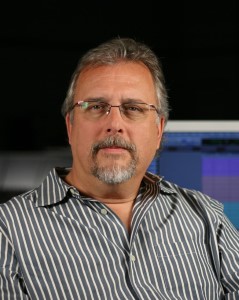
Skip Lievsay (SL): We’ve copied some of the sounds. We went into our archive and dug up some of the sounds. Like the trash can lid skid in the alleyway fight in Drive-Away Dolls was the hubcap from the car crash in The Man Who Wasn’t There.
Part of our shared joy of filmmaking is referencing our jokes that succeeded in our previous films. You can’t help but drop a punchline whenever you have the chance. It’s easy for them to imitate themselves, and so we’re happy to indulge.
And that is the Barton Fink hotel bell you hear. On the original, we got a computer to work on. For the first time, we could take all of our sounds and put them in this computer called a Synclavier. We could play most of the sounds in any given scene – you could hear most of the sounds all playing together – and you could do a rough mix so you could sort out what things are working.
Part of our shared joy of filmmaking is referencing our jokes that succeeded in our previous films.
For the first time, we could play the soundtrack for the Coen brothers and display our intention. The filmmakers could hear the whole gamut because we could play 20 or 30 things together (we didn’t have unlimited tracks).
When we got to that sequence in Barton Fink, the way I read that in the script there was a psychedelic event, much like the music sequences in Drive-Away Dolls. So I made a pretty big sound that didn’t sound very much like a bell, and I played it for Joel and Ethan. They did their signature laugh, but not too much. Then this concern washed over me: it’s not what they had in mind.
If you find yourself going down the wrong path, you can see it in their faces, in their reactions.
If you find yourself going down the wrong path, you can see it in their faces, in their reactions. I realized it was the wrong approach, that they just wanted to hear the front desk bell reverberating in that scene (not morph into a Forbidden Planet sound). So I took the source recording of that hotel bell, which was only 30 seconds long, and made a fundamental tone that matched using a tone generator. Even though the bell is metallic, it still boils down to a pure tone, just a sine wave. So I created a sine wave long enough to go all the way to when Steve Buscemi touches the bell and layered that under the hotel bell. When the natural bell recording decays, you hear the tone I created. Even at a very low level, you buy it. You could play that forever, basically, and make an impossibly long decay, which is what we did. We just kept making it lower. It’s amazing how low that sound can be and people get it and buy it.
Anyway, that’s how we did that sound for Barton Fink and that’s what we did for Drive-Away Dolls.
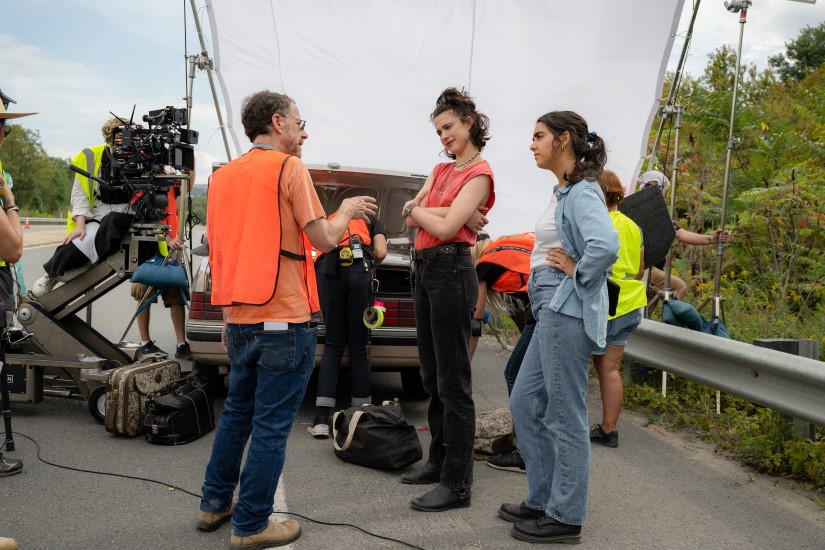
People rarely talk about wrong paths in their design work. Were there any wrong paths you explored sound-wise for Drive-Away Dolls?
SL: Actually, sound designer Paul Urmson and I screened the movie early on with Ethan and Tricia Cooke (co-writer). They gave some pretty specific instructions, although they’re in code. Oftentimes, Ethan will refer to other things and other movies that we’ve done, like the hubcap. The idea of something that’s rolling and rolling until it finally stops, that’s known as ‘the hubcap’. You can apply that to practically any kind of persistent ringing sound. Even though we were speaking in shorthand, we have a set of instructions that are pretty easy to follow. But it’s the degree to which you follow them that can get you a little strung out.
…we have a set of instructions that are pretty easy to follow. But it’s the degree to which you follow them that can get you a little strung out.
The “Maggot Brain” music sequences in Drive-Away Dolls are obviously psychedelic sequences. What you see in the movie, we always saw that way, although the graphics changed and got refined. We just swallowed the bait and made those wild, psychedelic sequences wild from the beginning. We did pull them back a bit. We were using the Dolby Atmos format, which is perfect for that, and we could move sounds around the room. I made a lot of tracks from the original stereo music cue that I could pan around the room and it still holds together, even if you do some pretty radical things to it.
A misunderstanding that no filmmaker will be disappointed with is going too far.
But we did, honestly, go too far and we pulled that back. A misunderstanding that no filmmaker will be disappointed with is going too far. Joel and Ethan ask us to go too far all the time. Even if they haven’t asked for it, I always try to make it as big as I can. I never want to leave the room thinking, “Gee, why didn’t we go farther with that?” Because it’s so easy to pull back. Once you have your palette of sounds that went too far, you can reduce or get rid of a few components and then it’s just right. An endlessly revolving pizza record, why wouldn’t you want to have some groovy, whacky stuff going on there?
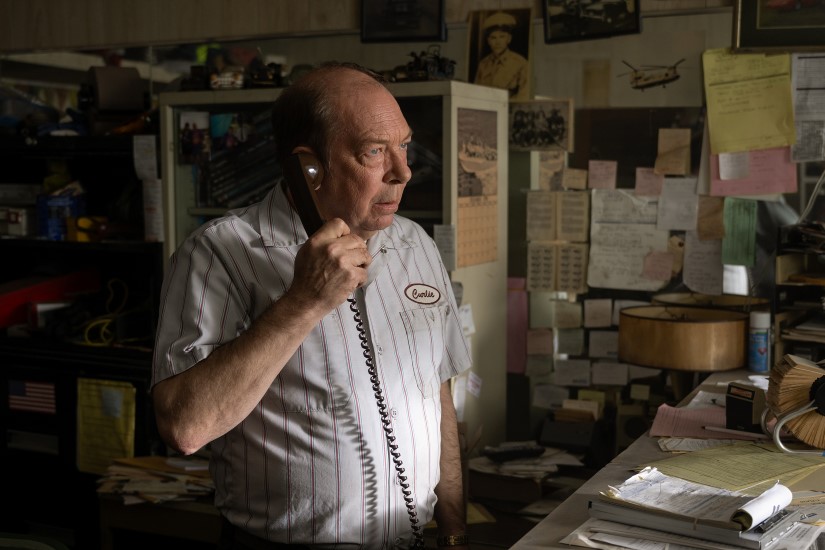
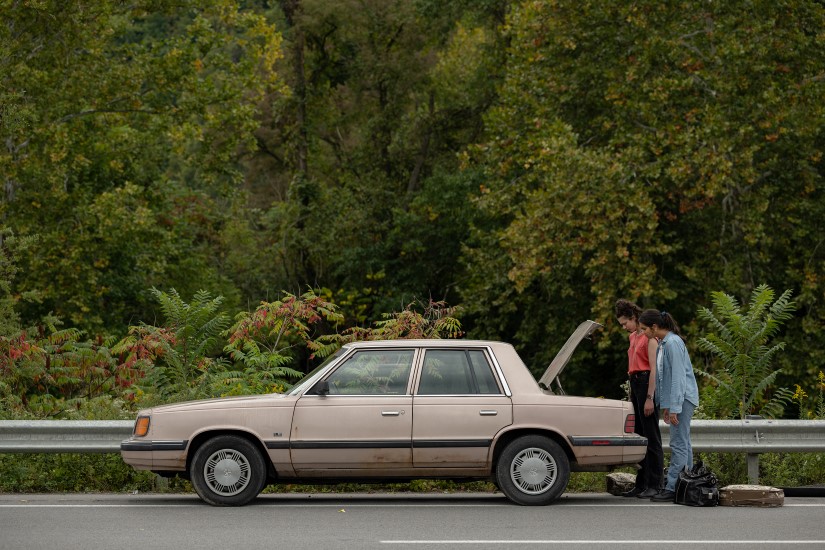
And the comedy is enhanced by pushing sounds to the edge. For instance, Curlie is lying unconscious on the floor of his office and you hear him snoring loudly in every scene that’s set in his shop. And the Dodge Aries (that the girls drive) rattles and clanks and sounds like it’s going to fall apart any second. The roadside motels have constant traffic outside, conveying the sense that this is a sh*tty motel…
SL: That’s very satisfying stuff, all those not-so-subtle little attentions to detail. A lot of filmmakers we admire pay attention to the details. And Ethan is certainly good at it. He enjoys it.
A lot of filmmakers we admire pay attention to the details. And Ethan is certainly good at it.
Something about that motel, I was thinking about that this morning. Nothing to me is more satisfying than a road trip. I love road trips. When I was a young kid, I used to go with my grandparents on road trips through the South visiting our relatives. The roadside motel is exciting. When we were little kids, we used to find one with a pool and get in the pool. No matter how small it was, we’d all be in there splashing around until midnight.
I made a road trip cross country when we moved from New York to California and the roadside motels have gotten shabby. Maybe we just picked shabby ones, but, the idea that you’re sleeping in someone else’s house, every night, is kind of an alarming process.
But, this film has them, No Country for Old Men certainly did, and Blood Simple as well. Anyone who’s done a road trip knows exactly what you’re talking about.
Blood Simple (1984) was the Coen brothers’ first film, one that you worked on back in the ’80s…
SL: Yes, it was. Now, I’ve actually worked on more Coen brothers films than either of the Coen Brothers.
Because you’ve worked with just Joel on his films, like The Tragedy of Macbeth, and with just Ethan on his films like Drive-Away Dolls …
SL: Exactly.
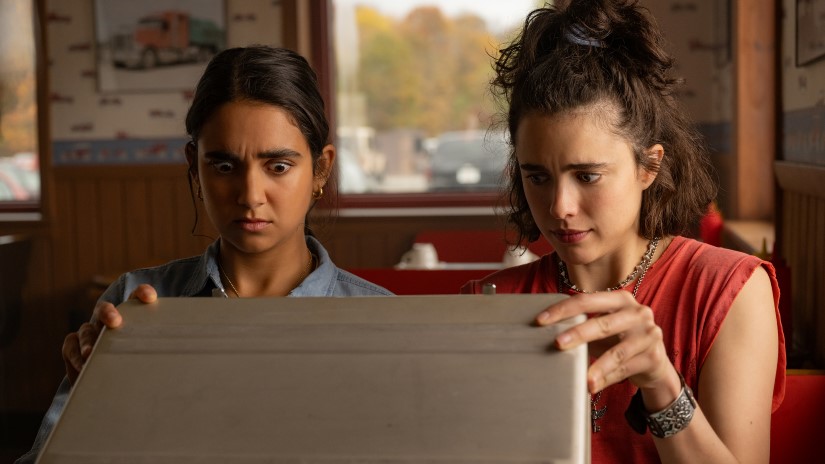
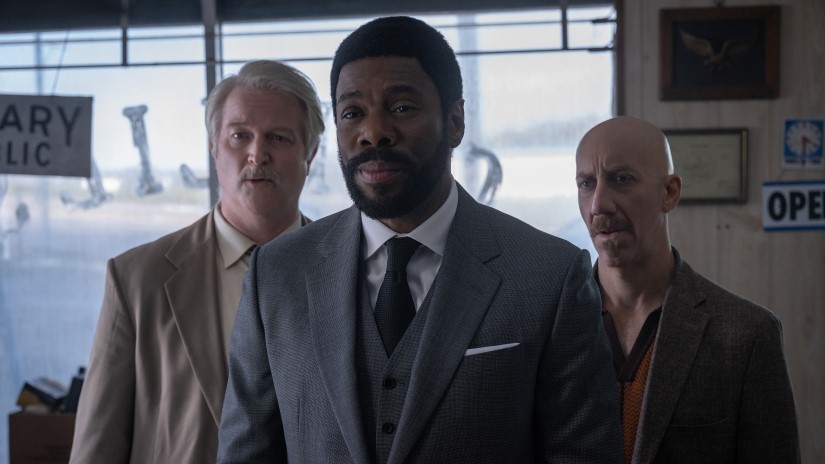
I love the way you use sound to make an ordinary object become something spectacular – for example, the briefcase the girls find in the trunk of the Dodge Aries. You’d think the smoking box with the head in it would be ‘the thing’ but sound-wise the briefcase is more over-pronounced. The latches sound huge, the creak as its opening is drawn out…
SL: You got to lay that at the feet of the Hollywood tradition. If you’re at the monster’s house, the front door is going to be massive and it’s going to make a big creaking sound when you open it.
If you’re not going to play it and let it play, then maybe it doesn’t need to have a sound.
It’s just honoring the idea that if it’s a character within the scene, then maybe it’s going to have a closeup. That closeup needs to have a sound. It’s like going to the closeup of an actor for their line. Instead, we’re going to the closeup of the lock for its line. It’s a part of an awareness and a kind of fairness doctrine that we have. Things should have sounds and sound should be heard. There’s no reason to be subtle about it. Why? If you’re not going to play it and let it play, then maybe it doesn’t need to have a sound.
But what about the dogs at the racetrack? There’s this close-up, slow-mo scene of the dogs running around the track. I admit, I don’t get it. I understand the briefcase having its big moment of sonic importance, but not the dogs…
SL: It’s interesting. I worked on a film a long time ago which, curiously, was about gambling on dog track races. It had a lot of slow-mo dogs. And it was a major flashback to see it in Ethan’s Drive-Away Dolls film. We were well-schooled in the sounds of slow-mo dog track sounds. It was easy to touch that stuff. I don’t think it’s the same sounds as we used for that film, but it’s the same idea.
I think if you asked Ethan, he’d say it’s so beautiful the way that the animals look in slow motion. It’s amazing enough at normal speed, but in slow motion the movement is balletic.
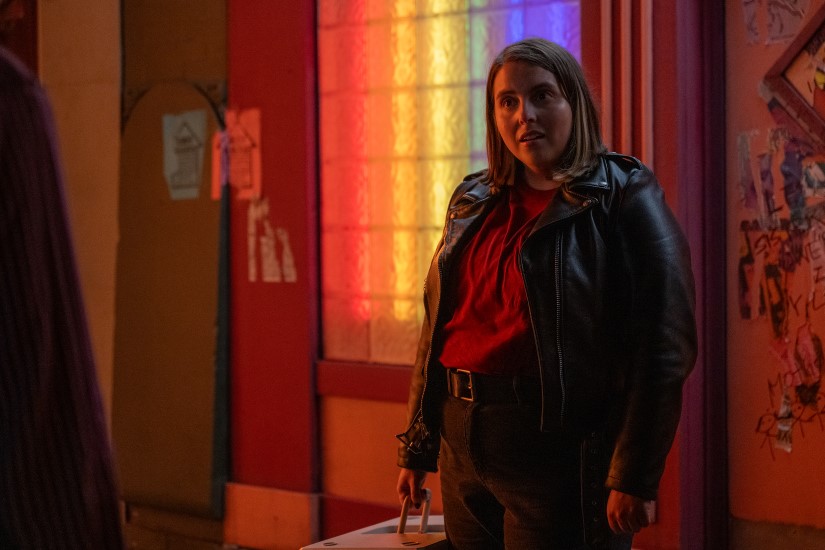
Can you talk about your mix on the fight scene in Sukie’s apartment? So, the Goons – Flint and Arliss – storm her apartment and Sukie is beating up Flint while Arliss is casually talking the whole time. Was that challenging to balance the brutality of the fight sounds with Arliss’s nonchalant dialogue?
SL: Ethan knows how to tell a joke. One time, he and I were working on a joke about a talking dog, to which the punchline is, “That dog’s a liar.” We worked on different readings with different inflections until the delivery of the line implied that many times the dog has been a liar. It gives the joke more depth.
The part that’s the most technical is giving the beats of the joke enough space.
Ethan is a technician. Telling is joke is hard enough, but writing it is even harder. The part that’s the most technical is giving the beats of the joke enough space. And that scene in Sukie’s apartment is a really good example of how Ethan knows how to pace out a joke – both in the way it’s written and in the editing – so there’s space for it.
You also have to allow for the laugh. You lose the audience for a second when they’re laughing so they won’t hear the next line unless there’s a little bit of a gap. That’s something that Ethan and his brother are really good at – crafting and telling jokes and putting them in their films.
So that space is already there for you when it gets to the dub stage? Or is there an opportunity to mix the scene and then maybe feel out that timing and have the picture re-cut if necessary?
SL: Exactly. So you have your template with sounds from picture editorial, usually production sound and they might add a punch or whatever is necessary.
Then let’s say that Sukie is in the background, and she might be mumbling or grunting continuously. We’ll record that separately and then we can mix that in so that we don’t lose that action while we’re listening to the one Goon tell his story.
That’s the mixing part of telling a joke, making sure that it’s still quasi-realistic.
That’s the mixing part of telling a joke, making sure that it’s still quasi-realistic. Otherwise, it’s not as much fun, especially in that case where the guy just keeps rambling on and on. Meanwhile, Sukie’s kicking the other guy’s butt. And the dog has got to have his way as well. It’s pretty endearing to give the last laugh to the little dog.

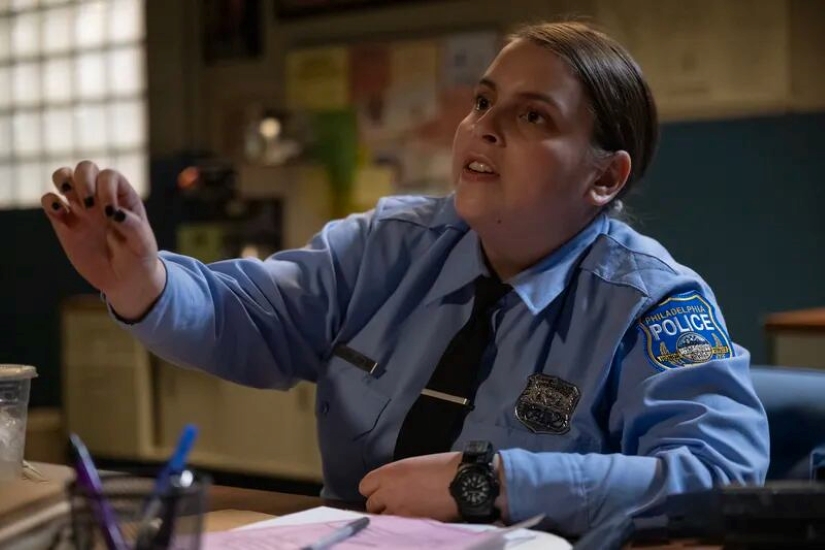
Another fun scene mix-wise is Sukie in the jail (she’s the booking officer) trying to have a conversation with Jamie on the phone when another officer comes in and his walkie-talkie is blaring, essentially drowning out parts of the conversation with Jamie. Can you talk about your mix there?
SL: That’s what Mel Zelniker (re-recording mixer on Blood Simple) would refer to as “a bit of business.” It has a lot of parts and you have to sort them all out and figure out the weight of each one. That’s the business of mixing, basically.
It has a lot of parts and you have to sort them all out and figure out the weight of each one. That’s the business of mixing, basically.
It’s one thing when you have beautiful music and a singer; that’s a little more straightforward in a way. But when you have all these components that feed each other, figuring out how much to hear of each one usually involves a little bit of magic where you hear a little bit of one thing and then you pull it back enough so you can hear the foreground dialogue and then hear a little of another thing poke through a little more. It’s a little bit of a dance. And that’s why Mel calls it “a bit of business.” We still call it that.
It was clear what the objectives were for that scene yet we did tweak it quite a lot during the mix – played back and tweaked it to get the most out of it. It was about giving space to the jokes and the lines. You had to hear Sukie in the foreground and then you had to hear Jamie on the phone, but you had to hear enough of the walkie-talkie to make her turn around and say, “Will you get out of here? I’m on the phone.”
What was your favorite scene, or the most enjoyable scene for you to mix?
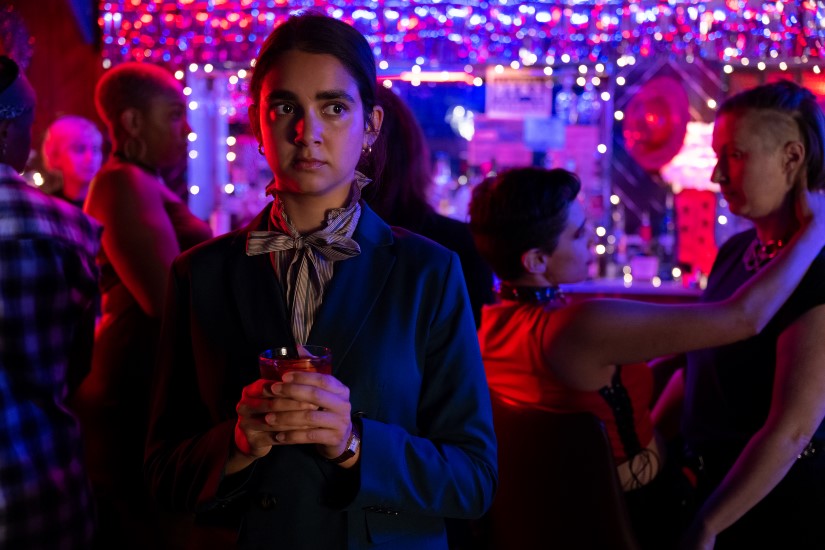
SL: I love the “Maggot Brain” stuff. I made a lot of fun sounds, reverby sounds, and spread them out. It was fun too because I had made some really loud versions. It reminded me of Janice Joplin at the Fillmore East back in the day. Those sequences reminded me of the light show that used to accompany rock concerts. I was clued into that. Those are always fun to do, moving that stuff all around the room in the Atmos channel. Mixing that was really fun.
…it was a fun part of the movie process, to take an amazing recording artist and reduce it to background noise, basically.
I also liked the hotel dinner and love scene at the end of the movie because we had the amazing Diana Krall make an appearance; we had a really nice session with her. She’s a fantastic performer and person, and that was really special. She’s not the main character of the scene, but it was a fun part of the movie process, to take an amazing recording artist and reduce it to background noise, basically. Anyway, she’s spectacular.
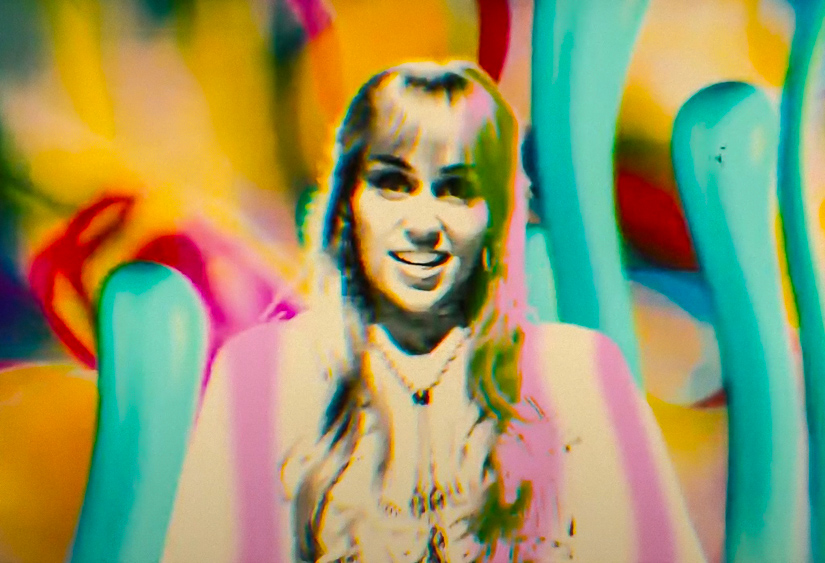
Going back to the trippy “Maggot Brain” music sequences, there are lines of dialogue that poke out, like, “Hey friend, wanna get plastered?” and “Never to wilt. Never to wane.” Who performed those lines as Cynthia Plaster Caster?
SL: Those were read by Mylie Cyrus.
What’s stood out to you in your experience of crafting the sound on Drive-Away Dolls?
SL: Well, they’re making the next one already. I think they start shooting next week or the week after. I’m looking forward to another long run of Coen brothers events. It’s been a pretty long time, 40 years, and I think this film is the 24th. (I’m counting them as Coen brothers films whether both of them worked on it or not.) The next one will be the 25th anniversary!
A big thanks to Skip Lievsay for giving us a behind-the-scenes look at the sound of Drive-Away Dolls and to Jennifer Walden for the interview!