





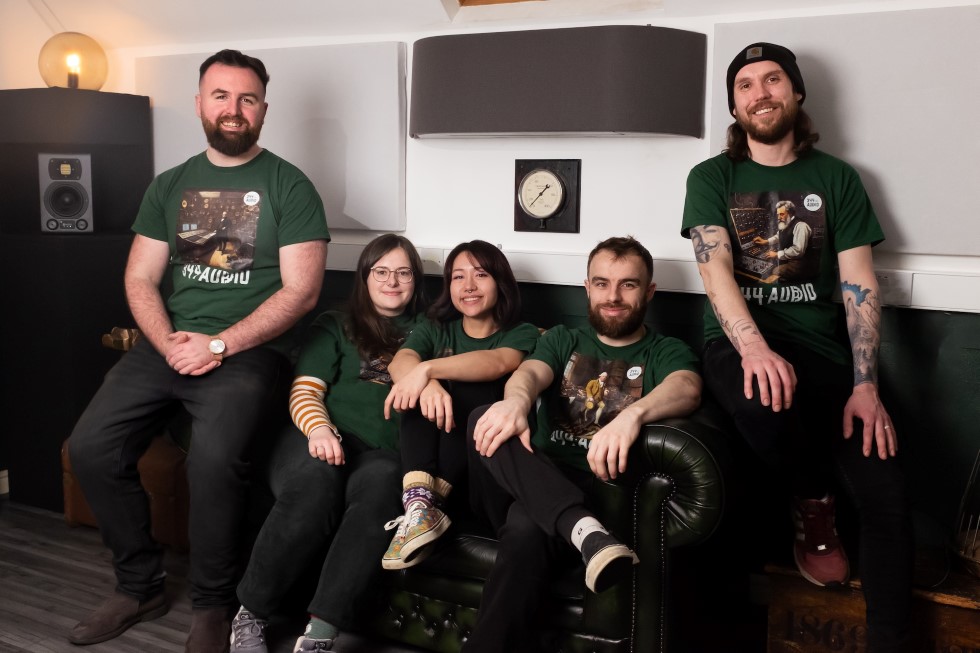
Here, 344 Audio's Alex Gregson (Foley Supervisor). Ryan Sweetman (Foley Mixer), and Danny Jones (Foley Artist) discuss their approach to creating grounded yet stylish character sounds that fit the game's fantasy energy. Find out which footsteps used different types of leaves (wet and dry) layered with a yoga mat, how bowed metal (including swords) helped to create a villain's magical build-up, why Jones wore gloves on his feet, and much more!
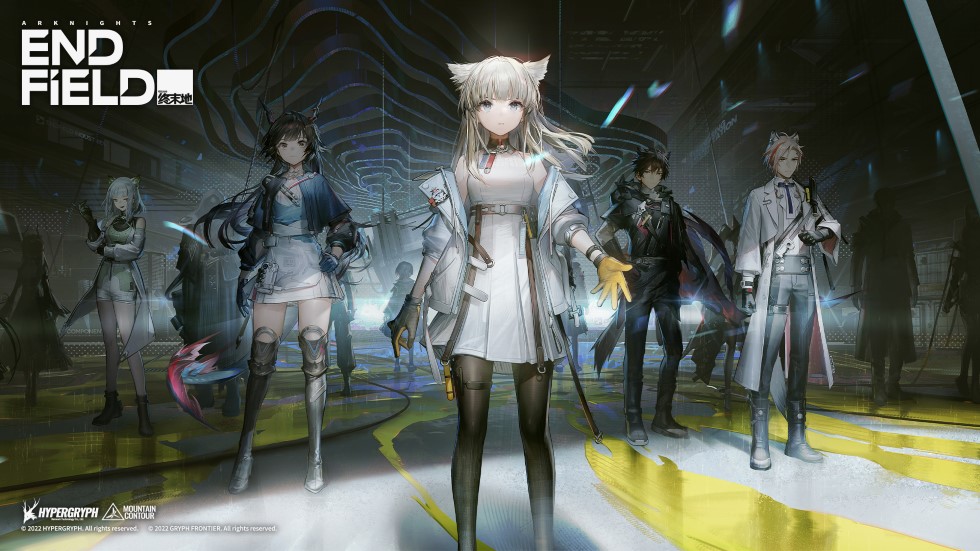
Hypergryph’s 3D real-time strategy RPG Arknights: Endfield is set on an alien moon called Talos-II, which Endfield Industries is trying to colonize. As the Endministrator, the player leads their team in combat and exploration, procures resources, builds bases, and manages the factory complex.
The game’s stylish mix of futuristic industrial and fantasy-based visuals sets the tone for character sounds. The sound team at 344 Audio in Manchester, UK, who handled the game’s foley, focused on footsteps and core character movement as their first priority, performing foley that felt grounded yet cinematic to reinforce the fantasy energy of Arknights: Endfield.
Here, Foley Supervisor Alex Gregson, Foley Mixer Ryan Sweetman, and Foley Artist Danny Jones share details on their international collaboration with China-based game developer Hypergryph, discuss their approach to building in approval checkpoints for sounds to establish clear direction before scaling up performances and delivery of assets, and share details of what went into their favorite character sounds.
Find out which footsteps used different types of leaves (wet and dry) layered with a yoga mat, how bowed metal (including swords) helped to create a villain’s magical build-up, why Jones wore gloves on his feet, and much more!
Arknights: Endfield Official Release Trailer: Back to Endfield
When did you get started on the sound for Arknights: Endfield, and what was your initial direction for sound on the game? Did that direction change over the course of development? If so, how did it evolve?
Alex Gregson (AG): 344 Audio began working on Arknights: Endfield in early 2024, initially focusing on footsteps and core character movement. The brief pointed towards realism and immersion, so our first priority was building authentic, performance-driven foley.
We developed a range of custom surfaces and refined performances in-house before sharing anything. Rather than sending isolated files, we delivered full Pro Tools sessions so that Hypergryph could see how the layers would function in-game. That collaborative back-and-forth with their implementation team helped us dial in consistency across surfaces and characters.
Rather than sending isolated files, we delivered full Pro Tools sessions so that Hypergryph could see how the layers would function in-game
As development progressed, we became more embedded in the project, contributing to cutscenes and working from gameplay captures. That allowed us to move from general realism to more character-specific, performance-led design.
Ryan Sweetman (RS): From our early conversations with Hypergryph, it was clear the sound needed to feel grounded but also stylish. The world of Arknights: Endfield has a strong visual identity, so the audio had to match that level of polish.
We experimented extensively with surfaces and textures to find the right balance. It wasn’t about pure realism; it was about realism that felt enhanced. Over time, that direction evolved into something slightly more cinematic, blending authentic detail with a sleek, controlled edge that suited the tone of the game.
Danny Jones (DJ): Before the project fully ramped up, we worked with Hypergryph on a smaller character-focused piece, developing cloth movement and footsteps. That helped us establish our approach at this scale.
We combined genuine source materials, like real metal and chainmail, with layered foley techniques and brighter, stylized details
When we moved onto the main project, we initially leaned heavily into natural, realistic foley. As discussions continued, it became clear they were after something more hyper-real. Still grounded, but with a heightened fantasy energy that fits the world of Arknights: Endfield.
So we combined genuine source materials, like real metal and chainmail, with layered foley techniques and brighter, stylized details. The final sound became a blend of authenticity and cinematic exaggeration, which felt true to the world they were building.
Can you talk about managing an international remote workflow between your UK-based team and your client based in China? What were some challenges? What were some opportunities?
AG: The reality today is that you can work on a major international title without ever being in the same room. We used WeChat as our primary communication channel, and despite being on opposite sides of the world, it never felt distant.
The focus was always on the work. Once communication was flowing, there were no real barriers, just a shared commitment to getting the details right. The collaboration felt close, direct, and creatively aligned.
RS: The time difference actually became an advantage. With Hypergryph being eight hours ahead, we’d send work at the end of our day and wake up to feedback the next morning. The same worked in reverse when they sent materials to us.
With Hypergryph being eight hours ahead, we’d send work at the end of our day and wake up to feedback the next morning
It created a near 24-hour workflow, which kept momentum high. We initially expected we’d need complex systems to manage the international setup, but in reality, it flowed far more smoothly than anticipated.
DJ: Early on, aligning creative terminology around sound design took some experimentation. Because foley can be very descriptive and each culture brings its unique influence, we built in approval checkpoints to make sure the direction was clear before scaling up. For example, we’d test specific footwear first, like boots and heels, to get confirmation on the direction, and only then scale up.
That process was crucial given the volume of assets involved. It ensured we weren’t committing to thousands of sounds without alignment. Once we had that clarity, everything moved quickly. Communication was constant, and that consistency made the remote setup work effectively.
Being from different cultures, how did you blend the sound perspectives/aesthetic preferences of the two countries?
AG: Sonically, the project brought together different creative perspectives on game audio. Hypergryph wanted something that would resonate with a global audience, so the solution was never going to sit purely in one camp.
Our approach was to anchor everything in strong, performance-led foley, then allow space for stylistic elements that aligned with their aesthetic preferences. The final result is a blend of cinematic realism and heightened stylisation that fits the world of Arknights: Endfield.
DJ: From early discussions, it was clear the game leaned into a highly stylised fantasy sound aesthetic. There were lots of high “shings,” ringing elements, fantasy textures, and more heavily sound-designed details.
With sword sounds, we recorded real metal sources like swords, shovels, and knives to capture authentic weight and texture across the full frequency spectrum
Our background tends to lean toward grounded, performance-led realism. On this project, we collaborated closely to align with the game’s stylised fantasy aesthetic, creating a cohesive blend.
For example, with sword sounds, we recorded real metal sources like swords, shovels, and knives to capture authentic weight and texture across the full frequency spectrum. Then we layered in brighter, more stylised elements, including things like a singing bowl and other metallic accents, to bring in that fantasy edge.
Through careful mixing, we were able to glue those elements together so it felt cohesive, rather than like two different styles competing.
What was your approach to foley for Arknights: Endfield? How did you use it to help reinforce the sonic style of the game? How did you use foley in-game vs. cutscene — was it a helpful sonic bridge between the two?
AG: Our approach to foley was rooted in performance, weight, and character differentiation. Some characters required testing five different shoe types before we found the right movement style. The performances had to feel authentic, but still sit within the slightly sci-fi tone Hypergryph was building.
That meant thinking creatively about shoes and surfaces so their interaction carried that evolved, futuristic edge. We kept consistency between in-game assets and cutscenes in terms of materials and character identity, but the cutscenes required more energy and impact. We focused on delivering that weight in the performances, and Hypergryph then elevated it further through their own effects layering and mix.
RS: Hypergryph was clear that the foley needed to feel immersive and real. Our challenge was balancing that realism with the metallic, sci-fi elements in the world.
We treated it as an evolution of reality rather than something completely alien, as if today’s materials had progressed into what you hear in the game
We treated it as an evolution of reality rather than something completely alien, as if today’s materials had progressed into what you hear in the game. Once we’d completed the early experimentation with shoes, cloth, and surfaces for gameplay, moving into cutscenes became more about refining performance and detail. The groundwork was already there; it was just about pushing precision and nuance.
DJ: For the in-game assets, the approach was very methodical. Footsteps had to be consistent enough that they could be edited and looped without sounding jarring, but varied enough to avoid repetition. That meant being extremely intentional with each heel-toe movement.
If they needed ten usable steps, we’d give them twenty so they could choose the strongest performances
Often, I’d record alternating steps with space between them so the editorial team had flexibility. If they needed ten usable steps, we’d give them twenty so they could choose the strongest performances. It was a different way of working compared to traditional linear foley.
With cutscenes, it felt closer to classic foley performance, reacting directly to picture and focusing on emotional weight. Because we handled both gameplay assets and cutscenes, we were able to create a cohesive bridge between the two, ensuring they felt like part of the same sonic world.
What went into the sounds of the characters? Can you share some examples of your favorite sounds and what went into their designs?
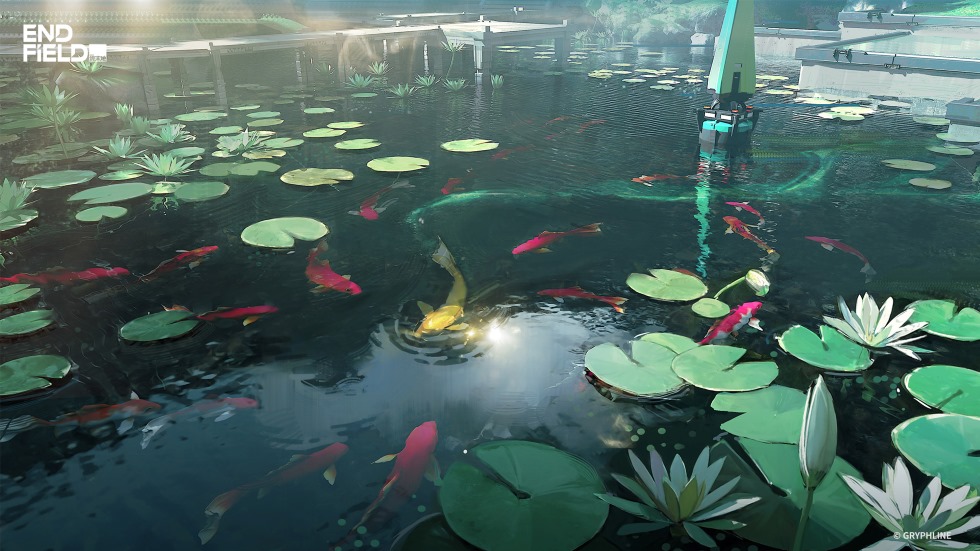
RS: One of my favourite challenges was creating the sound of a character walking across a lily pad. The reference footage showed movement over water, so it couldn’t sound like a standard footstep, but it also couldn’t become a full water splash. It needed subtle organic detail.
We went out into thewilderness to collect different types of leaves, combined wet and dry materials, and layered them with things like a yoga mat and other surfaces to get the right balance of softness and texture. It was a really creative problem to solve.
Another standout was a panda character whose movement required a classic cartoon-style “boing” in his steps. That was unexpected and nostalgic. Recreating that old-school animation feel inside an otherwise futuristic world was a lot of fun, and it showed how varied the character design could be.
DJ: For me, the cutscenes were the most memorable. One standout moment was a scene with the main villain summoning spikes from the ground. We designed every layer of that sequence, from the swell of the spikes rising to the impacts and debris.
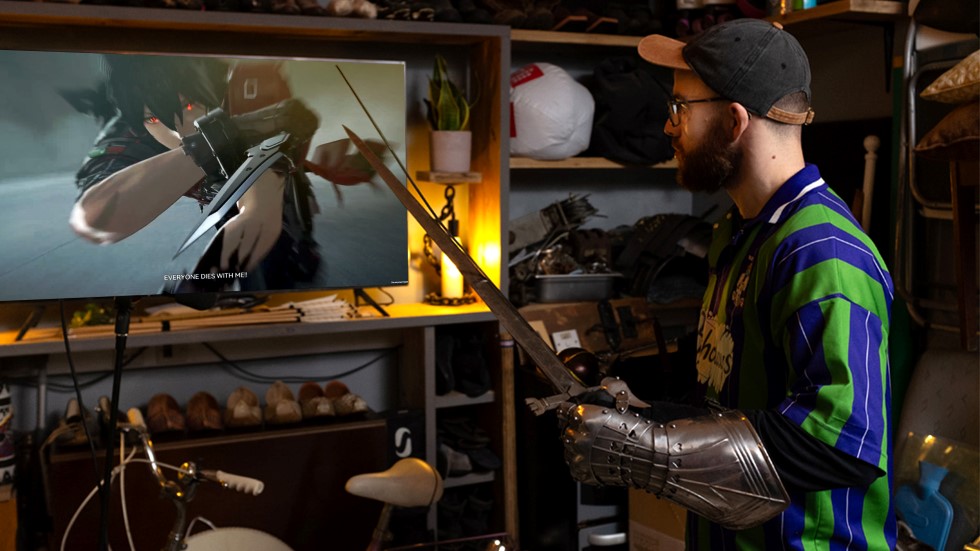
We spent a lot of time bowing different metal objects, including swords, using rosin to create sustained, textured tones. One of the swords had a natural rattle and roughness that gave us a kind of organic distortion, which worked perfectly for the magical build-up. We layered that with elements like glass smashes and harsher scrapes to add intensity.
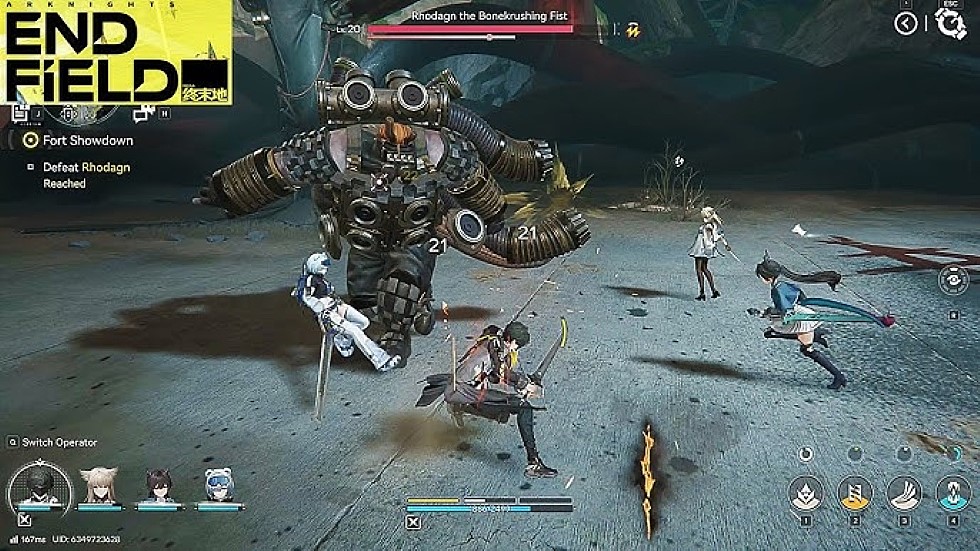
What were some of your favorite enemies to sound design? What went into their sounds? Can you share specific details?
AG: Two standout enemies for me were creatures featured in the RHODAGN Boss Fight & Cutscene. They required extremely heavy, intimidating footsteps.
After spending so much time refining grounded, character-led movement for the protagonists, shifting into something darker and more aggressive required a completely different mindset. The weight had to feel oppressive and threatening, not just physically heavy. That meant rethinking performance, pacing, and texture to create something scarier and more imposing.
RS: In one cutscene, there’s a moment where a group of Landbreakers approaches in the distance like an army marching. Building that sense of scale was a great challenge.
After spending so much time refining grounded, character-led movement for the protagonists, shifting into something darker and more aggressive required a completely different mindset
Danny and I performed multiple layers of footsteps together and separately, adding cloth movement, weapons, and additional props like guns and blades to give the group real weight. We supplied Hypergryph with a wide range of options so they could scale the size and intensity of the march in the mix.
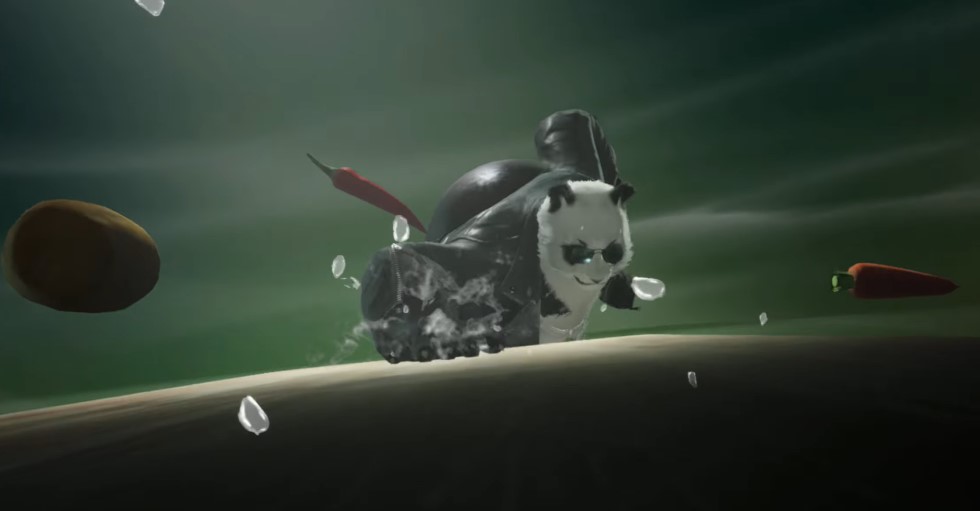
DJ: For me, it’s about how layered each character becomes. Every enemy wasn’t just footsteps. It was footsteps, cloth, jewellery, weapons, impacts, and surface interaction. If they were walking on snow, that alone might be three separate layers.
One of my favourites was the panda. Creating believable bare-footed movement for a creature like that meant thinking differently. At one point, I was wearing gloves on my feet to experiment with texture. Add in creaky leather, jingling buckles, and the weight of something like a shield on his back, and it quickly becomes a complex, multi-layered sound.
That’s what made it enjoyable; building a character from the ground up through layers of performance.
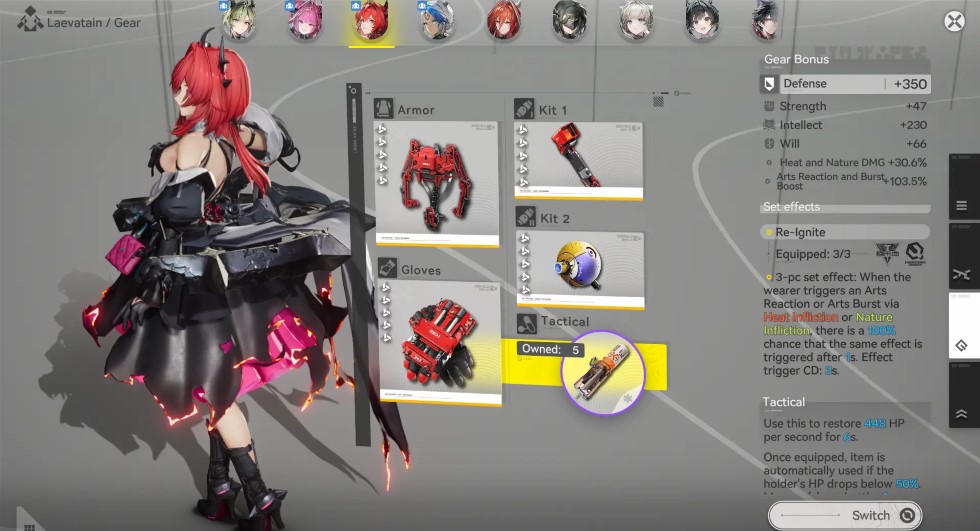
What went into the UI sounds for Arknights: Endfield?
RS: While we weren’t heavily involved in traditional UI sound design, some of our cloth foley was implemented into character changes within the menus.
It was great to see that level of detail carry over into the interface. The fact that Hypergryph chose to use our foley in that context showed how much they valued the texture and realism it added to the overall experience.
Any useful indie sound libraries? Also, any helpful or fun plugins that were used? Can you share some examples?
AG: We didn’t rely on external indie libraries. Our background in building 344 SFX libraries meant we approached the project as if we were creating a premium, game-ready collection from the ground up.
That applies both sonically and logistically. The assets weren’t just designed to sound great. They were structured to be easily implemented and dropped straight into the engine. We always aim to achieve the sound at source during recording, keeping it organic rather than heavily reshaping it later.
That applies both sonically and logistically. The assets weren’t just designed to sound great. They were structured to be easily implemented and dropped straight into the engine
RS: Everything was custom-recorded and bespoke for the game. We didn’t pull from external libraries. The brief demanded specificity, so we built it from scratch.
In terms of plugins, it was mostly stock tools: EQ, light noise reduction, and occasional enhancement where needed. We used iZotope for batch processing cloth assets, but because the recordings were captured cleanly in treated spaces, heavy processing wasn’t necessary. That helped us preserve the realism Hypergryph was looking for.
What have you learned while crafting the sound of Arknights: Endfield? What will you carry forward from your experience of working on the game’s sound?
AG: The biggest lesson for me was scale. Managing a huge volume of assets under tight deadlines forced us to refine our planning, delegation, and workflow systems.
We streamlined how we structure projects of this size, and those efficiencies will benefit every large-scale film or game we work on going forward. It really strengthened our internal processes and how we operate as a team.
RS: I learned that after three and a half weeks of recording footsteps, they genuinely start sounding like gunshots!
After three and a half weeks of recording footsteps, they genuinely start sounding like gunshots!
Jokes aside, the project sharpened how I communicate with performers and how we maintain energy during long, repetitive sessions. On films, there’s more constant back-and-forth, but this required sustained focus over weeks.
It also improved our editorial thinking. We picked up small workflow efficiencies that now carry over into our sound effects libraries and other game audio projects, helping us move faster without compromising on quality.
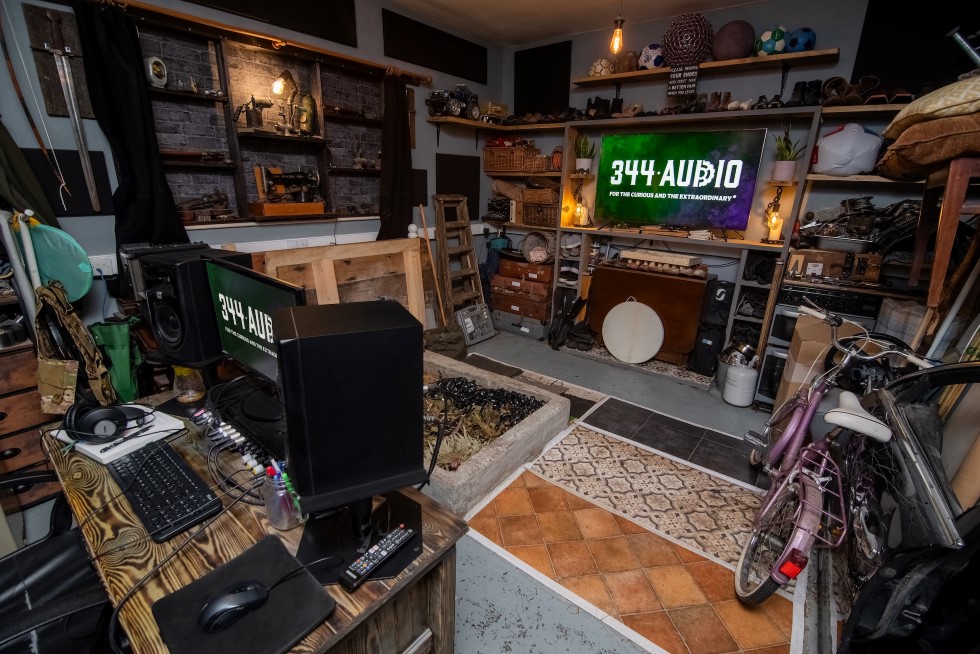
DJ: Personally, I learned a huge amount as a performer. This project pushed me to think differently and experiment constantly. We used almost every prop in the space and really explored how much you can achieve without a huge recording stage.
We used almost every prop in the space and really explored how much you can achieve without a huge recording stage
It also felt like working within a larger, more specialised team. My focus was purely performance, generating the sounds while others handled editorial and mix. That separation sharpened my craft.
Overall, the project helped me grow as an artist, particularly in performance, experimentation, and trusting the process.
A big thanks to Alex Gregson, Ryan Sweetman, and
Danny Jones for giving us a behind-the-scenes look at the sound of Arknights: Endfield and to Jennifer Walden for the interview!